Hosted by TruLight Ministries International – The Place of Truth
SELECT YOUR READING LANGUAGE – BOTTOM LEFT = YOUR DAILY MANNA NOW AVAILABLE IN 103 LANGUAGES
@ TruLight Daily Manna is not Just a Bible Verse with a Small Prayer . NO ::: WE SERVE DAILY Manna for the ENTIRE Day . Breakfast , Lunch , Dinner , Plus tea Times and even Entertainment Manna . Plus News Manna and More , This Daily Manna will keep you Spiritually full for the full 48 Hours and even More to Share with your Friends and Family !!!
Pride – The Sin of the Enemy – 10 Kinds of Pride !!!
Pastor Dirk , why this Huge Study on Pride ? Well it is the Nr 1 Thing God Hates !
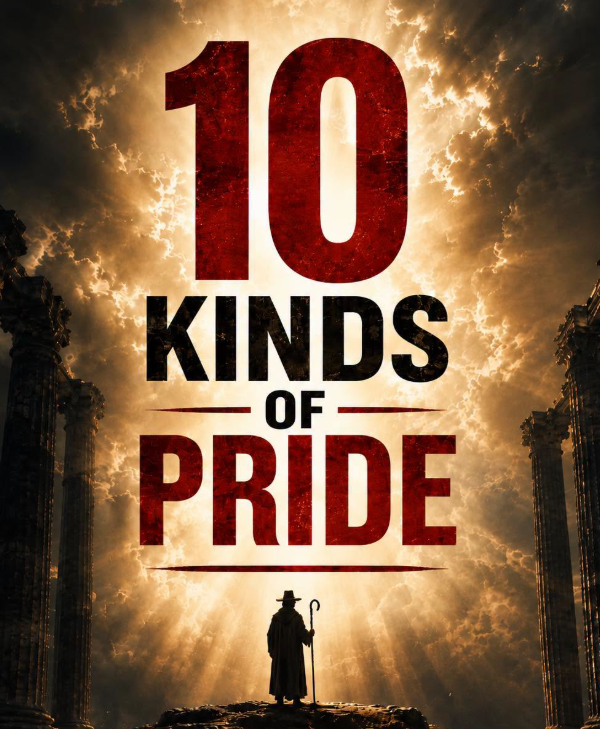
Proverbs 16:18 says, “Pride goes before destruction, and a haughty spirit before a fall.” There are many other biblical warnings about the sin of pride. But why is pride so strongly warned against? Why is pride a sin? Is it always a sin to feel proud of something you have accomplished? It is very important to understand what precisely is the pride that God hates (Proverbs 8:13).
In the movie Evan Almighty, the main character, Evan, is seen praying to God before he goes to bed. Evan thanks God for his house, despite the fact that he worked hard to pay for it, because, well, God created matter. Evan understood that neither he, nor his house, would even exist were it not for God. That seems to be the key distinction between “good” pride and “bad” pride. Sinful pride is refusing to recognize God’s sovereign role in everything. “Good pride” is recognizing that apart from God, you can do nothing (John 15:5), and, therefore, giving God the glory for the things you accomplish.
A few years ago my wife and I were given a prestigious award. I really struggled with what my attitude should be regarding the award. We had to travel to receive the reward, and people kept asking us why we were in town. What were we supposed to say? How could we have informed them that we were receiving a very distinguished award without sounding prideful and/or conceited? Ultimately, I think being mistaught on what sinful pride actually is made the proper response much more difficult than it had to be. We entirely recognize that nothing we have accomplished would have been possible without God. We entirely recognize that God is the one who has given us the wisdom, discernment, and strength to accomplish what we have. At the same time, we have worked exceedingly hard. Am I saying that God needed our efforts to accomplish what He desired? Of course not. Did God choose to accomplish His will through us due to our willingness to submit to Him? Yes, I think so. Is it a sin to feel pride in what God has accomplished? No, I do not think so.
While God is absolutely sovereign, and while nothing happens outside of His providence, our efforts, or more accurately, our willingness to be used of Him, do play a role in what God chooses to accomplish through whom. Of course, no one can come to God or submit to God without God’s enablement (John 6:44). But, there is still an aspect to our relationship with God which “depends” on how willingly we submit to Him. God will accomplish His plan no matter what. How much God incorporates you into how He accomplishes His plan depends at least somewhat on you.
Assuming that Isaiah 14:12-15 and Ezekiel 28:12-15 refer symbolically to Satan, Satan’s sin was pride. Despite the fact that God had created Satan, and despite the fact that it was God who gave Satan the power and beauty he possessed, Satan wanted the glory and credit for himself. Satan did not want to worship God in response to the gifts God had given him. Instead, Satan wanted to be worshipped. Satan viewed himself as glorious instead of what he actually was: a reflection of God’s glory. That is the sin of pride. Sinful pride is not recognizing that only God is worthy of worship because only God is able to accomplish things entirely in and of Himself. Only God is holy, beautiful, glorious, and powerful in and of Himself. Everything and everyone else relies on God. The most we are is evidence of the amazing creative power of God.
First Corinthians 4:7 summarizes this nicely: “What do you have that you did not receive? And if you did receive it, why do you boast as though you did not?” Everything we have, we have received from God. Therefore, we should not act as if we have accomplished anything on our own. It is not wrong to feel good about something you have accomplished as long as you recognize, and admit, that you could not have accomplished it apart from God.
What would have been the proper response to people asking us why we were in town? Something to the effect of: “We are being recognized for the great things God has accomplished through us in response to our willingness to submit to His will and be used of Him.” Now if I could only come up with a more concise way to say that.
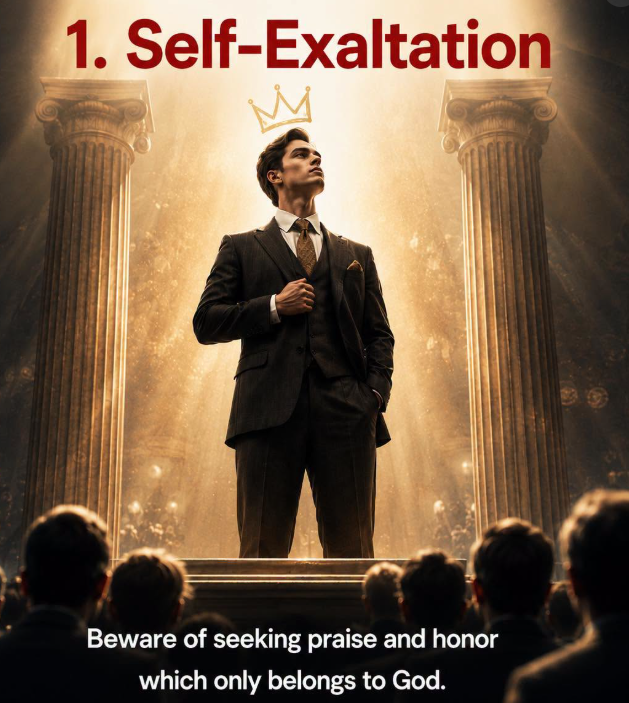
Amos 8:7 says, “The LORD has sworn by the Pride of Jacob: “I will never forget anything they have done.’” What is this “Pride of Jacob”?
Interpreters are divided on the understanding of this phrase. First, some suggest the Pride of Jacob is a reference to Israel’s sins, in which the wicked took unabashed pride. Others suggest the Pride of Jacob is a title of God. The latter is probably the better interpretation. The Pride of Jacob was the One to whom Jacob, the nation’s forefather, looked for strength. A similar title is found in 1 Samuel 15:29, where God is referred to as “the Glory of Israel.”
To say, “The LORD has sworn by the Pride of Jacob,” means that the Lord has sworn by Himself. The Bible speaks of God swearing by Himself in at least one other passage: “For when God made a promise to Abraham, since he had no one greater by whom to swear, he swore by himself, saying, ‘Surely I will bless you and multiply you’” (Hebrews 6:13-14).
But what has the Lord sworn by Himself? Amos 8:7 says, “I will never forget anything they have done.” This is the Lord’s promise to deal with the sins of the people. He would not let their rejection of Him go unpunished; rather, judgment would soon come.
Some confusion arises due to the same phrase, “pride of Jacob,” being used in two other passages. First, in Psalm 47:4 we read, “He chose our heritage for us, the pride of Jacob whom he loves.” Here, the phrase is in reference to the land of Israel rather than to God. Second, “pride of Jacob” is used in Amos 6:8 in reference to actual, sinful pride: “I abhor the pride of Jacob and hate his strongholds.” The city of Samaria served as Israel’s capital, and “stronghold” likely refers to that city. They were trusting in their city’s defenses rather than in God.
In summary, the “Pride of Jacob” in Amos 8:7 is a reference to God Himself. The Lord makes a solemn promise, based on His own character and faithfulness, that He would bring judgment against Israel. “Do not be deceived: God cannot be mocked. A man reaps what he sows” (Galatians 6:7).

The phrase “pride of life” is found only once in the Bible, in 1 John 2:16, but the concept of the pride of life, especially as it is linked with the “lust of the eyes” and the “lust of the flesh,” appears in two more significant passages of Scripture—the temptation of Eve in the Garden and the temptation of Christ in the wilderness (Matthew 4:8-10). The pride of life can be defined as anything that is “of the world,” meaning anything that leads to arrogance, ostentation, pride in self, presumption, and boasting. John makes it clear that anything that produces the pride of life comes from a love of the world and “if anyone loves the world, the love of the Father is not in him” (1 John 2:15, ESV).
The first example of the temptation of the pride of life occurs in the Garden of Eden, where Eve was tempted by the serpent to disobey God and eat the forbidden fruit of the tree of knowledge of good and evil. Eve perceived that the fruit was “good for food,” “pleasing to the eye,” and “desirable for gaining wisdom” (Genesis 3:6). She coveted the fruit in three ways. First, it was appealing to her appetite. This John refers to as the “lust of the flesh,” the desire for that which satisfies any of the physical needs. The fruit was also pleasing or delightful to the eye, that which we see and desire to own or possess. Here is the “lust of the eyes” John refers to. Finally, Eve somehow perceived that the fruit would make her wise, giving her a wisdom beyond her own. Part of Satan’s lie was that eating the fruit would make her “like God, knowing good and evil” (Genesis 3:5).
Here is the essence of the pride of life—anything that exalts us above our station and offers the illusion of God-like qualities, wherein we boast in arrogance and worldly wisdom. Eve wanted to be like God in her knowledge, not content to live in a perfect world under His perfect grace and care for her. Satan tried these same three temptations on Christ during His forty days in the wilderness (Matthew 4:1-11). He tempted Jesus with the lust of the flesh, bread for His hunger (Matthew 4:2–3); the lust of the eyes, “all the kingdoms of the world with their splendor” (Matthew 4:8–9); and the pride of life, daring Him to cast Himself from the roof of the temple in order to prove that He was the Messiah by an ostentatious display of power that was not in the will of God or His plan for the redemption of mankind Matthew 4:5-6). But Jesus, though He was “tempted in every way, just as we are” (Hebrews 4:15), resisted the devil and used the Word of God to ensure victory over him.
Christians have always been, and will always be, lured by the same three temptations Eve and Jesus experienced. Satan doesn’t change his methods; he doesn’t have to because they continue to be successful. He tempts us with the lust of the flesh—sexual gratification, gluttony, excessive alcohol consumption, and drugs, both legal and illegal, as well as the “works of the flesh” about which Paul warned the Galatians, “sexual immorality, impurity, sensuality, idolatry, sorcery, enmity, strife, jealousy, fits of anger, rivalries, dissensions, divisions, envy, drunkenness, orgies, and things like these” (Galatians 5:19-21, ESV). He tempts us with the lust of the eyes—the endless accumulation of “stuff” with which we fill our homes and garages and the insatiable desire for more, better, and newer possessions, which ensnares us and hardens our hearts to the things of God.
But perhaps his most evil temptation is the pride of life, the very sin that resulted in Satan’s expulsion from heaven. He desired to be God, not to be a servant of God (Isaiah 14:12-15). The arrogant boasting which constitutes the pride of life motivates the other two lusts as it seeks to elevate itself above all others and fulfill all personal desires. It is the root cause of strife in families, churches, and nations. It exalts the self in direct contradiction to Jesus’ statement that those who would follow Him must take up their cross (an instrument of death) and deny themselves. The pride of life stands in our way if we truly seek to be servants of God. It is the arrogance that separates us from others and limits our effectiveness in the kingdom. The pride of life “comes not from the Father, but from the world.” And, as such, it is passing away with the world, but those who resist and overcome the temptation of the pride of life do the will of God, and “whoever does the will of God lives forever” (1 John 2:17).
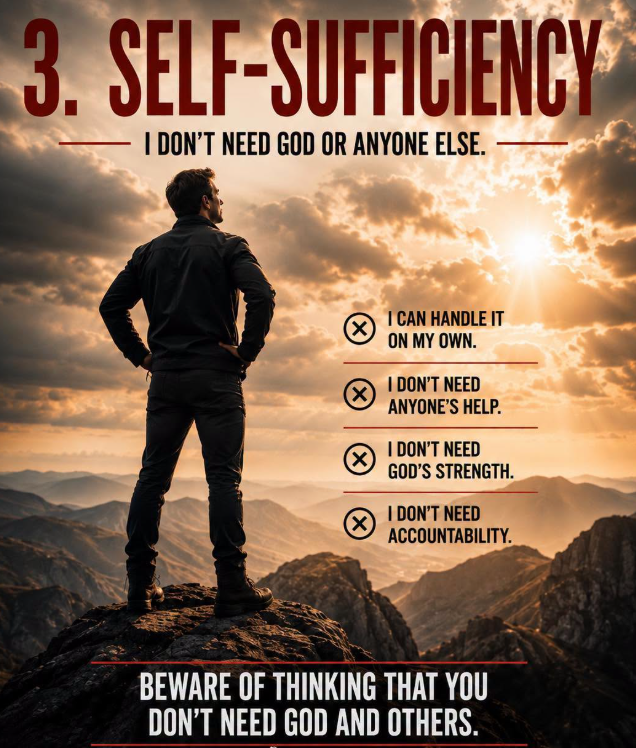
Bible verses about pride?
Proverbs 11:2
When pride comes, then comes disgrace, but with the humble is wisdom.
Proverbs 29:23
One’s pride will bring him low, but he who is lowly in spirit will obtain honor.
Proverbs 16:18
Pride goes before destruction, and a haughty spirit before a fall.
Proverbs 8:13
The fear of the Lord is hatred of evil. Pride and arrogance and the way of evil and perverted speech I hate.
James 4:6
But he gives more grace. Therefore it says, “God opposes the proud, but gives grace to the humble.”
Proverbs 16:5
Everyone who is arrogant in heart is an abomination to the Lord; be assured, he will not go unpunished.
Proverbs 18:12
Before destruction a man’s heart is haughty, but humility comes before honor.
Romans 12:16
Live in harmony with one another. Do not be haughty, but associate with the lowly. Never be wise in your own sight.
Psalm 10:4
In the pride of his face the wicked does not seek him; all his thoughts are, “There is no God.”
1 John 2:16
For all that is in the world—the desires of the flesh and the desires of the eyes and pride in possessions—is not from the Father but is from the world.
Proverbs 13:10
By insolence comes nothing but strife, but with those who take advice is wisdom.
Philippians 2:3
Do nothing from rivalry or conceit, but in humility count others more significant than yourselves.
Galatians 6:3
For if anyone thinks he is something, when he is nothing, he deceives himself.
Proverbs 26:12
Do you see a man who is wise in his own eyes? There is more hope for a fool than for him.
Proverbs 27:2
Let another praise you, and not your own mouth; a stranger, and not your own lips.
Proverbs 21:4
Haughty eyes and a proud heart, the lamp of the wicked, are sin.
Galatians 6:4
But let each one test his own work, and then his reason to boast will be in himself alone and not in his neighbor.
Psalm 59:12
For the sin of their mouths, the words of their lips, let them be trapped in their pride. For the cursing and lies that they utter,
Jeremiah 9:23
Thus says the Lord: “Let not the wise man boast in his wisdom, let not the mighty man boast in his might, let not the rich man boast in his riches,”
Proverbs 16:19
It is better to be of a lowly spirit with the poor than to divide the spoil with the proud.
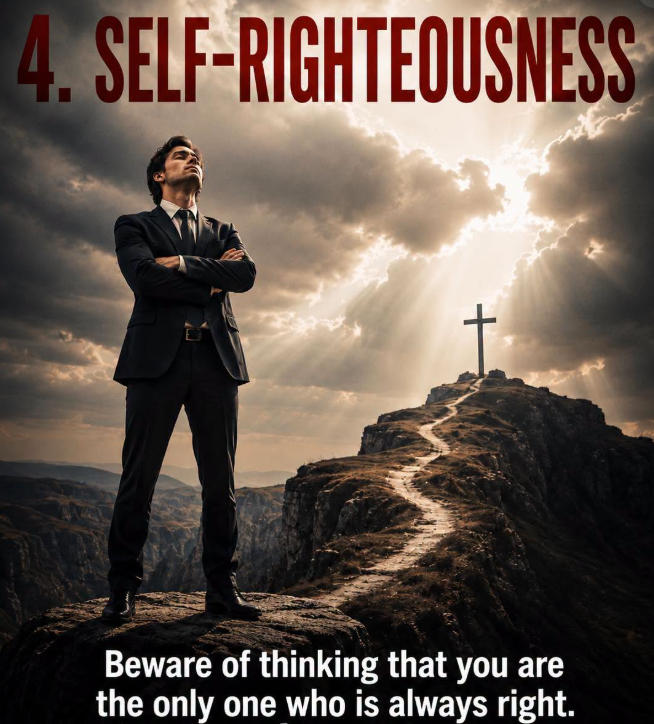
King Nebuchadnezzar of Babylon was given an unusual opportunity to learn about what happens to those who walk in pride in Daniel 4. It was a hard lesson to learn, but an important one.
The king had a dream that troubled him, and only the prophet Daniel was able to provide the interpretation (Daniel 4:6–7). Nebuchadnezzar explained the dream: he had seen a great and glorious tree (Daniel 4:10–12). As he watched the tree, he saw someone come down from heaven and give an order that the tree be chopped down, but the stump was to remain (Daniel 4:14–15). Remarkably, the one who had come from heaven began to speak of the tree as if it were a person. From those words, the king understood that the person the tree signified would share with the animals the grass of the earth (Daniel 4:15) and his mind would be changed from that of a man to that of a beast for seven periods of time (Daniel 4:16). This sentence was pronounced so that all would know what happens to those who walk in pride (Daniel 4:37), that God is the Ruler of all, and that He bestows authority on whomever He wishes (Daniel 4:17).
As Daniel explains the meaning of the dream, he is alarmed, realizing it is about Nebuchadnezzar (Daniel 4:19). The king certainly walked in pride (Daniel 4:37), and God planned to humble him. The tree that was cut down in the dream was Nebuchadnezzar (Daniel 4:20–22), who would lose his glory and become like a beast for “seven times” so he would learn that God is the one who gives authority (Daniel 4:23–25). Once Nebuchadnezzar humbled himself before God, his kingdom would be returned to him (Daniel 4:26–27).
As the narrative of Daniel 4 continues, Nebuchadnezzar describes that all these things happened just as the dream predicted. A year later, Nebuchadnezzar was filled with pride as he commended himself for the greatness of the kingdom he had built (Daniel 4:29–30). While he was still speaking, Nebuchadnezzar lost his mind and became like a beast (Daniel 4:30–33). After the prophesied time, Nebuchadnezzar’s reason returned to him, and he humbled himself before God, exclaiming that God is sovereign and does according to His own will (Daniel 4:34–35). Nebuchadnezzar’s kingdom was restored, and, this time, rather than view it with personal pride, he praised, exalted, and honored God:
“His dominion is an eternal dominion;
his kingdom endures from generation to generation.
All the peoples of the earth
are regarded as nothing.
He does as he pleases
with the powers of heaven
and the peoples of the earth.
No one can hold back his hand
or say to him: ‘What have you done?’” (Daniel 4:34–35).
Nebuchadnezzar had learned what happens to those who walk in pride.
God opposes the proud but gives grace to the humble (see Psalm 138:6; Proverbs 3:34; Matthew 23:12; James 4:6; 1 Peter 5:5). Jesus modeled the importance of humility—the willingness to treat others as worthy of more honor than oneself (Philippians 2:1–11). The quality of being humble before God (Micah 6:8) and treating others accordingly is demonstrated clearly in many ways in the Bible. Some of the lessons on humility show what happens to those who walk in pride (Daniel 4:37).

Many proverbs warn that the sin of pride is a dangerous offense. Proverbs 16:18 declares, “Pride goes before destruction, a haughty spirit before a fall.” Verse 18 links to verse 19: “Better to live humbly with the poor than to share plunder with the proud.” The meaning of the passage is clear-cut: pride leads to humiliation. It is better to be humble and poor than proud and rich.
A similar proverb expands the message: “Haughtiness goes before destruction; humility precedes honor” (Proverbs 18:12 NLT). While pride sets us on an ill-fated course, the opposite of pride—humility—leads to honor. To choose pride is to set oneself up for a fall; the pedestal we make for ourselves proves a precarious foundation.
Pride in the context of these verses refers to an arrogant attitude that manifests itself as independence from God and contrasts strikingly with humility. Such arrogance is hazardous to our well-being and success in life because it keeps us from fearing the Lord. By contrast, “Humility is the fear of the LORD; its wages are riches and honor and life” (Proverbs 22:4).
To fear the Lord and thus avoid the pride that goes before a fall is to respect, reverence, and submit to Him in every area of life. When we fear the Lord, we acknowledge our desperate need for God because He is infinitely wiser than we are: “Do not be wise in your own eyes; fear the LORD and shun evil” (Proverbs 3:7).
Terms like destruction, fall, disaster, ruin, and downfall in these passages can be understood as a punishment or discipline meted out to the proud in order to humble them and correct their waywardness. The word fall translates from a verb meaning “stumble” or “stagger.” Pride, unchecked, leads to destruction; the purpose of Scripture’s warnings is to put the proud sinner back on a path that leads to honor and life. For this reason, the maxims repeatedly inform, “When pride comes, then comes disgrace, but with humility comes wisdom” (Proverbs 11:2). And again, “Pride ends in humiliation, while humility brings honor” (Proverbs 29:23, NLT).
The Edomites serve as a classic example of the adage “pride goes before a fall.” Because of arrogance of heart, Edom fell never to rise again: “The pride of your heart has deceived you, you who live in the clefts of the rocks and make your home on the heights, you who say to yourself, ‘Who can bring me down to the ground?’ Though you soar like the eagle and make your nest among the stars, from there I will bring you down declares the LORD” (Obadiah 1:3–4; see also verses 15–16). Many biblical prophets echo this theme: “The proud one shall stumble and fall, with none to raise him up” (Jeremiah 50:32, ESV; see also Isaiah 28:3; Ezekiel 31:10–12; Zephaniah 3:11; Zechariah 10:11).
Perhaps the most dramatic and consequential illustration of pride going before a fall is what happened in the Garden of Eden. Adam and Eve’s fall stands behind every proud fall of humankind since. Adam and Eve disobeyed God and proudly chose their own way. The fall that resulted was catastrophic.
The proud person pursues his or her own way, but the humble one obeys God’s Word. Delighting in the Lord and humbly following His commands makes us sure-footed so that we will not slip or stagger: “The LORD makes firm the steps of the one who delights in him” (Psalm 37:23; see also Psalm 18:36; 37:31). Humility and fear of the Lord establish us securely on God’s path, where our feet won’t stumble, nor will we fall (Proverbs 3:26; Psalm 17:5; 119:133).

First Peter 5:5 says, “Likewise you younger people, submit yourselves to your elders. Yes, all of you be submissive to one another, and be clothed with humility, for ‘God resists the proud, But gives grace to the humble’” (NKJV). Here, Peter draws from Proverbs 3:34 to motivate Christians to adopt an attitude of humility. Scripture extols humility as a virtue and identifies pride as a vice. In fact, God resists, or opposes, the proud (cf. James 4:6).
The imagery presented is of God actively opposing the proud, akin to a government thwarting the advances of terrorists or a tide resisting a boat moving against its current. God sets up resistance to proud people. Pride, a grave sin in Scripture, is the foundation of other sinful actions. Lucifer exemplified pride when he raged against God (Isaiah 14:12–15), and the first humans displayed pride by disregarding God’s explicit command (Genesis 3:1–7). The Israelites’ persistent struggles with God were often rooted in their pride and unbelief (see Exodus 32:1–6; Hosea 13:6; Amos 4:1–5). Whenever humans sin, their actions can be traced back to a rejection of God and His commands, which is a manifestation of pride.
Ecclesiastes 7:29 states, “God created people to be virtuous, but they have each turned to follow their own downward path” (NLT). This is true of our first parents, Adam and Eve, and all of humanity following them. In our pride we incline toward self-rule, and we turn away from God and His standards. As Paul articulated, “Although they knew God, they neither glorified him as God nor gave thanks to him, but their thinking became futile and their foolish hearts were darkened” (Romans 1:21).
The antidote to pride is humility, which entails acknowledging our status as sinners and turning to the Savior who sacrificed His life for our reconciliation with the Father. True humility involves laying down our arms, ceasing to do battle against the Lord, and pledging loyalty to the Father. Humility requires us to steer our boat to flow with God’s tide, not against it. God gives grace to the humble.
Scripture provides numerous instances of God actively resisting the proud. King Nebuchadnezzar, for example, suffered a period of insanity after pridefully attempting to claim the glory for Babylon’s achievements (Daniel 4:28–33). King Herod faced a tragic fate when he sought to be exalted as a god (Acts 12:20–23). Various nations were judged for their pride, including Moab (Zephaniah 2:9–10), Judah (Jeremiah 13:9), Israel (Isaiah 9:9), Philistia (Zechariah 9:6), Assyria (Zechariah 10:11), and Edom (Obadiah 1:2–4).
Isaiah 2:11–12, 17 has a warning for all who would think more highly of themselves than they ought to think:
The eyes of the arrogant will be humbled
and human pride brought low;
the Lord alone will be exalted in that day.
The Lord Almighty has a day in store
for all the proud and lofty,
for all that is exalted
(and they will be humbled). . . .
The arrogance of man will be brought low
and human pride humbled;
the Lord alone will be exalted in that day.
Pride is a dead-end street full of resistance from God: “Pride goes before destruction, a haughty spirit before a fall” (Proverbs 16:18). We must avoid pride and embrace humility. That journey begins with acknowledging our need for a Savior.

First Corinthians 13 offers tremendous insight regarding the Christian perspective of love. As love is described, the stipulation that love “is not proud” is included (verse 4).
The very word translated “proud” offers valuable information. It comes from a Greek word meaning to “puff up” or “blow up.” The English idiom “having a big head” communicates the same idea. To be puffed up is to have an inflated opinion of oneself. But pride cannot coexist with godly love. Christian love is not proud or focused on self.
Jesus Christ is the perfect example of selfless love. Philippians 2:6-8 says that Jesus, though He is “in very nature God, did not consider equality with God something to be grasped, but made himself nothing, taking the very nature of a servant, being made in human likeness. And being found in appearance as a man, he humbled himself and became obedient to death – even death on a cross.” Jesus did not focus on Himself. Instead, He became a servant and in humility died to save us. As John 15:13 teaches, “Greater love has no one than this, that he lay down his life for his friends.”
In contrast to the humility of love, the Corinthian believers were known for their proud behavior at times. They argued over which apostle they followed (chapters 1-3), spoke poorly of Paul (chapter 4), boasted of their tolerance of sinful behavior (chapter 5), took fellow believers to court with lawsuits (chapter 6), dishonored God in their taking of the Lord’s Supper (chapter 11), and argued about which spiritual gifts were most important (chapter 12). Paul’s exhortation that “love is not proud” provided a proper corrective for their self-centered attitudes.
Pride is a sin. John taught that the pride of life “is not from the Father but is from the world” (1 John 2:16). The Proverbs summarize God’s attitude regarding pride: “Pride and arrogance and the way of evil and perverted speech I hate” (Proverbs 8:13), and, “Pride goes before destruction, and a haughty spirit before a fall” (Proverbs 16:18).
William Penn, the founder of the Colony of Pennsylvania, wrote, “A proud man then is a kind of glutton upon himself; for he is never satisfied with loving and admiring himself; whilst nothing else, with him, is worthy either of love or care” (from No Cross, No Crown, chapter XII). This is exactly why love and pride are anathema to each other. In pride we become the objects of our own love; in humility we learn to love others. A person with godly love is not concerned with benefiting himself. The only thing love sees is the need.
When the Good Samaritan stopped to help the man in need on the Jericho road, he didn’t concern himself with how “Jews do not associate with Samaritans” (John 4:9). The Good Samaritan did not care how it looked to others. He was there to help (Luke 10:30-37). His humble focus on someone else’s need is the illustration Jesus used of loving our neighbor as ourselves.
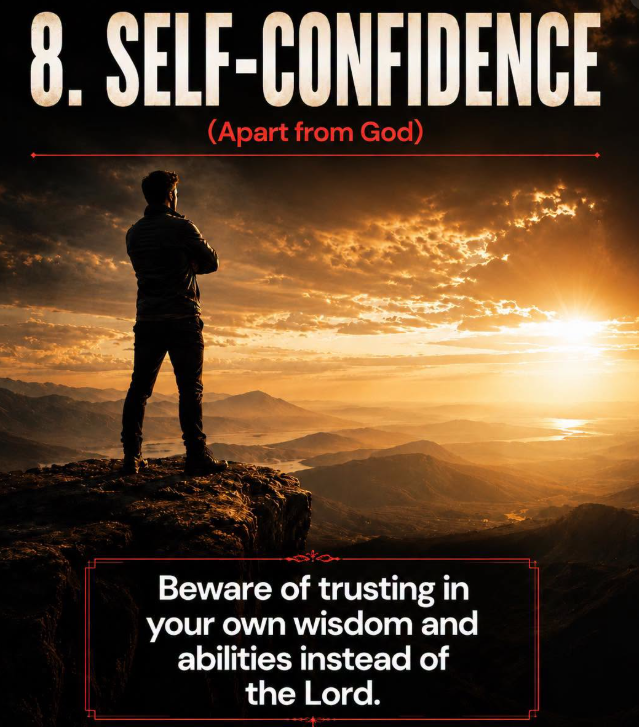
Pride is celebrated in our world. People proudly flaunt their accomplishments, possessions, or qualities they deem admirable in expectation of praise. Yet, selfish pride is a hindrance to salvation and to a fruitful relationship with God and others. James warns us about this self-focused pride when he writes, “God opposes the proud but gives grace to the humble” (James 4:6, NLT).
In warning against pride and promoting humility, James quotes the Septuagint translation of Proverbs 3:34. Of course, James is not referring to “pride” as in the satisfaction of a job well done (Galatians 6:4) or to the kind of pride one expresses over the accomplishment of loved ones (2 Corinthians 7:4). He is referring to the kind of pride that stems from self-righteousness or conceit.
God opposes the proud because pride is sinful and a hindrance to seeking Him. Those who insist on elevating themselves and refusing to trust God as sovereign, good, and trustworthy will find their way opposed by God. Psalm 10:4 explains that the proud are so consumed with themselves that they make no room for God. The ESV words it like this: “In the pride of his face the wicked does not seek him; all his thoughts are, ‘There is no God.’” The supremacy of God and the fact that we can do nothing to inherit eternal life apart from Christ is a stumbling block for prideful people. God will oppose those attempting to be the god of their own lives. Pride refuses to bend the knee to God or repent of sin, and that keeps many people from salvation.
In contrast to God’s opposition to the proud is God’s grace to the humble. Those who humble themselves find God’s favor: “Though the LORD is great, he cares for the humble” (Psalm 138:6, NLT). God shows His favor to those with a right view—a humble view—of themselves, and He promises them restoration: “I live in a high and holy place, but also with the one who is contrite and lowly in spirit, to revive the spirit of the lowly and to revive the heart of the contrite” (Isaiah 57:15; cf. James 4:10). Note that humility in this passage is related to contrition, or repentance.
Pride can also hinder our relationship with God and others even after we are saved. In his letter, James addresses an issue among the believers, namely, their quarrels and strife with one another. The source of the issue was selfish pride. Pride negatively affects our relationships because it inflates our view of self and deflates our view of God and others. In the midst of addressing this issue, James quotes Proverbs 3:34: “God opposes the proud but gives grace to the humble” (ESV).
Exalting ourselves pushes God out of His rightful place in our lives, and He will humble us “because the Lord disciplines the one he loves” (Hebrews 12:6). As we humble ourselves, He “gives grace generously” (James 4:6, NLT). God gives us grace that is sufficient to meet every need we have and every sin we face, if we are humble enough to receive it. As we decide whether we will elevate ourselves or turn to God, we must remember that God opposes the proud but gives grace to the humble. God calls us to repent of self-righteousness, selfish demands, and proud exaltation and instead “submit [ourselves], then, to God” (James 4:7).
In a world that champions pride, Jesus commands believers to be different. Each believer is called to “look not only to his own interests, but also to the interests of others” (Philippians 2:4, ESV). As we humble ourselves, we will experience God’s grace and the rewards He promises: “For everyone who exalts himself will be humbled, and he who humbles himself will be exalted” (Luke 14:11). Since God opposes the proud but gives grace to the humble, may we live humble lives in the fear of the Lord (Micah 6:8).
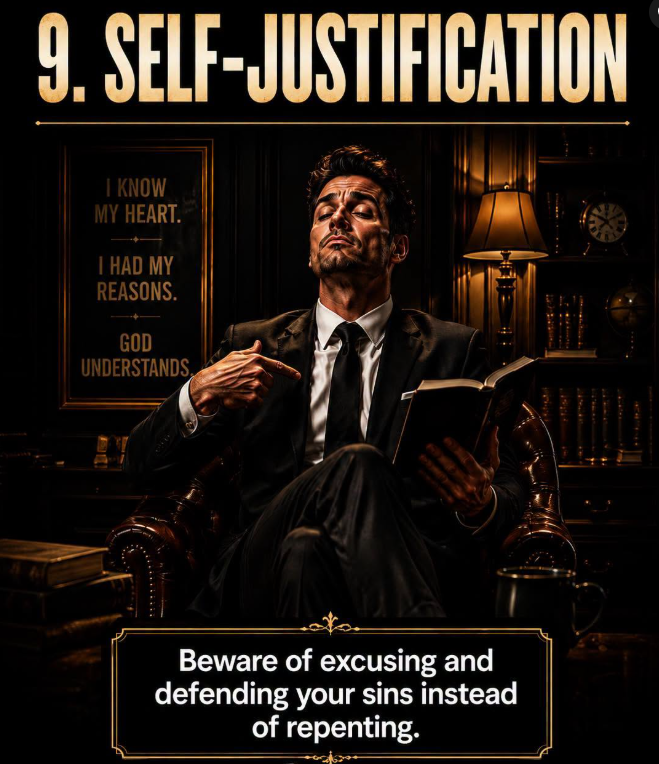
Physical appearance is important to God in that it reveals the glory of His creative abilities. So we should appreciate the beauty God has given us as His most complex and amazing creation. In ways we cannot understand, we reflect His own beauty. God places some value on appearances; if He did not, we would all look the same. It is not a wrong thing for us to notice and appreciate physical appearance as well.
But it should be remembered that God judges our hearts, not our physical appearance (1 Samuel 16:7). It is the inner man that is an even greater creation. We have souls that will never be destroyed, that live on forever in heaven or hell. Our hearts, too, are capable of so many thoughts and feelings, reflections of the complexities of God. We should not fall into the trap of believing that our looks are to be a source of pride or envy. Our true beauty should come from inside, not from the fleshly beauty that the world judges us on. In 1 Peter 3:3-5, Peter tells wives that their “beauty should not come from outward adornment, such as braided hair and the wearing of gold jewelry and fine clothes. Instead, it should be that of your inner self, the unfading beauty of a gentle and quiet spirit, which is of great worth in God’s sight. For this is the way the holy women of the past who put their hope in God used to make themselves beautiful.”
Our outward appearance should not be our focus. If the reason we try to be the perfect weight, wear the best clothes, have facial treatments, etc., is to impress other people, then our physical appearance has become a matter of pride. We should be humbly aware of our appearance rather than acting to conform to the world’s standards. Matthew 23:12 says, “For whoever exalts himself will be humbled, and whoever humbles himself will be exalted.” And James 4:6 says, “God opposes the proud but gives grace to the humble.”
We must watch out for anything that draws us away from God, including the too-often extreme emphasis the world places on appearances. God does not want us to love the world or anything in it (1 John 2:15), and we are not to think as the world does (Romans 12:2). God has shown us His own amazing power and beauty and love in an incredibly diverse creation. We should be humble, not committing idolatry in worshiping the creation rather than the Creator (Colossians 3:5).
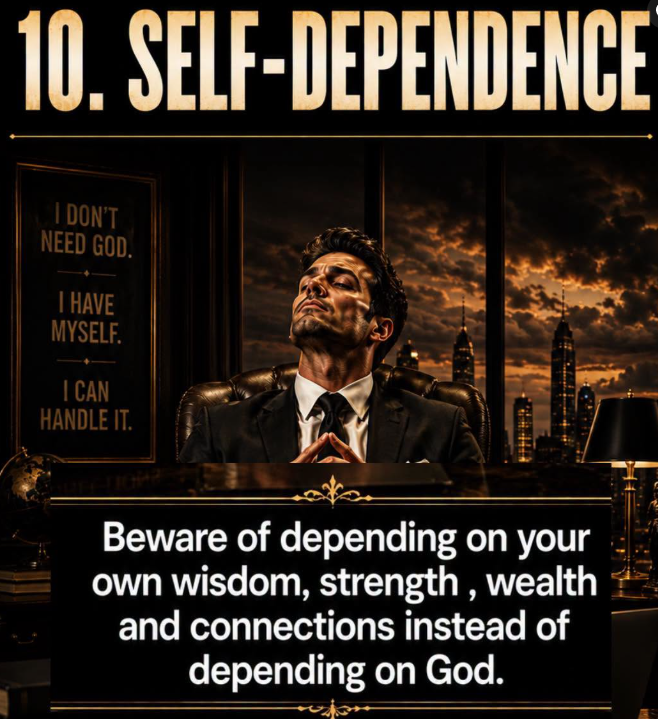
Is EGO Pride ? While the word ego does not appear in the Bible, concepts and principles regarding the ego certainly do. The word ego generally refers to an exaggerated sense of self-importance, which usually results is an excessive preoccupation with “self.” But dying to self, the polar opposite of ego, is the biblical model for Christians. The Bible is filled with admonitions against the self because of man’s inherent desire to be worshiped. In fact, all the various forms of modern idolatry have self at their very core. The dark forces of this age have convinced many that contentment is achieved only by satisfying the urges of the self. And we can trace this all the way back to the Garden of Eden where Eve became stirred by Satan’s lie that she could “be like God” (Genesis 3:5).
The opposite of ego is humility, and both the Old and New Testaments are laden with references to living humbly. In the book of Micah we read, “What does the LORD require of you? To act justly and to love mercy and to walk humbly with your God” (Micah 6:8). King Solomon declared, “Humility and the fear of the LORD bring wealth and honor and life” (Proverbs 22:4). One verse that epitomizes why we are to be humble is Peter’s exhortation in his first epistle: “All of you, clothe yourselves with humility toward one another, because, God opposes the proud but gives grace to the humble” (1 Peter 5:5, emphasis added).
Indeed, Scripture makes it clear that God hates pride and arrogance (Proverbs 8:13). In fact, it was pride that turned Lucifer into Satan. Isaiah 14:13-14 describes Satan’s astounding focus on self: “I will ascend…I will raise…I will sit… I will ascend…I will make myself like the Most High.” This is a perfect example of pride going before destruction (Proverbs 16:18), for in the next verse in Isaiah we see where Satan’s pride got him: “But you are brought down to the grave, to the depths of the pit” (v.15). Christ reiterated the fate of the proud, warning that “whoever exalts himself will be humbled” (Matthew 23:12). Clearly, an inflated ego and its focus on self are not in keeping with the Christian call for humility. Rather, it is the antithesis of what characterizes true Christians—dependence on God and service to others.
A humble heart has no room for ego or pride or arrogance because it recognizes that all we have and all we are comes from God, as Paul reminded the Corinthians: “For who makes you different from anyone else? What do you have that you did not receive? And if you did receive it, why do you boast as though you did not?” (1 Corinthians 4:7). Every gift, every talent, every breath we take—all are from God, as is our most precious gift, salvation (Ephesians 2:8-9). “Where, then, is boasting? It is excluded…by the law of faith” (Romans 3:27).
Jesus Christ is the perfect example of humility (Mark 10:45; Philippians 2:5-8). “Take my yoke upon you and learn from me, for I am gentle and humble in heart, and you will find rest for your souls” (Matthew 11:29). Indeed, Jesus did not come to earth to be served, but to serve, making “himself nothing, taking the very nature of a servant” (Philippians 2:7). We see an expression of Christ’s selfless attitude in the Garden of Gethsemane when He said to His Father in heaven, “Yet not as I will, but as you will” (Matthew 26:39), and then on the following day when He humbly endured the tortures of the cross so that we could be reconciled to our Father in heaven.
Paul is another beautiful example of humility in action. And even though he was perhaps the greatest advocate of Christ there ever was, he still considered himself as the “least of the apostles” and the “worst” of sinners (1 Corinthians 15:9; 1 Timothy 1:15). He always encouraged those who followed Christ to emulate Jesus’ humility, encouraging them, and us, to “do nothing out of selfish ambition or vain conceit, but in humility consider others better than yourselves,” adding that we should not simply look to our own interests, but also to the interests of others (Philippians 2: 3-4; Romans 12:10). That is the essence of humility and the opposite of ego.
Jesus taught us that the greatest commandments were to love God with all our heart, soul, and mind and to love our neighbor as we love our self (Matthew 22:37, 39). When we strive to keep these commandments, we take the focus off ourselves and place it where it should be—on God and on helping others. In the Christian life devoid of ego, the “I will” becomes a “thy will.”

Tea Time Manna
God is our refuge and strength, an ever-present help in trouble.
—Psalm 46:1
Where can we go when it seems as if all our walls have fallen, all the protection we have has vanished, and our hearts feel as if all hope is lost? We can go to the eternal God, who is also our Abba Father (Romans 8:15-17). He preserved ancient Israel miraculously through their most difficult times in their history, protected the Scriptures from hordes of those who tried to eradicate them, and has led his Church victoriously through all her troubles, trials, and triumphs throughout the centuries. He will do the same with us until he brings us home to himself. For “God is our refuge and strength, an ever-present help in trouble.”
Prayer
My Rock, My Hope and My Protector, I thank you for preserving my life. I thank you for hearing my cries for help and healing. I thank you for guiding my feet into ways that have been a blessing. Please, O God, stay close by as I face the stresses and challenges in my life. Through your Holy Spirit, enable me to grow and be an example to others as I pass through life’s storms. In the name of Jesus, my Savior and Lord, I ask for your presence and blessing. Amen and Amen
NEWS MANNA –
A Muslim NATO (Magog) Is Taking Shape-And Israel Is Already In Their cross-hairs
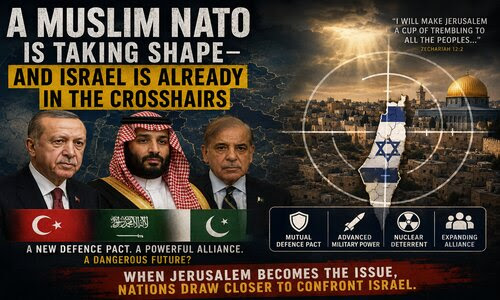
Something potentially historic is taking shape in the Muslim world.
Turkey, Saudi Arabia and Pakistan have signed a new mutual-defense agreement that does far more than promise closer military cooperation. Under the pact, an armed attack against one member will be considered an attack against all three–a collective-defense principle Turkey’s foreign minister has openly compared to NATO’s Article 5.
That alone would deserve attention.
But what happened next should get Israel’s attention.
Within days of the agreement, Pakistan’s defense minister Khawaja Asif called Israel an “illegitimate” state and urged Muslim nations to form a “united military front” against the Jewish state.
Suddenly, what might have been dismissed as another regional security agreement raises a much larger question:
Are we witnessing the early formation of a Muslim NATO–and if it expands, could Israel eventually become one of the threats around which it unites?
Three Nations, Three Different Kinds Of Power
The new alliance brings together an extraordinary combination of capabilities.
Turkey possesses one of the largest militaries in the region and NATO’s second-largest army. It also has a rapidly expanding defense industry producing drones, missiles, armored vehicles and other advanced weapons.
Saudi Arabia brings enormous financial resources, growing military capabilities and something even more important politically: its position as guardian of Islam’s two holiest cities, Mecca and Medina.
Then there is Pakistan.
Pakistan is not simply another Muslim military power.
It is a nuclear weapons state.
That changes the strategic calculation dramatically.
The agreement does not publicly state that Pakistan’s nuclear arsenal would automatically defend Saudi Arabia or Turkey. Officials have emphasized that the pact is defensive and is not aimed at any particular country.
Nevertheless, any alliance containing a nuclear-armed member possesses a deterrent dimension that cannot simply be ignored.
For decades Israel has maintained overwhelming strategic superiority over most of its regional adversaries.
But what happens if an expanding Islamic security structure eventually operates beneath the shadow of Pakistan’s nuclear weapons?
That question alone makes this pact far more significant than another diplomatic ceremony.
And It May Not Stop At Three
Perhaps the most important detail is that the alliance may expand.
Turkish officials have already raised Egypt as a possible future participant, while a permanent ministerial committee and secretariat are being established to oversee the alliance.
Think about what that could eventually mean.
Turkey. Saudi Arabia. Pakistan. Egypt.
Four of the most consequential Sunni Muslim countries would collectively possess enormous manpower, advanced weapons industries, major financial resources, strategic control over critical waterways–and nuclear weapons through Pakistan.
No one should assume such an alliance would automatically become anti-Israel.
Saudi Arabia still has powerful reasons to maintain relations with Washington and has explored normalization with Israel. Turkey remains a NATO member. Egypt has maintained peace with Israel for decades.
But alliances change.
Governments change.
And threats change.
Institutions built today for one crisis can be redirected toward another tomorrow.
That is why Pakistan’s rhetoric matters.
When the defense minister of the alliance’s only nuclear-armed member is already publicly calling for Muslim military unity against Israel, Israelis have every reason to listen carefully.
The First Test May Already Be Here
Remarkably, the alliance may not have to wait long before facing its first practical question.
Only days after the agreement was signed, Iran-aligned Houthi forces claimed an attack on Saudi Arabia’s Jazan oil refinery.
The timing immediately raised questions about the meaning of the new mutual-defense commitment.
Does an attack by a proxy organization qualify as aggression against Saudi Arabia?
Would Pakistan or Turkey provide military assistance?
Would the pact apply only during a direct interstate war?
Those details remain unresolved.
But if Turkey and Pakistan eventually begin participating operationally in Saudi Arabia’s defense, the agreement will have moved from diplomatic language into functioning collective security.
And once that machinery exists, it can potentially be used against other threats as well.
Israel Should Watch The Architecture, Not Just Today’s Intentions
The most important lesson may be this: geopolitical structures frequently outlive the circumstances that created them.
The alliances that existed before World War I were not originally created because everyone expected a continental war. They were mechanisms of mutual security that became enormously consequential once events changed.
The same principle applies here.
Today, Iran and its proxies may be one of the greatest forces driving Sunni Muslim states toward deeper military cooperation.
Tomorrow the focus could be somewhere else.
And one senior Pakistani official has already made clear where he believes Muslim military power should eventually be directed.
Israel.
Turkey has long suggested the Muslim world need to unify around it’s opposition to Israel.
Saudi Arabia has appeared to be more moderate to Israel in recent years but at the heart of it’s Kingdom is still Islamic principles and true Islamists will never make peace with Israel.
When Israel Becomes The Issue That Unites Its Enemies
There is another dimension to this development that students of Bible prophecy should not overlook.
The Bible does describe something broader–and arguably more striking.
Israel and Jerusalem increasingly becoming an international point of confrontation.
Zechariah 12 describes Jerusalem becoming a “cup of trembling” and a “burdensome stone” to the nations.
The remarkable thing about Israel’s position today is how frequently the Jewish state becomes the issue around which countries with profoundly different interests suddenly discover common ground.
Turkey and Saudi Arabia have spent years competing for influence across the Muslim world.
Pakistan sits thousands of miles from Jerusalem and faces enormous security challenges of its own.
Yet almost immediately after these three nations established a new collective-defense structure, Pakistan’s defense minister was publicly calling upon Muslim countries to unite militarily against Israel.
That should get our attention.
This illustrates something the prophets foresaw long ago: Jerusalem possesses an extraordinary ability to draw the attention of nations far beyond its borders.
Why should a country the size of Israel occupy such an enormous place in global politics?
Why should Jerusalem–a relatively small city in geographic terms–continually provoke resolutions, summits, demonstrations, diplomatic confrontations and threats of war across continents?
From a purely geopolitical perspective, it is remarkable.
From a biblical perspective, perhaps it should not surprise us at all.
The significant development is that the military infrastructure through which Muslim nations can coordinate is growing at the same time Israel is increasingly being presented as a common enemy capable of uniting them.
Today their interests overlap in some areas and clash in others.
Tomorrow circumstances may change.
But Scripture warned thousands of years ago that the world’s attention would eventually return again and again to Israel–and especially Jerusalem.
The treaty signed today may therefore matter less for what it currently is than for what it could eventually become.
Why Israel Rejected The Board Of Peace’s Plan For Gaza
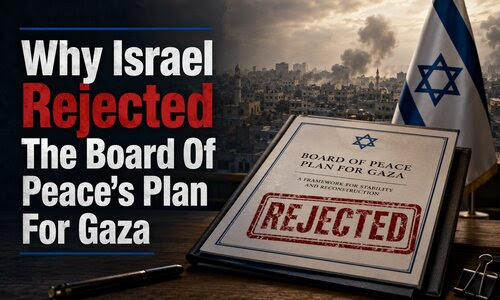
“Withdrawal must move in lockstep with decommissioning,” Board of Peace High Representative Nikolay Mladenov stated on July 31, referring to the release of the body’s 15-point Roadmap for Gaza and, specifically, its proposed timetable for an Israeli pullback from the Strip alongside Hamas’s disarmament.
With those words, Mladenov underscored the widening gap between Jerusalem and the international community over how to proceed with ending the war sparked by the Hamas-led Oct. 7, 2023, massacre. Mladenov acknowledged that “it took months of very difficult negotiations to get here. There were several points when I did not believe we would make it.”
U.S. President Donald Trump unveiled a comprehensive proposal on Sept. 29, 2025, to end the conflict. That 20-point proposal became the foundation for United Nations Security Council Resolution 2803, adopted on Nov. 17, 2025.
Article 9 of Trump’s plan called for the creation of an international transitional body, the “Board of Peace,” chaired by the U.S. president, to oversee the process of ending the war.
A day before the BoP released its roadmap, Trump announced that an agreement had been reached with Hamas on the terror group’s complete disarmament, calling it a “major milestone in the implementation” of his 20-point plan.
Even then, divisions were beginning to emerge. An Israeli source told JNS immediately after the announcement that Jerusalem continued to insist on the full demilitarization of Gaza as a precondition for any broader political process.
“There will be no Israeli withdrawal from the [ceasefire] Yellow Line in the Gaza Strip before Hamas disarms,” the source said, adding that Israel had conveyed its objections to aspects of the proposed roadmap through the appropriate channels.
Israeli Settlements and National Missions Minister Orit Strook told JNS in an exclusive interview on Wednesday that the disagreement centers on the roadmap’s lack of guarantees regarding Hamas’s disarmament, guarantees contained in Trump’s original proposal, and its significant differences from that proposal on issues ranging from Gaza’s governance to the prospect of establishing a Palestinian state.
Strook emphasized that Trump’s original 20-point plan stipulated that all weapons in the Gaza Strip would be removed or destroyed, whereas under the Board of Peace’s new roadmap they would instead remain in Palestinian hands.
“All the missiles, weapons, explosives and tunnels will go to this new entity, which is meant to govern in accordance with existing Palestinian law. It will be far worse than the Palestinian Authority, which does not possess such an arsenal,” she said.
“This roadmap leads to the creation of an entity that supports killing Jews and conducting terror attacks against Israel and is responsible for all the weapons Hamas still holds. It is an existential threat, and it is a shame,” Strook added.
Point 13 of Trump’s 20-point plan outlines his vision for a demilitarized Gaza: “All military, terror, and offensive infrastructure, including tunnels and weapon production facilities, will be destroyed and not rebuilt. There will be a process of demilitarization of Gaza under the supervision of independent monitors, which will include placing weapons permanently beyond use through an agreed process of decommissioning, and supported by an internationally funded buy back and reintegration program all verified by the independent monitors.”
By contrast, Clause 8 of the BoP plan outlines a potentially lengthy process “to decommission and store heavy weapons, military production sites, depots of weapons, and tunnels,” beginning only after the new Palestinian technocratic governing body, the National Committee for the Administration of Gaza, begins operating in Gaza and an International Stabilization Force is deployed.
The “decommissioning” process “shall be administered and implemented by NCAG in a gradual, sequential and time-bound manner” and “shall be linked to an Israeli withdrawal, in phases, from the areas under its control in Gaza,” according to the roadmap.
Some undefined “Palestinian factions” are to take part in the process, at the end of which “only NCAG shall hold, store or control weapons in Gaza,” rather than destroying them or removing them from the Strip, under the 15-point plan.
The BoP also links Gaza’s demilitarization to the creation of “appropriate conditions for a credible pathway towards achieving Palestinian self-determination and statehood.”
JNS reached out to the Board of Peace twice for clarification, but had not received a response by press time.
On Aug. 3, four days after Trump’s announcement and three days after the BoP plan was released, Israeli officialdom broke its near-uniform silence.
Israeli Finance Minister Bezalel Smotrich posted on X that “the proposal published by the Board of Peace is not the plan presented to us in the [Security] Cabinet and not what we voted on,” referring to the forum’s recent decision to allow the deployment of the ISF in Gaza.
The published outline “does not guarantee the real demilitarization of the Gaza Strip; it allows for an IDF withdrawal before the demilitarization is complete; applies the P.A.’s antisemitic laws in the Gaza Strip; changes the designation of the multinational force so that it will, in fact, limit IDF activity; does not condition the reconstruction of Gaza on demilitarization; and even restores the idea of a Palestinian state as a political goal,” Smotrich wrote.
“A blueprint that contradicts the war goals and the commitments given to Israel cannot be promoted in Gaza. I will not allow such a plan to erase the tremendous achievements of heroic IDF soldiers, achieved with their blood, body and soul,” he added.
The same day, Israeli President Isaac Herzog made clear that the position on disarmament was virtually uniform across the political spectrum, saying implementation of the BoP plan would depend on “the clear caveat and undertaking that Hamas must be disarmed.”
This, he said, “is clearly the basis of moving forward to the next phase by bringing in the government of technocrats,” referring to the NCAG, directly contradicting the timeline outlined by the BoP.
The comments came hours before BoP chief Mladenov met in Jerusalem with Israeli Prime Minister Benjamin Netanyahu.
Following the encounter, the BoP released a statement trumpeting that “Israel and the Board of Peace share a common understanding of the ultimate objectives.
“The goal is clear and is not in question: the complete decommissioning of weapons in the Strip and the transition away from rule by the gun to civilian governance,” it added. “Contrary to inaccurate reports, we note that the withdrawal of the IDF beyond the Yellow Line will take place only once decommissioning is complete, as Hamas committed to the mediators. This applies to light weapons, heavy weapons and the tunnels alike.”
While the statement suggested the sides were moving somewhat closer together, Mladenov released his own statement acknowledging that “This is the start of the hard phase and I have never pretended otherwise. Not much of what we do now is dramatic. It is slow, grinding and technical work.”
The next day, Aug. 4, Netanyahu broke his week-long silence on the matter in a video posted to Facebook.
“I am standing firm on our security interests–we will not withdraw from our current lines until Hamas is completely disarmed,” he said, adding that IDF soldiers had been instructed “to do everything necessary to defend themselves, to defend our territory, to defend our citizens.”
The next day, Netanyahu took aim at another issue in the BoP plan, making clear that Jerusalem would not agree to the establishment of a Palestinian state. He made the remarks at a ceremony in Jerusalem marking the reinterment of the grandparents of Theodor Herzl, the founder of modern Zionism.
“We will not establish a Palestinian terror state here that we know is aimed at destroying the Jewish nation-state,” the prime minister said. “We understand that they want to destroy us because we promote the values of progress, democracy and freedom, which are hated by the barbarians who seek our souls.”
A senior source told JNS on Thursday that the Cabinet never voted on Trump’s original plan precisely because of widespread opposition to Palestinian statehood.
Netanyahu “accepted the 20-point plan in his personal statement alongside President [Trump],” the senior source said. “There is no official decision by the Israeli government or the Security Cabinet that adopted it. Because of opposition to the clause on a path to a Palestinian state, we did not agree to such an official Israeli decision,” he said.
Nevertheless, the mention of Palestinian statehood in Trump’s plan was considerably more palatable to Jerusalem, appearing only once, in the 19th clause, and framed as a potentiality rather than a fait accompli.
“While Gaza redevelopment advances and when the PA reform program is faithfully carried out, the conditions may finally be in place for a credible pathway to Palestinian self-determination and statehood, which we recognize as the aspiration of the Palestinian people,” it reads.
By contrast, the first point of the BoP’s plan explicitly identifies as an end goal “facilitat[ing] launching a credible political path that achieves self-determination and Statehood.”
Sources also pointed out to JNS that key commitments to Israel contained in Trump’s 20-point plan do not appear in the Board of Peace’s proposal.
For example, Point 1 of Trump’s outline states that “Gaza will be a deradicalized terror-free zone that does not pose a threat to its neighbors,” while Point 14 offers a guarantee “to ensure that Hamas, and the factions, comply with their obligations and that New Gaza poses no threat to its neighbors or its people.”
The word “terrorism” does not appear in the BoP plan, which instead repeatedly refers to “militias” and “factions.”
For her part,Strook repeatedly emphasized the BoP document’s references to “Palestinian law,” a term that does not appear anywhere in Trump’s proposal. In her view, this effectively means the NCAG will be a shadow Palestinian Authority, whose legal system she described as the most antisemitic one since Nazi Germany.
“Palestinian law determines that the killing of Jews is not an offense at all. More than that, whoever kills a Jew or an Israeli gets a financial reward. It encourages terror,” she told JNS.
“Despite that, the Board of Peace is now creating an entity that, from the moment it starts governing, will abide by this same law. It’s shocking, and no moral person can agree to this,” she said.
The term appears in Point 6 of the roadmap, which states that “NCAG shall operate in accordance with Palestinian laws, relevant international standards and the principles of good governance.” It is repeated in Points 7 and 9. The latter, concerning armaments, states that “Personal weapons in Gaza shall be subject to the regulations of relevant Palestinian laws.” Point 11 further states that “A Social Peace Agreement shall be signed in accordance with Palestinian norms and laws.”
Netanyahu has reiterated time and again his determined opposition to the Palestinian Authority taking over the Gaza Strip.
“I will not allow us to replace Hamastan with Fatahstan, to replace Khan Yunis with Jenin,” Netanyahu said in December 2023, referring to the southern Gaza city, which was a focal point of Hamas terrorism during the Oct. 7 massacre and ensuing war, and the Palestinian city in northern Samaria, which is also a jihadist hotbed.
“I will not allow the State of Israel to repeat the fateful mistake of Oslo, which brought to the heart of our country and to Gaza the most extreme elements in the Arab world, which are committed to the destruction of the State of Israel and who educate their children to this end,” he added at the time.
Strook also noted a difference between Trump’s 20-point plan and the roadmap with regard to the role of Hamas members in Gaza’s post-war administration.
Point 6 of Trump’s 20-point plan states that “Hamas members who commit to peaceful co-existence and to decommission their weapons will be given amnesty” and that “members of Hamas who wish to leave Gaza will be provided safe passage to receiving countries.” Point 13 further stipulates that “Hamas and other factions agree to not have any role in the governance of Gaza, directly, indirectly, or in any form.”
However, Point 7 of the roadmap states that “all police personnel shall undergo a comprehensive vetting. Those who do not meet the required standards of vetting shall be offered alternative civilian roles consistent with Palestinian law. None of those shall be deprived of their financial rights, particularly due to political affiliation.”
The dispute over the roadmap came into sharper focus during Thursday’s Security Cabinet meeting in Jerusalem, where IDF Military Intelligence Research Division chief Brig. Gen. Ofir Mizrahi Rosen warned of a Hamas deception.
“Hamas agreed to the 15-point document, but it has not abandoned its vision of destroying Israel,” he was quoted by Israeli media as saying. “There is a clear Hamas effort to kick the ball back to us.”
Shin Bet Director David Zini warned in turn: “The agreement by Hamas is aimed at buying time and ensuring we do not return to operating in Gaza before [Israel’s Oct. 27] elections. It is a strategic ambush.”
Netanyahu also reportedly reiterated the gap between the Trump plan and the BoP document, saying, “We have understandings from November 2025 with the U.S. that contradict this document–the roadmap. We have submitted amendments.”
Israeli National Security Minister Itamar Ben-Gvir told JNS on Sunday that he welcomed growing opposition to the BoP plan, with the immediate focus being on whether to implement a previous Security Cabinet decision allowing the International Stabilization Force to enter the Strip.
Finance Minister Smotrich changed his position during Thursday night’s Security Cabinet meeting and is now opposing it.
Sources told JNS that the forum’s decision several weeks ago granted the ISF immunity, paving the way for the force to begin operating. However, the government secretary clarified on Thursday that the formal agreement has not yet been signed.
The same senior officials told JNS that the U.S. administration is pressing for the deployment of the ISF as part of a broader move that would also include IDF withdrawals from existing positions, and a cessation of targeted attacks on Hamas terrorists.
“Congratulations to Minister Smotrich, who withdrew his support for the introduction of the International Stabilization Force for Gaza and joins me in firmly opposing this dangerous step,” Ben-Gvir told JNS.
“It was clear from the beginning that no international force would do the job for us in Gaza–only the State of Israel can destroy Hamas,” he added.
Later on Sunday, Netanyahu closed the circle, leaving no doubt on where Israel stands.
“Israel rejects the [Board of Peace’s] 15-point document. The IDF will not carry out any withdrawal until Hamas is disarmed. And when I say Hamas must be disarmed, I mean the heavy weapons, the less heavy weapons, all weapons. We are talking about genuine disarmament, not a fictitious one,” the prime minister said.
Netanyahu noted that Jerusalem is currently discussing the matter with the Americans, adding: “They have ideas, some of which are acceptable to us and some of which are unacceptable.”
“The existence of Israel and the security of all Israeli citizens are nonnegotiable. We stand firm on these interests. We don’t just talk about this in advertising offices; we actually do it on the ground,” Netanyahu continued. “We have proven this all along–when we entered Rafah [in southern Gaza] and secured the Philadelphia Corridor, when we entered Lebanon and eliminated [terror chief Hassan] Nasrallah and the rocket depot there, and when we attacked Iran twice.
“Contrary to all those who preach to us, we do what needs to be done for Israel’s security, and we can and know how to stand our ground–even against our best friends when necessary.”

TruLight TV & Kingdom Kidz TV : Playing a Part in God’s Story!
Parker and Rose are on the case to solve an incredible mystery! In the fourth episode of “Mystery Manor,” Parker and Rose are being sabotaged! But by who? And how will they be able to tell real clues from fake clues? Tune in to find out! Meanwhile, on Konnect HQ – It would be impossible to put on a play that covers every single story in the Bible, right? Not according to Mike. In fact, he’s convinced there’s no better way to play a part in God’s story. This and some stunning gospel kids’ songs Enjoy.
Today on TruLight Radio XM
TruLight Radio XM 24/7
Program
GMT / UTC +2
Monday To Fridays
00:15 Words to Live By Testimonies
01.15 Science Scripture and Salvation
02.15 Ground Works
04.00 Gospel Concert of the Day
05.00 The Daren Streblow Comedy Show
5:55 It is Today devotional
6:00 Gaither Homecoming Morning Show
7:15 Discover the Word
8.15 Destined for Victory
8:55 Science Scripture and Salvation
9:00 Holy Spirit Hour – Normally Sermons
10:15 Hope of the Heart
11:15 Unshackled
11.45 Words to Live By
12:15 Truth for Life
13:15 Living on the Edge with Chip Ingram
14:15 Focus on the Family
15:00 Kids Hour
16:00 In Touch with Dr. Charles Stanley
16:30 Groundwork
17:15 Live in the Light
18:15 Renewing your Mind
19:00 Gaither Homecoming Show
20:15 Growing Hope
21:15 Adventures in Odyssey Radio Drama
21:45 Bible Reading
22:15 Night-sounds
23.00 Good Old Country Gospel / Rhema Gospel Express
VISIT THE WEBSITE
TruLight Ministry News – EXTRA MANNA
TruLight Ministries orders from God since 2012 . Teach Them , Comfort Them and Warn Them!
Healing Truths.
End Time Articles.
Share this Feeding of Manna with your Friends and Family. just click on the Social Media icon and share This Manna with your Friends and Family. just click on the Social Media icon and share !