Hosted by TruLight Ministries International – The Place of Truth
SELECT YOUR READING LANGUAGE – BOTTOM LEFT = YOUR DAILY MANNA NOW AVAILABLE IN 103 LANGUAGES
@ TruLight Daily Manna is not Just a Bible Verse with a Small Prayer . NO ::: WE SERVE DAILY Manna for the ENTIRE Day . Breakfast , Lunch , Dinner , Plus tea Times and even Entertainment Manna . Plus News Manna and More , This Daily Manna will keep you Spiritually full for the full 48 Hours and even More to Share with your Friends and Family !!!
Walk in the Spirit and Power !!!
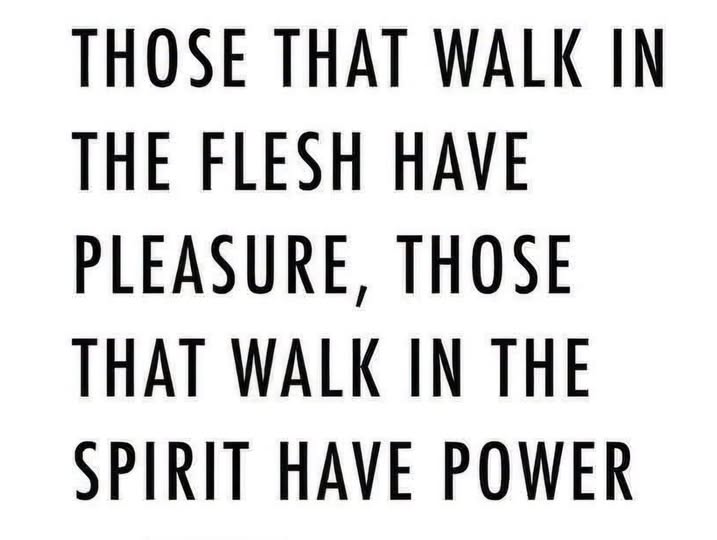
Spirit Filled Believers have the indwelling Spirit of Christ, the Comforter who proceeds from the Father (John 15:26). The Holy Spirit assists believers in prayer (Jude 1:20) and “intercedes for God’s people in accordance with the will of God” (Romans 8:27). He also leads the believer into righteousness (Galatians 5:16–18) and produces His fruit in those yielded to Him (Galatians 5:22–23). Believers are to submit to the will of God and walk in the Spirit.
A “walk” in the Bible is often a metaphor for practical daily living. The Christian life is a journey, and we are to walk it—we are to make consistent forward progress. The biblical norm for all believers is that they walk in the Spirit: “If we live in the Spirit, let us also walk in the Spirit” (Galatians 5:25, KJV; cf. Romans 8:14). In other words, the Spirit gave us life in the new birth (John 3:6), and we must continue to live, day by day, in the Spirit.
To walk in the Spirit means that we yield to His control, we follow His lead, and we allow Him to exert His influence over us. To walk in the Spirit is the opposite of resisting Him or grieving Him (Ephesians 4:30).
Galatians 5 examines the work of the Holy Spirit in the believer. The context is freedom from the Law of Moses (Galatians 5:1). Those who walk in the Spirit “eagerly await by faith the righteousness for which we hope” (verse 5) and are free from the Law (verse 18). Also, those who walk in the Spirit “will not gratify the desires of the flesh” (verse 16). The flesh—our fallen nature under the power of sin—is in direct conflict with the Spirit (verse 17). When the flesh is in charge, the results are obvious (verses 19–21). But when the Spirit is in control, He produces godly qualities within us, apart from the strictures of the Law (verses 22–23). Believers “have crucified the flesh with its passions and desires” (verse 24), and now we walk in the Spirit (verse 25).
Those who walk in the Spirit are united with Him and are the bearers of the fruit the Spirit produces. Thus, those who walk in the Spirit walk in love—they live in love for God and for their fellow man. Those who walk in the Spirit walk in joy—they exhibit gladness in what God has done, is doing, and will do. Those who walk in the Spirit walk in peace—their lives are not defined by worry or anxiety (Philippians 4:6). Those who walk in the Spirit walk in patience—they are known for having a “long fuse” and do not lose their temper. Those who walk in the Spirit walk in kindness—they show tender concern for the needs of others. Those who walk in the Spirit walk in goodness—their actions reflect virtue and holiness. Those who walk in the Spirit walk in faithfulness—they are steadfast in their trust of God and His Word. Those who walk in the Spirit walk in gentleness—their lives are characterized by humility, grace, and thankfulness to God. Those who walk in the Spirit walk in self-control—they display moderation, constraint, and the ability to say “no” to the flesh.
Those who walk in the Spirit rely on the Holy Spirit to guide them in thought, word, and deed (Romans 6:11–14). They show forth daily, moment-by-moment holiness, just as Jesus did when, “full of the Holy Spirit, [He] left the Jordan and was led by the Spirit into the wilderness” to be tempted (Luke 4:1).
To walk in the Spirit is to be filled with the Spirit, and some results of the Spirit’s filling are thankfulness, singing, and joy (Ephesians 5:18–20; Colossians 3:16). Those who walk in the Spirit follow the Spirit’s lead. They “let the word of Christ dwell in [them] richly” (Colossians 3:16, ESV), and the Spirit uses the Word of God “for teaching, rebuking, correcting and training in righteousness” (2 Timothy 3:16). Their whole way of life is lived according to the rule of the gospel, as the Spirit moves them toward obedience. When we walk in the Spirit, we find that the sinful appetites of the flesh have no more dominion over us.
Galatians 5:25 is part of a broader set of instructions that address Christian living. The verse states, “Since we live by the Spirit, let us keep in step with the Spirit.” Some translations express this as “follow the Spirit’s leading” (NLT).
The concept of “keeping in step” brings to mind a formal dance, where the man often initiates, and the woman follows. Both dancers excel when they move in synchrony, meaning that the woman keeps in step with the man. Considering that the church is Christ’s bride, this analogy seems fitting to illustrate what it means to keep in step with the Spirit.
The Spirit initiates the “dance” by convicting sinners of their need for salvation through the gospel witness (John 16:8–11, 13; Acts 2:37). He also regenerates our spirit in an act that Jesus calls being “born again” (John 3:5–6; Titus 3:5; 1 Peter 1:13). We respond to the Spirit’s conviction by having faith in the Person and sacrificial work of Christ (John 3:16; Romans 3:22–24; Galatians 2:16). The “dance” is set in motion as we begin to live by the Spirit.
Although Paul’s instruction may sound abstract, it has practical implications for our daily lives. How do we keep in step with the Spirit?
- Follow the Spirit’s desires. In Galatians 5:17, Paul explains that “the sinful nature wants to do evil, which is just the opposite of what the Spirit wants. And the Spirit gives us desires that are the opposite of what the sinful nature desires. These two forces are constantly fighting each other, so you are not free to carry out your good intentions” (NLT).
As Christians, we experience a battle between competing desires. Paul himself acknowledges the struggle he had in his personal life in Romans 7:19–25.
One way to keep in step with the Spirit is to yield to the godly desires that manifest in us. Philippians 2:13 asserts that “God is working in you, giving you the desire and the power to do what pleases him” (NLT). This is a comforting truth, because it means we’re not left to rely solely on our own strength. When we feel the desire to do something godly, we should obey it. We should also be sensitive to the conviction of the Spirit when we sin.
- Dwell in the Scriptures. To return to the dance analogy, imagine if the woman doesn’t know the dance steps. She would be unable to keep in step. Similarly, how can we keep in step with the Spirit when we are unfamiliar with God’s principles? It would be impossible. Only through Scripture can we understand the godly “steps” to take.
The Spirit does not introduce any new teachings but rather reminds us of what is already contained in the Bible (John 14:26; 1 Corinthians 2:10–12). Scripture also renews our minds, transforming the way we think (Romans 12:2; Ephesians 4:23–24). Furthermore, immersing ourselves in Scripture reduces the influence of sin over us. We need to engage with the Word of God on a daily basis.
- Examine the fruit. Paul contrasts the outcomes of yielding to our sinful nature with the fruit that results from obeying the Spirit:
The acts of the flesh are obvious: sexual immorality, impurity and debauchery; idolatry and witchcraft; hatred, discord, jealousy, fits of rage, selfish ambition, dissensions, factions and envy; drunkenness, orgies, and the like. I warn you, as I did before, that those who live like this will not inherit the kingdom of God. But the fruit of the Spirit is love, joy, peace, forbearance, kindness, goodness, faithfulness, gentleness and self-control. Against such things there is no law (Galatians 5:19–23).
The fruit of the Spirit are godly characteristics that are produced in our lives as we follow the Spirit and yield to His desires. Simply put, the Spirit influences us to want to obey God’s principles in specific situations, and the more we choose to obey, the more these godly traits manifest in our lives.
- Prioritize love. In Galatians 5:13, Paul emphasizes that, although we are free from the requirements of the law, this freedom should not be used to satisfy our sinful nature. Instead, we are called to “serve one another humbly in love.” There is a connection between keeping in step with the Spirit and serving others in love.
Biblical love entails the decision to treat others in a way that pleases God. We search the Scriptures to learn how He wants us to relate to both fellow Christians and unbelievers, and then we obey. Love also influences how we view people, including those who are difficult. Love is the greatest gift of all, and we are to prioritize it (1 Corinthians 13:13; 14:1).
- Depend on God. We must never make the mistake of thinking that we can follow the Spirit’s lead on our own. It requires a conscious choice on our part to surrender to Him, but the power does not come from us. We need to acknowledge our daily need for God and maintain fellowship with Him.
A mindset of dependence on God begins with the cross, which reveals our inability to reconcile with God by our own obedience to the law. The cross also demonstrates God’s justice and mercy as He took upon Himself the penalty for our sin in the Person of Jesus. Our hope lies in this truth, and everything we do as Christians must stem from relying on God’s grace.
In Ephesians 5:15–20, the apostle Paul teaches believers how to experience a holy relationship with God—how to live for Him, obey Him, and discover His will as we serve Him. He writes, “So be careful how you live. Don’t live like fools, but like those who are wise. . . . Don’t act thoughtlessly, but understand what the Lord wants you to do. Don’t be drunk with wine, because that will ruin your life. Instead, be filled with the Holy Spirit, singing psalms and hymns and spiritual songs among yourselves, and making music to the Lord in your hearts. And give thanks for everything to God the Father in the name of our Lord Jesus Christ” (NLT).
The pagan people of Ephesus worshiped their god in drunken orgies: “They believed that to commune with their god and to be led by him, they had to be drunk. In this drunken state, they could determine the will of their god and determine how best to serve and obey him” (Anders, M., Galatians–Colossians Holman New Testament Commentary, vol. 8, Broadman & Holman Publishers, 1999, p. 172). By contrast, Paul commanded believers to be filled with the Holy Spirit. We are filled with the Holy Spirit when we cautiously consider our actions and yield ourselves to the Spirit’s power, allowing Him to guide, influence, and govern our behavior. We carefully align our daily choices and decisions with the wisdom and truth Scripture teaches.
Being filled with the Holy Spirit in the context of Paul’s teaching in Ephesians 5:18 differs from the indwelling of the Holy Spirit at salvation (see John 14:16–17). Those who believe in Jesus Christ and accept His gift of salvation receive the life-giving, eternal “Living Water” of the Holy Spirit (John 7:37–39; see also 1 Corinthians 12:13; 2 Corinthians 1:22; Galatians 3:14; Ephesians 1:13). Everyone who belongs to Jesus Christ has the Spirit of God living in him or her (Romans 8:9). Nevertheless, we can hinder or stifle the work of the Spirit in our lives (1 Thessalonians 5:19) and even “grieve the Holy Spirit” (Ephesians 4:30).
Sin and rebellion against God’s will hinder us from being filled with the Holy Spirit. When we give in to sinful temptations and worldly desires, when we lose control and do what we know is wrong, living as we did before accepting Christ’s salvation, we prevent God’s Spirit from guiding, influencing, and governing our behavior. The Holy Spirit is grieved and quenched because He is not allowed to reveal Himself in our lives as He wants to, with expressions or “fruits” of “love, joy, peace, forbearance, kindness, goodness, faithfulness, gentleness and self-control” (Galatians 5:22–23). When we sin, we should confess our transgressions to God as soon as possible (1 John 1:9) and renew our commitment to being filled with the Spirit.
Jesus was filled with the guiding influence of the Holy Spirit (Matthew 4:1; Luke 4:18; 10:21). So was John the Baptist (Luke 1:15), his mother Elizabeth (Luke 1:41), and his father Zechariah (Luke 1:67). Old Testament saints like Bezalel (Exodus 31:3; 35:30), Joshua (Deuteronomy 34:9), Samson (Judges 13:25; 15:14), and Micah (Micah 3:8) were filled with the Holy Spirit. The believers at Pentecost were “filled with the Holy Spirit and began to speak in other tongues as the Spirit enabled them” (Acts 2:4). Peter (Acts 4:8), Paul (Acts 13:9), and “the disciples were filled with joy and with the Holy Spirit” (Acts 13:52). In contrast, Ananias allowed himself to be filled with Satan (Acts 5:3).
When we are filled with the Holy Spirit, we “walk by the Spirit” (Galatians 5:16) and are “led by the Spirit” (Galatians 5:18), “live by the Spirit,” and “keep in step with the Spirit” (Galatians 5:25). According to the apostle Paul, being filled with the Holy Spirit makes the difference between life and death. When we belong to Jesus, “the power of the life-giving Spirit” frees us “from the power of sin that leads to death” (Romans 8:2, NLT). “The mind governed by the flesh is death, but the mind governed by the Spirit is life and peace” (Romans 8:6). Instead of living in bondage to sin and fear of death, we live as God’s adopted children (Romans 8:14–15).
Spirit-filled believers trade in “fear and timidity” for “power, love, and self-control” (2 Timothy 1:7). They sing “psalms and hymns and spiritual songs . . . and [make] music to the Lord in [their] hearts. And give thanks for everything to God the Father in the name of our Lord Jesus Christ” (Ephesians 5:19–21, NLT). A heart overflowing with music, joy, and thankfulness to God usually signals a believer who is filled with the Holy Spirit. Finally, Paul described Spirit-filled believers as those who “submit to one another out of reverence for Christ” (Ephesians 5:21, NLT).
We can be filled with the Holy Spirit daily by yielding our will to God in submission and obedience to His Word. There is no formula to follow other than to allow Him to fill us and control every part of our lives—our thoughts, emotions, bodies, and actions. Only as we submit to Him and are filled with the Holy Spirit can we experience a harmonious relationship with God and one another.
Although there is no specific verse in the Bible about “yielding to the Spirit,” the idea is present. Romans 6:13 speaks of being yielded to God, and Romans 6:19 of yielding our bodies as “servants to righteousness unto holiness” (KJV). This is in contrast to yielding to sin and the flesh.
To yield is to give something up or to give way to a demand of some sort. A person yielded to the Spirit will accede to the Spirit’s will and submit to His authority. Scripture mentions walking in the Spirit—following His lead and living in cooperation with His plan. Scripture also mentions being filled with the Spirit—being fully surrendered to Him and functioning in His power and freedom. Both walking in and being filled with the Spirit necessitates yielding to His control.
Yielding to the Spirit finds its opposite in grieving Him (Ephesians 4:30), quenching Him (1 Thessalonians 5:19), or resisting Him (Acts 7:51). Those who are yielded to the Holy Spirit will not be doing that which offends Him, they will not dampen His influence in their hearts, and they will not oppose His will.
Some good examples of believers yielding to the Holy Spirit are found in the book of Acts. The believers gathered in a house in Jerusalem on the Day of Pentecost were there in obedience to the risen Lord’s command to “stay in the city until you have been clothed with power from on high” (Luke 24:49). That power came in the Person of the Holy Spirit in Acts 2:4, when “all of them were filled with the Holy Spirit and began to speak in other tongues a as the Spirit enabled them.” These disciples, yielded to the Spirit, proclaimed the gospel to the multitudes, and the church began.
The first foray into foreign missions began when the church in Syrian Antioch was “worshiping the Lord and fasting, [and] the Holy Spirit said, ‘Set apart for me Barnabas and Saul for the work to which I have called them’” (Acts 13:2). Yielding to the Spirit, the church “fasted and prayed, . . . placed their hands on them and sent them off” (Acts 13:3).
On the second missionary journey, Paul and his companions, Silas and Timothy, were traveling through Asia Minor preaching the gospel. But then the Spirit began to redirect them: “Paul and his companions traveled throughout the region of Phrygia and Galatia, having been kept by the Holy Spirit from preaching the word in the province of Asia. When they came to the border of Mysia, they tried to enter Bithynia, but the Spirit of Jesus would not allow them to. So they passed by Mysia and went down to Troas” (Acts 16:6–8). That night in Troas, Paul had a vision that guided the missionaries to Macedonia. The gospel was brought to Europe because Paul and his companions were yielded to the Spirit.
The Holy Spirit would have us “give thanks in all circumstances” (1 Thessalonians 5:18), do good works (1 Peter 2:15), and “be sanctified,” avoiding sexual immorality (1 Thessalonians 4:3). The Spirit desires that we count ourselves dead to sin and alive to God in Christ (Romans 6:11). He desires us to know the love of Christ (Ephesians 3:18–19) and be conformed to the image of Christ (Romans 8:29). He wants those who trust in Christ to be assured that they are God’s own children (Romans 8:16). As we yield to the Spirit, allowing Him full control of our lives, we will see the fruit of the Spirit being produced in us (Galatians 5:22–23), and we can look forward to “a harvest of righteousness and peace” (Hebrews 12:11).

Tea Time Manna
[Jesus] then began to teach [his disciples] that the Son of Man must suffer many things and be rejected by the elders, chief priests and teachers of the law, and that he must be killed and after three days rise again.
—Mark 8:31
Knowing Jesus is God’s Messiah is one thing. Following Jesus as our Lord is quite another. Getting our minds, hearts, and lives to line up with Jesus is always a challenge. Once Jesus’ disciples confessed him as the Christ, he knew he had to teach them the real road to glory. Each of the Gospels reminds us that this road led to the cross of agony before it led to the crown of glory. The early church captured it in a song that reminded them that they, too, must walk that same road of the cross as their Savior and Lord walked (see Philippians 2:5-11). We are heaven-bound people, but we can be sure that we will encounter potholes and bumps along the road and face some steep hills to climb as Satan tries to derail and defeat us. Our Savior, however, has already walked this road triumphantly. He is our great reminder that the path of the cross also leads us to share in our Lord’s glory!
Prayer
Dear Father, I know several believers who are struggling to follow Jesus faithfully. I ask that you give them strength and courage to endure. Please use me to encourage them and to help them through this dark time in their lives. May my life and my words point them to Jesus. I want to specifically mention several people by name, people who are struggling… [Insert the names you want to mention.] and ask you to bless them. In Jesus’ name, I pray. Amen and Amen

NEWS MANNA –
Iran’s regime: ‘The only solution is to build a nuclear bomb and fire it’
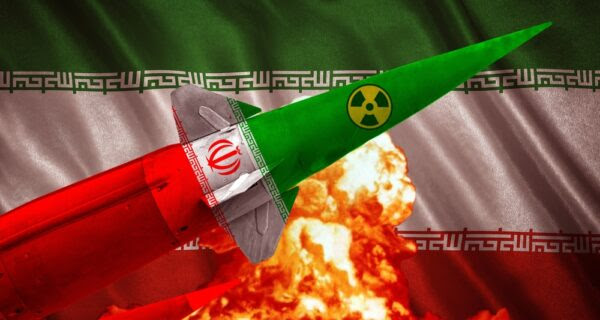
The West should not have to wait for Iran to acquire a nuclear weapon—when it would be impossible to stop, which is why the regime wants one—before taking Iran’s threats seriously.
For anyone who has ever harbored doubts—and for those who still do—that Iran’s regime stands against humanity, peace, and the basic norms of civilization, the latest remarks from hard-line Iranian cleric Mohammad Bagher Kharrazi, who is closely tied to the current Supreme Leader, should be impossible to ignore.
“The only way to save the country… is building an atomic bomb and firing it,” Kharrazi recently declared, “no other way is left for us…. We should create a tsunami whose waves hit the American coasts.”
In the ideology of Iran’s ruling establishment, nuclear weapons are still openly contemplated not just as a deterrent but as instruments of mass destruction.
If an extremist regime acquires a nuclear weapon, the question is, what happens afterwards?
Iran’s primary target, of course, remains Israel. Iranian leaders and their proxies have long framed the Jewish state’s destruction as a religious and strategic mission, if not obligation.
Israel’s compact size, roughly the same as New Jersey (22,000 sq. km.), means that even a single nuclear weapon would cause catastrophic destruction.
Moreover, nuclear weapons capability—or the materials and know-how—could be easily transferred to proxies such as Hamas, Hezbollah, the Houthis, or others.
These groups have already attacked civilians, shipping, and their neighboring states not even involved in a dispute.
A nuclear-armed Iranian regime, or one that arms its network, also assures a regional arms race—already begun by Saudi Arabia trying to build the infrastructure for uranium enrichment, for “peaceful purposes,” of course—at least until they are not.
US President Donald J. Trump has not treated Iran’s nuclear ambitions as an ordinary diplomatic disagreement.
He has repeated that “Iran Cannot Have a Nuclear Weapon.” A regime whose voices openly discuss building and “firing” nuclear weapons, with scenarios of tsunamis against America, cannot be trusted with such capability.
This is the language of ideological fanaticism from a theocracy that has spent nearly half a century exporting its revolution, funding terrorism, and crushing dissent at home, complete with the slaughter of “at least 42,000” of its own citizens in just two days, on January 8 and 9, 2026.
The problem is compounded by the fact that Iran’s brutal Islamic Revolutionary Guard Corps (IRGC) regime itself remains firmly in place.
Iran’s new leadership structure has continued to elevate hard-line figures with deep IRGC backgrounds.
Under Supreme Leader Mojtaba Khamenei, key security and military posts have been filled with veteran IRGC hardliners — the old guard of anti-American, anti-Israeli ideologues associated with the era of Qasem Soleimani.
Appointments of men such as Mohsen Rezaei to the Supreme National Security Council and Ahmad Vahidi to lead the IRGC, rather than signaling any pragmatic shift, instead point to the commitment of Iran’s current leaders to outlast Trump’s term of office.
The real question needs to be, “What happens after Trump leaves office?”
Meanwhile, repression inside Iran continues. UN High Commissioner for Human Rights Volker Türk reported that at least 56 people had been executed on national-security charges since March 19, including 27 allegedly involved in the protests earlier this year.
Human rights organizations have also documented expedited trials and death sentences against protesters.
The regime’s character—Islamist, anti-Western, anti-American, and expansionist—has not changed. If Western powers are truly serious, they must work to completely eliminate Iran’s present regime.
Recent developments show the danger of permitting recovery. Iran’s army is claiming that weapons systems damaged in the 2026 war have already been “rebuilt”—either domestically or after having been imported, and with a shift toward offensive capabilities.
Satellite imagery and intelligence assessments reveal rapid reconstruction of missile bases, tunnel entrances, production facilities, and infrastructure—faster than many anticipated. Israeli officials have expressed surprise at the speed of recovery in ballistic missile capabilities.
Leaving these arsenals in place would simply make further military efforts more dangerous both for US bases and allies in the Gulf.
Any rebuilding of Iran’s military infrastructure must be disrupted; leaders driving this belligerency need to be removed from power.
Economic isolation also remains critical, as US Treasury Secretary Scott Bessent has laid out, complete with universally enforced secondary sanctions.
The European Union should close remaining diplomatic and commercial channels that provide legitimacy or revenue.
The West should not have to wait for Iran to acquire a nuclear weapon—when it would be impossible to stop, which is why the regime wants one—before taking Iran’s threats seriously.
The war with the Iranian regime—to contradict those who claim it was a war of choice—is anything but that.
Iran, China, and Russia have been trying to take down Western civilization for decades. Only Trump had the vision and the determination to take on these threats.
For both US and international security, it is obligatory for the world’s leading superpower, the United States of America, to prevent Iran from obtaining nuclear weapons and to protect countless lives.
Iran’s regime must not be allowed to rebuild its military or remain in power. Every available measure needs to be pursued until the Islamic Republic of Iran is totally dismantled. For decades, half-measures have failed.
The alternative is for the West’s nuclear-capable adversaries—whose “only solution” will assuredly put the world at risk—to succeed in their mission.
Rabbi Traces Lost Temple Treasures to a Chamber Under the Vatican
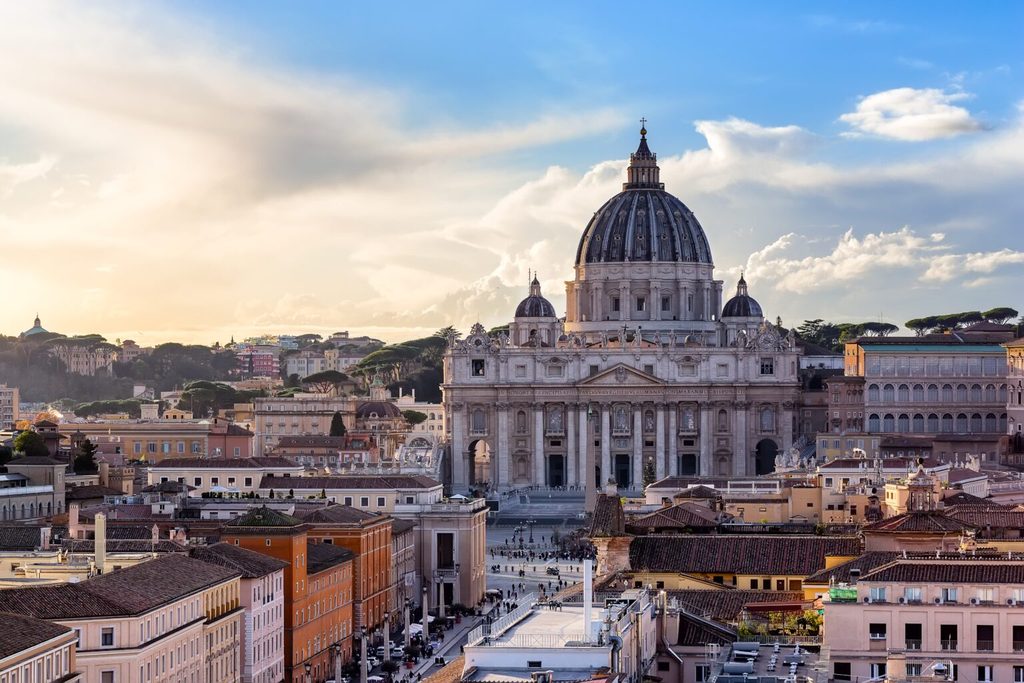
Deep beneath the Vatican, past checkpoint after checkpoint, Rabbi Harry Hirschel Moskoff descended four or five stories below St. Peter’s Basilica. “Every three or four meters there’s a glass door,” he said, describing the tour Vatican officials arranged for him. “It was like James Bond.” He did not find the golden vessels of the Second Temple on that trip. But after more than twenty years of research, Moskoff says he knows exactly where they are, and who is keeping them there.
Moskoff, an investigative archaeologist and author of The Ark Report and The Vatican and Me, has built what he calls the Jewish Heritage Project around a single claim: that the sacred vessels carried out of Jerusalem after the Temple’s destruction in 70 CE survived intact for centuries, hidden inside Vatican City. “I haven’t seen the vessels myself,” he said, “but according to my research, there’s practically no doubt in my mind that the vessels do exist.” Asked directly about the menorah, he did not hedge. “That for sure is there. Don’t forget, I haven’t seen it, but I know people that have gone within ten meters of it, and other people that actually have seen it.”
His certainty rests on a chain of testimonies he has spent two decades collecting. The strongest, he said, involves the late Rabbi David Menashe, a French medical student in Vatican City in the 1960s who became close friends with the son of the Vatican’s governor, later the chief archivist of the Vatican archives. “If you convert to Christianity, I will show you the golden temple vessels that were taken from your forefathers,” the official told him. Menashe went back and forth for two weeks asking his own rabbi for guidance before agreeing to go down and see for himself. “It was wrapped in scarves,” Moskoff said of what Menashe was shown. “In the end he didn’t convert, thank God, but he agreed to go down there because he wanted to see if all this was real.” Moskoff said Menashe gave the full account to Israel’s Mossad and police in 2002, with Shimon Peres serving as president at the time. “So the Israeli government knows this stuff. They have it on file. His testimony.”
Moskoff described a second witness, a Swiss Guard who discovered his own Jewish ancestry and was taken underground after striking a deal with a nun. “He actually ended up seeing the menorah, lit, but it was bright,” Moskoff said. “Immediately afterward he started losing his vision. By the time he actually came out, he could hardly see.” That guard gave his testimony to the former chief rabbi of Rome, Rabbi Elio Toaff, according to Moskoff. A third account, older still, comes from the former chief rabbi of Tripoli, who in the 1930s secured an audience with Vatican officials through Italy’s King Victor Emmanuel III. “He said, ‘Listen, if you don’t mind, I’d like to see the holy temple vessels from Jerusalem,’” Moskoff recounted. The rabbi was taken alone, at eleven at night, and afterward took a vow not to speak of what he saw. “Forty days later, in Tripoli, he passed away,” Moskoff said. “He was a big tzaddik.”
Moskoff pointed to a fourth episode, this one inside Jerusalem itself, at St. Anne’s Church near the Lion’s Gate. After the Six-Day War, an Israeli numismatics professor was sent to assess a collection of Byzantine coins and was locked, alone, inside a room for several hours. “He finds a door, practically hidden. He opens it, goes down the stairs, pitch black,” Moskoff said. “He sees a table, a big table in the middle. He approaches the table and he sees these are small vessels, and he recognizes them as keilim, vessels of the Second Temple.” According to Moskoff, the professor said aloud in Hebrew, “I can’t believe it, these are the temple vessels, and they’re in Jerusalem,” before a monk discovered him and had him removed. “That’s it. Thank you, but no thank you.”
On the location of the Ark of the Covenant itself, Moskoff is careful to separate theory from certainty. “Only Elijah the prophet knows where it is for sure,” he said. “Nobody knows for sure.” But his own research, and the backing of a number of senior rabbinic authorities in Jerusalem, points him to a chamber southwest of the Dome of the Rock rather than beneath it. “It has to be there,” he said, arguing that the Temple service required the Ark and the altar to stand together in the same location. “There’s no way the priestly service could continue without it.” He cited a book published weeks before the interview describing thermal and subsurface mapping of the Temple Mount that, he said, shows the outline of the Temple’s foundation walls shifted to the south and west of the traditional site. He also invoked rabbinic tradition holding that the location of the Holy of Holies has never been built upon by any other nation and never will be.
Moskoff acknowledged that none of it can be independently confirmed, but said the Vatican’s own posture has shifted. “For centuries they denied it,” he said. “Now they neither confirm nor deny it, which I think was a great milestone.” He has submitted a formal proposal asking the Vatican to publicly display Byzantine-era items connected to Jewish history, a project he said received word of papal cooperation before stalling. “The Gaza war set it back a little bit with Pope Francis,” he said, “but I didn’t want to burn the bridge.”
What does the Bible itself say becomes of sacred vessels carried into exile? When the vessels of the First Temple were taken to Babylon, the prophet Jeremiah gave the answer directly: “They shall be carried to Babylon, and there shall they be until the day that I visit them, saith the LORD; then will I bring them up, and restore them to this place” (Jeremiah 27:22). The vessels were not destroyed. They were preserved, waiting on God’s timing to be restored. It is the same claim Moskoff has staked twenty years of his life on, an unbroken thread running from Jerusalem to Rome and back again, waiting for the moment when it can be pulled.
Moskoff believes that moment is close. “I personally believe that we will get them back when the time comes,” he said. “I’m not pressuring them anymore. My project’s still going.” Asked what happens once the vessels are found, he was blunt about what would come next: “I have lawyers that would love to sink their teeth into this. Restitution, repatriation. But I can’t even mention that. I don’t mention it. I know that’s it for me if I say that.” For now, he is content to wait. “God willing,” he said, “as soon as in our days.”

TruLight TV : Words hold a lot of power
You probably remember some of the nicest things people have said to you. However in turn, you probably also remember some of the most hurtful things people said to you. Words hold a lot of power, and the Bible even talks about this too. In this video, you’ll be inspired to encourage those around you and be a highlight of their day. and later on the Enjoy Life program with Dr. Jerry and Lil’ Jan Goff, Today’s guest artist (Archie and Cindy Watkins) – Archie was born on January 6, 1949. Raised in a family with a deep love of gospel music, he and his family members would get together regularly to play musical instruments and sing. This led to friends and family organizing The Inspirations in 1964, when he was only 15 years old. A highly-accomplished athlete at Swain County High School, Archie gave up playing school sports in order to sing full-time. Enjoy the music and message on today show.
Today on TruLight Radio XM
TruLight Radio XM 24/7
Program
GMT / UTC +2
Monday To Fridays
00:15 Words to Live By Testimonies
01.15 Science Scripture and Salvation
02.15 Ground Works
04.00 Gospel Concert of the Day
05.00 The Daren Streblow Comedy Show
5:55 It is Today devotional
6:00 Gaither Homecoming Morning Show
7:15 Discover the Word
8.15 Destined for Victory
8:55 Science Scripture and Salvation
9:00 Holy Spirit Hour – Normally Sermons
10:15 Hope of the Heart
11:15 Unshackled
11.45 Words to Live By
12:15 Truth for Life
13:15 Living on the Edge with Chip Ingram
14:15 Focus on the Family
15:00 Kids Hour
16:00 In Touch with Dr. Charles Stanley
16:30 Groundwork
17:15 Live in the Light
18:15 Renewing your Mind
19:00 Gaither Homecoming Show
20:15 Growing Hope
21:15 Adventures in Odyssey Radio Drama
21:45 Bible Reading
22:15 Night-sounds
23.00 Good Old Country Gospel / Rhema Gospel Express
VISIT THE WEBSITE
TruLight Ministry News – EXTRA MANNA
TruLight Ministries orders from God since 2012 . Teach Them , Comfort Them and Warn Them!
Artist Liners
Healing Truths.
End Time Articles.
Share this Feeding of Manna with your Friends and Family. just click on the Social Media icon and share This Manna with your Friends and Family. just click on the Social Media icon and share !