Hosted by TruLight Ministries International – The Place of Truth
SELECT YOUR READING LANGUAGE – BOTTOM LEFT = YOUR DAILY MANNA NOW AVAILABLE IN 103 LANGUAGES
@ TruLight Daily Manna is not Just a Bible Verse with a Small Prayer . NO ::: WE SERVE DAILY Manna for the ENTIRE Day . Breakfast , Lunch , Dinner , Plus tea Times and even Entertainment Manna . Plus News Manna and More , This Daily Manna will keep you Spiritually full for the full 48 Hours and even More to Share with your Friends and Family !!!
The Cross Changed your Verdict
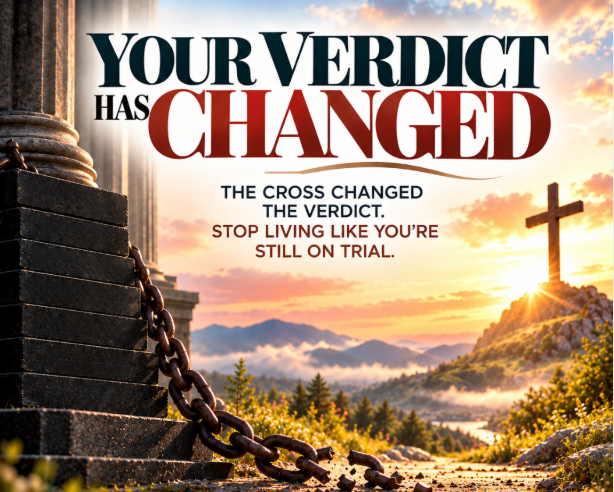
Romans 6:1-2, “What shall we say, then? Shall we go on sinning so that grace may increase? By no means! We died to sin; how can we live in it any longer?” The idea that a person could “trust in Jesus Christ” for salvation and then go on living just as he/she lived before, is absolutely foreign to the Bible. Believers in Christ are new creations (2 Corinthians 5:17). The Holy Spirit changes us from producing the acts of the flesh (Galatians 5:19-21) to producing the fruit of the Spirit (Galatians 5:22-23). The Christian life is a changed life because the Christian is changed.
What differentiates Christianity from every other religion is that Christianity is based on what God has done for us through Jesus Christ—divine accomplishment. Every other world religion is based on what we must do to earn God’s favor and forgiveness—human achievement. Every other religion teaches that we must do certain things and stop doing certain other things in order to earn God’s love and mercy. Christianity, faith in Christ, teaches that we do certain things and stop doing certain things because of what Christ has done for us.
How could anyone, having been delivered from sin’s penalty, eternity in hell, go back to living the same life that had him on the path to hell in the first place? How could anyone, having been cleansed from the defilement of sin, desire to go back to the same cesspool of depravity? How could anyone, knowing what Jesus Christ did on our behalf, go on living as if He were not important? How could anyone, realizing how much Christ suffered for our sins, continue sinning as if those sufferings were meaningless?
Romans 6:11-15 declares, “In the same way, count yourselves dead to sin but alive to God in Christ Jesus. Therefore do not let sin reign in your mortal body so that you obey its evil desires. Do not offer the parts of your body to sin, as instruments of wickedness, but rather offer yourselves to God, as those who have been brought from death to life; and offer the parts of your body to him as instruments of righteousness. For sin shall not be your master, because you are not under law, but under grace. What then? Shall we sin because we are not under law but under grace? By no means!”
For the truly converted, then, continuing to live sinfully is not an option. Because our conversion resulted in a completely new nature, our desire is to no longer live in sin. Yes, we still sin, but instead of wallowing in it as we once did, we now hate it and wish to be delivered from it. The idea of “taking advantage” of Christ’s sacrifice on our behalf by continuing to live sinfully is unthinkable. Christians who have no desire to live for Christ, but instead find themselves living lives indistinguishable from those of unbelievers, should examine whether they have ever genuinely received Christ as Savior. “Examine yourselves to see whether you are in the faith; test yourselves. Do you not realize that Christ Jesus is in you—unless, of course, you fail the test?” (2 Corinthians 13:5).
Since the fall of man, the basis of salvation has always been the death of Christ. No one, either prior to the cross or since the cross, would ever be saved without that one pivotal event in the history of the world. Christ’s death paid the penalty for past sins of Old Testament saints and future sins of New Testament saints.
The requirement for salvation has always been faith. The object of one’s faith for salvation has always been God. The psalmist wrote, “Blessed are all who take refuge in him” (Psalm 2:12). Genesis 15:6 tells us that Abraham believed God and that was enough for God to credit it to him for righteousness (see also Romans 4:3-8). The Old Testament sacrificial system did not take away sin, as Hebrews 10:1-10 clearly teaches. It did, however, point to the day when the Son of God would shed His blood for the sinful human race.
What has changed through the ages is the content of a believer’s faith. God’s requirement of what must be believed is based on the amount of revelation He has given mankind up to that time. This is called progressive revelation. Adam believed the promise God gave in Genesis 3:15 that the Seed of the woman would conquer Satan. Adam believed Him, demonstrated by the name he gave Eve (v. 20) and the Lord indicated His acceptance immediately by covering them with coats of skin (v. 21). At that point that is all Adam knew, but he believed it.
Abraham believed God according to the promises and new revelation God gave him in Genesis 12 and 15. Prior to Moses, no Scripture was written, but mankind was responsible for what God had revealed. Throughout the Old Testament, believers came to salvation because they believed that God would someday take care of their sin problem. Today, we look back, believing that He has already taken care of our sins on the cross (John 3:16; Hebrews 9:28).
What about believers in Christ’s day, prior to the cross and resurrection? What did they believe? Did they understand the full picture of Christ dying on a cross for their sins? Late in His ministry, “Jesus began to explain to his disciples that he must go to Jerusalem and suffer many things at the hands of the elders, chief priests and teachers of the law, and that he must be killed and on the third day be raised to life” (Matthew 16:21-22). What was the reaction of His disciples to this message? “Then Peter took him aside and began to rebuke him. ‘Never, Lord!’ he said. ‘This shall never happen to you!’” Peter and the other disciples did not know the full truth, yet they were saved because they believed that God would take care of their sin problem. They didn’t exactly know how He would accomplish that, any more than Adam, Abraham, Moses, or David knew how, but they believed God.
Today, we have more revelation than the people living before the resurrection of Christ; we know the full picture. “In the past God spoke to our forefathers through the prophets at many times and in various ways, but in these last days he has spoken to us by his Son, whom he appointed heir of all things, and through whom he made the universe” (Hebrews 1:1-2). Our salvation is still based on the death of Christ, our faith is still the requirement for salvation, and the object of our faith is still God. Today, for us, the content of our faith is that Jesus Christ died for our sins, He was buried, and He rose the third day (1 Corinthians 15:3-4).
It is a fairly well-established fact that Jesus Christ was publicly executed in Judea in the 1st Century A.D., under Pontius Pilate, by means of crucifixion, at the behest of the Jewish Sanhedrin. The non-Christian historical accounts of Flavius Josephus, Cornelius Tacitus, Lucian of Samosata, Maimonides and even the Jewish Sanhedrin corroborate the early Christian eyewitness accounts of these important historical aspects of the death of Jesus Christ.
As for His resurrection, there are several lines of evidence which make for a compelling case. The late jurisprudential prodigy and international statesman Sir Lionel Luckhoo (of The Guinness Book of World Records fame for his unprecedented 245 consecutive defense murder trial acquittals) epitomized Christian enthusiasm and confidence in the strength of the case for the resurrection when he wrote, “I have spent more than 42 years as a defense trial lawyer appearing in many parts of the world and am still in active practice. I have been fortunate to secure a number of successes in jury trials and I say unequivocally the evidence for the Resurrection of Jesus Christ is so overwhelming that it compels acceptance by proof which leaves absolutely no room for doubt” (quoted by Ankerberg, J., and Weldon, J., in Ready with an Answer, Harvest House, 1997, p. 106).
The secular community’s response to the same evidence has been predictably apathetic in accordance with their steadfast commitment to methodological naturalism. For those unfamiliar with the term, methodological naturalism is the human endeavor of explaining everything in terms of natural causes and natural causes only. If an alleged historical event defies natural explanation (e.g., a miraculous resurrection), secular scholars generally treat it with overwhelming skepticism, regardless of the evidence, no matter how favorable and compelling it may be.
In our view, such an unwavering allegiance to natural causes regardless of substantive evidence to the contrary is not conducive to an impartial (and therefore adequate) investigation of the evidence. We agree with Dr. Wernher von Braun and numerous others who still believe that forcing a popular philosophical predisposition upon the evidence hinders objectivity. Or in the words of Dr. von Braun, “To be forced to believe only one conclusion … would violate the very objectivity of science itself” (quoted by Seagraves, K., in Jesus Christ Creator, Creation-Science Research Center, 1973, p. 7–8).
Having said that, let us now examine several lines of evidence for Christ’s resurrection.
The First Line of Evidence for Christ’s resurrection
To begin with, we have demonstrably sincere eyewitness testimony. Early Christian apologists cited hundreds of eyewitnesses, some of whom documented their own alleged experiences. Many of these eyewitnesses willfully and resolutely endured prolonged torture and death rather than repudiate their testimony. This fact attests to their sincerity, ruling out deception on their part. According to the historical record (Acts 4:1-17; Pliny’s Letters to Trajan, X.97, etc.) most Christians could end their suffering simply by renouncing the faith. Instead, it seems that most opted to endure the suffering and proclaim Christ’s resurrection unto death.
Granted, while martyrdom is remarkable, it is not necessarily compelling. It does not validate a belief so much as it authenticates a believer (by demonstrating his or her sincerity in a tangible way). What makes the earliest Christian martyrs remarkable is that they knew whether or not what they were professing was true. They either saw Jesus Christ alive-and-well after His death or they did not. This is extraordinary. If it was all just a lie, why would so many perpetuate it given their circumstances? Why would they all knowingly cling to such an unprofitable lie in the face of persecution, imprisonment, torture, and death?
While the September 11, 2001, suicide hijackers undoubtedly believed what they professed (as evidenced by their willingness to die for it), they could not and did not know if it was true. They put their faith in traditions passed down to them over many generations. In contrast, the early Christian martyrs were the first generation. Either they saw what they claimed to see, or they did not.
Among the most illustrious of the professed eyewitnesses were the Apostles. They collectively underwent an undeniable change following the alleged post-resurrection appearances of Christ. Immediately following His crucifixion, they hid in fear for their lives. Following the resurrection they took to the streets, boldly proclaiming the resurrection despite intensifying persecution. What accounts for their sudden and dramatic change? It certainly was not financial gain. The Apostles gave up everything they had to preach the resurrection, including their lives.
The Second Line of Evidence for Christ’s resurrection
A second line of evidence concerns the conversion of certain key skeptics, most notably Paul and James. Paul was of his own admission a violent persecutor of the early Church. After what he described as an encounter with the resurrected Christ, Paul underwent an immediate and drastic change from a vicious persecutor of the Church to one of its most prolific and selfless defenders. Like many early Christians, Paul suffered impoverishment, persecution, beatings, imprisonment, and execution for his steadfast commitment to Christ’s resurrection.
James was skeptical, though not as hostile as Paul. A purported post-resurrection encounter with Christ turned him into an inimitable believer, a leader of the Church in Jerusalem. We still have what scholars generally accept to be one of his letters to the early Church. Like Paul, James willingly suffered and died for his testimony, a fact which attests to the sincerity of his belief (see Acts and Josephus’ Antiquities of the Jews, XX.ix.1).
The Third and Fourth Lines of Evidence for Christ’s resurrection
A third line and fourth line of evidence concern enemy attestation to the empty tomb and the fact that faith in the resurrection took root in Jerusalem. Jesus was publicly executed and buried in Jerusalem. It would have been impossible for faith in His resurrection to take root in Jerusalem while His body was still in the tomb where the Sanhedrin could exhume it, put it on public display, and thereby expose the hoax. Instead, the Sanhedrin accused the disciples of stealing the body, apparently in an effort to explain its disappearance (and therefore an empty tomb). How do we explain the fact of the empty tomb? Here are the three most common explanations:
First, the disciples stole the body. If this were the case, they would have known the resurrection was a hoax. They would not therefore have been so willing to suffer and die for it. (See the first line of evidence concerning demonstrably sincere eyewitness testimony.) All of the professed eyewitnesses would have known that they hadn’t really seen Christ and were therefore lying. With so many conspirators, surely someone would have confessed, if not to end his own suffering then at least to end the suffering of his friends and family. The first generation of Christians were absolutely brutalized, especially following the conflagration in Rome in AD 64 (a fire which Nero allegedly ordered to make room for the expansion of his palace, but which he blamed on the Christians in Rome in an effort to exculpate himself). As the Roman historian Cornelius Tacitus recounted in his Annals of Imperial Rome (published just a generation after the fire):
Nero fastened the guilt and inflicted the most exquisite tortures on a class hated for their abominations, called Christians by the populace. Christus, from whom the name had its origin, suffered the extreme penalty during the reign of Tiberius at the hands of one of our procurators, Pontius Pilatus, and a most mischievous superstition, thus checked for the moment, again broke out not only in Judaea, the first source of the evil, but even in Rome, where all things hideous and shameful from every part of the world find their centre and become popular. Accordingly, an arrest was first made of all who pleaded guilty; then, upon their information, an immense multitude was convicted, not so much of the crime of firing the city, as of hatred against mankind. Mockery of every sort was added to their deaths. Covered with the skins of beasts, they were torn by dogs and perished, or were nailed to crosses, or were doomed to the flames and burnt, to serve as a nightly illumination, when daylight had expired. (Annals, XV:44)
Nero illuminated his garden parties with Christians whom he burnt alive. Surely someone would have confessed the truth under the threat of such terrible pain. The fact is, however, we have no record of any early Christian denouncing the faith to end his suffering. Instead, we have multiple accounts of post-resurrection appearances and hundreds of eyewitnesses willing to suffer and die for it.
If the disciples didn’t steal the body, how else do we explain the empty tomb? Some have suggested that Christ faked His death and later escaped from the tomb. This is patently absurd. According to the eyewitness testimony, Christ was beaten, tortured, lacerated, and stabbed. He suffered internal damage, massive blood loss, asphyxiation, and a spear through His side. There is no good reason to believe that Jesus Christ (or any other man for that matter) could survive such an ordeal, fake His death, sit in a tomb for three days and nights without medical attention, food or water, remove the massive stone which sealed His tomb, escape undetected (without leaving behind a trail of blood), convince hundreds of eyewitnesses that He was resurrected from the death and in good health, and then disappear without a trace. Such a notion is ridiculous.
The Fifth Line of Evidence for Christ’s resurrection
Finally, a fifth line of evidence concerns a peculiarity of the eyewitness testimony. In all of the major resurrection narratives, women are credited as the first and primary eyewitnesses. This would be an odd invention since in both the ancient Jewish and Roman cultures women were severely disesteemed. Their testimony was regarded as insubstantial and dismissible. Given this fact, it is highly unlikely that any perpetrators of a hoax in first century Judea would elect women to be their primary witnesses. Of all the male disciples who claimed to see Jesus resurrected, if they all were lying and the resurrection was a scam, why did they pick the most ill-perceived, distrusted witnesses they could find?
Dr. William Lane Craig explains, “When you understand the role of women in first-century Jewish society, what’s really extraordinary is that this empty tomb story should feature women as the discoverers of the empty tomb in the first place. Women were on a very low rung of the social ladder in first-century Israel. There are old rabbinical sayings that said, ‘Let the words of Law be burned rather than delivered to women’ and ‘blessed is he whose children are male, but woe to him whose children are female.’ Women’s testimony was regarded as so worthless that they weren’t even allowed to serve as legal witnesses in a Jewish court of Law. In light of this, it’s absolutely remarkable that the chief witnesses to the empty tomb are these women…. Any later legendary account would have certainly portrayed male disciples as discovering the tomb—Peter or John, for example. The fact that women are the first witnesses to the empty tomb is most plausibly explained by the reality that—like it or not—they were the discoverers of the empty tomb! This shows that the Gospel writers faithfully recorded what happened, even if it was embarrassing. This bespeaks the historicity of this tradition rather than its legendary status” (Dr. William Lane Craig, quoted by Lee Strobel, The Case For Christ, Zondervan, 1998, p. 293).
In Summary
These lines of evidence: the demonstrable sincerity of the eyewitnesses (and in the apostles’ case, compelling, inexplicable change), the conversion and demonstrable sincerity of key antagonists- and skeptics-turned-martyrs, the fact of the empty tomb, enemy attestation to the empty tomb, the fact that all of this took place in Jerusalem where faith in the resurrection began and thrived, the testimony of the women, the significance of such testimony given the historical context; all of these strongly attest to the historicity of the resurrection. We encourage our readers to thoughtfully consider these evidences. What do they suggest to you? Having pondered them ourselves, we resolutely affirm Sir Lionel’s declaration:
“The evidence for the Resurrection of Jesus Christ is so overwhelming that it compels acceptance by proof which leaves absolutely no room for doubt.”

Tea Time Manna
It is the Lord your God you must follow, and him you must revere. Keep his commands and obey him; serve him and hold fast to him.
—Deuteronomy 13:4
So many people want us to follow their lead, validate their choices, approve of their opinions, and follow their voice. Only God alone has proved himself faithful and loving through the ages, worthy of our devotion as we follow and obey him. In his might, he is to be revered. But rather than seeing reverence only as a “church thing,” Moses reminds us that reverence is also a daily “life thing.” We are to obey and keep God’s commandments. We are to serve him and depend upon him in our daily lives. We are to worship God in the way we live each day. Rather than just silence in the worship assembly, reverence must also be a committed action in our daily lives as we follow the Lord’s guidance and obey his commands, while we serve others to God’s glory!
Prayer
Holy and Righteous Father, please help me take my worship beyond the church building and into my day-to-day life, as I try to live what I sing, practice what I say, and pursue what I pray. In Jesus’ name, I ask you to demonstrate your grace as I serve others to your glory in my day-to-day living. Amen and Amen
Truth Article by Pastor Dirk
The RAPTURE, Where will it take place on Earth?
The Bible says at the 2nd Coming of Jesus Christ and at the Sound of the 7th Trumpet , He Jesus will instruct His Angels to collect The Dead and Alive of His Elect , that died or lives for Christ in one Place , Where will this Be ?
Mat 24:30 ~ 31 And then shall appear the sign of the Son of man in heaven: and then shall all the tribes of the earth mourn, and they shall see the Son of man coming in the clouds of heaven with power and great glory.
And he shall send his angels with a great sound of a trumpet, and they shall gather together his elect from the four winds, from one end of heaven to the other.
1Th 4:13 ~ 17 But I would not have you to be ignorant, brethren, concerning them which are asleep, that ye sorrow not, even as others which have no hope.
For if we believe that Jesus died and rose again, even so them also which sleep in Jesus will God bring with him.
For this we say unto you by the word of the Lord, that we which are alive and remain unto the coming of the Lord shall not prevent them which are asleep.
For the Lord himself shall descend from heaven with a shout, with the voice of the archangel, and with the trump of God: and the dead in Christ shall rise first:
Then we which are alive and remain shall be caught up together with them in the clouds, to meet the Lord in the air: and so shall we ever be with the Lord.
Jesus is going to place His feet on the Mount of olives , facing the Valley of Meggido.
Zec 14:4 And his feet shall stand in that day upon the mount of Olives, which is before Jerusalem on the east, and the mount of Olives shall cleave in the midst thereof toward the east and toward the west, and there shall be a very great valley; and half of the mountain shall remove toward the north, and half of it toward the south.
So they Rapture of the Elect will happen in the Valley of Megiddo at the Battle of Armageddon.
Rev 16:15 ~ 16 Behold, I come as a thief. Blessed is he that watcheth, and keepeth his garments, lest he walk naked, and they see his shame.
And he gathered them together into a place called in the Hebrew tongue Armageddon.
View of the Valley of Megiddo from Muraka
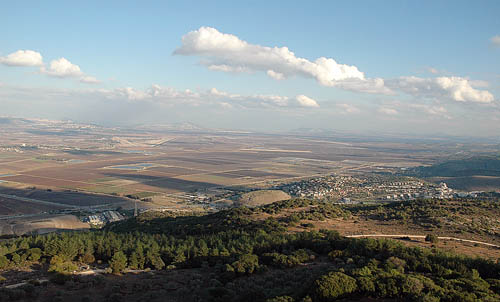
Megiddo and Jezreel Valley, Israel
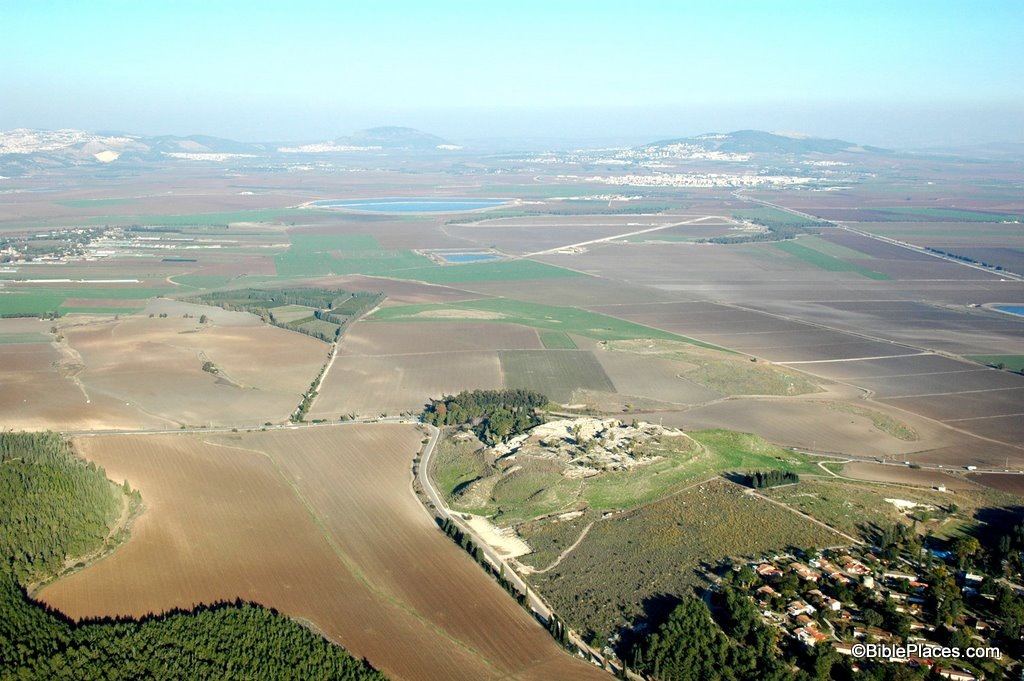
a view of the Valley of Jezreel, also known as the Valley of Megiddo, or Armageddon from the Mount of Olives
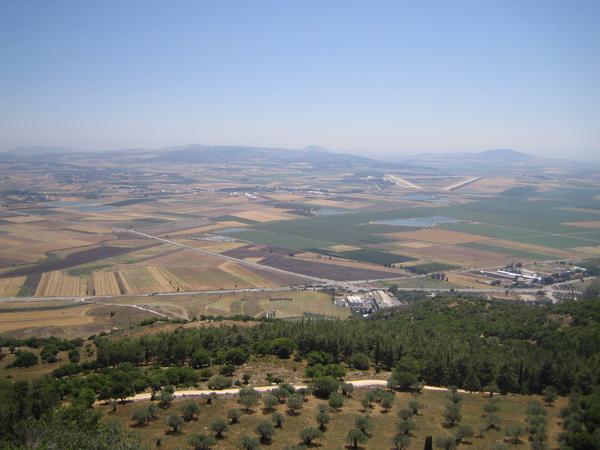
Article by Pastor Dirk – TruLight Ministries International
NEWS MANNA

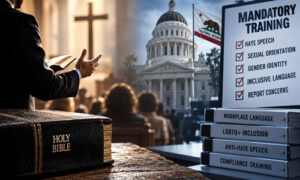
When Calling Sin ‘Sin’ Becomes Hate Speech
For nearly 2,000 years, the Christian message has contained an uncomfortable word: repent.
Jesus used it. The apostles preached it. The Church has carried that message across cultures, continents and centuries.
But what happens when a culture increasingly decides that calling certain behaviors sinful is itself harmful–and government begins requiring employers to train workers to recognize and confront speech it considers hateful?
California may be giving us an early glimpse.
Governor Gavin Newsom recently signed AB 1803, legislation requiring California employers covered by the state’s workplace harassment-training law to incorporate “anti-hate speech” instruction beginning January 1, 2028.
The law requires training that provides guidance on recognizing, reporting and confronting workplace speech that “vilifies, humiliates, or incites hatred” against people because of protected characteristics. Those characteristics include religion, race, sex, sexual orientation, gender identity and gender expression, among others.
The legislation applies through California’s existing harassment-training framework for employers with five or more employees.
On the surface, the goal sounds unobjectionable. Christians should be among the first to condemn genuine hatred.
Racial slurs are not Christianity. Mocking someone because of his ethnicity is not Christianity. Threatening homosexuals or transgender people with violence is not Christianity. Cruelty is not a fruit of the Spirit.
But that isn’t where the difficult question ends.
The difficult question is: Who defines hate?
Because Christianity makes claims about human behavior that modern Western culture increasingly finds offensive.
Christianity teaches that sex belongs within marriage between a man and a woman. It teaches that adultery is sinful. Pornography is sinful. Homosexual behavior is sinful. Drunkenness is sinful. Greed is sinful. Pride is sinful.
And Christianity does not reserve the word “sin” for people outside the Church.
Quite the opposite.
The Bible’s call to repentance begins with every one of us.
That is what makes the growing debate over “hate speech” so important for Christians.
The Gospel cannot be separated from repentance.
Jesus began His public ministry proclaiming, “Repent: for the kingdom of heaven is at hand.”
When Peter preached at Pentecost and his listeners asked what they should do, his answer began with the same command: “Repent.”
The Christian message is not simply that God loves humanity. It is that humanity has rebelled against God, Christ died for sinners, and sinners are called to turn from sin and follow Him.
Remove repentance and Christianity becomes something entirely different.
Yet increasingly, the cultural definition of compassion demands precisely that.
Love is being redefined as affirmation.
If someone identifies a behavior as fundamental to his identity, telling him that behavior is sinful can be characterized not merely as disagreement, but as an attack on the person himself.
That creates an unavoidable collision with historic Christianity.
The Christian says: “I love you enough to tell you what I believe God has said.”
The culture increasingly answers: “If you loved me, you wouldn’t say it.”
And now government is entering that conversation.
AB 1803 does not say that churches may no longer preach biblical teachings about sexuality. Nor does it specifically declare Christian doctrine to be hate speech. Those distinctions matter.
But critics are concerned about something broader.
The statute requires training concerning speech that “vilifies” or “humiliates,” terms whose application can depend heavily upon context and interpretation.
California Family Council, which opposed the legislation, warned that religious organizations and believers could eventually find themselves pressured to treat traditional convictions about marriage, sexuality and gender as hateful.
That concern should not simply be dismissed.
Imagine the questions that could eventually arise inside a Christian organization.
If an employee tells another employee that homosexual behavior is sinful, is that biblical counsel–or humiliating speech?
If someone says God created humanity male and female, is that Christian doctrine–or does it vilify someone who identifies as transgender?
If a Christian employee tells a coworker living with a boyfriend or girlfriend that sex outside marriage is sinful, is that religious expression–or workplace harassment?
Those questions will increasingly matter because America’s disagreement is no longer simply over what behavior is acceptable.
We are arguing over whether people should even be permitted to say certain behavior is wrong.
And Christianity cannot survive faithfully under a rule that says Christians may believe biblical morality privately but must remain silent about it publicly.
There is also a remarkable irony here.
The Christian call to repentance that can sound judgmental to modern ears is actually rooted in hope.
You don’t tell someone to repent because you believe he is beyond redemption.
You tell him to repent because you believe redemption is possible.
Jesus ate with sinners. He showed extraordinary compassion toward people whom respectable society rejected.
But He never confused compassion with pretending sin did not exist.
To the woman caught in adultery, Christ offered mercy–and then told her to “go, and sin no more.”
Grace and repentance were not enemies.
They were part of the same message.
That is the distinction our culture is rapidly losing.
Christians must never use biblical truth as an excuse for cruelty. We should examine our words, our motives and our behavior. If the world is offended because Christians are arrogant, insulting or hateful, we have failed.
But if the world is offended because Christians faithfully repeat what Scripture teaches, that is something altogether different.
The danger comes when society stops distinguishing hatred of people from disagreement about behavior–and when government begins participating in defining that boundary.
Today the argument is about workplace training.
Tomorrow the deeper question may be unavoidable:
Can Christians continue telling people to repent when the sins they are being called to repent of have become protected identities?
Because a Church that is permitted to preach only the parts of Christianity that the culture finds affirming is not really free to preach Christianity at all.
Hungary Is A Warning: What Will Survive The Post-Trump Reckoning?

Viktor Orbán spent 16 years building a political system in Hungary that many assumed would outlive him.
It took his successors only months to begin tearing major pieces of it apart.
That may be the most important lesson coming out of Hungary right now—not whether Americans admire Orbán, dislike him, or even understand Hungarian politics. It is how quickly the accomplishments of a powerful political leader can begin disappearing once his opponents inherit the machinery of government.
Péter Magyar defeated Orbán in April in a stunning election victory that gave his Tisza Party a two-thirds parliamentary majority. Magyar had promised Hungarians something bigger than replacing one prime minister with another. He promised what amounted to a change of system.
And that is what followed.
Hungary’s president was pushed out through a constitutional amendment terminating his mandate. The chief prosecutor resigned under political pressure. Secret-service chiefs were dismissed. The head of the counterterrorism police was removed. Constitutional rules were changed, Orbán-era institutions were targeted, and the government began dismantling what Magyar and his supporters regarded as entrenched remnants of 16 years of Fidesz rule.
The changes have been so sweeping that analysts have described them as a constitutional “reset.” Supporters say Hungary is restoring democratic institutions after years of Orbán consolidating power. Fidesz argues that Magyar is using his enormous parliamentary majority to purge political opponents and rewrite the rules for his own advantage.
Whichever interpretation ultimately proves closer to reality, Americans should pay attention to something much simpler:
Political legacies can be remarkably fragile.
What Happens After Trump?
Donald Trump has spent his second presidency attempting something far more ambitious than passing a few tax cuts or changing a handful of regulations.
He has attempted to fundamentally redirect the federal government.
DEI programs have been dismantled across federal agencies. Immigration enforcement has been dramatically expanded. Federal personnel policies have changed. Environmental and energy regulations have been reversed. Gender-identity policies have been rewritten. Agencies have been reorganized, funding priorities altered, and executive power aggressively employed to force Washington in a very different direction.
Trump’s DEI orders alone directed federal agencies to terminate DEI offices, positions, equity plans, grants, contracts and related requirements to the maximum extent permitted by law.
The question is no longer simply what Trump can change.
The more consequential question may be: How much of it survives him?
Because Trump’s opponents are already thinking about the government that comes afterward.
The Washington Post reported this week that Trump critics, particularly Democrats, are developing proposals aimed at reversing significant changes associated with his presidency and restricting presidential powers they believe Trump has abused. Those ideas include new limits on emergency powers, tougher ethics requirements and changes designed to insulate institutions such as the Justice Department from presidential influence.
That doesn’t mean every proposal will become law. It does demonstrate that the post-Trump conversation has already begun.
And Hungary shows how quickly that conversation can become government policy when political power changes hands.
The First Signature Could Erase The Last One
This is where Trump’s legacy faces an enormous vulnerability.
A law passed by Congress cannot simply be eliminated because a new president dislikes it.
An executive order can.
Regulations can be rewritten. Enforcement priorities can change. Federal funding can be redirected within legal limits. Agency leadership can be replaced. Foreign policy can shift dramatically. New administrations can reinterpret regulations and begin reversing their predecessors’ administrative actions.
What Trump accomplished through presidential power can, in many instances, eventually be attacked through presidential power.
Imagine another administration arriving in Washington determined to produce its own “reset.”
Immigration enforcement could change direction.
Federal DEI initiatives could return under new terminology.
Climate and environmental regulations could be rebuilt.
Title IX and gender-identity rules could shift again.
Federal agencies reorganized under Trump could be reorganized again.
Trump-appointed officials could be replaced wherever the law permits.
Funding priorities could move back toward organizations and programs Trump opposed.
This isn’t speculation about some secret plan. It is largely how the American administrative state operates when control of the executive branch changes parties.
The difference after Trump may be the scale.
Then Come The Investigations
There is another part of the post-Trump landscape that is already taking shape.
Democratic lawmakers aren’t hiding their intention to conduct aggressive investigations if they regain congressional power.
Reuters reported September 28 that Democrats are preparing investigations involving Trump’s family business dealings and associated companies if they capture either chamber of Congress. Democratic leader Hakeem Jeffries declared that Democrats would begin holding people they believe engaged in wrongdoing accountable “on day one.”
Other Democratic lawmakers have discussed subpoenas, hearings, document demands and investigations involving administration officials and outside organizations. House Democrats are developing an extensive oversight agenda spanning multiple committees, with impeachment of Trump or Cabinet officials not categorically ruled out.
Democrats describe this as legitimate congressional oversight and accountability. The Trump White House describes the prospective investigations as politically motivated attempts to obstruct the administration.
But consider the larger picture.
First comes reversing the policies.
Then restructuring the institutions.
Then replacing the personnel.
Then investigating the people who built the previous system.
Hungary demonstrates just how much can change when all those forces begin moving simultaneously.
Sixteen Years Can Disappear Surprisingly Fast
Orbán’s system wasn’t constructed overnight.
Beginning in 2010, Fidesz reshaped Hungary’s constitution, courts, media environment and government institutions. Orbán’s supporters saw much of this as reclaiming Hungarian sovereignty and traditional values. His critics regarded it as systematic consolidation of political power.
Either way, it was built over 16 years.
Then Orbán lost.
Within months, Hungary’s president was gone. The chief prosecutor was gone. Security officials were gone. Constitutional arrangements were being rewritten. Orbán himself was constitutionally blocked from returning as prime minister, and institutions designed during the Fidesz era were being dismantled.
That is the warning from Hungary.
Political movements naturally celebrate what happens while their side controls government. Executive orders are signed. Regulations disappear. agencies change direction. Policies long demanded by voters finally become reality.
But history doesn’t stop on Inauguration Day.
Eventually another election comes.
And sometimes the people entering government aren’t interested in merely governing differently.
They want to dismantle what came before them.
Trump has spent his second presidency trying to transform Washington. The ultimate measure of that transformation, however, may not be what Washington looks like on Trump’s final day in office.
It may be what remains several years later.
Because Hungary is demonstrating an uncomfortable truth about modern politics:
Building a political revolution is one thing.
Building one that survives the people who built it is something else entirely.

TruLight TV = God’s Great Creation – The Largest Existing Land Animal
What is the Trinity? God the Father, the Son, and the Holy Spirit. How can they all be God? This video is a quick master class in understanding the Trinity, and how they influence and impact your life as a believer. and later a Nature Documentary in title (Great Elephant) – Great Elephant, Nature 2018 HD Documentary. The Elephant National Park, lion, leopard, elephant, buffalo, white rhino, whale, and great white shark. The point of this Nature Documentary is based on the Bible Verse in Psalm 91;1 – The Heavens Declare the Glory of God; The Skies Proclaim the Work of His Hands. Enjoy today’s show and thanks for watching.
Today on TruLight Radio XM
TruLight Radio XM 24/7
Program
GMT / UTC +2
Monday To Fridays
00:15 Words to Live By Testimonies
01.15 Science Scripture and Salvation
02.15 Ground Works
04.00 Gospel Concert of the Day
05.00 The Daren Streblow Comedy Show
5:55 It is Today devotional
6:00 Gaither Homecoming Morning Show
7:15 Discover the Word
8.15 Destined for Victory
8:55 Science Scripture and Salvation
9:00 Holy Spirit Hour – Normally Sermons
10:15 Hope of the Heart
11:15 Unshackled
11.45 Words to Live By
12:15 Truth for Life
13:15 Living on the Edge with Chip Ingram
14:15 Focus on the Family
15:00 Kids Hour
16:00 In Touch with Dr. Charles Stanley
16:30 Groundwork
17:15 Live in the Light
18:15 Renewing your Mind
19:00 Gaither Homecoming Show
20:15 Growing Hope
21:15 Adventures in Odyssey Radio Drama
21:45 Bible Reading
22:15 Night-sounds
23.00 Good Old Country Gospel / Rhema Gospel Express
VISIT THE WEBSITE
TruLight Ministry News – EXTRA MANNA

TruLight Ministries orders from God since 2012 . Teach Them , Comfort Them and Warn Them!
TruLight News

TruLight Ministries International shaping up our digital platforms for gospel music and audio programming! www.TruPlay.co.za – If you are looking to stream gospel music, sermons, or radio dramas, you can access their active streaming media through the official TruLight Ministry portals:• Radio & Music: Stream Live Broadcast directly via their main portal to enjoy uplifting gospel music and praise and worship tracks- www.TruLightRadioXM.org.za • Video & Television: Watch gospel music concert events, and daily programs on www.TruLightTV.org.za • Daily Devotionals: Read scripture and daily spiritual nourishment in multiple languages on www.TruLightDailyManna.co.za

Artist Liners
Healing Truths.
End Time Articles.
Picture Manna to Share
From God – You are Called to Shine – Then Shine

From Jesus – Let your Home be a Place of Light – Start There

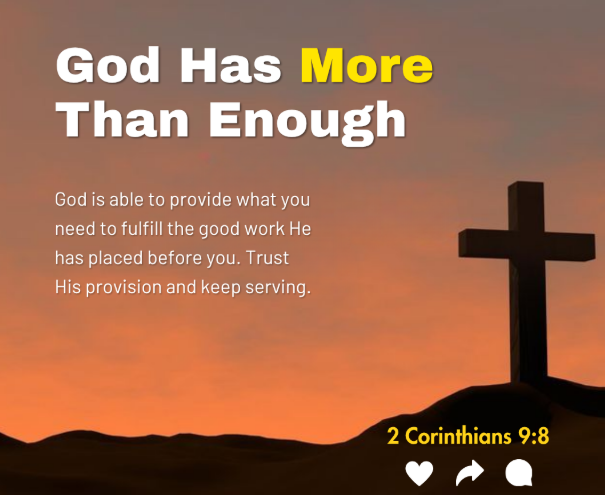
From the Holy Spirit – God is Able to Provide what you need
Share this Feeding of Manna with your Friends and Family. just click on the Social Media icon and share This Manna with your Friends and Family. just click on the Social Media icon and share !