Hosted by TruLight Ministries – The Place of Truth
SELECT YOUR READING LANGUAGE – BOTTOM LEFT = YOUR DAILY MANNA NOW AVAILABLE IN 103 LANGUAGES
@ TruLight – Daily Manna is not Just a Bible Verse with a Small Prayer . NO ::: WE SERVE DAILY Manna for the ENTIRE Day . Breakfast , Lunch , Dinner , Plus tea Times and even Entertainment Manna . Plus News Manna and More , This Daily Manna will keep you Spiritually full for the full 48 Hours and even More to Share with your Friends and Family !!!
For this week we will look at the Fruits of the Flesh !
PRIDE !!!
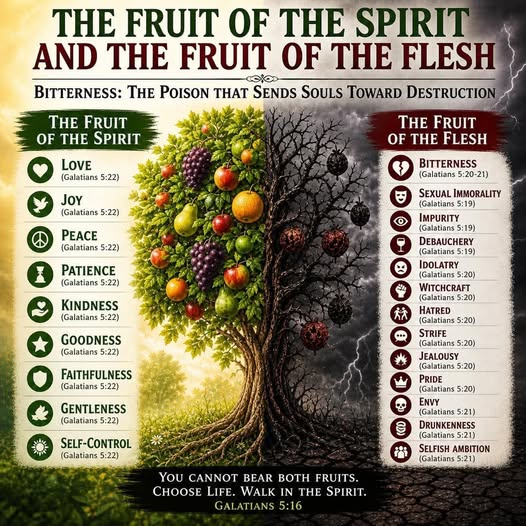
Proverbs 16:18 says, “Pride goes before destruction, and a haughty spirit before a fall.” There are many other biblical warnings about the sin of pride. But why is pride so strongly warned against? Why is pride a sin? Is it always a sin to feel proud of something you have accomplished? It is very important to understand what precisely is the pride that God hates (Proverbs 8:13).
In the movie Evan Almighty, the main character, Evan, is seen praying to God before he goes to bed. Evan thanks God for his house, despite the fact that he worked hard to pay for it, because, well, God created matter. Evan understood that neither he, nor his house, would even exist were it not for God. That seems to be the key distinction between “good” pride and “bad” pride. Sinful pride is refusing to recognize God’s sovereign role in everything. “Good pride” is recognizing that apart from God, you can do nothing (John 15:5), and, therefore, giving God the glory for the things you accomplish.
A few years ago my wife and I were given a prestigious award. I really struggled with what my attitude should be regarding the award. We had to travel to receive the reward, and people kept asking us why we were in town. What were we supposed to say? How could we have informed them that we were receiving a very distinguished award without sounding prideful and/or conceited? Ultimately, I think being mistaught on what sinful pride actually is made the proper response much more difficult than it had to be. We entirely recognize that nothing we have accomplished would have been possible without God. We entirely recognize that God is the one who has given us the wisdom, discernment, and strength to accomplish what we have. At the same time, we have worked exceedingly hard. Am I saying that God needed our efforts to accomplish what He desired? Of course not. Did God choose to accomplish His will through us due to our willingness to submit to Him? Yes, I think so. Is it a sin to feel pride in what God has accomplished? No, I do not think so.
While God is absolutely sovereign, and while nothing happens outside of His providence, our efforts, or more accurately, our willingness to be used of Him, do play a role in what God chooses to accomplish through whom. Of course, no one can come to God or submit to God without God’s enablement (John 6:44). But, there is still an aspect to our relationship with God which “depends” on how willingly we submit to Him. God will accomplish His plan no matter what. How much God incorporates you into how He accomplishes His plan depends at least somewhat on you.
Assuming that Isaiah 14:12-15 and Ezekiel 28:12-15 refer symbolically to Satan, Satan’s sin was pride. Despite the fact that God had created Satan, and despite the fact that it was God who gave Satan the power and beauty he possessed, Satan wanted the glory and credit for himself. Satan did not want to worship God in response to the gifts God had given him. Instead, Satan wanted to be worshipped. Satan viewed himself as glorious instead of what he actually was: a reflection of God’s glory. That is the sin of pride. Sinful pride is not recognizing that only God is worthy of worship because only God is able to accomplish things entirely in and of Himself. Only God is holy, beautiful, glorious, and powerful in and of Himself. Everything and everyone else relies on God. The most we are is evidence of the amazing creative power of God.
First Corinthians 4:7 summarizes this nicely: “What do you have that you did not receive? And if you did receive it, why do you boast as though you did not?” Everything we have, we have received from God. Therefore, we should not act as if we have accomplished anything on our own. It is not wrong to feel good about something you have accomplished as long as you recognize, and admit, that you could not have accomplished it apart from God.
What would have been the proper response to people asking us why we were in town? Something to the effect of: “We are being recognized for the great things God has accomplished through us in response to our willingness to submit to His will and be used of Him.” Now if I could only come up with a more concise way to say that.

Tea Time Manna
Sing to God, sing praise to his name, extol him who rides on the clouds — his name is the Lord — and rejoice before him. A father to the fatherless, a defender of widows, is God in his holy dwelling.
—Psalm 68:4-5
I can’t help but think of what James, Jesus’ brother, said:
Religion that God our Father accepts as pure and faultless is this: to look after orphans and widows in their distress and to keep oneself from being polluted by the world (James 1:27).
Jesus demonstrated the Father’s heart for the marginalized in his ministry by making time to love, serve, heal, welcome, and bless widows (Luke 21:1-4), lepers (Mark 1:40-45), children (Matthew 19:13-15), the afflicted (John 5:3-8), and the oppressed (Matthew 4:24). Now it is up to us, his people, his disciples, to continue the work of Jesus as his people, his bodily presence in our world today.
Prayer
Father, may our lives, our compassion, and our ministries reflect your heart for those who need care, protection, and love. Give us eyes to see these needs more clearly and hearts that respond more certainly so that we can demonstrate your love to people more fully. We pray that as we respond, the Spirit will lead us to do things that bless others, and we ask that you give us wisdom to know how best to demonstrate your love to all people. In the precious name of Jesus, we pray. Amen and Amen
Bible Teaching of the Day
LUNCH MANNA =
Amos 8:7 says, “The LORD has sworn by the Pride of Jacob: “I will never forget anything they have done.’” What is this “Pride of Jacob”?
Interpreters are divided on the understanding of this phrase. First, some suggest the Pride of Jacob is a reference to Israel’s sins, in which the wicked took unabashed pride. Others suggest the Pride of Jacob is a title of God. The latter is probably the better interpretation. The Pride of Jacob was the One to whom Jacob, the nation’s forefather, looked for strength. A similar title is found in 1 Samuel 15:29, where God is referred to as “the Glory of Israel.”
To say, “The LORD has sworn by the Pride of Jacob,” means that the Lord has sworn by Himself. The Bible speaks of God swearing by Himself in at least one other passage: “For when God made a promise to Abraham, since he had no one greater by whom to swear, he swore by himself, saying, ‘Surely I will bless you and multiply you’” (Hebrews 6:13-14).
But what has the Lord sworn by Himself? Amos 8:7 says, “I will never forget anything they have done.” This is the Lord’s promise to deal with the sins of the people. He would not let their rejection of Him go unpunished; rather, judgment would soon come.
Some confusion arises due to the same phrase, “pride of Jacob,” being used in two other passages. First, in Psalm 47:4 we read, “He chose our heritage for us, the pride of Jacob whom he loves.” Here, the phrase is in reference to the land of Israel rather than to God. Second, “pride of Jacob” is used in Amos 6:8 in reference to actual, sinful pride: “I abhor the pride of Jacob and hate his strongholds.” The city of Samaria served as Israel’s capital, and “stronghold” likely refers to that city. They were trusting in their city’s defenses rather than in God.
In summary, the “Pride of Jacob” in Amos 8:7 is a reference to God Himself. The Lord makes a solemn promise, based on His own character and faithfulness, that He would bring judgment against Israel. “Do not be deceived: God cannot be mocked. A man reaps what he sows” (Galatians 6:7).
Today’s Devotional
DINNER MANNA =
The phrase “pride of life” is found only once in the Bible, in 1 John 2:16, but the concept of the pride of life, especially as it is linked with the “lust of the eyes” and the “lust of the flesh,” appears in two more significant passages of Scripture—the temptation of Eve in the Garden and the temptation of Christ in the wilderness (Matthew 4:8-10). The pride of life can be defined as anything that is “of the world,” meaning anything that leads to arrogance, ostentation, pride in self, presumption, and boasting. John makes it clear that anything that produces the pride of life comes from a love of the world and “if anyone loves the world, the love of the Father is not in him” (1 John 2:15, ESV).
The first example of the temptation of the pride of life occurs in the Garden of Eden, where Eve was tempted by the serpent to disobey God and eat the forbidden fruit of the tree of knowledge of good and evil. Eve perceived that the fruit was “good for food,” “pleasing to the eye,” and “desirable for gaining wisdom” (Genesis 3:6). She coveted the fruit in three ways. First, it was appealing to her appetite. This John refers to as the “lust of the flesh,” the desire for that which satisfies any of the physical needs. The fruit was also pleasing or delightful to the eye, that which we see and desire to own or possess. Here is the “lust of the eyes” John refers to. Finally, Eve somehow perceived that the fruit would make her wise, giving her a wisdom beyond her own. Part of Satan’s lie was that eating the fruit would make her “like God, knowing good and evil” (Genesis 3:5).
Here is the essence of the pride of life—anything that exalts us above our station and offers the illusion of God-like qualities, wherein we boast in arrogance and worldly wisdom. Eve wanted to be like God in her knowledge, not content to live in a perfect world under His perfect grace and care for her. Satan tried these same three temptations on Christ during His forty days in the wilderness (Matthew 4:1-11). He tempted Jesus with the lust of the flesh, bread for His hunger (Matthew 4:2–3); the lust of the eyes, “all the kingdoms of the world with their splendor” (Matthew 4:8–9); and the pride of life, daring Him to cast Himself from the roof of the temple in order to prove that He was the Messiah by an ostentatious display of power that was not in the will of God or His plan for the redemption of mankind Matthew 4:5-6). But Jesus, though He was “tempted in every way, just as we are” (Hebrews 4:15), resisted the devil and used the Word of God to ensure victory over him.
Christians have always been, and will always be, lured by the same three temptations Eve and Jesus experienced. Satan doesn’t change his methods; he doesn’t have to because they continue to be successful. He tempts us with the lust of the flesh—sexual gratification, gluttony, excessive alcohol consumption, and drugs, both legal and illegal, as well as the “works of the flesh” about which Paul warned the Galatians, “sexual immorality, impurity, sensuality, idolatry, sorcery, enmity, strife, jealousy, fits of anger, rivalries, dissensions, divisions, envy, drunkenness, orgies, and things like these” (Galatians 5:19-21, ESV). He tempts us with the lust of the eyes—the endless accumulation of “stuff” with which we fill our homes and garages and the insatiable desire for more, better, and newer possessions, which ensnares us and hardens our hearts to the things of God.
But perhaps his most evil temptation is the pride of life, the very sin that resulted in Satan’s expulsion from heaven. He desired to be God, not to be a servant of God (Isaiah 14:12-15). The arrogant boasting which constitutes the pride of life motivates the other two lusts as it seeks to elevate itself above all others and fulfill all personal desires. It is the root cause of strife in families, churches, and nations. It exalts the self in direct contradiction to Jesus’ statement that those who would follow Him must take up their cross (an instrument of death) and deny themselves. The pride of life stands in our way if we truly seek to be servants of God. It is the arrogance that separates us from others and limits our effectiveness in the kingdom. The pride of life “comes not from the Father, but from the world.” And, as such, it is passing away with the world, but those who resist and overcome the temptation of the pride of life do the will of God, and “whoever does the will of God lives forever” (1 John 2:17).

NEWS MANNA –
THE EAGLE (F35) OF THE MIDDLE EAST

Israel operates approximately 200+ F-16s and has 48 active F-35s.
Exact numbers fluctuate due to ongoing deliveries, maintenance, and upgrades, but the breakdown is as follows:
F-35 Fleet (Stealth Fighters)
- Active Aircraft: Israel currently has 48 F-35I “Adir” fighter jets in its operational arsenal.
- Recent Deliveries: Three jets were delivered in January 2026, finalizing an initial procurement of 50 jets.
- Future Fleet: Israel signed agreements in 2024 and 2026 to procure a third and fourth squadron. This will bring Israel’s total F-35 fleet to 75 aircraft in the coming years.
F-16 Fleet (Multi-Role Fighters)
- Active Aircraft: The Israeli Air Force operates an estimated 149 to over 200 active F-16s across several variants
- Largest Fleet Outside the US: Historically, Israel has acquired a total of more than 300 F-16s. This inventory includes a specialized, custom-adapted variant known locally as the F-16I “Sufa”
Test Everything: Discern Truth In An Age Of Signs And Wonders
One of the greatest challenges facing the modern church is not atheism, secularism, or even persecution. It is discernment.
In an age where anyone can create a ministry, declare themselves an apostle, post a testimony online, and instantly gain thousands of followers, Christians are increasingly being asked to accept extraordinary claims with little or no evidence. Too often, many do exactly that.
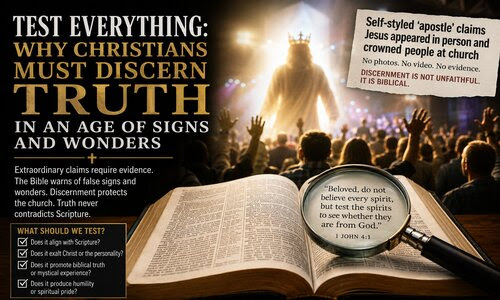
A recent example comes from Australia, where self-styled apostle David Vaka claimed that Jesus physically appeared during a Pentecost service on the Sunshine Coast. According to Vaka, “The King of Glory Himself turned up in person.” He described seeing Jesus wearing a massive crown and moving through the room, personally crowning attendees with kingly authority and power.
Vaka further stated that he had previously witnessed angels appearing and ministering to people, but this was the first time he had seen Jesus descend in such a manner. He also claimed God spoke through him to the city’s mayor regarding a vision to transform the Sunshine Coast into a “Kingdom City.”
Yet despite the magnitude of these claims, no photographs, video footage, independent eyewitness documentation, or verifiable evidence has been presented.
That fact alone should not necessarily cause Christians to mock or dismiss the story outright. God is capable of anything. The Bible records numerous supernatural encounters. The God who parted the Red Sea, raised Lazarus, and appeared to Saul on the road to Damascus certainly possesses the power to reveal Himself however He chooses.
The issue is not whether God can do such things.
The issue is whether Christians are obeying Scripture’s command to test such claims.
The Apostle John warned believers, “Beloved, do not believe every spirit, but test the spirits to see whether they are from God” (1 John 4:1). Notice that John does not tell Christians to automatically believe spiritual claims. Nor does he tell them to automatically reject them. He tells them to test them.
That command is more important today than ever.
The modern church often swings between two extremes. Some believers reject anything supernatural and become practical skeptics. Others accept nearly every miracle story, prophetic word, angelic visitation, heavenly encounter, or apostolic declaration without asking a single question.
Neither approach is biblical.
Discernment requires examination.
Throughout Scripture, signs and wonders alone were never considered sufficient proof that someone spoke for God. In fact, the Bible repeatedly warns that false signs and wonders will accompany deception.
Jesus Himself warned that false christs and false prophets would arise and perform “great signs and wonders” capable of deceiving many if possible (Matthew 24:24).
Paul warned that the coming of the lawless one would be accompanied by “all power and false signs and wonders” (2 Thessalonians 2:9).
The book of Revelation describes miraculous displays that persuade entire populations to follow a counterfeit religious system.
In other words, supernatural activity by itself is not proof of divine approval.
That truth makes discernment absolutely essential.
Unfortunately, many Christians evaluate claims based on emotion rather than Scripture. If the speaker is charismatic, popular, passionate, or carries an impressive title, the claims are often accepted without question.
Yet the Bible never instructs believers to trust a man because he calls himself an apostle, prophet, pastor, or evangelist.
We are told to examine the message.
Does it align with Scripture?
Does it point people toward Christ or toward the personality making the claim?
Does it exalt God’s Word or elevate mystical experiences?
Does it encourage biblical humility or create spiritual elitism?
These questions matter because deception rarely arrives wearing a name tag that says “False Teacher.” It usually comes wrapped in Christian language, accompanied by spiritual excitement, and promoted by people who appear sincere.
Perhaps one of the most concerning aspects of modern Christianity is how quickly many believers are captivated by experiences while neglecting biblical knowledge.
The Bereans in Acts 17 provide the opposite example. Even when listening to the Apostle Paul himself, they searched the Scriptures daily to verify whether what he taught was true.
Think about that.
They tested the words of an actual apostle.
Today many Christians refuse to test the words of self-appointed apostles.
The result is confusion, division, and vulnerability to deception.
As the world moves closer to the prophetic events described in Scripture, discernment will become increasingly important. Jesus repeatedly warned believers not to be deceived. That warning appears again and again because deception will become one of the defining characteristics of the last days.
Christians should remain open to God’s supernatural power. We should believe He still works miracles. We should never place God inside a theological box.
But neither should we abandon discernment.
Every testimony should be tested.
Every prophecy should be examined.
Every spiritual claim should be weighed against Scripture.
Truth does not fear investigation.
And in a time when signs and wonders increasingly dominate Christian headlines, believers must remember that our ultimate authority is not an experience, a vision, a miracle claim, or a self-proclaimed apostle.
It is the unchanging Word of God.
The Peace With Iran May Have Unexpectedly Opened The Door To Ezekiel 38

For much of the past year, Israel has achieved what many believed was impossible.
It has battered Iran’s military infrastructure. It has weakened Hezbollah. It has struck deep into Iranian territory. It has demonstrated intelligence and military capabilities that few nations on earth can match. Even many of Israel’s critics would acknowledge that the Jewish state emerged from this conflict having inflicted tremendous damage on its enemies.
And yet, despite all those battlefield victories, Israel now finds itself confronting a strategic paradox.
It may have won the war, only to discover that the peace is far more dangerous.
The emerging U.S.-Iran agreement championed by President Trump has been met with widespread skepticism and outright hostility across much of Israel’s political spectrum. Israeli media outlets, opposition leaders, security analysts, and even members of Netanyahu’s own coalition have criticized the agreement as one that leaves many of the core threats facing Israel unresolved.
Reports indicate that key issues such as Iran’s missile arsenal, support for regional proxy groups, and aspects of its nuclear program may remain outside the scope of the current negotiations.
That is the heart of Israel’s dilemma.
Iran has been weakened, but not defeated.
Its military capabilities have been degraded, but not eliminated.
Its missile stockpiles remain significant. Its drone capabilities remain intact. Its proxy network has been damaged but not dismantled.
Hezbollah is perhaps the clearest example. Israel has succeeded in pushing the terror organization farther away from its northern border and has dramatically reduced its operational freedom. Yet Hezbollah still exists. Its leadership structure remains. Its fighters remain. Its ideology certainly remains. Even today, Israeli leaders insist that they will retain freedom of action in Lebanon because they do not trust that the threat has disappeared.
From a military perspective, Israel achieved much.
From a strategic perspective, the outcome is far murkier.
The deeper concern emerging in Jerusalem is not simply the agreement itself but what it reveals about the future of U.S.-Israel relations regarding Iran.
For years, Israeli governments operated under the assumption that they could influence American policy through Congress, public opinion, and longstanding alliances in Washington. During the Obama years, Prime Minister Benjamin Netanyahu openly challenged the White House over the Iran nuclear deal. He addressed Congress. He mobilized supporters. He fought publicly against policies he believed endangered Israel.
Today the situation is very different.
President Trump remains enormously influential within both the Republican Party and among evangelical Christians who have traditionally been some of Israel’s strongest supporters. Yet Trump’s priorities are increasingly centered on American economic interests, energy stability, avoiding prolonged wars, and securing diplomatic agreements that can reduce regional instability.
Those priorities do not always align perfectly with Israel’s security calculations.
Israeli analysts increasingly fear that once the agreement is signed on Friday, any future Israeli military action against Iran could be viewed in Washington as an effort to sabotage American diplomacy.
That reality leaves Israel with fewer options than it has enjoyed in decades.
Ironically, Netanyahu may find that challenging Obama was easier than navigating Trump.
Obama could be opposed publicly.
Trump is far more difficult to confront because many of Israel’s traditional allies in Washington are reluctant to challenge him directly. Even strong pro-Israel voices appear cautious about publicly criticizing the president’s approach.
Meanwhile, Iran may emerge from this arrangement with substantial economic relief while surrendering relatively little of its long-term strategic position. If sanctions are eased, investments resume, and trade routes reopen, Tehran could gain valuable breathing room to rebuild capabilities over time. Critics inside Israel fear exactly that outcome.
This is why many Israelis are viewing the agreement not as the culmination of victory but as the beginning of a new and uncertain chapter.
Yet for Christians who study Bible prophecy, there is another layer to this story.
The book of Ezekiel describes a future scenario in which Persia—modern-day Iran—again emerges as part of a coalition that ultimately moves against Israel. The remarkable aspect of Ezekiel 38 and 39 is not merely that Israel faces overwhelming threats. It is that God repeatedly emphasizes that He Himself intervenes to save His people.
Not America.
Not NATO.
Not military alliances.
God.
That does not diminish the importance of the U.S.-Israel relationship. The United States remains Israel’s most important ally and the partnership has produced enormous benefits for both nations.
But Scripture reminds us that Israel’s ultimate security has never rested in Washington, London, or any earthly capital.
Perhaps that is one of the lessons emerging from today’s events.
The war exposed a growing gap between America and Israel regarding how to handle Iran. It demonstrated the limits of Israeli influence over U.S. decision-making. It revealed how quickly geopolitical priorities can shift.
Most importantly, it showed once again that no alliance is permanent and no political arrangement is guaranteed.
Israel may have won significant victories on the battlefield.
But the long-term strategic questions remain unanswered.
And if Ezekiel is correct, the next confrontation with Iran may arrive under very different circumstances—with Israel discovering that the ally it once relied upon is no longer willing to fight the same battle.
That is why the ultimate lesson of this moment is not about military power, diplomacy, or oil prices.
It is about where Israel places its trust when the next crisis comes.

TruLight TV – God’s Great Creation – The Largest Existing Land Animal
What is the Trinity? God the Father, the Son, and the Holy Spirit. How can they all be God? This video is a quick master class in understanding the Trinity, and how they influence and impact your life as a believer. and later a Nature Documentary in title (Great Elephant) – Great Elephant, Nature 2018 HD Documentary. The Elephant National Park, lion, leopard, elephant, buffalo, white rhino, whale, and great white shark. The point of this Nature Documentary is based on the Bible Verse in Psalm 91;1 – The Heavens Declare the Glory of God; The Skies Proclaim the Work of His Hands. Enjoy today’s show and thanks for watching.
Today on TruLight Radio XM
TruLight Radio XM 24/7
Program
GMT / UTC +2
Monday To Fridays
00:15 Words to Live By Testimonies
01.15 Science Scripture and Salvation
02.15 Ground Works
04.00 Gospel Concert of the Day
05.00 The Daren Streblow Comedy Show
5:55 It is Today devotional
6:00 Gaither Homecoming Morning Show
7:15 Discover the Word
8.15 Destined for Victory
8:55 Science Scripture and Salvation
9:00 Holy Spirit Hour – Normally Sermons
10:15 Hope of the Heart
11:15 Unshackled
11.45 Words to Live By
12:15 Truth for Life
13:15 Living on the Edge with Chip Ingram
14:15 Focus on the Family
15:00 Kids Hour
16:00 In Touch with Dr. Charles Stanley
16:30 Groundwork
17:15 Live in the Light
18:15 Renewing your Mind
19:00 Gaither Homecoming Show
20:15 Growing Hope
21:15 Adventures in Odyssey Radio Drama
21:45 Bible Reading
22:15 Night-sounds
23.00 Good Old Country Gospel / Rhema Gospel Express
VISIT THE WEBSITE
TruLight Ministry News – EXTRA MANNA
TruLight Ministries orders from God since 2012 . Teach Them , Comfort Them and Warn Them!
The Sheriff of the Church address the Christian Zionist Church in this Audio Movie
Healing Truths.
End Time Articles.
Bonus Manna = Bonus Teaching for the Child of God !!
King Nebuchadnezzar of Babylon was given an unusual opportunity to learn about what happens to those who walk in pride in Daniel 4. It was a hard lesson to learn, but an important one.
The king had a dream that troubled him, and only the prophet Daniel was able to provide the interpretation (Daniel 4:6–7). Nebuchadnezzar explained the dream: he had seen a great and glorious tree (Daniel 4:10–12). As he watched the tree, he saw someone come down from heaven and give an order that the tree be chopped down, but the stump was to remain (Daniel 4:14–15). Remarkably, the one who had come from heaven began to speak of the tree as if it were a person. From those words, the king understood that the person the tree signified would share with the animals the grass of the earth (Daniel 4:15) and his mind would be changed from that of a man to that of a beast for seven periods of time (Daniel 4:16). This sentence was pronounced so that all would know what happens to those who walk in pride (Daniel 4:37), that God is the Ruler of all, and that He bestows authority on whomever He wishes (Daniel 4:17).
As Daniel explains the meaning of the dream, he is alarmed, realizing it is about Nebuchadnezzar (Daniel 4:19). The king certainly walked in pride (Daniel 4:37), and God planned to humble him. The tree that was cut down in the dream was Nebuchadnezzar (Daniel 4:20–22), who would lose his glory and become like a beast for “seven times” so he would learn that God is the one who gives authority (Daniel 4:23–25). Once Nebuchadnezzar humbled himself before God, his kingdom would be returned to him (Daniel 4:26–27).
As the narrative of Daniel 4 continues, Nebuchadnezzar describes that all these things happened just as the dream predicted. A year later, Nebuchadnezzar was filled with pride as he commended himself for the greatness of the kingdom he had built (Daniel 4:29–30). While he was still speaking, Nebuchadnezzar lost his mind and became like a beast (Daniel 4:30–33). After the prophesied time, Nebuchadnezzar’s reason returned to him, and he humbled himself before God, exclaiming that God is sovereign and does according to His own will (Daniel 4:34–35). Nebuchadnezzar’s kingdom was restored, and, this time, rather than view it with personal pride, he praised, exalted, and honored God:
“His dominion is an eternal dominion;
his kingdom endures from generation to generation.
All the peoples of the earth
are regarded as nothing.
He does as he pleases
with the powers of heaven
and the peoples of the earth.
No one can hold back his hand
or say to him: ‘What have you done?’” (Daniel 4:34–35).
Nebuchadnezzar had learned what happens to those who walk in pride.
God opposes the proud but gives grace to the humble (see Psalm 138:6; Proverbs 3:34; Matthew 23:12; James 4:6; 1 Peter 5:5). Jesus modeled the importance of humility—the willingness to treat others as worthy of more honor than oneself (Philippians 2:1–11). The quality of being humble before God (Micah 6:8) and treating others accordingly is demonstrated clearly in many ways in the Bible. Some of the lessons on humility show what happens to those who walk in pride (Daniel 4:37).
Share this Feeding of Manna with your Friends and Family. just click on the Social Media icon and share !