Hosted by TruLight Ministries – The Place of Truth
SELECT YOUR READING LANGUAGE – BOTTOM LEFT = YOUR DAILY MANNA NOW AVAILABLE IN 103 LANGUAGES
@ TruLight – Daily Manna is not Just a Bible Verse with a Small Prayer . No WE SERVE DAILY Manna for the Whole Day . Breakfast , Lunch , Dinner , Plus tea Times and even Entertainment Manna . Plus News Manna and More , This Daily Manna will keep you Spiritually full for the full 48 Hours and even More to Share with your Friends and Family !!!
THE POWER OF A RENEWED MIND !!!
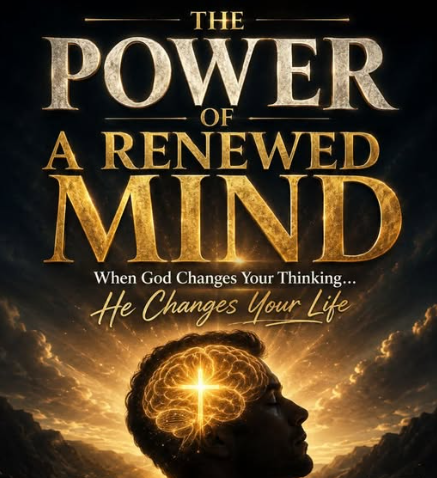
The phrase “transformed by the renewing of the mind” is found in Romans 12:2. Chapter 12 marks the transition in that epistle from the apostle Paul’s theological teaching to his practical teaching. The book of Romans is probably the closest thing in the Bible to a systematic theology. Paul did not found the church at Rome, but he had every intention of visiting that church on his way to Spain. As a result, Paul wrote this epistle as a way of introducing himself to that congregation and to give them an overview of the gospel and what it means in the lives of believers.
After teaching the great doctrine regarding the gospel of God’s righteousness that is ours through faith in Christ in Romans chapters 1—11, Paul begins to exhort us to godly living. How are we to live in light of the saving power of the gospel? That is what Romans 12—16 aims to teach. The practical section of Romans begins with a great “therefore.” Seeing all that God did on our behalf, therefore live like this. The first of Paul’s great exhortations is to be renewed in our minds:
“I appeal to you therefore, brothers, by the mercies of God, to present your bodies as a living sacrifice, holy and acceptable to God, which is your spiritual worship. Do not be conformed to this world, but be transformed by the renewal of your mind, that by testing you may discern what is the will of God, what is good and acceptable and perfect” (Romans 12:1–2, ESV).
The phrase “the mercies of God” refers to all of what has preceded in chapters 1—11. The exhortation that Paul presents is that since we have been the recipients of God’s great mercies, we are to be “living sacrifices” to God. How do we do this? We are living sacrifices to God by not conforming to this world, but by being transformed by the renewal of our minds.
This exhortation really serves as a summary statement of all that follows. A living sacrifice to God is one who does not conform, but is transformed. We are not to be conformed to this world. Paul is using the word world here to refer to the spirit of the age. In other words, world refers to the popular worldview that rejects God and His revelation. As unbelievers, we are naturally conformed to the world (Ephesians 2:1–3). As believers, we are no longer conformed to this world because we no longer belong to the spirit of this age. We have been translated from the kingdom of darkness into the kingdom of God’s beloved Son (Colossians 1:13). Therefore, rather than continuing to conform to this world, we are to be transformed by having our minds renewed.
It is interesting to note that Paul says that we must be transformed by the renewing of our “minds.” The mind is the key to the Christian life. The reason why non-Christians do not respond to Christian truth is that they cannot discern spiritual truth (1 Corinthians 2:14). The gospel is a call for the unbeliever to repent of his sin and embrace Christ by faith. The Greek word translated “repentance” carries the notion of a change of mind. Our thinking must be changed (transformed) from old, ungodly ways of thinking into new, godly ways of thinking. What we know in our minds to be true forms a conviction in our hearts of that truth, and that conviction in our hearts translates into action. Therefore, we must first renew our minds.
The only way to replace the error of the world’s way of thinking is to replace it with God’s truth, and the only infallible source of God’s truth is His revealed Word, the Bible. Transformation through renewed minds comes as believers expose themselves to God’s Word through the faithful exposition of it each week in church, personal Bible study, and group Bible study. A solid church that believes in preaching the Word, reading the Word, and singing the Word is invaluable in helping us renew our minds.
There are no shortcuts. There is no magical formula for renewing our minds. We must fill our minds with God’s Word. As Jesus prayed to the Father, “Sanctify them in the truth; your word is truth” (John 17:17).

Tea Time Manna
Encourage one another and build each other up, just as in fact you are doing.
—1 Thessalonians 5:11
While Paul’s exhortation here is excellent, it is the style of the exhortation we should especially notice. We live in an age where we are constantly pressured to emphasize the novel, new, or improved versions of things. But in our lives as Christians, our knowledge always exceeds our obedience — we very seldom live up to the truth we know, even though it is old truth and established truth. So, more often than we like to think, we need to remind each other of what we are doing that is right, good, obedient, and holy. Our words of affirmation and encouragement don’t need to be elaborate or profound or novel or new. We can say, “Hey, you’re doing well; just keep doing what you’re doing! I know your Father in heaven is pleased with you!” Let’s encourage each other and build each other up, as in fact some of us are already doing, and need to do so more and more.
Prayer
Faithful Father, thank you for noticing and keeping record of the things I’ve done that are good and pleasing to you. Thank you for choosing to forget those things you have forgiven me. Please help me to keep doing those things that please you, only help me do them better, more completely, so that you may be pleased and glorified. And, dear Father, help me see the good things others do, and encourage and affirm their goodness. I want to be the kind of disciple who catches people doing good things, then lets them know I appreciate them. In Jesus name and to become more JESUShaped, I pray. Amen and Amen

Bible Teaching of the Day
LUNCH MANNA =
Genesis 1:26–27 indicates that God created mankind distinct from all the other creatures. Scripture clearly teaches that man is intended to experience intimate relationship with God, and, therefore, He created us as a unity of both material (physical) and immaterial (spiritual) aspects (Ecclesiastes 12:7, Matthew 10:28, 1 Corinthians 5:5, 2 Corinthians 4:16; 7:1, James 2:26). The material component of humans is obviously that which is tangible and temporal: the physical body. The immaterial aspects are intangible: soul, spirit, intellect, will, conscience, mind, emotions, etc. These exist unendingly beyond the lifespan of the physical body.
All human beings possess both material (physical) and immaterial (spiritual) characteristics. Each person has a physical body. However, the intangible, non-physical qualities of mankind are often debated. What does Scripture say about these? Genesis 2:7 states that man was created as a “living soul” (KJV). Numbers 16:22 names God as the “God of the spirits of all flesh” (ESV). Proverbs 4:23 tells us, “Above all else, guard your heart, for everything you do flows from it,” indicating that the heart (not the myocardium) is central to man’s will and emotions. In Acts 23:1 Paul refers to the conscience as that part of the mind that convicts us of right and wrong. Romans 12:2 speaks of the transformative power of a renewed mind. These verses, and numerous others, refer to the various aspects of the spiritual components of humanity. We are a unified combination of both material and immaterial qualities.
Somehow, the soul, spirit, emotions, conscience, will, and mind are connected and interrelated. Perhaps the soul-spirit is comprised of a combination of all the other immaterial human aspects. With this in mind, is humanity dichotomous (“cut in two”) or trichotomous (“cut in three”)? In other words, do we have two parts (body and soul-spirit), or do we have three parts (body, soul, and spirit)? It is impossible to be dogmatic. Theologians have differed over this issue for centuries, and there has never been a decisive orthodox declaration of which is true.
Those who believe Scripture teaches that man is a dichotomy see humans as comprised of two parts: a body and a spirit. There are two general views of this dichotomy. The first view is that man is a united body and spirit that together comprise a living soul. A human soul is the spirit and the body united as one personhood. This view is supported by Genesis 2:7; Numbers 9:13; Psalm 16:10; 97:10 and Jonah 4:8. This view emphasizes that the Hebrew word nephesh in these verses refers to an integrated (unified) soul, living being, life, or self—i.e., a unified person (soul) comprised of a body and spirit. It is noted that, when the Bible speaks of the ruach (“breath, wind, or spirit”) being separated from the body, the person is disintegrated (fractured)—dead (see Ecclesiastes 12:7; Psalm 104:29; 146:4).
The second dichotomic view is that the spirit and the soul are the same thing with two different names. This view emphasizes the fact that the words spirit and soul are often used interchangeably (Luke 1:46–47; Isaiah 26:9; Matthew 6:25; 10:28, 1 Corinthians 5:3, 5) and should be understood as synonyms referring to the same spiritual reality within each person. Therefore, the dichotomous position holds that man is comprised of two parts. Man is either a body and spirit, which makes a soul, or a body and soul-spirit.
Those who believe Scripture teaches that man is a trichotomy see man as comprised of three distinct parts: body, soul, and spirit. They emphasize 1 Thessalonians 5:23 and Hebrews 4:12, which seem to differentiate between spirit and soul. The dichotomist counters that, if 1 Thessalonians 5:23 teaches trichotomy, then, by the same hermeneutic, does Mark 12:30 teach tetrachotomy?
Is it important to conclusively decide between dichotomy and trichotomy? Perhaps not; however, a word of caution is appropriate. Some who hold the trichotomist view have erroneously taught that God can bypass our soul/intellect and communicate directly with our spirit; such teaching leads to irrational mysticism. Other churches have used the trichotomous position to teach the possibility of Christians being demon-possessed. Because they see the soul and spirit as two separate immaterial aspects within the Christian, they postulate that one can be indwelt by the Holy Spirit and the other can be possessed by demonic forces. This teaching is problematic in that there are no biblical references that those who are indwelt by the Holy Spirit can be simultaneously possessed by demons.
Regardless of whether a Christian believes dichotomy or trichotomy best represents an accurate understanding of Scripture, we can all unitedly praise God with the psalmist: “I praise you because I am fearfully and wonderfully made; your works are wonderful, I know that full well” (Psalm 139:14).
Today’s Devotional
DINNER MANNA =
In Titus 3:1–11, the apostle Paul touches on some practical implications of our salvation. He explains that God saved us to do good and influence others for Christ and His kingdom. As part of His exhortation, Paul sums up the essence of Christian salvation: “But when the kindness and love of God our Savior appeared, he saved us, not because of righteous things we had done, but because of his mercy. He saved us through the washing of rebirth and renewal by the Holy Spirit, whom he poured out on us generously through Jesus Christ our Savior” (Titus 3:4–6).
Because of God’s grace, kindness and love, Jesus rescued us from our brokenness and corruption. We can’t claim credit for this work of salvation, for it was not accomplished through human effort but through divine mercy. The same applies to our spiritual renewal. The Holy Spirit is responsible for the “washing of rebirth and renewal.”
The washing of rebirth refers to regeneration, which is the transforming of our corrupt human nature from a state of spiritual death to life. When we believe in Jesus and receive His salvation, we are “born again” (John 3:3) or “born of water and the Spirit” (John 3:5; see also John 3:8). We are made alive in Jesus Christ (Ephesians 2:1–6; Colossians 2:13).
Regeneration involves a complete spiritual rebirth. Through the Holy Spirit’s power, we are reborn into a new life in Christ, shedding the old sinful nature and embracing a new identity (Romans 6:6). This new birth is the first aspect of the renewal of the Holy Spirit. It starts with a fundamental change in our inner being. The process is initiated and sustained by the Holy Spirit, who works within individual believers to renew their hearts and minds. The power of the Spirit who indwells us at salvation continues transforming us into new creatures in Jesus Christ (2 Corinthians 5:17; Romans 6:4; Galatians 6:15; Ephesians 4:22–24).
A second aspect of the renewal of the Holy Spirit is sanctification. The Holy Spirit sets believers apart for holy purposes (2 Thessalonians 2:13; Romans 15:16; 1 Corinthians 6:11; Galatians 5:5). This involves a gradual process of becoming more like Christ in character and actions (Galatians 5:22–23; Romans 14:17; 2 Corinthians 3:18). The Spirit instills and develops virtues of love, joy, peace, patience, kindness, goodness, faithfulness, gentleness, and self-control, allowing us to reflect the nature of Christ. This renewal is not superficial but a profound, lasting transformation that aligns our wants and desires more closely with God’s will.
Renewal of the Holy Spirit also involves empowerment (Luke 24:49). God’s Spirit equips us for ministry (Acts 1:8; 1 Corinthians 2:4; 1 Thessalonians 1:5) and to live out our faith, providing strength, wisdom, and guidance in our daily lives (Romans 15:13; Ephesians 3:16; Romans 1:11; 1 Corinthians 1:7–8). Through the Spirit’s indwelling presence, we are empowered to do good works and live in a manner that pleases God (Romans 8:6–8). We must keep in mind that our goodness does not come from our own behavior or inherent goodness (see Psalm 14:1–3; Ecclesiastes 7:20; Romans 3:23) but from God who is “working in [us], giving [us] the desire and the power to do what pleases him” (Philippians 2:13, NLT).
Renewal of the Holy Spirit includes conviction. The Spirit convicts us of sin and prompts us to seek forgiveness and turn away from behaviors contrary to God’s will (John 16:8; 1 Corinthians 2:8–10). He convinces us of our need for growth and change (Romans 8:5–9; Galatians 5:16–21) yet also brings full assurance of our secure relationship with God the Father (Romans 8:15–16).
Renewal of the Spirit also embraces comfort, counsel, and help. A specific title Jesus used for the Holy Spirit was “Advocate,” which refers to a legal counselor or representative who offers help, intercession, and comfort: “And I will ask the Father, and he will give you another Advocate, who will never leave you. He is the Holy Spirit, who leads into all truth. The world cannot receive him, because it isn’t looking for him and doesn’t recognize him. But you know him, because he lives with you now and later will be in you. No, I will not abandon you as orphans—I will come to you” (John 14:16–18, NLT). The Holy Spirit is always with us, offering solace and peace in times of trouble and guiding us through life’s challenges.
The renewal of the Holy Spirit is a tremendous gift of God’s mercy and grace, bringing spiritual new birth, sanctification, empowerment, conviction, and comfort. May we, as believers, yield to the Holy Spirit’s work, which has profound significance in our Christian walk. May we embrace this journey of continual growth and transformation, daily drawing us closer to God and more like His Son.

NEWS MANNA –
Bible Prophecy, Signs of the Times and Gog and Magog Updates with Articles in the News
World Cup, Ebola, And Bioengineered Mosquitoes: A New Era Of Biological Risk?

As America prepares to welcome millions of visitors for the 2026 FIFA World Cup, another kind of visitor may be arriving as well–one far less welcome than soccer fans.
A dangerous Ebola outbreak is spreading through central Africa. Global health officials are rushing to develop a new vaccine using mRNA technology. At the same time, Google-backed researchers are seeking permission to release up to 32 million specially modified mosquitoes into parts of Florida and California.
Individually, each of these stories raises important questions. Together, they paint a picture of a world entering a new era where biological threats, biotechnology, global travel, artificial intelligence, and public trust are all colliding.
The timing is difficult to ignore.
The World Cup is expected to bring millions of travelers from virtually every corner of the globe into the United States. Large international events have always created concerns about the spread of infectious disease, but today’s world is different from previous generations. International travel is faster, populations are more mobile, and outbreaks can move across continents before authorities even know they exist.
Former CDC Director Robert Redfield recently warned that he would not be surprised to see Ebola cases appear inside the United States as a result of increased global travel surrounding the World Cup. While he emphasized that widespread transmission remains unlikely, even a handful of imported cases would instantly dominate headlines and place public health systems on high alert.
The current outbreak in the Democratic Republic of Congo is particularly troubling because it involves the Bundibugyo strain of Ebola–a relatively rare variant for which there is currently no approved vaccine or treatment. More than 1,000 suspected cases and hundreds of deaths have already been reported, making it one of the largest Ebola outbreaks in history.
That reality has triggered a familiar response.
Governments, pharmaceutical companies, and global health organizations are rapidly mobilizing to develop vaccines. Moderna alone has received funding that could exceed $50 million to develop a new mRNA-based Ebola vaccine. Other institutions, including Oxford University and the Serum Institute of India, are also racing to create vaccine candidates.
The speed is impressive.
But it also raises an uncomfortable question.
How many people will trust the next emergency vaccine?
The COVID pandemic fundamentally altered public confidence in health authorities. Regardless of where one stands politically, it is undeniable that trust was damaged. Public officials repeatedly changed guidance. Questions surrounding vaccine effectiveness, mandates, side effects, and long-term risks created deep divisions that remain unresolved years later.
For millions of Americans, the phrase “safe and effective” no longer carries the same weight it once did.
That presents a serious challenge. Future outbreaks may require rapid medical responses, but public compliance cannot simply be assumed. Health officials now face a credibility deficit that may prove almost as difficult to overcome as the diseases themselves.
Meanwhile, another biological experiment is unfolding much closer to home.
Google’s parent company, Alphabet, is seeking approval to release millions of mosquitoes infected with Wolbachia bacteria into Florida and California. The goal is to suppress mosquito populations that spread diseases such as West Nile Virus and St. Louis encephalitis.
Supporters argue the approach is environmentally safer than pesticides and offers a powerful tool against disease-carrying insects. Critics worry about unintended consequences that may not become visible for years or even decades.
The project highlights a broader trend that is increasingly shaping modern society: the belief that technological intervention can solve virtually every problem.
Artificial intelligence is being used to sort and breed insects. Gene-editing technologies continue advancing. Scientists are discussing engineered mosquitoes, synthetic biology, gain-of-function research, laboratory-grown viruses, and AI-assisted drug development.
The line between medical innovation and biological manipulation is becoming increasingly blurred.
Most of these technologies are being developed with beneficial intentions. Yet history repeatedly reminds us that unintended consequences often accompany technological breakthroughs.
What happens when biological systems are modified at scale?
What happens when AI begins accelerating biotechnology faster than regulators can understand it?
What happens when public trust collapses at the exact moment authorities need cooperation most?
These are not fringe questions anymore.
The COVID pandemic demonstrated how quickly global supply chains, healthcare systems, economies, and governments can be disrupted by a microscopic organism. The next biological crisis may not emerge from nature alone. It could involve laboratory research, engineered organisms, AI-assisted development, or some combination of all three.
Even beyond Ebola and mosquitoes, concerns continue to grow about avian influenza, antimicrobial-resistant bacteria, synthetic viruses, and the expanding accessibility of biotechnology tools that were once available only to nation-states. The biological threat landscape is becoming more complex, not less.
None of this means panic is warranted.
But vigilance certainly is.
The challenge facing society is no longer simply protecting itself from naturally occurring diseases. It is learning how to navigate a world where biological risks are increasingly intertwined with advanced technology, artificial intelligence, and global connectivity.
As millions gather for the World Cup, most will rightly focus on the celebration of sport and international unity. Yet beneath the excitement lies a reminder of how interconnected–and vulnerable–our modern world has become.
A virus emerging in a remote African village can become a concern in American cities. A laboratory experiment in California can influence ecosystems across an entire region. A breakthrough vaccine can save lives, while simultaneously encountering unprecedented public skepticism.
We are entering an era where biological threats may move faster than ever before–and where trust may be the most important defense of all.
The question is whether that trust can be rebuilt before the next crisis arrives.
The Silent Hunters: Why Militaries Are Terrified Of Fiber-Optic Drones
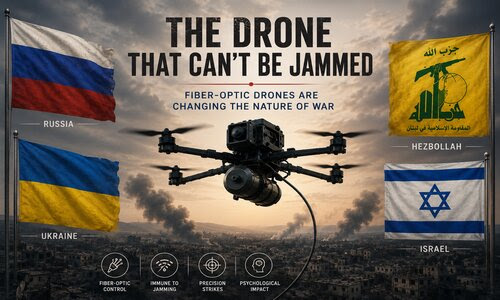
For years, modern militaries believed they had finally found an answer to the drone threat. Electronic warfare systems could jam radio frequencies, disrupt communications, and turn enemy drones into expensive pieces of falling debris. Nations poured billions into anti-drone technology based on one simple assumption: if you sever the connection between the operator and the drone, the threat disappears.
That assumption is now being shattered on battlefields from Ukraine to Lebanon.
A new generation of fiber-optic drones is rapidly changing the nature of warfare, creating a technological challenge that many militaries–including some of the world’s most advanced–are struggling to counter. These drones do not rely on radio signals. Instead, they drag a thin fiber-optic cable behind them, sometimes stretching for miles. Commands travel through the cable itself, making them virtually immune to traditional electronic jamming.
The result is a battlefield revolution that could alter military strategy for decades to come.
The technology first gained widespread attention during the war between Russia and Ukraine. Both sides had become masters of electronic warfare, constantly jamming each other’s drones and communications. Conventional drones increasingly struggled to survive in heavily contested airspace.
Then came fiber-optic drones.
Because they communicate through physical cables rather than radio frequencies, they can fly directly into areas saturated with jamming equipment. Operators maintain crystal-clear control and video feeds even in environments where ordinary drones would instantly lose connection.
Military observers quickly recognized what this meant. A weapon once considered vulnerable had suddenly become much harder to stop.
Now that same lesson is confronting Israel.
For decades, Israel has been regarded as one of the most technologically sophisticated militaries on Earth. Time and again, Israeli intelligence and defense agencies have stunned the world with operations that seemed more like scenes from a spy thriller than real-life warfare.
The most famous recent example was the extraordinary operation involving exploding pagers and communication devices used by Hezbollah operatives. The attack demonstrated an unprecedented level of intelligence penetration and technological ingenuity. Israel reportedly managed to compromise devices deep inside Hezbollah’s network, turning routine communications equipment into weapons against the very people carrying them.
Israel also spent years methodically penetrating Hezbollah’s command structure, gathering intelligence that enabled precision strikes against senior commanders and key leadership figures. The organization’s chain of command was repeatedly disrupted, creating the impression that Hezbollah had become increasingly vulnerable and incapable of mounting a sophisticated response.
The message seemed clear: Israel owned the technological high ground.
Yet warfare has a habit of humbling even the most advanced militaries.
Hezbollah’s growing use of fiber-optic first-person-view (FPV) drones has created a challenge that Israeli planners apparently did not fully anticipate. Unlike traditional drones that can often be jammed or disrupted electronically, these systems continue operating even in environments packed with advanced countermeasures.
The results have been unsettling.
Hezbollah has released numerous videos showing drones hunting Israeli positions, tracking vehicles, and striking troops. While these attacks have not inflicted casualties on the scale of Israel’s operations against Hezbollah, they have exposed an uncomfortable reality: highly trained soldiers can appear surprisingly vulnerable when targeted by inexpensive drones that are difficult to detect and nearly impossible to jam.
But the physical damage is only part of the story.
These drones have introduced a powerful new element to modern warfare: instant psychological warfare. Unlike previous generations of weapons, many FPV drone strikes are recorded in real time from the drone’s onboard camera and uploaded to social media within hours. Viewers witness the entire sequence unfold through the eyes of the weapon itself–spotting a target, closing in, and ultimately striking. The footage can be graphic, unsettling, and highly effective as a propaganda tool.
For organizations like Hezbollah, the videos serve multiple purposes. They demonstrate capability to supporters, intimidate opponents, boost recruitment, and create the perception that nowhere is truly safe. A single successful strike can be viewed millions of times online, amplifying its psychological impact far beyond the actual battlefield damage. Soldiers know that they are not only being hunted from above but that any mistake or vulnerability could be recorded and broadcast across the world.
The Ukraine-Russia war pioneered much of this new reality. Social media feeds have become flooded with first-person footage of drones chasing tanks, armored vehicles, and individual soldiers. The battlefield is no longer merely a contest of firepower–it is also a contest of narratives. Every drone strike now carries the potential to become a viral propaganda victory, influencing public opinion, morale, and even political decision-making thousands of miles from the front lines.
Former Israeli security officials have acknowledged that the threat caught many by surprise. The assumption that electronic warfare could provide a reliable defense suddenly looks outdated.
This creates a larger strategic problem.
Israel’s military doctrine has long emphasized maneuver warfare, intelligence superiority, and technological dominance. But fiber-optic drones are helping level the playing field. A relatively inexpensive drone can now threaten tanks, command posts, logistics hubs, and infantry positions that once enjoyed significant protection.
The challenge becomes even greater when forces occupy fixed positions. Military analysts have noted that stationary troops become ideal targets for persistent drone surveillance and attack. Once a position is identified, repeated strikes can follow with remarkable precision.
The implications extend far beyond Lebanon.
Military planners around the world are paying close attention to lessons emerging from both Ukraine and the Middle East. If fiber-optic drones continue proving effective, every major army will need to rethink battlefield tactics.
Traditional electronic warfare systems may no longer be enough.
Future defenses could require new layers of protection including laser weapons, kinetic interceptors, artificial intelligence detection systems, physical barriers, and autonomous counter-drone platforms. Armies may need entirely new doctrines for movement, concealment, and force protection.
Perhaps most concerning is the economics involved.
A modern tank can cost millions of dollars. A sophisticated command vehicle may cost even more. Yet many FPV drones cost only a tiny fraction of those amounts. When a low-cost drone can destroy or disable equipment worth hundreds of times its price, the economics of warfare begin to change dramatically.
This is why many defense experts increasingly compare drones to the machine gun’s arrival in World War I or the introduction of precision-guided munitions decades later. A technology once viewed as supplementary is becoming central to combat operations.
The broader lesson is one that history repeatedly teaches. Military superiority is never permanent.
Yesterday’s breakthrough eventually becomes tomorrow’s vulnerability.
Israel remains one of the world’s most capable military powers, but even it is discovering that innovation is a race with no finish line. The same nation that stunned the world with exploding pagers, covert intelligence operations, and technological wizardry now finds itself searching for answers to a relatively inexpensive weapon that bypasses some of its most trusted defenses.
From the trenches of Ukraine to the hills of southern Lebanon, a new chapter of warfare is being written.
The battlefield of the future may not be dominated by fighter jets, tanks, or even missiles. It may be ruled by swarms of inexpensive drones connected by strands of glass no thicker than a human hair–silent hunters that cannot be jammed, cannot be easily stopped, and broadcast their victories to the entire world in real time.
And if that future has already arrived, the rest of the world may be far less prepared than it realizes.
TruLight Ministries Daily Entertainment Manna

TruLight TV – Popcorn and Movie Time – Forgiven
When Lieutenant Morgan (Kevin Sorbo) and his armed force arrive on the scene of a church hostage situation, James (Casey Fuller) weighs his options for an escape while Elizabeth (Jenn Gotzon) makes saving his life her mission.
Today on TruLight Radio XM
TruLight Radio XM 24/7
Program
GMT / UTC +2
Monday To Fridays
00:15 Words to Live By Testimonies
01.15 Science Scripture and Salvation
02.15 Ground Works
04.00 Gospel Concert of the Day
05.00 The Daren Streblow Comedy Show
5:55 It is Today devotional
6:00 Gaither Homecoming Morning Show
7:15 Discover the Word
8.15 Destined for Victory
8:55 Science Scripture and Salvation
9:00 Holy Spirit Hour – Normally Sermons
10:15 Hope of the Heart
11:15 Unshackled
11.45 Words to Live By
12:15 Truth for Life
13:15 Living on the Edge with Chip Ingram
14:15 Focus on the Family
15:00 Kids Hour
16:00 In Touch with Dr. Charles Stanley
16:30 Groundwork
17:15 Live in the Light
18:15 Renewing your Mind
19:00 Gaither Homecoming Show
20:15 Growing Hope
21:15 Adventures in Odyssey Radio Drama
21:45 Bible Reading
22:15 Night-sounds
23.00 Good Old Country Gospel / Rhema Gospel Express
VISIT THE WEBSITE
TruLight Ministry News – EXTRA MANNA
TruLight Ministries orders from God since 2012 . Teach Them , Comfort Them and Warn Them!
Hi Sheriff of the Church Family – The Next Episode has been released . Ep 13 . Pre Tribulation Rapture Doctrine of Demons . This the Longest Episode ever , and voted the Episode with the Best Music . The Sheriff , Justus and Merci visits Las Vegas with a Bag full of reproof summons’s , Enjoy
Healing Truths.
End Time Articles.
Bonus Manna = Bonus Teaching for the Child of God !!
In the Bible transformation means “change or renewal from a life that no longer conforms to the ways of the world to one that pleases God” (Romans 12:2). This is accomplished by the renewing of our minds, an inward spiritual transformation that will manifest itself in outward actions. The Bible presents the transformed life in Christ as demonstrated through our “bearing fruit in every good work [and] growing in the knowledge of God” (Colossians 1:10). Transformation involves those who were once far from God being “drawn near” to Him through the blood of Christ (Ephesians 2:13).
Moreover, evidence of transformation within us is seen in the way we increasingly reflect the likeness and glory of Christ (2 Corinthians 3:18). For as the apostle Paul said, “You, however, are controlled not by the sinful nature but by the Spirit, if the Spirit of God lives in you. And if anyone does not have the Spirit of Christ, he does not belong to Christ” (Romans 8:9). To be considered as children of God, we must be led by the Spirit of God. And it is through the power of God’s Spirit that Christ lives within us. The transformed life mirrors the attitude of the apostle Paul: “I have been crucified with Christ and I no longer live, but Christ lives in me. The life I live in the body, I live by faith in the Son of God, who loved me and gave himself for me” (Galatians 2:20).
This power of transformation comes from one source. Paul said, “For the message of the cross [the gospel] is foolishness to those who are perishing, but to us who are being saved it is the power of God” (1 Corinthians 1:18). In speaking of Jesus, the apostle Peter, empowered by the Holy Spirit, boldly declared this truth: “Salvation is found in no one else, for there is no other name under heaven given to men by which we must be saved” (Acts 4:12).
Transformed lives begin with the gospel message of Christ, for in it is the power of God. It is the gospel that brings us salvation: “I am not ashamed of the gospel, because it is the power of God for the salvation of everyone who believes: first for the Jew, then for the Gentile. For in the gospel a righteousness from God is revealed, a righteousness that is by faith from first to last, just as it is written: ‘The righteous will live by faith’” (Romans 1:16-17).
Through the gospel message of Christ, we learn “to put off your old self, which belongs to your former manner of life and is corrupt through deceitful desires, and to be renewed in the spirit of your minds, and to put on the new self, created after the likeness of God in true righteousness and holiness” (Ephesians 4:22-24). “For if you live according to the sinful nature, you will die; but if by the Spirit you put to death the misdeeds of the body, you will live, because those who are led by the Spirit of God are sons of God” (Romans 8:13-14).
Just before he died, the apostle Peter provided us specific instructions on how we are to live out our transformed lives: “His divine power has given us everything we need for life and godliness … for if you do these things, you will never fall, and you will receive a rich welcome into the eternal kingdom of our Lord and Savior Jesus Christ” (2 Peter 1:3-11).
Share this Feeding of Manna with your Friends and Family. just click on the Social Media icon and share !