Hosted by TruLight Ministries – The Place of Truth
SELECT YOUR READING LANGUAGE – BOTTOM LEFT = YOUR DAILY MANNA NOW AVAILABLE IN 103 LANGUAGES
@ TruLight Daily Manna is not Just a Bible Verse with a Small Prayer . NO ::: WE SERVE DAILY Manna for the ENTIRE Day . Breakfast , Lunch , Dinner , Plus tea Times and even Entertainment Manna . Plus News Manna and More , This Daily Manna will keep you Spiritually full for the full 48 Hours and even More to Share with your Friends and Family !!!
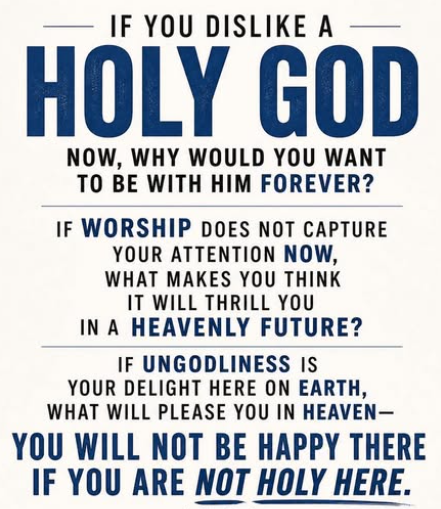
You will not be Happy in Heaven , if you are not Holy here !!!
In Christian theology, the word holy has two meanings. The holiness of God refers to the unparalleled majesty of His incomparable being and His blameless, faultless, unblemished moral purity (Isaiah 6:1–5; Revelation 4:1–8). Holy also refers to something or someone that has been separated from the common or set aside for God’s use. As an example, Belshazzar profaned the holy temple vessels—those set aside for use by God’s priests—by drinking toasts to his idols (Daniel 5:2–4). Belshazzar’s abuse of these holy artifacts made him guilty of sacrilege.
Unlike His created beings, God is eternal, preeminent, omnipotent, omniscient, and omnipresent. He was, is, and will be before all things. He is ageless, tireless, and faultless. He is beyond full human comprehension. Indeed, our language lacks the superlatives necessary to justly describe Him. Drawn to Him for His unequaled goodness and majesty, the psalmist wrote, “As a deer pants for flowing streams, so pants my soul for you, O God” (Psalm 42:1, ESV). Nothing or no one satisfies like God, for He is altogether lovely to behold. Earthly treasures will pass away, but the Lord is our great reward and inheritance (Joshua 13:33).
And yet the holiness of God presents something of a dilemma in the hearts and minds of mortal man. We are drawn to Him, for it is He who has made us (Genesis 1:27; Psalm 100:3), but as inherently flawed creatures, we also cower in the all-revealing light of His majestic glory. Just as the Israelites trembled in fear when God appeared to Moses on the mountain in Sinai, we prefer keeping God safely at arm’s length (Exodus 20:18–21). These ambivalent feelings of attraction and dread brought about by the holiness of God are illustrated in the following passage:
“In the year that King Uzziah died I saw the Lord sitting upon a throne, high and lifted up; and the train of his robe filled the temple. Above him stood the seraphim. Each had six wings: with two he covered his face, and with two he covered his feet, and with two he flew. And one called to another and said:
‘Holy, holy, holy is the Lord of hosts;
the whole earth is full of his glory!’
And the foundations of the thresholds shook at the voice of him who called, and the house was filled with smoke. And I said: ‘Woe is me! For I am lost; for I am a man of unclean lips, and I dwell in the midst of a people of unclean lips; for my eyes have seen the King, the Lord of hosts!’” (Isaiah 6:1–5, ESV).
In the numinous presence of the Lord, the prophet Isaiah stood in awestruck wonder, yet the holiness of God caused him to recoil in reverential fear. Similarly, the prophet Daniel and the apostle John demonstrated the same emotional mixture of attraction and dread when ushered into the presence of their majestic Creator (Daniel 8:17; Revelation 1:17).
John wrote, “And I saw what appeared to be a sea of glass mingled with fire—and also those who had conquered the beast and its image and the number of its name, standing beside the sea of glass with harps of God in their hands. And they sing the song of Moses, the servant of God, and the song of the Lamb, saying,
‘Great and amazing are your deeds,
O Lord God the Almighty!
Just and true are your ways,
O King of the nations!
Who will not fear, O Lord,
and glorify your name?
For you alone are holy.
All nations will come
and worship you,
for your righteous acts have been revealed’” (Revelation 15:2–4, ESV).
To the redeemed in heaven, the holiness of God is no longer a mystery. In a unified voice of praise, the citizens of heaven declare in Revelation 15 that
- God is the author of great and mighty deeds
- God is just and true in His ways
- God is the King of all nations
- God is deserving of our reverential fear and innermost respect
- God is to be glorified
- God alone is holy
- God will not be denied worldwide worship and adoration
- God’s ultimate righteousness will be made manifest
While the holiness of God is much too broad a topic for a single article, below are some key verses that will aid the reader’s understanding:
“You shall not take the name of the Lord your God in vain, for the Lord will not hold him guiltless who takes his name in vain” (Exodus 20:7, ESV).
“And when you pray, do not heap up empty phrases as the Gentiles do, for they think that they will be heard for their many words. Do not be like them, for your Father knows what you need before you ask him. Pray then like this:
‘Our Father in heaven,
hallowed be your name’” (Matthew 6:7–9, ESV).
“For thus says the One who is high and lifted up,
who inhabits eternity, whose name is Holy:
‘I dwell in the high and holy place,
and also with him who is of a contrite and lowly spirit,
to revive the spirit of the lowly,
and to revive the heart of the contrite’” (Isaiah 57:15, ESV).
“There is none holy like the Lord:
for there is none besides you;
there is no rock like our God.
Talk no more so very proudly,
let not arrogance come from your mouth;
for the Lord is a God of knowledge,
and by him actions are weighed” (1 Samuel 2:2–3, ESV).
“Therefore, preparing your minds for action, and being sober-minded, set your hope fully on the grace that will be brought to you at the revelation of Jesus Christ. As obedient children, do not be conformed to the passions of your former ignorance, but as he who called you is holy, you also be holy in all your conduct, since it is written, “You shall be holy, for I am holy” (1 Peter 1:13–16, ESV).
“I will also praise you with the harp
for your faithfulness, O my God;
I will sing praises to you with the lyre,
O Holy One of Israel.
My lips will shout for joy,
when I sing praises to you;
my soul also, which you have redeemed” (Psalm 71:22–23, ESV).
The holiness of God should stir our hearts to continual praise and adoration. We delight in Him, for in Him is our ultimate purpose and reason for being (Jeremiah 29:11). No one living apart from God is truly whole. To those who believe, He gives Himself. God is more than a means of achieving a transitory desire or worldly goal, for He is our greatest good. God is an end in Himself.
Though God is worthy of our highest respect and reverential fear, He is neither distant nor aloof (James 2:23). He desires intimacy with us. Despite the sins we have committed, the frequent folly of our thinking, the bouts of pride that stain our character, and the shameful lapses in our faith, God welcomes us with open arms through the redemptive work of His Son, Jesus (2 Corinthians 5:21; Ephesians 2:8–9). It is remarkable that we may approach God as a friend, but we are never to consider Him as our equal.
God’s desire for intimacy with us is not a point to be overlooked. Those who have placed their faith in Christ Jesus as Savior He lovingly adopts as sons and daughters (Ephesians 1:5) and encourages them to call Him “Father” (Romans 8:15; Galatians 4:6). That a holy and blameless God could cherish such dirty-faced orphans, “children of wrath” (Ephesians 2:3), is nearly unimaginable, yet through the cleansing blood of Jesus Christ, the vile and profane are transformed into beloved children and the cherished objects of His most tender affections (1 John 1:7).
We will not achieve holiness or sinless perfection on this side of eternity, but our lives should reflect the immaculate purity of God. The Lord Jesus called us to be “the salt of the earth” (Matthew 5:13). Salt is a preservative, and in these days of moral degradation, may we not be conformed to the behavior and thinking of this decaying planet; rather, may we be ambassadors of Christ and agents of transformation and renewal (2 Corinthians 5:20; Romans 12:2). By imitating the holiness of God, we bring honor to Him and comfort to others.
God is holy. In Him, there is not even the faintest trace of evil. He is impeccably pure, wholly without fault, and uncompromisingly just. God cannot lie. He cannot make wrong decisions. He is blameless, timeless, and sinless. By contrast, we are flawed beings tainted by sin (Isaiah 53:6; 1 John 1:8). By all rights, a holy and righteous God must judge sinners, and the wages of sin is death (Romans 6:23); thankfully, we can escape the wrath of God by placing our trust in Christ Jesus as Savior (Hebrews 2:3). Were it not for the gospel of Jesus Christ, the holiness of God would be mankind’s greatest fear, for no sinner can stand in the presence of His blinding glory. But, through a simple act of faith, those who believe in Jesus as Savior have been pardoned (Matthew 9:6). To the lost the holiness of God is a dreadful matter, but to the redeemed the holiness of God is our greatest good.

Tea Time Manna
Now to him who is able to do immeasurably more than all we ask or imagine, according to his power that is at work within us, to him be glory in the church and in Christ Jesus throughout all generations, for ever and ever! Amen.
—Ephesians 3:20-21
Of all the names for God in the Bible, my favorite is “Him Who-is-Able”! Our God can “do immeasurably more than all we ask or imagine”! Our God is the same God who parted the Red Sea and fed 5,000 people on a green hillside with only a couple of sardine sandwiches. Our Lord not only longs to do more through you and me and the Spirit at work within us, but Jesus also gave us this incredible promise as those who believe:
Very truly I tell you, whoever believes in me will do the works I have been doing, and they will do even greater things than these, because I am going to the Father. And I will do whatever you ask in my name, so that the Father may be glorified in the Son (John 14:12-13).
Unfortunately, most of us haven’t really given Jesus much of a challenge with our wimpy dreams and shallow prayers. Let’s dream big dreams for God. Let’s have great ideas of what he can do through us to reach the lost world. Then hang on for the ride that is more than we can even imagine!
Prayer
Almighty and Awesome God, we pray the prayer of Habakkuk, your prophet:
Lord, [we] have heard of your fame; [we] stand in awe of your deeds, Lord. Repeat them in our day, in our time, make them known… (Habakkuk 3:2).
Please, O Lord, give us faith to imagine and ask for greater things to be done for your glory. Amaze us with your works, which show how shortsighted our faith has really been. We ask this for your glory and the salvation of our world. In Jesus’ name, we ask this. Amen and Amen
Bible Teaching of the Day
LUNCH MANNA =
Holiness is not only a possibility for the Christian; holiness is a requirement. “Without holiness no one will see the Lord” (Hebrews 12:14). The difference between God and us is that He is inherently holy while we, on the other hand, only become holy in relationship to Christ and we only increase in practical holiness as we mature spiritually. The New Testament emphasizes the pursuit of holiness in this world and the final attainment of holiness in the world to come.
To be “holy” means that we are, first of all, “set apart for honorable use.” Whereas we were “once foolish, disobedient, led astray, slaves to various passions and pleasures . . . God our Savior . . . saved us, not because of works done by us in righteousness, but according to his own mercy, by the washing of regeneration and renewal of the Holy Spirit” (Titus 3:3-5; cf. 1 Corinthians 6:11). The Lord took the initiative to pull us out of our former lifestyles. He saved us, cleansed us, and set us apart for righteousness. If we have believed in Christ for salvation, we have been washed by the regeneration of the Holy Spirit and set apart from the world for godliness (see Romans 12:2).
However, the pursuit of holiness does not end when we come to Christ. In fact, it just begins! There is a positional holiness that we inherit at regeneration and a practical holiness which we must actively pursue. God expects us to cultivate a lifestyle of holiness (1 Peter 1:14-16) and commands us to “cleanse ourselves of all defilement of flesh and spirit, perfecting holiness in the fear of God” (2 Corinthians 7:1 NASB). Bringing holiness to “perfection” means that we should be increasing in spiritual fruitfulness every day. We are to consider ourselves “dead to sin” (Romans 6:11), refusing to revert back to our former lifestyles. In this way we “cleanse [ourselves] from what is dishonorable,” becoming vessels for “honorable use, set apart as holy, useful to the master . . . for every good work” (2 Timothy 2:21). Holiness is the mark of every true Christian (1 John 3:9-10).
Cultivating a lifestyle of holiness does not mean that we must draft a list of dos and donts to live by. We are free from the letter of the law which kills (2 Corinthians 3:6) and now live according to the dictates of the Holy Spirit (Galatians 5:16-18).
We are told, “Work out your own salvation with fear and trembling, for it is God who works in you, both to will and to work for his good pleasure” (Philippians 2:12-13). In this verse, we see cooperation between God and His children in sanctification. We “work out” what God “works in” us, because God has a timeline for the virtues that He wishes to cultivate in our lives. Our responsibility is to yield to His wishes, “working out” with focused attention and great care those things that He is causing to grow in us. Holiness will not be brought to completion in our lives with no effort on our part. We are invited to participate in God’s work in us. We will not be “carried to the skies on flowery beds of ease,” as the old hymn says.
This is, perhaps, the most important lesson that we can learn as Christians. God’s ultimate desire for His people is that we be holy—conformed into the image of His Son, Jesus (Romans 8:29; 1 Thessalonians 4:3-4). Holiness is the will of God for our lives.
Of course, the flesh is weak (Mark 14:38). None of us will reach sinless perfection in this world, but God has made provision for our sin. “If we confess our sins, he is faithful and just and will forgive us our sins and purify us from all unrighteousness” (1 John 1:9). Our pursuit of holiness in this world includes daily confessing and forsaking sin (see Hebrews 12:1-3).
God helps us in our weakness by giving us His Holy Spirit who reveals the mind of Christ to us and enables us to carry out His will (1 Corinthians 2:14-16; Philippians 2:13). When we yield to the Spirit, we become fruit-bearing Christians, yielding a harvest with which God is well pleased (Galatians 5:22-23). On the other hand, when we suppress the work of the Holy Spirit by rebelling against His will for us, we stifle the design of God, sabotage our own spiritual growth, and grieve the Holy Spirit (Ephesians 4:30).
If God was gracious enough to redeem us from sin and death and give us new life in Christ, the very least we can do is offer our lives back to Him in complete surrender and holiness, which is for our benefit (cf. Deuteronomy 10:13). Because of God’s mercies, we should be living sacrifices, “holy and pleasing to God” (Romans 12:1; cf. Deuteronomy 10:13). One day, in heaven, we will be free from sin and all its effects. Until then, we “fix our eyes on Jesus, the author and perfecter of our faith” and keep running our race (Hebrews 12:2).
Today’s Devotional
DINNER MANNA =
Perhaps better than any other chapter in the Bible, Leviticus 19 explains what it meant for Israel to live as a holy nation. Through Moses, God spoke to the people, saying, “Be holy because I, the LORD your God, am holy” (Leviticus 19:2). Both the Old and the New Testament stress the importance of cultivating personal holiness in the life of every believer: “But just as he who called you is holy, so be holy in all you do; for it is written: ‘Be holy, because I am holy’” (1 Peter 1:15–16).
In Hebrew, the words translated “holy” and “holiness” have to do with being “set apart,” “separate,” “different,” or “dedicated.” The absolute moral purity of God’s character sets Him apart, making Him different from every other living creature. Yet He calls His people to be holy as He is holy. Humans generally think of holiness as obeying God’s law. But, for God, holiness is not a mere action or a set of behaviors. Holiness is His essence. God is morally and ethically perfect by nature. So how can we set ourselves apart to reflect God’s holiness in the way we live?
The Bible reveals that God’s holiness of character is a model for believers’ lives and our shared communion with others. Both passages (Leviticus 19:2 and 1 Peter 1:16) and their surrounding verses stress that those who wish to replicate God’s holiness must reflect His holy nature in their relationships with other people and their sincere love for fellow believers.
In Leviticus 19:1–37, God applies the Ten Commandments to various areas of life, spelling out in great detail for the Israelites how to be holy as He is holy. They were to honor their parents, keep the Sabbath, not practice idolatry, worship and offer sacrifices properly according to God’s instructions, provide for the poor, not steal, cheat, seek revenge, and not follow pagan customs and rituals. The commands continue, covering every aspect of spiritual, moral, family, work, and community life. Included is the charge to “love your neighbor as yourself. I am the LORD” (Leviticus 19:18).
Peter also lays out how we can live in the light of God’s command to be holy as He is holy. First, he says to discipline our minds: “So prepare your minds for action and exercise self-control. Put all your hope in the gracious salvation that will come to you when Jesus Christ is revealed to the world” (1 Peter 1:13, NLT). We are to exercise self-control and stay alert both mentally and spiritually. This mental discipline requires a concentrated focus on trusting in the Lord to get us to our final destination, where we will experience the fullness of God’s grace in Jesus Christ.
Paul expresses it like this: “Not that I have already reached the goal or am already perfect, but I make every effort to take hold of it because I also have been taken hold of by Christ Jesus. Brothers and sisters, I do not consider myself to have taken hold of it. But one thing I do: Forgetting what is behind and reaching forward to what is ahead, I pursue as my goal the prize promised by God’s heavenly call in Christ Jesus” (Philippians 3:12–14, CSB). If we focus only on the short-term—our current situation—we run the risk of straying off course. But if we live with total trust that Jesus Christ will return to accomplish all that He started in us (Philippians 1:6), it will make a significant difference in how we live.
“You must live as God’s obedient children,” says Peter, “Don’t slip back into your old ways of living to satisfy your own desires” (1 Peter 1:14, NLT). When we “do not conform to the evil desires” (NIV) we had before we came to know Christ, we live in response to God’s holiness, adopting His behavior as our pattern.
This change of behavior begins on the inside with our attitude and mind-set. When our inner thought life, our purpose, and our character are changed into the image of Christ, our outward selves and outworking behavior will alter naturally. This process is the Holy Spirit’s work of sanctification: “And we all, who with unveiled faces contemplate the Lord’s glory, are being transformed into his image with ever-increasing glory, which comes from the Lord, who is the Spirit” (2 Corinthians 3:18).
As part of his teaching on cultivating holiness, Peter instructs believers to “live out your time as foreigners here in reverent fear” (1 Peter 1:17). Living as strangers here on earth hammers home the idea that our earthly lives with all their challenges and struggles are only temporary. Even in our pain, we can live with hope as citizens of a future heavenly reality. Reverent fear refers to humble, respectful awe of God, which motivates us to live obedient, holy lives.
Finally, Peter makes the point that living in the light of God’s holiness means demonstrating “sincere love to each other as brothers and sisters. Love each other deeply with all your heart” (1 Peter 1:22, NLT).
Believers ought to be notably different from non-believers and their old selves because of their relationship with God through Jesus Christ. His holy presence in our lives produces in us a loving obedience to God’s Word, which ultimately forms God’s character in us. If we are set apart for God’s use, separated from our old, common way of living, we are following God’s command to “be holy for I am holy.”

NEWS MANNA –
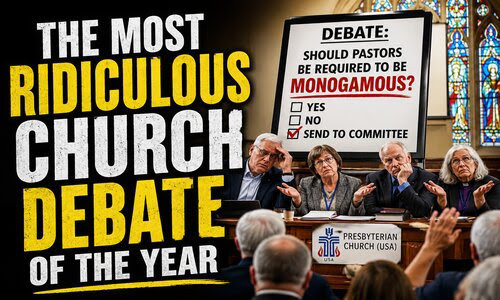
The Most Ridiculous Church Debate Of The Year
For years we’ve been told there are certain issues that are simply too controversial to decide.
So what do organizations do?
They create a committee.
Study it.
Delay it.
Hope the controversy cools off before anyone has to take a position.
That’s exactly what happened this week.
The only problem?
The organization wasn’t a Fortune 500 company trying to navigate corporate politics.
It wasn’t Congress trying to avoid a difficult vote.
It was a Christian denomination trying to decide whether its pastors should be… monogamous.
Yes, you read that correctly.
The Presbyterian Church (USA) postponed debate over a proposal that would explicitly require its clergy to be monogamous, referring the matter to committee after the issue generated significant disagreement among delegates. Let that sink in for a moment. A church couldn’t decide whether those entrusted with preaching God’s Word should be expected to remain sexually faithful to one spouse.
How did we arrive at a place where one of Christianity’s oldest and most basic moral standards has become too controversial to affirm?
The proposal itself should have been anything but groundbreaking. It sought to reaffirm what Christians have understood for centuries–that those called to lead Christ’s Church should model biblical standards in both doctrine and personal conduct. Yet even that proved too much for many within the denomination, particularly those who argued such language would exclude or stigmatize people in alternative relationship arrangements, including polyamorous relationships.
Rather than settle the issue, the denomination chose a familiar institutional escape hatch: send it to committee.
Anyone who has watched politics knows the strategy well. When leaders don’t want to make a difficult decision–or fear upsetting influential factions–they study it. They appoint a task force. They refer it for further consideration. Sometimes committees are valuable. Other times they simply become a place where difficult truths are parked until a future meeting.
Unfortunately, that appears to be what happened here.
The deeper concern isn’t merely the delay itself. It is what the delay reveals.
Consider what is actually being debated.
It isn’t an argument about worship music or church budgets.
The controversy is whether pastors should be expected to practice monogamy.
Fifty years ago, no Christian would have imagined that question needing a committee.
Scripture certainly doesn’t treat it as controversial.
When outlining the qualifications for elders and overseers, the Apostle Paul describes church leaders as being “the husband of one wife,” managing their households well and living lives worthy of imitation. Throughout both the Old and New Testaments, God’s design for marriage is consistently presented as an exclusive covenant marked by lifelong faithfulness.
Those standards were never viewed as oppressive limitations. They were evidence of spiritual maturity.
But increasingly within parts of the modern church, biblical standards are no longer measured by whether they are faithful to Scripture. They are measured by whether they align with contemporary cultural values.
That is a profound shift.
The question quietly changes from, “What does God require?” to “Who might feel excluded?”
Of course, Christians are called to love every person. Every church should welcome people seeking Christ regardless of their past, their struggles, or the sins that have marked their lives. The Gospel is for everyone.
But welcoming sinners is not the same thing as redefining the qualifications for spiritual leadership.
Grace never requires compromising truth.
History shows that theological drift rarely happens overnight. It moves incrementally. One accommodation becomes the justification for another. Teachings that were once unquestioned become optional. Eventually, convictions once considered foundational are portrayed as intolerant.
The Presbyterian Church (USA) has followed that pattern for years, revising longstanding positions on sexuality and marriage while continuing to experience declining membership. Rather than asking whether accommodation to the culture has strengthened the church, many appear determined to continue down the same road.
The irony is difficult to miss.
The culture promises relevance through compromise, yet every compromise seems to create another demand for further change. The finish line never stays in the same place.
Today’s debate over monogamy would have shocked previous generations of Christians. One can’t help but wonder what tomorrow’s “too controversial” biblical teaching will be.
This story ultimately isn’t about polyamory.
It isn’t even about one denomination.
It is about whether the Church will continue to believe that Scripture speaks with authority even when its teachings collide with the spirit of the age.
Because if a church can no longer confidently say that its pastors should be faithful to one spouse without referring the question to committee, then the greatest controversy isn’t over marriage.
It’s over whether God’s Word still has the final say.
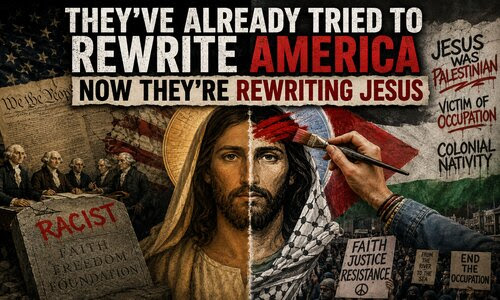
They’ve Already Tried To Rewrite America-Now They’re Rewriting Jesus
There was a time when history mattered.
Today, history is treated like wet clay–something to be molded into whatever shape best serves the political cause of the moment. Statues are toppled. Founding Fathers are recast as villains. National histories are rewritten through ideological lenses.
Now, even Jesus Christ isn’t off limits.
The latest attempt comes from the orbit of New York City’s socialist mayor, Zohran Mamdani. Reports indicate that his wife, Rama Duwaji, is co-hosting a luxury spiritual retreat in Corsica where attendees–paying as much as $5,000–will meditate on Mary as a “Palestinian woman giving birth under occupation.”
It’s difficult to know where to begin.
This isn’t creative theology.
It isn’t historical scholarship.
It isn’t even remotely true.
It is political propaganda dressed in religious language.
And it represents yet another effort to hijack Christianity in service of a modern ideological movement.
The Left Has Been Trying To “Palestinianize” Jesus For Years
This didn’t begin with Zohran Mamdani’s wife.
For years progressive activists, celebrity pastors, academics, and social media influencers have repeated variations of the same claim.
“Jesus was Palestinian.”
“Jesus was the first Palestinian refugee.”
“Jesus was a victim of Israeli occupation.”
Christmas after Christmas we’ve watched churches display nativity scenes draped in Palestinian flags. During every major Israel-Hamas conflict, social media fills with graphics insisting that Jesus was somehow Palestinian.
The narrative is always the same.
If activists can convince Christians that Jesus was Palestinian rather than Jewish, they can subtly reshape how believers think about Israel, biblical prophecy, and today’s Middle East.
It is one of the most successful examples of historical revisionism in recent years because it sounds compassionate while quietly rewriting nearly every historical fact surrounding Christ’s birth.
There Was No Such Thing As A Palestinian
Here’s the inconvenient problem.
Palestine didn’t exist.
Not as a nation.
Not as a people group.
Not as an ethnicity.
Not in the first century.
Jesus was born in Bethlehem in Judea.
Mary was Jewish.
Joseph was Jewish.
Their relatives were Jewish.
Their Scriptures were Jewish.
Their Temple was Jewish.
Their festivals were Jewish.
Their genealogy was Jewish.
The Gospels go to extraordinary lengths to establish Jesus’ Jewish ancestry because it fulfilled hundreds of Old Testament prophecies concerning Israel’s Messiah.
The very opening chapter of Matthew exists for that reason.
Luke traces His lineage for the same reason.
Paul repeatedly identifies Jesus as the promised descendant of David.
The writer of Hebrews identifies Him as coming from the tribe of Judah.
This isn’t a minor detail.
It is central to the entire Gospel.
The name “Palestine” itself wasn’t applied to Judea until roughly a century after Christ’s death, when Emperor Hadrian renamed the province “Syria Palaestina” following the Bar Kokhba revolt in an effort to erase the Jewish identity of the land.
Ironically, the people claiming Jesus was Palestinian are borrowing a name created by pagan Rome to diminish Israel.
Erasing Jesus’ Jewish Identity Isn’t An Accident
This is about far more than semantics.
If Jesus is no longer understood as Israel’s Jewish Messiah, then the biblical story itself begins to unravel.
God’s covenant with Abraham becomes blurred.
The promises to David lose their context.
Messianic prophecy becomes detached from Israel.
The unique role of the Jewish people in redemptive history fades into the background.
Once that foundation is removed, replacing biblical theology with modern political activism becomes much easier.
This isn’t merely historical revision.
It’s theological revision.
Even Islam Doesn’t Teach What They’re Selling
The irony becomes even more striking when viewed through the lens of Islam.
Muslims do honor Mary–Maryam–as one of the greatest women who ever lived.
She is the only woman mentioned by name throughout the Quran.
But Islam does not teach the same Mary Christians believe in.
Christians believe Mary gave birth to God incarnate–the eternal Son of God who died on the cross for the sins of the world and rose bodily from the grave.
Islam explicitly rejects every one of those central truths.
Jesus (Isa) is regarded only as a prophet.
He is not the Son of God.
His crucifixion is denied or radically reinterpreted.
His resurrection–the very heart of Christianity–is rejected.
So while Mary is honored in Islam, she exists within an entirely different theological framework.
The retreat’s messaging attempts to merge Christianity, Islamic reverence for Mary, and modern Palestinian nationalism into one emotionally compelling narrative.
The result isn’t biblical.
It isn’t Islamic.
It isn’t historical.
It’s ideological.
Truth Is Becoming The First Casualty
Perhaps the most alarming part of all this is how easily so many people accept it.
Most Christians know very little about Jewish history.
Many couldn’t explain why Matthew begins with a genealogy or why Luke carefully documents Christ’s ancestry.
That biblical illiteracy creates fertile ground for political myths.
If people don’t know Scripture, almost any story can be inserted into it.
That’s exactly what we’re witnessing.
Jesus becomes whatever modern activists need Him to be.
A socialist.
A revolutionary.
A refugee.
A Palestinian.
Anything–except the Jewish Messiah Scripture actually presents.
Christians Should See What’s Happening
This debate isn’t really about Mary.
It’s about authority.
Will Christians allow twenty-first century political activists to redefine biblical history?
Or will we allow Scripture–and history–to speak for themselves?
Mary was not a Palestinian woman giving birth under occupation.
She was a Jewish virgin from Nazareth, chosen by God to bear the promised Messiah exactly as the prophets foretold centuries in advance.
That isn’t merely a historical detail.
It is one of the pillars upon which the Gospel itself stands.
When a culture starts rewriting history, it won’t stop with kings, presidents, or civilizations.
Eventually, it comes for Christ Himself.
And that is exactly what we’re watching happen.

TruLight TV – Gaither – Heavenly Love (A Southern Convention Sing-Along)
Bill & Gloria Gaither joined over 200 Homecoming Friends who united in heart and voice for an old-fashioned, convention-styled, Gospel sing-along. The rafters echoed with sweet harmony and heartfelt praise as the choir sang “Jesus, Hold My Hand,” “Lord, Lead Me On,” “Where No One Stands Alone,” “He’s a Personal Savior” and more. Heavenly Love: A Southern Convention Sing-Along captures messages of joy, encouragement and faith and offers listeners everywhere the opportunity to join in the song.
Today on TruLight Radio XM
TruLight Radio XM 24/7
Program
GMT / UTC +2
Monday To Fridays
00:15 Words to Live By Testimonies
01.15 Science Scripture and Salvation
02.15 Ground Works
04.00 Gospel Concert of the Day
05.00 The Daren Streblow Comedy Show
5:55 It is Today devotional
6:00 Gaither Homecoming Morning Show
7:15 Discover the Word
8.15 Destined for Victory
8:55 Science Scripture and Salvation
9:00 Holy Spirit Hour – Normally Sermons
10:15 Hope of the Heart
11:15 Unshackled
11.45 Words to Live By
12:15 Truth for Life
13:15 Living on the Edge with Chip Ingram
14:15 Focus on the Family
15:00 Kids Hour
16:00 In Touch with Dr. Charles Stanley
16:30 Groundwork
17:15 Live in the Light
18:15 Renewing your Mind
19:00 Gaither Homecoming Show
20:15 Growing Hope
21:15 Adventures in Odyssey Radio Drama
21:45 Bible Reading
22:15 Night-sounds
23.00 Good Old Country Gospel / Rhema Gospel Express
VISIT THE WEBSITE
TruLight Ministry News – EXTRA MANNA
TruLight Ministries orders from God since 2012 . Teach Them , Comfort Them and Warn Them!
INTRODUCTION TO TRULIGHT MINISTRIES
Healing Truths.
End Time Articles.
Bonus Manna = Bonus Teaching for the Child of God !!
People have different ideas about heaven. Many have no understanding of God at all but still like to think of heaven as the “better place” where we all go when we die. Ideas about heaven are often no more than vague hopes, on par with “maybe I’ll win the lottery someday.” Most people don’t give heaven much thought until they attend a funeral or a loved one dies. It is popular to refer to heaven as the place where “the good people go.” And of course, everyone they know and love is included in the category of “good people.”
But the Bible has a lot to say about life after death, and it contradicts popular opinion. John 3:16 says, “For God so loved the world that he gave his one and only Son, that whoever believes in him shall not perish but have eternal life.” Then in verse 36, Jesus goes on to say, “Whoever believes in the Son has eternal life, but whoever rejects the Son will not see life, for God’s wrath remains on them.” Hebrews 9:27 says, “People are destined to die once, and after that to face judgment.” According to these verses, everyone dies, but not everyone goes to heaven (see also Matthew 25:46; Romans 6:23; Luke 12:5; Mark 9:43).
God is holy and perfect. Heaven, His dwelling place, is holy and perfect, too (Psalm 68:5; Nehemiah 1:5; Revelation 11:19). According to Romans 3:10, “there is no one righteous, not even one.” No human being is holy and perfect. No one is “good enough” for heaven. The people we call “good” are not good at all compared to the sinless perfection of God. If God allowed sinful humans to enter the perfection of heaven, that place would no longer be perfect. What standard should be used to determine who is “good enough”? God’s standard is the only one that counts, and He has already ruled. Romans 3:23 says that “all have sinned and fall short of the glory of God.” And the payment for that sin is eternal separation from God (Romans 6:23).
Sin has to be punished, or God is not just (2 Thessalonians 1:6). The judgment we face at death is simply God bringing our accounts up to date and passing sentence on our crimes against Him. We have no way to make our wrongs right. Our good does not outweigh our bad. Just as one drop of arsenic in a glass of water poisons the whole glass, one sin ruins perfection.
So, God became man and took our punishment upon Himself. Jesus is God in the flesh. He lived a sinless life of obedience to His Father (Hebrews 4:15). He had no sin, yet at the cross He took our sin and made it His own. Once He paid the price for our sin, we could be declared holy and perfect (2 Corinthians 5:21). When we confess our sin to Him and ask His forgiveness on the basis of Christ’s sacrifice, He saves us. It’s as if He stamps “Paid in Full” over our debt of sin (see Acts 2:38; 3:19; 1 Peter 3:18).
When we stand before God one day, we cannot beg entrance to heaven based on our own merit. We have none to offer. Compared to God’s standard of holiness, not one of us is good enough. But Jesus is good enough, and it is by His merit we can enter heaven. First Corinthians 6:9–11 says, “Do you not know that wrongdoers will not inherit the kingdom of God? Do not be deceived: Neither the sexually immoral nor idolaters nor adulterers nor men who have sex with men nor thieves nor the greedy nor drunkards nor slanderers nor swindlers will inherit the kingdom of God. And that is what some of you were. But you were washed, you were sanctified, you were justified in the name of the Lord Jesus Christ and by the Spirit of our God.” The sacrifice of Jesus covers it all.
The people who go to heaven are all alike in one way: they are sinners who have placed their faith in the Lord Jesus Christ (John 1:12; Acts 16:31; Romans 10:9). They have recognized their need for a Savior and humbly accepted God’s offer of forgiveness. They have repented of their old ways of living and set their course to follow Christ (Mark 8:34; John 15:14). They have not attempted to earn God’s forgiveness but have served Him gladly from grateful hearts (Psalm 100:2). The kind of faith that saves a soul is one that transforms a life (James 2:26; 1 John 3:9–10) and rests fully on the grace of God.
Do you want to know for sure that you will be among those who will go to heaven? Please read the following article: Going to heaven—how can I guarantee my eternal destination?
Share this Feeding of Manna with your Friends and Family. just click on the Social Media icon and share !