Hosted by TruLight Ministries – The Place of Truth
SELECT YOUR READING LANGUAGE – BOTTOM LEFT = YOUR DAILY MANNA NOW AVAILABLE IN 103 LANGUAGES
@ TruLight – Daily Manna is not Just a Bible Verse with a Small Prayer . No WE SERVE DAILY Manna for the Whole Day . Breakfast , Lunch , Dinner , Plus tea Times and even Entertainment Manna . Plus News Manna and More , This Daily Manna will keep you Spiritually full for the full 48 Hours and even More to Share with your Friends and Family !!!
I need to Get Back to God . Rekindle Our Relationship !!!
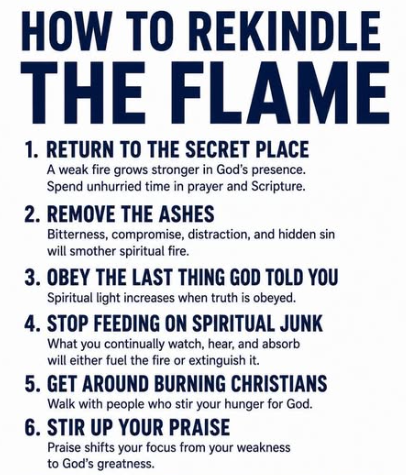
In order to get “right” with God, we must first understand what is “wrong.” The answer is sin. “There is no one who does good, not even one” (Psalm 14:3). We have rebelled against God’s commands; we “like sheep, have gone astray” (Isaiah 53:6).
The bad news is that the penalty for sin is death. “The soul who sins is the one who will die” (Ezekiel 18:4). The good news is that a loving God has pursued us in order to bring us salvation. Jesus declared His purpose was “to seek and to save what was lost” (Luke 19:10), and He pronounced His purpose accomplished when He died on the cross with the words, “It is finished!” (John 19:30).
Having a right relationship with God begins with acknowledging your sin. Next comes a humble confession of your sin to God (Isaiah 57:15). “For it is with your heart that you believe and are justified, and it is with your mouth that you confess and are saved” (Romans 10:10).
This repentance must be accompanied by faith – specifically, faith that Jesus’ sacrificial death and miraculous resurrection qualify Him to be your Savior. “If you confess with your mouth, ‘Jesus is Lord,’ and believe in your heart that God raised him from the dead, you will be saved” (Romans 10:9). Many other passages speak of the necessity of faith, such as John 20:27; Acts 16:31; Galatians 2:16; 3:11, 26; and Ephesians 2:8.
Being right with God is a matter of your response to what God has done on your behalf. He sent the Savior, He provided the sacrifice to take away your sin (John 1:29), and He offers you the promise: “Everyone who calls on the name of the Lord will be saved” (Acts 2:21).
A beautiful illustration of repentance and forgiveness is the parable of the prodigal son (Luke 15:11-32). The younger son wasted his father’s gift in shameful sin (verse 13). When he acknowledged his wrongdoing, he decided to return home (verse 18). He assumed he would no longer be considered a son (verse 19), but he was wrong. The father loved the returned rebel as much as ever (verse 20). All was forgiven, and a celebration ensued (verse 24). God is good to keep His promises, including the promise to forgive. “The Lord is close to the brokenhearted and saves those who are crushed in spirit” (Psalm 34:18).
If you want to get right with God, here is a sample prayer. Remember, saying this prayer or any other prayer will not save you. It is only trusting in Christ that can save you from sin. This prayer is simply a way to express to God your faith in Him and thank Him for providing for your salvation. “God, I know that I have sinned against You and am deserving of punishment. But Jesus Christ took the punishment that I deserve so that through faith in Him and His resurrection I could be forgiven. I place my trust in You for salvation. Thank You for Your wonderful grace and forgiveness – the gift of eternal life! Amen!”
Have you made a decision for Christ because of what you have read here? If so, please click on the “I trusted in Christ as Savior today” button below.

Tea Time Manna
Rejoice with those who rejoice; mourn with those who mourn.
—Romans 12:15
We are not alone. God promised that he would never leave us or forsake us (Hebrews 13:5-6). He has given us Jesus’ family to find support and share our joys. Along the way, we want to share each other’s burdens and soar on each other’s joys. We want to love each other through our hurts and mourn with each other through our grief. There should be no such thing as a solo Christian, whether joyful or in sorrow, excited or downtrodden. If we see a brother or sister struggling in life and feeling alone, let’s decide to walk with them. If we see one in joyful celebration, we should join them in that celebration. If they feel horrible sorrows and grief, we should sit with them and let them share their grief with us. We demonstrate our love for Jesus by the ways we love each other, and demonstrate that love in clear, practical ways of being with them, serving them, and sharing in their joys and sorrows (John 13:34-35; 1 John 3:16-18).
Prayer
Loving Father, lead me to the people today who need their burdens lifted and their joys celebrated. Let me be your presence in the life of another believer today, whether they face good times or hard times. I ask to be more like Jesus, to sense the needs of my brothers and sisters, and to be present for them. I pray this in the power and authority of Jesus’ name. Amen and Amen
Bible Teaching of the Day
LUNCH MANNA =
We tend to give up on people who repeatedly disappoint us. That is, after a certain number of letdowns, we stop trying to improve that person’s condition. We’ve tried everything—we’ve advised, encouraged, rebuked, begged, pressured, assisted, and more. All we get in return are empty promises and repeated disappointment. We can only take so much, and we give up.
Would God ever give up on you the same way? Would He ever stop working in your life and stop trying to improve the condition of your soul? There are various reasons why people might think He would, but there is a biblical response to each:
- “God will give up on me because I’ve sinned too much.” But Scripture says, “Where sin increased, grace increased all the more” (Romans 5:20). No one can out-sin God’s grace.
- “God will give up on me because I keep repeating the same sin.” Jesus taught us to forgive each other “not up to seven times, but up to seventy times seven” (Matthew 18:22, NKJV). God holds Himself to at least that same standard.
- “God will give up on me because I’m not worth rescuing.” Your worthiness has nothing to do with your salvation. You are forgiven on the basis of Christ’s worthiness alone. He is the Holy One who died and shed His blood; He is the one who “purchased for God persons from every tribe and language and people and nation” (Revelation 5:9).
- “God will give up on me because I’m a failure.” “All have sinned and fall short of the glory of God” (Romans 3:23); i.e., we are all equally failures before God. In Christ, we are made victors: “Everyone born of God overcomes the world. This is the victory that has overcome the world, even our faith” (1 John 5:4).
- “God will give up on me because I keep taxing His patience.” Be glad for this verse: “The Lord is not slow in keeping his promise. . . . Instead he is patient with you, not wanting anyone to perish, but everyone to come to repentance” (2 Peter 3:9).
- “God will give up on me because, if I were God, I would give up on me.” It’s a good thing you’re not God! “God is not . . . a human being, that he should change his mind. Does he speak and then not act? Does he promise and not fulfill?” (Numbers 23:19). The Bible repeatedly emphasizes God’s faithfulness: “May your whole spirit, soul and body be kept blameless at the coming of our Lord Jesus Christ. The one who calls you is faithful, and he will do it” (1 Thessalonians 5:23b–24).
You can have added confidence that God will not give up on you because of the examples of God’s faithfulness in history:
When Adam and Eve sinned, God did not “give up” on them; He came looking for them. They hid, but God sought: “But the Lord God called to the man, ‘Where are you?’” (Genesis 3:9).
When Israel followed after idols and forsook the Lord, the nation was delivered into captivity. But God did not “give up” on them; He promised them continued love and eventual renewal:
“Zion said, ‘The Lord has forsaken me,
the Lord has forgotten me.’
‘Can a mother forget the baby at her breast
and have no compassion on the child she has borne?
Though she may forget,
I will not forget you!
See, I have engraved you on the palms of my hands’” (Isaiah 49:14–16a).
When Peter denied Jesus on the night of the Lord’s arrest, God did not “give up” on him; in fact, Jesus had promised Peter a restoration before Peter even committed the sin: “When you have turned back,” Jesus said, “strengthen your brothers” (Luke 22:32). God wasn’t done with Peter yet.
When the world seemed hopelessly, irretrievably lost, God did not “give up” on us; He sent the Savior: “God so loved the world that he gave his one and only Son, that whoever believes in him shall not perish but have eternal life” (John 3:16).
God created you and loves you very much. He wants to have a vibrant relationship with you, and Jesus’ mission proves it. Jesus said, “The Son of Man came to seek and to save the lost” (Luke 19:10). In the parable of the lost sheep, the shepherd seeks the lost animal “until he finds it” (Luke 15:4). In the parable of the lost coin, the woman sweeps the house “until she finds it” (Luke 15:8). There’s no resignation in those parables. No giving up. The lost must be found.
This is certainly good news! God has gone to great lengths to save you from sin and death, and He did so “while we were still sinners” (Romans 5:8). God will not “give up” on anyone, you included.
What about those who resist the Holy Spirit’s conviction, refuse to heed the Word of God, decline to give God thanks, and stubbornly pursue a sinful path? Romans 1:18–32 is a sobering passage on the consequences of turning one’s back on God and refusing to repent. God gives the rebellious sinner over to three things:
- “to sexual impurity” (verse 24)
- “to shameful lusts” (verse 26)
- “to a depraved mind” (verse 28)
As the wicked desert God, God in turn deserts them, no longer giving them divine direction or restraint, but allowing them to corrupt themselves as they wish. This abandonment of God, this being given over to one’s own desires, is an awful judgment—and not one that will befall the child of God.
If you are a child of God, there is no way that God will give up on you. You have this promise: “And I am certain that God, who began the good work within you, will continue his work until it is finally finished on the day when Christ Jesus returns” (Philippians 1:6).
Today’s Devotional
DINNER MANNA =
Israel had a long history of wandering far from God and disobeying His holy laws. Time and time again, God, in His infinite love and never-ending mercy (Lamentations 3:22), called His people to repent and come back to Him: “‘Ever since the time of your ancestors you have turned away from my decrees and have not kept them. Return to me, and I will return to you,’ says the LORD Almighty” (Malachi 3:7).
When God says, “Return to Me,” the Hebrew verb translated “return” expresses the idea of turning back or coming to a place, condition, or activity that one has experienced before. God wants His people who are far away in spiritual rebellion to repent of their sins and come back to a place of wholehearted obedience and devotion to the Lord. It’s a theme found several times in Scripture; in Zechariah 1:3, the Lord lovingly pleads, “Return to me, and I will return to you” (NLT).
However, when God says, “I will return to you,” He is not implying that He needs to repent from sin. Instead, the Lord Almighty is promising to come again as He had in the past and bring His people His unique presence and abundant blessings. Their wholehearted repentance would bring about such divine blessing that any doubt of God’s love and compassion would be removed.
Jeremiah 24:7 explains, “I will give them hearts that recognize me as the LORD. They will be my people, and I will be their God, for they will return to me wholeheartedly” (NLT). Nehemiah 1:9 further clarifies, “But if you return to me and obey my commands and live by them, then even if you are exiled to the ends of the earth, I will bring you back to the place I have chosen for my name to be honored” (NLT).
The entire book of Malachi points the way back to the Lord, explaining to the people how to get right with God. They were to begin through obedience to God’s Word and being faithful in their giving to the Lord (Malachi 3:8–12).
It is impossible to follow God and stay close to Him without faithful obedience to His Word (John 14:21). Throughout Scripture, God’s people are told to “be careful to do what the LORD your God has commanded you; do not turn aside to the right or to the left” (Deuteronomy 5:32; see also Joshua 1:7; 23:6). But if we do happen to stumble or turn aside, we can be certain that God’s heart cry to us will be, “Return to Me, and I will return to you.”
Our heavenly Father cares deeply for us despite our tendency to wander into sinful disobedience (Jeremiah 31:3). He draws us back with enduring kindness, commanding, “Return to Me.” We can do this through humble confession and prayer: “Then if my people who are called by my name will humble themselves and pray and seek my face and turn from their wicked ways, I will hear from heaven and will forgive their sins and restore their land” (2 Chronicles 7:14, NLT; see also 1 John 1:9).
“Return to Me, and I will return to you” aligns with Christ’s instruction to “remain in me, and I will remain in you” (John 15:4, NLT). How much better it is for us if we never leave Him in the first place!
Jesus also said, “All who love me will do what I say. My Father will love them, and we will come and make our home with each of them” (John 14:23, NLT). In the person of the Holy Spirit, God takes up active residence in our lives at all times (1 Corinthians 3:16; Ephesians 2:22).

NEWS MANNA –
Bible Prophecy, Signs of the Times and Gog and Magog Updates with Articles in the News
Is The Stage Being Set For Daniel’s ‘Peace With Many’?

For decades, Bible prophecy teachers have pointed to one mysterious passage in the book of Daniel as a possible roadmap for the final chapter of human history. The verse is Book of Daniel 9:27 — the prophecy describing a future leader who will “confirm a covenant with many” for seven years before everything collapses into betrayal, tribulation, and global chaos.
To many Christians, it has long sounded almost impossible. How could the Middle East — perhaps the most divided and volatile region on Earth — ever unite under some type of sweeping peace framework involving Israel, Arab nations, and possibly even the Temple Mount itself?
And yet today, ideas once considered fantasy are now openly discussed by world leaders.
This week, reports emerged that President Donald Trump held a high-stakes conference call with leaders from several Arab and Muslim nations, pressing them to consider normalizing relations with Israel in an expanded version of the Abraham Accords once a deal to end the Iran conflict is finalized. According to reports, the leaders included representatives from Saudi Arabia, the United Arab Emirates, Qatar, Pakistan, Turkey, Egypt, Jordan, and Bahrain.
Just pause and think about that for a moment.
Only a generation ago, many of these same nations would not even publicly acknowledge Israel’s legitimacy. Some still officially reject it today. Yet now the conversation is no longer merely about ceasefires or backchannel diplomacy. It is about formalized regional peace structures, economic cooperation, security agreements, and potentially a completely redesigned Middle East order.
That alone is historic.
The original Abraham Accords already shattered decades of assumptions when the UAE and Bahrain normalized relations with Israel in 2020. Since then, prophecy watchers have increasingly wondered whether the accords could eventually evolve into something much larger — perhaps even laying groundwork for the covenant described in Daniel.
Yet there is another important detail often overlooked in modern prophecy discussions: Daniel’s covenant is specifically connected to a seven-year timeframe.
7 years
Daniel 9:27 says the coming ruler “shall confirm the covenant with many for one week,” with the “week” widely understood by prophecy teachers as a seven-year prophetic period.
That distinction matters.
The current peace efforts being discussed in the Middle East are aimed at producing broad, long-term regional stability. President Trump’s push for expanded normalization between Israel and Arab nations is not being presented as a temporary seven-year arrangement. There would seemingly be little reason for diplomats to intentionally construct a peace framework designed to expire after exactly seven years.
This is one reason many prophecy scholars caution against immediately labeling every new agreement as the fulfillment of Daniel 9:27 itself.
Instead, what may be happening now is something different: the gradual construction of the political architecture that could eventually make such a future covenant possible.
In other words, today’s diplomacy may not be the covenant — but it could help create the environment for a later agreement that fits Daniel’s description more precisely.
And this is where discussions surrounding Jerusalem and the Temple Mount become especially significant.
If future negotiations were tied to a highly sensitive issue such as Jewish worship rights on the Temple Mount, shared religious governance, or even authorization connected to a future temple structure, then suddenly the idea of a specific timed arrangement becomes easier to envision. A temporary framework surrounding one of the most explosive religious sites on earth could potentially involve carefully negotiated timelines, guarantees, or phased agreements unlike traditional diplomatic treaties.
Right now that remains speculative.
But even speculation of this kind would have sounded absurd only years ago.
Of course, Christians should be cautious about claiming any one event definitively fulfills prophecy. Scripture warns believers to watch carefully, not speculate recklessly. God’s timing often unfolds differently than human expectations.
And there are major obstacles standing in the way.
Several Arab states continue insisting that no true normalization with Israel can happen without the establishment of a Palestinian state. Nations like Pakistan and Turkey remain deeply hostile toward fully embracing Israel diplomatically. Even Saudi Arabia, once viewed as the crown jewel of future normalization, has reportedly cooled considerably amid the Gaza conflict and regional instability.
In other words, this entire effort could still collapse tomorrow.
But that may actually be part of the prophetic picture itself.
Bible prophecy does not necessarily portray lasting peace — only the appearance of it. Many prophecy teachers have long warned that any future Middle East agreement could begin as a hopeful diplomatic breakthrough before unraveling into catastrophe.
What makes the current moment especially fascinating is not merely the diplomacy itself, but what could eventually become attached to it.
Increasingly, discussions surrounding Jerusalem and the Temple Mount are entering mainstream geopolitical conversation in ways almost unimaginable a decade ago.
Recent reports have even suggested proposals involving a “multi-faith center” arrangement on the Temple Mount that could expand Jewish prayer rights while altering the long-standing Jordanian custodianship structure over the site. While some officials have denied aspects of those reports, the mere fact such ideas are circulating publicly is extraordinary.
Why does this matter prophetically?
Because according to many evangelical prophecy teachers a future Jewish temple appears central to end-times prophecy. Daniel’s prophecies, Jesus’ Olivet Discourse, and the book of Revelation all seem to imply temple activity existing during the Tribulation period.
For years skeptics mocked the idea entirely. There was no political pathway. No Muslim nation would tolerate it. The Temple Mount was simply too explosive.
Yet suddenly the impossible no longer seems quite so impossible.
Could a future regional peace agreement include unprecedented religious concessions in Jerusalem? Could international pressure eventually produce some form of shared administration, expanded Jewish access, or even construction beside the Dome of the Rock?
Right now, such scenarios still sound radical.
But so did Arab-Israeli normalization not very long ago.
There is also another fascinating detail in Daniel’s prophecy that many Christians overlook.
Daniel does not say the coming world leader creates the covenant.
He says the ruler will “confirm” it.
That wording has led many prophecy teachers over the years to suggest the Antichrist may not introduce an entirely brand-new peace agreement from nothing. Instead, he could strengthen, expand, enforce, guarantee, or officially confirm an already existing framework or regional arrangement that had been developing beforehand.
That possibility makes current events even more intriguing.
The agreements, coalitions, and normalization efforts taking shape today could eventually become the foundation upon which a future global leader builds something larger and more comprehensive. What begins as diplomatic progress could later evolve into a far more binding covenant under entirely different leadership and under very different global circumstances.
Again, Christians should avoid dogmatism here. Scripture gives important clues, but many prophetic details only become fully clear in hindsight.
This is why many Christians are watching these developments so carefully. Not because every headline fulfills prophecy directly, but because the infrastructure for prophecy appears to be forming in real time. Diplomatic alliances, regional coalitions, discussions about peace guarantees, international security arrangements, and Temple Mount conversations are all converging simultaneously.
The stage appears to be moving into position.
At the same time, believers should resist sensationalism. Jesus Himself warned against date-setting and false certainty. God’s prophetic timeline is precise, but human interpretation often is not.
Still, something undeniable is happening in the Middle East.
The old barriers are shifting. Enemies are talking. Former impossibilities are becoming policy discussions. And the very phrase “peace agreement with many nations involving Israel” no longer sounds distant or theoretical.
It sounds increasingly plausible.
Whether these current negotiations ultimately succeed or fail, they reveal something profound: the geopolitical conditions necessary for the kind of covenant described in Daniel are no longer unimaginable.
For students of Bible prophecy, that alone is worth paying attention to.
The Culture Of MAID: How Assisted Death Became Normal In Canada

The details surrounding the death of 45-year-old Ontario man Thomas Dillon are so shocking that many Canadians could be forgiven for thinking the story was satire.
A doctor reportedly assessed Dillon for euthanasia outside a Tim Hortons coffee shop, exchanged personal text messages with him about ending his life, and later drove him to the location where he would receive a lethal injection. Yet this was not fiction. It was another real case within Canada’s rapidly expanding MAID system — Medical Assistance in Dying — a program that has now become one of the fastest-growing causes of death in the country.
What is perhaps even more alarming than the circumstances themselves is the response. The physician involved, Dr. James MacLean, was not stripped of his ability to perform MAID. Instead, he agreed to six months of supervision and additional education after Ontario regulators concluded that his conduct exposed patients to potential harm.
For many Canadians watching this unfold, the story raises a haunting question: if this does not trigger serious consequences, what exactly are the safeguards?
According to reporting from the National Post and The Globe and Mail, Dillon suffered from Crohn’s disease but also battled depression, social isolation, substance abuse, and previous suicidal ideation. He qualified under Canada’s “Track 2” MAID category, meaning his natural death was not reasonably foreseeable.
That distinction matters enormously.
When Canada first legalized euthanasia in 2016, many supporters assured the public it would be limited to terminally ill patients already nearing death. But over time, the system expanded dramatically. First came eligibility for chronic illness and disability. Then came Track 2 approvals for those not dying but suffering physically or psychologically. Canada even prepared to extend MAID eligibility to those suffering solely from mental illness before temporarily pausing implementation amid growing backlash from psychiatrists, disability advocates, and lawmakers concerned about the lack of safeguards.
But that pause is not permanent.
Unless the law changes again, the current exemption preventing Canadians from accessing MAID solely for mental illness is set to expire in March 2027. That means individuals suffering from conditions such as severe depression, PTSD, bipolar disorder, schizophrenia, or other psychiatric illnesses could eventually qualify for state-assisted death even if they are physically healthy.
That reality has stunned critics both inside and outside Canada.
Psychiatrists in Canada and Europe have repeatedly warned that determining whether mental suffering is truly “irremediable” is deeply subjective. Mental illness often fluctuates. People who experience suicidal despair can later recover, stabilize, and regain purpose through treatment, community support, medication adjustments, counseling, or spiritual intervention. Critics argue that introducing euthanasia into mental-health treatment fundamentally changes the role of medicine itself — from preventing suicide to facilitating it.
The Dillon case already illustrates how blurry those lines can become.
According to reports, Dillon’s family believed his desire to die was tied heavily to untreated depression, isolation, addiction struggles, and emotional suffering. Yet there was reportedly little documented effort to involve family members in the assessment process despite their concerns. The physician’s text exchanges allegedly included comments minimizing the family’s objections. At one point, according to reports, the doctor wrote to Dillon: “You are the one ending your life and not them.”
The line between compassionate medical care and active encouragement begins to blur dangerously when doctors move from detached assessors to emotional participants in the death process itself.
Even more troubling was another complaint involving the same physician. In that case, MacLean reportedly failed to administer one of the required drugs during a MAID procedure. After initially being pronounced dead, the patient reportedly began breathing again after the doctor had already left the home. He later returned and administered additional drugs.
Imagine if such failures occurred during any other serious medical procedure. The public outcry would be enormous.
Yet in Canada’s MAID system, critics increasingly argue accountability appears remarkably limited.
Dr. Ramona Coelho, a former member of Ontario’s MAID death review committee, warned that “important gaps in oversight and accountability remain.” Her concerns echo a growing chorus of physicians, disability advocates, and mental-health professionals who fear Canada has moved far beyond protecting the terminally ill and into something far darker: a system where death can become the path of least resistance for vulnerable people struggling with suffering, poverty, isolation, addiction, disability, or depression.
According to Health Canada’s latest MAID report, more than 15,000 Canadians died through MAID in 2023 alone — roughly 1 in every 20 deaths nationwide. Since legalization, the total number has now surpassed 60,000 deaths.
Those numbers are staggering. What was introduced as a supposedly rare and tightly controlled exception has rapidly become normalized.
This is especially concerning given Canada’s broader healthcare pressures. Wait times for specialists, mental-health treatment shortages, chronic pain support gaps, and overwhelmed healthcare systems continue frustrating patients nationwide. Critics increasingly fear some individuals may view MAID not because all options were exhausted — but because support systems failed them first.
Over the past several years, controversial MAID stories have surfaced involving disabled veterans, individuals struggling with housing insecurity, and patients unable to access adequate medical care. Some Canadians now fear the country is slowly normalizing assisted death as a substitute for long-term compassion, treatment, and human support.
Supporters of MAID insist the system still includes safeguards and respects individual autonomy. But stories like Dillon’s make it harder for many Canadians to believe the process remains as careful and restrained as originally promised.
A euthanasia assessment outside a coffee shop parking lot. A doctor personally driving a vulnerable patient to die. A failed lethal injection procedure. Minimal professional consequences afterward. And now a looming expansion that could soon make mental illness alone grounds for assisted death.
None of this sounds like a system operating with the gravity, caution, and scrutiny that ending a human life should demand.
A society does not fundamentally change overnight. It changes gradually — one exception, one expansion, one normalization at a time.
TruLight Ministries Daily Entertainment Manna

TruLight TV – How Can I Be a Good Person?
When a beautifully wrapped present is torn open by someone at Konnect HQ, everyone has an excuse for why it wasn’t their fault. It’s up to Captain Alissa to find out what really happened.
Today on TruLight Radio XM
TruLight Radio XM 24/7
Program
GMT / UTC +2
Monday To Fridays
00:15 Words to Live By Testimonies
01.15 Science Scripture and Salvation
02.15 Ground Works
04.00 Gospel Concert of the Day
05.00 The Daren Streblow Comedy Show
5:55 It is Today devotional
6:00 Gaither Homecoming Morning Show
7:15 Discover the Word
8.15 Destined for Victory
8:55 Science Scripture and Salvation
9:00 Holy Spirit Hour – Normally Sermons
10:15 Hope of the Heart
11:15 Unshackled
11.45 Words to Live By
12:15 Truth for Life
13:15 Living on the Edge with Chip Ingram
14:15 Focus on the Family
15:00 Kids Hour
16:00 In Touch with Dr. Charles Stanley
16:30 Groundwork
17:15 Live in the Light
18:15 Renewing your Mind
19:00 Gaither Homecoming Show
20:15 Growing Hope
21:15 Adventures in Odyssey Radio Drama
21:45 Bible Reading
22:15 Night-sounds
23.00 Good Old Country Gospel / Rhema Gospel Express
VISIT THE WEBSITE
TruLight Ministry News – EXTRA MANNA

TruLight Ministries orders from God since 2012 . Teach Them , Comfort Them and Warn Them!
Healing Truths.
End Time Articles.
Bonus Manna = Bonus Teaching for the Child of God !!
This is a question that has been debated endlessly over the years. The word “backslider” or “backsliding” does not appear in the New Testament and is used in the Old Testament primarily of Israel. The Jews, though they were God’s chosen people, continually turned their backs on Him and rebelled against His Word (Jeremiah 8:9). That is why they were forced to make sacrifices for sin over and over in order to restore their relationship with the God they had offended. The Christian, however, has availed himself of the perfect, once-and-for-all sacrifice of Christ and needs no further sacrifice for his sin. God himself has obtained our salvation for us (2 Corinthians 5:21) and because we are saved by Him, a true Christian cannot fall away so as not to return.
Christians do sin (1 John 1:8), but the Christian life is not to be identified by a life of sin. Believers are a new creation (2 Corinthians 5:17). We have the Holy Spirit in us producing good fruit (Galatians 5:22-23). A Christian life should be a changed life. Christians are forgiven no matter how many times they sin, but at the same time Christians should live a progressively more holy life as they grow closer to Christ. We should have serious doubts about a person who claims to be a believer yet lives a life that says otherwise. Yes, a true Christian who falls back into sin is still saved, but at the same time a person who lives a life controlled by sin is not truly a Christian.
What about a person who denies Christ? The Bible tells us that if a person denies Christ, he never truly knew Christ to begin with. 1 John 2:19 declares, “They went out from us, but they did not really belong to us. For if they had belonged to us, they would have remained with us; but their going showed that none of them belonged to us.” A person who rejects Christ and turns his back on faith is demonstrating that he never belonged to Christ. Those who belong to Christ remain with Christ. Those who renounce their faith never had it to begin with. 2 Timothy 2:11-13, “Here is a trustworthy saying: If we died with him, we will also live with him; if we endure, we will also reign with him. If we disown him, he will also disown us; if we are faithless, he will remain faithful, for he cannot disown himself.”
Share this Feeding of Manna with your Friends and Family. just click on the Social Media icon and share !