Hosted by TruLight Ministries – The Place of Truth
SELECT YOUR READING LANGUAGE – BOTTOM LEFT = YOUR DAILY MANNA NOW AVAILABLE IN 103 LANGUAGES
@ TruLight – Daily Manna is not Just a Bible Verse with a Small Prayer . No WE SERVE DAILY Manna for the Whole Day . Breakfast , Lunch , Dinner , Plus tea Times and even Entertainment Manna . Plus News Manna and More , This Daily Manna will keep you Spiritually full for the full 48 Hours and even More to Share with your Friends and Family !!!
The Enemies of spiritual Passion!!!

The Next 4 Days, a Study about the Enemies of SPIRITUAL PASSION
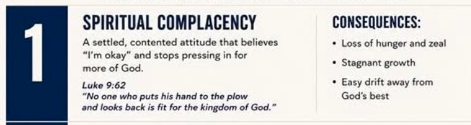
Spiritual Complacency IOW a Luke Warm Heart
In Revelation 3:14–21, the Lord describes the “lukewarm” heart attitude of those in the Laodicean church, an attitude manifested by their deeds. Jesus’ words to this church were quite strong:
I know your deeds, that you are neither cold nor hot. I wish you were either one or the other! So, because you are lukewarm—neither hot nor cold—I am about to spit you out of my mouth. (Revelation 3:15–16)
In their relationship to God, the Laodiceans were neither cold nor hot, just lukewarm. Hot water can cleanse and purify; cold water can refresh and enliven. But tepid water carries no corresponding value. The Laodiceans readily understood the Lord’s analogy because their drinking water came over an aqueduct from a spring six miles to the south; when it arrived at their city, the water was disgustingly lukewarm. Laodicean water was not hot like the nearby hot springs that people bathed in, nor was it refreshingly cold for drinking. It was lukewarm, good for nothing. In fact, it was nauseating, and that was the Lord’s response to the Laodiceans—they sickened Him, and He said in disgust, “I am about to spit you out of my mouth” (verse 16).
The letter to the church at Laodicea is the harshest of the seven letters to the churches in Asia Minor. By His indictment of their “deeds” (Revelation 3:15), Jesus makes it clear that this church is dying, if not already dead. Outwardly, they seemed to be flourishing. The members of this church saw themselves as “rich” and self-sufficient, but the Lord saw them as “wretched, pitiful, poor, blind and naked” (verse 17). Their lukewarm, indifferent faith led to half-hearted service.
Jesus frequently equates deeds with a person’s true spiritual state: “By their fruit you will recognize them,” and “Every good tree bears good fruit” (Matthew 7:16–17). Clearly, the lukewarm deeds of the Laodiceans were not in keeping with true salvation. Something needed to change. The deeds of the true believer will be “hot” or “cold”—that is, they will benefit the world in some way and reflect the spiritual passion of a life transformed. Lukewarm deeds, however—those done without joy, without love, and without the fire of the Spirit—do harm to the watching world. The lukewarm are those who claim to know God but live as though He doesn’t exist. They go to church and practice a form of religion, but their inner state is one of complacency.
A question often comes up regarding Jesus’ rebuke of the lukewarm Laodiceans: were they saved or not? That is, was this church comprised of believers or unbelievers?
The backslidden Christians view. Those who believe the church members in Laodicea were in fact believers see them as complacent and in need of rousing, but not children of darkness. Reasons for this line of thinking include the fact that Jesus still refers to them as “the church” at Laodicea. He doesn’t call them out for unbelief. He reminds the church that He loves them: “Those whom I love I rebuke and discipline” (Revelation 3:19). And being “hot” or “cold” shouldn’t be interpreted as being “for” or “against” God; rather, the hot/cold metaphor speaks of different types of usefulness. So, the church at Laodicea was complacent, self-sufficient, and apathetic, and that resulted in their faith being rendered useless.
The unsaved hypocrites view. Those who believe the church members in Laodicea were unbelievers see them as spiritually dead posers who maintained a sham religion. Reasons for this line of thinking include the fact that Jesus is standing outside of the church seeking to be admitted (Revelation 3:20). He speaks of their spiritual wretchedness, nakedness, and blindness. And His threat to spit them out of His mouth doesn’t sound like anything He would say to His own children. Also, in addressing the Ephesian church, Jesus coaxed backslidden believers to return to their first love (Revelation 2:4), and He commended that church (verses 2–3, 6). This is quite different from His approach to the Laodiceans. So, the church at Laodicea claimed to be Christians, but their hearts were unchanged, and their hypocrisy was sickening to God.
The truth is that the church at Laodicea was probably comprised of both those who were saved and those who were not. And the concept of “lukewarmness” can be applied to anyone who has lost a passionate vision to serve the Lord. Believers can be lukewarm, too.
The general biblical message is that we all bear the responsibility for self-examination. Are we living according to our faith, or has our fervor cooled to the point of being tepid? “Examine yourselves to see whether you are in the faith; test yourselves” (2 Corinthians 13:5). It’s possible for believers to be indifferent, lazy, or unmotivated. And it’s possible for unbelievers to pretend to be religious and call themselves a “church.” Whether or not the Laodiceans were born again, we must heed the warning Jesus gave them.

Tea Time Manna
In God, whose word I praise — in God I trust, and I will not be afraid. What can mortal man do to me?
—Psalm 56:4
One of the powerful things about having a Bible as a repository of God’s words is that its age and influence across diverse countries and cultures remind us how enduring God’s truth is. Still, we remember that it is God in whom we put our trust! His enduring presence across cultures, centuries, and countries reminds us that eternity is beyond our grasp. Still, the Eternal One holds us in his hands as we journey toward the destination he has for us. Our lives, with our future secured, are hidden with Christ in God and are destined for his glory (Colossians 3:1-4). Our worst days, months, and years of suffering, hardship, difficulty, and challenges cannot compare to the glory that is yet to be revealed in us (Romans 8:18-21). Our trust is in our eternal Savior, so let’s keep our eyes focused and our hopes centered on him and the glory that awaits us (Colossians 3:2; Hebrews 12:1-2). In God I trust, and I will not be afraid. What can mortal man do to me if God is my God!
Prayer
O Great and Eternal God, thank you that you are more stable than the ground on which I stand, more enduring than the mountain peaks I admire, and more constant than the waves upon the oceans that I love. I trust my life, future, and soul with you. I want to please you in the way I live. I want my life to be marked by consistent faithfulness to you, for in you I trust. In the name of Jesus, I ask for the Spirit’s help to keep my focus on you. Amen and Amen
Bible Teaching of the Day
LUNCH MANNA =
Spiritual Complacency IOW Spiritual apathy, coldness, or indifference can affect even the most sincere Christian at one time or another. Human emotions being as fickle as they are, feelings of apathy or disinterest can sometimes replace the fervor we once felt for the things of God. Overcoming such apathy is necessary for continuing our walk with God.
The one who realizes he is spiritually apathetic needs to, first of all, make sure he is a true believer in Jesus Christ (see 1 John 5:13; Romans 8:16). If he knows that he is a true believer in Christ, he needs to then ask himself this question: “What caused me to lose my love and passion for the Lord?”
One cause of spiritual apathy is sin in the believer’s life. When David sinned, he felt separated from God (Psalm 51:11). As he confessed his sin to God, David prayed for God to “renew a steadfast spirit” within him (verse 10), and he had this request: “Restore to me the joy of your salvation and grant me a willing spirit, to sustain me” (verse 12). A believer who feels spiritually apathetic should confess any known sin and ask for God’s cleansing and renewal.
Another cause of spiritual apathy is allowing dead orthodoxy to replace a true love for the Lord. A Christian is to be marked by his love for and obedience to Jesus (John 14:21), but it is possible to obey without love. It is possible to cling to the truth and serve God yet do so in a loveless, lifeless fashion. Such mechanical service is not pleasing to God. This was the Lord’s condemnation of the Ephesian church in Revelation 2:4: “You have forsaken the love you had at first.” When Paul wrote to the same church around AD 60, he commended them for their love (Ephesians 1:15–16), but now, some thirty years later, they had left their first love. Their passion had waned. Why? Perhaps the Ephesians had begun to take for granted what they had in Christ. Living for Christ was no longer a daily adventure; it was becoming “boring,” and they were losing sight of their eternal purpose. The church at Ephesus knew the teachings of Christ, but they were not living in His power. In so doing they lost their vibrant love and passion for Christ.
What’s the solution, then, for turning spiritual apathy into a renewed love and passion for Jesus Christ? The word to the spiritually apathetic Ephesian church was, “Consider how far you have fallen! Repent and do the things you did at first” (Revelation 2:5). The spiritually apathetic person needs to remember, repent, and renew.
First, the spiritually apathetic person needs to remember; that is, he should think back to the time when he sensed the warmth and closeness of Christ’s presence. He should realize that he can return to that state of fellowship. Then he needs to repent; that is, he needs to see his spiritual apathy as sin and confess that sin to God (1 John 1:9). Finally, he needs to renew; that is, he must cultivate a renewed commitment to the Lord—not just serving the Lord, but knowing Him, praising Him, and fellowshipping with Him. He should start again, if he has discontinued it, daily Bible reading and prayer. He should let the indwelling Holy Spirit empower him so his life will display the fruit of the Spirit (Galatians 5:22–23). And he should fellowship with a Bible-believing local church (Hebrews 10:25).
satan loves apathy. We must stay alert to the temptations of the old nature, the world, and the evil one. We must never lose the sense that God is always with us and in us. “We have this treasure in jars of clay to show that this all-surpassing power is from God and not from us” (2 Corinthians 4:7). As we begin to worship and praise the Lord and let Christ control our lives each day, we will rediscover a life of adventure filled with joy and eternal purpose. We will wonder how we ever became spiritually apathetic in the first place.
Today’s Devotional
DINNER MANNA =
In Romans 13:11–14, the apostle Paul exhorts readers to live with an acute awareness and full understanding of the time they are living in and to respond with appropriate spiritual action: “And do this, knowing the time, that now it is high time to awake out of sleep; for now our salvation is nearer than when we first believed. The night is far spent, the day is at hand. Therefore let us cast off the works of darkness, and let us put on the armor of light. Let us walk properly, as in the day, not in revelry and drunkenness, not in lewdness and lust, not in strife and envy. But put on the Lord Jesus Christ, and make no provision for the flesh, to fulfill its lusts” (NKJV).
Knowing the time (or “understanding the present time” as rendered in the NIV) involves a deep awareness of the current day and age. The Greek word (eidotes) translated as “knowing” in Romans 13:11 means “to be aware of a fact or specific information, to know, remember, appreciate.” The word for “time” (kairos in Greek) pertains to this present era of history—the church age—when salvation in Jesus Christ is available to all who believe in Him. This present time is also when Christians have the opportunity to demonstrate their faith in Jesus Christ by loving one another (see Romans 13:8–10).
Paul’s language underscores the importance of knowing the time and understanding the urgency of the moment. As God’s people, we need to fully appreciate the fact that we are living in the golden age of opportunity—the moment of decision: “For God says, ‘At just the right time, I heard you. On the day of salvation, I helped you.’ Indeed, the ‘right time’ is now. Today is the day of salvation” (2 Corinthians 6:2, NLT). Once this moment passes, our time is up. There will be no more second chances (Hebrews 9:27).
Paul’s reference to knowing the time calls for an awakening from spiritual complacency and a heightened consciousness of the imminent reality of salvation. He wants Christians to understand the urgency of the hour, likening the current time to the final moments before dawn. The day of salvation is breaking. The time for lollygagging in bed is over. We must “wake up from [our] drunken stupor, as is right, and do not go on sinning” (1 Corinthians 15:34, ESV; see also Ephesians 5:14). It’s crucial that we “keep awake and be sober” (1 Thessalonians 5:6, ESV). The return of Christ and the fulfillment of God’s redemptive plan are fast approaching.
Paul’s urgency for knowing the time is a call to action, prompting believers to evaluate their spiritual state and live in constant anticipation of Christ’s return. Jesus said, “We must quickly carry out the tasks assigned us by the one who sent us. The night is coming, and then no one can work” (John 9:4, NLT). We must “put aside the deeds of darkness and put on the armor of light” (Romans 13:12; see also Colossians 3:8; Ephesians 5:11). Jesus also warned, “Watch out! Don’t let your hearts be dulled by carousing and drunkenness. . . . Don’t let that day catch you unaware” (Luke 21:34, NLT).
Paul’s metaphorical language contrasting darkness and light suggests a radical transformation in our behavior, turning away from sinful practices and embracing a life of righteousness. Deeds of darkness symbolize evil behavior (see 1 Thessalonians 5:7), while walking in the daylight represents godly living (1 John 1:5, 7).
Understanding the time should revolutionize our conduct to reflect our commitment to living a life that honors God and stands as a testimony to others (see Romans 13:13–14). Knowing the time will motivate us to identify so closely with Christ that His character and teachings shape everything we say and do (Galatians 3:27; Ephesians 4:24; Colossians 3:10). In our relationships with others, we will “have the same mindset as Christ Jesus” (Philippians 2:5).
Knowing the time also has significance for the collective Christian community. Paul urges believers to stop their quarreling and jealous behavior and foster peaceful, harmonious, loving relationships within the body of Christ (Romans 13:13; see also 1 Corinthians 12:25–26; Ephesians 4:32). When the church embodies the life and teachings of Christ, it serves as a powerful witness to the world, shining a bright beacon of hope and truth, and drawing others into Christ’s light (John 13:35; 1 John 2:10; 1 John 4:7–21).
Understanding the time is less about chronology and more about discerning the spiritual significance of our current era. Believers must live daily with heightened spiritual awareness and readiness for Christ’s return. The implications of knowing the time involve recognizing the profound urgency of the moment and responding with a life committed to righteousness and transformation, both in our personal conduct and corporate life with fellow Christians.

NEWS MANNA –
Bible Prophecy, Signs of the Times and Gog and Magog Updates with Articles in the News
Shortages And Rationing Loom As Global Oil Reserves Fall Dramatically

No matter what happens now, the world is facing a very painful energy crisis. Let’s be as wildly optimistic as we possibly can and assume that Iran agrees to allow free passage through the Strait of Hormuz with absolutely no tolls or restrictions starting tomorrow.
Before normal traffic through the Strait could resume, Iran would first have to remove all of the mines that they have laid in the Strait, and that could take months. Once all of the mines have been removed, it will take the tankers that are currently trapped in the Persian Gulf weeks to arrive at their destinations.
Moving forward, Persian Gulf countries will be exporting much less oil and natural gas for the foreseeable future because of all the oil and natural gas infrastructure that was damaged or destroyed during the war. It will take years before all of that infrastructure is fully repaired and rebuilt. Meanwhile, global supplies of oil and natural gas will be very tight for an extended period of time.
What I have just laid out for you is the best case scenario.
Ultimately, what we end up facing could be so much worse.
Over the past couple of months, global oil reserves have been falling at the fastest rate ever recorded…
Record inventory draw: Global oil stocks have fallen by 246 million barrels in March-April, with draws in May hitting a record 8.7 million barrels per day.
Hormuz closure impact: The Strait of Hormuz shutdown has cut off 25% of the world’s seaborne oil, compounding already low reserves and boosting prices.
US price outlook: Analysts expect U.S. gasoline prices could reach $5 this summer (many states are already there) unless flows resume, with relief unlikely before autumn.
Needless to say, this is not sustainable.
Here in the United States, the strategic petroleum reserve has been dropping at a record-breaking pace…
The SPR’s most recent drawdown, covering the week ended May 22, shows a drop of 9.1 million barrels, leaving the reserves at 365 million barrels. The previous weekly drawdown, covering the week of May 15, was its steepest on record — the U.S. withdrew 9.92 million barrels from the SPR then.
Before that record-breaking decline, the largest weekly drop in the SPR’s history occurred in the week ended Oct. 7, 2022, when the reserves dropped by 7.41 million barrels, and was connected to the war in Ukraine.
Commercial oil inventories are being rapidly depleted as well.
At some point the tanks are going to hit minimum operating levels and we are going to have an enormous crisis on our hands.
The chief economist at Capital Economics is projecting that commercial oil inventories “could reach critically low levels by the end of June”…
“At the current pace of drawdown, commercial oil stocks could reach critically low levels by the end of June,” Neil Shearing, chief economist at Capital Economics, wrote in a research note on May 18.
If supply conditions don’t improve soon, “prices could rise sharply,” Shearing warned.
Jeff Currie is warning that Asia is already very close to minimum operating levels, and he is projecting that the U.S. could potentially be dealing with shortages in July…
Oil markets are nearing minimum operating levels in Asia, with Europe likely next and the U.S. potentially facing shortages by July, said veteran market strategist Jeff Currie on Monday, underscoring the global energy shock due to the Iran war.
Headline global inventory figures can be misleading as much of the oil stored worldwide cannot be used immediately, said Currie, Carlyle’s chief strategy officer of energy pathways and co-chairman of Abaxx Markets.
A large portion of that oil is needed to keep pipelines and storage systems running safely, leaving only a smaller share available for the market. Asia is already close to these so-called “minimum operating levels,” Currie told CNBC on the sidelines of the UBS Wealth Conference in Singapore.
This is really happening.
The Australian government is so concerned about what is ahead that they have already prepared a plan to limit the amount of fuel each vehicle can purchase per day when that becomes necessary…
Contained in documents obtained by Guardian Australian under freedom of information, one option the government had at its disposal to arrest a local fuel supply shortage would be to impose a “maximum transaction value per vehicle per day” – a rationing rule which would limit how much fuel a single vehicle can buy at a service station over a 24-hour period.
If the Strait of Hormuz does not get reopened, we could eventually see similar measures get implemented all over the world.
Of course rationing of motor oil has already started…
Nissan is rationing 5W-30 and 0W-20 Nissan Genuine Motor Oils. Starting this week, Nissan’s stock of these oils has dropped by 30% year-on-year. With only 70% left in the tank, the brand is already taking precautions, sending memos to dealers to manage its stock during the shortage.
The brand will prioritize certain owners, such as those claiming “warranty, extended warranty, recall repairs, goodwill, and prepaid maintenance,” according to Kim Less, the vice president of aftersales at Nissan Americas, in the bulletin addressed to Nissan dealers.
“Given these constraints, it is critical to prioritize the use of Nissan Genuine 0W-20 (and 5W-30, where applicable) for warranty, extended warranty, recall repairs, goodwill, and prepaid maintenance,” Kim Less, vice president of aftersales, Nissan Americas, said in the May 15 bulletin to Nissan dealers.
I would encourage my readers to stock up on motor oil while they still can.
Supplies are only going to get tighter from this point forward.
The pharmaceutical industry is also very dependent on raw materials from the Middle East, and one pharmacist is claiming that the current drug shortage is the “worst I’ve ever known”…
Some people living with heart conditions, stroke risks, eye infections and bipolar disorder are among those unable to get the medications they rely on, a pharmacist has said.
Graham Jones, who owns Shrivenham Pharmacy in Oxfordshire, said vital medication like aspirin was harder to obtain because of surging global prices and government funding which was not keeping up with costs.
Jones said the current medication shortage was the “worst I’ve ever known”.
Personally, I am even more concerned about the global fertilizer shortage.
The UN is telling us that we could be facing a worldwide food crisis that could last for “years”…
The de facto closure of the Strait of Hormuz risks a global food crisis that could extend for years, the UN warned.
Global fertilizer companies have slashed production over shortfalls of sulphur, required to make many farming inputs; about half of the global supply passed through the strait before the Iran war.
As a result, farmers are likely to produce lower yields in coming harvests. Richer economies like those in Europe are mulling building fertilizer stockpiles, reducing duties on imports, and onshoring production, but poorer ones have limited room to adapt.
I want to be very clear about what lies in front of us.
No matter what happens now, there will be shortages and rationing.
It is just a matter of how intense they will be and how long they will last.
Needless to say, the outlook for the global economy in the months ahead is not promising at all.
We really do have a major crisis on our hands, and it will become a historic nightmare if the Strait of Hormuz does not get reopened soon.
Literally Eating Scripture – Prophetic Ministry Overreach?
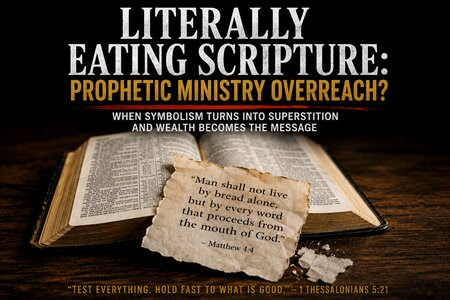
There is no shortage of strange stories emerging from modern charismatic circles, but every so often one comes along that forces Christians to ask a difficult question: At what point does a prophetic act stop being biblical symbolism and become theological confusion?
That question is now being asked after a prophetic conference in West Virginia where longtime minister Kevin Leal instructed an 18-year-old young man to literally tear a page from the Book of Proverbs, chew it, and swallow it. The act followed a series of prophecies declaring that the teenager, Ethan Soucy, would become a wealthy “kingdom businessman” and future millionaire who would fund ministries around the world.
According to reports, Leal told the young man that after eating the page, “the power of God is going to go inside of you.”
The scene immediately generated criticism from Christians across multiple denominations, and for good reason.
While defenders of the event point to biblical examples where prophets were instructed to eat scrolls, a closer examination reveals that what happened on that stage bears little resemblance to what Scripture actually teaches.
The Scrolls Of Ezekiel And John
Supporters often cite the experiences of the prophet Ezekiel and the Apostle John.
In Ezekiel 3, God commanded Ezekiel to eat a scroll before delivering His message to Israel. Likewise, in Revelation 10, John was instructed to eat a scroll that was sweet in his mouth but bitter in his stomach.
These passages were never intended to establish a ritual for receiving divine power.
The symbolism was clear. God’s Word was being internalized. The prophet was receiving and absorbing God’s message before proclaiming it to others.
Neither Ezekiel nor John was told that supernatural power would enter their bodies through the physical consumption of paper.
Neither passage involved promises of financial prosperity.
Neither passage suggested that wisdom could be obtained by literally swallowing parchment.
The Bible consistently teaches that wisdom comes through fearing God, studying His Word, obeying His commands, and being led by the Holy Spirit–not through symbolic rituals performed as if they possess power in themselves.
“The Power Of God Will Go Inside You”
Perhaps the most troubling statement from the event was not the eating itself but the explanation given for it.
“When you eat this, the power of God is going to go inside of you.”
That statement introduces a concept foreign to biblical Christianity.
The New Testament teaches that believers receive the Holy Spirit through faith in Jesus Christ. God’s power is not transmitted through objects, paper, rituals, or ceremonial acts.
This begins to resemble a form of spiritual superstition–treating a physical object as though it possesses inherent spiritual power.
Throughout church history, Christians have repeatedly battled similar errors.
Whether relics, charms, blessed objects, magical formulas, or mystical rituals, the temptation has always been the same: replacing faith in Christ with confidence in a physical act.
The Apostle Paul warned against such thinking repeatedly. God’s power is not manipulated through ceremonies. It is received through God’s grace and operates according to His will.
The Prosperity Problem
The second major concern is the context surrounding the event.
This was not merely a discussion about wisdom.
The entire prophetic exercise was centered around predictions of future wealth.
Repeated declarations of becoming a millionaire were made over the young man. Businessmen proclaimed not just millions, but “millions and millions.” The young man himself was encouraged to pray for God to make him wealthy so he could support the Kingdom.
While Christians should celebrate generosity and faithful stewardship, Scripture repeatedly warns against making wealth a central focus of spiritual life.
Jesus spoke more warnings about riches than many modern prosperity preachers seem willing to acknowledge.
The Apostle Paul warned that those who desire to be rich fall into temptation and many harmful desires. He did not say wealth itself was evil, but he certainly did not present becoming a millionaire as a primary spiritual goal.
One cannot help but wonder how many young Christians leave such meetings believing God’s favor is measured by future bank account balances.
That is a dangerous message.
Testing The Spirits
The Bible does not tell believers to reject every prophetic claim automatically.
At the same time, it does not tell believers to accept every prophetic claim automatically either.
Instead, Scripture commands Christians to test everything.
The Bereans were praised because they examined teachings carefully against God’s Word. Paul instructed believers to test prophecies. John warned Christians to test the spirits because many false teachers had gone out into the world.
That remains sound advice today.
The issue is not whether God can use symbolism.
The issue is whether the symbolism aligns with Scripture.
The issue is not whether God blesses people financially.
The issue is whether wealth has become the centerpiece of the message.
The issue is not whether someone claims a prophetic gift.
The issue is whether that gift is operating within biblical boundaries.
Discernment Is Needed More Than Ever
Modern Christianity desperately needs discernment.
Not cynicism. Not mockery. Not hostility toward the supernatural.
Discernment.
The Bible is filled with miracles, visions, prophetic actions, and extraordinary encounters with God. Christians should never apologize for believing that God still works powerfully today.
But biblical Christianity is also rooted in truth.
When symbolic acts begin to resemble superstition, when prophecy becomes focused on wealth, and when physical rituals are presented as conduits of divine power, alarm bells should begin ringing.
God’s Word is meant to be consumed spiritually through study, meditation, and obedience–not swallowed physically in hopes that wisdom or power will somehow transfer into the body.
The teenager involved may have had sincere motives. Many in attendance may have sincerely desired to honor God.
But sincerity alone is not enough.
Every movement, every prophecy, and every spiritual claim must ultimately be measured against the one standard that never changes: the Word of God itself.
TruLight Ministries Daily Entertainment Manna

TruLight TV – How to Rebuild Friendships
We have an obligation. As followers of Christ, we are called to be like Jesus by serving His people and taking care of His earth. Watch this video and be encouraged the next time you think, “someone should do something about that,” consider that person might be you. and later our sermon today from Dr. Charles Stanley (Troubled Friendships) – Your most valuable asset, second only to your friendship with God, is your relationships with people. Discover how to choose friends, the building blocks of friendship, and how to rebuild friendships. This plus some great gospel music on today’s show. Enjoy! and Share this Video With your Friends.
Today on TruLight Radio XM
TruLight Radio XM 24/7
Program
GMT / UTC +2
Monday To Fridays
00:15 Words to Live By Testimonies
01.15 Science Scripture and Salvation
02.15 Ground Works
04.00 Gospel Concert of the Day
05.00 The Daren Streblow Comedy Show
5:55 It is Today devotional
6:00 Gaither Homecoming Morning Show
7:15 Discover the Word
8.15 Destined for Victory
8:55 Science Scripture and Salvation
9:00 Holy Spirit Hour – Normally Sermons
10:15 Hope of the Heart
11:15 Unshackled
11.45 Words to Live By
12:15 Truth for Life
13:15 Living on the Edge with Chip Ingram
14:15 Focus on the Family
15:00 Kids Hour
16:00 In Touch with Dr. Charles Stanley
16:30 Groundwork
17:15 Live in the Light
18:15 Renewing your Mind
19:00 Gaither Homecoming Show
20:15 Growing Hope
21:15 Adventures in Odyssey Radio Drama
21:45 Bible Reading
22:15 Night-sounds
23.00 Good Old Country Gospel / Rhema Gospel Express
VISIT THE WEBSITE
TruLight Ministry News – EXTRA MANNA
TruLight Ministries orders from God since 2012 . Teach Them , Comfort Them and Warn Them!
Healing Truths.
End Time Articles.
Bonus Manna = Bonus Teaching for the Child of God !!
In Matthew 12:43–45, Jesus uses a parable to speak about spiritual emptiness and the consequences of rejecting God’s message: “When an impure spirit comes out of a person, it goes through arid places seeking rest and does not find it. Then it says, ‘I will return to the house I left.’ When it arrives, it finds the house unoccupied, swept clean and put in order. Then it goes and takes with it seven other spirits more wicked than itself, and they go in and live there. And the final condition of that person is worse than the first. That is how it will be with this wicked generation” (Matthew 12:43–45).
Jesus is responding to the Pharisees and teachers of the law who demanded signs from Him yet remained unrepentant, faithless, and spiritually closed (see Matthew 12:38–41; 16:4). He applies an analogy, comparing “this wicked generation” to a person with an unclean spirit. After the spirit is temporarily expelled and then returns, it brings back with it seven other spirits even more evil than itself, worsening the person’s condition. Jesus warns the Pharisees that, without genuine spiritual renewal, they would suffer further deterioration of their spiritual state.
The primary application of “this wicked generation” in Matthew 12:45 was to the current generation of Israel’s leaders at the time of Jesus’ earthly ministry. With their privileged knowledge of Old Testament prophecy and the fulfilled Scriptures, they should have recognized Jesus for who He was—their Messiah and King. Instead, they were an evil generation of blind and hypocritical leaders. They were supposed to be spiritual guardians of God’s people, but, through their own stubborn unbelief, they were setting themselves up for greater spiritual destruction by rejecting God Himself.
“This wicked generation” can also be applied generally to the nation of Israel in Jesus’ time, or at least the rebellious segment represented by the Pharisees, who refused God’s gracious gift of salvation in Jesus Christ. By rejecting their Savior, they sided with the forces of darkness and became even more vulnerable to spiritual attack. The impending dire condition Jesus warned of was a possible allusion to the fall of Jerusalem, which occurred in AD 70.
Another, more personal application can be extracted from the text. Today, we should ask ourselves, are we a wicked generation? Jesus showed that it is not enough to sweep a house clean; we must fill our spiritual home with the right person—Christ Himself. Jesus stands at the door of our hearts, knocking, and we must let Him in (see Revelation 3:20). Only He can bring restoration and total transformation. Only He can save us.
The Pharisees’ houses looked clean and “beautiful on the outside.” Still, the insides were “full of the bones of the dead and everything unclean” (Matthew 23:27). We can attempt to clean up our lives superficially through self-righteousness and religious activity. But without genuine submission to the Lord, we only invite greater spiritual vulnerability.
Matthew 12:45 warns against spiritual complacency and the dangers of rejecting or ignoring the truth of the gospel. Every era since the fall of humanity has seen a portion of its society given over to wickedness and sin. Yet there has always been at least a remnant of people with hearts of compassion, justice, and mercy, who desire to serve and glorify God.
The core message of Matthew 12:45 encourages self-examination rather than condemnation of others. It is an invitation to seek genuine spiritual renewal by examining our own hearts and actions to know if we are staying receptive to God’s guidance or turning away from it.
Whether we are a “wicked generation” depends on our response to the spiritual truth presented to us. The Bible calls us to hear God’s voice (John 8:47; 10:27–28; Hebrews 3:7–8), turn from wickedness (Acts 3:19), and accept Jesus Christ as Lord and Savior (Romans 10:9–10). Instead of remaining empty, we daily seek the Holy Spirit to fill our spiritual houses with faith, love, joy, peace, and other fruits of righteousness (see Philippians 1:11; Galatians 5:22–23).
Share this Feeding of Manna with your Friends and Family. just click on the Social Media icon and share !