Hosted by TruLight Ministries – The Place of Truth
SELECT YOUR READING LANGUAGE – BOTTOM LEFT = YOUR DAILY MANNA NOW AVAILABLE IN 103 LANGUAGES
@ TruLight – Daily Manna is not Just a Bible Verse with a Small Prayer . NO ::: WE SERVE DAILY Manna for the ENTIRE Day . Breakfast , Lunch , Dinner , Plus tea Times and even Entertainment Manna . Plus News Manna and More , This Daily Manna will keep you Spiritually full for the full 48 Hours and even More to Share with your Friends and Family !!!
Preach JESUS !!! Not something Else.
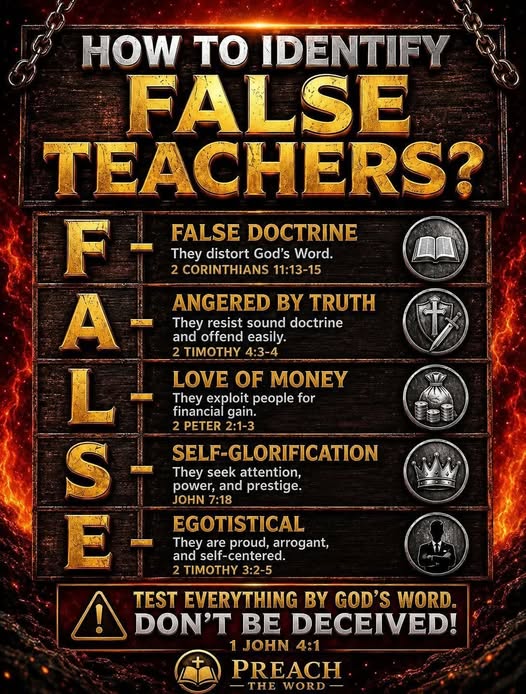
How to Identify FALSE TEACHERS
“Preach the Gospel and, if necessary, use Words”
The saying “preach the gospel and, if necessary, use words” is traditionally attributed to the medieval Catholic friar, Francis of Assisi (1181—1226). However, there is no historical or literary evidence that he said it. Despite the lack of clarity concerning its origin, the saying remains popular in discussions promoting Christian missions and evangelism. It highlights the importance of doing good works as an effective witness for Christianity. However, the saying falls short of reflecting the Bible’s teaching on how to spread the gospel because the New Testament emphasizes that words are necessary to share the good news of Jesus Christ.
In the Gospels, Jesus provides a clear example of the importance of preaching the gospel with words. For instance, Mark reports that at the beginning of Jesus’ ministry, He “went into Galilee, proclaiming the good news of God.” Jesus did more than merely perform good works for the Galileans. He also spoke, saying, “The kingdom of God has come near. Repent and believe the good news!” (Mark 1:14–15). Alongside His preaching, Jesus also performed good works in Galilee, such as exorcizing a demon and healing the sick (Mark 1:23–26, 29–34). However, these miracles supported His words—they did not replace them.
Furthermore, Jesus specifically instructed His disciples to use words when preaching the gospel. For instance, when Jesus sent out the twelve disciples, He told them to proclaim the message verbally and reinforce it through their deeds. He said, “As you go, proclaim this message: ‘The kingdom of heaven has come near’” (Matthew 10:7). Then He told them to perform good works, saying, “Heal the sick, raise the dead, cleanse those who have leprosy, and drive out demons” (verse 8).
Similarly, Jesus told His disciples to “go and make disciples of all nations, baptizing them in the name of the Father and of the Son and of the Holy Spirit, teaching them to obey everything I have commanded you” (Matthew 28:19–20). The command, “teaching them,” highlights Jesus’ emphasis on the necessity of using words when spreading the gospel. We must preach the gospel, and it is necessary to use words.
Following Jesus’ example and obeying His instructions, the apostles also used words to preach the gospel. Peter proclaimed the good news in Jerusalem, saying, “Repent and be baptized, every one of you, in the name of Jesus Christ for the forgiveness of your sins. And you will receive the gift of the Holy Spirit” (Acts 2:38). Similarly, Philip used words to preach the gospel, which he supported with good deeds. According to Acts, “Philip went down to a city in Samaria and proclaimed the Messiah there” (Acts 8:5). Then, “when the crowds heard Philip and saw the signs he performed, they all paid close attention to what he said” (verse 6). Later, on the road to Gaza, Phillip shared the gospel once more with an Ethiopian traveler. Using words, he “told him the good news about Jesus” (verse 35).
Similarly, Paul’s example and teachings demonstrate the importance of using words when preaching the gospel. Shortly after his conversion, Paul began proclaiming Jesus as the Son of God using words (e.g., Acts 9:20; 13:16–41). Paul also verbally witnessed in a philosophical and theological discussion in Athens about the “unknown god” and the resurrection of Jesus (Acts 17:22–31). In Corinth, he devoted a significant amount of time to teaching the Word of God (Acts 18:1–11). In Ephesus, he persuasively argued about the kingdom of God, first in the synagogue and later at the hall of Tyrannus (Acts 19:8–10). Using words was central to Paul’s evangelistic efforts.
Likewise, in his letters Paul instructed Christians to use words when preaching the gospel. To the Romans, he wrote, “How, then, can they call on the one they have not believed in? And how can they believe in the one of whom they have not heard? And how can they hear without someone preaching to them?” (Romans 10:14; cf. 2 Timothy 4:2).
Good works play an important role in evangelism, but they cannot be a substitute for words. Actions like providing for someone’s physical needs or befriending a widow are undoubtedly acts of love, and they do “preach” in a manner of speaking. However, these deeds alone do not communicate the crucial message that the recipient is a sinner separated from God, nor do they reveal that God sent Jesus to the world to redeem humanity (Romans 3:23; John 3:16). It is impossible for our actions to convey that Jesus’ death on the cross served as an atonement for sin or that He rose from the dead three days later (1 John 4:10; Matthew 28:5–6). So, actions can reinforce the message of the gospel, they are insufficient without the essential use of words in its proclamation.
The saying “preach the gospel and, if necessary, use words” is a good reminder that our actions are important. We dare not allow our behavior to contradict our message. But actions alone are insufficient without the essential use of words in the gospel’s proclamation.
Jesus warned us that “false Christs and false prophets” will come and will attempt to deceive even God’s elect (Matthew 24:23–27; see also 2 Peter 3:3 and Jude 1:17–18). To guard against falsehood and false teachers, it’s important to know the truth and know the characteristics of the counterfeit. Any believer who “correctly handles the word of truth” (2 Timothy 2:15) and who makes a careful study of the Bible can identify false doctrine.
Jesus said, “A tree is recognized by its fruit” (Matthew 12:33). So, believers are to be fruit inspectors. Knowing the look, texture, and taste of a healthy apple is important. So is knowing the look, texture, and taste—and smell—of a rotten one. Here are three specific tests to apply to any teacher to determine the accuracy of his or her teaching:
1) What does this teacher say about Jesus? In Matthew 16:15-16, Jesus asks, “Who do you say I am?” Peter answers, “You are the Christ, the Son of the living God,” and for this answer Peter is called “blessed.” In 2 John 9, we read, “Anyone who runs ahead and does not continue in the teaching of Christ does not have God; whoever continues in the teaching has both the Father and the Son.” In other words, Jesus Christ and His work of redemption is of utmost importance; beware of anyone who denies that Jesus is equal with God, who downplays Jesus’ sacrificial death, or who rejects Jesus’ humanity. First John 2:22 says, “Who is the liar? It is the man who denies that Jesus is the Christ. Such a man is the antichrist—he denies the Father and the Son.”
2) Does this teacher preach the gospel? The gospel is defined as the good news concerning Jesus’ death, burial, and resurrection, according to the Scriptures (1 Corinthians 15:1-4). As nice as they sound, the statements “God loves you,” “God wants us to feed the hungry,” and “God wants you to be wealthy” are not the complete message of the gospel. As Paul warns in Galatians 1:7, “Evidently some people are throwing you into confusion and are trying to pervert the gospel of Christ.” No one, not even a great preacher, has the right to change the message that God gave us. “If anybody is preaching to you a gospel other than what you accepted, let him be eternally condemned!” (Galatians 1:9).
3) Does this teacher exhibit character qualities that glorify the Lord? Speaking of false teachers, Jude 1:11 says, “They have taken the way of Cain; they have rushed for profit into Balaam’s error; they have been destroyed in Korah’s rebellion.” In other words, a false teacher can be known by his pride (Cain’s rejection of God’s plan), greed (Balaam’s prophesying for money), and rebellion (Korah’s promotion of himself over Moses). Jesus said to beware of such people and that we would know them by their fruits (Matthew 7:15-20).
For further study, review those books of the Bible that were written specifically to combat false teaching within the church: Galatians, 2 Peter, 1 John, 2 John, and Jude. It is often difficult to spot a false teacher/false prophet. Satan masquerades as an angel of light (2 Corinthians 11:14), and his ministers masquerade as servants of righteousness (2 Corinthians 11:15). Only by being thoroughly familiar with the truth will we be able to recognize a counterfeit.

Tea Time Manna
Those who hope in the Lord will renew their strength. They will soar on wings like eagles; they will run and not grow weary, they will walk and will not be faint.
—Isaiah 40:31
It is easy for us to live victoriously for the Lord when we are soaring on the wings of eagles. Things are going great. We can see the Lord at work in our life and good things are happening. It can be exciting when we run and don’t grow weary doing the work of the Lord, buoyed by his power and presence, as the Holy Spirit shows up and makes us better than we really are. But it often takes real heroes to keep walking without fainting during trying times, attacks from the evil one, or oppressive criticism and opposition. So, dear friend of Jesus, please keep walking forward. Trust the Spirit of the living God is alive in you to empower you, more than you can even ask or think (Ephesians 1:17-20, 4:14-21). The Lord is with you, even when you most fear he has forgotten you. Keep walking, and as you do, may the Lord reveal his sustaining presence to you, in you, and through you!
Prayer
O, Majestic God, who spoke into existence the universe, whose voice holds together the great expanse of the heavens, give those who can barely walk forward with faith, the strength to continue as they face the stress and assaults of the evil one. I specifically want to pray for those I know personally who are facing trying times. Please, dear Lord, give them strength as I share their names with you, and meet their most pressing needs, and do your work through them in ways that they can see and experience. Through Jesus, who conquered satan, sin, hell, and death. Amen and Amen
Bible Teaching of the Day
LUNCH MANNA =
A false prophet is a person who spreads false teachings or messages while claiming to speak the Word of God. In the Bible, false prophets also spoke on behalf of false gods. False prophets functioned in their prophetic role illegitimately or for the purpose of deception. The Bible denounces false prophets for leading people astray.
In the Old Testament, the actual term false prophet does not occur, but references to false prophets are evident and abundant. In the book of Jeremiah, we encounter a clear description of false prophets: “Then the LORD said to me, ‘The prophets are prophesying lies in my name. I have not sent them or appointed them or spoken to them. They are prophesying to you false visions, divinations, idolatries and the delusions of their own minds’” (Jeremiah 14:14; see also 23:21–33; Zechariah 10:2).
The primary difference between men like Jeremiah—a true prophet of God—and false prophets was their source of information. Rather than speak the Word of the Lord, false prophets delivered messages that originated in their own hearts and minds: “This is what the LORD Almighty says: ‘Do not listen to what the prophets are prophesying to you; they fill you with false hopes. They speak visions from their own minds, not from the mouth of the LORD’” (Jeremiah 23:16; see also 14:14; 23:25–32; Ezekiel 13:1–7). God distances Himself from all false prophets: “I did not send these prophets, yet they have run with their message; I did not speak to them, yet they have prophesied” (Jeremiah 23:21).
Another difference between true prophets and false prophets in the Bible is motivation. True prophets are motivated by loyalty to God above all else, whereas false prophets are motivated by self-interest and a desire to be popular among the people (1 Kings 22:13–14). While Jeremiah foretold the grim truth of coming desolation upon Jerusalem (Jeremiah 4), the false prophets promised peace (Jeremiah 6:14; 8:11). Naturally, the people of Judah preferred the pleasant messages of the false prophets: “Don’t tell us what is right. Tell us nice things. Tell us lies” (Isaiah 30:10, NLT).
Often false prophets were hired for payment or spoke their messages for financial gain: “Her leaders judge for a bribe, her priests teach for a price, and her prophets tell fortunes for money. Yet they look for the LORD’s support and say, ‘Is not the LORD among us? No disaster will come upon us’” (Micah 3:11; see also Nehemiah 6:12–13; Jeremiah 6:13–14; Ezekiel 13:19; 2 Peter 2:1–3).
Israel could not always discern the difference between a true and false prophet. In 1 Kings 22, King Jehoshaphat of Judah sought counsel from the Lord before he and King Ahab of Israel embarked on their mission to retake the city of Ramoth in Gilead. Jehoshaphat heard the predictions of victory from Ahab’s 400 counselors but suspected that these men were false prophets who did not have the mind of the Lord. Jehoshaphat’s suspicions were correct: they were Ahab’s “yes men,” false prophets who had no concern for relating the true Word of God. They merely said what the king wanted to hear and collected their salary from the royal treasury.
Jehoshaphat asked if there was another prophet who could give a second opinion. Ahab called for the prophet Micaiah, albeit reluctantly: “I hate him,” Ahab complained, “because he never prophesies anything good about me, but always bad” (1 Kings 22:8). True to form, Micaiah prophesied that Ahab would be killed in the battle and Israel would be “scattered on the hills like sheep without a shepherd” (verse 17). Micaiah, whose words came to pass, proved to be the true prophet of God. None of the false prophets in Ahab’s court could keep the king alive.
The punishment specified for false prophets in the Old Testament was severe: “If any prophet dares to speak a message in My name that I have not commanded him to speak, or to speak in the name of other gods, that prophet must be put to death” (Deuteronomy 18:20).
In the New Testament, Jesus taught about false prophets in His Sermon on the Mount: “Watch out for false prophets. They come to you in sheep’s clothing, but inwardly they are ferocious wolves. By their fruit you will recognize them. Do people pick grapes from thornbushes, or figs from thistles? Likewise, every good tree bears good fruit, but a bad tree bears bad fruit. A good tree cannot bear bad fruit, and a bad tree cannot bear good fruit” (Matthew 7:15–18).
Jesus went on to explain the grave consequences of being a false prophet: “Every tree that does not bear good fruit is cut down and thrown into the fire. Thus, by their fruit you will recognize them. Not everyone who says to me, ‘Lord, Lord,’ will enter the kingdom of heaven, but only the one who does the will of my Father who is in heaven. Many will say to me on that day, ‘Lord, Lord, did we not prophesy in your name and in your name drive out demons and in your name perform many miracles?’ Then I will tell them plainly, ‘I never knew you. Away from me, youevildoers!’” (Matthew 7:19–23).
The Bible describes false prophets as adulterous (Jeremiah 23:14), treacherous (Zephaniah 3:4), drunkards (Isaiah 28:7), wicked (Jeremiah 23:11), liars (Jeremiah 14:14; 23:14), and associated with divination and witchcraft (Jeremiah 14:14; Ezekiel 22:28; Acts 13:6). Scripture teaches believers to be diligent in faith and devotion to Christ’s teachings so that they will be able to spot false prophets and false teachers quickly (2 Peter 1:10; 1:19—2:1; 1 John 4:1). Thankfully, the Bible outlines foolproof tests for recognizing a false prophet. The key is to know what a true prophet is like:
A true prophet will acknowledge Jesus Christ as divine (1 John 4:1–6).
A true prophet’s words will be fulfilled (Deuteronomy 18:21–22; Jeremiah 28:8–9).
A true prophet’s teachings are consistent with Scripture (2 Peter 1:20–21; Revelation 22:18–19).
A true prophet’s teachings will encourage righteous behavior and provide spiritual benefit (Deuteronomy 13:1–4; Jeremiah 23:13–14, 32; Ezekiel 13:17–23; 14:4–8; Lamentations 2:14).
A true prophet’s life will reflect a divine call (Isaiah 28:7; Jeremiah 23:10–11, 14; 29:9; Zephaniah 3:4; Matthew 7:15–20).
Today’s Devotional
DINNER MANNA =
Jesus alerts us to “watch out for false prophets” in Matthew 7:15. He compares these false prophets to wolves in sheep’s clothing. Jesus also tells us how to identify these false prophets: we will recognize them by their fruit (Matthew 7:20).
Throughout the Bible, people are warned about false prophets (Ezekiel 13, Matthew 24:23–27, 2 Peter 3:3). False prophets claim to speak for God, but they speak falsehood. To gain a hearing, they come to people “in sheep’s clothing, but inwardly they are ferocious wolves” (Matthew 7:15). No matter how innocent and harmless these teachers appear on the outside, they have the nature of wolves—they are intent on destroying faith, causing spiritual carnage in the church, and enriching themselves. They “secretly introduce destructive heresies,” “bring the way of truth into disrepute,” and “exploit you with fabricated stories” (2 Peter 2:1–3).
The false teachers wear “sheep’s clothing” so they can mingle with the sheep without arousing suspicion. They usually are not up front about what they believe; rather, they mix in some truth with their falsehood and carefully choose their words to sound orthodox. In reality, they “follow their own ungodly desires” (Jude 1:17–18), and “they never stop sinning; they seduce the unstable; they are experts in greed” (2 Peter 2:14).
By contrast, a true prophet teaches God’s Word fully (Deuteronomy 18:20). Wolves in sheep’s clothing twist God’s Word to deceive or influence the audience for their own purposes. Satan himself masquerades as an angel of light (2 Corinthians 11:14), and his ministers masquerade as servants of righteousness (2 Corinthians 11:15).
The best way to guard against wolves in sheep’s clothing is to heed the warnings of Scripture and know the truth. A believer who “correctly handles the word of truth” (2 Timothy 2:15) and carefully studies the Bible will be able to identify false prophets. Christians must judge all teaching against what Scripture says. Believers will also be able to identify false prophets by their fruit—their words, actions, and lifestyles. Jesus said, “A tree is recognized by its fruit” (Matthew 12:33; cf. Matthew 7:20). Peter described false teachers as having “depraved conduct” and who “carouse” as “slaves of depravity” (2 Peter 2:2, 13, 19). If a teacher in the church does not live according to God’s Word, he is one of those wolves in sheep’s clothing.
Here are three specific questions to identify false prophets, or wolves in sheep’s clothing:
1) What does the teacher say about Jesus? In John 10:30, Jesus says, “I and the Father are one.” The Jews understood Jesus’ statement as a claim to be God and wanted to stone him (John 10:33). Anyone who denies Jesus as Lord (1 John 4:1–3) is a false prophet.
2) Does the teacher preach the biblical gospel? Anyone who teaches an incomplete or unbiblical gospel is to be eternally condemned (Galatians 1:9). Any gospel apart from what the Bible tells us (1 Corinthians 15:1–4) is not the true good news.
3) Does this teacher exhibit godly character qualities? Jesus said to beware of teachers whose moral behavior does not match what the Bible says. He says we will know wolves in sheep’s clothing by their fruits (Matthew 7:15–20)
It doesn’t matter how large a church a preacher has, how many books he has sold, or how many people applaud him. If he “teaches a different doctrine and does not agree with the sound words of our Lord Jesus Christ and the teaching that accords with godliness,” then he is a wolf in sheep’s clothing (1 Timothy 6:3).

NEWS MANNA –
Gen Z Wants Marriage But Doesn’t Know Why

Not only do empty nesters face an existential crisis, but the young birds leaving it are teleologically disoriented. Imagine if three little fledglings weren’t confined to one geography, one species of mate, one set of birdcalls, and one type of nest, but if they could do anything, go anywhere, be anyone: how confused would they be?
A new Barna poll reveals that today’s teens are asking big questions about purpose, indicating an existential crisis in Gen Z. Only 58% feel hopeful about the future. The survey was given to 1,500 U.S. teenagers aged 13-18 in early 2026 and consisted of an online panel asking how much pressure they felt to answer life’s biggest questions.
How is this a problem? According to another Barna poll, 81% of Gen Z values marriage but don’t see it as being that important to raising a family. In fact, they’re the least likely generation to hold that belief at 67%. Young adults, perplexed about the purpose of their life and thus marriage, are feeling like they need to have it all together — finances, education, etc. — before tying the knot.
Gen Z accepts prolonged singleness as a normal developmental stage, yet it previously existed only as a bridge between stages. The median age at first marriage has climbed drastically in the past few decades. Today, for men and women, the average is 31 and 28.5, respectively. In 2000, it was 27 and 25, and in 1950, it was even lower at 24 and 20.5. Undeniably, this indicates changing values or, as the Barna study suggests, uncertainty about values. Questions like “What is the purpose of marriage?” and “How important is the family?” lay unanswered in the hearts of Gen Z, and, as a result, so do their marriage vows.
As a member of Gen Z, the survey is ultimately not surprising. The overwhelming possibilities after high school can feel like an choppy wave pool. The vast plethora of options, intended to grant freedom, can instead inhibit action. Even young Christians are confounded by conflicting counsel. Particularly challenging for women, young adults are simultaneously told to marry and have kids early, to first complete their college education, explore their personal interests, and become “spiritually mature.”
They’re told to both trust God’s timing and to plan the next four years out. The more hesitant are scolded for slothful apathy and tunneled into an unfulfilling path. All of this occurs as accusations construe formative institutions like marriage and family as restrictive, man-made structures.
Understandably, Gen Z is confused. The culture still echoes “Get married!” but doesn’t properly teach marriage’s purpose. Thanks to the Sexual Revolution, marriage is no longer considered a procreative union and cornerstone — but as a capstone. Cohabitation further denigrates marriage. As a result, with no reason to marry but compliance with a fading norm, young adults delay until they sense “alignment.”
Though material needs — such as rising costs — contribute to the gap between sexual, financial, and emotional maturity, or marriage readiness, the mindset concerning marriage demands adjustment. Two people don’t need to have it all together when they get married. If they did, no one would be married, because nobody has it all together. Not to mention that delayed marriage accelerates the declining fertility rate.
The optimal time for the female body to bear children is in the late teens and early 20s, but now that most women aren’t getting married until their late 20s and having kids even later, this significantly narrows the childbearing years, especially since her fertility begins declining at 30. Clearly, worldview, marriage, family, and fertility are interconnected.
Thus, the questions teens feel pressured to answer shape the entire fabric of society. Most prominent is the question of future stability, of which they harbor “anxious optimism.” Three in four teens feel at least some pressure to answer questions about it (how they’ll make a living, the importance of education, and whether society is heading in the right direction). Also prominent are questions about truth and identity (especially due to AI), a desire for belonging, and the existence of God. All four themes connect to marriage and family.
How can we guide teenagers in their uncertainty? We must base ourselves in the Bible. The church also has a wealth of literature. Besides historical wisdom, older generations must teach the younger — not just passing on core values but practical knowledge (Titus 2). And, as past Barna research has confirmed, today’s church leaders need to educate members. With a solid biblical worldview to guide, Christians can build communities where people can flourish, ordered by the God-ordained boundaries of marriage and family.
Worlds’ Approval of Artificial Intelligence Is Plummeting

Artificial intelligence could potentially destroy humanity in five to 10 years, CEOs postulated at a Yale University summit in 2023. Three years later, the world is abuzz with discussion and debate over AI: Is it good? Is it bad? Is society doomed?
When advances such as Learning Language Models first hit the scene, many applauded the tech industry. But now, the nation is becoming more skeptical of AI and its looming threat. Some assert that the threat is already here. Only 16% of respondents to a recent Pew Research poll say they believe AI will positively impact society.
AI use has exploded over the last two years. The reasons for using it include its function as a search engine, photoshop, fitness plan generator, news source, health advice, and even romantic companionship, says Pew. Nearly half of American adults use AI chatbots in 2026, up from a third in 2024.
Around a fourth report using chatbots every day, including 12% several times a day and 4% almost constantly, Pew continues. Along with these growing numbers are Americans’ concerns over how the technology could adversely affect societal behavior.
“Majorities of younger and older adults alike say AI is advancing too quickly. Across age groups, this share ranges from 61% to 65%,” Pew says.
While 14% of adults under 30 say the impact of AI will be positive, about half of them say it will negatively impact society; the report continues. Young adults are also skeptical; about four in 10 say that AI will be negative for their age group specifically.
Pew discovered that these are not anomalies, and that views of AI are more negative than positive across every age group.
Both men and women are concerned. Thirty-three percent of women say that they believe that AI will have a negative impact on them personally over the next 20 years, while 27% of men believe the same. Nearly half of the women surveyed say they believe that AI will have an overall negative impact on society. Overall, Americans believe AI is moving too fast, with 68% of women and 58% of men agreeing on this.
“AI promises tremendous benefits, but it also raises legitimate questions about privacy, employment, human autonomy, national security, and even the future of human relationships,” Robert Maginnis, a senior fellow for National Security at Family Research Council, told The Washington Stand. “The real story isn’t that women fear AI more than men. It’s that women appear more willing to question whether society is adopting AI faster than it can safely govern it. That’s not fear — that’s prudence.
This decline in support could be attributed to a myriad of things: chatbots encouraging lonely children to commit suicide, the prevalence of automated scams, the dire effects of allowing AI to be present in schools, and even the establishment of data centers.
“Even putting aside the environmental toll of chip manufacturing and supply chains, the training process for a single AI model, such as a large language model, can consume thousands of megawatt hours of electricity and emit hundreds of tons of carbon.
This is roughly equivalent to the annual carbon emissions of hundreds of households in America,” a report by Harvard Business Review says about the effects of data centers. “Furthermore, AI model training can lead to the evaporation of an astonishing amount of fresh water into the atmosphere for data center heat rejection, potentially exacerbating stress on our already limited freshwater resources.”
“AI promises tremendous benefits, but it also raises legitimate questions about privacy, employment, human autonomy, national security, and even the future of human relationships,” Maginnis said. “Those are questions all of us should be asking.”

TruLight TV – God’s Great Creation – Our gardens provide vital habitats for wild animals and plants
Do you ever wish you were leading worship instead of cleaning up after Sunday school? The people in the front may get noticed more by others, but God notices every single thing we do to serve Him. Every job is necessary and important to make us all function together as a church body. and later a Nature Documentary in title (Garden Wild ) – By making a little space in our gardens we can provide vital habitats for a large number of wild animals and plants. Garden wetlands, dry stone walls, hedgerows and flower meadows can be homes for useful and attractive visitors. Sometimes one small step leads to a great change. This documentary follows biological cycles through the year to show how gardens can be a permanent food source and refuge for wildlife. The point of this Nature Documentary is based on the Bible Verse in Psalm 91;1 – The Heavens Declare the Glory of God; The Skies Proclaim the Work of His Hands. Enjoy today’s show and thanks for watching.
Today on TruLight Radio XM
TruLight Radio XM 24/7
Program
GMT / UTC +2
Monday To Fridays
00:15 Words to Live By Testimonies
01.15 Science Scripture and Salvation
02.15 Ground Works
04.00 Gospel Concert of the Day
05.00 The Daren Streblow Comedy Show
5:55 It is Today devotional
6:00 Gaither Homecoming Morning Show
7:15 Discover the Word
8.15 Destined for Victory
8:55 Science Scripture and Salvation
9:00 Holy Spirit Hour – Normally Sermons
10:15 Hope of the Heart
11:15 Unshackled
11.45 Words to Live By
12:15 Truth for Life
13:15 Living on the Edge with Chip Ingram
14:15 Focus on the Family
15:00 Kids Hour
16:00 In Touch with Dr. Charles Stanley
16:30 Groundwork
17:15 Live in the Light
18:15 Renewing your Mind
19:00 Gaither Homecoming Show
20:15 Growing Hope
21:15 Adventures in Odyssey Radio Drama
21:45 Bible Reading
22:15 Night-sounds
23.00 Good Old Country Gospel / Rhema Gospel Express
VISIT THE WEBSITE
TruLight Ministry News – EXTRA MANNA
TruLight Ministries orders from God since 2012 . Teach Them , Comfort Them and Warn Them!
The Sheriff of the Church address the Kingdom Now Church in this Audio Movie
Healing Truths.
End Time Articles.
Bonus Manna = Bonus Teaching for the Child of God !!
Doctrine is “a set of ideas or beliefs that are taught or believed to be true.” Biblical doctrine refers to teachings that align with the revealed Word of God, the Bible. False doctrine is any idea that adds to, takes away from, contradicts, or nullifies the doctrine given in God’s Word. For example, any teaching about Jesus that denies His virgin birth is a false doctrine, because it contradicts the clear teaching of Scripture (Matthew 1:18).
As early as the first century AD, false doctrine was already infiltrating the church, and many of the letters in the New Testament were written to address those errors (Galatians 1:6–9; Colossians 2:20–23; Titus 1:10–11). Paul exhorted his protégé Timothy to guard against those who were peddling heresies and confusing the flock: “If anyone advocates a different doctrine and does not agree with sound words, those of our Lord Jesus Christ, and with the doctrine conforming to godliness, he is conceited and understands nothing” (1 Timothy 6:3–4).
As followers of Christ, we have no excuse for remaining ignorant of theology because we have the “whole counsel of God” (Acts 20:27) available to us—the Bible is complete. As we “study to show ourselves approved unto God” (2 Timothy 2:15), we are less likely to be taken in by smooth talkers and false prophets. When we know God’s Word, “we are no longer to be children, tossed here and there by waves and carried about by every wind of doctrine, by the trickery of men, by craftiness in deceitful scheming” (Ephesians 4:14).
It is important to point out the difference between false doctrine and denominational disagreements. Different congregational groups see secondary issues in Scripture differently. These differences are not always due to false doctrine on anyone’s part. Church policies, governmental decisions, style of worship, etc., are all open for discussion, since they are not directly addressed in Scripture. Even those issues that are addressed in Scripture are often debated by equally sincere disciples of Christ. Differences in interpretation or practice do not necessarily qualify as false doctrine, nor should they divide the Body of Christ (1 Corinthians 1:10).
False doctrine is that which opposes some fundamental truth or that which is necessary for salvation. The following are some examples of false doctrine:
- The erasing of hell. The Bible describes hell as a real place of eternal torment, the destination for every unregenerate soul (Revelation 20:15; 2 Thessalonians 1:8). A denial of hell directly contradicts Jesus’ own words (Matthew 10:28; 25:46) and is therefore a false doctrine.
- The idea that there are “many paths to God.” This philosophy has become popular recently under the guise of tolerance. This false doctrine claims that, since God is love, He will accept any religious effort as long as the practitioner is sincere. Such relativism flies in the face of the entire Bible and effectively eliminates any need for the Son of God to take on flesh and be crucified for us (Jeremiah 12:17; John 3:15–18). It also contradicts Jesus’ direct words that He is the only way to God (John 14:6).
- Any teaching that redefines the person of Jesus Christ. Doctrine that denies the deity of Christ, the virgin birth, His sinless nature, His actual death, or His physical resurrection is false doctrine. A group’s errant Christology readily identifies it as a sect or cult that may claim to be Christian but is actually teaching false doctrine. Even many mainline denominations have begun the rapid slide into apostasy by declaring that they no longer hold to a literal interpretation of Scripture or the deity of Christ. First John 4:1–3 makes it clear that a denial of biblical Christology is “anti-Christ.” Jesus described false teachers within the church as “wolves in sheep’s clothing” (Matthew 7:15).
- Teaching that adds human religious works to Christ’s finished work on the cross as necessary ingredients for salvation. This teaching may pay lip service to salvation by faith alone but insists that a religious ritual (such as water baptism) is salvific. Some groups even legislate hairstyles, clothing options, and food consumption. Romans 11:6 warns against attempts to mix grace with works. Ephesians 2:8–9 says we are saved by the grace of God, through faith, and nothing we do can add to or take away from it. Galatians 1:6–9 pronounces a curse on anyone who changes the good news of salvation by grace.
- The teaching that presents grace as a license to sin. Sometimes called “easy-believism,” this false doctrine implies that all one must do for right standing with God is to believe the facts about Jesus, pray a prayer at some point, and then resume control of one’s life with the assurance of heaven at the end. Paul dealt with this thinking in Romans 6. In Matthew 7:21–23, Jesus warned those who adopt this doctrine that they did not know Him at all. Second Corinthians 5:17 states that those who are “in Christ” become “new creatures.” That transformation, in response to a believer’s faith in Christ, changes the outward behaviors. To know and love Christ is to obey Him (Luke 6:46).
- Satan has been confusing and perverting the Word of God since the Garden of Eden (Genesis 3:1–4; Matthew 4:6). False teachers, the servants of Satan, try to appear as “servants of righteousness” (2 Corinthians 11:15), but they will be known by their fruits (Matthew 7:16). A charlatan promoting false doctrine will show signs of pride, greed, and rebellion (see Jude 1:11) and will often promote or engage in sexual immorality (2 Peter 2:14; Revelation 2:20).
- We are wise to recognize how vulnerable we are to heresy and make it our habit to do as the Bereans did in Acts 17:11: “They . . . examined the Scriptures every day to see if what Paul said was true.” When we make it our goal to follow the lead of the first church, we will go far in avoiding the pitfalls of false doctrine. Acts 2:42 says, “They devoted themselves to the apostles’ teaching and to fellowship, to the breaking of bread and to prayer.” Such devotion will protect us and ensure that we are on the path Jesus set for us.
TRULIGHT MINISTRIES HAS A PLATFORM THAT ADDRESS FALSE TEACHERS / CHRISTS . PROPHETS AND DOCTRINES OF DEMONS AND A RADIO DRAMA THAT ADDRESS THE TYPES OF DOCTRINES OF DEMONS CURRENTLY IN THE WORLD
https://sheriffofthechurch.co.za
Share this Feeding of Manna with your Friends and Family. just click on the Social Media icon and share !