Hosted by TruLight Ministries International – The Place of Truth
SELECT YOUR READING LANGUAGE – BOTTOM LEFT = YOUR DAILY MANNA NOW AVAILABLE IN 103 LANGUAGES
@ TruLight Daily Manna is not Just a Bible Verse with a Small Prayer . NO ::: WE SERVE DAILY Manna for the ENTIRE Day . Breakfast , Lunch , Dinner , Plus tea Times and even Entertainment Manna . Plus News Manna and More , This Daily Manna will keep you Spiritually full for the full 48 Hours and even More to Share with your Friends and Family !!!
Your Spiritual Growth was Successful When ——
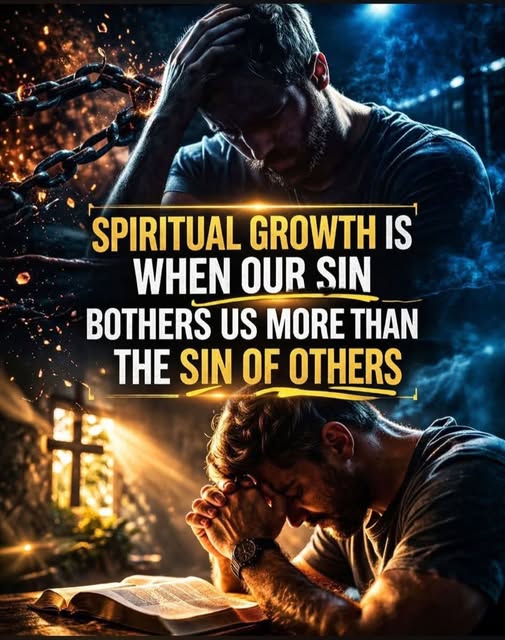
Spiritual growth is the process of becoming more and more like Jesus Christ. When we place our faith in Jesus, the Holy Spirit begins the process of making us more like Him, conforming us to His image. Spiritual growth is perhaps best described in 2 Peter 1:3-8, which tells us that by God’s power we have “everything we need” to live lives of godliness, which is the goal of spiritual growth. Notice that what we need comes “through our knowledge of Him,” which is the key to obtaining everything we need. Our knowledge of Him comes from the Word, given to us for our edification and growth.
There are two lists in Galatians 5:19-23. Verses 19-21 list the “acts of the flesh.” These are the things that identified our lives before we came to Christ for salvation. The acts of the flesh are the activities we are to confess, repent of, and, with God’s help, overcome. As we experience spiritual growth, fewer and fewer of the “acts of the flesh” will be evident in our lives. The second list is the “fruit of the Spirit” (verses 22-23). These are what should characterize our lives now that we have experienced salvation in Jesus Christ. Spiritual growth is identified by the fruit of the Spirit becoming increasingly evident in a believer’s life.
When the transformation of salvation takes place, spiritual growth begins. The Holy Spirit indwells us (John 14:16-17). We are new creatures in Christ (2 Corinthians 5:17). The old, sinful nature begins to give way to the new, Christlike nature (Romans 6-7). Spiritual growth is a lifelong process that depends on our study and application of God’s Word (2 Timothy 3:16-17) and our walk in the Spirit (Galatians 5:16-26). As we seek spiritual growth, we should pray to God and ask for wisdom concerning the areas He desires us to grow in. We can ask God to increase our faith and knowledge of Him. God desires for us to grow spiritually, and He has given us all we need to experience spiritual growth. With the Holy Spirit’s help, we can overcome sin and steadily become more like our Savior, the Lord Jesus Christ.
The Bible presents several different resources to aid us in our effort to overcome sin. In this lifetime, we will never be perfectly victorious over sin (1 John 1:8), but that should still be our goal. With God’s help, and by following the principles of His Word, we can progressively overcome sin and become more and more like Christ.
The first resource the Bible mentions in our effort to overcome sin is the Holy Spirit. God has given us the Holy Spirit so we can be victorious in Christian living. God contrasts the deeds of the flesh with the fruit of the Spirit in Galatians 5:16-25. In that passage we are called upon to walk in the Spirit. All believers already possess the Holy Spirit, but this passage tells us that we need to walk in the Spirit, yielding to His control. This means choosing to consistently follow the Holy Spirit’s prompting in our lives rather than following the flesh.
The difference the Holy Spirit can make is demonstrated in the life of Peter, who, before being filled with the Holy Spirit, denied Jesus three times—and this after he had said he would follow Christ to the death. After being filled with the Spirit, he spoke openly and strongly to the Jews at Pentecost.
We walk in the Spirit as we try not to quench the Spirit’s promptings (as spoken of in 1 Thessalonians 5:19) and seek instead to be filled with the Spirit—that is, to be fully under the Spirit’s control (Ephesians 5:18–21). How is one filled with the Holy Spirit? If sin is what grieves the Spirit and hinders His filling, then obedience to God is how the filling of the Spirit is maintained. We should pray that we be filled with the Spirit, immerse ourselves in God’s Word (Colossians 3:16), and walk in obedience to God’s commands. This gives the Spirit freedom to work within our thoughts and actions.
The Word of God, the Bible, says that God has given us His Word to equip us for every good work (2 Timothy 3:16-17). It teaches us how to live and what to believe, it reveals to us when we have chosen wrong paths, it helps us get back on the right path, and it helps us to stay on that path. Hebrews 4:12 tells us that the Word of God is living and powerful, able to penetrate to our hearts to root out and overcome the deepest sins of heart and attitude. The psalmist talks about its life-changing power in-depth in Psalm 119. Joshua was told that the key to success in overcoming his enemies was not to forget this resource but instead to meditate on it day and night and obey it. This he did, even when what God commanded did not make sense militarily, and this was the key to his victory in his battles for the Promised Land.
The Bible is a resource that we too often treat lightly. We give token service to it by carrying our Bibles to church or reading a daily devotional or a chapter a day, but we fail to memorize it, meditate on it, or apply it to our lives; we fail to confess the sins it reveals or praise God for the gifts it reveals to us. When it comes to the Bible, we are often either anorexic or bulimic. We either take in just enough to keep us alive spiritually by eating from the Word (but never ingesting enough to be healthy, thriving Christians), or we come to feed often but never meditate on it long enough to get spiritual nutrition from it.
It is important, if you have not made a habit of daily studying and memorizing God’s Word, that you begin to do so. Some find it helpful start a journal. Make it a habit not to leave the Word until you have written down something you have gained from it. Some record prayers to God, asking Him to help them change in the areas that He has spoken to them about. The Bible is the tool the Spirit uses in our lives (Ephesians 6:17), an essential and major part of the armor that God gives us to fight our spiritual battles (Ephesians 6:12-18).
A third crucial resource in our battle against sin is prayer. Again, it is a resource that Christians often give lip service to but make poor use of. We have prayer meetings, times of prayer, etc., but we do not use prayer in the same way as the early church (Acts 3:1; 4:31; 6:4; 13:1-3). Paul repeatedly mentions how he prayed for those he ministered to. God has given us wonderful promises concerning prayer (Matthew 7:7-11; Luke 18:1-8; John 6:23-27; 1 John 5:14-15), and Paul includes prayer in his passage on preparing for spiritual battle (Ephesians 6:18).
How important is prayer to overcoming sin in our lives? We have Christ’s words to Peter in the Garden of Gethsemane, just before Peter’s denial. As Jesus prays, Peter is sleeping. Jesus wakes him and says, “Watch and pray so that you will not fall into temptation. The spirit is willing, but the body is weak” (Matthew 26:41). We, like Peter, want to do what is right but are not finding the strength. We need to follow God’s admonition to keep seeking, keep knocking, keep asking—and He will give us the strength that we need (Matthew 7:7). Prayer is not a magic formula. Prayer is simply acknowledging ourown limitations and God’s inexhaustible power and turning to Him for that strength to do what He wants us to do, not what we want to do (1 John 5:14-15).
A fourth resource in our war to conquer sin is the church, the fellowship of other believers. When Jesus sent His disciples out, He sent them out two-by-two (Mark 6:7). The missionaries in Acts did not go out one at a time, but in groups of two or more. The Bible commands us not to forsake the assembling of ourselves together but to use that time for encouraging one another in love and good works (Hebrews 10:24). It tells us to confess our faults to one another (James 5:16). In the wisdom literature of the Old Testament, we are told that as iron sharpens iron, so one man sharpens another (Proverbs 27:17). There is strength in numbers (Ecclesiastes 4:11-12).
Many Christians find that having an accountability partner can be a huge benefit in overcoming stubborn sins. Having another person who can talk with you, pray with you, encourage you, and even rebuke you is of great value. Temptation is common to us all (1 Corinthians 10:13). Having an accountability partner or an accountability group can give us the final dose of encouragement and motivation we need to overcome even the most stubborn of sins.
Sometimes victory over sin comes quickly. Other times, victory comes more slowly. God has promised that as we make use of His resources, He will progressively bring about change in our lives. We can persevere in our efforts to overcome sin because we know that He is faithful to His promises.
In His great Sermon on the Mount, Jesus Christ sometimes employed a literary tool known as hyperbole to make a point. In one such example, Jesus asked, “Why do you look at the speck of sawdust in your brother’s eye and pay no attention to the plank in your own eye? How can you say to your brother, ‘Let me take the speck out of your eye,’ when all the time there is a plank in your own eye? You hypocrite, first take the plank out of your own eye, and then you will see clearly to remove the speck from your brother’s eye” (Matthew 7:3–5).
Jesus drew a brilliant word picture of someone struggling with the sensitive business of extracting a tiny speck of sawdust from a friend’s eye. In contrast, a sizable plank of wood in that person’s own eye completely obstructed his vision. Such a feat would be impossible. It’s evident that Jesus was not speaking literally here. Instead, He used exaggeration to drive home the truth that people are often blind to their own faults while keenly focused on weaknesses in others. This segment of Christ’s sermon addressed the natural human tendency to see shortcomings in others and to be judgmental of their sin while ignoring, minimizing, or excusing our own sin.
When the woman caught in adultery was brought before Jesus, He confronted the same issue by telling the scribes and Pharisees, “Let him who is without sin among you be the first to throw a stone at her” (John 8:7, ESV). Jesus wasn’t excusing the woman’s sin but instead pointing out the need for consistency, honesty, and humility when passing judgment.
The Lord would have us remember that the blade of judgment cuts both ways. When we judge others, we condemn ourselves as well. If we are not willing to evaluate ourselves honestly and accurately, we’ll undermine our right to scrutinize the lives of others. Jesus said, “Do not judge, or you too will be judged. For in the same way you judge others, you will be judged” (Matthew 7:1–2; see also Luke 6:37–42). Paul taught in 1 Corinthians 11:31, “If we were properly judging ourselves, we would not be judged” (CSB).
Sadly, Christ’s instruction to “take the plank out of your own eye” is often misinterpreted as a general prohibition against all judgment. We can’t overlook the fact that Jesus said both the speck and the plank were to be removed. Believers are indeed called to help other Christians who become entangled in sin. Paul said, “Dear brothers and sisters, if another believer is overcome by some sin, you who are godly should gently and humbly help that person back onto the right path” (Galatians 6:1, NLT). But before we can help a fellow brother or sister onto the right path—before we can remove the speck from another’s eye—we must first deal honestly with our own sin.
In the Lord’s illustration, the fact that there is a “plank” in our eye, but only a “speck” in our brother’s eye, exposes the hypocrisy, self-righteousness, and pride at the heart of the matter. Somehow, we can’t discern that our own sins are more glaringly serious than those we concentrate on in others. We criticize others while absolving ourselves. Yet, often, those faults we pass judgment on in others are the very same flaws we can’t bear to admit in ourselves.
The Lord’s choice of an illustration involving the eye also ties in with a person’s overall spiritual condition: “The eye is the lamp of the body. If your eyes are healthy, your whole body will be full of light. But if your eyes are unhealthy, your whole body will be full of darkness. If then the light within you is darkness, how great is that darkness!” (Matthew 6:22–23).
The Lord calls all believers to live holy, godly lives (1 Peter 1:14–16). To do that, we must never forget our propensity to overlook our own faults while arrogantly locking on to those same faults in others. All ungodliness is cause for concern, whether it be in ourselves or in others. If we hope to help and restore someone else, we must honestly face up to our own sins and confess them—we must first take the plank out of our own eye.

Tea Time Manna
“All men will hate you because of me, but he who stands firm to the end will be saved.”
—Matthew 10:22
Wow! Jesus’ words are emphatic and decisive! He chose these challenging words because his followers — that’s us today — must realize they will not be the dominant or accepted culture during most of the world’s history. Discipleship is difficult and demanding; most folks want things simple and easy. The values Jesus called his disciples to embody are generally unfavorable to the dominant cultures of our world. “So, be ready!” Jesus was essentially telling us. “Be ready to face criticism and rejection.” While we know life as a disciple may be an uphill battle to change the hearts of men and women of the world, with the Spirit’s help, we can be God’s tools to bless others and lead them closer to him! Jesus called us to do that throughout his teaching and example during his earthly ministry (Matthew 5:11-16). Salvation in all its glory awaits us at our journey’s end. Hopefully, we will influence others to join us in our journey to Jesus despite the opposition of those who reject the Lordship of Jesus Christ!
Prayer
Forgive us, dear Father, for we have often grown impatient with the world around us and started seeing it as the enemy rather than our target for your grace. Please give us the wisdom and the courage to balance our understanding of the world with your passion to redeem it through Jesus, in whose name we pray. Amen and Amen
Truth Article by Pastor Dirk
Why you should study Bible prophecy!
There are six very good reasons why you should study Bible prophecy.
1. Nearly a Third of the Bible is Prophecy
Some 31% of the Bible is God letting mankind know what the future holds. And I’m not just talking about the writings of the Major and Minor Prophets and the book of Revelation. If you don’t want to read prophecy, then you also have to skip the Psalms, Jesus’ own teachings in the Gospels, and pretty much all the books by Peter, Paul, Jude and John.
The Apostle Paul warned Christians, “Do not despise prophecies.” He even confirmed that “All Scripture is given by inspiration of God” and so that must also include the prophetic writings. And, even Jesus throughout the Gospels and Revelation, recited prophecies from the Old Testament and taught new ones. To top it all off, Jesus promised a blessing for those who read and obey the prophecies in the book of Revelation.
So, if prophecy is so important to Jesus, then shouldn’t it be important to Christians as well?
2. The Focus of Prophecy is Jesus Christ
Bible prophecy is in the end all about Jesus. Jesus declared He must fulfill prophecy so that “…all things must be fulfilled which were written in the Law of Moses and the Prophets and the Psalms concerning Me.” The angel of Revelation 19 even equated the testimony of Jesus with prophecy, declaring “…Worship God! For the testimony of Jesus is the spirit of prophecy.”
If Jesus did not fulfill even one of the 109 distinct First Coming prophecies about the Messiah, then He couldn’t be who He claimed to be — the Savior.
Fulfilled prophecy validates Jesus’ claim to divinity and being our Savior.
3. Fulfilled Prophecies Prove the Bible is Truly God’s Word
The Bible is unique in being prophetic. There is no religious book, not by Buddha or Krishna or Mohammed or anyone else, ever written which contains so much prophecy. And, I’m not talking about general prophecies about the future, but super specific prophecies such as the Messiah would descend from the line of David, be born in Bethlehem, be killed by crucifixion, and be raised from the dead three days later.
The actual fulfillment of all these prophecies and over a hundred more proves the Bible truly is the Word of God, and so we can put our faith in what it teaches.
4. Bible Prophecy Motivates One to Holy Living
The Prophets and Apostles didn’t just relay God’s messages about the future, but they also gave powerful messages concerning living morally. For example, Romans 13 encourages, “…the day is at hand. Therefore let us cast off the works of darkness, and let us put on the armor of light.”
When the people obeyed prophetic teachings, they grew spiritually. 1 John 3 declares, “…when He [Jesus] is revealed, we shall be like Him, for we shall see Him as He is. And everyone who has this hope in Him purifies himself, just as He is pure.”
They became better people, being less self-centered and more God-centered. 1 Peter 4 admonishes, “But the end of all things is at hand; therefore be serious and watchful in your prayers… have fervent love for one another… minister to one another, be good stewards…”
When a person is more heavenly minded they’ll be more generous because they’re investing in eternity. 2 Peter 3 advises, “But the day of the Lord will come… Therefore, since all these things will be dissolved, what manner of persons ought you to be in holy conduct and godliness, looking for and hastening the coming of the day of God…”
And, the people became much better at discerning truth from falsehoods. Luke 21 warns, “But take heed to yourselves, lest your hearts be weighed down with carousing, drunkenness, and cares of this life, and that Day come on you unexpectedly…”
5. Bible Prophecy Energizes Christians to Evangelize
Knowing that we’re quickly running out of time before Jesus returns, Christians when they study Bible prophecy become motivated to get out there and tell people about the Good News of Jesus Christ.
Fulfilled Bible prophecies actually are an excellent apologetics tool for defending the faith. And, the Gospel is very attractive to people wanting to know what the future holds.
6. Bible Prophecy Provides Hope for the Future
When the world seems to be careening into chaos and you wonder if God’s still around, Bible prophecy tells us God certainly is still in control. In the light of Bible prophecy, these crazy current events finally make sense. They’re all leading up to one big thing — Jesus Christ’s return.
And when Jesus returns, He wins! And when Jesus wins, believers in Christ, well, we win as well! So, when you live a life of anticipating victory, you too can have hope for the future.
Summary
So in summary, to reject Bible prophecy means skipping almost a third of the Bible. The focus of prophecy is Jesus Christ. Fulfilled prophecies prove the Bible is truly God’s Word. Prophecy motivates Christians to holy living, to evangelism, and to have hope about the future.
The Apostle Peter warned, “that scoffers will come in the last days, walking according to their own lusts, and saying, ‘Where is the promise of His coming?’” Will that be you? No! Or, will you embrace the wonder that Is Jesus Christ, the focus and fulfillment of Bible prophecy
NEWS MANNA

Israel Is Preparing For the Day America May No Longer Stand With It

Israel has long relied on the United States as its most important ally and weapons supplier. But Israeli leaders are now planning for a future in which American support could become less reliable—or come with conditions that limit Israel’s freedom to act.
That concern came into sharper focus this month when Yisrael Beytenu chairman Avigdor Liberman warned that the United States could recognize a Palestinian state within two years. Speaking at a counterterrorism summit at Reichman University, Liberman said he believed that would not happen while President Donald Trump remains in office. He urged Israel to use the time that is left to prevent what he called a diplomatic disaster.
Liberman claimed that officials he had spoken with at the State Department and National Security Council supported recognition of a Palestinian State. He predicted that Washington could lead a United Nations Security Council resolution and described a future Palestinian state as including Judea and Samaria, the Jordan Valley, Gaza and East Jerusalem.
Liberman’s warning reflects a fear in Israel that today’s political support could shift quickly after the next change of administration or even stall if US mid-terms weaken support for Trump.h
A lesson Israel learned during the War
Israel has already seen how an American ally can apply pressure during a conflict. In 2024, the Biden administration paused one shipment of bombs while it reviewed Israel’s planned operation in Rafah. President Joe Biden also warned that certain offensive weapons would not be supplied if Israel launched a major ground operation there.
The pause involved specific munitions and did not amount to a complete cutoff of U.S. Military aid. Still, the episode showed Israeli leaders that access to weapons can become part of a political dispute, even between close allies.
That experience helps explain why Prime Minister Benjamin Netanyahu has called for Israel to reduce its dependence on foreign suppliers. In December, he announced plans to invest 350 billion shekels—about $110 billion—over the next decade to develop an independent arms industry. He has acknowledged that complete self-sufficiency is unrealistic, but the goal is to produce more of the weapons and ammunition Israel needs at home.
This is not merely a response to one administration. Israel faces ongoing threats from Iran and its regional allies, while its military has been using large amounts of ammunition across multiple fronts. A stronger domestic defense industry could help Israel sustain operations when foreign shipments are delayed, restricted or caught up in political debate.
Democratic support for Israel is under growing pressure
For decades, support for Israel was a central part of the American political consensus. That consensus has weakened most visibly among Democrats, where criticism of Israel and opposition to U.S. military assistance have moved from the party’s progressive edge toward the center of its congressional debate.
The shift was on display in July, when the House considered an amendment to block $3.3 billion in annual security assistance to Israel. The measure failed, but 103 Democrats voted for it. The vote marked a sharp departure from the near-unanimous support Israel once received in Congress.
The disagreement reached into the party’s leadership. House Democratic Leader Hakeem Jeffries opposed the amendment, calling it too broad. But Katherine Clark, the second-ranking House Democrat, backed it, arguing that the United States should not provide a blank check to a country that does not comply with American law and values. Progressive Caucus Chair Greg Casar urged members to vote for the measure, saying Americans were demanding an end to U.S. tax dollars supporting Israel’s military.
The Democratic National Committee has also faced pressure to take a harder line. In 2025, a DNC panel rejected a resolution calling for an arms embargo on Israel and recognition of Palestinian statehood. The party’s national leadership did not adopt that demand. But the fight itself showed how far the debate had moved inside the party—and how difficult it has become for Democratic leaders to keep their coalition together on Israel.
Democratic Socialists of America has taken a more explicit position. At its 2025 national convention, the organization adopted a resolution declaring DSA a “fighting anti-Zionist” organization and tying DSA endorsements to anti-Zionist commitments, including support for the Boycott, Divestment and Sanctions movement. Democratic socialists are not all interchangeable, and the DSA is not the entire Democratic Party. But its candidates have gained influence in Democratic primaries, and its position helps
The Chatbot In The Bible Study: Who Is Discipling Christians Now? Ai ?

Millions of people are bringing questions about Scripture to artificial intelligence every week. They want help understanding difficult passages, comparing interpretations and making sense of what the Bible says.
OpenAI’s analysis found that about 22 million weekly ChatGPT requests focus on studying religious texts. Nearly half of Christianity-related messages concern Bible passages, while another 13% involve worship, sermons or church practices.
Those numbers do not tell us how many people are growing in faith, attending church or turning away from it. They do show that AI has become a place where people are asking spiritual questions. For the Church, the question is no longer whether people will use these tools. It is whether they will learn to use them with wisdom—and whether a chatbot is becoming the first voice they trust.
An Answer in Seconds
There are obvious reasons someone might ask AI about the Bible. A person can type a question at any hour, ask for a passage to be explained in simpler language, or request background on a place, person or custom mentioned in Scripture. They can ask follow-up questions without worrying that they will sound uninformed.
For someone new to Christianity that accessibility may be valuable. A reader who encounters a confusing passage can get a starting point for further study. A parent can ask for questions to guide a family discussion. A small-group leader can use AI to organize ideas or find themes to investigate.
But an answer that is easy to get is not automatically an answer that is sound. AI can produce a clear, confident explanation while missing the passage’s context, blending competing interpretations or presenting a mistaken claim as fact. A user may not know enough to spot the difference.
That is especially important with Scripture. A verse can be made to appear to say almost anything when separated from the surrounding chapter, the rest of the Bible and the historic beliefs of the Church. A chatbot may summarize a passage, but it does not carry the spiritual responsibility of teaching it faithfully.
Convenience Is Not Discipleship
The deeper issue is not simply whether AI can answer Bible questions. It is whether people are beginning to confuse receiving information with being discipled.
Christian faith is not only a set of facts to collect or verses to interpret. Discipleship involves learning to follow Christ in community, being corrected when we misunderstand, growing in prayer and service, and allowing Scripture to shape our lives. It includes relationships with people who know us and can walk with us through difficult questions.
A chatbot can respond to a question about forgiveness. It cannot reconcile with someone on our behalf. It can generate a prayer, but it cannot pray as a believer. It can offer general advice about grief or conflict, but it does not know the full story or bear responsibility for the counsel it gives.
That distinction matters when people turn to AI with questions they might otherwise bring to a pastor, parent or trusted Christian friend. The tool may feel private and nonjudgmental. That can help a person begin asking questions they have been afraid to voice. Yet private answers can also leave someone alone with a misunderstanding, especially when the question involves suffering, sin, a major life decision or a crisis of faith.
AI should not become a substitute for the Church’s calling to teach, shepherd and care for people. Nor should believers assume that a polished response is spiritually neutral. The way an AI system frames a question, chooses an interpretation or leaves out a perspective can influence what the user believes—even when the answer sounds balanced.
The Church Has a Teaching Opportunity
The answer is not for churches to pretend AI does not exist. People are already using it. Churches can help believers approach it with discernment: check quoted verses in a reliable Bible, read the surrounding passage, compare claims with the whole of Scripture and consult mature Christian teachers when the question carries weight.
AI can be useful as a study aid. It might help identify unfamiliar terms, suggest questions for further reading or organize material for a Bible study. But the user should verify its claims, especially when it supplies quotations, historical details or theological conclusions. AI can be a starting point for study; it should not be treated as the final authority.
Pastors and ministry leaders can also talk openly about how they use these tools. If AI helps with research or preparation, transparency can build trust. Churches can discuss where the technology helps, where it falls short and why human relationships remain central to Christian ministry.
That creates both an opportunity and a responsibility. If someone’s first question about the Bible goes to a chatbot, the Church should want that person to find faithful teaching, real community and a deeper understanding of Scripture. Technology can help open the door. It cannot walk the path of discipleship for us.
Millions may be asking AI what the Bible means. The Church’s task is to help them seek answers with discernment—and to remind them that knowing Scripture is meant to lead us beyond information, into a life of faithfulness to Christ.

TruLight TV – Popcorn and Movie Time – Samson
When his youthful ambition leads to a tragic marriage, the all-powerful Samson embarks on a quest for vengeance that brings him into direct conflict with the Philistine army. As his brother mounts a tribal rebellion, Samson’s relationship with a Philistine temptress and his final surrender to God will help turn imprisonment into a final victory.
Note – Rating: PG-13 (Violence and Battle Sequences)
Today on TruLight Radio XM
TruLight Radio XM 24/7
Program
GMT / UTC +2
Monday To Fridays
00:15 Words to Live By Testimonies
01.15 Science Scripture and Salvation
02.15 Ground Works
04.00 Gospel Concert of the Day
05.00 The Daren Streblow Comedy Show
5:55 It is Today devotional
6:00 Gaither Homecoming Morning Show
7:15 Discover the Word
8.15 Destined for Victory
8:55 Science Scripture and Salvation
9:00 Holy Spirit Hour – Normally Sermons
10:15 Hope of the Heart
11:15 Unshackled
11.45 Words to Live By
12:15 Truth for Life
13:15 Living on the Edge with Chip Ingram
14:15 Focus on the Family
15:00 Kids Hour
16:00 In Touch with Dr. Charles Stanley
16:30 Groundwork
17:15 Live in the Light
18:15 Renewing your Mind
19:00 Gaither Homecoming Show
20:15 Growing Hope
21:15 Adventures in Odyssey Radio Drama
21:45 Bible Reading
22:15 Night-sounds
23.00 Good Old Country Gospel / Rhema Gospel Express
VISIT THE WEBSITE
https://trulightradioxm.org.za
TruLight Ministry News – EXTRA MANNA

TruLight Ministries orders from God since 2012 . Teach Them , Comfort Them and Warn Them!
TruLight Ministry News – EXTRA MANNA
TruLight Ministries orders from God since 2012 . Teach Them , Comfort Them and Warn Them!
TruLight News
TruLight Ministries International shaping up our digital platforms for gospel music and audio programming! www.TruPlay.co.za – If you are looking to stream gospel music, sermons, or radio dramas, you can access their active streaming media through the official TruLight Ministry portals:• Radio & Music: Stream Live Broadcast directly via their main portal to enjoy uplifting gospel music and praise and worship tracks- www.TruLightRadioXM.org.za • Video & Television: Watch gospel music concert events, and daily programs on www.TruLightTV.org.za • Daily Devotionals: Read scripture and daily spiritual nourishment in multiple languages on www.TruLightDailyManna.co.za
Artist Liners
Picture Manna to Share
From God –
From Jesus –
From the Holy Spirit –

Share this Feeding of Manna with your Friends and Family. just click on the Social Media icon and share This Manna with your Friend and Family to Share