Hosted by TruLight Ministries International – The Place of Truth
SELECT YOUR READING LANGUAGE – BOTTOM LEFT = YOUR DAILY MANNA NOW AVAILABLE IN 103 LANGUAGES
@ TruLight Daily Manna is not Just a Bible Verse with a Small Prayer . NO ::: WE SERVE DAILY Manna for the ENTIRE Day . Breakfast , Lunch , Dinner , Plus tea Times and even Entertainment Manna . Plus News Manna and More , This Daily Manna will keep you Spiritually full for the full 48 Hours and even More to Share with your Friends and Family !!!
Don’t Give Up – The End is Near !!! 7 day Study Started Yesterday
2. Knocked Down but Not Destroyed
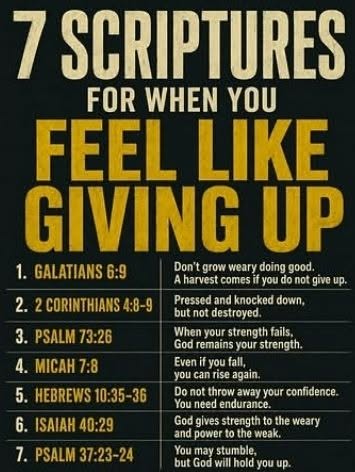
In 2 Corinthians 4:7–18, the apostle Paul explains that the endurance he exhibits in his ministry points to God’s strength and not his own. Even though he has encountered numerous difficulties physically, mentally, and spiritually, he is able to press on because of God’s incredible power (2 Corinthians 4:7). This is vividly illustrated by a series of contrasts in verses 8 and 9. One of the stark illustrations provided is of someone getting knocked down. Paul writes, “We are . . . struck down, but not destroyed” (2 Corinthians 4:9).
The words struck down and destroyed mean exactly that in the original language. The word for “struck down” portrays something getting hit, abused, abandoned, or even killed. The word for “destroyed” simply means “perished or ruined.” Paul acknowledges he has been struck down by hardship before, but quickly clarifies that he has never been destroyed, standing up again through the power of God (2 Corinthians 4:7; cf. Psalm 54:4). The picture is like that of a boxer who is knocked over by a huge blow but manages to rise again—think of Rocky Balboa in the Rocky movies. In ministry, Paul has been knocked down but not knocked out. He has been wounded by his enemies, but no one can deal him a lethal blow because God is his strength (2 Corinthians 12:9–10).
What does that look like in Paul’s life? One obvious example is the persecution Paul faced on his missionary journeys. People often did not welcome the gospel of Christ and abused Paul for preaching it. However, they were unable to stop him because of God’s continued protection and empowerment. A good example is what happened in Lystra on Paul’s first missionary journey when the townspeople stoned Paul and left him for dead (Acts 14:19). After the stoning, the indominable apostle got back to his feet and kept ministering, proclaiming the gospel (Acts 14:20). Paul was certainly “struck down, but not destroyed” (2 Corinthians 4:9).
What does this mean for us? Like Paul, there are things in life that threaten to strike us down. Because of our faith, we can be persecuted, alienated, or ridiculed. In moments of extreme hardship, it is critical to refocus our attention on God and remember that He alone is our source of strength. It is only by God’s power, and not our own, that we can be “struck down, but not destroyed” (2 Corinthians 4:9). The world may wound us, but it cannot destroy us because our future is certain with Jesus Christ (2 Corinthians 4:13–14).
The apostle Paul compares the ministry of the gospel to a “treasure in jars of clay.” In Paul’s metaphor, God stores the priceless gospel ministry in fragile, everyday human vessels. Then Paul lists some of the real hardships he and other ministers encounter: “We are hard pressed on every side, but not crushed; perplexed, but not in despair; persecuted, but not abandoned; struck down, but not destroyed” (2 Corinthians 4:8–9).
Jars of clay are common, earthenware containers, but the ministry of the gospel is the most valuable treasure on earth. The New Living Translation makes Paul’s meaning evident: “We now have this light shining in our hearts, but we ourselves are like fragile clay jars containing this great treasure. This makes it clear that our great power is from God, not from ourselves. We are pressed on every side by troubles, but we are not crushed. We are perplexed, but not driven to despair. We are hunted down, but never abandoned by God. We get knocked down, but we are not destroyed. Through suffering, our bodies continue to share in the death of Jesus so that the life of Jesus may also be seen in our bodies” (2 Corinthians 4:7–10, NLT).
Paul cites four contrasts to show the lives of gospel ministers are like ordinary jars of clay containing a precious possession. First, he describes the hardships they experience. Then he explains how God’s power sustains them through times of adversity.
We are pressed but not crushed is the first hardship and corresponding display of God’s power. The word for “pressed,” in the original Greek, means “afflicted, to be brought into difficulties, trouble, distress, or suffering.” The term translated “crushed” is similar but speaks of being afflicted or distressed to the point of total hopelessness. It describes being in a situation without any hope of escape or survival. Paul asserts that, even when placed under the most severe pressure and strain, the jar of clay—the frail human minister in a perishing body made of dust—will not be broken or smashed to the point of hopelessness and despair because of the great treasure held within—the gospel of Jesus Christ or the grace and truth of God.
We are pressed but not crushed means that, even though we suffer tremendous affliction, we will not be overcome by it because of God’s sustaining power. We have the treasure of Christ within us and the message of the gospel, which is the power of God (Romans 1:16).
Paul often spoke of suffering as part of the Christian experience, especially for ministers of the gospel (Galatians 6:17; Philippians 3:10–11). “If we are to share his glory, we must also share his suffering” (Romans 8:17, NLT). We should not be surprised or give up when we experience hardships, “For our present troubles are small and won’t last very long. Yet they produce for us a glory that vastly outweighs them and will last forever!” (2 Corinthians 4:16–17, NLT). Although we may feel hard pressed on every side, the power of God working within us will never leave us without hope (Psalm 94:14; Hebrews 13:5 Matthew 28:20).
We have hope in this life because we know that the difficulties we endure as believers will give way to future glory in the world to come. Our suffering has an eternal purpose: “Yes, we live under constant danger of death because we serve Jesus, so that the life of Jesus will be evident in our dying bodies” (2 Corinthians 4:11, NLT). The life of Christ is displayed through what God does in our weakened earthen vessels. Our sufferings give opportunity for God’s power to be revealed, but they also bear witness to the death of Jesus and His resurrection life (2 Timothy 2:11).
Paul never sugar-coated the Christian experience, and neither should we. If we are to speak honestly about what it means to be a sold-out minister of the gospel of Jesus Christ, like Paul, we won’t cover up the gritty and sometimes harsh realities. At times we will feel hard pressed on every side by troubles, but we will not be completely crushed. We can admit when our circumstances are perplexing, but they will never reach the point of hopelessness and despair. We may sometimes feel hunted down, but God will never abandon us. Even if we get knocked down, with God’s power in us, we will never be destroyed. The priceless treasure hidden deep within assures us “that when this earthly tent we live in is taken down (that is, when we die and leave this earthly body), we will have a house in heaven, an eternal body made for us by God himself” (2 Corinthians 5:1, NLT).
A common misconception of new believers is that God solves all our problems, filling our lives with only blessings and joy. If this were true, the apostle Paul would not have urged Christians to “rejoice in hope, be patient in tribulation, be constant in prayer” (Romans 12:12, ESV).
For most of us, patience is a virtue that does not come naturally. To be patient in tribulation requires a special grace from God. In the original Greek text, the verb for “be patient” means “to be persistent, refuse to stop, persevere.” Tribulation is an oppressive, distressing state of physical, mental, social, or economic adversity or affliction.
Patience is a fruit of the Holy Spirit (Galatians 5:22; Colossians 3:12). According to the author of Hebrews, patience in tribulation is an indispensable virtue: “Patient endurance is what you need now, so that you will continue to do God’s will. Then you will receive all that he has promised” (Hebrews 10:36, NLT). Patient endurance means staying put in the face of adversity and standing firm when you feel like running away (1 Corinthians 16:13; Philippians 1:27).
Perhaps no one was more qualified than Paul to teach about enduring affliction, distress, and adversity, especially for the sake of the gospel. Paul frequently faced opposition and persecution as an apostle of Christ: “We are pressed on every side by troubles, but we are not crushed. We are perplexed, but not driven to despair. We are hunted down, but never abandoned by God. We get knocked down, but we are not destroyed. Through suffering, our bodies continue to share in the death of Jesus so that the life of Jesus may also be seen in our bodies. Yes, we live under constant danger of death because we serve Jesus, so that the life of Jesus will be evident in our dying bodies” (2 Corinthians 4:8–11, NLT).
Paul told his protégé Timothy, “Everyone who wants to live a godly life in Christ Jesus will be persecuted” (2 Timothy 3:12). As a missionary and evangelist, Paul traveled around, “strengthening the souls of the disciples, encouraging them to continue in the faith, and saying that through many tribulations we must enter the kingdom of God” (Acts 14:22, ESV). Paul warned the Thessalonians that “troubles would soon come—and they did” (1 Thessalonians 3:4).
Serving the Lord and preaching the good news of His kingdom means dealing with opposition from our adversary, the devil (1 Peter 5:8). We are sure to experience times of discouragement. It was for this reason that Jesus said, “In the world you will have tribulation. But take heart; I have overcome the world” (John 16:33, ESV).
We can learn to be patient in tribulation because we know that, in the end, Jesus Christ will triumph over every enemy: “In his justice he will pay back those who persecute you. And God will provide rest for you who are being persecuted and also for us when the Lord Jesus appears from heaven. He will come with his mighty angels, in flaming fire, bringing judgment on those who don’t know God and on those who refuse to obey the Good News of our Lord Jesus” (2 Thessalonians 1:6–8, NLT; see also 1 Corinthians 15:25).
Being patient in tribulation means learning to rejoice “when we run into problems and trials, for we know that they help us develop endurance. And endurance develops strength of character, and character strengthens our confident hope of salvation. And this hope will not lead to disappointment. For we know how dearly God loves us, because he has given us the Holy Spirit to fill our hearts with his love” (Romans 5:3–5, NLT). Paul admonished believers to persevere when life becomes difficult by depending on God for strength, delighting “in weaknesses, in insults, in hardships, in persecutions, in difficulties. For when I am weak, then I am strong” (2 Corinthians 12:10).
James, another biblical authority on being patient in tribulation and suffering (James 5:7–12), viewed trials of faith as a privilege designed to strengthen and perfect us (James 1:2–4). The Bible affirms that God will set right all the wrongs in this world—but not until the return of Jesus Christ. Therefore, for now, we ought to expect hardships, yield to God, and endure them with hope, knowing He is using them to produce a harvest of spiritual fruit in our lives (Galatians 5:22–23).

Tea Time Manna
You will be made rich in every way so that you can be generous on every occasion, and through us your generosity will result in thanksgiving to God.
—2 Corinthians 9:11
An old saying says, “You can’t outgive God!” And this saying is true. The more we give to bless others and honor God, the more we have to give. Why does God bless us with riches? So we can share those riches generously with those in need, bring joy to those in despair, and give thanksgiving from all of these hearts to God.
Prayer
Father, thank you for providing me with so many blessings. May my use of your riches bring you glory and bring others a true and genuine blessing that will touch their hearts with your grace. In Jesus’ name, I pray. Amen and Amen
Truth Article by Pastor Dirk
Without the Baptism of the Holy Spirit there is NO Rapture for You!
Early this morning I was urged by the Holy Spirit to urge You to prepare and seek the Baptism of the Holy Spirit with all you heart and soul.
The Message I received was: Without the Power of the Baptism of the Holy Spirit, You will not be able to be Raptured. If you are in death at that point in time, if you did not receive the Baptism of the Holy Spirit before your Death you will not be resurrected to meet Jesus in the Air at the Point of His 2nd Coming and the Collection of the Bride of Christ. If you are alive at that point, you would need the Holy Spirit power within you to transform you mortal state to immortal state to be Raptured.
Note: Not even Jesus with His fullness and Glory could resurrect out of the grave without the Power of the Holy Spirit. The Holy Spirit was the one of the Trinity that was responsible for the resurrection of Jesus Christ, 3 days after He died.
Let’s look at what made Jesus to Resurrect from His Grave?
Jesus States in Joh 3:5
Jesus answered, Verily, verily, I say unto thee, Except a man be born of water and of the Spirit, he cannot enter into the kingdom of God.
Joh 3:6 That which is born of the flesh is flesh; and that which is born of the Spirit is spirit.
Does this Mean that everybody that wanted to Be Raptured, had to be Born Again, Baptized with water and baptized with The Holy Spirit? to be Resurrected and Gathered when Christ comes at His 2nd Coming?
Paul States
Rom 8:9 But ye are not in the flesh, but in the Spirit,
if so be that the Spirit of God dwell in you.
Now if any man have not the Spirit of Christ, he is none of his.
In other words – If you are not Baptized in the Spirit and the Holy Spirit does not dwell in you , You are not part of Jesus Christ?
Rom_8:10 And if Christ be in you, the body is dead because of sin;
but the Spirit is life because of righteousness.
In Other words – If there is sin in your life – The Holy Spirit cannot live in you?
Rom_8:11 But if the Spirit of him that raised up Jesus from the dead dwell in you,
he that raised up Christ from the dead shall also quicken your mortal bodies by his Spirit that dwelleth in you.
In Other words – The Spirit (Holy Spirit) Raised Jesus from the Dead! So those WHO died in Christ will be raised by the Holy Spirit within them to come from the grave and meet Jesus in the Air!
Rom_8:13 For if ye live after the flesh, ye shall die:
In other words – If you don’t have the Baptism of the Holy Spirit You will remain in the Grave as the dead that will be judged.
Rom 8 v 13b but if ye through the Spirit do mortify the deeds of the body, ye shall live.
In Other words – The Holy Spirit is the spark for you to become rapture-able and receive eternity?
Rom_8:14 For as many as are led by the Spirit of God, they are the sons of God.
It was True then, and this is still True today. Jesus also urged us to make sure that we take the 3 Most important step to make it in Heaven! Jesus did it, why will you and I be exempt?
Step 1. Re Birth
Step 2. Baptism in Water
Step 3. Baptism of the Holy Spirit
Joh 3:3 Jesus answered and said unto him, Verily, verily, I say unto thee, Except a man be born again, he cannot see the kingdom of God.
At Rebirth You can only see the Kingdom of God , not Enter!
Joh 3:5 Jesus answered, Verily, verily, I say unto thee, Except a man be born of water and of the Spirit, he cannot enter into the kingdom of God.
To ENTER the Kingdom of God ! Baptized in Water and the Holy Spirit
Jesus was !
Mat 3:16-17 And Jesus, when he was baptized, went up straightway out of the water: and, lo, the heavens were opened unto him, and he saw the Spirit of God descending like a dove, and lighting upon him:
And lo a voice from heaven, saying, This is my beloved Son, in whom I am well pleased.
Without the Baptism of the Holy Spirit you will not enter the Kingdom of Heaven!!!!!
I want to urge You today, Please make this your Number 1 Priority! The Baptism of the Holy Spirit.
The Holy Spirit urged me this Morning in my Dreams and when I woke up. Please inform my People.
So I have included all our resources in this Article. For you to Learn about the Baptism of the Holy Spirit, to see the Role the Holy Spirit plays in the times ahead, and how to prepare and desire the Baptism of the Holy Spirit. I have included all my articles on the Holy Spirit; I give you free access to my 2 Books on eBook for Free. Namely. Not Just a Spirit and Living with Eternity on my Mind.
Please I urge You, Become Sinless and clean your spirit, and as soon as your spirit is clean, invite the Holy Spirit into your spirit! Don’t wait!
Eph 1:13 In whom ye also trusted, after that ye heard the word of truth, the gospel of your salvation: in whom also after that ye believed, ye were sealed with that holy Spirit of promise,
Articles to Read
The End Time Fruit and Gift of the Holy Spirit
The Holy Spirit will lead you to safety
Resurrection of the Dead
Conviction from the Holy Spirit
Where does the Holy Spirit stay in my Body?
Request your free eBook Copies today!
Pastor Dirk Flemix – TruLight Radio XM

NEWS MANNA –
10 Reasons Socialism Sounds Christian – Until You Look More Closely = The Red Horsemen
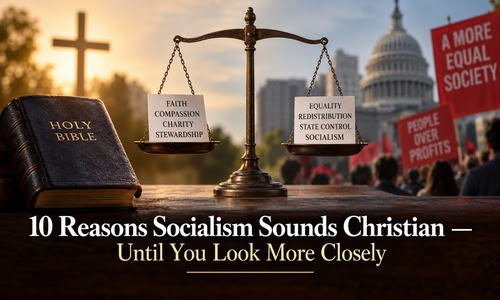
At first glance, socialism can sound remarkably compatible with Christianity.
Care for the poor. Reduce suffering. Challenge exploitation. Make sure people have food, housing and medical care. Christians hardly need to be convinced that these things matter. Scripture repeatedly commands God’s people to care for widows, orphans, strangers and those in genuine need.
That helps explain why some Christians see socialist ideas as a natural extension of biblical compassion.
But sharing a concern does not necessarily mean sharing the same solution. Socialism is generally understood as an economic system involving public or social ownership or control of major productive resources. Christianity is not an economic system at all. It is a theological worldview that addresses human nature, property, work, generosity, responsibility and the proper use of wealth.
When those ideas are compared, several important tensions emerge.
1. Biblical Giving Comes From The Heart
One of the clearest New Testament passages about giving appears in 2 Corinthians 9:7, where Paul tells believers that giving should come from what someone has decided in his heart, “not reluctantly or under compulsion.”
That doesn’t answer every question about taxation or government assistance. Governments routinely collect taxes for purposes citizens may or may not personally support.
But it establishes something important about Christian charity: God isn’t interested only in transferring resources from someone who has them to someone who needs them. He is also interested in generosity occurring in the heart of the giver.
2. Acts 2 Was Radical Generosity — But Was It Socialism?
Acts 2 is frequently raised in discussions of Christianity and socialism because believers “had everything in common” and sold possessions to help those in need.
Yet Acts 5 provides an important qualification.
When Ananias sold property and lied about the proceeds, Peter told him that the property belonged to him before it was sold and that the money remained at his disposal afterward. His sin was deception, not refusing to surrender everything he owned.
The picture in Acts is therefore one of extraordinary voluntary sharing within the church, rather than government abolition of private ownership.
3. Christianity Locates The Problem Deeper Than Economic Class
Socialist traditions have often understood society through tensions between economic classes and ownership of productive resources.
Christianity certainly recognizes economic oppression. Scripture repeatedly condemns exploitation of the poor.
But Christianity’s diagnosis goes deeper: the fundamental human problem is sin.
Rich people can be greedy. Employers can exploit workers. But workers, politicians, bureaucrats and revolutionaries are fallen human beings as well.
Changing who controls wealth does not change human nature.
4. Scripture Assumes Private Property Exists
The commandments against stealing and coveting make little sense without some concept of legitimate possession.
Likewise, throughout Scripture people own homes, land, businesses and possessions. The Bible repeatedly regulates how property should be acquired and used rather than simply abolishing ownership.
Acts itself continues referring to Christians who owned homes even after describing the Jerusalem believers’ remarkable sharing of possessions.
5. Ownership Comes With Accountability
Yet biblical ownership is very different from saying, “It’s mine, so I can do whatever I want with it.”
Christianity introduces the concept of stewardship.
Everything ultimately belongs to God. Wealth, abilities, opportunities and possessions are entrusted to human beings, who remain accountable for how they use them.
The biblical owner therefore has both property and responsibility.
6. Compassion And Personal Responsibility Exist Together
Scripture contains strong commands to provide for people in need, but it also emphasizes work and responsibility.
Paul famously distinguishes someone unwilling to work from someone unable to do so. Elsewhere, Scripture gives special attention to widows, orphans and others genuinely unable to provide for themselves.
Biblical compassion therefore involves more than simply transferring resources. It also raises questions about responsibility, restoration and helping people become capable of providing for themselves when possible.
7. Government Assistance And Christian Charity Aren’t Identical
A government welfare program can provide real food, housing or medical assistance to someone who desperately needs it. That material benefit shouldn’t be dismissed simply because government provided it.
But it also shouldn’t automatically be described as Christian charity.
Biblical charity involves love, sacrifice, obedience and often personal relationship. Paul repeatedly describes generosity as something believers consciously choose to practice.
Government can redistribute resources. It cannot require the spiritual transformation Christianity associates with generosity.
8. There Is A Risk Of Outsourcing Love Of Neighbor
This presents a challenge that goes beyond economics.
Jesus commanded people to love their neighbors. The early church fed people, cared for widows, practiced hospitality and shared possessions.
Modern societies can transfer many of those responsibilities to institutions.
That may provide important assistance, but it raises a distinctly Christian question: Can believers begin assuming they have fulfilled their responsibility toward the poor simply because government programs exist?
Christian charity historically involves more than funding. It involves people.
9. Biblical Justice Doesn’t Necessarily Mean Identical Outcomes
Scripture strongly condemns dishonest business practices, exploitation, favoritism and withholding wages.
But economic inequality itself is not consistently treated as synonymous with injustice.
People possess different abilities, opportunities and resources. The biblical emphasis is repeatedly on justice, honest dealing, generosity and faithfulness with what someone possesses.
That differs from the idea that justice necessarily requires equal economic outcomes.
10. Capitalism Isn’t Christianity Either
This may be the most important qualification.
Rejecting a biblical identification with socialism does not establish capitalism as Christianity’s economic equivalent.
Scripture has plenty to say against greed, materialism, exploitation and indifference toward suffering. James delivers a severe warning to wealthy people who withheld wages from their workers. Christianity offers no theological defense for getting rich through dishonesty or treating profit as life’s highest purpose.
Markets may facilitate ownership, investment, entrepreneurship and exchange. They do not make those participating in them righteous.
The Biblical Alternative Is Stewardship
Perhaps the biggest problem with trying to squeeze Christianity into modern economic categories is that Christianity makes demands neither socialism nor capitalism can fully capture.
The Christian cannot simply say, “The government should take care of the poor.”
But neither can he say, “It’s my money, and nobody can tell me what to do with it.”
Biblical stewardship presents a different standard: What we possess may legitimately belong to us in an earthly sense, yet ultimately everything belongs to God.
That means the Christian questions surrounding wealth go far beyond who owns the means of production or what tax rate should apply. They include how wealth was obtained, how workers were treated, how families were provided for, whether the vulnerable were ignored, whether generosity was practiced and whether possessions became an idol.
Socialism can redistribute wealth. Capitalism can create wealth. Christianity asks a different and ultimately deeper question:
What will we do with whatever God has placed in our hands?
Damascus: The Center Of One Of The Bible’s Most Dramatic Unfulfilled Prophecies
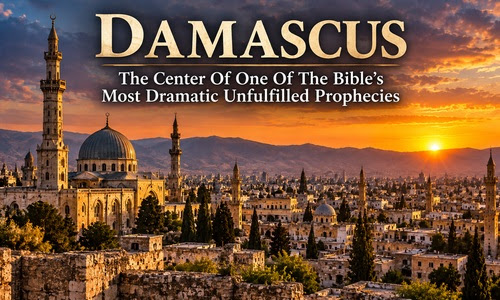
There are moments when a headline deserves more than a passing glance.
There are moments when the words being spoken in the Middle East should cause students of Bible prophecy to stop, listen, and open their Bibles. One of those moments is presently unfolding in Syria.
Reports and photos have recently emerged of the Syrian Arab Army soldiers standing in formation outside the historic Damascus Citadel and chanting violent threats directed toward Jews. According to published the soldiers declared that they were coming for the Jew and spoke of making Jewish blood flow like rivers.
These were not simply civilians arguing on social media. They were members of Syria’s military. Standing in Damascus. For students of Bible prophecy, these details are hard to ignore.
Damascus is not merely another Middle Eastern capital. It is a city whose name appears in one of the Bible’s most dramatic unfulfilled prophecies.
A New Syria, but an Old Hatred?
When Bashar al-Assad’s government collapsed in December 2024, the world began asking what kind of Syria would emerge from the ruins. Would Syria eventually become more moderate? Would a new government seek peaceful relations with Israel? Could Damascus move away from the Iranian axis that had dominated Syrian affairs? Or would one hostile regime simply be replaced by another?
Those questions have been answered by the military chants and should not be dismissed merely as rhetoric. In December 2025, Syrian soldiers participating in a military parade in Damascus were already recorded chanting their support for Gaza. Arabic reporting documented chants expressing solidarity with Gaza during events marking the anniversary of Assad’s fall.
By May 2026, an official Syrian army video anthem was attracting attention for imagery carrying unmistakable messages toward Israel. The production reportedly showed the Golan Heights and Mount Hermon within a map of Syria and included footage connected with Israeli strikes on Damascus. Then came the August incident. This public display of hate has moved beyond support for Gaza. Soldiers were chanting direct threats against Jews.
The Damascus Prophecy
The prophet Isaiah wrote Scripture’s most famous statements concerning Syria’s capital: “The burden of Damascus. Behold, Damascus is taken away from being a city, and it shall be a ruinous heap” (Isaiah 17:1). Damascus is among the world’s oldest continuously inhabited cities. It has endured invasion, conquest, regime change, civil war, terrorism, and bombardment. Yet the city remains.
Isaiah 17 ultimately points toward the destruction of Damascus. Some believe Isaiah’s prophecy was fulfilled in the eighth century B.C. through the Assyrian conquest of Israel’s ten northern tribes. Bible prophecy should never require us to force today’s headlines into Scripture. However, we know Damascus is specifically identified, as is its future destruction.
Isaiah 17 Is About More Than Syria
There is another important element often overlooked when Isaiah 17 is discussed.
The chapter does not speak exclusively about Damascus. It also speaks about Israel. The prophet writes: “The fortress also shall cease from Ephraim, and the kingdom from Damascus.” (Isaiah 17:3) The prophecy places Syria and Israel within the same geopolitical judgment. That makes Isaiah 17 particularly interesting in our generation. Modern Israel was reborn in 1948. Syria and Israel have technically remained enemies ever since. They fought major wars in 1948, 1967, and 1973. Israel captured the Golan Heights from Syria during the Six-Day War, and the territory remains one of the central strategic disputes between the two nations.
The Golan Heights: Israel’s Northern Shield
To understand why Syria matters so much to Israel, one just needs to look at a map.
The Golan Heights overlooks northern Israel. Damascus lies just forty miles north. Whoever controls those elevations possesses an enormous strategic advantage. Before Israel captured the territory in 1967, Syrian forces regularly used the heights to threaten Israeli communities below. Today the Golan remains one of Israel’s most strategically defensive regions.
The fall of Assad dramatically changed the security environment along Israel’s northeastern frontier. Israel became deeply concerned that weapons, territory, and military infrastructure could fall under the control of hostile Islamic forces.
Those concerns did not disappear simply because Assad disappeared.
The question became: Who will replace him? The chants coming from Syrian military personnel provide at least one troubling piece of evidence. They do not prove that Syria has decided to launch a war against Israel. This does not mean Isaiah 17 is being fulfilled tomorrow. But this does reveal something about the ideological currents that remain alive inside the country.
When Anti-Israel Becomes Anti-Jewish
There is another aspect Christians should recognize. There is a difference between criticizing the policies of the Israeli government and threatening Jews because they are Jews. Governments may legitimately be criticized. Israeli policies, like the policies of every government, can be debated. But when political opposition becomes ethnic or religious hatred, something fundamentally different has occurred.
The reported Syrian chant did not merely address an Israeli administration. It addressed “the Jew.” That should trouble every Christian.
Scripture teaches that the Jewish people occupy a unique place in God’s redemptive history. The Apostle Paul wrote: “As concerning the gospel, they are enemies for your sakes: but as touching the election, they are beloved for the fathers’ sakes. For the gifts and calling of God are without repentance” (Romans 11:28-29).
God has not forgotten Israel. And neither has satan. Throughout history, a pattern of hatred has followed the Jewish people from nation to nation. Egypt tried to destroy them. Haman plotted their annihilation in Persia. Rome scattered them.
European pogroms persecuted them. Nazi Germany attempted to exterminate them. Yet Israel exists. The Jewish people survived. And nearly two thousand years after Rome scattered them, a Jewish state exists once again in the land of their ancestors. For the Bible prophecy student, that fact is monumental.
The Nations Are Watching Israel
Zechariah describes a future period when Jerusalem will become the center of international conflict: “And in that day will I make Jerusalem a burdensome stone for all people” (Zechariah 12:3). Notice the progression. The prophecy becomes international. Jerusalem has become a global problem. That may have sounded impossible when Zechariah wrote it, but today it sounds familiar.
Israel is one of the smallest nations on earth, yet decisions concerning Jerusalem, Gaza, the West Bank, Iran, Syria, Lebanon, and the Golan Heights repeatedly dominate international news.
The United Nations debates Israel.
European governments debate Israel.
Arab governments debate Israel.
Washington debates Israel.
Universities protest Israel.
Crowds march over Israel.
And now Syrian soldiers are once again directing violent threats toward Jews. Jerusalem’s importance cannot be measured merely in square miles. Jerusalem sits at the center of the Biblical story.
Syria and the Coming Middle Eastern Alignment
Syria sits between several major prophetic and geopolitical actors. Turkey to the north. Israel to the southwest. Iraq to the east. Lebanon and the Mediterranean to the west. Iran has spent decades using Syria and Lebanon to aid in their attacks against Israel.
Russia established a major military presence in Syria during the Assad era. Turkey has enormous strategic interests in northern Syria. Israel considers developments inside Syria a direct national-security concern. In other words, Syria sits at a key geopolitical intersection.
Do Not Set Dates–Watch Direction
Whenever dramatic events occur in the Middle East, believers face two opposite dangers. The first is sensationalism. Every missile is not Armageddon. Every Middle Eastern war is not automatically Ezekiel 38. Every crisis involving Damascus does not prove Isaiah 17 is being fulfilled that afternoon. Jesus specifically warned against deception. Prophecy requires discernment.
The second danger is equally serious: indifference. Jesus repeatedly commanded His followers to watch. Biblical watchfulness does not mean predicting dates. It means recognizing direction or seasons. And several directions are becoming difficult to miss. Israel is increasingly isolated internationally. Antisemitism has resurfaced openly around the world. Iran remains committed to confronting Israel. Turkey’s regional influence continues to grow. Syria’s future remains uncertain.
Adding that all up and one sees a season of the Middle East undergoing enormous political realignment. Jerusalem remains at the center of international controversy.
None of those developments individually proves that a particular prophecy is being fulfilled. Together, however, they should remind Christians that the geopolitical world described by the prophets no longer seems impossible.
Imagine Reading the Prophets 100 Years Ago. Consider what a Christian reading Bible prophecy in 1926 would have encountered.
Israel was not a sovereign nation.
Jerusalem was not Israel’s capital.
The Jewish people were scattered throughout the world.
There was no Israeli military.
There was no modern Israeli-Syrian border.
There was no modern Iran-Israel conflict.
Many prophetic passages seemed geopolitically impossible. Then history began moving. Israel became a nation in 1948. Jerusalem returned to Jewish control in 1967. The Jewish population of Israel grew into the millions. Ancient regional enemies reemerged in modern political forms. Jerusalem became an international controversy. Suddenly passages written thousands of years ago could be read against an astonishingly recognizable geographic landscape. That gives us reason to take prophecy seriously.
Damascus Is Worth Watching
So, what should we make of Syrian soldiers chanting threats against Jews? True, normally a military chant is not a declaration of war. Soldiers participating in a demonstration do not necessarily speak for every Syrian citizen or every policy of the Syrian government. However, this does not eliminate legitimate concern over Islamic extremism and antisemitism hostility.
The Gospel calls us to love people while recognizing dangerous ideologies.
But when armed soldiers in Damascus chant openly about Jewish blood, the world should pay attention. And Bible students should remember where they are standing. Damascus. A city specifically named by the prophet Isaiah. Forty miles from Israel’s border. This in a country whose political future remains unsettled.
In a region undergoing historic transformation and in a world where hostility toward Israel is becoming increasingly visible.
The Bigger Prophetic Picture
Perhaps the greatest prophetic significance of this story is not the chant itself.
It is the environment in which the chant occurred. Israel is fighting threats on multiple fronts. Antisemitism is becoming increasingly public. And nations are being forced to decide where they stand concerning Israel and Jerusalem.
Scripture tells us that a day is coming when that question will engulf the nations.
Zechariah declares: “Behold, I will make Jerusalem a cup of trembling unto all the people round about.” (Zechariah 12:2) The church cannot afford to sleep through the transformation occurring before us.
Watch Damascus. Watch Jerusalem.
The Syrian soldiers’ chants will eventually disappear from the news cycle. Another crisis will replace them. Another election. Another diplomatic summit. Another technological breakthrough. That is how the modern news cycle works. But Scripture gives believers a longer perspective. Nations rise and nations fall. Leaders come and leaders go. Military alliances change. Borders move.
Yet God’s prophetic Word continues moving toward its appointed conclusion.
So when threatening voices rise from Damascus, perhaps Christians should do more than watch a video and scroll to the next story. We should open Isaiah. We should read Ezekiel. We should study Zechariah. We should pray for Israel. We should pray for the people of Syria. We should reject antisemitism wherever it appears. We should proclaim the Gospel while the opportunity remains. And above all, we should remember the words of Jesus: “And when these things begin to come to pass, then look up, and lift up your heads; for your redemption draweth nigh.” (Luke 21:28)

TruLight TV = Popcorn and Movie Time – Running the Bases
A small-town baseball coach receives the offer of a lifetime from a larger 6A high school. He uproots his family and leaves the only home he has ever known. But soon faces opposition to his coaching methods from the school superintendent.
Today on TruLight Radio XM
TruLight Radio XM 24/7
Program
GMT / UTC +2
Monday To Fridays
00:15 Words to Live By Testimonies
01.15 Science Scripture and Salvation
02.15 Ground Works
04.00 Gospel Concert of the Day
05.00 The Daren Streblow Comedy Show
5:55 It is Today devotional
6:00 Gaither Homecoming Morning Show
7:15 Discover the Word
8.15 Destined for Victory
8:55 Science Scripture and Salvation
9:00 Holy Spirit Hour – Normally Sermons
10:15 Hope of the Heart
11:15 Unshackled
11.45 Words to Live By
12:15 Truth for Life
13:15 Living on the Edge with Chip Ingram
14:15 Focus on the Family
15:00 Kids Hour
16:00 In Touch with Dr. Charles Stanley
16:30 Groundwork
17:15 Live in the Light
18:15 Renewing your Mind
19:00 Gaither Homecoming Show
20:15 Growing Hope
21:15 Adventures in Odyssey Radio Drama
21:45 Bible Reading
22:15 Night-sounds
23.00 Good Old Country Gospel / Rhema Gospel Express
VISIT THE WEBSITE
TruLight Ministry News – EXTRA MANNA

TruLight Ministries orders from God since 2012 . Teach Them , Comfort Them and Warn Them!
Artist Liners
Healing Truths.
End Time Articles.
Share this Feeding of Manna with your Friends and Family. just click on the Social Media icon and share This Manna with your Friends and Family. just click on the Social Media icon and share !