Hosted by TruLight Ministries International – The Place of Truth
SELECT YOUR READING LANGUAGE – BOTTOM LEFT = YOUR DAILY MANNA NOW AVAILABLE IN 103 LANGUAGES
@ TruLight Daily Manna is not Just a Bible Verse with a Small Prayer . NO ::: WE SERVE DAILY Manna for the ENTIRE Day . Breakfast , Lunch , Dinner , Plus tea Times and even Entertainment Manna . Plus News Manna and More , This Daily Manna will keep you Spiritually full for the full 48 Hours and even More to Share with your Friends and Family !!!
These 5 Truth will Keep you Grounded
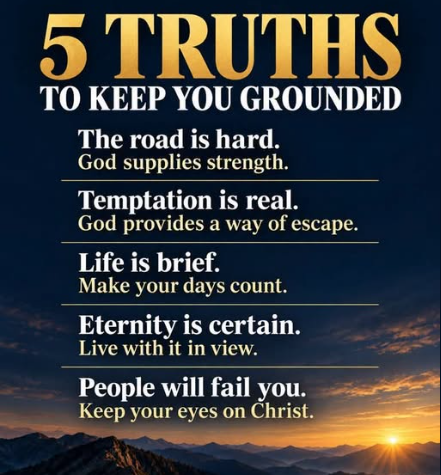
First Peter 4:11 says, “If anyone speaks, let him speak as the oracles of God. If anyone ministers, let him do it as with the ability which God supplies, that in all things God may be glorified through Jesus Christ, to whom glory and dominion belong forever and ever. Amen” (NKJV). This verse encapsulates a basic tenet of Christian living and service: that in all things God and not man is to be exalted.
Glory belongs to God only (Isaiah 42:8). Peter, writing to persecuted believers, stressed that every action and word should glorify God (1 Peter 4:11). This idea is consistent with the broader biblical narrative that speaks of man’s role in glorifying, worshiping, and praising God (Isaiah 43:7; 1 Corinthians 10:31). The goal “that in all things God may be glorified” is primary in Christian living.
All things encompasses the entire spectrum of living. There is nothing that should detract from God’s glory. As Paul told the Colossians, “Whatever you do in word or deed, do all in the name of the Lord Jesus, giving thanks to God the Father through Him” (Colossians 3:17, NKJV).
Peter clearly states that God is glorified through Jesus Christ (1 Peter 4:11). Christ is the fountain of divine glory (John 1:14; Hebrews 1:3), and it is only through Him that our actions are accepted by God. Jesus said in John 15:5, “I am the vine, you are the branches. He who abides in Me, and I in him, bears much fruit; for without Me you can do nothing” (NKJV). In Christ, we can glorify God in all things and bear the fruit of righteousness (Philippians 4:13).
Peter mentions two forms of service: speaking and serving (1 Peter 4:11). In this case, speaking is disseminating divine words. The phrase oracles of God implies that those who teach or preach should do so in harmony with the Word of God. This excludes human wisdom or personal insights (1 Corinthians 2:4–5), so the glory goes to God, not to the speaker.
Peter encourages those who serve to do so “with the strength God provides” (1 Peter 4:11). God empowers us to use our spiritual gifts to edify our local church and glorify Him. In 2 Corinthians 9:8, Paul states that God can bless us abundantly to do good works. God always supplies the grace necessary for us to serve others and glorify Him.
Peter follows his exhortation to glorify God with a doxology: “To him be the glory and the power for ever and ever. Amen” (1 Peter 4:11). All creation should honor God, as the glory belongs to Him alone and not to any other person. The term power conveys the concept of divine authority and indicates that man’s service is to participate in God’s eternal kingdom and not to gain fame for himself.
The knowledge that “in all things God may be glorified” impacts our attitude. Humility should characterize those who know every good gift is from God (James 1:17). We are dependent on God’s power, and we reject self-reliance. We deflect any praise heavenward.
Christian living is to be offered up to God’s glory. In all our activity, we are to display God’s excellence through Jesus Christ. Christians should examine their lives to ensure they live for the One to whom glory and power are due for eternity.
There are at least 169 verses in the Bible that refer to the ways God provides for us. Philippians 4:19 puts it simply: “My God will supply all your needs according to His riches in glory in Christ Jesus.” While prosperity seekers might always be looking for money or possessions to miraculously arrive, we should take a closer look at what God desires to provide for us.
Like any good parent, God would never give us what He knows would harm us. His intent is to help us develop Christlikeness so that we become salt and light in the world (Matthew 5:13–14). God does not want us to see Him as a heavenly source of mere material possessions. Acquiring things is not the fundamental goal of this life (Luke 12:15).
God differentiates between our needs and our wants because He knows that where our treasure is our heart is also (Matthew 6:21). He wants us to know that this world is not our home and that part of what we need is to shift our focus to the eternal life while still living this one.
God is concerned with every part of our being: spirit, soul, and body. As the facets of His character are infinite, so the ways God provides for us are beyond anything we can ask or imagine (Ephesians 3:20). We can trust His goodness, guidance, and shepherding care to do more for us than we could ever achieve on our own. God provides a way for us to develop an intimate, conversational, obedient relationship with Him so that we can lead ourselves and others into a “Psalm 23” quality of life. Those whose shepherd is the Lord can say, “I lack nothing” (Psalm 23:1).
In the Lord’s Prayer, Jesus teaches His disciples to ask for provision, and our dependence on God is affirmed each time we pray, “Give us this day our daily bread” (Matthew 6:11). In Matthew 6:24–25, Jesus tells His disciples not to worry about food or clothing. The Father knows our needs. He desires covenant relationship with us, and that involves trusting Him to meet our daily requirements and seeking first His kingdom and righteousness (Matthew 6:33).
Psalm 84:11 states, “No good thing does He withhold from those who walk uprightly.” This verse carries a reminder that there is a part we play in God’s provision coming to fruition in our lives. We must walk uprightly.
James 4:3 is an answer to our questions about why prayers sometimes go unanswered: “When you ask, you do not receive, because you ask with wrong motives, that you may spend what you get on your pleasures.” God sees the heart, and our prayers’ motivations are important to Him.
Many passages about God’s provision relate to our need for food and clothing and the daily, physical needs of life. Others refer to the needs of our soul and spirit, our inner man. He provides us with peace (John 14:27), comfort (2 Corinthians 1:4), and “power, love and self-discipline” (2 Timothy 1:7). In fact, He “has blessed us in the heavenly realms with every spiritual blessing in Christ” (Ephesians 1:3). In whatever physical state we find ourselves, we can be content in the Lord (Philippians 4:12).
Passages such as Galatians 1:15 and Jeremiah 1:5 give us an assurance that God’s love and direction began even before conception. What a gift to know that God has been involved in our lives from the very start! His love for us is encompassed in His desire for our highest good. He is truly Jehovah-Jireh, the Lord-Who-Provides.
God’s provision extends to His ongoing relationship to all of His creation, which is deeply dependent on Him (Psalm 104:21). Often, we take for granted the rain that falls, the sun that comes up every morning, the refreshing winds that blow, and the tides that cleanse our shores and invigorate the life in our vast oceans. But all these things are watched over by our loving God in His provision for us.
Psalm 90:12 says, “Teach us to number our days, that we may gain a heart of wisdom.” The request “teach us to number our days” means that we need God to reveal to us the brevity of life. That revelation will help us grow wise, and wisdom is important because the choices we make during our brief stay on earth have eternal consequences. The remainder of Psalm 90 gives details about God’s wrath against sin and about the meaning of life. Our earthly lives will not last long, and we need wisdom to prepare for what follows.
Psalm 90 was penned by Moses, a man with whom the Lord spoke “face to face, as a man speaks with his friend” (Exodus 33:11; see also Numbers 12:7-8). Yet Moses wrote about the fierce anger of God against sin. He pleaded with the Lord to help humankind realize that we will all answer to God for deeds done in the body (cf. 2 Corinthians 5:10). In Psalm 90:11, Moses writes, “If only we knew the power of your anger!” Moses was a man who knew God better than most mortals, yet he had experienced the sting of God’s punishment for his sin and yearned to help others avoid it (Numbers 20:12).
Jesus gave a parable that also explains what happens when we don’t “number our days.” In Luke 12:19–21 He describes a rich man who wanted only to “eat, drink, and be merry” and had no time or thought for God. The rich man believed he had years yet to enjoy his pleasures, but God required his soul that very night. If the rich man had learned to “number his days,” he would have pursued ventures that had eternal significance. We can learn from this parable that none of us know how many days we will be granted, so we must not waste them on silly, selfish pursuits that have no real value.
God’s desire for human beings is that we learn, grow, and seek wisdom (Proverbs 2). As we learn to number our days, we will share that desire. We were created to walk in fellowship with God, discovering the mysteries and delights He has scattered throughout creation. The Lord enjoys partnering with us as we pursue all He designed for us to accomplish (Psalm 37:23; Ephesians 2:10). When we live in harmony with Him, death is simply a change of address. Our enjoyment of Him continues unabated when we step from this life into eternity.
Those who have learned to number their days spend them in pursuit of wisdom, goodness, and the kingdom of God (Matthew 6:33). They don’t have to fear the wrath of God when their earthly lives are over. Jesus came to earth to make a way for us to be made right with God (2 Corinthians 5:21). But He won’t force His gift of eternal life on anyone (John 3:16–18). Those who never learn to number their days spend them as if this life is all there is. Psalm 90 warns them about the judgment they are destined to undergo (Hebrews 9:27). But when we learn to number our days, we see each day as a valuable gift and an opportunity to store up treasure in heaven (Luke 12:33; Revelation 22:12).
It goes without saying that the only things of eternal value in this world are those that are eternal. Life in this world is temporal, not eternal, and therefore, the only part of life that has eternal value is that which lasts through eternity. Clearly, the most important thing in this world that has true eternal value is having a relationship with Jesus Christ, as the free gift of eternal life comes only through Him to all those who believe (John 3:16). As Jesus said, “I am the way and the truth and the life. No one comes to the Father except through me” (John 14:6). Everyone is going to live somewhere for all of eternity, Christians and non-Christians alike. And the only eternal destiny other than the one in heaven with Christ is one that provides everlasting punishment for those who reject Him (Matthew 25:46).
Regarding the abundant material things this world offers, which many tenaciously seek after, Jesus taught us not to store up for ourselves earthly treasures that can be destroyed or stolen (Matthew 6:19–20). After all, we brought nothing into this world, and we can take nothing out of it. Yet our core Christian values often get overlooked in our diligent quest for success and material comfort, and in the midst of these earthly pursuits we often forget about God. Moses addressed this issue 3,500 years ago as his people were about to enter the Promised Land. He warned them not to forget about God, for he knew once they “built fine houses and settled down” their hearts would become proud and they would forget about Him (Deuteronomy 8:12–14). There is certainly no eternal value in living our lives for ourselves, looking to get out of life all that we can, as the world system would have us believe.
Yet there can be significant eternal value in what we do with our lives during the exceedingly short time we are here on earth. Although Scripture makes it clear that our earthly good works will not save us or keep us saved (Ephesians 2:8–9), it is equally clear that we will be eternally rewarded according to what we have done while here on earth. As Christ Himself said, “For the Son of Man is going to come in His Father’s glory with His angels, and then He will reward each person according to what he has done” (Matthew 16:27). Indeed, Christians are God’s workmanship, “created in Christ Jesus to do good works which God prepared in advance for us to do” (Ephesians 2:10, emphasis added). These “good works” pertain to serving the Lord the best we can with what He has given us and with full dependence on Him.
The apostle Paul discusses the quality of the works that can bring eternal rewards. Equating Christians to “builders” and the quality of our works with the building materials, Paul informs us that the good materials that survive God’s testing fire and have eternal value are “gold, silver, and costly stones,” whereas using the inferior materials of “wood, hay and straw” to build upon the foundation that is Christ have no eternal value and will not be rewarded (1 Corinthians 3:11–13). Essentially, Paul is telling us that not all of our conduct and works will merit rewards.
There are many ways our service to the Lord will bring us rewards. First, we need to recognize that every true believer has been set apart by God and for God. When we received God’s gift of salvation, we were given certain spiritual gifts (1 Corinthians 12:7, 11). And if we think our gifts are insignificant, we need to remember that, as Paul told the church in Corinth, the body of Christ is made up of many parts. And “God has arranged the parts in the body, every one of them, just as He wanted them to be . . . and those parts of the body that seem weaker are indispensable” (1 Corinthians 12:14, 18, 22 emphasis added). If you are exercising your spiritual gifts, you are playing a significant role in the body of Christ and doing that which has eternal value.
Every member of Christ’s body can make meaningful contributions when we humbly seek to edify the body and to glorify God. Indeed, every little thing can add to the beautiful mosaic of what God can do when we each do our part. Remember, on earth Christ has no body but ours, no hands but ours, and no feet but ours. Spiritual gifts are God’s way of administering His grace to others. When we show our love for God by obeying His commandments, when we persevere in the faith despite all opposition and persecution, when in His name we show mercy to the poor and sick and less fortunate, and when we help alleviate the pain and suffering that is all around us, then we are indeed building with the “gold, silver, and costly stones” that have true eternal value.
In our fast-paced, attention-grabbing world, it is easy to get caught up in the daily grind, get distracted, and lose sight of our true purpose in life—the worship and love of God (see Matthew 22:37). Yet we are told to run our race with our eyes focused on Christ: “Let us run with perseverance the race marked out for us, fixing our eyes on Jesus, the pioneer and perfecter of faith” (Hebrews 12:1–2). How can we resist the allure of the world and keep our focus where it belongs, on Christ?
To focus is to direct one’s attention or concentrate on something. If we are focused on Christ, then He has our attention; we are concentrating on Him and His word; He occupies the forefront of our minds. Such a focus is only fitting, because Jesus “is the head of the body, the church; he is the beginning and the firstborn from among the dead, so that in everything he might have the supremacy” (Colossians 1:18). By rights, He should be our focus.
Colossians 3:1–4 contains much that can help us stay focused on Christ: “Since, then, you have been raised with Christ, set your hearts on things above, where Christ is, seated at the right hand of God. Set your minds on things above, not on earthly things. For you died, and your life is now hidden with Christ in God. When Christ, who is your life, appears, then you also will appear with him in glory.” We are to focus on “things above,” remembering that Christ is seated in the place of glory and power (verse 1). The reason for the command is also given: because we have been raised to new life with Christ. To focus on the things above, we must consciously remove our focus from “earthly things” (verse 2), and the reason is given: we have died to self, and Christ is our very life (verse 3). Helping us stay focused on Christ is the reminder that Jesus is coming again, and when we see Him we will know glory (verse 4).
Hebrews 2 lists some of the things that Christ has done or is doing for us: He shared our humanity (verse 14), He breaks the power of the devil (verse 14), He frees us (verse 15), He is our “merciful and faithful high priest” (verse 17), He suffered for us (verse 18), and He helps those who are tempted in this world (verse 18). Because of all this, Hebrews 3:1, says, “Therefore, holy brothers and sisters, who share in the heavenly calling, fix your thoughts on Jesus, whom we acknowledge as our apostle and high priest.”
Here are some practical ways for a born-again believer to stay focused on Christ:
Commit to reading the Bible. It is impossible for a believer to be consistently in the Word without having his attention drawn again and again to Christ: “The Scriptures point to me!” Jesus said (John 5:39, NLT; see also Luke 24:44 and Hebrews 10:7). To focus on the Word of God is to have the Son of God brought more into focus.
Develop your prayer life. If you want to know how to pray, read Jesus’ instructions to His disciples in Luke 11:1–13. As you speak to the Lord throughout your day, you will naturally be more focused on Him. Little things, big things—we can come to the Lord with any and all of our cares. The command is to “pray continually” (1 Thessalonians 5:17), to always be in an attitude and atmosphere of instant prayer.
Trust the Lord as your only protector: “My eyes are ever on the LORD, for only he will release my feet from the snare” (Psalm 25:15). Once we understand the spiritual dangers we face on a daily basis, we will focus more on Christ, our one and only Savior, who alone has the power of deliverance.
Recognize your need and the Lord as the source of all good things: “Behold, as the eyes of servants look to the hand of their master, as the eyes of a maidservant to the hand of her mistress, so our eyes look to the LORD our God, till he has mercy upon us” (Psalm 123:2, ESV). The world offers various means of obtaining love, joy, and peace, but they are destined to disappoint. The believer understands that love, joy, and peace (and a myriad other fine gifts) are the direct result of his relationship with Christ (see Galatians 5:22–23).
See the world for what it is: a sin-filled place of desperate need. The darker the world is to us, the more clearly the light of Christ will stand out. It’s not hard to focus on a light in a darkened room. “We . . . have the prophetic message as something completely reliable, and you will do well to pay attention to it, as to a light shining in a dark place, until the day dawns and the morning star rises in your hearts” (2 Peter 1:19). Those who stay focused on Christ will find their perspective on worldly things changing. As Helen Lemmel says in her hymn, “Turn your eyes upon Jesus, / Look full in His wonderful face, / And the things of earth will grow strangely dim / In the light of His glory and grace.”
In John Bunyan’s The Pilgrim’s Progress, Christian and Faithful go through Vanity Fair, where they are offered “all sorts of vanity.” Christian’s and Faithful’s response is instructive for us: “These pilgrims set very light by all their wares—they cared not so much as to look upon them; and if they called upon them to buy, they would put their fingers in their ears, and cry, ‘Turn away mine eyes from beholding vanity,’ and look upwards, signifying that their trade and traffic was in heaven” (Part I, p. 86). May we, like the pilgrims in Vanity Town, practice the heavenward-look and keep our eyes focused on Christ, His glory, and His love.

Tea Time Manna
Carry each other’s burdens and in this way you will fulfill the law of Christ.
—Galatians 6:2
Sometimes I let myself feel so burdened by my problems that I don’t even see others’ struggles, trials, and hardships. But Jesus reminds me that if I am to be like him, truly JESUShaped, I will be a burden-bearer for others. This principle is implicit in the second greatest commandment: “Love your neighbor as yourself” (Matthew 22:39), and it’s made clear by the example of Jesus! Jesus became one of us to lift our heaviest burdens. The Lord died and rose again to free us from the weight of sin, the fear of death, and the threat of hell. Jesus blessed us by carrying our heaviest burdens and now calls us to lighten the load of those around us.
Prayer
Compassionate Father, help me see the burdens weighing down those around me. Give me wisdom to know how best to respond with help and courage not to put off that help. I want to be a blessing to the broken and discouraged, so please help me find my place and my way of bearing burdens for others, to your glory. In Jesus’ name. Amen and Amen
Truth Article by Pastor Dirk

The Two Harvests of Revelation
The Harvest of the Wheat and the Harvest of the Grapes
This Harvest takes place at the 2nd Coming of Jesus Christ and During the Battle of Armageddon.
During the 2nd Coming of Jesus , All Dead in Christ will meet Jesus in the Air and then all Living will be Harvested . Called the Harvest of the Grain ! The Rapture is the Harvest of the Grain , When Harvesting Wheat a high amount of material is airborne.
Rev 14:14 ~ 20 And I looked, and behold a white cloud, and upon the cloud one sat like unto the Son of man, having on his head a golden crown, and in his hand a sharp sickle. And another angel came out of the temple, crying with a loud voice to him that sat on the cloud, Thrust in thy sickle, and reap: for the time is come for thee to reap; for the harvest of the earth is ripe. And he that sat on the cloud thrust in his sickle on the earth; and the earth was reaped. And another angel came out of the temple which is in heaven, he also having a sharp sickle. And another angel came out from the altar, which had power over fire; and cried with a loud cry to him that had the sharp sickle, saying, Thrust in thy sharp sickle, and gather the clusters of the vine of the earth; for her grapes are fully ripe. And the angel thrust in his sickle into the earth, and gathered the vine of the earth, and cast it into the great wine press of the wrath of God. And the wine press was trodden without the city, and blood came out of the wine press, even unto the horse bridles, by the space of a thousand and six hundred furlongs.
When Harvesting Grapes with a Sickle , The Grapes fall on the Ground , This falling of the Grapes = The unsaved happens when Jesus Christ places His feet on the Mount of Olives and the Earth Stops spinning / Rotating from 1000 miles per hours to instant 0 miles per hour. The Rolling action of the Earth and all the continents will act like a Wine press and Press all the Blood from the fallen world wide and hatter it at the feet of Jesus in the Valley of Armageddon.
Revelation 6 . The 6th Seal confirms this
Rev 6:12 ~ 17 And I beheld when he had opened the sixth seal, and, lo, there was a great earthquake; and the sun became black as sackcloth of hair, and the moon became as blood; And the stars of heaven fell unto the earth, even as a fig tree casteth her untimely figs, when she is shaken of a mighty wind. And the heaven departed as a scroll when it is rolled together; and every mountain and island were moved out of their places. And the kings of the earth, and the great men, and the rich men, and the chief captains, and the mighty men, and every bondman, and every free man, hid themselves in the dens and in the rocks of the mountains; And said to the mountains and rocks, Fall on us, and hide us from the face of him that sitteth on the throne, and from the wrath of the Lamb: For the great day of his wrath is come; and who shall be able to stand?
So does Revelation 16
Rev 16:15 ~ 21 Behold, I come as a thief. Blessed is he that watcheth, and keepeth his garments, lest he walk naked, and they see his shame. And he gathered them together into a place called in the Hebrew tongue Armageddon. And the seventh angel poured out his vial into the air; and there came a great voice out of the temple of heaven, from the throne, saying, It is done. And there were voices, and thunders, and lightnings; and there was a great earthquake, such as was not since men were upon the earth, so mighty an earthquake, and so great. And the great city was divided into three parts, and the cities of the nations fell: and great Babylon came in remembrance before God, to give unto her the cup of the wine of the fierceness of his wrath. And every island fled away, and the mountains were not found. And there fell upon men a great hail out of heaven, every stone about the weight of a talent: and men blasphemed God because of the plague of the hail; for the plague thereof was exceeding great.
All this Confirmed by Jesus and Paul
Mat 24:29 ~ 31 Immediately after the tribulation of those days shall the sun be darkened, and the moon shall not give her light, and the stars shall fall from heaven, and the powers of the heavens shall be shaken: And then shall appear the sign of the Son of man in heaven: and then shall all the tribes of the earth mourn, and they shall see the Son of man coming in the clouds of heaven with power and great glory. And he shall send his angels with a great sound of a trumpet, and they shall gather together his elect from the four winds, from one end of heaven to the other.
1Th 4:13 ~ 17 But I would not have you to be ignorant, brethren, concerning them which are asleep, that ye sorrow not, even as others which have no hope. For if we believe that Jesus died and rose again, even so them also which sleep in Jesus will God bring with him. For this we say unto you by the word of the Lord, that we which are alive and remain unto the coming of the Lord shall not prevent them which are asleep. For the Lord himself shall descend from heaven with a shout, with the voice of the archangel, and with the trump of God: and the dead in Christ shall rise first: Then we which are alive and remain shall be caught up together with them in the clouds, to meet the Lord in the air: and so shall we ever be with the Lord.
NEWS MANNA

College Students Are Still Hungry for Something The Culture Cannot Give Them
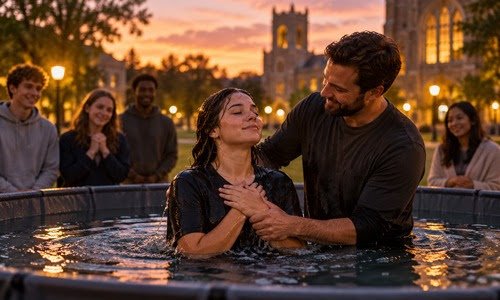
More than 700 students made decisions to follow Jesus at Appalachian State University last week. After the gathering, about 100 were baptized.
The scene has been repeated at campuses across the country. At the University of Miami, students responded to the Gospel and were baptized after a UniteUS outreach. Pepperdine University has also seen a large student response. Since its first event at Auburn University in 2023, UniteUS says it has reached more than two dozen campuses and more than 100,000 students.
A packed arena and students stepping into the water make for powerful images. But the deeper story may be what they reveal: College students are still hungry for something the culture cannot give them.
A Generation Still Asking the Big Questions
Young adults are surrounded by constant noise, competing messages and promises of fulfillment that can leave them more anxious and alone. They are told to build an identity, find a purpose and define truth for themselves. Yet those answers often raise more questions than they settle.
A night of worship and a clear presentation of the Gospel offer something different: truth, purpose, forgiveness and the hope of belonging to Christ.
That hunger should not surprise Christians. Every generation needs the good news of Jesus. Still, it is easy to assume young adults have moved beyond faith, or that they are too distracted to listen. Students filling campus venues challenge that assumption. They are showing up, worshiping and listening. According to UniteUS, many are also making decisions to follow Christ.
When Faith Goes Public
The baptisms are especially moving because they make a decision visible. Students step into the water before their peers to identify themselves with Jesus. One student wrote after the App State gathering that there was “nothing more beautiful than watching people publicly declare their faith through baptism.”
In a culture that often treats Christian belief as outdated or embarrassing, that public step carries meaning. These students are not simply attending a concert or watching from the stands. They are saying, in front of friends and classmates, that they have decided to follow Jesus.
But the moment in the water is not the end of the story. A powerful event can open a door; it cannot replace the lifelong work of learning to follow Christ.
The Work Begins After the Arena Empties
New believers need more than memories of a packed arena or a moving worship set. They need the Word of God, prayer, Christian friendship and a church community that will walk with them through the questions and pressures ahead. Jesus called His followers not only to make disciples, but to teach them to obey everything He commanded.
That responsibility belongs to the whole church. Campus ministries can open doors and proclaim the Gospel. Local congregations, pastors and mature believers can help students keep growing once the event is over and ordinary campus life resumes. A student who raises a hand or enters the water should not have to figure out the next steps alone.
The opportunity is clear. If students are searching for meaning, Christians should be ready to show them where lasting hope is found. That means speaking plainly about sin and salvation, teaching Scripture faithfully and welcoming young believers into communities where faith is lived out week after week.
We should be grateful whenever students hear the Gospel and respond. We should also pray that the seeds planted at these gatherings take root. The measure of a campus outreach will not be only how many attended or came forward that night. It will also be whether students continue following Christ when the music ends and they return to class.
The reports from App State, Miami and Pepperdine suggest that many young adults are willing to hear the message of Jesus. The church must be ready to help them follow Him.
The next outreaches will be held at the University of South Alabama on October 27 and in Nashville at Belmont University on November 10.
Israel’s Religious Revival Faces Its First Test At The Ballot Box

At a gathering in the Knesset sukkah this month, Benjamin Netanyahu read from the Book of Samuel and spoke of a “great deliverance.” Whether the prime minister was expressing personal conviction or reading the political moment, he chose language that reaches beyond military strength alone.
On October 27, Israel’s youngest voters will have their say. Estimates put the number of first-time voters at between 550,000 and 640,000—enough to make this cohort a significant force in an election shaped by War, national security and the country’s future. Netanyahu has been prime minister for roughly 16 of the 18 years these voters have been alive.
A Channel 12 survey conducted by the Midgam Research Institute found that 80 percent of first-time Jewish voters believe in God or a higher power, compared with 75 percent of older voters. Forty-three percent said they kiss the mezuzah on their doorposts, compared with 33 percent of older voters. And 56 percent said they believe the Messiah will come, versus 51 percent of the older group.
The survey was a snapshot of Jewish first-time voters, not every young person in Israel. Still, the mezuzah figures point to a notable rise in a visible expression of Jewish tradition. In a country where identity, history and faith are closely linked, even a measured change can carry political weight.
The shift is unfolding among young people raised in the shadow of conflict. They have grown up with rockets from Gaza, repeated rounds of fighting and, for many, the shock of October 7 and its aftermath. Friends and relatives served in the military. Some lost loved ones. The experience has left a generation weighing questions of survival, responsibility and what holds the nation together.
For some, the answer is not only a stronger army or a tougher government. It is a renewed sense that Israel’s story has a spiritual dimension—that the country’s survival cannot be explained by military power alone. The return of religious language to public life may reflect that search for meaning, even among voters who are not religiously observant.
Faith and politics, however, do not point neatly to one party. About three-quarters of first-time voters describe themselves as right or center-right, yet their support is divided. In one recent poll, Gadi Eisenkot’s Yashar led among the sampled voters with 16 percent, while Likud received 14 percent. Ten percent remained undecided. A generation may be more religious and more conservative without automatically lining up behind Netanyahu or any single party.
There is also a demographic force shaping Israel’s future. Haredi families have many more children on average than secular families, and the ultra-Orthodox population is especially young. That means religious communities will account for a growing share of future voters, even apart from any change in belief among secular Israelis.
A separate example of faith and identity entering politics is Yoseph Haddad, an Arab Christian IDF veteran and pro-Israel advocate who is running for the Knesset. Israel’s Christian population is about 185,000, nearly 80 percent of it Arab. Haddad’s candidacy does not explain the trend among young Jewish voters, but it reflects another part of Israel’s religious and civic landscape: citizens whose Arab, Christian and Israeli identities can coexist in public life.
For religious Zionist voters, faith can also shape how they think about the land, including Judea and Samaria as the biblical heartland of Israel. Whether that conviction is becoming more influential among younger voters is a question the survey alone cannot answer. The election may offer clues, but party choices will also reflect security, leadership, military service and the cost of years of conflict.
Israel’s next election will still be fought over familiar political questions. But the generation entering the electorate may bring a different sense of what those questions mean. The ballot will not measure faith directly. It will show how much religious identity, tradition and biblical history influence the choices young Israelis make about their country’s future.
On October 27, Israel will show whether it votes the way it prays. To God , to Allah , to Jesus

TruLight TV : Popcorn & Movie Time – The Bible Collection: Thomas
Although he has gone down in history as Doubting Thomas,this innovative new film from the producers of Time Life’s The Bible series gives a new dimension to the man who was also known as The Twin and was a great believer and disciple of Jesus. This fascinating version of Thomas life sees the impact of Jesus Christ through a fresh pair of eyes and particularly the dramatic events that unfold before and after the death of Jesus. A highly-charged dramatic film, it brings to life the fear of the Apostles, their conflicts and struggles under the yoke of Roman occupation and life after the passing of their Messiah.
Today on TruLight Radio XM
TruLight Radio XM 24/7
VISIT THE WEBSITE
https://trulightradioxm.org.za
TruLight Ministry News – EXTRA MANNA

TruLight Ministries orders from God since 2012 . Teach Them , Comfort Them and Warn Them!
a TruQuestion for the Day
Do you enjoy having fellowship with Christ and His redeemed people?
(1 John 1:3)
Geniet jy gemeenskap met Christus en sy verloste mense?
TruLight News
TruLight Ministries International shaping up our digital platforms for gospel music and audio programming! www.TruPlay.co.za – If you are looking to stream gospel music, sermons, or radio dramas, you can access their active streaming media through the official TruLight Ministry portals:• Radio & Music: Stream Live Broadcast directly via their main portal to enjoy uplifting gospel music and praise and worship tracks- www.TruLightRadioXM.org.za • Video & Television: Watch gospel music concert events, and daily programs on www.TruLightTV.org.za • Daily Devotionals: Read scripture and daily spiritual nourishment in multiple languages on www.TruLightDailyManna.co.za
Artist Liners
Picture Manna to Share
From God –

From Jesus –
From the Holy Spirit –
Share this Feeding of Manna with your Friends and Family. just click on the Social Media icon and share This Manna