Hosted by TruLight Ministries International – The Place of Truth
SELECT YOUR READING LANGUAGE – BOTTOM LEFT = YOUR DAILY MANNA NOW AVAILABLE IN 103 LANGUAGES
@ TruLight Daily Manna is not Just a Bible Verse with a Small Prayer . NO ::: WE SERVE DAILY Manna for the ENTIRE Day . Breakfast , Lunch , Dinner , Plus tea Times and even Entertainment Manna . Plus News Manna and More , This Daily Manna will keep you Spiritually full for the full 48 Hours and even More to Share with your Friends and Family !!!
7 CERTAINTIES TO LIVE BY = NEXT 7 DAY STUDY
5. The Church is my Fellowship – Note , The Church is not a Building , Its the Body of Christ
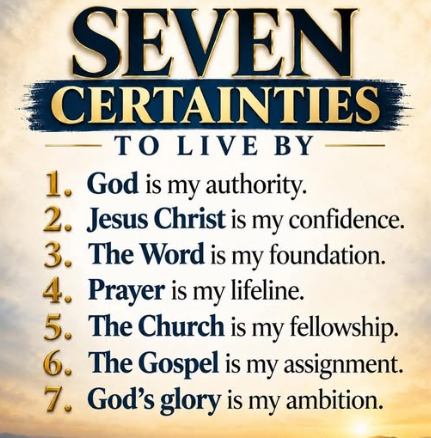
THE BODY OF CHRIST IS MY FELLOWSHIP
Living and serving together in Christian harmony is the emphasis of Paul’s teaching in Philippians 1:27—2:18. Aware that the church faces a severe problem of division (see Philippians 3:1–3; 4:1–3), Paul urges the believers in Philippi to “stand fast in one spirit, with one mind” (Philippians 1:27). Then, using rhetorical language, Paul states that his joy (and their joy) would only be complete as they demonstrate loving, like-minded unity: “Therefore if there is any consolation in Christ, if any comfort of love, if any fellowship of the Spirit, if any affection and mercy, fulfill my joy by being like-minded, having the same love, being of one accord, of one mind” (Philippians 2:1–2, NKJV).
The Greek noun translated here as “fellowship” (NKJV), “participation” (ESV), or “common sharing” (NIV) is koinonia. It refers to “the act of sharing together in the activities or privileges of an intimate association or group, especially used of marriage and churches.” The “Spirit” (pneuma) here is God’s Holy Spirit.
Fellowship of the Spirit describes the harmony and community that can exist in the body of Christ because of the gospel—because God, through the sacrifice of Jesus Christ on the cross, has brought believers into a right relationship with Himself (Ephesians 2:18–19). Paul’s words in Philippians 2:1–2 resonate in the apostle John’s writings: “And our fellowship is with the Father and with his Son, Jesus Christ. We are writing these things so that you may fully share our joy. This is the message we heard from Jesus and now declare to you: God is light, and there is no darkness in him at all. . . . If we are living in the light, as God is in the light, then we have fellowship with each other, and the blood of Jesus, his Son, cleanses us from all sin” (1 John 1:3–5, 7, NLT).
God the Father, through His Son and by the power of the Holy Spirit, has established, by His grace, a covenant relationship with His people. Those who believe the message of the gospel are united in the fellowship of the Spirit (John 14:16–17) through “partnership with his Son” (1 Corinthians 1:9, NLT) to the Father (John 15:1–17; 17:1–26; 1 John 1:3–7). This relationship is the basis of the communion between humans and God (Hebrews 10:19–22; Romans 5:10; 2 Corinthians 5:18–19; Colossians 1:20–22).
Those who take part in the fellowship of the Spirit also participate in communion with one another (1 John 1:3; Mark 9:37; John 17:21; 2 Corinthians 13:11). This interconnected reality, this spiritual communion, is koinonia, or fellowship in the body of Christ. It does not initiate with humans but is God’s gracious gift, flowing from the eternal triune fellowship of the Godhead (2 Corinthians 13:14).
The church, the body of Christ, is an intimately associated group of redeemed individuals who share a mutual life of fellowship (Acts 2:44; 4:32). Being part of the fellowship of the Spirit involves living in God’s love, humility, and service to one another (1 John 3:10; 4:10–12; John 13:34; 15:12; Ephesians 5:1–2; Colossians 3:12; 1 Peter 3:8; John 13:14). For this reason, Paul urged, “Make every effort to keep the unity of the Spirit through the bond of peace. There is one body and one Spirit, just as you were called to one hope when you were called; one Lord, one faith, one baptism; one God and Father of all, who is over all and through all and in all” (Ephesians 4:3–6).
Fellowship of the Spirit and dwelling together in unity does not imply total uniformity. Instead, as members of one body, we recognize and embrace different gifts, personalities, and ministries (1 Corinthians 12:4–30; Ephesians 4:11–13).
Christians who participate in the fellowship of the Spirit share in the work of the gospel (Philippians 1:5), worship, pray, and take communion together (1 Corinthians 10:16–17; 14:26; Ephesians 5:19; Colossians 3:16; Acts 1:14; Hebrews 10:24–25; James 5:16). They are interested in the lives of other believers (Romans 12:4–5; 1 Corinthians 12:12-27; Ephesians 4:16; 1 Corinthians 12:13). They “let the peace of Christ rule in [their] hearts” (Colossians 3:15), united in purpose and “striving together as one for the faith of the gospel” (Philippians 1:27; see also Matthew 18:19–20; 1 Corinthians 10:24). They make every effort to quell division and cultivate unity with their brothers and sisters in Christ (Ephesians 4:3; 1 Corinthians 1:10; 14:26; Romans 12:16).
The Church is a Place where the Body of Christ meets : a Place where the CHURCH goes to CHURCH : Simply put, the Bible tells us we need to attend church so we can worship God with other believers and be taught His Word for our spiritual growth. The early church “devoted themselves to the apostles’ teaching and to fellowship, to the breaking of bread and to prayer” (Acts 2:42). We should follow that example of devotion—and to the same things. Back then, they had no designated church building, but “every day they continued to meet together in the temple courts. They broke bread in their homes and ate together with glad and sincere hearts” (Acts 2:46). Wherever the meeting takes place, believers thrive on fellowship with other believers and the teaching of God’s Word.
Church attendance is not just a “good suggestion”; it is God’s will for believers. Hebrews 10:25 says we should “not [be] giving up meeting together, as some are in the habit of doing, but encouraging one another—and all the more as you see the Day approaching.” Even in the early church, some were falling into the bad habit of not meeting with other believers. The author of Hebrews says that’s not the way to go. We need the encouragement that church attendance affords. And the approach of the end times should prompt us to be even more devoted to going to church.
Church is the place where believers can love one another (1 John 4:12), encourage one another (Hebrews 3:13), “spur” one another to love and good works (Hebrews 10:24), serve one another (Galatians 5:13), instruct one another (Romans 15:14), honor one another (Romans 12:10), and be kind and compassionate to one another (Ephesians 4:32).
When a person trusts Jesus Christ for salvation, he or she is made a member of the body of Christ (1 Corinthians 12:27). For a church body to function properly, all of its “body parts” need to be present and working (1 Corinthians 12:14–20). We are not to attend church as if we are mere spectators. We are actually part of our church. Not only does our church help equip us for ministry, it is a place where we serve, using the spiritual gifts God has given us (Ephesians 4:11-13) A believer will never reach full spiritual maturity without having that outlet for his gifts, and we all need the assistance and encouragement of other believers (1 Corinthians 12:21–26). As we serve, worship, and live in community together, the body of Christ reflects who God is. Together, we are the light of the world (Matthew 5:14–16).
For these reasons and more, church attendance, participation, and fellowship should be regular aspects of a believer’s life. Weekly church attendance is in no sense “required” for believers, but someone who belongs to Christ should have a desire to worship God, receive His Word, and fellowship with other believers.
Jesus is the Cornerstone of the Church (1 Peter 2:6), and we are “like living stones . . . being built into a spiritual house to be a holy priesthood, offering spiritual sacrifices acceptable to God through Jesus Christ” (1 Peter 2:5). As the building materials of God’s “spiritual house,” we naturally have a connection with one another, and that connection is evident every time the Church “goes to church.”
IRON SHARPENS IRON – In order to understand the importance of Christian fellowship, we must first understand what Christian fellowship is and what it isn’t. The Greek words translated “fellowship” in the New Testament mean essentially a partnership to the mutual benefit of those involved. Christian fellowship, then, is the mutually beneficial relationship between Christians, who can’t have the identical relationship with those outside the faith.
The mystery and privilege that is Christian fellowship is that it exists because God has enabled it by His grace. Those who believe the gospel are united in the Spirit through Christ to the Father, and that unity is the basis of fellowship. This relationship is described by Jesus in His high-priestly prayer for His followers: “I have given them the glory that you gave me, that they may be one as we are one: I in them and you in me. May they be brought to complete unity to let the world know that you sent me and have loved them even as you have loved me” (John 17:23). The “complete unity” He refers to is the oneness that Christians experience in true fellowship, oneness with one another, with Christ and with the Father. Just as the Father is in Jesus, so is Jesus in us, and we have unity with one another because of the uniqueness of that relationship (1 John 1:3).
This relationship must be the basis of Christian fellowship. We can have friendships and relationships with unbelievers, but true Christian fellowship can only occur within the body of Christ. We are united to one another by common beliefs, purposes, and goals. Our hearts and minds are “other-worldly” because we follow Jesus Christ, who said that His kingdom is not of this world (John 18:36). We know that we are strangers in this world, and we long for the time when we will be in our true home, heaven.
The importance of true Christian fellowship is that it reinforces these things in our mind and helps us to focus on Christ and His desires and goals for us. As iron sharpens iron, in true Christian fellowship Christians sharpen one another’s faith and stir one another to exercise that faith in love and good works, all to God’s glory.
.

Tea Time Manna
We also rejoice in our sufferings, because we know that suffering produces perseverance; perseverance, character; and character, hope.
—Romans 5:3-4
I remember the Corrie ten Boom phrase, “Thank God for the fleas.” The fleas kept the German soldiers out of the barracks in the concentration camp where she was imprisoned. This allowed her to minister to and visit those being persecuted. The deplorable conditions and her sufferings allowed her to show and share the love of Jesus authentically. In the earliest days of the church, the apostles rejoiced “because they had been counted worthy of suffering disgrace for the Name” of Jesus! Their willingness to suffer for Christ opened some people’s hearts to believe because they could see that their hope in Jesus wasn’t just something they preached, but also something they lived! Even in the worst of suffering, God can bring blessings through those who know that life’s goal is character, not comfort. And that character gives us hope for our future with Jesus!
Prayer
Mighty God, I confess that I get impatient and frustrated with difficulty, pain, and especially unjust suffering. Please give me more compassion and a better listening ear so that I may bless those who need your love and grace, regardless of the personal cost or personal suffering inflicted upon me. Please bless me with strength to find joy in the difficulties, suffering, and pain of breaking through the barriers the evil one tries to place in the way to keep others from knowing Jesus. In the Savior’s name, I pray to rejoice even in sufferings. Amen and Amen
Truth Article by Pastor Dirk
Intercessors in Heaven = Replacement Theology
The Truth shall set You Free!
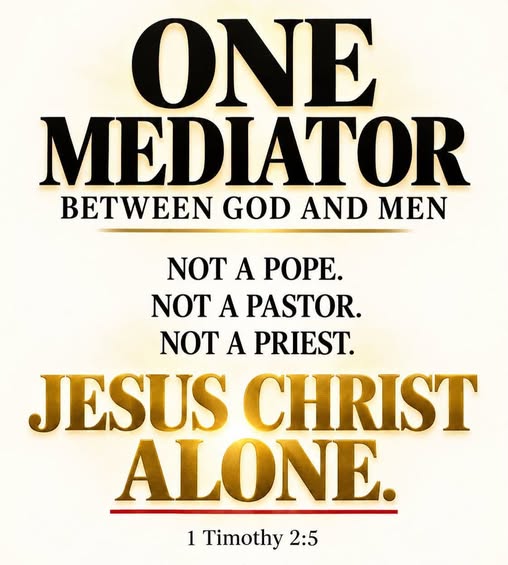
Can Humans be Intercessors in Heaven? Or is this from satan to try and take the Place of Jesus Christ between us and God?
“What is the purpose of Jesus interceding for us in Heaven?”
Answer: Speaking of Jesus, the writer to the Hebrews says, “Therefore He is able also to save forever those who draw near to God through Him, since He always lives to make intercession for them” (Hebrews 7:25).
Heb 7:12 – 28 For the priesthood being changed, there is made of necessity a change also of the law.
For he of whom these things are spoken pertaineth to another tribe, of which no man gave attendance at the altar.
For it is evident that our Lord sprang out of Juda; of which tribe Moses spake nothing concerning priesthood.
And it is yet far more evident: for that after the similitude of Melchisedec there ariseth another priest,
Who is made, not after the law of a carnal commandment, but after the power of an endless life.
For he testifieth, Thou art a priest for ever after the order of Melchisedec.
For there is verily a disannulling of the commandment going before for the weakness and unprofitableness thereof.
For the law made nothing perfect, but the bringing in of a better hope did; by the which we draw nigh unto God.
And inasmuch as not without an oath he was made priest:
(For those priests were made without an oath; but this with an oath by him that said unto him, The Lord sware and will not repent, Thou art a priest for ever after the order of Melchisedec:)
By so much was Jesus made a surety of a better testament.
And they truly were many priests, because they were not suffered to continue by reason of death:
But this man, because he continueth ever, hath an unchangeable priesthood.
Wherefore he is able also to save them to the uttermost that come unto God by him, seeing he ever liveth to make intercession for them.
For such an high priest became us, who is holy, harmless, undefiled, separate from sinners, and made higher than the heavens;
Who needeth not daily, as those high priests, to offer up sacrifice, first for his own sins, and then for the people’s: for this he did once, when he offered up himself.
For the law maketh men high priests which have infirmity; but the word of the oath, which was since the law, maketh the Son, who is consecrated for evermore.
This verse (and others like it) tells us that although Christ’s work to secure the salvation of the elect was completed on the cross, as evidenced by His cry “It is finished!”
Joh 19:30 When Jesus therefore had received the vinegar, he said, It is finished: and he bowed his head, and gave up the ghost.
His care for His redeemed children will never be finished.
Jesus did not go to heaven after His earthly ministry and “take a break” from His role as eternal Shepherd to His people. “For if while we were enemies we were reconciled to God through the death of His Son, much more, having been reconciled, we shall be saved by His life” (Romans 5:10, emphasis added).
Rom 5:10-11 For if, when we were enemies, we were reconciled to God by the death of his Son, much more, being reconciled, we shall be saved by his life.
And not only so, but we also joy in God through our Lord Jesus Christ, by whom we have now received the atonement.
If when humble, despised, dying, and dead, He had the power to accomplish so great a work as reconciling us to God, how much more may we expect that He will be able to keep us now that He is a living, exalted, and triumphant Redeemer, raised to life and interceding on our behalf before the throne (Romans 8:34).
Who is he that condemneth? It is Christ that died, yea rather, that is risen again, who is even at the right hand of God, who also maketh intercession for us.
Clearly, Jesus is still very active on our behalf in heaven.
After Jesus ascended to heaven and was seated at the right hand of God the Father (Acts 1:9; Colossians 3:1),
Act 1:9 And when he had spoken these things, while they beheld, he was taken up; and a cloud received him out of their sight.
Col 3:1 If ye then be risen with Christ, seek those things which are above, where Christ sitteth on the right hand of God.
He returned to the glory He had before His incarnation (John 17:5)
Joh 17:5 And now, O Father, glorify thou me with thine own self with the glory which I had with thee before the world was.
to carry on His role of King of kings and Lord of lords—His eternal role as the second Person of the triune God. While this old earth continues in a constant battle to be “won” for Christ or satan, Jesus is the Advocate for Christians, meaning He is our great Defender. This is the intercessory role He currently fulfills for those who are His .
1 Jn 2:1 My little children, these things write I unto you, that ye sin not. And if any man sin, we have an advocate with the Father, Jesus Christ the righteous:
Jesus is always pleading our case before the Father, like a defense lawyer on our behalf.
Jesus is interceding for us while Satan (whose name means “accuser”) is accusing us, pointing out our sins and frailties before God, just as he did with Job (Job 1:6-12).
Now there was a day when the sons of God came to present themselves before the LORD, and Satan came also among them.
And the LORD said unto Satan, Whence comest thou? Then Satan answered the LORD, and said, From going to and fro in the earth, and from walking up and down in it.
And the LORD said unto Satan, Hast thou considered my servant Job, that there is none like him in the earth, a perfect and an upright man, one that feareth God, and escheweth evil?
Then Satan answered the LORD, and said, Doth Job fear God for nought?
Hast not thou made an hedge about him, and about his house, and about all that he hath on every side? thou hast blessed the work of his hands, and his substance is increased in the land.
But put forth thine hand now, and touch all that he hath, and he will curse thee to thy face.
And the LORD said unto Satan, Behold, all that he hath is in thy power; only upon himself put not forth thine hand. So Satan went forth from the presence of the LORD.
But the accusations fall upon deaf ears in heaven, because Jesus’ work on the cross paid our sin debt in full; therefore, God always sees in His children the perfect righteousness of Jesus. When Jesus died on the cross, His righteousness (perfect holiness) was imputed to us, while our sin was imputed to Him at His death. This is the great exchange Paul talks about in 2 Corinthians 5:21.
For he hath made him to be sin for us, who knew no sin; that we might be made the righteousness of God in him.
That took away forever our sinful state before God, so God can accept us as blameless before Him as Children.
Finally, it is important to understand that Jesus and The Holy Spirit is the only mediator between God and man. No one else—not Mary, not any previous Christian saints, not angels,
Not your Pastor , Not your Reverent or your Councillor or your Intercessor —has the power to intercede for us before the throne of the Almighty. Christ alone mediates and intercedes between God and man. “For there is one God, and one mediator also between God and men, the man Christ Jesus” (1 Timothy 2:5).
For there is one God, and one mediator between God and men, the man Christ Jesus;
Who gave himself a ransom for all, to be testified in due time.
If Jesus and the Holy Spirit is the Only Intercessors in Heaven , Why do we need Human Intercessors? Then The Human Intercessor is Man made or a tool from satan to replace the real Intercessor and misleading the Children of God to believe there is more than one intercessor, and the outcome , God will not listen to the wood-be Intercessor , I hear Christians say “Anne is my Intercessor and Anne will stand between God and me , and plea my case with God” (The name Anne just used as example). or “Pastor Please Pray for me ! ask God for a answer on my behalf ” Can Humans be Intercessors and replace Jesus Christ and the Holy Spirit as the Only Intercessors in Heaven?
Rom 8:26 – 27 Likewise the Spirit also helpeth our infirmities: for we know not what we should pray for as we ought: but the Spirit itself maketh intercession for us with groanings which cannot be uttered. And he that searcheth the hearts knoweth what is the mind of the Spirit, because he maketh intercession for the saints according to the will of God.
The Answer is NO !
God himself cancelled the Priesthood the day Jesus Christ died on the Cross . That day God opened the Holy of Holy’s by removing the Curtain, Meaning the Priesthood was cancelled! As Pastor or Reverent we are now just Temple Guides and not Priests anymore . We can Guide the sinner to God . Introduce Him or Her to God , Lead them to God , but never again Inter-seed on behalf of somebody in front of God . That is the Job of Jesus Christ and The Holy Spirit in Prayer.
Rom 8:27 And he that searcheth the hearts knoweth what is the mind of the Spirit, because he maketh intercession for the saints according to the will of God.
Rom 8:34 Who is he that condemneth? It is Christ that died, yea rather, that is risen again, who is even at the right hand of God, who also maketh intercession for us.
Were did the Intercessor believe start?
Intercession of the saints is a doctrine held by the Eastern Orthodox, Oriental Orthodox and Roman Catholic Churches. That was adopted from the Knights Templar, The practice of praying to saints can be found in Christian writings from the 3rd century onward. The 4th-century Apostles’ Creed states belief in the communion of saints, which certain Christian churches interpret as supporting the intercession of saints. This practice is controversial in Judaism and Islam. BUT has taken over in Christianity from the last century,
What is the difference between prayer and intercession?
Prayer is communication from our heart to the Heart of God. It can be a request addressed to the Father as an expression of our trust in Him, a time of pleading earnestly or a time of praise and thanksgiving to God. These requests must come from our heart not our head, as prayer raises the spiritual climate in our hearts.
Prayer is seeking God’s face first, connecting personally with Him and must not be reduced to just petitioning. Prayer is communion with God, with a desire to enter into a conscious and intimate relationship with Him
Prayer on behalf of another person becomes intercession. Prayer can be a petition or supplication, asking God to meet certain needs. But to stand in the place of that person is inter-seeding.
Intercession is defined as praying for another person requesting God’s help on his or her behalf , and is taking place in the Throne Room. This the Divine place of Jesus Christ .
Joh 14:6 Jesus saith unto him, I am the way, the truth, and the life: no man cometh unto the Father, but by me.
Article by Pastor Dirk – TruLight Ministries International
NEWS MANNA

2027: The Perfect Storm Is Already Forming

Most People aren’t thinking about sulfuric acid, phosphate fertilizer, Saudi oil pipelines or water levels on major shipping routes when they walk through the grocery store.
But perhaps they should be.
A remarkable collection of problems is developing across the systems that produce and transport the things Americans use every day. War is disrupting energy and fertilizer markets. Saudi oil infrastructure has been attacked. A major Midwestern refinery is offline. Fertilizer supplies have been squeezed. An exceptionally powerful El Niño is developing.
Any one of these problems can usually be absorbed.
The concern is what happens when several hit together—and when the consequences of today’s disruptions don’t fully appear until 2027.
That is the perfect storm now taking shape.
Why A Crisis Thousands Of Miles Away Can Reach Your Grocery Cart
Start with the Strait of Hormuz.
To the average American, it sounds like another distant Middle Eastern shipping lane. In reality, what happens there can eventually affect everything from the cost of filling a pickup truck to the price of bread.
The Strait normally carries enormous volumes of oil, natural gas, sulfur and fertilizer products. The UN Food and Agriculture Organization warned in May that disruptions there were already tightening fertilizer markets and increasing energy costs, with consequences that could extend into 2027.
Here’s the connection.
Modern farms require fertilizer. Producing and transporting fertilizer requires energy. Farmers require diesel to plant and harvest crops. Trucks, trains and ships then require fuel to move those crops. Food processors require energy. Finally, trucks require still more diesel to deliver food to supermarkets.
Increase the cost or reduce the availability of several of those inputs simultaneously and the consumer eventually pays for it.
But not immediately.
That delay may be one of the most important parts of this story.
The Fertilizer Clock Is Already Ticking
Unlike many manufactured products, agriculture can’t simply make up lost production next Tuesday.
Crops have planting windows. Fertilizer has application windows. Harvests happen on biological schedules.
The FAO has made precisely this point, warning that fertilizer arriving several weeks late can force farmers to use less of it or miss the application entirely. The result can be lower yields months later. Its warning specifically extends into 2027.
That creates an unsettling chain reaction:
Expensive or unavailable fertilizer today can mean less fertilizer applied to a field.
Less fertilizer can mean a smaller harvest.
A smaller harvest means tighter supplies.
Tighter supplies can mean higher prices for grain.
Higher grain prices eventually work their way into cereal, bread, meat, dairy and countless processed foods.
The original disruption may have happened half a world away months earlier.
The American family simply encounters the final result at checkout.
Now Add An Energy Crisis
The same geopolitical turmoil affecting fertilizer is hitting energy.
Saudi Arabia’s East-West pipeline became especially important because it provides an alternative route for oil that otherwise depends on the Strait of Hormuz. Drone attacks have now damaged that infrastructure as well.
Saudi Aramco has canceled some European crude deliveries, forcing customers to seek replacement supplies elsewhere.
Saudi Arabia is finding alternative ways to move substantial amounts of crude, including transfers near Oman, so this is not the same thing as Saudi oil disappearing from the world market.
But that distinction illustrates the larger problem.
Every workaround consumes capacity somewhere else.
Europe searches for replacement oil. Tankers change routes. Freight costs rise. Buyers compete for alternative supplies. Refineries scramble for appropriate crude.
And eventually an overseas energy problem becomes an American price problem.
Then America’s Own Refineries Start Having Problems
Now bring the crisis home.
ExxonMobil’s massive Joliet refinery in Illinois was taken offline following a power outage, and floodwater later overwhelmed a pump. As of September 17, the 275,000-barrel-per-day facility remained offline. It normally produces approximately 11 million gallons of gasoline and diesel every day for the Midwest.
Think about the timing.
American farmers are harvesting crops using diesel-powered equipment while the global diesel market is already strained by war and attacks on energy infrastructure.
Now remove a major domestic refinery from the system.
It doesn’t mean America’s fuel supply suddenly disappears.
It means the cushion gets thinner.
And thin cushions become dangerous when the next problem arrives.
And Mother Nature May Be Preparing One
NOAA reported this week that El Niño is strengthening and now puts the probability of a very strong event this fall and winter above 90 percent.
An experimental NOAA forecasting system goes even further: all 30 of its model runs indicate the developing El Niño could compete with some of the strongest events in the historical record.
El Niño doesn’t automatically mean agricultural disaster. Its effects differ dramatically by region, and in some places it can actually improve conditions.
But that’s almost beside the point.
Weather risk is arriving at precisely the moment when the global agricultural and energy systems have less room for error.
Imagine a household already struggling to pay its bills. A $500 emergency might normally be manageable.
But what happens when the transmission fails the same week the furnace breaks and the mortgage increases?
That’s essentially the danger facing the global supply system.
Why 2027 May Be When Americans Really Feel It
This is where the story becomes particularly important.
We tend to think about crises as events.
A hurricane hits. Gas prices jump. A factory closes.
Agricultural crises behave differently. They move in waves.
Fall 2026 can bring higher diesel, transportation and fertilizer costs.
Winter can bring elevated heating and energy expenses while those higher production costs begin moving through the food system.
Then comes the 2027 planting season.
Farmers around the world must decide how much fertilizer they can afford, what crops they will plant and how much acreage makes economic sense. Poorer nations and small farmers are especially vulnerable because they have far less ability to absorb dramatically higher input costs.
Then months later comes harvest.
Only then do we discover what those decisions—and the weather—actually produced.
That is why a fertilizer problem in 2026 can become a food problem in 2027.
The Dominoes Don’t Have To Fall Perfectly
None of this means America is guaranteed to experience empty supermarkets or nationwide fuel rationing next year.
Saudi Arabia could restore its pipeline. Refineries can restart. Fertilizer markets can adapt. Other producers can increase exports. Weather can cooperate. Markets are extraordinarily good at finding alternatives when prices provide enough incentive.
In fact, Saudi Arabia’s ability to reroute additional crude through Oman demonstrates exactly that resilience.
But resilience has limits.
The danger isn’t one catastrophic event.
It’s convergence.
Food depends upon fertilizer.
Fertilizer depends upon energy and raw materials.
Farming depends upon diesel.
Transportation depends upon diesel.
Global trade depends upon secure shipping lanes.
Consumers depend upon all of them functioning together.
Start placing pressure on several links simultaneously and problems that once looked unrelated suddenly become one problem.
A World With Less Margin For Error
For Christians watching world events, there is another dimension worth considering.
Revelation describes a future system in which economic participation itself—buying and selling—becomes a mechanism of control.
That system does not emerge in a vacuum.
When food becomes expensive, people demand solutions.
When fuel becomes scarce, governments intervene.
When supply chains fail, rationing becomes politically acceptable.
When essential resources become difficult to obtain, populations become increasingly willing to exchange economic freedom for promises of stability, security and guaranteed access.
That is why the convergence taking place now deserves attention.
The defining economic story of 2027 may not begin in 2027 at all.
It may already be underway—in damaged pipelines, fertilizer shortages, refinery shutdowns, disrupted shipping routes and fields where decisions being made today will determine how much food exists months from now.
One broken link can be repaired.
Several broken links can be managed.
But when enough stressed systems begin failing at the same time, something very different happens.
A storm becomes a perfect storm.
When Churches Become Mosques: The Changing Face Of An City
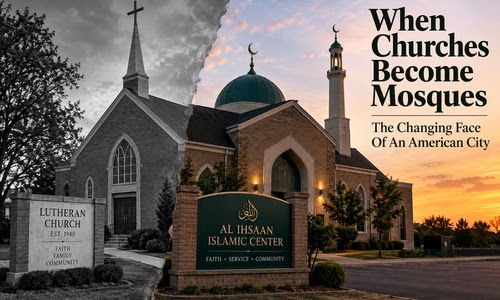
Drive through parts of Warren, Michigan, and you can see America’s religious transformation written into the buildings themselves.
A Lutheran church that stood for more than 80 years is now the Al Ihsaan Islamic Center. The cross that once topped its steeple is gone. A former Baptist church has become another Islamic center. An old industrial machinery business has become a mosque.
And another large mosque is being built.
Within seven miles of one Warren neighborhood highlighted in a new Fox News investigation, residents identified five new mosques. Longtime residents say the transformation has happened with stunning speed — largely within the past decade.
This isn’t simply another story about immigration.
It is a picture of two religious trajectories moving in opposite directions.
Islam is building.
Christianity is selling.
And the buildings tell the story.
A Neighborhood Transformed In Less Than A Decade
Warren was once the picture of blue-collar, postwar America. Auto workers, veterans, modest homes, neighborhood churches and families formed the backbone of the community. Today it remains Michigan’s third-largest city, but some longtime residents barely recognize portions of the place they grew up in.
Justin Tye returned to Warren 13 years ago and bought his childhood home. He told Fox News that the neighborhood hadn’t changed dramatically when he first returned.
Then it did.
“This whole neighborhood has been flipped in a decade — less than a decade — to Muslim,” he said.
The transformation isn’t merely anecdotal.
Warren’s own government records document the expanding Islamic infrastructure.
At an April 2025 Planning Commission meeting, one Muslim resident appealed for approval of a new Islamic center on behalf of what he explicitly described as Warren’s “growing Muslim Community.” Another explained that Muslims currently traveled longer distances to worship and needed a local mosque because they pray five times each day.
Months later, the city was considering expansion of another Islamic prayer facility because of the “current and growing needs” of its community. Another project involved adding minarets to an existing mosque. Yet another city proceeding involved plans for an Islamic worship center on Thirteen Mile Road.
This is what demographic and religious transformation looks like on the ground.
It doesn’t require armies.
It requires families, institutions, buildings, businesses, religious conviction and another generation willing to carry that conviction forward.
When The Church Becomes The Mosque
And that should make Christians uncomfortable.
Because while Islam is expanding its religious footprint in communities like Warren, Christianity has spent decades surrendering much of its own.
When an 80-year-old Lutheran church becomes a mosque, the most important question isn’t simply why Muslims wanted the building.
Why didn’t Christians need it anymore?
That question extends far beyond Michigan.
Across America, churches have closed, denominations have hemorrhaged members and generations have grown increasingly disconnected from Christianity. Buildings constructed through the sacrifices of Christians decades ago eventually become too expensive, too empty or simply unnecessary.
Someone eventually buys them.
In Warren, sometimes that buyer is a Muslim congregation.
The symbolism could hardly be clearer.
The cross comes down.
The mosque opens.
And life moves on.
Growing Pains — And Growing Frustration
Meanwhile, some longtime Warren residents say the transformation has brought practical conflicts as well.
Residents interviewed by Fox described Friday traffic problems, vehicles blocking driveways and lawns, amplified religious services and a feeling that their concerns aren’t being taken seriously.
Those disputes have surfaced in official city proceedings too. At a September Planning Commission meeting concerning additions to an existing mosque, residents complained that parking during special events was “out of control,” creating traffic problems and obstructing sidewalks.
And Warren is hardly occurring in isolation from the enormous Muslim presence already established in nearby Dearborn and other parts of metropolitan Detroit.
Islam Is Building. Is Christianity Retreating?
The lesson Christians should draw from Warren isn’t that Muslims practice their religion too seriously.
Perhaps it is that Christians increasingly don’t.
Muslims organize communities around their faith. They establish mosques. They teach their children. They build institutions. They create businesses serving their communities. They arrange their schedules around religious observance.
Christian America increasingly treats faith as something squeezed into Sunday morning — assuming there isn’t soccer practice.
Cultures rarely remain spiritually empty.
When one worldview retreats, another eventually occupies the space.
That is why the converted churches of Warren matter far beyond Michigan.
Those buildings are monuments to a transition already underway.
A Lutheran congregation once worshipped beneath that steeple. Children once played outside. Families gathered there. Hymns were sung. Sermons were preached. Generations passed through its doors.
Today Muslims gather there for Islamic prayer.
No invading army seized it.
No government confiscated it.
Christians relinquished it, and Muslims had enough religious commitment and community cohesion to take its place.
That may be the most sobering part of Warren’s story.
One Church At A Time
Christians can complain about Islam’s growing influence in America. They can debate immigration policy, assimilation, mosque construction and cultural change.
But eventually Christianity must confront a much more uncomfortable reality.
A civilization cannot preserve a Christian inheritance after abandoning the Christianity that created it.
If Christians stop filling churches, someone else may eventually fill the buildings.
Warren is showing America what that future can look like.
One church at a time.


TruLight TV – Popcorn and Movie Time – Season Of Miracles
Based on the award-winning novel by Rusty Whitener, Season of Miracles follows the Robins, an underdog Little League team through their 1974 season with newcomer and autistic baseball savant, Rafer (Grayson Russell, Diary of a Wimpy Kid, Talladega Nights). Team leader Zack (Andrew Wilson Williams) takes Rafer under his wing despite taunting from their rivals, the Hawks. Their Coach (John Schneider, The Dukes of Hazzard, October Baby), manager Rebecca (Sydney Morgan Layne), and the rest of the Robins encourage Rafer as the team rises towards an unlikely championship season, that is less about winning and losing and more about living and dying. Season of Miracles is a life-inspiring story about sportsmanship, friendship, and courage in the face of adversity.
Today on TruLight Radio XM
TruLight Radio XM 24/7
Program
GMT / UTC +2
Monday To Fridays
00:15 Words to Live By Testimonies
01.15 Science Scripture and Salvation
02.15 Ground Works
04.00 Gospel Concert of the Day
05.00 The Daren Streblow Comedy Show
5:55 It is Today devotional
6:00 Gaither Homecoming Morning Show
7:15 Discover the Word
8.15 Destined for Victory
8:55 Science Scripture and Salvation
9:00 Holy Spirit Hour – Normally Sermons
10:15 Hope of the Heart
11:15 Unshackled
11.45 Words to Live By
12:15 Truth for Life
13:15 Living on the Edge with Chip Ingram
14:15 Focus on the Family
15:00 Kids Hour
16:00 In Touch with Dr. Charles Stanley
16:30 Groundwork
17:15 Live in the Light
18:15 Renewing your Mind
19:00 Gaither Homecoming Show
20:15 Growing Hope
21:15 Adventures in Odyssey Radio Drama
21:45 Bible Reading
22:15 Night-sounds
23.00 Good Old Country Gospel / Rhema Gospel Express
VISIT THE WEBSITE
https://trulightradioxm.org.za
TruLight Ministry News – EXTRA MANNA

TruLight Ministries orders from God since 2012 . Teach Them , Comfort Them and Warn Them!
The TESTIFY MAGAZINE run a SPECIAL EDITION this week on TruLight Ministries International

Thanks to Mark and Gerda the Stunning Management Team of Testify Magazine for this Lovely Edition and Introduction to TruLight Minsitries , God Bless for Keeping Jesus before the People!
CLICK ON THE LINK TO READ THIS SPECIAL EDITION
The NEXT Episode of The Sheriff of the Church – I Tell You Tru is available!
The Sheriff of The Church is a Breakthrough radio drama that follows a Spiritual Lawman, Appointed by God and commissioned by the City Marshal’s Office, as he rides across a landscape to serve Reproof and Rebuke Summons on systems that have traded the Truth for for everything else but the truth . with his trusty Horse Justice , He travels from Doctrine of Demon to Doctrine of Demons and meet Strange Caracter’s along the way,
This radio drama produced by TruLight Broadcasting Network and Hosted by Trulight Ministries, is more than just a Western Radio Adventure—it is a spiritual Educational Teaching Platform of Discernment. It is a journey to strip away the “False Religions and traditions of men” and return to the pure, unadulterated Word of God.
As the Sheriff likes to say: “Eternity is an awfully long time to be wrong.”
MOBILE LIGHTHOUSE WENT ON AIR YESTERDAY


Artist Liners
Healing Truths.
End Time Articles.
INTRODUCTION MANNA

Share this Feeding of Manna with your Friends and Family. just click on the Social Media icon and share This Manna with your Friends and Family. just click on the Social Media icon and share !