Hosted by TruLight Ministries International – The Place of Truth
SELECT YOUR READING LANGUAGE – BOTTOM LEFT = YOUR DAILY MANNA NOW AVAILABLE IN 103 LANGUAGES
@ TruLight Daily Manna is not Just a Bible Verse with a Small Prayer . NO ::: WE SERVE DAILY Manna for the ENTIRE Day . Breakfast , Lunch , Dinner , Plus tea Times and even Entertainment Manna . Plus News Manna and More , This Daily Manna will keep you Spiritually full for the full 48 Hours and even More to Share with your Friends and Family !!!
YOUR GIFT FROM THE HOLY SPIRIT IS A GIFT , GIVE IT AWAY FREELY ?

There are actually three biblical lists of the “gifts of the Spirit,” also known as spiritual gifts. The three main passages describing the spiritual gifts are Romans 12:6–8; 1 Corinthians 12:4–11; and 1 Corinthians 12:28. We could also include Ephesians 4:11, but that is a list of offices within the church, not spiritual gifts, per se. The spiritual gifts identified in Romans 12 are prophesying, serving, teaching, encouraging, giving, leadership, and mercy. The list in 1 Corinthians 12:4–11 includes the word of wisdom, the word of knowledge, faith, healing, miraculous powers, prophecy, distinguishing between spirits, speaking in tongues and interpretation of tongues. The list in 1 Corinthians 12:28 includes healings, helps, governments, diversities of tongues. A brief description of each gift follows:
Prophecy – The Greek word translated “prophecy” in both passages properly means “a speaking forth.” According to Thayer’s Greek Lexicon, the word refers to “discourse emanating from divine inspiration and declaring the purposes of God, whether by reproving and admonishing the wicked, or comforting the afflicted, or revealing things hidden; especially by foretelling future events.” To prophesy is to declare the divine will, to interpret the purposes of God, or to make known in any way the truth of God that is designed to influence people.
Serving – Also referred to as “ministering,” this gift involves providing service of any kind; it is the broad application of practical help to those in need. “Serving“ is a translation of the Greek word diakonian, from which we get the English deacon.
Teaching – This gift involves the analysis and proclamation of the Word of God, explaining the meaning, context and application to the hearer’s life. The gifted teacher is one who has the unique ability to clearly instruct and communicate knowledge, specifically the doctrines of the faith.
Encouraging – Also called “exhortation,” this gift is evident in those who consistently call upon others to heed and follow God’s truth, which may involve correction or building others up by strengthening weak faith or comforting in trials.
Giving – Gifted givers are those who joyfully share what they have with others, whether it is financial, material, or the giving of personal time and attention. The giver is concerned for the needs of others and seeks opportunities to share goods, money, and time with them as needs arise.
Leadership – The gifted leader is one who rules, presides over, or has the management of other people in the church. The word literally means “guide” and carries with it the idea of one who steers a ship. One with the gift of leadership rules with wisdom and grace and exhibits the fruit of the Spirit in his life as he leads by example.
Mercy – Closely linked with the gift of encouragement, the gift of mercy is obvious in those who are compassionate toward others who are in distress, showing sympathy and sensitivity coupled with a desire and the resources to lessen their suffering in a kind and cheerful manner.
Word of wisdom – The fact that this gift is described as the “word” of wisdom indicates that it is one of the speaking gifts. This gift describes someone who can understand and speak forth biblical truth in such a way as to skillfully apply it to life situations with discernment.
Word of knowledge – This is another speaking gift that involves understanding truth with an insight that only comes by revelation from God. Those with the gift of knowledge understand the deep things of God and the mysteries of His Word.
Faith – All believers possess faith in some measure because it is one of the gifts of the Spirit bestowed on all who come to Christ in faith (Galatians 5:22-23). The spiritual gift of faith is exhibited by one with a strong and unshakeable confidence in God, His Word, His promises, and the power of prayer to effect miracles.
Healing – Although God does still heal today, and while there is no biblical reason that God could not empower an individual with the spiritual gift of healing today, God miraculously healing people directly through the spiritual gifting of an individual seems to have primarily been limited to the ministry of the apostles and their close associates in the very early days of the church (2 Corinthians 2:12; Hebrews 2:4).
Miraculous powers – Also known as the working of miracles, this is another temporary sign gift that involved performing supernatural events that could only be attributed to the power of God (Acts 2:22). This gift was exhibited by Paul (Acts 19:11-12), Peter (Acts 3:6), Stephen (Acts 6:8), and Phillip (Acts 8:6-7), among others.
Distinguishing (discerning) of spirits – Certain individuals possess the unique ability to determine the true message of God from that of the deceiver, Satan, whose methods include purveying deceptive and erroneous doctrine. Jesus said many would come in His name and would deceive many (Matthew 24:4-5), but the gift of discerning spirits is given to the church to protect it from such as these.
Speaking in tongues – The gift of tongues is one of the temporary sign gifts given to the early church to enable the gospel to be preached throughout the world to all nations and in all known languages. It involved the divine ability to speak in languages previously unknown to the speaker. This gift authenticated the message of the gospel and those who preached it as coming from God. The phrase “diversity of tongues” (KJV) or “different kinds of tongues” (NIV) effectively eliminates the idea of a “personal prayer language” as a spiritual gift.
Interpretation of tongues – A person with the gift of interpreting tongues could understand what a tongues-speaker was saying even though he did not know the language that was being spoken. The tongues interpreter would then communicate the message of the tongues-speaker to everyone else, so all could understand.
Helps – Closely related to the gift of mercy is the gift of helps. Those with the gift of helps are those who can aid or render assistance to others in the church with compassion and grace. This has a broad range of possibilities for application. Most importantly, this is the unique ability to identify those who are struggling with doubt, fears, and other spiritual battles; to move toward those in spiritual need with a kind word, an understanding and compassionate demeanor; and to speak scriptural truth that is both convicting and loving.
Before we survey the spiritual gifts, we will look at two Greek words used to describe the gifts of the Spirit: pneumatika refers to their source, the Holy Spirit (pneuma) of God; and charismata refers to the fact that they are granted as an act of God’s grace (charis). The spiritual gifts are given by grace and are not based on our worthiness or personal abilities; they are given according to God’s sovereign choice. The gifts are given by the Spirit of God; thus, the gifts are a part of the new life granted to us in Christ and may be drastically different from our perceived capabilities or desires prior to salvation. First Corinthians 12:4–7 explains: “There are different kinds of gifts, but the same Spirit distributes them. There are different kinds of service, but the same Lord. There are different kinds of working, but in all of them and in everyone it is the same God at work. Now to each one the manifestation of the Spirit is given for the common good.” Believers will differ in their spiritual gifts, but all spiritual gifts are meant to be used for the edification of the body of Christ and to the glory of God.
A brief examination of three key texts (Romans 12:6–8; 1 Corinthians 12:4–11; 1 Peter 4:10–11) will help us see God’s design regarding His gifts.
One of the first things that becomes clear in these passages is the diversity of the gifts. Paul’s survey of spiritual gifts in Romans 12 includes different gifts than are found in 1 Corinthians 12. And when Peter spoke of the spiritual gifts in 1 Peter 4:10–11, he didn’t specify them but rather listed broad categories of the types of gifts God gives. Among the gifts listed in the Bible are prophecy, ministry, wisdom, knowledge, faith, healing, teaching, exhorting, giving, ruling, showing mercy, speaking in languages, and interpreting languages. Whatever the specific use, each gift fits together with the other gifts, and they all work together as the parts of the body to make a functional whole (Romans 12:5).
In putting together a complete survey of the spiritual gifts, one must attempt to quantify and define the gifts. Romans 12 lists at least seven gifts, and 1 Corinthians 12 lists nine. There is some overlap in these lists, and there are certainly indications that there are more gifts than are itemized.
Here is a brief spiritual gifts survey from Dr. Larry Gilbert (modified from “How Many Spiritual Gifts Are There?”):
- Miraculous Gifts
- Apostleship (1 Corinthians 12:28; Ephesians 4:11)
- Tongues (1 Corinthians 12:10, 28, 30)
- Interpretation (1 Corinthians 12:10, 30)
- Miracles (1 Corinthians 12:10, 28)
- Healing (1 Corinthians 12:9, 28)
- Enabling Gifts
- Faith (1 Corinthians 12:9)
- Discernment (1 Corinthians 12:10)
- Wisdom (1 Corinthians 12:8)
- Knowledge (1 Corinthians 12:8)
- Team Gifts
- Evangelism: passionately leading others to the saving knowledge of Christ (Ephesians 4:11)
- Prophecy: boldly and fearlessly proclaiming God’s truth (Romans 12:6; Ephesians 4:11; 1 Corinthians 12:10, 28)
- Teaching: making clear the truth of God’s Word with simplicity and accuracy (Romans 12:7; 1 Corinthians 12:28)
- Exhortation: motivating others to action, application, and purpose (Romans 12:8)
- Shepherding: overseeing, training, feeding, coaching/leading (Ephesians 4:11)
- Serving: providing practical help both physically and spiritually (Romans 12:7; 1 Corinthians 12:28)
- Mercy-showing: identifying with and comforting those in need (Romans 12:8)
- Giving: releasing material resources to further the work of the Church (Romans 12:8)
- Administration: organizing, administering, promoting, leading (Romans 12:8; 1 Corinthians 12:28)
In 1 Peter 4:9–11, Peter gives us two groups of Team Gifts:
1.“Speaking” gifts. Those who have the speaking gifts are Evangelists, Prophets, Teachers, Exhorters, and Shepherds.
- “Ministering” gifts, or support gifts. People with these gifts emulate Christ in that He came not to be served, but to served (Mark 10:45). They have been blessed with self-forgetfulness as they focus on the needs of others. Ministering gifts include Shepherds, Mercy-Showers, Servers, Givers, and Administrators.
The Bible says we are given spiritual gifts for a purpose. In Romans 12:8 we are told to use the various gifts according to the character of God and His revealed will “with simplicity . . . with diligence . . . with cheerfulness.” In 1 Corinthians 12:24–25 we are told that “God has put the body together, giving greater honor to the parts that lacked it, so that there should be no division in the body, but that its parts should have equal concern for each other.” In 1 Peter 4:11 the purpose of the gifts is “that in all things God may be praised through Jesus Christ.”
Romans 12:3-8 and 1 Corinthians chapter 12 make it clear that each Christian is given spiritual gifts according to the Lord’s choice. Spiritual gifts are given for the edification of the body of Christ (1 Corinthians 12:7, 14:12). The exact timing of the giving of these gifts is not specifically mentioned. Most assume that spiritual gifts are given at the time of spiritual birth (the moment of salvation). However, there are some verses that may indicate God gives spiritual gifts later as well. Both 1 Timothy 4:14 and 2 Timothy 1:6 refer to a gift that Timothy had received at the time of his ordination “by prophecy.” This likely indicates that one of the elders at Timothy’s ordination spoke about a spiritual gift that Timothy would have to enable his future ministry.
We are also told in 1 Corinthians 12:28-31 and in 1 Corinthians 14:12-13 that it is God (not us) who chooses the gifts. These passages also indicate that not everyone will have a particular gift. Paul tells the Corinthian believers that if they are going to covet or long after spiritual gifts, they should strive after the more edifying gifts, such as prophesying (speaking forth the word of God for the building up of others). Now, why would Paul tell them to strongly desire the “greater” gifts if they already had been given all they would be given, and there was no further opportunity of gaining these greater gifts? It may lead one to believe that even as Solomon sought wisdom from God in order to be a good ruler over God’s people, so God will grant to us those gifts we need in order to be of greater benefit to His church.
Having said this, it still remains that these gifts are distributed according to God’s choosing, not our own. If every Corinthian strongly desired a particular gift, such as prophesying, God would not give everyone that gift simply because they strongly desired it. If He did, then who would serve in all of the other functions of the body of Christ?
There is one thing that is abundantly clear—God’s command is God’s enablement. If God commands us to do something (such as witness, love the unlovely, disciple the nations, etc.), He will enable us to do it. Some may not be as gifted at evangelism as others, but God commands all Christians to witness and disciple (Matthew 28:18-20; Acts 1:8). We are all called to evangelize whether or not we have the spiritual gift of evangelism. A determined Christian who strives to learn the Word and develop his teaching ability may become a better teacher than one who may have the spiritual gift of teaching, but who neglects the gift.
Are spiritual gifts given to us when we receive Christ, or are they cultivated through our walk with God? The answer is both. Normally, spiritual gifts are given at salvation, but also need to be cultivated through spiritual growth. Can a desire in your heart be pursued and developed into your spiritual gift? Can you seek after certain spiritual gifts? First Corinthians 12:31 seems to indicate that this is possible: “earnestly desire the best gifts.” You can seek a spiritual gift from God and be zealous after it by seeking to develop that area. At the same time, if it is not God’s will, you will not receive a certain spiritual gift no matter how strongly you seek after it. God is infinitely wise, and He knows through which gifts you will be most productive for His kingdom.
No matter how much we have been gifted with one gift or another, we are all called upon to develop a number of areas mentioned in the lists of spiritual gifts: to be hospitable, to show acts of mercy, to serve one another, to evangelize, etc. As we seek to serve God out of love for the purpose of building up others for His glory, He will bring glory to His name, grow His church, and reward us (1 Corinthians 3:5-8, 12:31–14:1). God promises that as we make Him our delight, He will give us the desires of our heart (Psalm 37:4-5). This would surely include preparing us to serve Him in a way that will bring us purpose and satisfaction.
To Understand the Gifts of the Holy Spirit clearly , Read Pastor Dirk’s eBook on this Topic, What Happens behind the scenes at the Baptism of the Holy Spirit !

Tea Time Manna
The word of God is living and active. Sharper than any double-edged sword, it penetrates even to dividing soul and spirit, joints and marrow; it judges the thoughts and attitudes of the heart.
—Hebrews 4:12
How often do you let God do major surgery on your spirit as the Holy Spirit uses God’s Word to encourage, judge, motivate, convict, instruct, and inspire you? Open the Bible. Search the Scriptures. Find Jesus in the four Gospels — Matthew, Mark, Luke, and John. With such a great tool so readily at hand for most of us, let’s not let a day go by without inviting God to use his words on our hearts and inviting the Holy Spirit to give us understanding as he leads us to become more like Jesus.
Prayer
Almighty God, your will is my heart’s desire. But I also realize I need to be fed more consistently by your Word in Scripture and conformed to your ultimate Word, Jesus (2 Corinthians 3:18). Please give me strength and consistency in my walk with you through your Scriptures. I open my heart and will to your Spirit, so please inspire me to change what needs to be changed, convict me of what I need to be convicted about, and encourage me when I need encouragement. I turn to you and trust in your Scriptures and the Lord Jesus to lead me to your life. I pray in the name of your ultimate Word, Jesus of Nazareth. Amen and Amen
Truth Article by Pastor Dirk
Standing Alone for the Truth: When Honesty Costs Us Everything
The cost of absolute truth is often profound isolation, yet Scripture commands us to stand firm even when honesty transforms friends into rivals. In a world that thrives on comfortable illusions and social convenience, speaking raw truth acts as a filter. It exposes the fragile foundations of superficial relationships. The Bible never promises that telling the truth will make us popular; in fact, it guarantees the exact opposite. However, it anchors us in the reality that standing alone with God is far better than standing with a crowd built on a lie.
1. The Friction of Truth: Why Friends Become Rivals
The moment you choose to speak the truth, you introduce a standard that forces people to confront reality. This confrontation routinely breeds hostility.
- The Apostle Paul’s Dilemma: In his letter to the Galatians, Paul experienced the sudden chill of broken fellowship simply because he refused to dilute the gospel. He asked a piercing question: “Have I now become your enemy by telling you the truth?” (Galatians 4:16).
- The Expositor of Sin: Truth disrupts comfort. When you point out an injustice or refuse to participate in a shared deception, human pride reacts with defensiveness. Former allies may view your integrity as a silent judgment against their compromise, quickly turning sweet fellowship into bitter rivalry.
2. The Deception of “Flattering” Friendship
We often mistake silence for loyalty. We believe that keeping the peace means keeping the truth to ourselves. Scripture flips this narrative on its head.
- Faithful Wounds: King Solomon observed the sharp contrast between superficial loyalty and genuine devotion: “Wounds from a sincere friend are better than many kisses from an enemy” (Proverbs 27:6).
- The Trap of Complaisance: Letting a friend persist in destructive patterns or falsehoods just to spare their feelings isn’t love—it is selfishness disguised as politeness. True biblical friendship demands honesty, even when that honesty threatens to fracture the relationship temporarily or permanently.
3. Standing Alone at the End
Choosing to speak nothing but the truth means preparing yourself for moments of complete isolation. The biblical narrative is populated by individuals who stood entirely alone against the status quo.
| Biblical Figure | The Truth They Spoke | The Price They Paid |
| Micaiah the Prophet | Prophesied defeat instead of the flattering victories of false prophets (1 Kings 22). | Imprisoned and fed only bread and water. |
| Jeremiah | Warned Judah of imminent Babylonian captivity due to their sins. | Thrown into a muddy cistern and rejected by his peers. |
| Jesus Christ | Declared, “I am the way, the truth, and the life” John 14 v 6 | Deserted by His closest friends and crucified. |
Jesus stood before Pontius Pilate completely abandoned by His followers. When Pilate cynically asked, “What is truth?” (John 18:38), the Truth was standing right in front of him, rejected by the world.
4. The Mandate to Stay with the Truth
Why must we endure the loss of friends, the rise of enemies, and the sting of isolation? Because truth is not merely a moral concept—it is a reflection of the nature of God.
- Refusing the Father of Lies: The Bible identifies Satan as the “father of lies” who has no truth in him (John 8:44). When we compromise the truth to maintain social harmony, we align ourselves with the enemy’s camp.
- The Promise of Freedom: Christ assured His disciples that “the truth will set you free” (John 8:32). This freedom is not an exemption from social hardship; it is an internal liberation from the exhausting burden of pleasing people through falsehoods.
Conclusion: Never Truly Alone
When you speak nothing but the truth, the crowd around you will inevitably thin out. You may find yourself standing entirely alone in the eyes of the world.
Yet, as the Apostle Paul neared the end of his life, deserted by his companions during his trial, he recorded this profound reality: “At my first defense, no one came to my support, but everyone deserted me… But the Lord stood at my side and gave me strength” (2 Timothy 4:16-17).
If the truth makes you enemies and turns your friends into rivals, stay the course. You are in holy company. It is infinitely better to stand alone on the solid rock of truth than to fall headlong with a crowd built on sand.
Delivering a hard truth is one of the most difficult interpersonal challenges you will face, especially when you know it might fracture a friendship. The goal is to speak with uncompromising honesty (firmness) while protecting the dignity of the listener (gentleness).
Scripture provides a beautiful framework for this balance in Ephesians 4:15: “Speaking the truth in love.” Truth without love is brutality; love without truth is hypocrisy.
Here is a practical, step-by-step guide to delivering a hard truth gently but firmly.
1. Prepare Your Heart before Your Words
Before you speak, analyze your internal motivations. If you speak out of anger, frustration, or a desire to be right, the delivery will fail.
- Check your motive: Are you speaking up to help them, protect someone, or preserve your integrity? Or are you doing it to punish them?
- Pray for humility: Ask for the grace to speak without a self-righteous tone. Remember Galatians 6:1: “Restore him gently. But watch yourself, or you also may be tempted.”
2. Choose the Right Environment
Never deliver a hard truth over text message, email, or in front of an audience.
- Privacy is paramount: Confrontation in public breeds immediate defensiveness. Choose a quiet, neutral, face-to-face setting.
- Timing matters: Avoid times when they are already highly stressed, exhausted, or distracted.
3. The “Gentle but Firm” Conversation Blueprint
When you sit down to speak, structure your thoughts using this communication framework to keep the conversation constructive:
- Lead with your commitment to the relationship (Gentle): Start by reaffirming your care for them.
- Example: “I value our friendship deeply, and because I care about you, I need to talk to you about something difficult.”
- Stick to objective facts, not character attacks (Firm): Describe the behavior or the situation neutrally without assigning malicious intent or using absolute words like “always” or “never.”
- Avoid: “You are being completely selfish and lying to everyone.”
- Use: “I noticed that what you said in the meeting didn’t align with what actually happened, and it has created a lot of distrust.”
- Use “I” statements to reduce defensiveness (Gentle): Frame the impact from your perspective rather than accusing them.
- Example: “I felt hurt and compromised when that happened,” rather than “You hurt me and made me look bad.”
- State the truth clearly without watering it down (Firm): Do not use “cushioning” language that obscures the point. Be direct.
- Example: “To be completely honest, I cannot support this decision, and I won’t be able to participate in it moving forward.”
4. Distinguish Between the Person and the Action
To maintain gentleness, make it clear that you are rejecting a specific behavior or falsehood, not rejecting them as a human being.
- Affirm their worth: Make sure they know that their value in your eyes (and God’s eyes) isn’t tied to the mistake they made.
- Allow room for silence: Once you deliver the truth, stop talking. Let them process it. They may lash out or go quiet; give them the space to feel the weight of the truth.
5. Accept the Outcome
Being firm means accepting that you cannot control their reaction. You are responsible for how you speak the truth, but you are not responsible for how they choose to receive it.
- If they become angry or turn into a rival, maintain your composure.
- Remind yourself that a temporary fracture caused by truth is healthier than a permanent bond built on a lie.

NEWS MANNA

A 90-Day Doomsday Plan? The Pentagon Prepares For Fortress America

For months, we have been reporting on Europe’s preparations for emergency scenarios, including the possibility of military conflict and disruptions to essential services. Now the Pentagon has unveiled its own effort to prepare America for a crisis that could knock out power, cripple supply chains and threaten military operations on U.S. soil.
The plan is called FORTRESS America. Much of it sounds like prudent preparation: keep bases supplied, secure backup power and make sure factories can produce what the military needs. But the scale raises a harder question. Why is the Pentagon planning for American military installations to survive for 90 days without outside support? Is this simply responsible planning—or a sign that military leaders see a level of danger the public has not fully grasped?
A military that can keep fighting
According to documents reviewed by Fox News, major military bases in the continental United States would be expected to maintain essential operations for at least 90 days without relying on civilian infrastructure. That means having dependable access to electricity, water, fuel and communications even if the systems around them fail.
The Pentagon’s concern is that a major conflict could reach beyond distant battlefields. A power grid could be attacked or sabotaged. Communications could be disrupted. Transportation and supply networks could seize up. Bases that depend on the same civilian systems as nearby communities could find themselves unable to operate when the military needs them most.
“We don’t want to rely on standard civilian municipal infrastructure to run our national defense,” Pentagon spokesperson Sean Parnell told Fox News. “We just simply can’t. It’s an intolerable risk.”
That is more than a backup generator. FORTRESS America envisions independent power systems, large batteries and potentially portable nuclear reactors. The plan also calls for stronger supply chains and stockpiles of items such as ammunition, fuel, spare parts, electronics and medical supplies.
The Pentagon is also looking beyond its own facilities. Through the Civil Reserve Manufacturing Network, commercial factories could be identified and prepared to shift to defense production during a crisis. The idea is to work out the contracts, technical requirements and conversion procedures before a conflict begins—not while the country is already struggling to keep production moving.
A lesson from Ukraine
The Russia–Ukraine war has shown how vulnerable essential infrastructure can be to repeated drone and missile attacks. Russian strikes on Ukraine’s energy system have caused widespread power outages, while Ukrainian drones have hit Russian refineries and other energy sites, at times disrupting operations.
Drones are not impossible to stop, but defending every vulnerable site against repeated attacks is a difficult task. Even when many are intercepted, a large wave can stretch defenses and force a country to protect power facilities, fuel supplies and industrial sites across a wide area. The lesson for military planners is stark: a nation’s ability to keep operating can be targeted without an invading army crossing its borders.
The weak link may be at home
Modern warfare does not require an enemy army to cross America’s borders before Americans feel its effects. An attack on infrastructure or a disruption to key supplies could place pressure on military readiness without a single invasion.
That possibility changes the meaning of “homeland security.” The concern is not only protecting bases from a direct strike. It is ensuring that electricity, fuel, communications, transportation and manufacturing continue to function when a crisis tests them all at once.
FORTRESS America also recognizes that a single supplier can become a single point of failure. Critical military needs are supposed to have at least two qualified sources, so the loss of one factory or one supply route does not stop production. The effort extends into space as well, where satellite communications and navigation systems could be threatened or jammed.
Prudent planning—or a warning?
The Pentagon’s public announcement described broad goals: energy independence, stronger supply chains, strategic reserves, protected installations and resilience in space and the electromagnetic spectrum. The more specific 90-day standard was described in Fox News’ reporting on internal documents.
That distinction matters. The plan does not prove that war is imminent, or that officials expect the national grid to collapse tomorrow. Military planners are supposed to prepare for severe scenarios precisely so the country is not improvising in the middle of a crisis.
Still, the public should pay attention to what is being planned. A military that wants its bases prepared to function for three months without outside support is acknowledging that a major disruption could be prolonged—and that America’s civilian systems may not be insulated from conflict.
Preparation can be prudent. But when leaders begin building for a crippled homeland, the question is no longer whether the scenario is imaginable. The Pentagon is already asking what it would take to keep the country’s military running if that scenario became real.

TruLight TV & Kingdom Kidz TV : The Power of Courage: David and Goliath
Today on Kids Hour, we have an exciting episode featuring the story of David and Goliath from the Bible, which is perfect for kids! It’s part of the Little Big Heroes series and is presented through fun animated cartoons that make the story come alive. Also, in this episode of Camp Wannastay!, one brave camper will take a big step and confront their fears, showing that sometimes being the first to try something new can be a little scary but also really rewarding.
Today on TruLight Radio XM
TruLight Radio XM 24/7
VISIT THE WEBSITE
https://trulightradioxm.org.za
TruLight Ministry News – EXTRA MANNA

TruLight Ministries orders from God since 2012 . Teach Them , Comfort Them and Warn Them!
a TruQuestion for the Day
Does your life indicate you love God rather than the world? (1 John 2:15)
Our TruPlay website is coming together – Stunning Music , Plays and Podcasts , Easy Radio Player and More https://truplay.co.za

TruLight News

TruLight Ministries has Created these 4 Radio Dramas for Educational Purpose’s
The 1st Play
The Place of Death – Radio Drama
A Link between the Old and New Testament . What happened in the spiritual realm during the 3 Hours of Darkness on Earth after the Death of Jesus on the Cross and the 3 Days and Nights Events leading the Resurrection of Jesus Christ.
The 2nd Play
Have you seen! (Dear Angel) – Radio Drama
A Radio Drama about the Last 7 Years and 7 Months on Earth. Travel with Bill as He takes you to the Major Bible Prophecies on the End Time, Time Line.
The 3rd Play
Eschatology: Back to the Future (WHO ARE WORTHY) – Radio Drama
This 3rd Play by TruLight Ministries is the 2nd Part of a 3 Part End Time Time line Study . You should 1st Listen to our 1st Play – The Place of Death and then this Play ” Back to the Future ” and then or 2nd Play ” Have you seen , Dear Angel “. These 3 Radio Drama Plays will take you on a Journey starting at the Ministry of Jesus to then Great white Throne Judgment and every event in between giving you a clear understanding on the events as the had and still will unfold in the Prophetic End Time Time line unto the 2nd Coming of Jesus and beyond.
The 4th Play
The Sheriff of The Church (I Tell You Tru) – Radio Drama
The Audio Drama Series
“The Sheriff of the Church” is a faith-based radio drama featuring a “Spiritual Lawman” appointed by God. The character rides a horse called “Justice” and travels through different “Doctrines of Demons” to serve reproof and rebuke summons on systems that have strayed from the truth. You can listen to episodes on the The Gospel Truth platform. “The Sheriff of the Church” is a breakthrough Christian radio drama produced by The Gospel Truth and written in alignment with the teachings of Pastor Dirk, the in-house teacher of TruLight Ministries.The core details of this audio broadcast include:
The Premise
The series is framed as a spiritual Western. It follows a Spiritual Lawman who has been appointed by God and officially commissioned by the “City Marshal’s Office”. Mounted on his horse named Justice, he rides across a metaphorical landscape to confront spiritual deception.
The Mission
The Sheriff’s primary task is to track down and confront various “Doctrines of Demons”. He is tasked with serving official Reproof and Rebuke Summons to religious and worldly systems that have abandoned biblical truths in exchange for false teachings.
Where to Listen & Context Platform:
You can stream and access the audio drama directly on The Gospel Truth Website and Sheriff of the Church Websites , Links provided.
Thematic Style:
It uses a dramatic, narrative-driven audio format (similar to old-time radio theater) to unpack modern spiritual issues using strict King James Version (KJV) scriptural references. Companion Shows: It airs alongside other end-times prophecy audio programs on the same platform, Eschatology Back to the Future
Artist Liners
Picture Manna to Share
From God –

From Jesus –
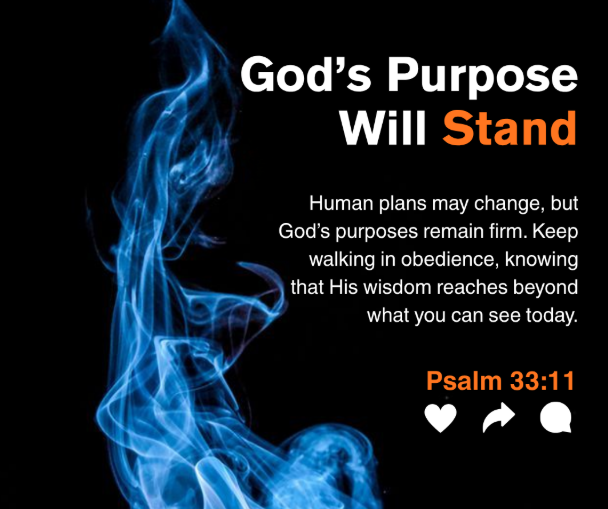
From the Holy Spirit –

NEW ON TRULIGHT DAILY MANNA FROM 1 NOVEMBER 2026
A PLAY A DAY !

Share this Feeding of Manna with your Friends and Family. just click on the Social Media icon and share !