Hosted by TruLight Ministries International – The Place of Truth
SELECT YOUR READING LANGUAGE – BOTTOM LEFT = YOUR DAILY MANNA NOW AVAILABLE IN 103 LANGUAGES
@ TruLight Daily Manna is not Just a Bible Verse with a Small Prayer . NO ::: WE SERVE DAILY Manna for the ENTIRE Day . Breakfast , Lunch , Dinner , Plus tea Times and even Entertainment Manna . Plus News Manna and More , This Daily Manna will keep you Spiritually full for the full 48 Hours and even More to Share with your Friends and Family !!!
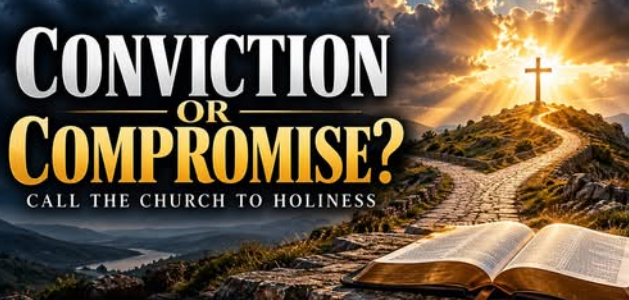
Last call to the Church towards Holiness !
Judgment is a recurring theme throughout the Bible (see Psalm 82:8). God’s plan includes a final judgment on the wicked and all who reject the sacrifice of Jesus Christ as payment for their sins (Matthew 10:15; Romans 2:2; Hebrews 9:27; 10:26–27). A cursory reading of 1 Peter 4:17 seems to suggest that Christians may face God’s judgment, too: “For it is time for judgment to begin at the household of God; and if it begins with us, what will be the outcome for those who do not obey the gospel of God?” Is the “judgment” that begins at the house of God the same as the judgment of the wicked?
The context of 1 Peter 4:17 explains more about the judgment that begins at the household of God. In this chapter Peter is exhorting the church—the house of God—which was facing persecution, to persevere. The believers were also struggling to separate from the former worldly sins that had once enslaved them (verses 1–4). Peter reminds them that the wicked will face God’s judgment (verse 5) but that believers in Christ must hold themselves to a higher standard than they once did. The “fiery trials” that they were facing were to help refine them like gold (verse 12).
God allows difficulties and suffering in the lives of His people to purify them. When we are persecuted for the cause of Christ, we share in His sufferings (1 Peter 4:13–14). And when we share His suffering, we know Him a little better (Philippians 3:10). Paul echoes this theme in Romans 8:17: “Now if we are children, then we are heirs—heirs of God and co-heirs with Christ, if indeed we share in his sufferings in order that we may also share in his glory.” Part of God’s judgment upon sin is physical suffering. When His own children experience such suffering, it is not for our harm but to make us more like Jesus. “Judgment” for the children of God can be considered discipline (Hebrews 12:4–11). It is designed to purge the sin from our lives and teach us obedience.
A loving father does not discipline the kids down the street, because they are not his. A father disciplines his own children. Likewise, the discipline of our heavenly Father begins at His own household, with His own children, the church. He is reserving for the wicked an ultimate, final judgment that His children will never experience (Romans 8:1). Scripture makes a distinction between God’s purifying discipline of the church and His ultimate condemnation of the wicked: “When we are judged . . . by the Lord, we are being disciplined so that we will not be finally condemned with the world” (1 Corinthians 11:32).
In this present age, God allows painful circumstances in the lives of His own household, not to condemn but to mature, convict, and bring repentance (2 Corinthians 7:10). Through suffering we learn patience (James 1:2–4). This kind of judgment is to encourage us to abandon selfishness and draw nearer to Him (James 4:8). The ultimate, final judgment for unbelievers will be eternal separation from God, from life, and from all that is good and beautiful (Matthew 8:11–12; Revelation 21:8).
The judgment that begins at the household of God also includes church discipline. Church discipline is not for unbelievers but for believers: “What business is it of mine to judge those outside the church? Are you not to judge those inside?” (1 Corinthians 5:12). Believers are commanded to take responsibility for other followers of Christ who may be slipping or headed toward sin (James 5:20). First Corinthians 5:11–13 commands us to avoid fellowship with anyone claiming to be a brother or sister in Christ but who insists on maintaining a sinful lifestyle. Jesus lays out the process for church discipline in Matthew 18:15–17. Someone who has been confronted multiple times and warned that the choices he is making are in opposition to God needs to repent. If he refuses to listen to the church, we are to turn away from him in the hope that this drastic action will bring about repentance (see 2 Corinthians 2:7 and Galatians 6:1). As believers, we are to pursue holiness and encourage each other to pursue it, too (1 Peter 1:15–16). We are to judge ourselves as God’s household (1 Corinthians 11:31). In this way, judgment begins in the house of God.
There will be another kind of judgment for all those who have been redeemed by God’s Son. Second Corinthians 5:10 says, “For we must all appear before the judgment seat of Christ, so that each one may receive what is due for what he has done in the body, whether good or evil” (cf. Romans 14:10). This judgment for those who are “in Christ” is not to determine eternal destiny but to give rewards for godly service and faithfulness (Matthew 16:27; Revelation 22:12). Jesus commanded us to store up treasure in heaven (Luke 12:33). This treasure will be revealed at the judgment seat of Christ. This glorious day will be more like an awards ceremony than a trial, because everyone present has already had their eternal fate secured when they were born again (John 3:3). Jesus Himself will give us crowns and treasure to enjoy for all eternity according to what we have done with all He had entrusted to us (Matthew 25:21).
God’s desire is that His people learn to walk in holiness and fellowship with Him (Romans 8:29). As any loving parent would do, God will bring unpleasant consequences upon His children for rebellion. He expects the ones He has redeemed by the blood of His Son to set the example for the rest of the world. If the church is not in pursuit of holiness, the world sees no need to change its allegiance. So judgment begins in the household of God, with His own children, as He teaches us to live like Jesus.
Righteousness and holiness are two words that describe states of moral excellence. There is a slight difference between the two concepts. Oxford Dictionary’s definition of holiness is “the state of being holy,” and the definition of holy is “dedicated or consecrated to God or a religious purpose; sacred” or “morally and spiritually excellent.” The Oxford definition of righteousness is “the quality of being morally right or justifiable,” and the definition of righteous is “morally right or justifiable; virtuous.” So, righteousness is the condition of being proven or declared morally excellent, while holiness is the condition of being consecrated or dedicated to moral excellence.
Think of it this way: a ballerina who dances for the New York City Ballet has been declared good enough to be part of that company. From a young age, she has set herself apart to that purpose, to honing her skills, and she continues to practice and improve as she dances. In this analogy, righteousness is the ballerina’s position in the ballet company. She has been given a position, her talents have been approved, and she belongs to the company. Holiness is the ballerina’s dedication and devotion to her art. Everything in her life—what she eats, whom she knows, how she spends her time and money—bows to this purpose.
To some, terms like righteousness and holiness can be a bit daunting. We think, “But that’s not how I am,” or we wonder how we can be sinful and also holy or righteous. Many people experience fear and doubt that stem from the idea that we need to “clean ourselves up” or be “good enough” before we come to God. This confusion is natural, considering the strict definition of righteousness and holiness. We want to be approved and included, but we often feel like our spiritual “dancing skills” are just not up to par—and never will be.
The Bible provides hope. We are not left to achieve righteousness and holiness on our own. Quite the opposite. In fact, left to ourselves, we would never achieve those states. Let’s look at righteousness first, and then holiness.
The story of righteousness really starts with a man named Abram in the ancient city of Ur in Mesopotamia (modern-day Iraq). God called Abram to leave his country, his people, and his father’s household and go to the land God would show him. God promised to make Abram into a great nation and bless the nations of the world through him (Genesis 12:1–3). In faith, Abram gathered up his household and left. Several years later, God told Abram, “Do not be afraid, Abram. I am your shield, your very great reward” (Genesis 15:1). Abram asked what God could give him since Abram still had no children. God again promised him an heir and offspring as numerous as the stars (Genesis 15:2–5). “Abram believed the LORD, and he credited to him as righteousness” (Genesis 15:6).
What was “morally excellent” or righteous about Abram believing God? He had not sacrificed anything to God. He had not done some mighty work in God’s name. He had not even perfectly trusted God in the journey so far (see Genesis 12:11–20). He hadn’t done anything except listen to God’s words and accept them as true. And for that Abram was counted righteous in God’s eyes. If we look at the definition of righteousness again, “the quality of being morally right or justifiable,” it is clear that this incident set the foundation of justification by faith, a concept explored many more times throughout Scripture (Romans 4; Galatians 3; James 2:23).
Galatians 3:7–9 links all who have faith in Christ to their predecessor in faith, Abraham: “Understand, then, that those who have faith are children of Abraham. Scripture foresaw that God would justify the Gentiles by faith, and announced the gospel in advance to Abraham: ‘All nations will be blessed through you.’ So those who rely on faith are blessed along with Abraham, the man of faith.” All who have faith in Christ are righteous in God’s sight, regardless of their nationality (Galatians 3:26–29). “For it is by grace you have been saved, through faith—and this is not from yourselves, it is the gift of God—not by works, so that no one can boast” (Ephesians 2:8–9). Paul explains, “God made him [Jesus] who had no sin to be sin for us, so that in him we might become the righteousness of God” (2 Corinthians 5:21). It is by Jesus’ work on the cross that we are made righteous, and by faith we are justified, or declared righteous, before God.
Now, what about holiness? The Bible says that “without holiness no one will see the Lord” (Hebrews 12:14). Zechariah, the father of John the Baptist, praised God for sending the Messiah, saying, in part, that Jesus would “enable us to serve him without fear in holiness and righteousness before him all our days” (Luke 1:74). The apostle Peter wrote, “But just as he who called you is holy, so be holy in all you do; for it is written: ‘Be holy, because I am holy’” (1 Peter 1:15–16). Ephesians 4 explains that we are to put off our old, sinful self, “which is being corrupted by its deceitful desires; to be made new in the attitude of your minds; and to put on the new self, created to be like God in true righteousness and holiness” (Ephesians 4:22–24).
Like righteousness, holiness is a gift from God. The process of becoming holy is called sanctification, and God promises to complete His sanctification in us because of Christ’s work on the cross. The writer of Hebrews explains positional sanctification: “By [God’s] will, we have been made holy through the sacrifice of the body of Jesus Christ once for all,” and also alludes to progressive sanctification, speaking of “those who are being made holy” (Hebrews 10:10, 14). We are perfected and sanctified by one event: Christ’s substitutionary atonement on the cross for our sin. As we live our lives in Christ, our holiness increases as we yield to the work of the Holy Spirit within us and follow this command: “Continue to work out your salvation with fear and trembling, for it is God who works in you to will and to act in order to fulfill his good purpose” (Philippians 2:12–13; see also Romans 12:1–2; Hebrews 12:1–2).
The holiness of God is a critical facet of His character. God desires—even commands—that His people seek after His holiness (Leviticus 11:44). Emulating a lifestyle that reflects God’s holiness is so important that the writer of Hebrews urged Christians to “strive for peace with everyone, and for the holiness without which no one will see the Lord” (Hebrews 12:14, ESV).
In His Sermon on the Mount, Jesus said, “Blessed are the pure in heart, for they will see God” (Matthew 5:8). People who desire to live in close fellowship with the Lord and see Him face to face must turn away from self-seeking, unholy interests. They must “seek first his kingdom and his righteousness” (Matthew 6:33). Believers are called to become like God in His holiness (Ephesians 1:4).
The apostle Peter instructed believers to “live as God’s obedient children. Don’t slip back into your old ways of living to satisfy your own desires. You didn’t know any better then. But now you must be holy in everything you do, just as God who chose you is holy. For the Scriptures say, ‘You must be holy because I am holy’” (1 Peter 1:14–16, NLT). Without a lifelong endeavor toward personal holiness, no one will see the Lord.
God must discipline willfully disobedient children who live to please themselves. Throughout Scripture, God appeals to His people to work at cultivating holiness: “For God did not call us to be impure, but to live a holy life” (1 Thessalonians 4:7–8).
The declaration without holiness no one will see the Lord reflects a sense of the author’s anticipation of seeing Christ at His return (see 1 John 3:2). This is the culminating point of the broader passage (Hebrews 12:22–29). If our ultimate goal is to be like Christ and see Him when He returns, our practical daily pursuit must be toward complete purity of thought and lifestyle.
We are the temple of the living God (2 Corinthians 6:14–18). In light of this revelation, the apostle Paul urged, “Because we have these promises, dear friends, let us cleanse ourselves from everything that can defile our body or spirit. And let us work toward complete holiness because we fear God” (2 Corinthians 7:1, NLT). Paul told Timothy, “Therefore, if anyone cleanses himself from what is dishonorable, he will be a vessel for honorable use, set apart as holy, useful to the master of the house, ready for every good work” (2 Timothy 2:21, ESV).
We find a parallel idea to “without holiness no one will see the Lord” in these words from Paul: “For of this you can be sure: No immoral, impure or greedy person—such a person is an idolater—has any inheritance in the kingdom of Christ and of God” (Ephesians 5:5). Of the future, glorious New Jerusalem, the apostle John said, “Nothing impure will ever enter it, nor will anyone who does what is shameful or deceitful, but only those whose names are written in the Lamb’s book of life” (Revelation 21:27).
It’s vital to understand that, as the Lord’s redeemed people, we are made holy through Christ’s finished work, the offering of His body on the cross (Hebrews 10:10, 14; Ephesians 1:4; 1 Corinthians 1:2). We are saved by Jesus “to a holy calling, not because of our works but because of his own purpose and grace, which he gave us in Christ Jesus before the ages began” (2 Timothy 1:9, ESV). “He saved us, not because of the righteous things we had done, but because of his mercy. He washed away our sins, giving us a new birth and new life through the Holy Spirit” (Titus 3:5, NLT).
Sanctification is based on the death and resurrection of Jesus Christ and the ongoing work of the indwelling Holy Spirit (Colossians 1:22; 1 Thessalonians 5:23; 2 Thessalonians 2:13; John 3:5–8; 1 Corinthians 6:11). Motivated by the knowledge that “without holiness no one will see the Lord,” we continue going all-out for Christ, striving to put on our “new nature, created to be like God—truly righteous and holy” (Ephesians 4:24, NLT).

Tea Time Manna
Once you were not a people, but now you are the people of God; once you had not received mercy, but now you have received mercy.
—1 Peter 2:10
Excluded. Rejected. Discarded. Abandoned. Forgotten. Pushed aside. Never picked. Each of these describes what it feels like to be a nobody. The evil one gives our sinful flesh the tools and the opportunities to speak these words of self-condemnation to ourselves. God, however, has extended his mercy and grace to us. “But now…” — two of the greatest words of hope when God is attached. “But now” we can trust that God has loved us in Christ, brought us into his family, and given us a purpose. We are now part of the people of God! We have been chosen to be part of the victorious team of teams. We have received mercy! Grace has washed over us, and God’s love has adopted us into his family. Peter is reminding maligned and persecuted believers that they can choose to see themselves as “nobodies,” or they can choose to see themselves by their new, God-shaped identity. Peter’s words speak to our hearts, too. You, dear friend in Jesus, are God’s child. You are part of his eternal and conquering people — like Moses, Esther, Paul, and Mary Magdalene. Mercy has reversed the power of sin and failure in your life and has graciously given you a new identity, empowered by the Holy Spirit’s presence. Live today as you now are in Jesus: one of God’s special people who “declare the praises of him who called you out of darkness into his wonderful light” (1 Peter 2:9).
Prayer
O Father of mercy and God of all grace, thank you for making me part of your people, with a divine purpose for my life. In Jesus’ name, I thank you. Amen and Amen
Truth Article by Pastor Dirk

The Words of Jesus – In the Book of Revelation
The Red Letters is the Words of Jesus in the Bible – We are Going to read the RED Letters only .
Rev 1:8 I am Alpha and Omega, the beginning and the ending, Rev 1:11 I am Alpha and Omega, the first and the last: and, What thou seest, write in a book, and send it unto the seven churches which are in Asia; unto Ephesus, and unto Smyrna, and unto Pergamos, and unto Thyatira, and unto Sardis, and unto Philadelphia, and unto Laodicea. right hand upon me, saying unto me, Rev 1: 19 Fear not; I am the first and the last: Rev 1:18 I am he that liveth, and was dead; and, behold, I am alive for evermore, Amen; and have the keys of hell and of death. Rev 1:19 Write the things which thou hast seen, and the things which are, and the things which shall be hereafter; Rev 1:20 The mystery of the seven stars which thou sawest in my right hand, and the seven golden candlesticks. The seven stars are the angels of the seven churches: and the seven candlesticks which thou sawest are the seven churches. Rev 2:1 Unto the angel of the church of Ephesus write; These things saith he that holdeth the seven stars in his right hand, who walketh in the midst of the seven golden candlesticks; Rev 2:2 I know thy works, and thy labour, and thy patience, and how thou canst not bear them which are evil: and thou hast tried them which say they are apostles, and are not, and hast found them liars: Rev 2:3 And hast borne, and hast patience, and for my name’s sake hast laboured, and hast not fainted. Rev 2:4 Nevertheless I have somewhat against thee, because thou hast left thy first love. Rev 2:5 Remember therefore from whence thou art fallen, and repent, and do the first works; or else I will come unto thee quickly, and will remove thy candlestick out of his place, except thou repent. Rev 2:6 But this thou hast, that thou hatest the deeds of the Nicolaitans, which I also hate. Rev 2:7 He that hath an ear, let him hear what the Spirit saith unto the churches; To him that overcometh will I give to eat of the tree of life, which is in the midst of the paradise of God. Rev 2:8 And unto the angel of the church in Smyrna write; These things saith the first and the last, which was dead, and is alive; Rev 2:9 I know thy works, and tribulation, and poverty, (but thou art rich) and I know the blasphemy of them which say they are Jews, and are not, but are the synagogue of Satan. Rev 2:10 Fear none of those things which thou shalt suffer: behold, the devil shall cast some of you into prison, that ye may be tried; and ye shall have tribulation ten days: be thou faithful unto death, and I will give thee a crown of life. Rev 2:11 He that hath an ear, let him hear what the Spirit saith unto the churches; He that overcometh shall not be hurt of the second death. Rev 2:12 And to the angel of the church in Pergamos write; These things saith he which hath the sharp sword with two edges; Rev 2:13 I know thy works, and where thou dwellest, even where Satan’s seat is: and thou holdest fast my name, and hast not denied my faith, even in those days wherein Antipas was my faithful martyr, who was slain among you, where Satan dwelleth. Rev 2:14 But I have a few things against thee, because thou hast there them that hold the doctrine of Balaam, who taught Balac to cast a stumbling block before the children of Israel, to eat things sacrificed unto idols, and to commit fornication. Rev 2:15 So hast thou also them that hold the doctrine of the Nicolaitans, which thing I hate. Rev 2:16 Repent; or else I will come unto thee quickly, and will fight against them with the sword of my mouth. Rev 2:17 He that hath an ear, let him hear what the Spirit saith unto the churches; To him that overcometh will I give to eat of the hidden manna, and will give him a white stone, and in the stone a new name written, which no man knoweth saving he that receiveth it. Rev 2:18 And unto the angel of the church in Thyatira write; These things saith the Son of God, who hath his eyes like unto a flame of fire, and his feet are like fine brass; Rev 2:19 I know thy works, and charity, and service, and faith, and thy patience, and thy works; and the last to be more than the first. Rev 2:20 Notwithstanding I have a few things against thee, because thou sufferest that woman Jezebel, which calleth herself a prophetess, to teach and to seduce my servants to commit fornication, and to eat things sacrificed unto idols. Rev 2:21 And I gave her space to repent of her fornication; and she repented not. Rev 2:22 Behold, I will cast her into a bed, and them that commit adultery with her into great tribulation, except they repent of their deeds. Rev 2:23 And I will kill her children with death; and all the churches shall know that I am he which searcheth the reins and hearts: and I will give unto every one of you according to your works. Rev 2:24 But unto you I say, and unto the rest in Thyatira, as many as have not this doctrine, and which have not known the depths of Satan, as they speak; I will put upon you none other burden. Rev 2:25 But that which ye have already hold fast till I come. Rev 2:26 And he that overcometh, and keepeth my works unto the end, to him will I give power over the nations: Rev 2:27 And he shall rule them with a rod of iron; as the vessels of a potter shall they be broken to shivers: even as I received of my Father. Rev 2:28 And I will give him the morning star. Rev 2:29 He that hath an ear, let him hear what the Spirit saith unto the churches. Rev 3:1 And unto the angel of the church in Sardis write; These things saith he that hath the seven Spirits of God, and the seven stars; I know thy works, that thou hast a name that thou livest, and art dead. Rev 3:2 Be watchful, and strengthen the things which remain, that are ready to die: for I have not found thy works perfect before God. Rev 3:3 Remember therefore how thou hast received and heard, and hold fast, and repent. If therefore thou shalt not watch, I will come on thee as a thief, and thou shalt not know what hour I will come upon thee. Rev 3:4 Thou hast a few names even in Sardis which have not defiled their garments; and they shall walk with me in white: for they are worthy. Rev 3:5 He that overcometh, the same shall be clothed in white raiment; and I will not blot out his name out of the book of life, but I will confess his name before my Father, and before his angels. Rev 3:6 He that hath an ear, let him hear what the Spirit saith unto the churches. Rev 3:7 And to the angel of the church in Philadelphia write; These things saith he that is holy, he that is true, he that hath the key of David, he that openeth, and no man shutteth; and shutteth, and no man openeth; Rev 3:8 I know thy works: behold, I have set before thee an open door, and no man can shut it: for thou hast a little strength, and hast kept my word, and hast not denied my name. Rev 3:9 Behold, I will make them of the synagogue of Satan, which say they are Jews, and are not, but do lie; behold, I will make them to come and worship before thy feet, and to know that I have loved thee. Rev 3:10 Because thou hast kept the word of my patience, I also will keep thee from the hour of temptation, which shall come upon all the world, to try them that dwell upon the earth. Rev 3:11 Behold, I come quickly: hold that fast which thou hast, that no man take thy crown. Rev 3:12 Him that overcometh will I make a pillar in the temple of my God, and he shall go no more out: and I will write upon him the name of my God, and the name of the city of my God, which is new Jerusalem, which cometh down out of heaven from my God: and I will write upon him my new name. Rev 3:13 He that hath an ear, let him hear what the Spirit saith unto the churches. Rev 3:14 And unto the angel of the church of the Laodiceans write; These things saith the Amen, the faithful and true witness, the beginning of the creation of God; Rev 3:15 I know thy works, that thou art neither cold nor hot: I would thou wert cold or hot. Rev 3:16 So then because thou art lukewarm, and neither cold nor hot, I will spue thee out of my mouth. Rev 3:17 Because thou sayest, I am rich, and increased with goods, and have need of nothing; and knowest not that thou art wretched, and miserable, and poor, and blind, and naked: Rev 3:18 I counsel thee to buy of me gold tried in the fire, that thou mayest be rich; and white raiment, that thou mayest be clothed, and that the shame of thy nakedness do not appear; and anoint thine eyes with eyesalve, that thou mayest see. Rev 3:19 As many as I love, I rebuke and chasten: be zealous therefore, and repent. Rev 3:20 Behold, I stand at the door, and knock: if any man hear my voice, and open the door, I will come in to him, and will sup with him, and he with me. Rev 3:21 To him that overcometh will I grant to sit with me in my throne, even as I also overcame, and am set down with my Father in his throne. Rev 3:22 He that hath an ear, let him hear what the Spirit saith unto the churches. Rev 16:15 Behold, I come as a thief. Blessed is he that watcheth, and keepeth his garments, lest he walk naked, and they see his shame. Rev 21:5 Behold, I make all things new. Write: for these words are true and faithful. Rev 21:6 And he said unto me, It is done. I am Alpha and Omega, the beginning and the end. I will give unto him that is athirst of the fountain of the water of life freely. Rev 21:7 He that overcometh shall inherit all things; and I will be his God, and he shall be my son. Rev 21:8 But the fearful, and unbelieving, and the abominable, and murderers, and whoremongers, and sorcerers, and idolaters, and all liars, shall have their part in the lake which burneth with fire and brimstone: which is the second death. Rev 22:7 Behold, I come quickly: blessed is he that keepeth the sayings of the prophecy of this book. Rev 22:12 And, behold, I come quickly; and my reward is with me, to give every man according as his work shall be. Rev 22:13 I am Alpha and Omega, the beginning and the end, the first and the last. Rev 22:16 I Jesus have sent mine angel to testify unto you these things in the churches. I am the root and the offspring of David, and the bright and morning star. Rev 22:20 Surely I come quickly.
MARK THEM IN YOUR BIBLE IF YOU DO NOT HAVE A RED LETTER BIBLE
NEWS MANNA

The Death of Paper Money: Is the Cashless Coming of Age a Biblical Warning?

The Death of Paper Money: Is the Cashless Coming of Age a Biblical Warning?
A cashless society is rapidly approaching as financial institutions, technology companies, and global governments steadily accelerate the transition toward digital-only economies. While paper notes and metal coins have facilitated trade for millennia, the convenience of tap-to-pay apps, central bank digital currencies (CBDCs), and biometric authentication are systematically forcing physical currency into extinction. For millions of people worldwide, this transition is viewed not merely as a matter of modern banking, but as the construction of an infrastructure directly foretold in ancient biblical prophecy.
The Mechanism of Total Economic Control
The foundational scripture tying financial transactions to end-times prophecy is found in the Book of Revelation. The Apostle John details a global system orchestrated by a future political and religious ruler, traditionally referred to as the Antichrist, who exercises absolute control over daily survival by weaponizing the economy.
“It also forced all people, great and small, rich and poor, free and slave, to receive a mark on their right hands or on their foreheads, so that they could not buy or sell unless they had the mark, which is the name of the beast or the number of its name.”
— Revelation 13:16-17
Biblical scholars and watchmen point out that while paper currency allows transactions to occur privately between individuals, a purely digital framework means every purchase can be tracked, moderated, or blocked instantaneously. The emergence of contactless infrastructure, human microchipping trials, and centralized biometric tracking systems provides the precise technical mechanism required to enforce the absolute embargo described in John’s apocalyptic vision.
The Consolidation of Global Power
Prophecy also implies that this economic control is tied to a centralized global governance structure.
“And the ten horns which thou sawest are ten kings, which have received no kingdom as yet; but receive power as kings one hour with the beast. These have one mind, and shall give their power and strength unto the beast.”
— Revelation 17:12-13
In a completely cashless society, the consolidation of financial systems under global watchdogs mirrors this description of unified political power. If all funds reside on digital ledgers, a centralized authority possesses the uncontested leverage to dictate who is permitted to participate in the marketplace and who is locked out.
Preparation vs. Fulfillment: A Balanced Perspective
Many Christian theologians emphasize that a digital payment system or a credit card is not inherently evil, nor does it equal the prophetic “Mark of the Beast”. Scripture indicates that the coming mark is fundamentally an act of enforced idolatry and voluntary spiritual allegiance, rather than an accidental byproduct of a routine financial transaction.
Historically, early Christians faced identical economic exclusion through Roman trade guilds, which required pagan sacrifices to conduct business. Therefore, current banking trends represent the preparation of the global framework rather than the literal fulfillment of the prophecy itself.
The Believer’s Posture: Trust Over Fear
For believers tracking these shifts, the overriding biblical instruction is not panic or paranoia, but alert awareness and reliance on divine sovereignty.
“But when these things begin to take place, straighten up and lift up your heads, because your redemption is drawing near.”
— Luke 21:28
As paper money enters its final chapters, the Christian perspective views the decline of cash as a reminder that temporal financial systems are fragile, pointing ultimately toward a spiritual economy that requires no physical currency:
“Come, everyone who thirsts, come to the waters; and he who has no money, come, buy and eat! Come, buy wine and milk without money and without price.”
— Isaiah 55:1
The architecture of a cashless society is being built through several convergent technological trends. These technologies are shifting digital transactions from an option to an absolute infrastructure, matching the systemic economic control discussed in biblical prophecy.
1. Central Bank Digital Currencies (CBDCs)
Unlike decentralized cryptocurrencies, CBDCs are digital versions of a nation’s sovereign fiat currency, issued and completely regulated by the central bank.
- The Reality: The vast majority of global economies—representing over 98% of global GDP—are actively researching, piloting, or deploying CBDCs. The Atlantic Council CBDC Tracker indicates that China’s retail e-CNY pilot has handled trillions in transaction volume, while the European Central Bank is aggressively preparing regulatory frameworks for a digital euro.
- The Prophetic Concern: CBDCs introduce the concept of “programmable money.” Because every unit of currency exists on a centralized government ledger, the issuing authority can track, freeze, or restrict a user’s funds instantly. This provides the exact operational capability needed to block specific individuals from buying or selling
2. Biometric “Pay-by-Body” Systems
The physical wallet and even the smartphone are being replaced by biometric authentication, effectively transforming the human body into the financial transaction terminal.
- The Reality: “Pay-by-Palm” systems, which utilize infrared sensors to scan the deep vascular vein patterns inside a person’s hand, have seen widespread expansion. Major tech and payment processors—including Amazon One, Visa, and Tencent—have established active biometric payment networks across various regions. Concurrently, “Smile-to-Pay” facial recognition kiosks are dominating modern retail environments globally. [
- The Prophetic Concern: Bible watchmen frequently highlight how seamlessly these systems align with the description of a commerce system tied permanently to a person’s physical body—specifically mentioning the hand or forehead . While current scanners do not require a literal physical mark, they establish a societal norm where biological data is mandatory to conduct commerce.
3. Subdermal Microchips and RFID Implants
While not yet a mandatory standard for global banking, the physical implantation of Near Field Communication (NFC) and Radio Frequency Identification (RFID) microchips has moved from science fiction into commercial application.
- The Reality: Thousands of early adopters globally have voluntarily had microchips inserted into the webbing of their hands. These implants allow users to bypass keys, log into computers, and complete contactless payment transactions at equipped point-of-sale terminals.
- The Prophetic Concern: Because these microchips are inserted directly underneath the skin of the hand, they represent the closest literal technical analog to the biblical prediction of a localized bodily mechanism required for transactional authorization.
4. AI-Driven Fraud Prevention & Risk Scoring
The software governing digital money relies increasingly on Artificial Intelligence to monitor financial behavior.
- The Reality: Financial networks use AI algorithms to analyze hundreds of millions of transaction metrics in milliseconds. Concurrently, nations are experimenting with “social credit” structures or regulatory compliance parameters that link a citizen’s online behavior or carbon footprint to their banking capabilities.
- The Prophetic Concern: In a cashless economy, an algorithm can be updated instantly to flag, restrict, or shut down access to capital based on a user’s political or religious alignment.
Summary of the Tech-Prophecy Parallel
| Technology | Current Function | Prophetic Parallel |
| CBDCs | Eliminates cash handling, stops tax evasion, and increases speed. | Centralizes entire monetary supplies under a single authority . |
| Biometric Scanning | Frictionless checkout without cards or phones. | Conditions everyday buying and selling on bodily registration . |
| Subdermal Chips | Secure, impossible-to-lose personal identification. | Places the technical hardware directly inside the right hand. |
| AI Risk Engines | Detects fraudulent spending and prevents cybercrime. | Dynamically locks individuals out of the marketplace. |

TruLight TV : Make a Joyful Noise
What do you think of when you hear the phrase “joyful noise”? Maybe you think of hooting and hollering. While those sounds can certainly bring praise to God, so can saying “I love you” to a family member or an encouraging word to a friend. and later come sing along with Josh & Ashley with Music that will move the soul. When our eyes are opened, and we become alive in Christ – how do we begin witnessing to others? Dr. Charles Stanley offers some perspective on the work of the Holy Spirit. Enjoy today’s show and thanks for watching.
Today on TruLight Radio XM
TruLight Radio XM 24/7
VISIT THE WEBSITE
https://trulightradioxm.org.za
TruLight Ministry News – EXTRA MANNA
TruLight Ministries orders from God since 2012 . Teach Them , Comfort Them and Warn Them!
a TruQuestion for the Day
Do you “walk the walk,” versus just “talking the talk”? (1 John 3:18-19)
Our TruPlay website is coming together – Stunning Music , Plays and Podcasts , Easy Radio Player and More https://truplay.co.za

TruLight News

A PLAY A DAY !


The Buffet Line of Faith: Why the Hard Truths of the Bible Matter
We live in a culture obsessed with comfort, validation, and curation. We filter our photos, stream only the content we like, and distance ourselves from anything that makes us uncomfortable. This desire for comfort often bleeds into our spiritual lives. It is easy to view the Bible like a buffet line—piling our plates high with the sweet promises of grace, love, and mercy, while completely bypassing the demanding vegetables of holiness, obedience, and self-sacrifice.
But a diet of pure sentimentality leaves a soul malnourished. One of the hardest, most unpalatable truths found in Scripture is that human effort accomplishes nothing when it comes to earning salvation, and that true discipleship will cost you everything.
The Illusion of Our Own Goodness
In John 6:63, Jesus delivers a sharp blow to human pride:
“The Spirit gives life; the flesh counts for nothing. The words I have spoken to you—they are full of the Spirit and life.”
We naturally want to believe that we are inherently good people who can contribute something to our standing with God. We like the idea of earning our keep. Yet, the biblical reality is unyielding: apart from the Holy Spirit, our moral achievements, good deeds, and religious rituals amount to nothing in securing eternal life.
When Jesus first preached these concepts, the crowd didn’t applaud. They grumbled. In fact, John 6 records that many of His followers walked away because the teaching was too difficult to accept. It is a bruising truth to realize that we are entirely dependent on divine mercy and that our own strength cannot bridge the gap created by sin.
The Cost of Following Christ
The hardness of Scripture does not stop at how we are saved; it extends to how we are called to live. The Bible routinely demands actions that run entirely counter to human nature:
- Loving your enemies and praying for those who mistreat you (Luke 6:27).
- Choosing to endure wrong rather than retaliating or demanding your rights (1 Corinthians 6:7).
- Keeping oneself unstained from the corruptive patterns of the world (James 1:27).
These are not optional suggestions for “elite” Christians; they are basic expectations. True faith requires a different pattern of thinking than that of the world, intentionally trading personal comfort for Christlike holiness.
Why the Hard Truths Are Good for You
If the Bible only told us what we wanted to hear, it would be a mirror of our own desires rather than the word of a sovereign God. The hard truths are necessary because they act as a spiritual guardrail. A physical therapist must sometimes stretch a tight muscle to the point of discomfort to bring about healing and mobility; in the same way, God’s truth disrupts our comfort to heal our souls.
When we accept the hard truth of our own spiritual bankruptcy, the sweetness of God’s grace becomes genuinely overwhelming. We stop trying to perform for approval and begin to live out of deep gratitude. The truths that challenge us, break our pride, and demand our obedience are ultimately the very things that anchor our faith in reality rather than wishful thinking.
Artist Liners
Picture Manna to Share
From God –
From Jesus –
From the Holy Spirit –
Share this Feeding of Manna with your Friends and Family. just click on the Social Media icon and share !