Hosted by TruLight Ministries International – The Place of Truth
SELECT YOUR READING LANGUAGE – BOTTOM LEFT = YOUR DAILY MANNA NOW AVAILABLE IN 103 LANGUAGES
@ TruLight Daily Manna is not Just a Bible Verse with a Small Prayer . NO ::: WE SERVE DAILY Manna for the ENTIRE Day . Breakfast , Lunch , Dinner , Plus tea Times and even Entertainment Manna . Plus News Manna and More , This Daily Manna will keep you Spiritually full for the full 48 Hours and even More to Share with your Friends and Family !!!
When GRACE becomes an Excuse to Live in SIN !
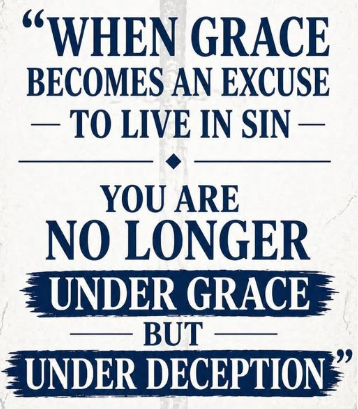
Grace Is Not a License to Sin
In Christian theology, cheap grace occurs when believers treat God’s forgiveness as a permission slip to continue living in deliberate sin rather than a power that transforms them.
The New Testament directly confronts this misunderstanding. While salvation is a free gift that cannot be earned by good works, true grace fundamentally changes a believer’s relationship with sin.
The Biblical Warning Against Presuming on Grace
The Apostle Paul anticipated that his teaching on radical forgiveness might be twisted into an excuse for moral carelessness. He addressed this head-on in his letter to the Romans:
“What shall we say, then? Shall we go on sinning so that grace may increase? By no means! We are those who have died to sin; how can we live in it any longer?” — Romans 6:1–2
Similarly, Jude warned early churches about false teachers who were distorting the gospel message to justify immorality:
“For certain individuals whose condemnation was written about long ago have secretly slipped in among you. They are ungodly people, who pervert the grace of our God into a license for immorality and deny Jesus Christ our only Sovereign and Lord.” — Jude 1:4
True Grace vs. “Cheap Grace”
Theologian Dietrich Bonhoeffer famously coined the term “cheap grace” to describe grace without discipleship or repentance. Scripture draws a clear contrast between genuine saving grace and a counterfeit excuse for sin:
| Aspect | True Biblical Grace | Grace Used as an Excuse |
|---|---|---|
| View of Sin | Sees sin as a deadly bondage Jesus died to break. | Sees sin as a harmless habit God is obligated to overlook. |
| Response to Failure | Leads to conviction, repentance, and reliance on God. | Leads to apathy, entitlement, and justifying wrong choices. |
| Purpose of Grace | Trains believers to say “no” to ungodliness (Titus 2:11–12). | Acts as a safety net to protect a rebellious lifestyle. |
| Fruit in Life | Produces spiritual growth and increasing holiness. | Produces stagnation and a hardened conscience. |
What Grace Actually Does
According to Titus 2:11–12, grace is not passive; it is an active teacher:
“For the grace of God has appeared that offers salvation to all people. It teaches us to say ‘No’ to ungodliness and worldly passions, and to live self-controlled, upright and godly lives in this present age…”
Key realities of authentic grace include:
- Grace frees from sin’s mastery: Paul reminds believers that under grace, sin is no longer their master (Romans 6:14).
- Grace produces gratitude, not entitlement: Recognizing the immense cost of Jesus’ sacrifice motivates obedience out of love, not fear.
- Grace fosters accountability: Walking in the light means confessing sin honestly rather than hiding behind religious slogans (1 John 1:6–9).
Conclusion
Grace is big enough to cover any sin a person brings to God in repentance, yet too transformative to leave them comfortable staying there. When grace is used to excuse ongoing, unrepentant sin, it ceases to be the grace described in Scripture.

Tea Time Manna
Sanctify them by the truth; your word is truth.
—John 17:17
God’s promises, God’s Scriptures, and God’s clearest message of all, his Son (Hebrews 1:1-2), are God’s truth. But only the last of these is not only truth, but the embodiment of grace, deliverance, love, salvation, power, and redemption: Jesus Christ our Lord. He is Immanuel, God with us (Matthew 1:23). He is the living embodiment, the enfleshment of holy God in human form, the living Word (John 1:14-18). God sanctifies us, makes us clean and holy, as we obey the Father’s truth revealed in Scripture. Those Scriptures reveal other ways God has worked to sanctify us. God does sanctify us through the work of the Holy Spirit (Romans 15:16; 1 Cor. 6:11). God does sanctify us completely through the saving work of Jesus, the Son (1 Cor. 1:2; 1 Peter 1:2). As Jesus’ disciples, we are blessed to experience God’s words and Word in rich, meaningful ways. So, let’s join Jesus and pray for each other to be sanctified by God’s truth!
Prayer
O Father, please give us a holy passion to know your truth and live it in both word and deed. Please have our lives reflect your Word, who both proclaimed and lived your truth. In the name of Jesus, your ultimate Word, we pray. Amen and Amen
Truth Article by Pastor Dirk

The Danger of Willfully Continuing in Sin
Scripture draws a sharp line between stumbling into sin out of weakness and choosing to live in deliberate, unrepentant rebellion. While God offers endless mercy to those who repent, the Bible issues sobering warnings about the spiritual consequences of willfully persisting in sin after knowing the truth.
The Core Biblical Warning
The Book of Hebrews delivers one of the most direct warnings in the New Testament regarding intentional, ongoing sin:
“If we deliberately keep on sinning after we have received the knowledge of the truth, no sacrifice for sins is left, but only a fearful expectation of judgment and of raging fire that will consume the enemies of God.” — Hebrews 10:26–27
This passage does not refer to believers who struggle against temptation and fail, but to those who knowingly reject God’s authority and treat Christ’s sacrifice with contempt (Hebrews 10:29).
Spiritual Consequences of Willful Sin
Choosing to remain in known sin creates progressive spiritual damage in a person’s life:
- A Hardened Heart: Repeatedly ignoring the Holy Spirit’s conviction dulls spiritual sensitivity. Hebrews 3:13 warns believers to encourage one another daily so that none may be “hardened by sin’s deceitfulness.”
- A Seared Conscience: Persistent disobedience can eventually silence a person’s moral awareness, leaving them unable to feel remorse or recognize danger (1 Timothy 4:2).
- Broken Fellowship with God: Sin creates relational distance between a believer and God. As Isaiah 59:2 states, iniquities separate people from their God, hindering prayer and spiritual intimacy (Psalm 66:18).
- Self-Deception: Continuing in sin while claiming to walk with God leads to spiritual blindness. 1 John 1:6 states plainly that if we claim to have fellowship with Him yet walk in darkness, “we lie and do not live out the truth.”
- Divine Discipline and Judgment: Because God loves His children, He disciplines those who persist in rebellion to bring them back (Hebrews 12:6). However, persistent, unrepentant sin ultimately leads to spiritual ruin and eternal judgment (Romans 6:23; Galatians 6:7–8).
Stumbling vs. Willful Rebellion
To understand these warnings clearly, it helps to distinguish between a struggling believer and a defiant heart:
| Aspect | Stumbling in Weakness | Willfully Continuing in Sin |
|---|---|---|
| Attitude Toward Sin | Hates the sin and desires freedom from it (Romans 7:15). | Loves the sin, defends it, and plans to keep doing it. |
| Response to Conviction | Feels godly sorrow that leads to repentance (2 Corinthians 7:10). | Resents correction, makes excuses, or ignores the truth. |
| Direction of Life | Moving toward Christ despite occasional falls. | Moving away from Christ while clinging to darkness. |
| Relationship to Grace | Relies on Christ’s mercy for strength to change. | Treats Christ’s sacrifice as permission to rebel. |
The Path Back: Repentance
The danger of willful sin is real, yet the door to restoration remains open to anyone willing to turn back. 1 John 1:9 promises:
“If we confess our sins, he is faithful and just and will forgive us our sins and purify us from all unrighteousness.”
True repentance involves more than feeling sorry about consequences; it requires agreeing with God about sin, turning away from it, and surrendering anew to Christ’s lordship.
Conclusion
Sin is never neutral—it either gets put to death through Christ, or it slowly puts spiritual life to death. Taking Scripture’s warnings seriously is not about living in constant fear, but about valuing God’s holiness and guarding the soul against the quiet trap of deliberate disobedience.
NEWS MANNA
First Britain, Now America? Growing Campaign To Criminalize Criticism Of Islam

Imagine living in a country where questioning a religion could put you under government scrutiny. Where criticizing religious teachings, challenging political movements, or raising concerns about ideological influence could become evidence of hatred in the eyes of authorities.
For Americans who believe the First Amendment protects the right to speak uncomfortable truths, that possibility should be alarming.
Yet in New Jersey, lawmakers have introduced legislation raising precisely these concerns.
Assembly Bill A1146 would establish an official definition of “Islamophobia” for use in civil and criminal discrimination investigations.
The legislation would require officials to consider its definition when determining whether alleged violations of existing laws were motivated by anti-Muslim bias.
There is great danger in allowing government authorities to examine religious and political opinions as potential evidence of unlawful intent.
And Americans need only look across the Atlantic to understand why.
When Criticism Becomes Evidence Of Hate
The most troubling aspect of New Jersey’s proposal is not its opposition to violence or unlawful discrimination. Existing laws already address those offenses.
It is the language used to define Islamophobia.
Among the examples listed are “hostility and fear of Islam,” certain allegations concerning Muslim political influence, and claims of a demographic threat involving Muslims.
Where does legitimate criticism of a religion or political ideology end, and government-defined prejudice begin?
Consider the questions Americans should be free to debate.
Should Islamic religious principles influence American legislation? What about Sharia-based restrictions on religious conversion, blasphemy, or women’s rights in countries where such rules are enforced? Should Islamist organizations advocating religious governance face public scrutiny?
These are legitimate subjects of public debate, not questions government should discourage.
Yet when an official definition includes hostility toward Islam and allegations concerning Muslim political influence, critics have reason to question how authorities might interpret such discussions.
Republican Assemblyman Paul Kanitra has warned that the legislation could allow officials to treat criticism of Islamic texts, history, and demographic developments as evidence of discriminatory motivation.
The bill contains language preserving First Amendment protections. But constitutional guarantees do not automatically eliminate concerns about vague definitions, selective enforcement, or investigations that discourage lawful speech.
Consider the chilling effect.
A journalist hesitates before investigating a controversial religious organization. A teacher avoids discussing Islamic law. An employee remains silent about political Islam. A pastor wonders whether an outspoken sermon could generate an official complaint.
None of these outcomes is inevitable. But they illustrate the danger when government definitions of prejudice become entangled with criticism of ideas.
Freedom of speech means little if citizens become afraid to exercise it.
Britain’s Warning: When Speech Becomes A Police Matter
New Jersey’s proposal did not emerge in isolation.
Its legislative statement acknowledges that the definition was modeled partly on work by a British parliamentary group examining Islamophobia.
That connection matters because Britain has already experienced years of controversy surrounding hate-speech enforcement, online communications laws, and police investigations of controversial statements.
British authorities have investigated and sometimes prosecuted individuals over social media communications under laws addressing threatening, grossly offensive, or otherwise unlawful messages.
Who decides whether a statement is legitimate criticism, offensive commentary, or evidence of prejudice?
How freely will ordinary citizens speak when those boundaries become uncertain?
America’s First Amendment provides stronger constitutional protections than Britain’s legal framework. But that protection should never become an excuse for complacency.
The question remains: How far should government go in defining unacceptable attitudes toward a religion?
Religious Freedom Must Include The Freedom To Disagree
For Christians, this debate reaches far beyond politics.
Christianity and Islam make fundamentally different theological claims.
Christians believe Jesus Christ is the divine Son of God, crucified and risen from the dead, and that salvation comes through Him alone. Islam rejects central elements of those beliefs.
When Jesus declared in John 14:6 that He is the way, the truth, and the life, He made an exclusive claim that conflicts with other religious teachings.
Christians must remain free to proclaim that conviction.
They must also remain free to examine Islamic doctrine, criticize religious practices, discuss persecution of Christians in Muslim-majority countries, and challenge political movements seeking to incorporate religious law into government.
Those same freedoms belong to Muslims criticizing Christianity, former Muslims challenging Islam, and atheists rejecting religion altogether.
A free society cannot guarantee comfortable religious disagreements. It must guarantee the freedom to have them.
When protecting religious believers begins to blur into protecting religious beliefs from scrutiny, freedom of expression becomes vulnerable.
And once government authorities are empowered to evaluate which religious criticisms constitute hostility, the potential for abuse becomes impossible to ignore.
The Precedent America Must Examine
New Jersey’s A1146 remains in committee for now…
But the proposed use of a broad religious-bias definition in civil and criminal investigations raises questions extending far beyond one state.
If officials are instructed to consider religious or political viewpoints when assessing discriminatory intent, what prevents legitimate disagreement from being mistaken for unlawful prejudice?
What happens when definitions introduced for one purpose become embedded in workplace investigations, educational policies, and future legislation?
And if criticism of Islam can become evidence of hostility, could similar standards eventually be applied to criticism of other religions or political movements?
Americans do not need government permission to criticize Christianity, Islam, Judaism, secularism, or any other system of belief. Nor should they need to demonstrate that their opinions are polite or acceptable to those who disagree.
The freedom to challenge powerful ideas is not a privilege granted by government. It is a constitutional right government is obligated to respect.
Britain offers a warning about what can happen when speech restrictions and government enforcement become entangled in disputes over religious hostility.
New Jersey offers an opportunity to examine those dangers before new legislation is enacted.
The question is whether government can protect individuals from genuine discrimination without allowing accusations of prejudice to become a tool for scrutinizing religious and political dissent.
Because once criticism of an idea becomes grounds for official suspicion, the debate is no longer simply about religion. It is about who gets to decide what Americans are free to say.

TruLight TV – Popcorn and Movie Time – The Bible Collection: Thomas
Although he has gone down in history as Doubting Thomas,this innovative new film from the producers of Time Life’s The Bible series gives a new dimension to the man who was also known as The Twin and was a great believer and disciple of Jesus. This fascinating version of Thomas life sees the impact of Jesus Christ through a fresh pair of eyes and particularly the dramatic events that unfold before and after the death of Jesus. A highly-charged dramatic film, it brings to life the fear of the Apostles, their conflicts and struggles under the yoke of Roman occupation and life after the passing of their Messiah.
Today on TruLight Radio XM
TruLight Radio XM 24/7
VISIT THE WEBSITE
https://trulightradioxm.org.za
TruLight Ministry News – EXTRA MANNA

TruLight Ministries orders from God since 2012 . Teach Them , Comfort Them and Warn Them!
a TruQuestion for the Day
Who was swallowed by a great fish after fleeing from God’s call to preach in Nineveh?
Our TruPlay website – Stunning Music , Plays and Podcasts , Easy Radio Player and More https://truplay.co.za

TruLight News

A PLAY A DAY !


A Hard Truth from the Book of Hebrews: Don’t Drift Away
The central hard truth of the Book of Hebrews is that spiritual stagnation is impossible—if you are not actively anchoring yourself to Christ, you are slowly drifting away from Him.
Written to Jewish Christians facing intense persecution and temptation to slip back into their old religious habits, Hebrews does not offer gentle suggestions. Instead, it delivers five urgent, uncompromising warnings against spiritual apathy, unbelief, and turning back from Jesus.
The Core Warning: The Danger of Drifting
Unlike a sudden, dramatic rebellion, spiritual ruin often happens quietly through neglect. Hebrews opens its warnings with a vivid nautical image:
“We must pay the most careful attention, therefore, to what we have heard, so that we do not drift away.” — Hebrews 2:1
A boat does not need a hole in its hull to end up on the rocks; it simply needs the crew to stop rowing and ignore the anchor. Similarly, neglecting salvation—treating the gospel as familiar background noise rather than an urgent daily reality—leaves the soul vulnerable to the current of the world.
Five Sobering Realities in Hebrews
Throughout the letter, the author confronts comfortable Christianity with truths that are difficult to hear yet vital for spiritual survival:
- Unbelief Hardens the Heart (Hebrews 3:12–13): Sin deceives people gradually. What begins as a small compromise or a quiet doubt can eventually harden into an unbelieving heart that turns away from the living God.
- Spiritual Immaturity Has Consequences (Hebrews 5:11–14): Staying a spiritual infant is not harmless. Believers who refuse to grow past basic principles remain unable to distinguish good from evil when real testing arrives.
- Falling Away Cannot Be Treated Lightly (Hebrews 6:4–6): Those who have experienced God’s truth and deliberately abandon Christ place themselves in a terrifying position, rejecting the very source of repentance.
- Trampling on Grace Invites Judgment (Hebrews 10:26–31): Continuing in willful, unrepentant sin treats the blood of Jesus as common and insults the Spirit of grace, leaving no other sacrifice for sins.
- Refusing God’s Voice Carries Eternal Stakes (Hebrews 12:25): If people could not escape judgment when they rejected earthly warnings under the Old Covenant, how much more serious is it to ignore God speaking through His Son?
Why Hebrews Speaks So Strongly
These passages can feel overwhelming, especially to believers with tender consciences. However, understanding the author’s purpose brings clarity:
| What the Warnings Are NOT | What the Warnings ARE |
|---|---|
| Meant to terrify repentant believers who struggle with weakness. | A wake-up call for those growing casual, complacent, or hardened toward sin. |
| Teaching that a single mistake erases God’s love. | A warning against sustained, deliberate rejection of Christ’s lordship. |
| A reason to despair over past failures. | An urgent invitation to hold tightly to Jesus while it is still called “Today” (Hebrews 3:13). |
The Anchor for the Soul
Hebrews never leaves the reader in despair. Right after its sharpest warnings, the letter points directly to the unshakable security found in Jesus—our Great High Priest who sympathizes with our weaknesses (Hebrews 4:15) and is able to save completely those who come to God through Him (Hebrews 7:25).
The hard truth of Hebrews is paired with an unbreakable hope:
“We have this hope as an anchor for the soul, firm and secure.” — Hebrews 6:19
Conclusion
The Book of Hebrews refuses to let believers coast on yesterday’s faith. Its hard truth is actually a severe mercy—a loud alarm designed to wake up sleeping hearts before they drift past the point of return. The call is clear: fix your eyes on Jesus, encourage one another daily, and hold fast to the end.
Artist Liners
Picture Manna to Share

From God –
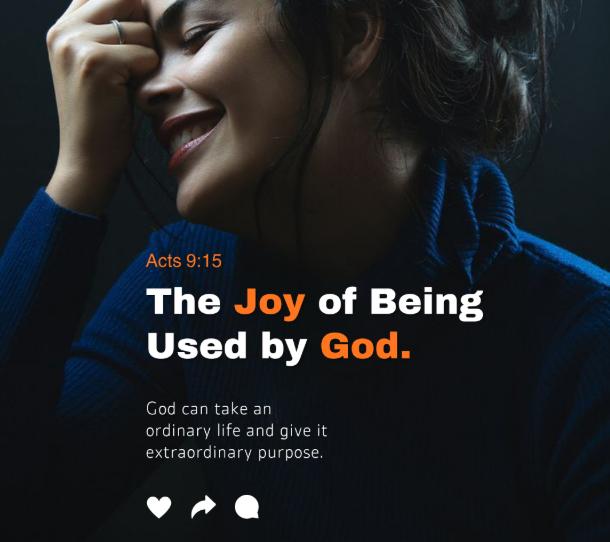
From Jesus –
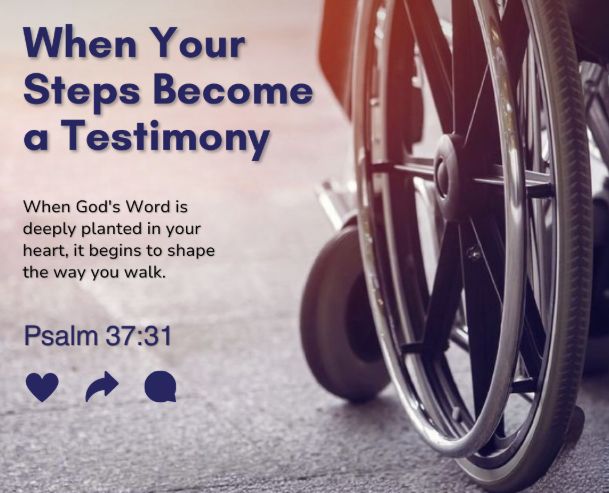
From the Holy Spirit –
Share this Feeding of Manna with your Friends and Family. just click on the Social Media icon and share !