Hosted by TruLight Ministries International – The Place of Truth
SELECT YOUR READING LANGUAGE – BOTTOM LEFT = YOUR DAILY MANNA NOW AVAILABLE IN 103 LANGUAGES
@ TruLight Daily Manna is not Just a Bible Verse with a Small Prayer . NO ::: WE SERVE DAILY Manna for the ENTIRE Day . Breakfast , Lunch , Dinner , Plus tea Times and even Entertainment Manna . Plus News Manna and More , This Daily Manna will keep you Spiritually full for the full 48 Hours and even More to Share with your Friends and Family !!!
Gambling the Number 1 Problem in South Africa Today!
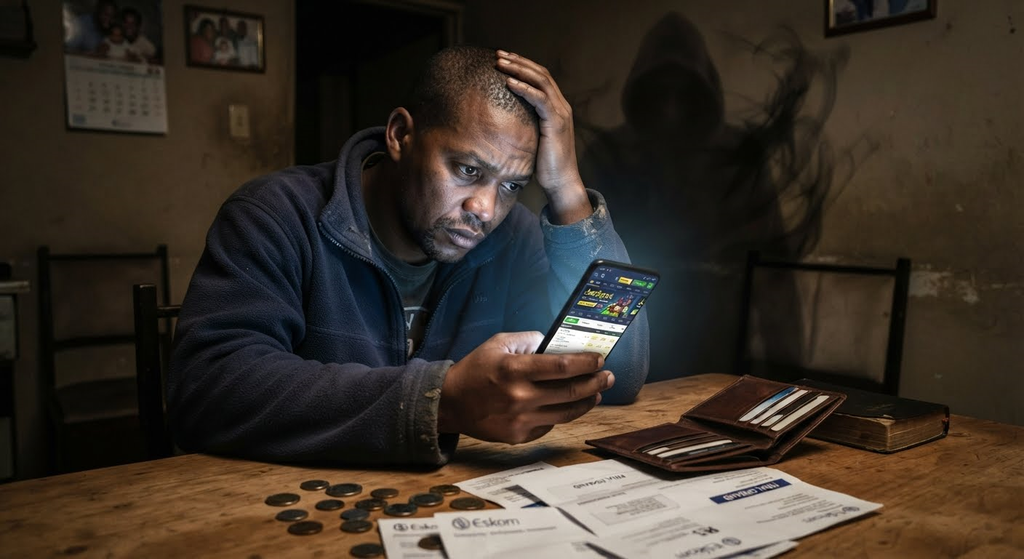
🚨 The Gambling Pandemic: The Silent Killer Destroying South Africa
South Africa is facing an unprecedented social crisis as an unchecked “gambling spirit” sweeps across the nation, driving millions into financial ruin, tearing families apart, and eroding the foundational values of the country. Once a regulated pastime, the explosion of easily accessible online casino games, sports-betting apps, and digital lotteries has transformed gambling from entertainment into a destructive national epidemic.
The hardest hit are often those who can least afford it. In communities heavily burdened by unemployment, data reveals that a devastating portion of vulnerable citizens—including government grant recipients and university students utilizing their NSFAS allowances—are gambling away their survival funds in pursuit of a quick escape from poverty. Christian organizations, like the TruLight Ministries , warn that this multi-billion-rand industry preys ruthlessly on the vulnerable, offering a false promise of instant wealth while leaving a trail of broken dreams, bankruptcy, and spiritual devastation.
📖 The Biblical Warning Against the Gambling spirit
While the Bible does not explicitly use the modern word “gambling,” it issues severe spiritual and moral warnings against the very heart and mechanisms of betting. Scripture addresses this “spirit” not merely as a physical habit, but as a dangerous spiritual trap that attacks human dignity and replaces faith with greed.
- The Trap of “Get-Rich-Quick” Schemes
Gambling thrives on the illusion of gaining immense wealth with zero effort. The Bible explicitly warns that wealth acquired through shortcuts will not last and brings ruin:
Scripture addresses the dangers of shortcuts to wealth, noting in Proverbs 13:11 and 1 Timothy 6:9 that rapid gains dwindle while greed plunges people into ruin.
- The Love of Money and Idolatry
The underlying driver of gambling is often likened to the worship of money (Mammon), which turns attention away from God. The New Testament warns that the love of money roots all kinds of evil and that individuals cannot serve both God and money.
- Profiting from a Neighbor’s Loss
Because gambling operates on the losses of many to enrich a few, it runs counter to the biblical mandate to love and do no wrong to one’s neighbor.
- The Destruction of the Divine Work Ethic
Rather than fostering honest labor and personal talents, gambling cultivates idleness and societal decay, conflicting with apostolic instruction regarding work.
🛑 The Spiritual and Social Fallout
Faith leaders emphasize that gambling frequently evolves into spiritual bondage and addiction, violating the principle in 1 Corinthians 6:12 against being dominated by anything. The broader societal impacts include:
- 💔 Family Breakdowns: Hidden financial pressures trigger domestic strife and broken marriages.
- 📉 Deepening Poverty: Essential household and educational funds are redirected into a system statistically skewed toward the house.
- ⚠️ Mental Health Crisis: Desperate attempts to recover lost funds accelerate severe depression and suicide risks.
Full scriptural references and pastoral details can be explored further via the referenced documentation.
🕊️ A Call to Action for the Nation
Addressing this crisis requires a unified response across South Africa:
- The Church must speak out: Ministries are urged to preach biblical stewardship, contentment, and honest labor.
- Protect the Home: Households are encouraged to reject casual betting to prevent the habit from gripping younger generations.
- Seek Deliverance and Support: Intervention through groups like the National Responsible Gambling Programme (NRGP) and local faith networks provides a way out of addiction. https://www.addictionhelp.org.za
South Africa’s path forward relies on restoring trust in honest provision and safeguarding the vulnerable from exploitation
A Reproof Summons against the Owners and Advertisers of Gambling Houses
Woe to the one through whom sin comes!
This phrase is a variation of a well-known biblical warning delivered by Jesus Christ regarding temptation, moral responsibility, and misleading others. It appears in slightly different wording across the Gospels in the New Testament.
📖 Biblical Origins
The statement is most explicitly recorded in two of the Gospels:
- Luke 17:1: Jesus says to his disciples, “Temptations to sin are sure to come, but woe to the one through whom they come!”
- Matthew 18:7: “Woe to the world for temptations to sin! For it is necessary that temptations come, but woe to the one by whom the temptation comes!”
💡 Meaning and Context
The verse highlights a paradox about human nature and carries a severe warning:
- The Inevitability of Sin: Jesus acknowledges that “stumbling blocks” or temptations are an unavoidable reality in a broken world.
- Personal Responsibility: Even though temptation is guaranteed to exist globally, the individual who chooses to act as the agent or catalyst for someone else’s moral downfall is held strictly accountable.
- The Severity: In both Gospel passages, Jesus follows this statement by saying it would be better for that person to have a heavy millstone tied around their neck and be drowned in the sea than to cause a vulnerable believer (referred to as “little ones”) to lose faith or sin.
The Gravity of Influence: Understanding Jesus’s Warning on “Stumbling Blocks”
In a world full of systemic distractions, societal pressures, and moral gray areas, the ancient biblical warning—“Woe to the one through whom temptation comes”—remains a piercing reminder of human accountability. Found across the Synoptic Gospels, particularly in Luke 17:1 and Matthew 18:7, this declaration establishes a profound spiritual law: while evil and temptation are guaranteed to exist in a broken world, the individuals who actively or passively facilitate the moral downfall of others bear an incredibly heavy burden of guilt.
🏛️ The Anatomy of a “Stumbling Block”
To fully grasp the weight of this warning, one must look at the original language used by the Gospel writers. The Greek word translated as “temptation to sin” or “offence” is skandalon (σκάνδαλον).
Originally, a skandalon referred to the trigger stick of a trap—the piece of wood holding the bait that, when touched, causes the trap to violently snap shut. Over time, it evolved metaphorically to describe an obstacle placed intentionally in someone’s path to make them trip, stumble, or fall into ruin.
When Jesus issues this warning, He is not talking about an accidental social faux pas or a theological disagreement. He is addressing actions, teachings, or behaviors that entice, manipulate, or push someone else into spiritual or moral destruction.
⚖️ The Paradox: Inevitable Yet Condemnable
In Matthew 18:7, Jesus states: “For it is necessary that temptations come, but woe to the one by whom the temptation comes!”
This presents a striking moral paradox. If temptation is entirely inevitable in a fallen human society, why is the individual held so strictly liable?
The biblical answer separates cosmic reality from personal agency:
- The Global Reality: Sin is an institutionalized, systemic problem globally. Because humanity is imperfect, temptation is a statistical and spiritual certainty.
- The Personal Responsibility: The inevitability of a crime does not absolve the criminal. Just because sin will happen does not mean you have to be the conduit for it. Believers and leaders are reminded that they have a daily choice: to be agents of grace or catalysts for corruption.
🌊 The Severity of the Consequence
Jesus uses deliberately shocking imagery to contrast the severity of the crime with a horrific alternative punishment. He notes that it would be better for a person to have a heavy millstone (mylos onikos, a massive stone turned by a donkey) tied around their neck and be hurled into the depths of the sea than to cause a vulnerable believer to stumble.
In ancient Jewish culture, drowning was considered a terrifying way to die because it meant a lack of a proper burial. By stating that certain death by drowning is preferable, Jesus highlights that the spiritual consequence of leading someone else astray is far worse than the worst imaginable physical death.
[ Acting as a “Skandalon” / Trap ]
│
▼
[ Causing a “Little One” to Sin ]
│
▼
───────────────────────────────────────────
PHYSICAL ALTERNATIVE: SPIRITUAL REALITY:
Drowning via Millstone Divine Judgment &
(Preferable Outcome) “Woe” (Sorrow/Wrath)
───────────────────────────────────────────
👥 Who are the “Little Ones”?
While the phrase “little ones” can literally mean children, the contextual theology of the Gospels expands this definition. “Little ones” refers to the vulnerable, the spiritually young, the impressionable, and those who trust deeply without defensive filters.
In the immediate historical context, Jesus was directly targeting the religious elites—the Scribes and Pharisees. They claimed to be spiritual guides, yet their hypocrisy, greed, and legalistic burdens effectively closed the kingdom of heaven to those seeking God.
🎯 Modern Application: The Ripple Effect of Conduct
The warning of the skandalon forces self-reflection across multiple dimensions of modern life:
- Leadership and Authority: Parents, teachers, managers, and religious leaders possess disproportionate influence. Using power, secrecy, or trust to manipulate or corrupt those under your care triggers the fullness of this “woe”.
- The Power of Example: Our private compromises often become public permissions for others. To behave recklessly under the banner of “personal freedom,” without considering how it compromises a weaker person’s boundaries, violates the community standard Jesus set.
- Systemic Complicity: In a digital and consumer-driven age, creating systems, media, or environments that profit off of feeding human vices or exploiting vulnerabilities falls squarely under the banner of introducing stumbling blocks.
🔚 Bottom Line
The phrase “Woe to the one through whom sin comes” is a call to take moral inventory. It reminds us that humanity does not live in isolation. Every action, word, and lifestyle choice radiates outward, either building a clearer path toward truth or laying a hidden trap that causes someone else to fall.
🧠 Core Components of Moral Responsibility
To be held morally responsible for an action (or for causing someone else to sin), philosophers and theologians generally agree that three criteria must be met:
- Agency & Intention: The person must be a conscious agent capable of understanding right from wrong. They must have intended the action or at least willingly set it into motion.
- Knowledge (Cognitive Condition): The person must have a reasonable awareness of the consequences of their actions. Ignorance only excuses someone if that ignorance itself isn’t a result of negligence.
- Freedom (Volitional Condition): The person must possess free will or the freedom to choose otherwise. If someone is forced or heavily coerced into an action, their moral blameworthiness is significantly reduced.
⚖️ The Problem of Causation: Proximate vs. Remote
When Jesus says, “Woe to the one through whom the temptation comes,” He is introducing a profound rule regarding causation in moral failures. In ethics, we often separate responsibility into two categories:
1. The Proximate Cause (The One Who Sins)
This is the person who ultimately commits the wrong act. Under standard moral philosophy, free will means the ultimate choice belongs to the individual. If Person B decides to lie, steal, or succumb to a vice, Person B is morally responsible for that choice.
2. The Remote/Catalytic Cause (The One Through Whom It Comes)
This is Person A—the one who set the trap, offered the bribe, or modeled the corrupt behavior. Jesus’s teaching clarifies that Person B’s personal choice does not absolve Person A of guilt. Even though Person B had the free will to resist, Person A is independently guilty of the distinct sin of instigation or enticement.
🧩 Philosophical Perspectives on “Inevitability”
The warning in Matthew 18:7 introduces a paradox: Temptation is necessary/inevitable, yet the person who brings it is condemned. Different philosophical schools approach this tension in unique ways:
🧱 Determinism vs. Libertarian Free Will
- Determinism/Compatibilism: This view suggests that while human history and social structures make certain outcomes inevitable (e.g., in a broken world, a certain percentage of people will always commit crimes or succumb to vices), an individual still acts on their own desires. Therefore, you are responsible for being the specific cog in the machine that caused the breakdown.
- Libertarian Free Will: This perspective argues that despite overwhelming systemic pressure, individuals always retain the power of contrary choice. The “woe” is justified because the instigator actively chose to introduce evil into a situation where they could have chosen to introduce good.
🏛️ The Stoic Analogy of the Cylinder
The Stoic philosopher Chrysippus famously explained this using a rolling cylinder. If you push a cylinder down a hill, your push is the proximate cause of it starting to move. However, the cylinder rolls because of its own inherent shape (its internal cause).
Applying this to the biblical verse: The world or an instigator provides the external “push” (the temptation), but the individual falls because of their own internal human vulnerability. Crucially, ethics holds both the pusher and the rolling object accountable for their respective parts in the motion.
🕸️ Collective and Systemic Moral Responsibility
In modern ethical discourse, the concept of the skandalon expands into systemic moral responsibility. This looks at how corporations, governments, or tech platforms create environments where it is incredibly easy for individuals to stumble.
- Design Ethics: Designing a social media algorithm to intentionally exploit human dopamine loops and anger for profit is a modern equivalent of laying a skandalon. The platform didn’t force the user to argue or waste their life away, but it intentionally engineered the environment to make that failure highly probable.
- Corporate Accountability: If a company builds an toxic work culture where cutting corners or lying to clients is the only way to get a promotion, the executives bear moral responsibility for the widespread ethical failures of their employees.


Tea Time Manna
God’s voice thunders in marvelous ways; he does great things beyond our understanding. He says to the snow, “Fall on the earth,” and to the rain shower, “Be a mighty downpour.”
—Job 37:5-6
Aren’t those beautiful words?! “God’s voice thunders in marvelous ways; he does great things beyond our understanding.” Amen! Isn’t that so?! Instead of spending a lot of time talking or thinking about how marvelous God is — if he is greater than our words can capture (And he is!) — let’s praise him in prayer through what we do today; not just in words, but in words and deeds. Like the rain and snow, let’s do what the Lord asks of us and bring refreshment to our dry and weary world!
Prayer
Holy, righteous, and eternal God, you alone are marvelous, mighty, gracious, and holy. God — Father, Son, and Holy Spirit — we can barely comprehend the distant “outskirts” of your ways,* but we do love you. We admire you. We worship you. You are so far beyond and above us on our best days. We can’t quite understand why you would pay such a terribly high cost to redeem people like us and bring us into your holy presence. But, dear God, we thank you and praise you from the bottom of our hearts for loving us, redeeming us, and bringing us your refreshment. In Jesus’ name, we praise you. Amen and Amen
Truth Article by Pastor Dirk
The Parable of the Ten Virgins: A Story of Spiritual Readiness

The Parable of the Ten Virgins, also known as the Parable of the Wise and Foolish Virgins, is one of the most prominent stories told by Jesus in the New Testament. Found exclusively in the Gospel of Matthew 25:1–13, this eschatological passage serves as a critical warning to believers regarding spiritual alertness and preparation for the Second Coming of Christ. [
📖 the Biblical Narrative
The parable is set against the backdrop of a traditional first-century Jewish wedding celebration. In this tradition, bridesmaids (the virgins) wait for the bridegroom to arrive and escort him into the wedding feast.
- The Arrival: Ten bridesmaids take their oil lamps and go out to meet the bridegroom. Five are described as wise (prudent) and five as foolish.
- The Distinction: The foolish virgins take their current lamps but bring no extra oil. The wise virgins have the foresight to bring extra jars of oil along with their lamps.
- The Delay: The bridegroom is significantly delayed, causing all ten women to grow drowsy and fall asleep.
- The Midnight Cry: At midnight, a shout rings out: “Here is the bridegroom! Come out to meet him!”. All ten wake up and begin trimming their lamps.
- The Refusal: The foolish virgins notice their lamps are going out and beg the wise ones for oil. The wise virgins decline, explaining that there will not be enough for everyone, and advise them to go buy their own.
- The Closed Door: While the foolish virgins are away trying to purchase oil, the bridegroom arrives. The five wise virgins enter the banquet, and the door is shut. When the foolish virgins return and plead to be let in, the groom answers, “Truly I tell you, I don’t know you”.
💡 Core Symbols and Interpretations
While biblical scholars across traditions view the parable slightly differently, the fundamental symbolic elements generally mean the following:
| Symbol | Spiritual Meaning |
| The Bridegroom | Represents Jesus Christ returning at the Second Coming. |
| The Ten Virgins | Represents members of the Church or individuals awaiting Christ’s return. |
| The Wedding Feast | Symbolises the kingdom of heaven and eternal life. |
| The Oil | Symbolises spiritual preparedness, faith, or the indwelling of the Holy Spirit. |
📌 Key Takeaways for Today
The ultimate moral of the story is captured in Matthew 25:13: “Watch therefore, for you know neither the day nor the hour in which the Son of Man is coming.”
- Spiritual Readiness Cannot Be Borrowed: When the crisis struck, the foolish virgins could not rely on the reserves of the wise. Each person is individually responsible for their own faith and relationship with God.
- The Danger of Casual Faith: On the outside, all ten virgins looked identical—they all carried lamps, slept, and expected the groom. The difference was entirely internal (the hidden reserve of oil). This warns against a purely external form of religion without true internal renewal.
- Expect Delays: True spiritual stamina requires being prepared for the long haul. The foolish virgins were only prepared for an immediate arrival, highlighting the necessity of enduring faith
NEWS MANNA

Visibility Is Power: Who Gets To Decide What You See Online?

You pause on one Facebook post. The algorithm notices. Soon, your feed is crowded with the same subject.
That is power. Whoever controls what rises to the top of your screen can shape what you think matters—and what you never think to question.
Now governments want a hand on the dial.
Germany’s proposed Digital Media State Treaty would require one in every five algorithmic recommendations to promote content classified as “public value.” State media authorities would decide which outlets qualify. The language is polished. The consequence is blunt: government-backed regulators would help determine which voices receive a guaranteed place in people’s feeds.
A story does not have to be banned to be silenced. Push it down far enough, and most people will never see it.
The new censorship wears a friendly label
Britain is advancing a similar idea under the banner of “trusted news.” Its media Green Paper proposes exploring legislation that would require social media and video platforms to make public-service media and other trusted providers easier to find.
Who defines “trusted”? The government and regulators. Which sources are most likely to benefit? The institutions already recognized by the state. Which voices risk being pushed aside? Independent outlets that challenge the approved narrative.
This is censorship adapted for the algorithmic age. Instead of forbidding speech, authorities can elevate favored sources and bury the rest. The public sees a narrower stream of information and is told it represents diversity.
Canada shows how quickly the rules can reshape the feed
Canada’s CRTC now expects Canadian and Indigenous programming to be made visible—even when audiences are not actively looking for it. The regulator points to recommendations, search results and featured placements as ways platforms can make content more discoverable.
CBC has argued for discoverability requirements and suggested that platforms could give Canadian services visibility through recommendation results, search and home-page placement. The principle is already taking hold: regulators are asserting a role in what online audiences encounter.
Canada has also seen the fallout when government tries to redesign the online news system. After Parliament passed the Online News Act, Meta made news content unavailable on Facebook and Instagram in Canada. The public was left with fewer places to encounter journalism on two of the world’s largest social platforms.
Politicians may promise that intervention will strengthen the news. But once governments start rearranging the digital information landscape, they cannot control every consequence. They can, however, claim authority over the direction.
Burying a story is still control
The battle over online speech is moving beyond what people are permitted to say. It is becoming a battle over what people are permitted to see.
An independent journalist can keep publishing while algorithms steer readers elsewhere. A story can remain online yet vanish from public conversation. And officials can insist they are protecting diversity while deciding which voices deserve prominence.
Christians should recognize the danger. Scripture calls us to test what we hear and seek truth—not to outsource discernment to governments, platforms or media institutions that claim the right to decide what deserves our attention.
Visibility is power. Whoever controls the feed can shape public opinion without appearing to censor anyone. The question is whether we will recognize that power before it becomes accepted as the government’s job.
TruLight TV & Kingdom Kidz TV – Thanking God for His Plan
Last time on “Way Out West,” Dusty, Dallas, and the folks of Rowdy Town escaped the wild shenanigans of their no-good, sneaky mayor and moved way out west to Tumbleweed Canyon. It wasn’t always easy, but they trusted that God had a plan and purpose for their lives. Now that they’re all settled into their new town, it’s time to celebrate and thank God for all that He has done! Watch now to find out what happens! Meanwhile, at Konnect HQ, sports, phones, and rock stars all become major distractions as Mike and Maurice help a kid with an idol problem. Don’t miss out on an hour of exciting entertainment!
Today on TruLight Radio XM
TruLight Radio XM 24/7
VISIT THE WEBSITE
https://trulightradioxm.org.za
TruLight Ministry News – EXTRA MANNA
TruLight Ministries orders from God since 2012 . Teach Them , Comfort Them and Warn Them!
a TruQuestion for the Day
True or False: Anyone who genuinely believes in Jesus Christ will not perish but is promised eternal life. ( John 3 v 16 )
Our TruPlay website is coming together – Stunning Music , Plays and Podcasts , Easy Radio Player and More https://truplay.co.za


TruLight News

A PLAY A DAY !

The Hardest Truth in the Book of Job: Good People Still Suffer Without Answers
Most readers approach the Bible hoping to find a neat formula for life. If you obey God, you get blessed. If you disobey God, you get punished.
The Book of Job shatters that comfortable illusion. Its hardest truth is simple yet unsettling: righteous people can experience catastrophic suffering for reasons God never explains to them.
The Trap of “Karma” Theology
In the opening chapter, the text makes one detail crystal clear. Job is “blameless and upright,” a man who fears God and avoids evil. Yet in a single day, he loses his wealth, his servants, and all ten of his children. Shortly after, painful sores cover his body from head to toe.
When Job’s three friends—Eliphaz, Bildad, and Zophar—arrive to comfort him, they bring a rigid worldview. They operate on a strict law of divine retribution:
- The Friends’ Logic: God only punishes the wicked and always protects the innocent.
- Their Conclusion: Because Job is suffering terribly, he must be hiding a terrible sin.
We often fall into this exact same trap today. When tragedy strikes, our first instinct is to ask what we did wrong to deserve it. We secretly believe that good behavior acts as an insurance policy against pain. Job’s story proves that faith is not a shield against heartbreak.
God Never Explains the “Why”
For more than thirty chapters, Job demands a courtroom hearing with God. He wants an explanation for his agony. He wants justice.
When God finally speaks out of a whirlwind in chapter 38, He does something shocking. God never mentions the heavenly wager with Satan. He never tells Job why his children died, and He never apologizes or offers a neat theological reason for the pain.
Instead, God asks Job a series of humbling questions about the universe. He points to the foundations of the earth, the boundaries of the ocean, and the habits of wild animals. The message is unmistakable: running the cosmos requires infinite wisdom, and human beings are not equipped to see the full picture.
What Job Actually Teaches Us
If the Book of Job takes away our easy answers, what does it leave us with?
- Suffering is not always a punishment. At the end of the book, God rebukes Job’s friends because they spoke falsely about Him. Pain is a broken reality of the world, not automatic proof of God’s anger.
- God welcomes raw honesty. Job complains, weeps, and questions God’s fairness. Yet God calls Job His servant and approves of his honesty over the fake, pious clichés of his friends.
- True faith loves God for who He is, not what He gives. Satan’s core accusation was that Job only loved God because God made him rich and safe. By holding onto God in the ashes, Job proves that God Himself—not His blessings—is the ultimate treasure.
Living With the Mystery
The ending of Job shows his health and wealth restored, which can sometimes soften the blow of the story. However, new children do not erase the grief of losing the first ten.
The lasting power of the Book of Job lies in its refusal to flatter us. It strips away transactional religion and forces us to confront a sobering reality. Peace in the middle of suffering does not come from figuring out why it happened. Peace comes from trusting the character of God when no explanation is given
Artist Liners
Picture Manna to Share
From God –
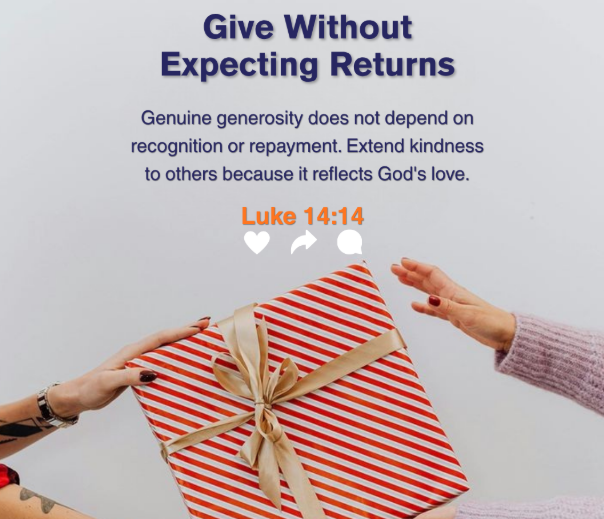
From Jesus –
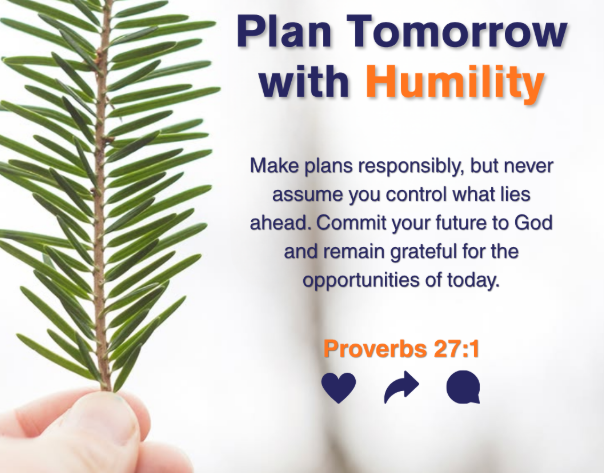
From the Holy Spirit –
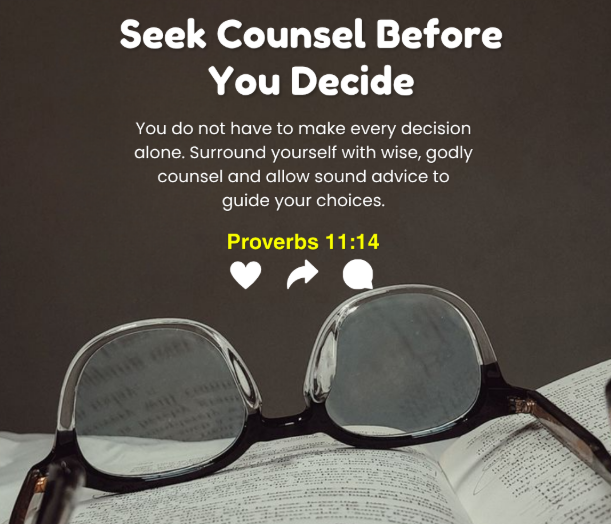
Share this Feeding of Manna with your Friends and Family. just click on the Social Media icon and share !