Hosted by TruLight Ministries – The Place of Truth
SELECT YOUR READING LANGUAGE – BOTTOM LEFT = YOUR DAILY MANNA NOW AVAILABLE IN 103 LANGUAGES
@ TruLight – Daily Manna is not Just a Bible Verse with a Small Prayer . No WE SERVE DAILY Manna for the Whole Day . Breakfast , Lunch , Dinner , Plus tea Times and even Entertainment Manna . Plus News Manna and More , This Daily Manna will keep you Spiritually full for the full 48 Hours and even More to Share with your Friends and Family !!!
The True Gospel are Not Popular !

BREAKFAST MANNA
The true gospel is the good news that God saves sinners. Man is by nature sinful and separated from God with no hope of remedying that situation. But God, by His power, provided the means of man’s redemption in the death, burial and resurrection of the Savior, Jesus Christ.
The word “gospel” literally means “good news.” But to truly comprehend how good this news is, we must first understand the bad news. As a result of the fall of man in the Garden of Eden (Genesis 3:6), every part of man—his mind, will, emotions and flesh—have been corrupted by sin. Because of man’s sinful nature, he does not and cannot seek God. He has no desire to come to God and, in fact, his mind is hostile toward God (Romans 8:7). God has declared that man’s sin dooms him to an eternity in hell, separated from God. It is in hell that man pays the penalty of sin against a holy and righteous God. This would be bad news indeed if there were no remedy.
But in the gospel, God, in His mercy, has provided that remedy, a substitute for us—Jesus Christ—who came to pay the penalty for our sin by His sacrifice on the cross. This is the essence of the gospel which Paul preached to the Corinthians. In 1 Corinthians 15:2-4, he explains the three elements of the gospel—the death, burial and resurrection of Christ on our behalf. Our old nature died with Christ on the cross and was buried with Him. Then we were resurrected with Him to a new life (Romans 6:4-8). Paul tells us to “hold firmly” to this true gospel, the only one which saves. Believing in any other gospel is to believe in vain. In Romans 1:16-17, Paul also declares that the true gospel is the “power of God for the salvation of everyone who believes” by which he means that salvation is not achieved by man’s efforts, but by the grace of God through the gift of faith (Ephesians 2:8-9).
Because of the gospel, through the power of God, those who believe in Christ (Romans 10:9) are not just saved from hell. We are, in fact, given a completely new nature (2 Corinthians 5:17) with a changed heart and a new desire, will, and attitude that are manifested in good works. This is the fruit the Holy Spirit produces in us by His power. Works are never the means of salvation, but they are the proof of it (Ephesians 2:10). Those who are saved by the power of God will always show the evidence of salvation by a changed life.

Tea Time Manna
For he must reign until he has put all his enemies under his feet. The last enemy to be destroyed is death.
—1 Corinthians 15:25-26
How many times have you stood over the grave of a recently departed friend or loved one? It hurts! When was the last time you tasted grief and separation from someone you dearly loved? Oh, my, that hurts deeply! I don’t know about you, but I am so thankful that the Bible identifies death as one of Jesus’ enemies. I am grateful that Jesus hates death and the damage and separation it causes. I rejoice! The Lord hates death even more than I do and came to earth and suffered death to destroy the evil one’s power over us in death. I am filled with joy to know that death ultimately will be destroyed when Jesus gives immortality and life to us so we can share in his glory forever!
Prayer
Holy Father, please triumph with life and mercy in the lives of those I know who are wrestling with emotional, spiritual, and physical illness and death. Triumph in their lives through your power and your grace. I look forward to the day, dear Father, when death is no more. Lord Jesus, I not only pray this in your name, but I ask you to speed this day of victory for all your disciples! Amen and Amen
Bible Teaching of the Day
LUNCH MANNA =
No, it is impossible for someone to be saved without being elected by God to salvation. Many people, the first time they encounter the doctrine of election, are upset by what seems to them to be a horribly unfair arrangement. Unfortunately, that is where many people end the discussion. A proper biblical view of election, however, leads to the conclusion that God’s choice in predestination is an incredibly loving act.
We are all sinners, and, left to ourselves, we would never choose God. Our initial response to God is to rebel against His love and sovereignty. We do not seek Him (Romans 3:11). We do not want Him to tell us what to do. If we are ever to turn from our sin in repentance and faith, He must initiate the process. Jesus told the crowds who were grumbling at His teaching, “No one can come to me unless the Father who sent me draws them” (John 6:44). In other words, no one can be saved unless they are elect.
It is also true that, in order to be saved, a person must make the choice to believe. Most believers can point to a time in which they considered the claims of Christ and surrendered to Him. We chose to surrender in faith; if we had not chosen to do so, we could not be saved. However, examining Scripture and looking back on the process of our salvation, we recognize God’s hand at work all along the way—we see the conviction of the Holy Spirit; we see how God was changing our unregenerate hearts to enable us to believe; we see the series of events that God orchestrated so that we could hear the gospel.
We have a relationship with God because God chose to pursue a relationship with us and win us over. Some object that God does this with everyone. But, if that were the case, then the reason some people believe and others don’t is that some were more genuine, spiritually attuned, or morally sensitive. That would mean that some measure of innate human goodness enables some people to believe. If people contribute of their own goodness to salvation, we have a logical problem. More importantly, we have a biblical problem.
Scripture teaches that God has chosen to save some people, and He chose them based on His own purposes, not some innate goodness on the part of the people being saved. Nor was His choice based on His advance knowledge of what decisions they would make. Paul describes God as the One who “chose us in [Christ] before the creation of the world to be holy and blameless in his sight. In love he predestined us for adoption to sonship through Jesus Christ, in accordance with his pleasure and will—to the praise of his glorious grace, which he has freely given us in the One he loves” (Ephesians 1:4–6).
In Ephesians 1:11–14, Paul explains how God’s choice and our faith work together: “In him we were also chosen, having been predestined according to the plan of him who works out everything in conformity with the purpose of his will, in order that we, who were the first to put our hope in Christ, might be for the praise of his glory. And you also were included in Christ when you heard the message of truth, the gospel of your salvation. When you believed, you were marked in him with a seal, the promised Holy Spirit, who is a deposit guaranteeing our inheritance until the redemption of those who are God’s possession—to the praise of his glory.” The whole plan is for God’s glory and for the good of those whom He has chosen to save. Contrary to much popular teaching, the plan of salvation is not about us; it is about God.
The doctrine of election is clearly taught in Scripture. The Bible even speaks of those who belong to God who have not yet believed in Him. God has chosen them, and they belong to Him, even though they have yet to come to faith. To the unbelieving religious leaders, Jesus says, “You do not believe because you are not my sheep. My sheep listen to my voice; I know them, and they follow me” (John 10:26). Notice the cause and effect in His statement. He does not say, “You are not my sheep because you do not believe”; rather, He says, “You do not believe because you are not my sheep.” In verse 16, Jesus speaks of other sheep who will believe once they hear His voice. Those who are predestined to be saved will be saved.
In Corinth, there were only a handful of believers, and Paul was facing persecution, but Jesus appeared to him in a vision and said, “Do not be afraid; keep on speaking, do not be silent. For I am with you, and no one is going to attack and harm you, because I have many people in this city” (Acts 18:9–10). Corinth was not full of believers at the time, but it was full of the elect—people whom God had chosen and who would come to faith when they heard the message.
Some might ask, why bother sharing the gospel if God has already chosen to save some? The answer is that He commands us to share the gospel. We evangelize to bring God glory and because the preaching of the gospel is the way He has chosen to save the elect. Writing from a Roman prison and awaiting execution, Paul explains to Timothy why he is willing to endure hardship for the gospel: “Therefore I endure everything for the sake of the elect, that they too may obtain the salvation that is in Christ Jesus, with eternal glory” (2 Timothy 2:10).
Some may charge that God’s plan is simply unfair—some are chosen to be saved while others are passed over and have no chance. This objection often assumes a faulty picture of salvation, one in which people are lining up to be saved, pleading with God to save them, but He says, “No, I have not chosen you. Your name’s not on the list, so I reject you.” But that’s not what happens. The reality is that everyone is given a choice to obey God, and everyone, great and small, chooses to sin. Scripture reveals that, in His grace, God has chosen to save some in spite of their rebellion. He works in their hearts and wins them over. The others God simply allows to continue in the ways they have freely chosen and desire to continue in. Those who reject Christ do so freely. Those who receive Christ also do so freely, but only because God has worked in their hearts to win them over so that they now want to receive Him. God is perfectly free; He is obligated to save no one, and the fact that He saves some shows that He is loving.
No one is saved without the election and predestination of God. If there were no election and predestination, the entire human race would be eternally lost. The only reason a rebellious sinner ever comes to faith in Christ is that God has chosen to win him over instead of allowing him to continue down the path to destruction. God is in charge. “Salvation belongs to our God, who sits on the throne, and to the Lamb” (Revelation 7:10).
Today’s Devotional
DINNER MANNA =
What is the gospel?
The word gospel literally means “good news” and occurs 93 times in the Bible, exclusively in the New Testament. In Greek, it is the word euaggelion, from which we get our English words evangelist, evangel, and evangelical. The gospel is, broadly speaking, the whole of Scripture; more narrowly, the gospel is the good news concerning Christ and the way of salvation.
The key to understanding the gospel is to know why it’s good news. To do that, we must start with the bad news. The Old Testament Law was given to Israel during the time of Moses (Deuteronomy 5:1). The Law can be thought of as a measuring stick, and sin is anything that falls short of “perfect” according to that standard. The righteous requirement of the Law is so stringent that no human being could possibly follow it perfectly, in letter or in spirit. Despite our “goodness” or “badness” relative to each other, we are all in the same spiritual boat—we have sinned, and the punishment for sin is death, i.e. separation from God, the source of life (Romans 3:23). In order for us to go to heaven, God’s dwelling place and the realm of life and light, sin must be somehow removed or paid for. The Law established the fact that cleansing from sin can only happen through the bloody sacrifice of an innocent life (Hebrews 9:22).
The gospel involves Jesus’ death on the cross as the sin offering to fulfill the Law’s righteous requirement (Romans 8:3–4; Hebrews 10:5–10). Under the Law, animal sacrifices were offered year after year as a reminder of sin and a symbol of the coming sacrifice of Christ (Hebrews 10:3–4). When Christ offered Himself at Calvary, that symbol became a reality for all who would believe (Hebrews 10:11–18). The work of atonement is finished now, and that’s good news.
The gospel also involves Jesus’ resurrection on the third day. “He was delivered over to death for our sins and was raised to life for our justification” (Romans 4:25). The fact that Jesus conquered sin and death (sin’s penalty) is good news, indeed. The fact that He offers to share that victory with us is the greatest news of all (John 14:19).
The elements of the gospel are clearly stated in 1 Corinthians 15:3–6, a key passage concerning the good news of God: “For what I received I passed on to you as of first importance: that Christ died for our sins according to the Scriptures, that he was buried, that he was raised on the third day according to the Scriptures, and that he appeared to Cephas, and then to the Twelve. After that, he appeared to more than five hundred of the brothers and sisters at the same time, most of whom are still living.” Notice, first, that Paul “received” the gospel and then “passed it on”; this is a divine message, not a man-made invention. Second, the gospel is “of first importance.” Everywhere the apostles went, they preached the crucifixion and resurrection of Christ. Third, the message of the gospel is accompanied by proofs: Christ died for our sins (proved by His burial), and He rose again the third day (proved by the eyewitnesses). Fourth, all this was done “according to the Scriptures”; the theme of the whole Bible is the salvation of mankind through Christ. The Bible is the gospel.
“I am not ashamed of the gospel, because it is the power of God that brings salvation to everyone who believes: first to the Jew, then to the Gentile” (Romans 1:16). The gospel is a bold message, and we are not ashamed of proclaiming it. It is a powerful message, because it is God’s good news. It is a saving message, the only thing that can truly reform the human heart. It is a universal message, for Jews and Gentiles both. And the gospel is received by faith; salvation is the gift of God (Ephesians 2:8–9).
The gospel is the good news that God loves the world enough to give His only Son to die for our sin (John 3:16). The gospel is good news because our salvation and eternal life and home in heaven are guaranteed through Christ (John 14:1–4). “He has given us new birth into a living hope through the resurrection of Jesus Christ from the dead, and into an inheritance that can never perish, spoil or fade. This inheritance is kept in heaven for you” (1 Peter 1:3–4).
The gospel is good news when we understand that we do not (and cannot) earn our salvation; the work of redemption and justification is complete, having been finished on the cross (John 19:30). Jesus is the propitiation for our sins (1 John 2:2). The gospel is the good news that we, who were once enemies of God, have been reconciled by the blood of Christ and adopted into the family of God (Romans 5:10; John 1:12). “See what great love the Father has lavished on us, that we should be called children of God! And that is what we are!” (1 John 3:1). The gospel is the good news that “there is now no condemnation for those who are in Christ Jesus” (Romans 8:1).
To reject the gospel is to embrace the bad news. Condemnation before God is the result of a lack of faith in the Son of God, God’s only provision for salvation. “For God did not send his Son into the world to condemn the world, but to save the world through him. Whoever believes in him is not condemned, but whoever does not believe stands condemned already because they have not believed in the name of God’s one and only Son” (John 3:17–18). God has given a doomed world good news: the Gospel of Jesus Christ!
NEWS MANNA –
Bible Prophecy, Signs of the Times and Gog and Magog Updates with Articles in the News
Pope Leo’s Mosque Visit Raises Serious Concerns Over Doctrinal Confusion – The MOVEMENT towards ONE RELIGION
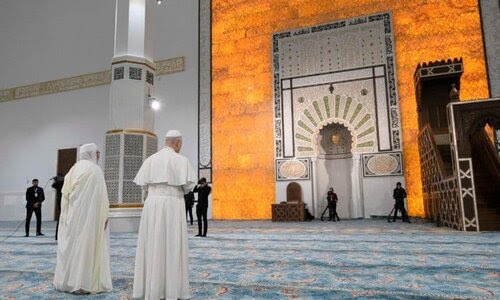
Pope Leo XIV’s recent visit to the Mosque of Algiers–where he removed his shoes, stood in silent reflection before the mihrab, and expressed gratitude for being in “a place that represents the space proper to God”–is not a harmless gesture of goodwill. It is a deeply consequential moment that raises serious questions about how the highest office in the Catholic Church is choosing to represent Christian truth in the public square.
Because this is not simply about respect. No one is arguing against basic courtesy toward Muslims or any other religious group. Christians are called to love their neighbors and treat sacred spaces with dignity. But what happened in Algiers went beyond respect and entered the realm of symbolic participation–actions that inevitably communicate theological agreement where none exists.
Standing in silent reflection in a mosque, directly before the mihrab–the directional focal point of Islamic worship–is not a neutral act. It is not the same as visiting a historical site or engaging in dialogue in a conference room. It is entering a space defined by a specific act of worship to God as understood in Islamic theology, and participating in its atmosphere of devotion without any accompanying doctrinal clarification.
When the Pope then describes the mosque as “a space proper to God,” the problem intensifies. Proper to which understanding of God? Christianity and Islam do not simply differ in language; they differ in the most foundational claims about who God is, how He is known, and how He has revealed Himself. To speak in generic terms of shared divine space is not bridge-building–it is theological flattening.
This is not an isolated misstep. It sits within a wider pattern of interfaith language emerging from the Vatican over recent years, particularly under Pope Francis, that has repeatedly blurred distinctions between Christianity and other religions in ways that have caused legitimate concern among clergy and theologians.
Pope Francis famously stated that “every religion is a way to arrive at God,” and described religions as “different languages” pointing toward the same divine reality. He also declared that “God is God for all,” and placed Sikh, Hindu, Muslim, and Christian traditions within a shared framework of spiritual pathways.
Those are not minor semantic choices. They represent a shift in tone that directly challenges the historic Christian claim that salvation is found uniquely in Jesus Christ. When the Pope speaks in this way, confusion is not just possible–it is inevitable.
This is precisely why the Algiers visit matters. It is not an isolated gesture of kindness. It is part of a trajectory in which symbolic actions and ambiguous language increasingly replace doctrinal clarity.
The Core Problem: Symbolism Without Theology
Religious leadership carries weight precisely because symbols are never just symbols. When the Pope stands in silent reflection in a mosque, the global audience does not see a neutral academic observer. They see the visible head of Catholicism engaging in a posture of reverence within a non-Christian act of worship.
Silence in such a setting does not clarify intent–it obscures it. And when combined with language about shared divine “space,” it creates the impression that Christianity and Islam are simply different cultural expressions of the same faith. That impression is not only inaccurate–it directly contradicts core Christian teaching.
The issue is not that Catholics should be hostile toward Muslims. The issue is that the distinct claims of Christianity are being visually and verbally diluted at the highest level of representation.
The Five Irreconcilable Differences That Are Being Blurred
If there is any clarity needed in this discussion, it is here. Christianity and Islam are not parallel routes up the same mountain. They are fundamentally different religious systems built on incompatible claims.
1. Jesus Christ: Divine Son or Human Prophet
Christianity declares Jesus Christ to be the eternal Son of God, not merely a messenger but God incarnate. This is not a symbolic title–it is the center of Christian faith. Jesus is worshipped, not merely respected, because He is understood as God made flesh.
Islam explicitly denies this. Jesus (Isa) is honored as a prophet, but the idea of His divinity is rejected as theological error. This is not a minor disagreement–it is the single most important dividing line between the two faiths. If Jesus is not divine, Christianity collapses into something entirely unrecognizable.
2. The Cross: Central Event or Theological Rejection
Christianity is built on the crucifixion and resurrection of Christ. The cross is not optional theology–it is the foundation of salvation. Without the death and resurrection of Jesus, there is no Christian Gospel.
Islam rejects the Christian understanding of the crucifixion. Traditional Islamic teaching holds that Jesus was not crucified in the manner Christians believe, and therefore the entire redemptive framework of sin, atonement, and resurrection is denied. That alone makes the two faiths structurally incompatible.
3. The Nature of God: Triune Revelation or Strict Unitarianism
Christianity teaches that God is one being in three persons–Father, Son, and Holy Spirit. This is not polytheism, but relational unity within the divine nature.
Islam rejects this entirely. God is absolutely singular, indivisible, and without internal relationship. Any suggestion of “Sonship” or Trinitarian structure is considered a distortion of monotheism. These are not small doctrinal differences–they represent entirely different understandings of who God is.
4. Salvation: Grace Through Christ or Judgment by Deeds
Christianity teaches salvation as a gift of grace through faith in Jesus Christ. Human effort cannot earn reconciliation with God; it is received through Christ alone.
Islam emphasizes submission to God’s will expressed through obedience, prayer, fasting, and righteous deeds, with final judgment based on a balance of actions and mercy. While both traditions value moral living, the mechanism of salvation is fundamentally different: grace versus merit, redemption versus accountability.
5. Revelation: Fulfilled in Christ or Finalized in the Qur’an
Christianity holds that God’s revelation reaches its fulfillment in Jesus Christ, with the New Testament bearing witness to Him as the culmination of God’s self-disclosure.
Islam teaches that the Qur’an is the final, perfect, and unaltered revelation, superseding previous scriptures, including the Bible. This creates not just different interpretations, but competing claims about final authority.
Respect Does Not Require Theological Confusion
It must be said clearly: respect between Christians and Muslims is not optional in a plural world. Civility, peace, and dialogue are necessary. But respect does not require symbolic actions that blur essential distinctions. It does not require standing in silent quasi-devotional posture inside another religion’s place of worship while using language that implies shared theological space.
That is not unity–that is confusion.
The danger in the Pope’s actions is not that he visited a mosque. It is how he did it, what was said, and what was left unsaid. In a world already drowning in relativism, religious leaders do not have the luxury of ambiguity. Their words and gestures define how millions understand God.
And when those gestures begin to suggest that Christianity is simply one language among many ways of reaching the divine, the result is not harmony–it is the erosion of Christian identity itself.
| Pope Removes Red Shoes, Enters Mosque, Marking New Stage in Esav’s Submission to Ishmael in Gog and Magog War |
Trump blasts the Pope :
‘weak on crime, terrible’ Pope Leo
President Trump accused the pope of enabling Iran’s nuclear ambitions.
President Donald Trump sharply criticized Pope Leo in a fiery post on his Truth Social platform after the pontiff condemned the U.S. war on Iran.
Trump’s missive came after a series of increasingly direct criticisms from Pope Leo, who in recent days has denounced the conflict and called for an end to the fighting.
Speaking at a Vatican prayer vigil, the pope urged world leaders to reject violence, declaring, “Enough with war,” and warning against what he described as the “idolatry of self” and the glorification of military force.
He also previously condemned Trump’s threat to destroy Iran’s “entire civilization” as “truly unacceptable.”
In response, Trump issued a blistering statement on Sunday evening, accusing the pope of hypocrisy and political bias.
“Pope Leo is WEAK on Crime, and terrible for Foreign Policy,” Trump wrote, dismissing the pontiff’s criticism as selective and unfair.
The president asserted that Leo’s opposition to the war effectively enables Iran’s nuclear ambitions and criticized the pope’s stance on U.S. actions abroad.
“I don’t want a Pope who thinks it’s OK for Iran to have a nuclear weapon. I don’t want a Pope who thinks it’s terrible that America attacked Venezuela—a country that was sending massive amounts of drugs into the United States and, even worse, emptying their prisons, including murderers, drug dealers, and killers, into our country,” Trump continued.
Top US official resigns, slams Trump for conducting ‘Israel-first’ war and bending to Jewish lobby
Trump argued that Leo ignored restrictions on religious life during the COVID-19 pandemic under the Biden administration.
“He talks about ‘fear’ of the Trump Administration, but doesn’t mention the fear that the Catholic Church, and all other Christian organizations, had during COVID, when they were arresting priests, ministers, and others for holding church services—even outdoors and spaced apart,” Trump wrote.
Trump concluded by urging the pope to stay out of politics.
“He should focus on being a great pope, not a politician,” Trump said, adding that Leo’s statements are “hurting him very badly, and more importantly, hurting the Catholic Church.”
Is King Charles III leading the Church of England away from its roots and into Islam?
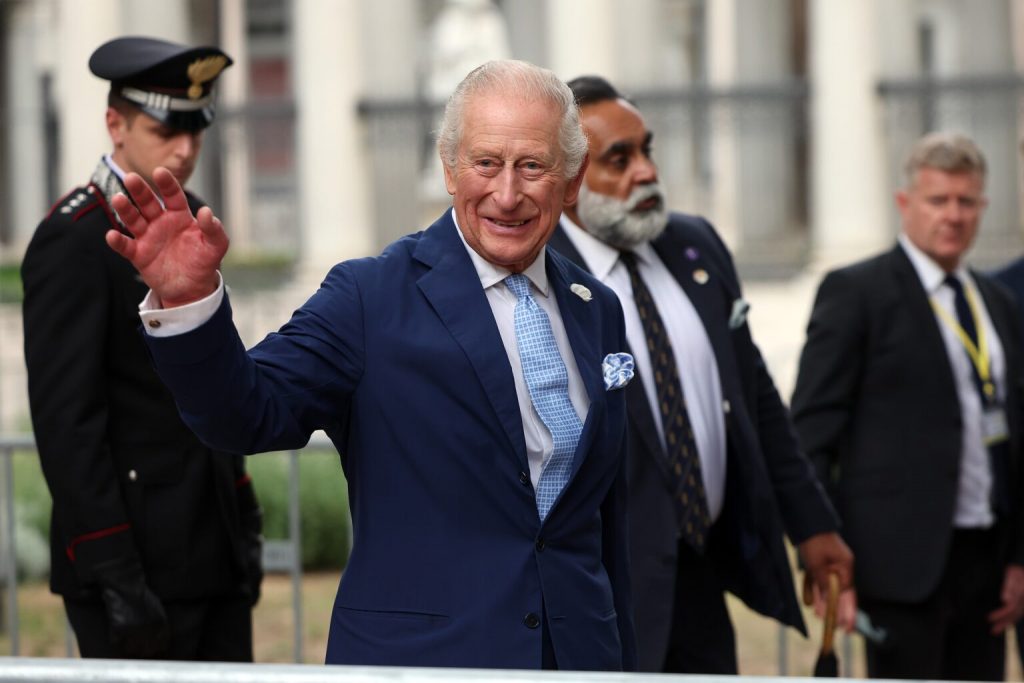
This Easter, the man who swore at his coronation to be Fidei Defensor, Defender of the Faith, had nothing to say. King Charles III, Supreme Governor of the Church of England, issued no Easter message to the hundreds of millions of Christians in the United Kingdom and across the Commonwealth. He did, however, find time in February to wish Muslims a “blessed and peaceful Ramadan,” opening his message with “As-salaamu alaikum“, “peace be upon you” in Arabic, and posting it to the official Royal Family account alongside a graphic reading “Ramadan Mubarak.”
Buckingham Palace confirmed that King Charles would not be releasing an Easter message in 2026, just two months after wishing Muslims a “happy Ramadan.” The Palace defended the omission by noting that, unlike the Christmas broadcast, an Easter message from the monarch is not an established annual tradition. Royal expert Richard Fitzwilliams acknowledged the historical point but called the decision “a mistake.” “The King did give a special message to celebrate Ramadan this year. It would therefore surely have been appropriate to have delivered one for Easter, as the controversy over this is one which could and should have been avoided,” Fitzwilliams told Fox News Digital.
Royal commentator Neil Sean was more blunt. “This came as a shock to most UK Christians here in the United Kingdom… we expect a message from the Monarch,” he said. Sean added that British anger has mounted specifically because Charles made video contributions filmed inside Royal palaces for Eid and Ramadan, while Christians received silence. Sean noted that Charles is already being accused in the United Kingdom of being a “secret Muslim.”
Ian Pelham Turner, a royals expert, framed the dereliction in stark constitutional terms. “How do you turn a Royal drama into a crisis? Simply do not follow decades of tradition and decide not to write an Easter message even though King Charles is head of the Church and swore an oath at his Coronation to uphold the faith,” Turner said.
Bishop Ceirion H. Dewar, who had written an open letter to the King calling on him to defend Britain’s Christian heritage, did not mince words. “Christians will be heartbroken, having learnt the defender of the faith has ignored them,” he said. “Having just issued a Ramadan and Eid Mubarak message for the Islamic community, choosing not to give an Easter message is bitterly disappointing. It does not meet the expectations you would expect from the monarch.”
This Easter omission is the culmination of a slow-growing pattern for the king. For the first time in its thousand-year history, Charles opened Windsor Castle to Muslims breaking their fast during Ramadan. In February 2025, he and Queen Camilla helped pack biryani rice and dates into food boxes for iftar meals donated to hospitals. When his 2025 Easter message did appear, it was laced with interfaith language, describing Christ’s love as “a deep human instinct echoed in Islam and other religious traditions” — language that many Christians found deeply inappropriate for the holiest day of their calendar. At a state banquet in March 2026, Charles acknowledged the Muslim President of Nigeria’s “sacrifice” during Ramadan, closing his speech with “Eid Mubarak.” His silence regarding the mass slaughter of Nigerian Christians by Fulani jihadists and Boko Haram at that same dinner was conspicuous.
Charles’s fascination with Islam goes back decades. As Prince, he made a now-famous speech in 1993 at the Oxford Centre for Islamic Studies, of which he is patron, arguing that the West fundamentally misunderstood Islam. He has publicly defended Islamic law, praised the status of Muslim women, and voiced the view that Islam offers solutions for Britain’s ailments. In July 2025, the King cut the ribbon on the newly renamed “King Charles III” wing of the Oxford Centre for Islamic Studies, saying that understanding the Muslim world is “more imperative than ever.”
Former Queen’s chaplain Gavin Ashenden laid the pattern bare with precision. “Last year, a message to the Islamic community in the spring as they finished Ramadan. This year, a message to the Islamic community as they began Ramadan. In neither this year nor last year did he mention Christianity and Lent.” Ashenden concluded: “The inevitable perception is that he favours Islam, because when it comes to the Christian festivals like Christmas, what he does is offer an inclusive view — he includes all faiths.”
His record toward the Jewish people and Israel is no better. In a letter written in November 1986, after an official visit to Saudi Arabia, Bahrain, and Qatar, the then-Prince Charles suggested that the “influx of foreign, European Jews (especially from Poland, they say)” had helped “cause great problems” in the Middle East, and fretted over what he called the “Jewish lobby” in America. In 2017, the United Kingdom canceled a planned state visit by Prince Charles to Israel, reportedly to avoid alienating Arab states in the region. Despite attending international forums in Israel — most notably the World Holocaust Forum at Yad Vashem in January 2020 — Charles has never met with an Israeli prime minister. By contrast, in that same January 2020 trip, he traveled to Bethlehem to meet with Palestinian Authority President Mahmoud Abbas.
After attending the funeral of Shimon Peres in 2016, then-Prince Charles of Wales visited his grandmother’s tomb in Jerusalem for the first time. Princess Alice died in 1969 and was originally interred in St George’s Chapel, Windsor. Her final wish was to be buried at the Russian Orthodox convent on the Mount of Olives, near her aunt Elizabeth, the Grand Duchess of Russia, who was murdered by the Bolsheviks and declared a Russian Orthodox saint. In 1988, her wish was realized, and she was re-interred in a crypt below the church.
Alice was posthumously declared “Righteous Among the Gentiles” by the Yad Vashem Holocaust Memorial in 1994 for sheltering Jewish acquaintances in her residence in Athens, Greece, for 13 months during World War Two while the city was occupied by the Nazis. Prince Philip attended the ceremony honoring his mother at the Yad Vashem Memorial in Jerusalem, marking the first time a member of the royal family visited Israel. More than 85 percent of the Greek Jews were taken to concentration camps during the Holocaust.
He did not meet with any Israeli officials on this visit.
The appointment of Dame Sarah Mullally, a former chief nursing officer with no prior theological training — as the 106th Archbishop of Canterbury has compounded the alarm among traditional Christians already concerned about the direction of the Church of England under Charles’s nominal stewardship.
While Christians make up approximately 47 percent of the UK population and Muslims roughly 6 percent, the Muslim Council of Britain has confirmed that the Muslim population is the fastest-growing faith group in the country. That demographic reality makes the symbolism of a silent Easter and a celebrated Ramadan all the more pointed.
Drought, Diesel, And Fertilizer – Global Food Shock Could Be Coming

It’s not one crisis–it’s two, colliding at the worst possible moment. Across the United States and much of the world, farmers are being squeezed by a brutal combination of worsening drought conditions and surging input costs–especially diesel fuel and nitrogen fertilizer. On their own, either challenge would strain the global food system. Together, they form a “double whammy” that could ripple through grocery stores, economies, and households within months.
And the timing couldn’t be worse.
Spring planting season is the most critical window of the year for farmers. It’s when decisions are made that determine how much food will be available not just this fall–but well into 2027. But this year, many farmers are being forced to make impossible choices.
In parts of the American Midwest and Plains, persistent dryness has already weakened soil conditions. Crops like corn, soybeans, and wheat depend heavily on early moisture to establish strong roots. Without it, yields decline–even before fertilizer or fuel costs are factored in.
But those costs are now front and center.
Following escalating tensions in the Middle East and the closure of the Strait of Hormuz–a chokepoint for global energy and fertilizer shipments–diesel prices have surged, and fertilizer supplies have tightened dramatically. For farmers like Andy Corriher in North Carolina, nitrogen fertilizer prices have jumped as much as 40 percent, with some key inputs like urea rising even higher at major U.S. ports.
This isn’t just a budgeting problem. It’s a production problem.
Nitrogen fertilizer is essential for modern agriculture. It is, quite literally, one of the pillars that sustains a global population of 8 billion people. When farmers cut back on fertilizer–as many now are–crop yields almost always fall. Corriher has already reduced his fertilizer use by a third. Others are applying only the “bare minimum,” hoping to stretch limited supplies.
At the same time, diesel fuel–the lifeblood of farm equipment and transportation–is becoming more expensive and less certain. Tractors don’t run without it. Neither do irrigation systems, harvesters, or the trucks that carry food to market.
The result? A slow-motion squeeze on food production.
Domestically, the U.S. agricultural sector has already been under pressure. Net farm income has been declining for years, while costs continue to rise. Now, with this sudden shock, many farmers are operating on razor-thin margins–or worse. Some are questioning whether they can afford to plant at all.
But the crisis doesn’t stop at America’s borders.
Half a world away, in Australia, the situation is even more precarious. The country is facing a potential fuel emergency that could bring both transportation and agriculture to a standstill. With only about 38 days of petrol, 31 days of diesel, and 28 days of jet fuel in reserve, officials are warning that rationing may soon be unavoidable if supply lines are not restored.
For a nation that is the world’s fifth-largest producer of wheat and second-largest exporter of barley, the implications are enormous.
If Australian farmers cannot access the diesel needed to plant and harvest crops, global grain supplies could take a significant hit. Wheat and barley are staple commodities, feeding millions directly and indirectly through livestock production. A disruption in Australia doesn’t stay in Australia–it reverberates through global markets.
And Australia is not alone.
Across Europe, parts of Asia, and Africa, fertilizer shortages linked to disrupted exports from the Middle East are already being felt. In previous years, countries like China restricted fertilizer exports to protect domestic supplies. Now, with geopolitical tensions cutting off key shipping routes, the problem is even more acute–and far less predictable.
The Strait of Hormuz is one of the most critical arteries in the global supply chain. A prolonged closure doesn’t just impact oil prices–it chokes off the flow of essential agricultural inputs to farmers around the world.
If that closure continues, the consequences 6 to 9 months from now could be severe.
Lower fertilizer use today means smaller harvests tomorrow. Smaller harvests lead to tighter supplies, higher prices, and increased risk of shortages–especially in vulnerable regions that depend heavily on imports.
In practical terms, that could mean significantly higher grocery bills for American families by late 2026. It could also mean food insecurity worsening in developing nations, where even small price increases can push millions into hunger.
And there’s another layer to this crisis that often goes unnoticed: transportation.
Even if crops are successfully grown, they still need to be moved. Diesel shortages don’t just impact farmers–they impact truckers, shipping companies, and the entire logistics network. In Australia, trucking leaders are already warning that without fuel, the industry could grind to a halt. The same risk, on a smaller scale, exists elsewhere.
Food doesn’t just grow–it moves. And right now, both processes are under threat.
Looking ahead, the next six months will be critical. If the Strait of Hormuz reopens and supply chains stabilize, some of the worst-case scenarios may be avoided. But if disruptions persist, the world could be staring down a significant food supply shock–one that builds quietly over time before hitting suddenly at the checkout line.
This is not a distant or abstract issue. It’s a chain reaction already in motion–from dry soil in American fields to fuel shortages in Australia, from fertilizer plants in the Middle East to grocery shelves across the globe.
The warning signs are there.
The question now is whether the world is paying attention before the harvest comes up short.
What a Turkish attack on Israel might look like?
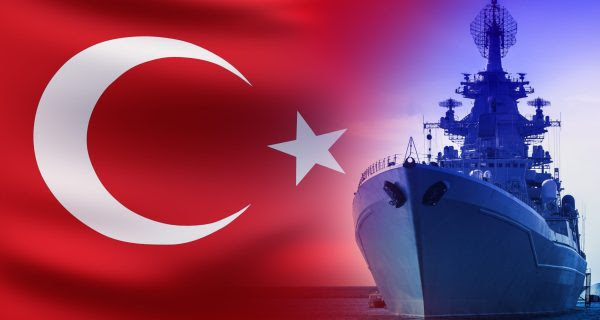
Turkish President Recep Tayyip Erdoğan continues to demonize the Jewish state and recently threatened to attack Israel.
Turkish President Recep Tayyip Erdoğan continues to demonize the Jewish state and recently threatened to attack Israel.
History teaches that these kinds of threats should not be dismissed out of hand. What then might a Turkish attack look like?
A Turkish attack on Israel would likely center on the Eastern Mediterranean and the Syrian border, leveraging Turkey’s proven “drone and proxy” model.
The offensive might begin with a massive deployment of Bayraktar TB3 and Akinci drones launched from the TCG Anadolu, Turkey’s amphibious assault ship.
These UAVs would coordinate with unmanned surface vehicles (USVs) such as the Albatros to harass Israeli offshore gas rigs and naval patrols.
Simultaneously, Turkish-backed Sunni proxies in northern Syria—possibly integrated into a new Syrian national force—would launch cross-border raids and rocket barrages into the Golan Heights, aiming to stretch the IDF across multiple fronts.
Israel’s response would be immediate and multi-layered. Its Arrow 3 and David’s Sling systems would engage Turkish Tayfun ballistic missiles, though sustained salvos could strain interceptor stockpiles.
To regain the initiative, Israel would likely use its F-35 Adir fleet for surgical, long-distance strikes against Turkish UAV control centers and naval assets in the Mediterranean.
Recognizing the proxy threat, the IDF might expand its “buffer zones” in Syria, conducting airstrikes against Turkish military convoys to disrupt supply lines.
While Turkey’s active personnel of over 480,000 provides a massive numerical advantage, Israel’s superiority in military electronics and US strategic support would likely force the conflict into a war of attrition or a rapid diplomatic intervention by NATO.
Turkey is a NATO member with deep economic ties to Europe and the United States, and any direct military action against Israel could trigger diplomatic and economic consequences.
TruLight Ministries Daily Entertainment Manna

TruLight TV & Kingdom Kidz TV = Jesus walks with us
Alex loves to pretend to be a detective known as Agent A! Preschoolers can join Agent A, Bitsy, and Cluey and be a part of the Super Detective Team as they discover wonderful mysteries in God’s Word! In week one, the team discovers that God made everything! and later on KONNECT HQ – Dot’s broken her arm, and she’s feeling sore and tired and uncomfortable, and on top of all that, she has a school project to complete, too! Can Harper help Dot learn how to deal with times of suffering? This and plus some stunning gospel kids’ songs.
Today on TruLight Radio XM
TruLight Radio XM 24/7
Program
GMT / UTC +2
Monday To Fridays
00:15 Words to Live By Testimonies
01.15 Science Scripture and Salvation
02.15 Ground Works
04.00 Gospel Concert of the Day
05.00 The Daren Streblow Comedy Show
5:55 It is Today devotional
6:00 Gaither Homecoming Morning Show
7:15 Discover the Word
8.15 Destined for Victory
8:55 Science Scripture and Salvation
9:00 Holy Spirit Hour – Normally Sermons
10:15 Hope of the Heart
11:15 Unshackled
11.45 Words to Live By
12:15 Truth for Life
13:15 Living on the Edge with Chip Ingram
14:15 Focus on the Family
15:00 Kids Hour
16:00 In Touch with Dr. Charles Stanley
16:30 Groundwork
17:15 Live in the Light
18:15 Renewing your Mind
19:00 Gaither Homecoming Show
20:15 Growing Hope
21:15 Adventures in Odyssey Radio Drama
21:45 Bible Reading
22:15 Night-sounds
23.00 Good Old Country Gospel / Rhema Gospel Express
VISIT THE WEBSITE
TruLight Ministry News – EXTRA MANNA
TruLight Ministries orders from God since 2012 . Teach Them , Comfort Them and Warn Them!
Listen to this Radio Drama – Bible Prophecies of the End Times that HAVE TAKEN PLACE ALREADY !

THIS YEAR STUDIES STARTS 1ST MAY 2026 – REGISTER TODAY .
We Starting , the 1st May 2026 . with Our Preachers Diploma Online Platform – TruTheology.co.za . 36 Subjects with between 10 to 15 Lessons per Subject , equivalent to a 3 Year Theology Degree , The Training is Free to Approved Members and Tests Online after Each Lesson , You Determine the Speed of Your Studies . If you are interested registrations will take place from 1 April 2026 .
Healing Truths
End Time Articles
Bonus Teaching for the Child of God !!
The Gospel according to Paul
Other than our Lord Jesus, Paul is probably the most prominent character in the New Testament. Born in Tarsus shortly after the birth of Jesus, Paul, then known as Saul, was a Benjamite brought up in the strict manner of the Pharisees. Early in life, he demonstrated a keen intellect and a zeal for the traditions of Judaism. Though afforded the rights of a Roman citizen, Paul was an ardent Jewish nationalist who despised the ways of the Gentiles. Prior to his dramatic conversion during a journey to Damascus, Saul was a fiery persecutor of the church. After his conversion, he became the New Testament’s most prolific writer and Christianity’s most tireless missionary.
Paul speaks of the message he proclaimed as “my gospel” in Romans 2:16 and 16:25. What, then, is the “gospel of Paul”? Does it differ from the true gospel, the gospel the other apostles preached? Or does he call it “my gospel” for a different reason?
During his long ministry, Paul’s apostolic authority was repeatedly questioned (1 Corinthians 9:2; 2 Corinthians 11) despite his acceptance by the church (Acts 9:19–25; Galatians 1:18–20). Even today, there are cultic groups that deny the legitimacy of Paul’s ministry. Those who question Paul’s apostolic authority ignore the testimony of Peter, James, and John, recognized apostles of Christ and pillars of the early church, who extended “the right hand of fellowship” to Paul and his companion Barnabas (Galatians 2:9). Let us set aside any foolish belief that Paul was a counterfeit apostle who preached a spurious message, for the plain teachings of Scripture proves otherwise.
The gospel of Paul was not a different or a counterfeit gospel; the “good news” or “good announcement” he preached conformed in every way to the teachings of the Old Testament writers, the other apostles of the faith, and, most importantly, to the gospel message according to Jesus Christ. If there is a difference in the apostle Paul’s treatment of the gospel, it is not in the essence of the message but in the meticulous detail of the gospel. Indeed, most notably in Romans and Galatians, the apostle Paul, guided by the Holy Spirit, delves into the lofty heights and unfathomable depths of the gospel unlike any other New Testament writer. Even Peter, the Apostle to the Jews, was moved by the “weightiness” of Paul’s writings (2 Peter 3:15–18).
With that said, let us explore the question “What is the gospel of Paul?”
Whose gospel is this?
Paul, a servant of Christ Jesus, called to be an apostle, set apart for the gospel of God, which he promised beforehand through his prophets in the holy Scriptures, concerning his Son, who was descended from David according to the flesh and was declared to be the Son of God in power according to the Spirit of holiness by his resurrection from the dead, Jesus Christ our Lord, through whom we have received grace and apostleship to bring about the obedience of faith for the sake of his name among all the nations, including you who are called to belong to Jesus Christ. (Romans 1:1–6, ESV)
Is this Paul’s gospel? By his own words,
- the message he preached is the gospel of God (verse 1)
- the good news Paul preached, the gospel of God, was foretold by the holy prophets long before Paul lived (verse 2)
- the gospel message focuses on Christ Jesus, a descendant of King David according to the Scriptures (verse 3)
- though born of a woman and, thus, being fully man, Jesus was also fully God and divine in nature; His Sonship was indisputably established by the Holy Spirit through His bodily resurrection (verse 4)
- Paul’s authority as an apostle, being called to preach the gospel of God, was granted to him by none other than the Lord Jesus Christ (verse 5)
- those called of God, having heard and believed the gospel of God, now belong to the Lord Jesus (verse 6)
The gospel focuses on the Lord Jesus (Romans 1:9) and His sacrificial death, burial, and resurrection (1 Corinthians 15:1–4). Paul unashamedly devoted himself to broadcasting this thrilling message, for the gospel reveals the power of God—a mighty force capable of transforming sinners into saints (Romans 1:16). Knowing we are incapable of saving ourselves, we trust the gospel, which reveals the righteousness of God, who saves all who simply believe (Romans 1:17).
Now, brothers and sisters, I want to remind you of the gospel I preached to you, which you received and on which you have taken your stand. By this gospel you are saved, if you hold firmly to the word I preached to you. Otherwise, you have believed in vain. For what I received I passed on to you as of first importance: that Christ died for our sins according to the Scriptures, that he was buried, that he was raised on the third day according to the Scriptures, and that he appeared to Cephas, and then to the Twelve. After that, he appeared to more than five hundred of the brothers and sisters at the same time, most of whom are still living, though some have fallen asleep. Then he appeared to James, then to all the apostles, and last of all he appeared to me also, as to one abnormally born. (1 Corinthians 15:1–4, ESV)
According to this passage,
- there is only one gospel: it is the gospel of God that Paul preached and in which the redeemed have taken their stand (verse 1)
- this is the gospel that saves, the gospel Paul delivered, and the gospel that must never be forgotten or discarded (verse 2)
- according to the Scriptures, the Lord Jesus died for our sins. His sacrifice paid our sin debt (verse 3)
- after His lifeless body was taken from the cross and laid to rest in a borrowed tomb, Jesus miraculously walked away from where He lay, as foretold by the holy prophets, proving His absolute power over sin and death (verse 4)
How can this be? Dead men do not rise from their graves. A jeering mob had witnessed our Lord’s mangled body hanging lifeless on a cruel Roman cross. To counter those who would say the Lord’s bodily resurrection is no more than a fanciful tale, He appeared to His disciples and to a company of more than five hundred eyewitnesses. The resurrection did not take place in a dark, hidden corner; the evidence of Jesus’ bodily resurrection is a verifiable fact beyond dispute (1 Corinthians 15:5–8).
The Gospel of Antiquity
The gospel did not originate with Paul, nor did Paul preach a new or novel message that was hitherto unknown:
And if you call on him as Father who judges impartially according to each one’s deeds, conduct yourselves with fear throughout the time of your exile, knowing that you were ransomed from the futile ways inherited from your forefathers, not with perishable things such as silver or gold, but with the precious blood of Christ, like that of a lamb without blemish or spot. He was foreknown before the foundation of the world but was made manifest in the last times for the sake of you. (1 Peter 1:17–20, ESV, emphasis added)
In His perfect knowledge, God knew, even before He spoke the earth into existence, that mankind would need a redeemer. It is rightfully said Christ was slain before the foundation of the world.
The Lord God said to the serpent,
“Because you have done this,
cursed are you above all livestock
and above all beasts of the field;
on your belly you shall go,
and dust you shall eat
all the days of your life.
I will put enmity between you and the woman,
and between your offspring and her offspring;
he shall bruise your head,
and you shall bruise his heel.” (Genesis 3:14–15, ESV, emphasis added)
The gospel was first preached by God in the Garden of Eden; the future Messiah, called the “Seed” of the woman (NKJV), would suffer an injury by the hand of Satan, but, in the end, our conquering Savior would deliver a fatal blow to our infernal enemy. As our Savior suffered on the cross, it appeared victory belonged to Satan, but the victory was short-lived. Jesus conquered death and, in doing so, set the stage for Satan’s ultimate doom (Revelation 20:10).
The Jews answered him, “Are we not right in saying that you are a Samaritan and have a demon?” Jesus answered, “I do not have a demon, but I honor my Father, and you dishonor me. Yet I do not seek my own glory; there is One who seeks it, and he is the judge. Truly, truly, I say to you, if anyone keeps my word, he will never see death.” The Jews said to him, “Now we know that you have a demon! Abraham died, as did the prophets, yet you say, ‘If anyone keeps my word, he will never taste death.’ Are you greater than our father Abraham, who died? And the prophets died! Who do you make yourself out to be?” Jesus answered, “If I glorify myself, my glory is nothing. It is my Father who glorifies me, of whom you say, ‘He is our God.’ But you have not known him. I know him. If I were to say that I do not know him, I would be a liar like you, but I do know him and I keep his word. Your father Abraham rejoiced to see my day. He saw it and was glad.” (John 8:48–56, ESV, emphasis added).
High atop a mountain in the land of Moriah, Abraham told his son Isaac that God would provide the sacrificial lamb (Genesis 22:8). Though Abraham lived some two millennia before the Lord Jesus’ birth in Bethlehem, the patriarch was well familiar with the gospel message, and, in fulfillment of Abraham’s prophetic utterance, God indeed provided the perfect, unblemished sacrificial Lamb (John 1:29; 1 Peter 1:17–20; Revelation 5:8–10).
Surely he has borne our griefs
and carried our sorrows;
yet we esteemed him stricken,
smitten by God, and afflicted.
But he was pierced for our transgressions;
he was crushed for our iniquities;
upon him was the chastisement that brought us peace,
and with his wounds we are healed.
All we like sheep have gone astray;
we have turned—every one—to his own way;
and the Lord has laid on him
the iniquity of us all. (Isaiah 53:4–6, ESV)
Eight hundred years before Roman guards nailed iron spikes into the hands and feet of our Lord Jesus, Isaiah peered into the future and foretold of the Messiah’s sacrificial death, which is foundational to the gospel. The gospel according to the prophet Isaiah is the same gospel preached by the apostle Paul, who wrote, “But far be it from me to boast except in the cross of our Lord Jesus Christ, by which the world has been crucified to me, and I to the world” (Galatians 6:14, ESV).
The New Testament Gospel
Pulling back the curtain of time, the Holy Spirit allowed the prophets and patriarchs of old to see the future coming of the Messiah; then, in the fullness of time, the Son of God clothed Himself in human flesh to fulfill His role as Redeemer (John 1:14; Luke 19:10).
The next day [John] saw Jesus coming toward him, and said, “Behold, the Lamb of God, who takes away the sin of the world! This is he of whom I said, ‘After me comes a man who ranks before me, because he was before me.’” (John 1:29–30, ESV)
John the Baptist testified that Jesus was the long-awaited sacrificial Lamb sent by God according to the words of the holy prophets. To fulfill this role, Jesus had to be sinless and willing to die for the sin of the world. Had Jesus been born with a sin nature, there would be no gospel message.
For God so loved the world, that he gave his only Son, that whoever believes in him should not perish but have eternal life. For God did not send his Son into the world to condemn the world, but in order that the world might be saved through him. Whoever believes in him is not condemned, but whoever does not believe is condemned already, because he has not believed in the name of the only Son of God. (John 3:16–18, ESV)
This most familiar passage gives us the essence of the gospel. God sent His Son, the One who shared in His divine nature, to save a lost world. Those who receive Him by faith are granted everlasting life. Conversely, those who reject Him are already condemned. Later, the apostle Paul wrote, “But God, being rich in mercy, because of the great love with which he loved us, even when we were dead in our trespasses, made us alive together with Christ—by grace you have been saved—and raised us up with him and seated us with him in the heavenly places in Christ Jesus, so that in the coming ages he might show the immeasurable riches of his grace in kindness toward us in Christ Jesus. For by grace you have been saved through faith. And this is not your own doing; it is the gift of God, not a result of works, so that no one may boast” (Ephesians 2:4–9, ESV). It is obvious the message of Paul agrees with the gospel according to Jesus.
Peter preached on the Day of Pentecost,
“Brothers, I may say to you with confidence about the patriarch David that he both died and was buried, and his tomb is with us to this day. Being therefore a prophet, and knowing that God had sworn with an oath to him that he would set one of his descendants on his throne, he foresaw and spoke about the resurrection of the Christ, that he was not abandoned to Hades, nor did his flesh see corruption. This Jesus God raised up, and of that we all are witnesses. Being therefore exalted at the right hand of God, and having received from the Father the promise of the Holy Spirit, he has poured out this that you yourselves are seeing and hearing. For David did not ascend into the heavens, but he himself says,
‘The Lord said to my Lord,
“Sit at my right hand,
until I make your enemies your footstool.”’
Let all the house of Israel therefore know for certain that God has made him both Lord and Christ, this Jesus whom you crucified.”
Now when they heard this they were cut to the heart, and said to Peter and the rest of the apostles, “Brothers, what shall we do?” And Peter said to them, “Repent and be baptized every one of you in the name of Jesus Christ for the forgiveness of your sins, and you will receive the gift of the Holy Spirit.” (Acts 2:29–38, ESV)
From Peter’s powerful sermon, we learn
- Christ Jesus was a descendant of King David (verse 30)
- Christ Jesus was raised from the dead (verse 31)
- Peter and many others were eye-witnesses of our Lord’s bodily resurrection (verse 32)
- now that Jesus sits at the right hand of the Father, the Holy Spirit of God begins His ministry (verse 33)
- God the Father promises God the Son that His enemies will be defeated (verses 34–35)
- the One crucified is both Lord and Christ (verse 36)
Convicted by the Holy Spirit, Peter’s audience asked what they were to do. By faith, they believed Peter’s gospel message, so what was next? Peter instructed his audience to repent, that is, to renounce the rites and rituals of mere religion by turning to the living Savior. Repentance involves a change of heart and a change in direction. Peter also instructed the new believers to publicly acknowledge their newfound faith through water baptism. Believers are not saved by the ordinance of baptism, but believers willingly choose to be baptized because they have been saved.
Again, the gospel focuses on the person of Jesus and His death, burial, and resurrection. Jesus is the unique, unblemished, and uncompromised Anointed One, fully God and fully man, who overcame death and the grave so that all who believe in Him will receive the gift of everlasting life. This is in accordance with the inspired teachings of both the Old and New Testament writers.
Warning against counterfeit gospel messages
Just as our Lord Jesus warned against false christs (Matthew 24:23–24), the apostle Paul warned against perversions of the gospel. Satan understands that false christs and false gospel messages are incapable of saving lost sinners, so for two thousand years, our enemy has been counterfeiting phony messiahs and advancing spurious gospel messages.
I am astonished that you are so quickly deserting him who called you in the grace of Christ and are turning to a different gospel—not that there is another one, but there are some who trouble you and want to distort the gospel of Christ. But even if we or an angel from heaven should preach to you a gospel contrary to the one we preached to you, let him be accursed. As we have said before, so now I say again: If anyone is preaching to you a gospel contrary to the one you received, let him be accursed. (Galatians 1:6–9, ESV)
Paul’s warning to the church in Galatia says
- those who follow a different gospel have, in truth, deserted our Lord Jesus and have turned their backs on His loving grace (verse 6)
- there is only one gospel, and all others are worthless distortions of the truth (verse 7)
- those who preach counterfeit gospel messages are heretics worthy of damnation (verses 8–9)
Obviously, those who proclaim there are many ways to God are the false teachers Paul warned against.
Conclusion
Despite the false charges levied against Paul, his gospel teachings are in harmony with the Old Testament patriarchs and prophets, his New Testament contemporaries, and, most importantly, the teachings of Jesus. Those who accuse Paul of having strayed from the gospel stand on shaky ground; Scripture proves that, rather than teaching a “different gospel,” he gave the church greater insight into the only true gospel, the gospel of God (Romans 1:1). The following passage gives ample evidence that Paul’s prime motive was not in making a name for himself, but in furthering the cause of Christ:
I appeal to you, brothers, by the name of our Lord Jesus Christ, that all of you agree, and that there be no divisions among you, but that you be united in the same mind and the same judgment. For it has been reported to me by Chloe’s people that there is quarreling among you, my brothers. What I mean is that each one of you says, “I follow Paul,” or “I follow Apollos,” or “I follow Cephas,” or “I follow Christ.” Is Christ divided? Was Paul crucified for you? Or were you baptized in the name of Paul? I thank God that I baptized none of you except Crispus and Gaius, so that no one may say that you were baptized in my name. (I did baptize also the household of Stephanas. Beyond that, I do not know whether I baptized anyone else.) For Christ did not send me to baptize but to preach the gospel, and not with words of eloquent wisdom, lest the cross of Christ be emptied of its power. (1 Corinthians 1:10–17, ESV)
What is the gospel of Paul? Quite simply, the gospel Paul preached is the same gospel proclaimed by the patriarchs, prophets, apostles, and the Lord Jesus. The gospel of Paul is the gospel of God. He refers to it as “my gospel” because it was the message he had devoted his life to proclaiming.
Share this Feeding of Manna with your Friends and Family. just click on the Social Media icon and share !