Hosted by TruLight Ministries – The Place of Truth
SELECT YOUR READING LANGUAGE – BOTTOM LEFT = YOUR DAILY MANNA NOW AVAILABLE IN 103 LANGUAGES
@ TruLight – Daily Manna is not Just a Bible Verse with a Small Prayer . No WE SERVE DAILY Manna for the Whole Day . Breakfast , Lunch , Dinner , Plus tea Times and even Entertainment Manna . Plus News Manna and More , This Daily Manna will keep you Spiritually full for the full 48 Hours and even More to Share with your Friends and Family !!!
You will not be Happy in Heaven , If you don’t like Holiness !!!
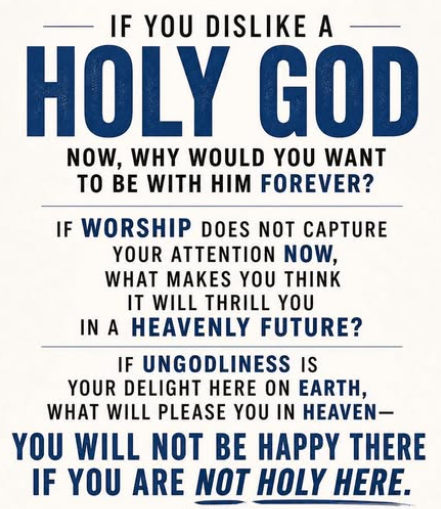
Righteousness and holiness are two words that describe states of moral excellence. There is a slight difference between the two concepts. Oxford Dictionary’s definition of holiness is “the state of being holy,” and the definition of holy is “dedicated or consecrated to God or a religious purpose; sacred” or “morally and spiritually excellent.” The Oxford definition of righteousness is “the quality of being morally right or justifiable,” and the definition of righteous is “morally right or justifiable; virtuous.” So, righteousness is the condition of being proven or declared morally excellent, while holiness is the condition of being consecrated or dedicated to moral excellence.
Think of it this way: a ballerina who dances for the New York City Ballet has been declared good enough to be part of that company. From a young age, she has set herself apart to that purpose, to honing her skills, and she continues to practice and improve as she dances. In this analogy, righteousness is the ballerina’s position in the ballet company. She has been given a position, her talents have been approved, and she belongs to the company. Holiness is the ballerina’s dedication and devotion to her art. Everything in her life—what she eats, whom she knows, how she spends her time and money—bows to this purpose.
To some, terms like righteousness and holiness can be a bit daunting. We think, “But that’s not how I am,” or we wonder how we can be sinful and also holy or righteous. Many people experience fear and doubt that stem from the idea that we need to “clean ourselves up” or be “good enough” before we come to God. This confusion is natural, considering the strict definition of righteousness and holiness. We want to be approved and included, but we often feel like our spiritual “dancing skills” are just not up to par—and never will be.
The Bible provides hope. We are not left to achieve righteousness and holiness on our own. Quite the opposite. In fact, left to ourselves, we would never achieve those states. Let’s look at righteousness first, and then holiness.
The story of righteousness really starts with a man named Abram in the ancient city of Ur in Mesopotamia (modern-day Iraq). God called Abram to leave his country, his people, and his father’s household and go to the land God would show him. God promised to make Abram into a great nation and bless the nations of the world through him (Genesis 12:1–3). In faith, Abram gathered up his household and left. Several years later, God told Abram, “Do not be afraid, Abram. I am your shield, your very great reward” (Genesis 15:1). Abram asked what God could give him since Abram still had no children. God again promised him an heir and offspring as numerous as the stars (Genesis 15:2–5). “Abram believed the LORD, and he credited to him as righteousness” (Genesis 15:6).
What was “morally excellent” or righteous about Abram believing God? He had not sacrificed anything to God. He had not done some mighty work in God’s name. He had not even perfectly trusted God in the journey so far (see Genesis 12:11–20). He hadn’t done anything except listen to God’s words and accept them as true. And for that Abram was counted righteous in God’s eyes. If we look at the definition of righteousness again, “the quality of being morally right or justifiable,” it is clear that this incident set the foundation of justification by faith, a concept explored many more times throughout Scripture (Romans 4; Galatians 3; James 2:23).
Galatians 3:7–9 links all who have faith in Christ to their predecessor in faith, Abraham: “Understand, then, that those who have faith are children of Abraham. Scripture foresaw that God would justify the Gentiles by faith, and announced the gospel in advance to Abraham: ‘All nations will be blessed through you.’ So those who rely on faith are blessed along with Abraham, the man of faith.” All who have faith in Christ are righteous in God’s sight, regardless of their nationality (Galatians 3:26–29). “For it is by grace you have been saved, through faith—and this is not from yourselves, it is the gift of God—not by works, so that no one can boast” (Ephesians 2:8–9). Paul explains, “God made him [Jesus] who had no sin to be sin for us, so that in him we might become the righteousness of God” (2 Corinthians 5:21). It is by Jesus’ work on the cross that we are made righteous, and by faith we are justified, or declared righteous, before God.
Now, what about holiness? The Bible says that “without holiness no one will see the Lord” (Hebrews 12:14). Zechariah, the father of John the Baptist, praised God for sending the Messiah, saying, in part, that Jesus would “enable us to serve him without fear in holiness and righteousness before him all our days” (Luke 1:74). The apostle Peter wrote, “But just as he who called you is holy, so be holy in all you do; for it is written: ‘Be holy, because I am holy’” (1 Peter 1:15–16). Ephesians 4 explains that we are to put off our old, sinful self, “which is being corrupted by its deceitful desires; to be made new in the attitude of your minds; and to put on the new self, created to be like God in true righteousness and holiness” (Ephesians 4:22–24).
Like righteousness, holiness is a gift from God. The process of becoming holy is called sanctification, and God promises to complete His sanctification in us because of Christ’s work on the cross. The writer of Hebrews explains positional sanctification: “By [God’s] will, we have been made holy through the sacrifice of the body of Jesus Christ once for all,” and also alludes to progressive sanctification, speaking of “those who are being made holy” (Hebrews 10:10, 14). We are perfected and sanctified by one event: Christ’s substitutionary atonement on the cross for our sin. As we live our lives in Christ, our holiness increases as we yield to the work of the Holy Spirit within us and follow this command: “Continue to work out your salvation with fear and trembling, for it is God who works in you to will and to act in order to fulfill his good purpose” (Philippians 2:12–13; see also Romans 12:1–2; Hebrews 12:1–2).

Tea Time Manna
Do you not know? Have you not heard? The Lord is the everlasting God, the Creator of the ends of the earth. He will not grow tired or weary, and his understanding no one can fathom. He gives strength to the weary and increases the power of the weak.
—Isaiah 40:28-29
God is eternal. He has unlimited power. His supply of strength is limitless. He blesses and shares his grace without growing tired. Most importantly, he longs to share his power and grace with you and me daily.
Prayer
Almighty and eternal God, loving and generous in your mercy, thank you for giving me strength in my weariness, guidance in my confusion, and hope in my despair. Please bless me with the courage to follow your will and trust in your presence through the Holy Spirit. In Jesus’ name, I pray. Amen and Amen
Bible Teaching of the Day
LUNCH MANNA =
Holiness is not only a possibility for the Christian; holiness is a requirement. “Without holiness no one will see the Lord” (Hebrews 12:14). The difference between God and us is that He is inherently holy while we, on the other hand, only become holy in relationship to Christ and we only increase in practical holiness as we mature spiritually. The New Testament emphasizes the pursuit of holiness in this world and the final attainment of holiness in the world to come.
To be “holy” means that we are, first of all, “set apart for honorable use.” Whereas we were “once foolish, disobedient, led astray, slaves to various passions and pleasures . . . God our Savior . . . saved us, not because of works done by us in righteousness, but according to his own mercy, by the washing of regeneration and renewal of the Holy Spirit” (Titus 3:3-5; cf. 1 Corinthians 6:11). The Lord took the initiative to pull us out of our former lifestyles. He saved us, cleansed us, and set us apart for righteousness. If we have believed in Christ for salvation, we have been washed by the regeneration of the Holy Spirit and set apart from the world for godliness (see Romans 12:2).
However, the pursuit of holiness does not end when we come to Christ. In fact, it just begins! There is a positional holiness that we inherit at regeneration and a practical holiness which we must actively pursue. God expects us to cultivate a lifestyle of holiness (1 Peter 1:14-16) and commands us to “cleanse ourselves of all defilement of flesh and spirit, perfecting holiness in the fear of God” (2 Corinthians 7:1 NASB). Bringing holiness to “perfection” means that we should be increasing in spiritual fruitfulness every day. We are to consider ourselves “dead to sin” (Romans 6:11), refusing to revert back to our former lifestyles. In this way we “cleanse [ourselves] from what is dishonorable,” becoming vessels for “honorable use, set apart as holy, useful to the master . . . for every good work” (2 Timothy 2:21). Holiness is the mark of every true Christian (1 John 3:9-10).
Cultivating a lifestyle of holiness does not mean that we must draft a list of dos and donts to live by. We are free from the letter of the law which kills (2 Corinthians 3:6) and now live according to the dictates of the Holy Spirit (Galatians 5:16-18).
We are told, “Work out your own salvation with fear and trembling, for it is God who works in you, both to will and to work for his good pleasure” (Philippians 2:12-13). In this verse, we see cooperation between God and His children in sanctification. We “work out” what God “works in” us, because God has a timeline for the virtues that He wishes to cultivate in our lives. Our responsibility is to yield to His wishes, “working out” with focused attention and great care those things that He is causing to grow in us. Holiness will not be brought to completion in our lives with no effort on our part. We are invited to participate in God’s work in us. We will not be “carried to the skies on flowery beds of ease,” as the old hymn says.
This is, perhaps, the most important lesson that we can learn as Christians. God’s ultimate desire for His people is that we be holy—conformed into the image of His Son, Jesus (Romans 8:29; 1 Thessalonians 4:3-4). Holiness is the will of God for our lives.
Of course, the flesh is weak (Mark 14:38). None of us will reach sinless perfection in this world, but God has made provision for our sin. “If we confess our sins, he is faithful and just and will forgive us our sins and purify us from all unrighteousness” (1 John 1:9). Our pursuit of holiness in this world includes daily confessing and forsaking sin (see Hebrews 12:1-3).
God helps us in our weakness by giving us His Holy Spirit who reveals the mind of Christ to us and enables us to carry out His will (1 Corinthians 2:14-16; Philippians 2:13). When we yield to the Spirit, we become fruit-bearing Christians, yielding a harvest with which God is well pleased (Galatians 5:22-23). On the other hand, when we suppress the work of the Holy Spirit by rebelling against His will for us, we stifle the design of God, sabotage our own spiritual growth, and grieve the Holy Spirit (Ephesians 4:30).
If God was gracious enough to redeem us from sin and death and give us new life in Christ, the very least we can do is offer our lives back to Him in complete surrender and holiness, which is for our benefit (cf. Deuteronomy 10:13). Because of God’s mercies, we should be living sacrifices, “holy and pleasing to God” (Romans 12:1; cf. Deuteronomy 10:13). One day, in heaven, we will be free from sin and all its effects. Until then, we “fix our eyes on Jesus, the author and perfecter of our faith” and keep running our race (Hebrews 12:2).
Today’s Devotional
DINNER MANNA =
The holiness of God is a critical facet of His character. God desires—even commands—that His people seek after His holiness (Leviticus 11:44). Emulating a lifestyle that reflects God’s holiness is so important that the writer of Hebrews urged Christians to “strive for peace with everyone, and for the holiness without which no one will see the Lord” (Hebrews 12:14, ESV).
In His Sermon on the Mount, Jesus said, “Blessed are the pure in heart, for they will see God” (Matthew 5:8). People who desire to live in close fellowship with the Lord and see Him face to face must turn away from self-seeking, unholy interests. They must “seek first his kingdom and his righteousness” (Matthew 6:33). Believers are called to become like God in His holiness (Ephesians 1:4).
The apostle Peter instructed believers to “live as God’s obedient children. Don’t slip back into your old ways of living to satisfy your own desires. You didn’t know any better then. But now you must be holy in everything you do, just as God who chose you is holy. For the Scriptures say, ‘You must be holy because I am holy’” (1 Peter 1:14–16, NLT). Without a lifelong endeavor toward personal holiness, no one will see the Lord.
God must discipline willfully disobedient children who live to please themselves. Throughout Scripture, God appeals to His people to work at cultivating holiness: “For God did not call us to be impure, but to live a holy life” (1 Thessalonians 4:7–8).
The declaration without holiness no one will see the Lord reflects a sense of the author’s anticipation of seeing Christ at His return (see 1 John 3:2). This is the culminating point of the broader passage (Hebrews 12:22–29). If our ultimate goal is to be like Christ and see Him when He returns, our practical daily pursuit must be toward complete purity of thought and lifestyle.
We are the temple of the living God (2 Corinthians 6:14–18). In light of this revelation, the apostle Paul urged, “Because we have these promises, dear friends, let us cleanse ourselves from everything that can defile our body or spirit. And let us work toward complete holiness because we fear God” (2 Corinthians 7:1, NLT). Paul told Timothy, “Therefore, if anyone cleanses himself from what is dishonorable, he will be a vessel for honorable use, set apart as holy, useful to the master of the house, ready for every good work” (2 Timothy 2:21, ESV).
We find a parallel idea to “without holiness no one will see the Lord” in these words from Paul: “For of this you can be sure: No immoral, impure or greedy person—such a person is an idolater—has any inheritance in the kingdom of Christ and of God” (Ephesians 5:5). Of the future, glorious New Jerusalem, the apostle John said, “Nothing impure will ever enter it, nor will anyone who does what is shameful or deceitful, but only those whose names are written in the Lamb’s book of life” (Revelation 21:27).
It’s vital to understand that, as the Lord’s redeemed people, we are made holy through Christ’s finished work, the offering of His body on the cross (Hebrews 10:10, 14; Ephesians 1:4; 1 Corinthians 1:2). We are saved by Jesus “to a holy calling, not because of our works but because of his own purpose and grace, which he gave us in Christ Jesus before the ages began” (2 Timothy 1:9, ESV). “He saved us, not because of the righteous things we had done, but because of his mercy. He washed away our sins, giving us a new birth and new life through the Holy Spirit” (Titus 3:5, NLT).
Sanctification is based on the death and resurrection of Jesus Christ and the ongoing work of the indwelling Holy Spirit (Colossians 1:22; 1 Thessalonians 5:23; 2 Thessalonians 2:13; John 3:5–8; 1 Corinthians 6:11). Motivated by the knowledge that “without holiness no one will see the Lord,” we continue going all-out for Christ, striving to put on our “new nature, created to be like God—truly righteous and holy” (Ephesians 4:24, NLT).
TruLight Ministries Daily Entertainment Manna

TruLight TV – Understanding God’s Will: Why He’s Still Good When Life Gets Tough
We all know the frustrations that come when we realize what we have is broken or stopped working. These pieces of junk literally take away our peace. Yet when we focus our peace on Jesus, we discover a treasure far better than anything else. Watch today’s video to be reminded about where our perfect source of peace lies. In today’s lesson from Dr. Charles Stanley, God always gives His best to His children. But sometimes His will includes something we might not choose for ourselves. How do we reconcile God’s generous love with the difficulties He allows? Dr. Stanley responds to this intricate question in part two of this four-sermon set.
Today on TruLight Radio XM
TruLight Radio XM 24/7
Program
GMT / UTC +2
Monday To Fridays
00:15 Words to Live By Testimonies
01.15 Science Scripture and Salvation
02.15 Ground Works
04.00 Gospel Concert of the Day
05.00 The Daren Streblow Comedy Show
5:55 It is Today devotional
6:00 Gaither Homecoming Morning Show
7:15 Discover the Word
8.15 Destined for Victory
8:55 Science Scripture and Salvation
9:00 Holy Spirit Hour – Normally Sermons
10:15 Hope of the Heart
11:15 Unshackled
11.45 Words to Live By
12:15 Truth for Life
13:15 Living on the Edge with Chip Ingram
14:15 Focus on the Family
15:00 Kids Hour
16:00 In Touch with Dr. Charles Stanley
16:30 Groundwork
17:15 Live in the Light
18:15 Renewing your Mind
19:00 Gaither Homecoming Show
20:15 Growing Hope
21:15 Adventures in Odyssey Radio Drama
21:45 Bible Reading
22:15 Night-sounds
23.00 Good Old Country Gospel / Rhema Gospel Express
VISIT THE WEBSITE
TruLight Ministry News – EXTRA MANNA
TruLight Ministries orders from God since 2012 . Teach Them , Comfort Them and Warn Them!
INTRODUCTION TO TRULIGHT MINISTRIES
GOSPEL ARTIST INTRODUCTIONS
THE STORY BEHIND THE GOSPEL SONG – AUDIO
Healing Truths.
End Time Articles.
Bonus Manna = Bonus Teaching for the Child of God !!
The word holy has two primary definitions. First, holiness refers to absolute moral purity and an uncompromised, unsurpassed standard of righteousness. God, who is incapable of error, untainted by sin, unrestrained by the laws of nature, and pure in all His ways, is holy. Second, holiness refers to the state of being set apart from the common for God’s purpose. As an example, the psalmist referred to God’s “holy” temple in Jerusalem (Psalm 79:1). The temple was not just another structure of wood and stone; this was the place where God’s people assembled in reverential worship. Our Lord Jesus was justly angered by greedy mercenaries who were making the holy temple a “den of robbers” (Matthew 21:12–13).
In discussing the holiness of Christ, we must hold an accurate understanding of His personage and nature. To some, Jesus is little more than a historic figure—an ancient prophet, a moral teacher, the founder of a major world religion, a martyr, a philosopher, and perhaps, even a miracle worker. Islam esteems Jesus as a prophet inferior in status to Muhammad. The Watchtower Bible and Tract Society teaches that Jesus is Michael the Archangel. Mormonism holds that Jesus is the spirit brother of Lucifer. The New Age Movement considers Jesus an avatar or messenger from a long line of messengers. Liberal theology teaches Jesus is one of many ways to God. Obviously, there is much misunderstanding surrounding the person and nature of Christ Jesus; to properly know Him, we must diligently search the Scriptures that speak of Him (see Luke 24:27).
The holiness of Christ is related to His deity. Jesus is fully God and fully man. Jesus claimed to be God (John 8:58; Revelation 1:8, 17). Jesus accepted worship (Matthew 2:11; John 12:13). Jesus declared He and His Heavenly Father are of the same divine essence and nature (John 10:30). The prophet Isaiah called Him “Mighty God and Everlasting Father” (Isaiah 9:6). Upon seeing the resurrected Jesus, the disciple Thomas honored Him with the dual title, “My Lord and my God” (John 20:28). The apostle John opens his gospel account by attesting to the deity of Jesus: “In the beginning was the Word, and the Word was with God, and the Word was God. He was in the beginning with God. All things were made through him, and without him was not any thing made that was made” (John 1:1–3, ESV). Christ Jesus is worthy of our highest adoration and praise, for He is God who clothed Himself in human flesh (John 1:14). To deny His deity, and thus to deny His holiness, is to deny Him altogether.
In his book Mere Christianity, C. S. Lewis wrote, “I am trying here to prevent anyone saying the really foolish thing that people often say about Him: I’m ready to accept Jesus as a great moral teacher, but I don’t accept his claim to be God. That is the one thing we must not say. A man who was merely a man and said the sort of things Jesus said would not be a great moral teacher. He would either be a lunatic—on the level with the man who says he is a poached egg—or else he would be the Devil of Hell. You must make your choice. Either this man was, and is, the Son of God, or else a madman or something worse. You can shut him up for a fool, you can spit at him and kill him as a demon or you can fall at his feet and call him Lord and God, but let us not come with any patronizing nonsense about his being a great human teacher. He has not left that open to us. He did not intend to” (Macmillan, 1952, pp. 55–56).
Man’s Attraction to and Fear of the Holy
Those who obey Jesus’ commandments may call Him friend (John 15:14), but we must never treat Him as an equal. His holiness demands awe and respect. To approach Him in an overly familiar manner or to use His name flippantly or carelessly is shameful. Jesus draws us to Himself, and we find Him altogether lovely, for He is of the same divine essence and nature as God the Father (Philippians 2:6). Yet His unparalleled goodness and radiant glory stand in stark contrast to fallen mankind’s depravity. Even the best among us are as lowly worms in His divine presence. The Lord Jesus is deserving of our worship, and the day is approaching when even those who mocked and scorned Him will bow in submission and say, “Jesus is Lord” (Philippians 2:10–11).
Suppose that, overcoming his fear, a young boy musters the courage to approach the prettiest girl in his class for a date. With nervousness and inelegance, the youth stumbles over his words and behaves in an almost comical manner. What we are witnessing in this encounter are the contradictory feelings of attraction and dread. The young man is drawn to the girl’s beauty, but that is also the source of his anxiety. In a rather homey way, this illustrates the concept of numinous awe. Sinful man is drawn to God because of His holiness, yet the divine presence of the Holy One fills us with fear and dread.
We see this mixture of attraction and fear in Peter on the Lake of Galilee:
On one occasion, while the crowd was pressingin on him to hear the word of God, he was standing by the lake of Gennesaret, and he saw two boats by the lake, but the fishermen had gone out of them and were washing their nets. Getting into one of the boats, which was Simon’s, he asked him to put out a little from the land. And he sat down and taught the people from the boat. And when he had finished speaking, he said to Simon, “Put out into the deep and let down your nets for a catch.” And Simon answered, “Master, we toiled all night and took nothing! But at your word I will let down the nets.” And when they had done this, they enclosed a large number of fish, and their nets were breaking. They signaled to their partners in the other boat to come and help them. And they came and filled both the boats, so that they began to sink. But when Simon Peter saw it, he fell down at Jesus’ knees, saying, “Depart from me, for I am a sinful man, O Lord.” For he and all who were with him were astonished at the catch of fish that they had taken, and so also were James and John, sons of Zebedee, who were partners with Simon. And Jesus said to Simon, “Do not be afraid; from now on you will be catching men.” And when they had brought their boats to land, they left everything and followed him (Luke 5:1–11, ESV).
Simon Peter was a seasoned fisherman. He knew what he was doing when it came to tackle and nets and harvesting fish. Peter may have marveled at the teachings of Jesus, but in the matter of catching fish, Peter bowed to no one. When Jesus asked to use his boat as a floating speaker’s platform, Peter agreed, but when the itinerant rabbi suggested that he drop his fishing nets into the deep, Peter reluctantly obliged: “Master, we toiled all night and took nothing! But at your word I will let down the nets” (Luke 5:5).
Peter was unprepared for what followed. Never before had he hauled in such a catch. The nets, bursting with fish, filled not one, but two boats well beyond their normal capacities. This was the catch of a hundred lifetimes—an unexplainable, supernatural event that defied human understanding. Peter understood this was more than good fortune, and he reacted with unsettled fear. Rather than thanking Jesus for the abundant catch, Peter fell at the Lord’s feet and begged Him to leave: “Depart from me, for I am a sinful man, O Lord” (Luke 5:8). Peter’s fear stemmed from the contrast between his sinfulness and the holiness of Christ. It is frightful indeed when the common and profane encounter the One who is holy.
Unfathomable, yet Approachable
By all rights, sinful creatures should recoil in abject fear in the presence of Christ Jesus, for He is holy. And, by all rights, Christ Jesus should recoil from the wickedness that marks our fallen race. Yet He opens His arms and says, “Come to me, all who labor and are heavy laden, and I will give you rest. Take my yoke upon you, and learn from me, for I am gentle and lowly in heart, and you will find rest for your souls. For my yoke is easy, and my burden is light” (Matthew 11:28–30, ESV).
In our natural state, we are wretched, miserable, poor, blind, and naked, but Jesus did not turn His back on us. He says, “Behold, I stand at the door and knock. If anyone hears my voice and opens the door, I will come in to him and eat with him, and he with me” (Revelation 3:20, ESV). Is it possible the Holy One of God, Christ Jesus, genuinely desires fellowship with us? As improbable as this sounds, the answer is a resounding “yes.” When we place our faith in Christ Jesus as Savior, we, formerly the “children of wrath” (Ephesians 2:3), are supernaturally transformed into His beloved sons and daughters (Romans 8:15).
Conclusion
The Lord Jesus, who is fully God and fully man, is meritoriously holy because of His divine nature. He is sinless, impeccably pure, and unequivocally righteous (Matthew 26:59–61). Even Pontius Pilate, the politician who refused to act on behalf of the world’s first and only truly innocent man, three times pronounced Jesus to be without fault (see Luke 23:13–15). Christ Jesus is the only One worthy to offer Himself for our sin, and His sacrifice was like that of “a lamb without blemish or defect” (1 Peter 1:19). We now join in the exultation of heaven: “Worthy is the Lamb, who was slain, to receive power and wealth and wisdom and strength and honor and glory and praise!” (Revelation 5:12).
Share this Feeding of Manna with your Friends and Family. just click on the Social Media icon and share !