Hosted by TruLight Ministries – The Place of Truth
SELECT YOUR READING LANGUAGE – BOTTOM LEFT = YOUR DAILY MANNA NOW AVAILABLE IN 103 LANGUAGES
@ TruLight – Daily Manna is not Just a Bible Verse with a Small Prayer . No WE SERVE DAILY Manna for the Whole Day . Breakfast , Lunch , Dinner , Plus tea Times and even Entertainment Manna . Plus News Manna and More , This Daily Manna will keep you Spiritually full for the full 48 Hours and even More to Share with your Friends and Family !!!
Part of Holiness – is Self Discipline !!!
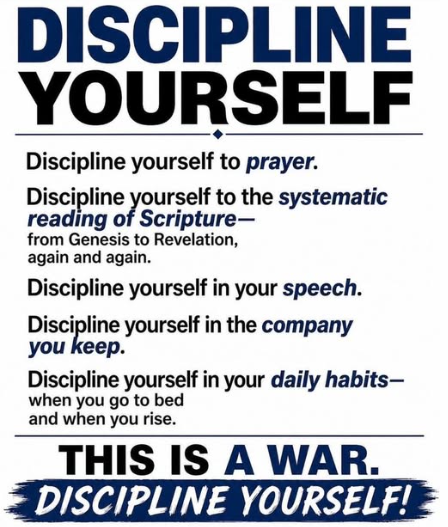
Self-discipline is essentially the same as self-control, one of the nine fruits of the Spirit listed by Paul in Galatians 5:22-23. The KJV translation uses the word temperance in place of “self-control” which, like self-discipline, generally refers to our ability to control or restrain ourselves from all kinds of feelings, impulses, and desires, which includes the desire for physical and material comfort. Now, even though self-control is the last of the spiritual fruits mentioned by Paul, and even though it is a term not used extensively in the Bible, self-control is clearly an indispensable attribute of the Christian life, especially as our unredeemed flesh sometimes causes us to succumb to the persistent tug of our sinful desires.
The apostle Paul calls us to “purify ourselves from everything that contaminates body and spirit, perfecting holiness out of reverence for God” (2 Corinthians 7:1). And in his letter to the Romans, he exhorts us to “offer your bodies as living sacrifices, holy and pleasing to God,” and not to be conformed to the pattern of this world (Romans 12:1-2). Yet most Christians would agree that subordinating the constant pull of these worldly desires in order to please our Lord is not always an easy thing to do. Paul discusses his own inner conflict and struggle with sin in his letter to the Romans, “What I want to do I do not do…the evil I do not want to do – this I keep on doing…it is sin living in me that does it” (Romans 7:15-20).
It is clear that our seemingly insatiable human appetites and needs can easily lead to sinful excesses if not controlled. Especially in affluent societies, the lack of self-discipline is rampant, leading to problems like obesity, alcoholism, drug use, and debt. The enticements of the material world have caused many to yearn for and acquire material goods far beyond their needs and their ability to pay for them. Indeed, the nations of the world have fallen into the same trap, borrowing trillions of dollars to finance bloated budgets that result from the inability to exercise self-discipline. For Christians, without self-discipline, our appetites for comforts and pleasures can easily become our master and lead us into sin or otherwise hinder us in our spiritual walk. If the spiritual does not govern the physical, we can become easy targets for Satan due to our lack of self-control (1 Corinthians 7:5).
Paul discusses self-discipline in his letter to the Corinthian church. As the Greeks had the Olympic games and the Isthmian games, they were very familiar with the rigors of athletic training, especially if one wanted to win the “prize” or the “crown.” Paul analogizes living a disciplined Christian life to an athlete in training: “Everyone who competes in the games goes into strict training” (1 Corinthians 9:25). When Paul says “I beat my body and make it my slave,” he is saying that his body is under the dominion and control of his mind, not the other way around. Paul is showing us how self-control is needed to win the race that is before us and to live the life that is “holy and pleasing to God.” For Paul, the “race” was winning souls for Christ, a goal which he states four times in verses 19-22.
It is important to understand that self-control is a work of the Holy Spirit, not a work of the individual. After all, Galatians 5:22-23 lists the fruit of the Spirit, not the fruit of the Christian. As we are merely the branches upon which the Vine (Christ) hangs the fruit He produces (John 15:1-8), it is the indwelling presence of the Holy Spirit that gives Christians the power and ability to exercise self-control so that we will not be mastered by the “cravings of sinful man.” As Paul said, “God did not give us a Spirit of timidity, but a Spirit of power, of love and of self-discipline” (2 Timothy 1:7). Indeed, Christians are controlled not by the sinful nature, but by the Holy Spirit (Romans 8:9), who helps us in our weakness (v.26), which makes us able to say “no” to sin.
The wise King Solomon wrote many proverbs for the purpose of helping us to live a “disciplined” and prudent life (Proverbs 1:3). Certainly, we will be more victorious in our Christian walk when we exercise our Spirit-given self-control, that which helps us respond in obedience to the commands of Scripture and allows us to grow in our spiritual life.

Tea Time Manna
However, I consider my life worth nothing to me, if only I may finish the race and complete the task the Lord Jesus has given to me — the task of testifying to the gospel of God’s grace.
—Acts 20:24
How important is grace? Paul said that sharing the good news of God’s grace was more important to him than his life! In fact, that was his life after his conversion to Jesus. The wonderful thing for Paul is that he aligned his life’s mission to be an expression of God’s grace. That’s why he could tell the Philippians:
I eagerly expect and hope that I will in no way be ashamed, but will have sufficient courage so that now as always Christ will be exalted in my body, whether by life or by death. For to me, to live is Christ and to die is gain (Philippians 1:20-21).
The challenge for us is to find out where we fit in God’s story of unfolding grace and live into that role as our life’s mission. We don’t have to be a missionary, preacher, pastor, or evangelist to have such a mission. God longs for each of us to see living for him and sharing his mercy, grace, and love in Jesus as essential — as our life. No matter what we do to earn a living, lead a family, live as a single for Jesus, or influence others as a teen, God has a mission for us in who we are and where he has placed us. In whatever place we find ourselves, let’s live as Jesus’ salt and light in a world of decay and darkness so that others can discover grace and glorify our Father in heaven (Matthew 5:13-16).
Prayer
Almighty God, thank you for your lavish grace, demonstrated and fully expressed in sending Jesus to save us and give meaning to our lives. As your children, and in thanks for your sacrificial gift, we pledge to you our lives, our love, and our all. We ask for the Holy Spirit’s help to know and complete the mission you have for each of us. In the name of Jesus, we pray. Amen and Amen
Bible Teaching of the Day
LUNCH MANNA =
Perhaps better than any other chapter in the Bible, Leviticus 19 explains what it meant for Israel to live as a holy nation. Through Moses, God spoke to the people, saying, “Be holy because I, the LORD your God, am holy” (Leviticus 19:2). Both the Old and the New Testament stress the importance of cultivating personal holiness in the life of every believer: “But just as he who called you is holy, so be holy in all you do; for it is written: ‘Be holy, because I am holy’” (1 Peter 1:15–16).
In Hebrew, the words translated “holy” and “holiness” have to do with being “set apart,” “separate,” “different,” or “dedicated.” The absolute moral purity of God’s character sets Him apart, making Him different from every other living creature. Yet He calls His people to be holy as He is holy. Humans generally think of holiness as obeying God’s law. But, for God, holiness is not a mere action or a set of behaviors. Holiness is His essence. God is morally and ethically perfect by nature. So how can we set ourselves apart to reflect God’s holiness in the way we live?
The Bible reveals that God’s holiness of character is a model for believers’ lives and our shared communion with others. Both passages (Leviticus 19:2 and 1 Peter 1:16) and their surrounding verses stress that those who wish to replicate God’s holiness must reflect His holy nature in their relationships with other people and their sincere love for fellow believers.
In Leviticus 19:1–37, God applies the Ten Commandments to various areas of life, spelling out in great detail for the Israelites how to be holy as He is holy. They were to honor their parents, keep the Sabbath, not practice idolatry, worship and offer sacrifices properly according to God’s instructions, provide for the poor, not steal, cheat, seek revenge, and not follow pagan customs and rituals. The commands continue, covering every aspect of spiritual, moral, family, work, and community life. Included is the charge to “love your neighbor as yourself. I am the LORD” (Leviticus 19:18).
Peter also lays out how we can live in the light of God’s command to be holy as He is holy. First, he says to discipline our minds: “So prepare your minds for action and exercise self-control. Put all your hope in the gracious salvation that will come to you when Jesus Christ is revealed to the world” (1 Peter 1:13, NLT). We are to exercise self-control and stay alert both mentally and spiritually. This mental discipline requires a concentrated focus on trusting in the Lord to get us to our final destination, where we will experience the fullness of God’s grace in Jesus Christ.
Paul expresses it like this: “Not that I have already reached the goal or am already perfect, but I make every effort to take hold of it because I also have been taken hold of by Christ Jesus. Brothers and sisters, I do not consider myself to have taken hold of it. But one thing I do: Forgetting what is behind and reaching forward to what is ahead, I pursue as my goal the prize promised by God’s heavenly call in Christ Jesus” (Philippians 3:12–14, CSB). If we focus only on the short-term—our current situation—we run the risk of straying off course. But if we live with total trust that Jesus Christ will return to accomplish all that He started in us (Philippians 1:6), it will make a significant difference in how we live.
“You must live as God’s obedient children,” says Peter, “Don’t slip back into your old ways of living to satisfy your own desires” (1 Peter 1:14, NLT). When we “do not conform to the evil desires” (NIV) we had before we came to know Christ, we live in response to God’s holiness, adopting His behavior as our pattern.
This change of behavior begins on the inside with our attitude and mind-set. When our inner thought life, our purpose, and our character are changed into the image of Christ, our outward selves and outworking behavior will alter naturally. This process is the Holy Spirit’s work of sanctification: “And we all, who with unveiled faces contemplate the Lord’s glory, are being transformed into his image with ever-increasing glory, which comes from the Lord, who is the Spirit” (2 Corinthians 3:18).
As part of his teaching on cultivating holiness, Peter instructs believers to “live out your time as foreigners here in reverent fear” (1 Peter 1:17). Living as strangers here on earth hammers home the idea that our earthly lives with all their challenges and struggles are only temporary. Even in our pain, we can live with hope as citizens of a future heavenly reality. Reverent fear refers to humble, respectful awe of God, which motivates us to live obedient, holy lives.
Finally, Peter makes the point that living in the light of God’s holiness means demonstrating “sincere love to each other as brothers and sisters. Love each other deeply with all your heart” (1 Peter 1:22, NLT).
Believers ought to be notably different from non-believers and their old selves because of their relationship with God through Jesus Christ. His holy presence in our lives produces in us a loving obedience to God’s Word, which ultimately forms God’s character in us. If we are set apart for God’s use, separated from our old, common way of living, we are following God’s command to “be holy for I am holy.”
Today’s Devotional
DINNER MANNA =
Jesus taught that to be His disciple—His follower—the spiritual discipline of self-denial is required: “Then Jesus told his disciples, ‘If anyone would come after me, let him deny himself and take up his cross and follow me’” (Matthew 16:24, ESV). Denying yourself is an essential part of the Christian life. Jesus called upon those who wish to be His followers to reject the natural human inclination toward selfishness. The Lord Himself exemplified self-denial (John 13:1–17).
The Dictionary of Bible Themes defines self-denial as “the willingness to deny oneself possessions or status, in order to grow in holiness and commitment to God.” The words Jesus used in the original language for “deny yourself” were strong terms similar in meaning to Paul’s wording in Philippians 3:7–8: “But whatever gain I had, I counted as loss for the sake of Christ. Indeed, I count everything as loss because of the surpassing worth of knowing Christ Jesus my Lord. For his sake I have suffered the loss of all things and count them as rubbish, in order that I may gain Christ” (ESV, emphasis added). The purpose of self-denial—counting as “loss” all earthly gains—is to become more like Jesus in holiness and obedience to God.
Denying yourself includes overcoming the persistent fleshly demands of the body, also known as the carnal self or the natural man, and bringing them into submission to God’s Word so that you don’t give in to sin: “And those who belong to Christ Jesus have crucified the flesh with its passions and desires” (Galatians 5:24, ESV).
Self-denial for the Christian means renouncing oneself as the center of existence (which goes against the natural inclination of the human will) and recognizing Jesus Christ as one’s new and true center. It means acknowledging that the old self is dead and the new life is now hidden with Christ in God (Colossians 3:3–5).
From the moment of our new birth into Jesus Christ, self-denial becomes a daily exercise for the rest of this life on earth (1 Peter 4:1–2). With the Holy Spirit now indwelling us, we are thrust into a conflict between the divine Spirit of God and the carnal self. Paul describes this ongoing struggle in Romans 7:14–25. Only by God’s grace and the power of the Holy Spirit can we learn to deny self: “For the grace of God has appeared that offers salvation to all people. It teaches us to say ‘No’ to ungodliness and worldly passions, and to live self-controlled, upright and godly lives in this present age, while we wait for the blessed hope—the appearing of the glory of our great God and Savior, Jesus Christ” (Titus 2:11–13).
Through daily self-denial and crucifying the flesh, our life in Christ grows, strengthens, and develops more and more. Christ now becomes our life. These famous words of Dietrich Bonhoeffer help us understand the meaning of self-denial: “When Christ calls a man, he bids him come and die” (The Cost of Discipleship, SCM Press, 2015, p. 44). A follower of Jesus must be prepared to die if death is where the path of discipleship leads: “I have been crucified with Christ and I no longer live, but Christ lives in me. The life I now live in the body, I live by faith in the Son of God, who loved me and gave himself for me” (Galatians 2:20; see also Romans 6:1–11).
Fasting is one of the disciplines of self-denial that Jesus practiced Himself (Matthew 4:1–2). Giving to the poor and needy is a form of self-denial that Jesus encouraged (Matthew 5:42; Luke 11:41). Watching in prayer is another way to deny yourself in service to God, as Jesus demonstrated (Matthew 14:23; 26:41). Likewise, living modestly rather than indulging in excessive luxury is an area in which believers can exercise self-denial (Matthew 8:20; 10:10; 1 Timothy 2:9).
Perhaps the most significant way we practice self-denial is in how we love and esteem our brothers and sisters in Christ. Self-denial is the basis for Christian fellowship and service within the church: “Let each of you look not only to his own interests, but also to the interests of others. Have this mind among yourselves, which is yours in Christ Jesus, who, though he was in the form of God, did not count equality with God a thing to be grasped, but emptied himself, by taking the form of a servant, being born in the likeness of men. And being found in human form, he humbled himself by becoming obedient to the point of death, even death on a cross” (Philippians 2:4–8, ESV; see also Matthew 5:38–48; Mark 10:42–45).
Denying yourself means seeking the good of others before looking out for yourself (1 Corinthians 10:24). When Ruth followed Naomi, she practiced self-denial for the benefit of her mother-in-law (Ruth 2:11). When Esther put her life at risk to save her people, she demonstrated self-denial (Esther 4:16). Scripture teaches us to deny ourselves for the sake of those who are weak in the faith (Romans 14:21; 15:1–3; 1 Corinthians 8:13; 9:23). When you are willing to sacrifice your time, energy, rights, position, reputation, privileges, comforts, and even your very life for the sake of Christ, you exemplify what it means to deny yourself: “Whoever finds their life will lose it, and whoever loses their life for my sake will find it” (Matthew 10:39; see also John 12:24–26; 2 Corinthians 6:4–5).

NEWS MANNA –
Bible Prophecy, Signs of the Times and Gog and Magog Updates with Articles in the News
Could Peace In The Middle East Open The Door To A Third Temple?

The stones beneath Jerusalem are speaking again.
For decades, the Temple Mount was treated as a place too volatile to touch politically, spiritually, or prophetically. Jewish prayer there was heavily restricted, Jewish religious presence was intentionally minimized, and most Israelis avoided even ascending the mount altogether. But something has changed in recent years — and especially since the horrors of October 7th.
A growing wave of religious Zionism is sweeping across Israel as many Jews rediscover their Biblical identity, their covenant history, and their connection to the very place where the First and Second Temples once stood.
And with that rediscovery comes a renewed longing for the Temple itself.
That longing is no longer confined to fringe activists. It is becoming increasingly visible in Israeli society, politics, and public demonstrations. Temple Mount flags are appearing during Jerusalem Day celebrations. More politicians are intentionally visiting the mount. Rabbis are openly discussing preparations for future Temple worship. One rabbi recently even proposed establishing a synagogue on the Temple Mount itself as a step toward eventual restoration.
Rabbi Shmuel Eliyahu recently called on Prime Minister Benjamin Netanyahu and Israeli leadership to establish a synagogue directly on the Temple Mount as a first step toward expanded Jewish worship there. Speaking opposite the mount during Jerusalem Day events, Eliyahu declared that the Islamic structures currently standing there are tied to Israel’s exile and insisted that a future Jewish Temple will one day rise again.
To many secular observers, these developments may appear symbolic or political. But to students of Bible prophecy, they may represent something far more significant.
At the center of this growing movement is the long-standing “status quo” arrangement governing the Temple Mount — a fragile and controversial framework that has existed since Israel recaptured eastern Jerusalem during the Six-Day War in 1967.
After Israel regained control of the Old City and the Temple Mount, then-Defense Minister Moshe Dayan made the historic decision to leave administrative authority over the mount in the hands of the Jordanian Islamic Waqf. Israel retained overall security control, but Muslims would continue managing religious affairs at the site.
The arrangement was designed to prevent a wider religious war.
Under this unwritten “status quo,” Muslims were permitted to worship freely on the mount, while Jews and Christians could only visit during limited hours and were forbidden from conducting visible acts of worship. Jews could not pray audibly, bow, carry Torah scrolls, blow shofars, or openly engage in religious rituals on Judaism’s holiest site.
In theory, Israel’s 1967 Protection of Holy Sites Law guarantees freedom of access and worship for all religions. In practice, however, Jewish worship on the Temple Mount has remained heavily restricted for decades.
For years, most Jews accepted this arrangement — either out of political caution or rabbinical concerns regarding ritual purity. The Temple Mount became primarily a destination for foreign tourists while observant Jews often prayed below at the Western Wall instead.
But that reality is changing rapidly.
The recent arrest of 13 Jewish activists attempting to bring the Biblically mandated Shavuot bread offering onto the Temple Mount is only the latest sign of growing pressure against the status quo. According to reports, the activists breached security barriers carrying two loaves of leavened bread meant to fulfill the Biblical Shtei HaLechem offering described in Leviticus 23:17. Authorities quickly arrested them before the ritual could be completed.
Temple activists have been arrested several times in the past for attempts to bring Passover sacrifice-related items onto the mount.
These incidents are not isolated acts of religious extremism. They reflect a broader movement that increasingly believes Jews should fully reclaim worship rights at the site of the ancient Temples.
And the movement is growing.
More Jews are ascending the Temple Mount today than at any point in modern Israeli history. Organized Jewish tours now occur regularly. Religious activists openly advocate for expanded prayer rights. Israeli National Security Minister Itamar Ben-Gvir has repeatedly visited the mount and publicly called for ending restrictions on Jewish prayer there — triggering outrage across the Muslim world.
Prime Minister Benjamin Netanyahu continues insisting the status quo remains unchanged. Yet many observers recognize that gradual change is already underway. What once seemed politically impossible is increasingly becoming normalized.
Recent reports have added even more fuel to speculation that major changes surrounding the Temple Mount may eventually be considered. According to a report by Middle East Eye, discussions have allegedly taken place involving figures connected to the Trump administration and Israeli leadership regarding possible changes to Jordan’s long-standing custodianship over the Al-Aqsa Mosque compound.
The report claimed that a future arrangement could potentially reduce the authority of the Jordanian-backed Islamic Waqf and replace it with a new administrative framework tied more closely to Israel — one that could significantly expand Jewish prayer rights at the site and even reimagine the compound as a “multi-faith center.”
Middle East Eye cited unnamed American, Jordanian, Palestinian, Gulf Arab, and Western sources in its reporting. However, after publication, a U.S. official reportedly denied that Washington was actively working to remove Jordan from its custodial role, calling the claims “totally false.”
Still, regardless of whether such proposals are presently active, the mere fact that reports of this nature are now circulating publicly demonstrates how dramatically the conversation surrounding the Temple Mount has shifted in recent years. Ideas that once would have been dismissed outright are increasingly entering mainstream political and diplomatic discussion.
And this raises a larger prophetic question:
Could these developments eventually lead to the construction of a Third Temple?
For Christians who study Biblical prophecy, this question matters immensely because Scripture repeatedly points to a future Jewish temple existing in the last days. The prophet Daniel describes a coming desecration of the temple by the Antichrist. Jesus Himself referenced this future “abomination of desolation” in Matthew 24. The Apostle Paul wrote that the “man of sin” would one day sit in the temple of God proclaiming himself to be God.
A functioning temple is central to many end-times prophecies.
For decades, skeptics dismissed such ideas as impossible. The Temple Mount is home to the Islamic Dome of the Rock and Al-Aqsa Mosque — among the holiest sites in Islam. The political consequences of altering the site seemed unthinkable.
Yet the Middle East has repeatedly shown that what once appeared impossible can suddenly become reality.
The Abraham Accords dramatically reshaped regional politics. Open normalization between Israel and Arab nations would have been nearly unimaginable just years earlier. Now discussions are growing about expanding those agreements further once regional conflicts — including an end to the war with Iran — into some form of negotiated framework that could include the entire region. President Trump has already said this is on the table in the weeks ahead once peace with Iran is reached.
Could a future peace arrangement include religious concessions involving the Temple Mount?
Some Temple activists believe a Third Temple could potentially be constructed beside the Dome of the Rock rather than directly replacing it. Others believe archaeological evidence suggests the historic Jewish temples may have stood slightly north or south of the current Islamic structures, leaving room for coexistence.
Whether such proposals are realistic remains deeply debated. But the fact they are now being discussed openly at all is remarkable.
And perhaps that is the real story here.
The Temple Mount is no longer a dormant issue buried in ancient history. It is re-emerging as one of the most spiritually and geopolitically explosive subjects in the world. The push to change the status quo is accelerating. Religious Zionism is growing stronger. The desire for Jewish worship on the mount is intensifying. And the idea of a future temple — once considered fantasy — is steadily moving into mainstream discussion.
To Christians, this is not merely about politics or archaeology. It is about watching history move closer to the prophetic framework laid out thousands of years ago in Scripture.
The Temple Mount remains the most contested piece of real estate on earth because it sits at the intersection of God’s promises, human conflict, and future prophecy.
And events there may ultimately shape the final chapters of human history itself.
Silicon Salvation: Humanity’s New Tower Of Babel?
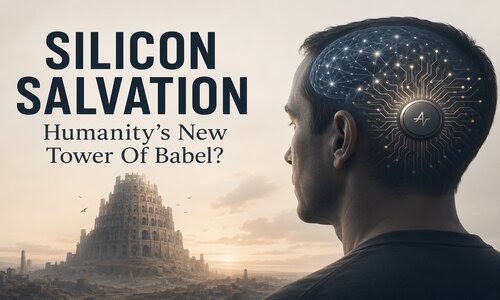
For thousands of years, humanity has pursued the same dangerous dream: to transcend its limitations without God.
From the Tower of Babel in Genesis to today’s race toward artificial intelligence, brain-computer interfaces, and digital immortality, mankind continues chasing the ancient temptation first whispered in the Garden of Eden: “You shall be as gods.”
What once sounded like science fiction is now openly discussed by some of the world’s most influential technology leaders. Elon Musk continues advancing brain-computer interface technology through Neuralink while warning about the dangers of uncontrolled AI. Meanwhile, Silicon Valley increasingly speaks in language that sounds less scientific and more spiritual.
Terms like “superintelligence,” “mind uploading,” “digital consciousness,” and “human enhancement” are no longer fringe concepts. Billionaires, researchers, and futurists openly discuss conquering death, transcending biology, and creating a post-human future.
That should make people pause.
For most of history, humanity accepted certain realities as unavoidable:
death,
weakness,
suffering,
aging,
limited intelligence.
Those limitations reminded mankind that we are not gods.
Now technology increasingly promises to erase them.
Across Silicon Valley, billions are being poured into anti-aging research, AI-assisted medicine, genetic engineering, and life-extension technologies. Some futurists speak about death itself as if it were merely a technical problem waiting to be solved.
Others go even further, envisioning a future where human consciousness can somehow be uploaded into machines, allowing a person to continue existing digitally after biological death.
Whether scientifically possible or not, the pursuit itself reveals something profound: humanity is once again searching for immortality apart from God.
That is not merely scientific ambition. It is spiritual ambition.
Artificial intelligence also represents mankind’s attempt to transcend intellectual limits. AI systems already outperform humans in many forms of analysis, pattern recognition, prediction, and information processing. Increasingly, society looks to algorithms for guidance on everything from investing and healthcare to morality and decision-making.
In many ways, AI is becoming a new source of authority.
People now ask AI:
how to think,
how to vote,
how to parent,
how to invest,
even how to understand spirituality itself.
The temptation will only grow stronger if AI becomes integrated directly into the human brain through neural interfaces. Imagine instant knowledge, enhanced memory, emotional regulation, or AI-assisted cognition connected to the mind itself.
The appeal would be enormous because it promises something humanity has always desired: expanded power and expanded knowledge.
Again, the parallels to Genesis are striking.
The temptation in Eden was not simply rebellion. It was the promise of elevated consciousness: “You shall be as gods, knowing good and evil.”
At the same time, the transhumanist movement increasingly portrays the human body itself as flawed hardware needing upgrades. Some openly describe biology as obsolete and argue humanity must evolve beyond its natural limitations through technology.
This radically changes how society views human identity.
Historically, faith emphasized humility, dependence on God, spiritual transformation, and redemption. Transhumanism increasingly emphasizes self-directed evolution, engineered perfection, and technological salvation.
One worldview seeks eternal life from God.
The other increasingly seeks it from machines.
That is why the comparison to the Tower of Babel resonates so deeply.
In Genesis 11, humanity united under one vision to build a tower reaching toward heaven, not to glorify God, but to glorify itself. Scripture says they sought to “make a name” for themselves. It was mankind unified through pride, ambition, and collective knowledge.
Today, the parallels are difficult to ignore.
Modern civilization is increasingly unified through global technology platforms, artificial intelligence, digital currencies, biometric identification, and surveillance systems. AI already shapes what billions of people see, believe, and consume every day. The next frontier now appears to be the human mind itself.
The concerns are no longer theoretical.
If neural interfaces eventually connect human thought to AI systems, privacy itself could fundamentally change. Today, companies collect your searches, purchases, location, and conversations. Tomorrow, could emotional states, impulses, or thought patterns become data as well?
The idea sounds extreme — until one remembers how quickly society normalized smartphones, social media surveillance, facial recognition, and algorithmic manipulation.
Convenience has become one of the most powerful forces in human history.
And many Christians see prophetic warning signs emerging alongside these technological advances. The Bible describes a future global system involving centralized control, economic regulation, deception, and the monitoring of buying and selling. For centuries, skeptics mocked such ideas as impossible.
Now the technological framework is visibly emerging before our eyes.
That does not mean every new technology is evil. Brain chips themselves are not automatically the “mark of the beast,” and Christians should avoid sensationalism. Medical breakthroughs that help suffering people can be genuine blessings.
But wisdom requires recognizing patterns.
Humanity increasingly places its hope in technological salvation rather than spiritual redemption. The modern Tower of Babel is not built with bricks and mortar. It is being constructed through servers, satellites, algorithms, neural networks, and perhaps eventually, the human mind itself.
The deeper issue may not simply be the technology, but the spirit behind it.
At what point does mankind stop using technology as a tool and begin using it as a substitute for God?
TruLight Ministries Daily Entertainment Manna

TruLight TV – 7th Street Theater’s Future: Obedience Tested
A big change is at hand for the cast of 7th Street Theater. And our sermon today from Dr. Charles Stanley (The School of Obedience) – Obeying God isn’t always easy, but it is always the wisest thing to do. Meditating on God’s Word, following His instruction, and trusting Him to provide for your needs are the cornerstone of obedience. You will be rewarded with immeasurable blessings when you trust and obey.
Today on TruLight Radio XM
TruLight Radio XM 24/7
Program
GMT / UTC +2
Monday To Fridays
00:15 Words to Live By Testimonies
01.15 Science Scripture and Salvation
02.15 Ground Works
04.00 Gospel Concert of the Day
05.00 The Daren Streblow Comedy Show
5:55 It is Today devotional
6:00 Gaither Homecoming Morning Show
7:15 Discover the Word
8.15 Destined for Victory
8:55 Science Scripture and Salvation
9:00 Holy Spirit Hour – Normally Sermons
10:15 Hope of the Heart
11:15 Unshackled
11.45 Words to Live By
12:15 Truth for Life
13:15 Living on the Edge with Chip Ingram
14:15 Focus on the Family
15:00 Kids Hour
16:00 In Touch with Dr. Charles Stanley
16:30 Groundwork
17:15 Live in the Light
18:15 Renewing your Mind
19:00 Gaither Homecoming Show
20:15 Growing Hope
21:15 Adventures in Odyssey Radio Drama
21:45 Bible Reading
22:15 Night-sounds
23.00 Good Old Country Gospel / Rhema Gospel Express
VISIT THE WEBSITE
TruLight Ministry News – EXTRA MANNA
TruLight Ministries orders from God since 2012 . Teach Them , Comfort Them and Warn Them!
Healing Truths.
End Time Articles.
Bonus Manna = Bonus Teaching for the Child of God !!
In 2 Timothy 1:7, Paul writes to Timothy, saying, “God hath not given us the spirit of fear; but of power, and of love, and of a sound mind” (KJV). The “spirit of a sound mind” is the Holy Spirit, who empowers believers to live with discernment, discipline, and self-control.
The spirit of a sound mind is evident in our ability to exercise self-control. Galatians 5:22–23 lists the fruit of the Spirit, concluding with temperance: “The fruit of the Spirit is love, joy, peace, longsuffering, gentleness, goodness, faith, meekness, temperance: against such there is no law” (KJV). The Greek word translated as “temperance” is enkrateia, meaning “self-control” or “self-discipline. The fruit of self-control is the direct result of the Holy Spirit’s work within us, shaping and molding us into the image of Christ. To remain self-controlled, we must live by the Spirit and keep in step with Him (Galatians 5:25).
Romans 8:6 provides further insights into the spirit of a sound mind: “To be carnally minded is death; but to be spiritually minded is life and peace” (KJV). To be spiritually minded means to have our thoughts, wills, and actions governed by the Spirit instead of our sinful flesh. In this way, we will experience life and peace rather than death. The Holy Spirit brings life and peace because He aligns our thoughts with the truth of God’s Word, helping us to confront sin and temptation with biblical truth and sound judgment.
Another passage that illuminates our understanding of the spirit of a sound mind is 1 Corinthians 2:12–16. In this passage, Paul contrasts the natural man, who does not accept the things of the Spirit, with the spiritual man who has the mind of Christ. To have the mind of Christ is to think and behave in God-honoring ways. This is accomplished not by our own power but by the power of the Holy Spirit, who is “the spirit of a sound mind” (2 Timothy 1:7, KJV).
Ephesians 4:22–24 says, “Put off your old self, which belongs to your former manner of life and is corrupt through deceitful desires, and to be renewed in the spirit of your minds, and to put on the new self, created after the likeness of God in true righteousness and holiness” (ESV). A renewed mind is essential to living in the spirit of a sound mind. The Holy Spirit transforms our inner selves, enabling us to live righteously and reflect the holiness of God.
Paul also speaks about the grace of God that teaches us to live self-controlled, upright, and godly lives: “The grace of God has appeared that offers salvation to all people. It teaches us to say ‘No’ to ungodliness and worldly passions, and to live self-controlled, upright and godly lives in this present age” (Titus 2:11–12). Again, the spirit of a sound mind is linked to self-control, as the Holy Spirit instructs us to reject sin and pursue godliness.
Peter, too, highlights that God has given us everything we need for a godly life, including self-control: “His divine power has given us everything we need for a godly life through our knowledge of him who called by his own glory and goodness. For this very reason, make every effort to add to your faith goodness; and to goodness, knowledge; and to knowledge, self-control; and to self-control, perseverance; and to perseverance, godliness; and to godliness, mutual affection; and to mutual affection, love.”
The spirit of a sound mind, as mentioned in 2 Timothy 1:7, is the Holy Spirit working in us to produce discernment, discipline, and self-control. By yielding to the Holy Spirit, we can live without fear, knowing that He has supplied us with everything we need.
Share this Feeding of Manna with your Friends and Family. just click on the Social Media icon and share !