Hosted by TruLight Ministries – The Place of Truth
SELECT YOUR READING LANGUAGE – BOTTOM LEFT = YOUR DAILY MANNA NOW AVAILABLE IN 103 LANGUAGES
@ TruLight – Daily Manna is not Just a Bible Verse with a Small Prayer . No WE SERVE DAILY Manna for the Whole Day . Breakfast , Lunch , Dinner , Plus tea Times and even Entertainment Manna . Plus News Manna and More , This Daily Manna will keep you Spiritually full for the full 48 Hours and even More to Share with your Friends and Family !!!
The Enemies of spiritual Passion!!!
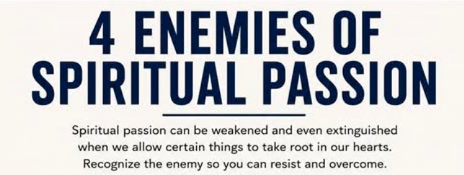
The Next 4 Days, a Study about the Enemies of SPIRITUAL PASSION
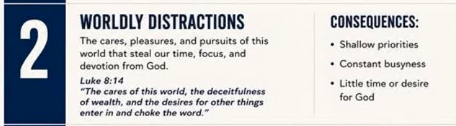
Worldly Distractions
James 4:5 asks, “Do you think that the Scripture says in vain, ‘The Spirit who dwells in us yearns jealously’?” (NKJV). This passage is challenging to interpret because the identity of “the Spirit” is uncertain. The NKJV capitalizes the word spirit, suggesting the Holy Spirit. However, other translations, such as the ESV, do not capitalize the word. To understand the verse, we must identify the spirit and determine why He (or it) yearns jealously.
James 4:1–12 is a warning against worldliness, the condition of being concerned with worldly affairs at the expense of spiritual things. James says believers quarrel and fight with one another because they are friends with the world. James assures his readers that “anyone who chooses to be a friend of the world becomes an enemy of God” (James 4:4).
James classifies those who befriend the world as “adulterous” in James 4:4 because love of the world betrays one’s covenant with God. In the Old Testament, God described His relationship with Israel as a marriage (see Isaiah 54:5 and Ezekiel 16:8). This concept is also prominent in the New Testament. The church will be “prepared as a bride adorned for her husband” (Revelation 21:2, NKJV). God is rightly jealous when we give the world something that belongs to Him—namely, ourselves.
“The spirit” in James 4:5 is likely the Holy Spirit, who indwells believers upon their confession of Christ as Lord and Savior (Romans 8:9; 1 Corinthians 6:19). In this view, the Holy Spirit opposes sinful desires because He longs for single-hearted devotion to God. This interpretation aligns with the biblical theme of God’s righteous jealousy: “The Lord, whose name is Jealous, is a jealous God” (Exodus 34:14, NKJV). He will not tolerate our placing anything before Him.
Another interpretation is that “the spirit” in James 4:5 is the human spirit, which inclines toward jealousy. Proverbs 27:4 states, “Wrath is cruel and anger a torrent, but who is able to stand before jealousy?” (NKJV). This view aligns with James’ warning against worldliness, but it is less consistent with the phrase dwells in us in James 4:5.
The Greek phrase translated as “yearns jealously” in the NKJV can also be translated as “longs with envy” or “desires jealously.” The Greek word phthonon (“jealousy”) sometimes conveys a negative sense of “envy”; however, jealousy as an attribute of God reflects His righteousness (see Exodus 34:14). God is zealous for our undivided love.
The apostle Paul speaks of a “godly jealousy”: “I am jealous for you with godly jealousy. For I have betrothed you to one husband, that I may present you as a chaste virgin to Christ” (2 Corinthians 11:2, NKJV).
Believers should resist the temptation of worldly distractions and instead fully devote themselves to God. When we commit ourselves to Him, “He gives more grace” (James 4:6, NKJV), including the grace we need to stay faithful to Him. Being faithful to God does not mean achieving sinless perfection; it does require perseverance in our commitment to Him.

Tea Time Manna
I saw the Holy City, the new Jerusalem, coming down out of heaven from God, prepared as a bride, beautifully dressed for her husband. And I heard a loud voice from the throne saying, “Now the dwelling of God is with men, and he will live with them. They will be his people, and God himself will be with them and be their God. He will wipe every tear from their eyes. There will be no more death or mourning or crying or pain, for the old order of things has passed away.
—Revelation 21:2-4
I don’t know about you, but I’m kind of ready for that old order stuff to go away. The end of tears, death, mourning, crying, violence, abuse, suffering, war, divisive politics, and pain sounds pretty good to me! No wonder the early Christians would say, “Marantha. Come, O Lord” (1 Corinthians 16:22). They couldn’t wait. How about us? How about you? What is keeping you from saying, “Lord Jesus, please come, and come soon? I urge you to put it aside, or put it under the lordship of Jesus, and use those moves to make you ready to receive the glory yet to be revealed in us (Romans 8:18; Colossians 3:3-4). Let’s make ourselves ready for the time when:
He will wipe every tear from their eyes. There will be no more death or mourning or crying or pain, for the old order of things has passed away.
Hallelujah!
Prayer
Holy God, please help me as I try to serve you faithfully and yearn for Jesus’ return. I desire to be steadfast in my love, living for you until the glorious day that so many of your children have longed to experience over the centuries. I long to see you in your glory, to share in your presence, and to join with the saints of all ages praising you around your glorious throne. And yes, dear Father, I long for you to wipe away all my tears and welcome me home. Because of Jesus’ victory, and by his authority, I offer my prayer in holy expectation. Amen and Amen

Bible Teaching of the Day
LUNCH MANNA =
Philippians 1:21 says, “For to me, to live is Christ, and to die is gain.” Most people focus on the second part of the verse, “to die is gain,” and contemplate the joys of heaven. But we should not overlook what comes before. The importance of the phrase “to live is Christ” cannot be overstated. In all honesty, this phrase should be central to every Christian’s life.
In this statement, the apostle Paul is saying that everything he has tried to be, everything he is, and everything he looked forward to being pointed to Christ. From the time of Paul’s conversion until his martyrdom, every move he made was aimed at advancing the knowledge, gospel, and church of Christ. Paul’s singular aim was to bring glory to Jesus.
“To live is Christ” means that we proclaim the gospel of Christ. Paul preached in synagogues; he preached at riversides; he preached as a prisoner; he preached as an apostle; he preached as a tentmaker. His message was constant: “Jesus Christ and him crucified” (1 Corinthians 2:2). He brought the message of Christ’s sacrifice to kings, soldiers, statesmen, priests, and philosophers, Jews and Gentiles, men and women. He would preach to literally anyone who would listen.
“To live is Christ” means that we imitate the example of Christ. Everything that Jesus did and said, that’s what Paul wanted to do and say. The church benefitted from his godly example: “Follow my example, as I follow the example of Christ” (1 Corinthians 11:1). What would Jesus do? That’s what we want to do.
“To live is Christ” means that we pursue the knowledge of Christ. We want to know Christ better and better each day. Not just a set of facts about Christ, but Christ Himself. “I want to know Christ—yes, to know the power of his resurrection and participation in his sufferings, becoming like him in his death, and so, somehow, attaining to the resurrection from the dead” (Philippians 3:10-11).
“To live is Christ” means that we are willing to give up anything that prevents us from having Christ. Paul’s testimony in this regard: “Whatever were gains to me I now consider loss for the sake of Christ. What is more, I consider everything a loss because of the surpassing worth of knowing Christ Jesus my Lord, for whose sake I have lost all things. I consider them garbage, that I may gain Christ and be found in him” (Philippians 3:7-9). We cling to the promise of our Lord in Mark 10:29-30 that our sacrifices for Jesus’ sake will be repaid a hundredfold.
“To live is Christ” means that Christ is our focus, our goal, and our chief desire. Christ is the center point of our mind, heart, body and soul. Everything that we do, we do for Christ’s glory. As we run the “race marked out for us,” we lay aside the entangling sin and worldly distractions, “fixing our eyes on Jesus” (Hebrews 12:1-2). He is our life.
Today’s Devotional
DINNER MANNA =
Proverbs 4:23 says, “Above all else, guard your heart, for everything you do flows from it.” This verse reminds us that our hearts are not just the seat of our emotions but the core of who we are—the heart contains our thoughts, desires, and motivations. Everything we do flows from it, meaning that the condition of our hearts shapes our actions, relationships, and, ultimately, our lives. Guarding our hearts protects us from harmful influences that could lead us away from God’s path of righteousness.
As followers of Christ, we understand that the heart is critical to our spiritual lives. Jesus echoed this truth in Matthew 12:34, “For out of the overflow of the heart, the mouth speaks” (BSB). There is a connection between our hearts, words, and actions. If we allow bitterness, anger, or sin to take root in our hearts, it will manifest in our lives because everything we do flows from the heart. We must guard our hearts, ensuring they are filled with God’s love and truth.
The fact that “everything you do flows from it” reminds us that the heart is the source of all we say and do. Just as a spring feeds a river, our hearts feed our behaviors and decisions. When we neglect to guard our hearts, negative influences such as pride, envy, or lust can seep in, distorting our thoughts and actions. In Matthew 15:19, Jesus warns, “For out of the heart come evil thoughts—murder, adultery, sexual immorality, theft, false testimony, slander.” These actions are the natural outflow of an unguarded heart.
To guard our hearts effectively, we must be intentional about what we allow to influence us. This involves being mindful of the media we consume, the company we keep, and the habits we develop. Guarding the heart also encompasses turning to God daily for guidance. Through prayer, Scripture, and reflection, we can allow God to shape our hearts, ensuring that everything we do flows from a place of righteousness. As Paul encourages us in Philippians 4:8, “finally, brothers and sisters, whatever is true, whatever is noble, whatever is right, whatever is pure, whatever is lovely, whatever is admirable—if anything is excellent or praiseworthy—think about such things.” Focusing on these profitable and virtuous things fills our hearts with goodness, and positive actions can follow naturally.
In guarding our hearts, we also commit to spiritual growth and discipline. Proverbs 4:23 does not merely suggest that we protect our hearts occasionally; it places this task “above all else.” In other words, heart-guarding is a priority. It is an ongoing responsibility that requires self-awareness and a willingness to confront unhealthy life patterns. Everything we do flows from the heart, so the effort we put into keeping our hearts pure will be reflected in our actions, decisions, and interactions with others.
Moreover, guarding our hearts enables us to live out the fruit of the Spirit, as described in Galatians 5:22–23: “But the fruit of the Spirit is love, joy, peace, forbearance, kindness, goodness, faithfulness, gentleness and self-control.” When our hearts are aligned with God’s Spirit, He will produce these traits in us. Our guarded hearts allow the Holy Spirit to work through us, producing godly behavior that honors God and blesses others.
Finally, by guarding our hearts, we create space for God’s peace to dwell in us. Philippians 4:7 reminds us, “And the peace of God, which transcends all understanding, will guard your hearts and your minds in Christ Jesus.” When we submit to God and seek His face, we allow His peace to guard our hearts. We will experience freedom from anxiety, fear, and worldly distractions. Everything we do flows from the heart, and a heart at peace with God will radiate peace in all areas of life.

NEWS MANNA –
Bible Prophecy, Signs of the Times and Gog and Magog Updates with Articles in the News
China’s AI Surveillance State Is Becoming Something The World Has Never Seen

For years, China has built what many observers have described as the most extensive surveillance network in human history. Now, thanks to rapid advances in artificial intelligence, that network is evolving into something far more powerful–and far more concerning.
According to recent reporting from the Financial Times, Chinese authorities are upgrading their already vast surveillance infrastructure with advanced AI systems capable of analyzing behavior, identifying individuals, predicting crowd activity, and even anticipating potential social unrest before it occurs.
This is no longer simply about cameras watching street corners. It is about creating a real-time digital map of an entire society.
China’s surveillance system already includes hundreds of millions of cameras deployed throughout cities, transportation hubs, schools, residential complexes, and public spaces. Citizens are routinely monitored as they travel, shop, work, and interact with others.
What is changing now is the intelligence behind the cameras.
New systems supplied by companies such as Huawei and Hikvision are reportedly equipped with powerful AI chips that allow footage to be processed directly within cameras themselves. Instead of merely recording video for later review, these systems can analyze events as they happen.
Authorities can reportedly search vast video archives using natural-language commands. Rather than manually reviewing footage, an officer might simply type:
“Show me everyone wearing black jackets who entered the train station between 3 and 5 p.m.”
Within seconds, the AI can locate relevant individuals.
The implications become even more significant when combined with facial recognition.
China has spent years building facial recognition databases that can identify citizens within seconds. AI now allows authorities to track individuals across multiple camera networks, following movements from one district to another with little human involvement.
But identification is only the beginning.
Modern AI systems excel at pattern recognition. They are designed to notice unusual behavior, flag anomalies, and generate predictions based on massive amounts of data.
According to experts familiar with these new projects, authorities are increasingly focused on using AI to identify indicators of potential unrest before demonstrations or protests occur.
In other words, the goal is no longer merely solving crimes after they happen.
The goal is anticipating behavior before it occurs.
Imagine a system that notices an unusually large gathering forming, tracks online discussions, monitors transportation patterns, observes increased foot traffic, and alerts authorities that a protest may be developing hours before participants arrive.
That is the direction China appears to be moving.
Nor is video surveillance the only source of data.
China’s digital ecosystem already collects extraordinary amounts of information through mobile phones, payment systems, transportation records, internet activity, and social media platforms.
Apps record locations.
Digital payment systems track purchases.
Transit systems monitor travel.
Online activity reveals interests, opinions, and relationships.
AI’s real power emerges when these separate streams are connected.
The result is what amounts to a digital profile of each citizen–where they go, who they know, what they buy, what they read, and increasingly, what algorithms predict they may do next.
Supporters argue such systems improve public safety, reduce crime, locate missing persons, and help authorities respond more quickly to emergencies.
Those benefits are real.
The concern is that every surveillance technology created for legitimate security purposes can also be used for social control.
History repeatedly demonstrates that governments rarely surrender powers once acquired.
What begins as crime prevention can gradually expand into political monitoring.
What starts as public safety can become behavior management.
What is marketed as convenience can become compliance.
This is why developments in China deserve attention far beyond Beijing.
Many Western observers assume such systems could never emerge in democratic societies.
That assumption may prove dangerously naïve.
The technologies themselves are not uniquely Chinese.
Facial recognition exists throughout the West.
License plate readers are widespread.
Smart cities increasingly deploy connected sensors.
Artificial intelligence can already analyze video feeds, identify individuals, and monitor patterns of behavior.
Governments regularly cite terrorism, public safety, organized crime, pandemics, misinformation, cyber threats, and national security as reasons for expanding monitoring capabilities.
Few surveillance systems arrive all at once.
They typically appear incrementally.
One camera for safety.
One database for efficiency.
One digital ID for convenience.
One AI tool to help law enforcement.
One emergency measure during a crisis.
Each step may appear reasonable in isolation. Yet over time, those steps can accumulate into something remarkably similar to the systems many Western nations criticize abroad.
China’s AI overhaul provides a glimpse into where technology is heading. For the first time in history, governments possess tools capable of monitoring populations at scales previous generations could scarcely imagine.
The question is no longer whether such technology exists.
It does.
The question is whether free societies will establish meaningful limits before convenience, security, and fear gradually normalize the same level of surveillance that China is now perfecting.
Once a government can see everything, know everything, and predict behavior before it happens, the line between protecting citizens and controlling them becomes dangerously thin.
And that is a conversation every free nation should be having now–not after the cameras, databases, and AI systems are already in place.
AOC’s Awkward Reality Check: The Truth About Islam And Women’s Rights
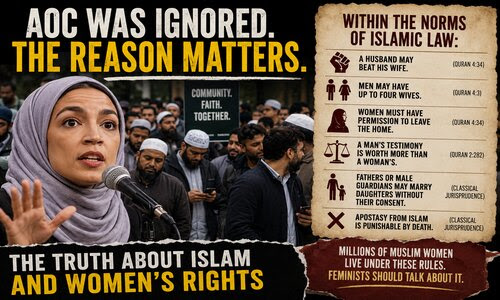
Rep. Alexandria Ocasio-Cortez, one of America’s most prominent progressive politicians and outspoken defenders of Muslim communities, appeared at a Muslim cultural gathering wearing a hijab and addressing the crowd. Yet what captured attention online was not what she said. It was how many in the audience appeared to respond. In several widely circulated clips, groups of men seemed largely uninterested, continuing conversations among themselves or appearing to ignore the congresswoman altogether.
The optics were striking. Here was one of the leading voices of modern feminism standing before a crowd where many men appeared to treat her as background noise.
For many observers, the moment exposed a contradiction that Western progressives have spent years trying to avoid.
Progressive activists frequently portray criticism of Islamic teachings regarding women as intolerant or bigoted. Yet they routinely condemn similar views when expressed by conservative Christians, traditionalists, or political opponents. The result is a glaring double standard that becomes harder to ignore with each passing year.
The reality is that many of the world’s most restrictive laws regarding women exist not in Western democracies but in nations governed by traditional interpretations of Islamic law.
Afghanistan provides perhaps the clearest example.
When the Taliban returned to power in 2021, its leaders assured the world they would respect women’s rights “within Islamic law.” Many Western media outlets cautiously welcomed the statement. Five years later, the reality has become painfully clear. Women have been largely removed from public life, educational opportunities have been drastically restricted, and human rights organizations continue to raise alarms about forced marriages and the treatment of women under Taliban rule.
The issue extends beyond Afghanistan. Reports from various parts of the Islamic world continue to reveal debates surrounding child marriage, women’s legal status, guardianship laws, and unequal treatment under traditional interpretations of Sharia. Critics point to examples from Afghanistan, Pakistan, Nigeria, Saudi Arabia, and elsewhere where influential clerics have defended positions that would be considered unacceptable throughout most of the Western world.
The problem for modern progressives is that many of these issues are not merely cultural practices found in distant countries. They arise from longstanding interpretations of Islamic law itself.
While Muslims disagree over how such texts should be understood and applied today, traditional Islamic jurisprudence contains teachings that would trigger outrage if they appeared anywhere else. Under classical interpretations of Sharia, a husband may discipline his wife physically, women face restrictions that men do not regarding marriage, and a man’s testimony can carry greater legal weight than that of a woman. Traditional rulings have also permitted polygamy for men while prohibiting it for women.
Some classical legal manuals further state that a woman requires the permission of her husband in various aspects of public life, while fathers and male guardians possess authority over family matters that mothers do not. Inheritance laws often provide daughters with smaller shares than sons, and in some traditional interpretations, a woman who leaves Islam can face severe legal penalties under an Islamic state.
Critics further point to teachings found in traditional Islamic jurisprudence that allow men greater authority within marriage, restrict Muslim women from marrying outside the faith while allowing Muslim men to marry Christians and Jews, and place women under systems of male guardianship.
Human rights organizations have also raised concerns regarding the treatment of women in countries where strict forms of Sharia are enforced, including issues surrounding custody rights, forced marriages, female genital mutilation, and honor-based violence.
These are not fringe accusations invented by critics. They are found in centuries of Islamic legal literature and remain defended by influential clerics and scholars across parts of the Muslim world today.
Perhaps nowhere is the contradiction more obvious than on the issue of child marriage.
Prominent Islamic scholars in multiple countries have historically argued that Islamic law does not establish a fixed minimum age for marriage. Human rights organizations have documented how such interpretations continue to influence legal systems in parts of the Muslim world.
The debate exists because these issues are not inventions of Islam’s critics. They are subjects of active discussion within the Islamic world itself.
Yet Western progressives often seem reluctant to acknowledge the debate at all.
Instead, criticism is frequently dismissed as prejudice.
This unwillingness to engage honestly with difficult questions ultimately harms the very women progressives claim to champion.
Women living under oppressive interpretations of Islamic law do not need Western activists pretending the problem doesn’t exist. They need allies willing to speak openly about the challenges they face.
That includes women in Iran who have risked imprisonment by removing mandatory head coverings.
It includes Afghan women barred from educational opportunities.
It includes reformers across the Muslim world who are pushing for greater freedom despite enormous pressure from religious authorities.
Ironically, many of these women display more courage than the politicians and activists who claim to represent them.
The scene involving AOC may ultimately be remembered for more than a few awkward viral videos. It served as a reminder that alliances built on political expediency often collide with reality.
Progressives have spent years insisting that every culture shares the same assumptions about gender equality. The evidence increasingly suggests otherwise.
The question now is whether they are willing to acknowledge it.
Because genuine concern for women’s rights requires consistency. If inequality is wrong, it is wrong regardless of who promotes it, what language it is spoken in, or what religion claims to justify it.
The question is whether feminists will apply the same standards to every belief system. If equality truly matters, then silence regarding teachings that place women in a subordinate position is not courage. It is selective activism.
Anything less is not feminism.
It is politics.
TruLight Ministries Daily Entertainment Manna

TruLight TV – Gaither Gospel Series – Rocky Mountain Homecoming
The majestic splendor of Colorado’s Rocky Mountains provide a dramatic backdrop for the Gaither Vocal Band-hosted Rocky Mountain Homecoming, taped at Red Rocks Amphitheatre, one of the world’s most spectacular natural wonders. Bill and Gloria Gaither’s Homecoming Friends, along with Gaither Vocal Band members Guy Penrod, David Phelps, and Russ Taff pay tribute in song and spoken word to the beauty of America’s west.
Today on TruLight Radio XM
TruLight Radio XM 24/7
Program
GMT / UTC +2
Monday To Fridays
00:15 Words to Live By Testimonies
01.15 Science Scripture and Salvation
02.15 Ground Works
04.00 Gospel Concert of the Day
05.00 The Daren Streblow Comedy Show
5:55 It is Today devotional
6:00 Gaither Homecoming Morning Show
7:15 Discover the Word
8.15 Destined for Victory
8:55 Science Scripture and Salvation
9:00 Holy Spirit Hour – Normally Sermons
10:15 Hope of the Heart
11:15 Unshackled
11.45 Words to Live By
12:15 Truth for Life
13:15 Living on the Edge with Chip Ingram
14:15 Focus on the Family
15:00 Kids Hour
16:00 In Touch with Dr. Charles Stanley
16:30 Groundwork
17:15 Live in the Light
18:15 Renewing your Mind
19:00 Gaither Homecoming Show
20:15 Growing Hope
21:15 Adventures in Odyssey Radio Drama
21:45 Bible Reading
22:15 Night-sounds
23.00 Good Old Country Gospel / Rhema Gospel Express
VISIT THE WEBSITE
TruLight Ministry News – EXTRA MANNA

TruLight Ministries orders from God since 2012 . Teach Them , Comfort Them and Warn Them!
Healing Truths.
End Time Articles.
Bonus Manna = Bonus Teaching for the Child of God !!
The phrase god of this world (or god of this age) indicates that Satan is the major influence on the ideals, opinions, goals, and views of the majority of people. His influence encompasses the world’s philosophies, education, and commerce. When people live as if there is no God, they by default follow the god of this world. The unholy thoughts, destructive ideas, wild speculations, and false religions of this world have sprung from Satan’s lies and deceptions.
Satan is also called the “prince of the power of the air” in Ephesians 2:2. He is the “ruler of this world” in John 12:31. These titles and many more signify Satan’s capabilities. He wields a certain amount of authority and power in this world. He is not a king, but a prince, a ruler of some sort. In some way he rules over the world and the people in it: “The whole world is under the control of the evil one” (1 John 5:19).
This is not to say that Satan rules the world completely; God is still sovereign. Satan is not God—capital G—he is a god—small g. God, in His infinite, inscrutable wisdom, has allowed Satan to operate in this world within the boundaries God has set for him. Satan’s limits are clearly seen in Job 1 and 2. There, Satan must give an account of himself to God, and it seems he must have God’s permission to carry out his plans. At no time can Satan do all he wants, for God restricts his actions.
Satan may be the god of this world, but his domain is limited to unbelievers. Born-again children of God are no longer under the rule of Satan. God the Father “has rescued us from the dominion of darkness and brought us into the kingdom of the Son he loves” (Colossians 1:13). The apostle Paul was sent by God to turn people “from the power of Satan to God” (Acts 26:18). Unbelievers, however free they may think they are, are caught “in the snare of the devil” (2 Timothy 2:26) and lie in the “power of the evil one” (1 John 5:19).
As the god of this world, Satan exercises his power over the unbelieving world to keep them from Jesus. Second Corinthians 4:4 indicates that he is responsible for the spiritual blindness of people without Christ: “The god of this world has blinded the minds of unbelievers, so that they cannot see the light of the gospel of the glory of Christ.” Satan snatches the gospel from people’s hearts (Matthew 13:19). He promotes false philosophies and “doctrines of demons” (1 Timothy 4:1, NKJV). Satan’s philosophies are the fortresses in which people are imprisoned, and they must be set free by Christ.
As the god of this world, Satan has spread his lies far and wide. Many of his lies have been successful in taking root and deceiving millions. Here are a few of his more popular ones:
- “God doesn’t exist”
- “God doesn’t care”
- “God cannot be trusted”
- “God is evil”
- “Jesus did not rise again”
- “You can go to heaven if you’re good enough”
As the god of this world, Satan puts forward his agenda, and the unbelievers in the world follow. Thankfully, our Lord is greater than the god of this world, as He proved every time He cast out a demon (e.g., Mark 1:39). Jesus came “to open eyes that are blind, to free captives from prison and to release from the dungeon those who sit in darkness” (Isaiah 42:7). The god of this world is no match for Him (John 12:31).
Share this Feeding of Manna with your Friends and Family. just click on the Social Media icon and share !