Hosted by TruLight Ministries – The Place of Truth
SELECT YOUR READING LANGUAGE – BOTTOM LEFT = YOUR DAILY MANNA NOW AVAILABLE IN 103 LANGUAGES
@ TruLight – Daily Manna is not Just a Bible Verse with a Small Prayer . No WE SERVE DAILY Manna for the Whole Day . Breakfast , Lunch , Dinner , Plus tea Times and even Entertainment Manna . Plus News Manna and More , This Daily Manna will keep you Spiritually full for the full 48 Hours and even More to Share with your Friends and Family !!!
The Enemies of spiritual Passion!!!
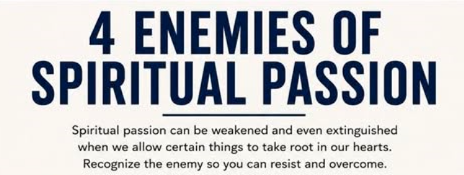
The Next 4 Days, a Study about the Enemies of SPIRITUAL PASSION
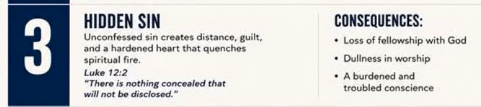
HIDDEN SIN !!! SECRET SIN
A secret can be difficult to keep and equally difficult to share. Yet life seems to run on secrets, from concealing birthday presents to obscuring a difficult past to protecting the whereabouts of an important political figure. The Bible teaches, indirectly, that keeping secrets can be either good or bad, but it does not clearly delineate the right and wrong uses of secrets.
The Bible shows that, throughout the history of Israel, political and military secrets were kept. Scripture does not pronounce any moral judgments for or against the keeping of those secrets (e.g., 2 Samuel 15:35–36). However, in the story of Samson and Delilah (Judges 16:4–22), Samson reveals the source of his strength, an act which, based on the aftermath of his admission, was awfully stupid. It was a secret he should have kept.
Esther’s story provides a positive example of someone keeping a secret. Queen Esther’s decision to hide her nationality (Esther 2:20) became an integral part of God’s plan to save His people (Esther 4:13; 7:3–6). The same story also supports the morality of revealing a secret that, if kept hidden, would cause great wrong or serious harm (Esther 2:21–23).
Proverbs, the central book among the “wisdom literature” of the Bible, is the most explicit about keeping secrets. Chapter 11 says that “a man of understanding holds his tongue. A gossip betrays a confidence, but a trustworthy man keeps a secret” (verse 12–13). So, keeping a secret can be noble. But secrets kept for the wrong reason earn a person the title of “wicked,” for “a wicked man accepts a bribe in secret to pervert the course of justice” (Proverbs 17:23), and “whoever slanders his neighbor in secret, him will I put to silence” (Psalm 101:5).
Keeping secrets of one type is always wrong: trying to hide sin. “He who conceals his sins does not prosper, but whoever confesses and renounces them finds mercy” (Proverbs 28:13). When it comes to our sin, God wants full disclosure, and He grants full forgiveness (Isaiah 1:18).
Of course, there’s no use trying to hide our sin from God. Keeping secrets from Him is impossible. He is “the God of gods . . . and a revealer of secrets” (Daniel 2:47, NKJV). Even our “secret sins” are exposed in His light (Psalm 90:8). “For nothing is secret that will not be revealed, nor anything hidden that will not be known and come to light” (Luke 8:17).
God Himself keeps secrets. There are some things—probably many things—hidden from us: “The secret things belong to the LORD our God” (Deuteronomy 29:29). Jesus asked several people to keep miracles He had done secret. For example, Jesus healed two blind men and told them, “See that no one knows about this” (Matthew 9:30). When Job realized the immensity of God’s knowledge, he spoke of “things too wonderful for me to know” (Job 42:3).
We can conclude that God does not consider keeping secrets to be sinful in and of itself. There are some things that people should know and some things they should not. God’s concern is how secrets are used, whether to protect others or to hurt them.

Tea Time Manna
Commit to the Lord whatever you do, and your plans will succeed.
—Proverbs 16:3
The real question behind this promise is very simple: How do I define success for my plans? The answer is very simple as well: bringing glory to God for his grace (Ephesians 1:6, 12, 14). Committing our works and plans to God means surrendering them to God’s will (James 4:15), trusting that Jesus will be glorified in them (Colossians 3:17), and recognizing that it is not in our power to properly guide our steps (Proverbs 16:9). God longs to bless us and empower us — not for our selfish ambition (James 3:16, 4:3), but for our eternal good and God’s glory (Romans 8:28-29). Like Jesus, when we commit our plans and works to the Lord, we are saying, “Not my will, Father, but yours be done!” When we do that and seek his glory, we will find true success!
Prayer
Father, I want your will to shape all of my plans. I want your glory to be my goal and the result of my plans. I have things that I want to do. However, if these plans are not for your glory, if these plans are not a blessing to my family or those over whom I have influence, then please defeat me in those plans and please guide me into other areas of blessing. I want you to be glorified in what I do. I want to go where your grace leads. I commit my ways, my plans, and my works to you and your glory, and trust that you will bring the proper success. In Jesus’ name, I pray. Amen and Amen
Bible Teaching of the Day
LUNCH MANNA =
Some form of the word presumptuous appears eight times in the King James Version (KJV). The word indicates intentionality and audacity in rebellion. A presumptuous sin can be committed by a single person (Exodus 21:14; Numbers 15:30; Deuteronomy 17:12; 18:22; Psalm 19:13), multiple people (2 Peter 2:10), or the entire nation of Israel (Deuteronomy 1:43; 17:13).
The phrase presumptuous sins is found only once in the KJV. Most older translations use the word presumptuous, while newer translations instead use deliberate, willful, arrogant, insolent, flagrant, or similar words. Here is the passage in the Revised Standard Version, including the previous verse for context: “Who can discern his errors? Clear thou me from hidden faults. Keep back thy servant also from presumptuous sins; let them not have dominion over me. Then I shall be blameless, and innocent of great transgression” (Psalm 19:12–13).
The author of Psalm 19, King David, presents two types of sin, hidden (unintentional, accidental, secret, unseen by the sinner) and presumptuous (deliberate, intentional). We all know that our intentional sins need God’s forgiveness (Exodus 32:33; Mark 3:29). But God’s perfect law also requires our unintentional sins to be atoned for (Leviticus 4; 5:17; Numbers 15:22–29). So, David humbly prays to God for protection from and forgiveness of both kinds of sin, knowing his own human weakness and powerlessness against this enemy, this disease of the soul, this foreign invader in all humans (1 John 1:8).
Presumptuous sins are deliberate. They are committed with the full knowledge that they are sins and in full light of what God has said. Presumptuous sins are premeditated. There is intent to sin and a time of deliberation before the act. Presumptuous sins can only be committed in suppression of the conscience and in spite of its appeals. Those who sin presumptuously say, in effect, “I’m going to do this, and nothing is going to stop me. I know what God says about it, and I don’t care if it’s wrong. I’m going to do it anyway.”
Presumptuous sins—sins committed in willful defiance of God—are a grave offense. In fact, Numbers 15:30–31, the Old Testament law specified that someone guilty of willful, defiant sin was to be “cut off from among his people” (NKJV). Charles Spurgeon pointed out, “All sins are great sins, but yet some sins are greater than others. . . . While all transgression is a greatly grievous sinful thing, yet there are some transgressions which have a deeper shade of blackness, and a more double scarlet-dyed hue of criminality than others” (from Sermon 135, New Park Street Pulpit, Volume 3). A presumptuous sin would certainly have a “deeper shade.”
Presumptuous sin is committed in direct contradiction to what a person knows is true. We can know that something is wrong—we’ve spoken out against it, and we’ve counseled others to avoid it—but, given opportunity, temptation, and a moment of weakness, we can succumb to the very sin we were sure we would never commit. We knew it was wrong, even as we were doing it, but that knowledge did not prevent us from deliberately moving forward in our sin. It’s almost inexplicable, until we remember the nature of the human heart.
Committing presumptuous sin does great damage to one’s relationship with the Lord. But there is forgiveness available in Christ. God is merciful to the repentant: “Let the wicked forsake their ways and the unrighteous their thoughts. Let them turn to the Lord, and he will have mercy on them, and to our God, for he will freely pardon” (Isaiah 55:7). Peter, who grievously denied the Lord three times, was restored, and God’s plan for him continued. David, who murdered a man and took his wife, was forgiven and restored to a place of blessing. God can forgive all sin in Christ (1 John 1:7–9).
John Calvin wrote, “Unless God restrain us, our hearts will violently boil with a proud and insolent contempt of God” (Commentary on Psalms, note on Psalm 19:13). That’s why David prayed, “Keep back your servant also from presumptuous sins; let them not have dominion over me!” (Psalm 19:13, ESV). May God be our defender against temptation and grant us wisdom to recognize defiance within us and strength to resist it. May we be preserved from the audacity of presumptuous sins.
Today’s Devotional
DINNER MANNA =
If you lived isolated on an island in the middle of the sea, then perhaps your private sin would not affect anyone but yourself. However, since the maxim is “no man is an island,” there is a good chance that you have family, friends, and acquaintances that you come into contact with on a continual basis. All of them will be affected in some way by sin because sin has consequences (Romans 6:23). That is a principle that follows the pattern laid down at the creation. Everything created has a seed from which it propagates itself after its “kind” (Genesis 1:11, 21, 25). In other words, you do not plant corn and expect to harvest beets. You cannot “plant” sin—even in private—and not expect to reap a harvest of consequences. And consequences have a way of spilling out over everyone and anyone that comes into contact with us because of another principle called “association.” This means that those around you can be blessed or hurt by association with you and the choices and actions you make, both privately and publicly.
One needs only to look at the recent scandals involving famous evangelical leaders to see the effects on others of “private” sins. Once they are discovered—and the Bible tells us to “be sure your sin will find you out” (Numbers 32:23)—families, friends, congregations, and the Christian community at large will be harmed. Worse still, the cause of Christ will be damaged as unbelievers scoff and sneer at us and blaspheme His name. It may seem that people sin without visible consequences, but what is secret will one day be made manifest. “For there is nothing hidden that will not be disclosed, and nothing concealed that will not be known or brought out into the open” (Luke 8:17). Can you honestly say that there is no one that would then be affected by your secret sins if they should become known?
Sin that is kept secret produces guilt, and guilt has a way of changing us. Others see those changes and are affected by them. Perhaps a spouse, for instance, is unaware of her husband’s addiction to pornography, but his addiction leads to a guilty secretiveness and change in attitude toward her as his sexual partner. She perceives that change and speculates on the possible cause—he finds her unattractive, he doesn’t love her any more, or he’s having an affair. While none of these things are true, the consequences of his “private” sin are potentially devastating to her, their marriage, and their family, even if his secret is never discovered.
Here is another principle to consider. “But when you pray, go into your room, close the door and pray to your Father, who is unseen. Then your Father, who sees what is done in secret, will reward you. . . . So that it will not be obvious to men that you are fasting, but only to your Father, who is unseen; and your Father, who sees what is done in secret, will reward you” (Matthew 6:6, 18). When we reason from Scripture, we are able to see a principle here that can be applied both positively and negatively. What we do in secret, God will reward openly. If we pray and fast as unto the LORD, we are rewarded. So, it stands to reason that if we sin in secret, we shall also be “rewarded” openly for that action. In any case, God sees and knows about sin, whether private or public, and He does not let sin go unpunished.
The greatest consequence of private, personal sin is to our own mortal soul. Ezekiel 18:4 says that the soul that sins shall die, and Romans 6:23 tells us that the wages of sin is death. This speaks of a person who is a natural, habitual sinner without the benefit of newness of life. For the born-again child of God—one who has accepted the Lord Jesus Christ as his savior—there is a standard of conduct, both in private and in public: “So whether you eat or drink or whatever you do, do it all for the glory of God” (1 Corinthians 10:31). A born-again child of God has a desire to live to glorify God, and even though there are times when we can and do fail, God has made provision for us to be in fellowship with Him. He has promised that “If we confess our sins, he is faithful and just and will forgive us our sins and purify us from all unrighteousness” (1 John 1:9).

NEWS MANNA –
Bible Prophecy, Signs of the Times and Gog and Magog Updates with Articles in the News
Dying Liberal Churches Continue To Elevate Unbiblical Leadership
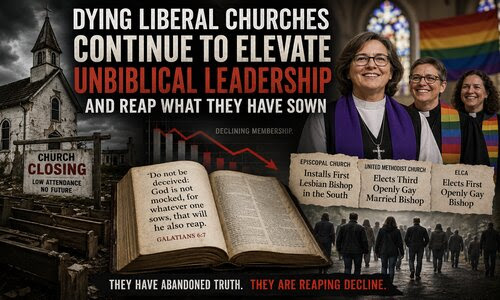
There was a time when America’s mainline Protestant denominations filled massive sanctuaries, shaped public culture, and sent missionaries around the world. Today, many of those same denominations are shrinking at a historic pace, closing churches, selling off properties, and watching younger generations drift away. Yet instead of asking why their pews continue to empty, many of their leaders appear determined to double down on the very theological changes that helped accelerate the decline.
The latest example comes from the Episcopal Church, where the Rev. Sarah Fisher was installed as bishop of the Episcopal Diocese of East Carolina. Fisher, who is in a same-sex relationship with the Rev. Mandy Brady, reportedly became the first openly lesbian Episcopal bishop leading a diocese in the southern United States. Her election was celebrated as a historic milestone by church leaders, but it also serves as another reminder of how far many mainline denominations have moved from historic biblical Christianity.
Supporters view such developments as progress. Critics see something very different: a denomination continuing to elevate leaders whose lifestyles openly contradict centuries of Christian teaching while wondering why membership continues to collapse.
The numbers tell a sobering story.
The Episcopal Church had approximately 2.1 million members in 2006. By 2023, membership had fallen to roughly 1.54 million. The decline has been relentless. Churches have closed, congregations have merged, and attendance has steadily weakened. The downward trend accelerated following the denomination’s embrace of progressive theological positions, including the consecration of Gene Robinson in 2003 as the church’s first openly gay bishop. That decision triggered a massive exodus of conservative congregations and years of legal battles over church property.
Yet rather than viewing these developments as a warning sign, many leaders appear committed to pushing even further.
The Episcopal Church is hardly alone.
The United Methodist Church recently experienced one of the largest denominational splits in modern American history. Thousands of congregations chose to leave over disagreements surrounding biblical authority, sexuality, and doctrine. In the midst of that turmoil, the denomination celebrated the election of another openly gay married bishop, Kristin Stoneking, after delegates voted to remove longstanding restrictions regarding LGBTQ clergy and leadership.
The Evangelical Lutheran Church in America (ELCA) has followed a similar path. In 2025, the Metropolitan New York Synod elected Katrina Foster as its first openly gay bishop. The denomination has spent years embracing progressive positions on sexuality and gender identity, while also elevating transgender and openly LGBTQ leaders into prominent roles.
At some point, an obvious question must be asked.
If these changes are supposedly revitalizing Christianity, where are the crowds?
Where is the growth?
Where is the revival?
The answer is difficult to ignore.
Most of the denominations leading the charge into progressive theology are simultaneously among the fastest-declining religious bodies in North America.
This is not merely a political issue. It is fundamentally a theological one.
Historically, Christianity has grown when churches confidently proclaimed biblical truth, called people to repentance, preached salvation through Jesus Christ, and distinguished themselves from the surrounding culture. The early church did not attract converts because it mirrored Rome. It attracted converts because it stood apart from Rome.
Today, many liberal denominations appear to be pursuing the opposite strategy.
Rather than confronting culture, they often seek affirmation from it.
Rather than asking what Scripture teaches, many appear more concerned with what modern activists demand.
Rather than calling people to transformation through Christ, they increasingly reshape doctrine to accommodate contemporary social movements.
The result should not surprise anyone.
When churches become nearly indistinguishable from secular culture, people begin asking an uncomfortable question: why bother attending church at all?
If a congregation simply echoes the same messages people hear from universities, Hollywood, corporate diversity departments, and social media, the church ceases to offer something unique. It loses its prophetic voice. It loses its spiritual authority. Eventually, it loses its members.
Ironically, many of the fastest-growing churches around the world are those doing the exact opposite.
Across Africa, Asia, Latin America, and even pockets of North America, churches that maintain traditional biblical teachings continue to grow. They preach repentance. They preach the authority of Scripture. They preach Christ crucified and risen. They offer certainty in a confused age rather than confusion wrapped in religious language.
The contrast could hardly be clearer.
Liberal denominations frequently speak about inclusion, diversity, and relevance. Yet year after year, they continue reporting declining attendance, declining membership, declining baptisms, and aging congregations.
Meanwhile, churches that refuse to surrender biblical convictions often face criticism from the culture but continue attracting those hungry for truth.
None of this means every conservative church is healthy or every liberal church is empty. But broad trends matter. And the broad trend is undeniable.
When denominations spend decades undermining biblical authority, redefining morality, and elevating leaders whose lifestyles openly conflict with historic Christian teaching, they should not be shocked when fewer people view them as trustworthy guardians of the faith.
Galatians 6:7 contains a timeless principle: “Do not be deceived: God is not mocked, for whatever one sows, that will he also reap.”
For decades, many mainline denominations have sown theological compromise. They have sown accommodation to cultural pressures. They have sown doubt regarding the authority of Scripture.
Now they are reaping the harvest.
The tragedy is not merely declining membership statistics. The deeper tragedy is that many souls searching for truth enter these churches looking for biblical guidance and instead receive affirmation of the very culture that has already left so many spiritually empty.
A church cannot abandon its foundation and expect the structure to remain standing forever. History–and increasingly the membership rolls–are proving that lesson in real time.
The State Of Canadian Christianity Is Much Much Worse Than Most Realize
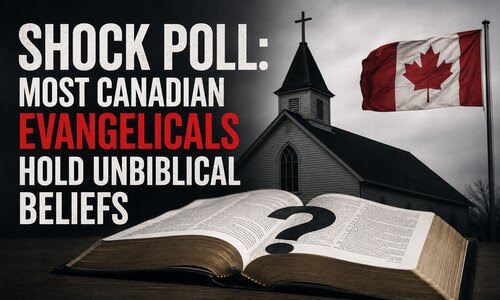
There are survey results that make you pause. Then there are survey results that leave you wondering whether entire generations have sat in church buildings without ever hearing the basic truths of the Christian faith.
A newly released State of Theology survey from Ligonier Ministries Canada and Lifeway Research falls firmly into the second category.
The findings are nothing short of shocking.
What makes them even more alarming is that these are not the beliefs of the general Canadian public. These are the beliefs of people classified as evangelicals–the very segment of Christianity that has historically been known for taking the Bible seriously, emphasizing personal salvation through Jesus Christ, and defending core Christian doctrine.
If these are the beliefs of evangelicals, one can only imagine what similar polling might reveal among Canada’s increasingly liberal mainline denominations.
The survey found that 73 percent of Canadian evangelicals agreed with the statement that “Everyone is born innocent in the eyes of God.” Another 60 percent agreed that “Everyone sins a little, but most people are good by nature.”
Those answers directly contradict one of the most foundational teachings of Christianity.
The Bible teaches that humanity has inherited a fallen nature through Adam’s sin. Scripture repeatedly describes mankind as spiritually dead, separated from God, and in desperate need of redemption. The Gospel itself begins with the reality that humanity has a sin problem that cannot be solved through personal goodness or moral effort.
If people are born innocent and are mostly good by nature, then why did Jesus have to die?
That is not a minor theological disagreement. It strikes at the very heart of the Gospel message.
Yet the surprises do not stop there.
Perhaps one of the most astonishing findings in the survey is that 66 percent of Canadian evangelicals agreed with the statement that “The Holy Spirit is a force but is not a personal being.”
This is remarkable because 93 percent of the same respondents affirmed belief in the Trinity.
How can both statements be true?
The doctrine of the Trinity teaches that God exists eternally as Father, Son, and Holy Spirit–three distinct persons sharing one divine essence. To deny the personhood of the Holy Spirit is to deny a central component of the Trinity itself.
It would be similar to claiming belief in a triangle while insisting one of its sides does not exist.
The survey appears to reveal what the late theologian R.C. Sproul often called “happy inconsistencies”–people affirming Christian labels while simultaneously holding beliefs that undermine those very labels.
But even that explanation may not fully account for what these numbers reveal.
Consider another statistic.
Forty-five percent of Canadian evangelicals agreed that “Jesus was a great teacher, but he was not God.”
Read that again.
Nearly half of self-identified evangelicals deny the deity of Christ.
Yet according to the survey’s own definition, these same individuals affirm that the Bible is their highest authority and that salvation comes through Jesus Christ alone.
The contradiction is staggering.
The New Testament repeatedly and explicitly identifies Jesus as divine. The opening chapter of John’s Gospel declares that “the Word was God.” Thomas worships the risen Christ by declaring, “My Lord and my God.” Jesus Himself accepted worship, forgave sins, and claimed titles reserved for God alone.
Christianity without the deity of Christ is not Christianity at all.
It becomes merely another moral philosophy built around a remarkable teacher.
The survey also found that 28 percent of Canadian evangelicals believe the Bible contains helpful myths but is not literally true.
Again, the contradiction is difficult to ignore.
How can Scripture be the highest authority in someone’s life if it is viewed primarily as mythology?
An authority that cannot be trusted cannot truly function as an authority.
The deeper issue revealed by this survey may be the growing disconnect between Christian identity and Christian understanding.
For generations, many Canadians have continued to identify as Christian culturally even as biblical literacy has collapsed. Churches have increasingly emphasized feelings over doctrine, experience over truth, and personal fulfillment over discipleship.
The result is a Christianity that often retains Christian vocabulary while losing Christian content.
People still use words like salvation, grace, faith, and Jesus. But many no longer understand what those words actually mean.
This is not merely a Canadian problem. Similar surveys in the United States have shown troubling levels of theological confusion. But Canada’s increasingly secular culture appears to be accelerating the trend.
For decades, Christian leaders warned that biblical illiteracy would eventually produce doctrinal confusion. That prediction now appears to be playing out before our eyes.
The solution is not despair but discipleship.
The Church does not need better marketing strategies. It does not need trendier programs. It does not need more cultural accommodation.
It needs a renewed commitment to teaching the Word of God clearly, faithfully, and unapologetically.
The Apostle Paul warned that a time would come when people would not endure sound doctrine. We may be witnessing the consequences of that warning today.
These survey results should serve as a wake-up call for every pastor, church leader, parent, and believer in Canada.
A nation cannot preserve biblical Christianity if it no longer understands what biblical Christianity teaches.
The numbers in this survey are not merely statistics. They are a spiritual alarm bell ringing across the Canadian Church.
And it is getting harder to ignore.
TruLight Ministries Daily Entertainment Manna

TruLight TV – Gaither Gospel Series – Irish Homecoming
This live concert, videotaped at Whitewell Metropolitan Tabernacle in Belfast, is spiced with Celtic sounds. Joy Gardner is joined by an Irish choir on “The Promise” while Larry Ford, who has developed a following in Ireland in recent years, performs “What A Friend We Have In Jesus.” Anthony Burger offers a dazzling piano solo on “Holy, Holy, Holy.” Russ Taff moves close to the audience to sing “Ain’t No Grave” and the Gaither Vocal Band raises the roof on “It Is Finished.”
Today on TruLight Radio XM
TruLight Radio XM 24/7
Program
GMT / UTC +2
Monday To Fridays
00:15 Words to Live By Testimonies
01.15 Science Scripture and Salvation
02.15 Ground Works
04.00 Gospel Concert of the Day
05.00 The Daren Streblow Comedy Show
5:55 It is Today devotional
6:00 Gaither Homecoming Morning Show
7:15 Discover the Word
8.15 Destined for Victory
8:55 Science Scripture and Salvation
9:00 Holy Spirit Hour – Normally Sermons
10:15 Hope of the Heart
11:15 Unshackled
11.45 Words to Live By
12:15 Truth for Life
13:15 Living on the Edge with Chip Ingram
14:15 Focus on the Family
15:00 Kids Hour
16:00 In Touch with Dr. Charles Stanley
16:30 Groundwork
17:15 Live in the Light
18:15 Renewing your Mind
19:00 Gaither Homecoming Show
20:15 Growing Hope
21:15 Adventures in Odyssey Radio Drama
21:45 Bible Reading
22:15 Night-sounds
23.00 Good Old Country Gospel / Rhema Gospel Express
VISIT THE WEBSITE
TruLight Ministry News – EXTRA MANNA
TruLight Ministries orders from God since 2012 . Teach Them , Comfort Them and Warn Them!
Healing Truths.
End Time Articles.
Bonus Manna = Bonus Teaching for the Child of God !!
HIDDEN WORD AGAINST HIDDEN SIN !!!
The unparalleled importance and power of God’s Word in the life of those who love, honor, and obey it is the theme of Psalm 119. In verse 11, the psalmist acknowledges, “I have hidden your word in my heart that I might not sin against you,” stressing the purifying quality of the Word of God to keep believers from straying into sin. Outward obedience comes from having the Scriptures buried deep within our hearts like a priceless treasure.
How can we have God’s Word hidden in our hearts? Let’s start by gaining a better understanding of what the psalmist is saying. The word for “hidden” in the original Hebrew means “to treasure, to regard as highly valued, to hide, keep, save up, store.” Translations range from “I have treasured your word in my heart” (CSB), to “I have stored up your word in my heart” (ESV), to “I’ve banked your promises in the vault of my heart” (The Message).
God’s Word is the agent of His Spirit used to cleanse the hearts of all who believe in Christ and are saved (Ephesians 5:25–27). And it is through keeping God’s Word securely planted in our hearts and living according to what it says that believers continue to walk in holiness (Psalm 37:31; 119:9).
The Lord commanded Israel, “Fix these words of mine in your hearts and minds; tie them as symbols on your hands and bind them on your foreheads. Teach them to your children, talking about them when you sit at home and when you walk along the road, when you lie down and when you get up. Write them on the doorframes of your houses and on your gates” (Deuteronomy 11:18–20). This passage mentions several of the ways we can hide, treasure, and store up God’s Word in our hearts. Let’s explore these in detail.
Read
One of the first steps in hiding God’s Word in our hearts is reading the Bible. We get to know God and understand His plan for our lives through the Scriptures (2 Timothy 3:16; Hebrews 4:12; Psalm 119:105). Every Christian ought to pursue a consistent method of reading through the Bible.
Listen
Proverbs 2:1–5 conveys the benefits of listening to the Word of God: “My child, listen to what I say, and treasure my commands. Tune your ears to wisdom, and concentrate on understanding. . . . Search for them as you would for silver; seek them like hidden treasures. Then you will understand what it means to fear the LORD, and you will gain knowledge of God” (NLT).
Romans 10:17 says, “So faith comes from hearing, that is, hearing the Good News about Christ” (NLT). The spoken Word of Christ—the peaching of the gospel message—has the power to produce faith and reveal Christ. In Jesus Christ’s day, Scripture was read aloud in the synagogues and recited in households. When we listen to the Scriptures, either in music or read out loud, we reinforce God’s Word in our hearts.
Write
Proverbs 7:1–3 states, “My son, keep my words and store up my commands within you. Keep my commands and you will live; guard my teachings as the apple of your eye. Bind them on your fingers; write them on the tablet of your heart.” Writing down our thoughts as we read and listen to the Bible will help clarify and strengthen those biblical truths in our hearts (Exodus 34:27; Deuteronomy 6:6, 8–9; Habakkuk 2:2).
Talk About
Discussing God’s Word with our children, spouse, friends, and small group members will further strengthen, illuminate, and solidify its teachings in our hearts and minds (Deuteronomy 6:7).
Study
The Bible urges us to study the Scriptures for greater understanding (Acts 17:11). The apostle Paul told Timothy, “Do your best to present yourself to God as one approved, a worker who does not need to be ashamed and who correctly handles the word of truth” (2 Timothy 2:15). Use a study Bible and other resources to help you accurately apprehend what Scripture is saying, not superficially, but historically and in the proper context.
Meditate
The Bible also encourages us to “delight in the law of the LORD, meditating on it day and night” (Psalm 1:2, NLT). We are to think about God’s instructions and promises all day and night long (Psalm 119:97, 148). As we ponder God’s Word continually, treasuring, storing, and hiding it in our hearts, it will literally transform how we think and behave (Romans 12:2).
Share this Feeding of Manna with your Friends and Family. just click on the Social Media icon and share !