Hosted by TruLight Ministries – The Place of Truth
SELECT YOUR READING LANGUAGE – BOTTOM LEFT = YOUR DAILY MANNA NOW AVAILABLE IN 103 LANGUAGES
@ TruLight – Daily Manna is not Just a Bible Verse with a Small Prayer . No WE SERVE DAILY Manna for the Whole Day . Breakfast , Lunch , Dinner , Plus tea Times and even Entertainment Manna . Plus News Manna and More , This Daily Manna will keep you Spiritually full for the full 48 Hours and even More to Share with your Friends and Family !!!
The Enemies of spiritual Passion!!!

The Next 4 Days, a Study about the Enemies of SPIRITUAL PASSION
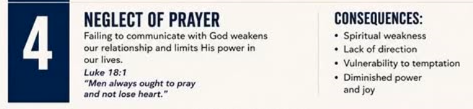
NEGLECT OF PRAYER !!!
The prayers Jesus prayed give us insight into His nature, His heart, and His mission on earth. The prayers of Jesus also inform and encourage us in our own prayer lives. Far more important than where He prayed, when He prayed, and in what position He prayed is the fact that He prayed. The theme of His prayers is instructive for all of us.
Prayer was an integral part of Jesus’ time on earth, and He prayed regularly: “Jesus often withdrew to lonely places and prayed” (Luke 5:16). If the Son incarnate found it necessary to commune with the Father frequently, how much more do we need to do so? Jesus faced persecution, trials, heartache, and physical suffering. Without regular and continual access to the throne of God, He would surely have found those events unbearable. In the same way, Christians must never neglect to “approach God’s throne of grace with confidence, so that we may receive mercy and find grace to help us in our time of need” (Hebrews 4:16).
What is often called “The Lord’s Prayer” is actually a teaching tool of Christ as part of His Sermon on the Mount (Matthew 6:9–13). In this model prayer, Jesus teaches us to approach God as “our Father”; to hallow God’s name; to pray for God’s will; and to ask for daily provision, forgiveness, and spiritual protection.
In addition to His regular times of prayer, Jesus prayed at some important events in His life: He prayed at His baptism (Luke 3:21–22); before feeding the 5,000 (Luke 9:16) and the 4,000 (Matthew 15:36); and at the moment of His transfiguration (Luke 9:29). Before Jesus chose His twelve disciples, He “spent the night praying to God” on a mountainside (Luke 6:12).
Jesus prayed at the return of the 72 disciples: “At that time Jesus, full of joy through the Holy Spirit, said, ‘I praise you, Father, Lord of heaven and earth, because you have hidden these things from the wise and learned, and revealed them to little children. Yes, Father, for this is what you were pleased to do’” (Luke 10:21).
Jesus prayed at Lazarus’ tomb. As they rolled away the stone from His friend’s tomb, “Jesus looked up and said, ‘Father, I thank you that you have heard me. I knew that you always hear me, but I said this for the benefit of the people standing here, that they may believe that you sent me’” (John 11:41–42). This is a good example of prayer prayed in the hearing of others for the sake of the hearers.
In Jerusalem the week of His arrest, Jesus predicted His soon-to-come death. As He spoke of His coming sacrifice, Jesus prayed a very short prayer: “Father, glorify your name!” (John 12:28). In response to Jesus’ prayer, a voice from heaven said, “I have glorified it, and will glorify it again.” Spending a last few minutes with His disciples on the night of His arrest, Jesus prayed an extended prayer known today as His “high priestly prayer” (John 17) on behalf of His own, those given to Him by the Father (verse 6). In this prayer, Jesus is the Intercessor for His children (cf. Hebrews 7:25). He prays “not . . . for the world, but for those you have given me, for they are yours” (verse 9). He prays that they would have His joy (verse 13) and that God would keep them from the evil one (verse 15). He prays for His own to be sanctified by the truth, which is the Word of God (verse 17), and to be unified in that truth (verses 21–23). In the John 17 prayer, Jesus looks to the future and includes all those who would ever believe in Him (verse 20).
Jesus prayed in the Garden of Gethsemane just before His arrest (Matthew 26:36–46). He had asked His disciples to pray with Him, but they fell asleep instead. Jesus’ agonized prayer in the garden is a model of submission and sacrifice: “My Father, if it is possible, may this cup be taken from me. Yet not as I will, but as you will” (verse 39). Three times Jesus prayed this.
Jesus even prayed from the cross, in the midst of His agony. His first prayer echoes Psalm 22:1 and expresses His deep distress: “About three in the afternoon Jesus cried out in a loud voice, ‘Eli, Eli, lemasabachthani?’ (which means “My God, my God, why have you forsaken me?”) (Matthew 27:46). Jesus also prayed for the forgiveness of those who were torturing Him to death: “Father, forgive them, for they do not know what they are doing” (Luke 23:34). In His final breath, Jesus continued to express His faith in God: “Father, into your hands I commit my spirit” (Luke 23:46).
Several themes are apparent in Jesus’ prayers. One is the giving of thanks to the Father. Praise was a regular part of Jesus’ prayers. Another theme is His communion with the Father; His relationship with His heavenly Father naturally resulted in His desire to spend time communicating with Him. The third theme in Jesus’ prayers is His submission to the Father. Our Lord’s prayers were always in accordance with God’s will.
Just as Jesus gave thanks, we should in all things pray with thanksgiving (Philippians 4:6–7). As God’s adopted children, we should naturally desire to talk to God (Ephesians 3:12). And in everything we should seek the Lord’s will above our own. Jesus prayed in a variety of settings, public and private. He prayed in times of joy and times of sorrow. He prayed for Himself, and He prayed for others. He prayed to express thanks, to petition for needs, and to commune with His Father. Jesus set the example of how we should trust God, submit to God, and seek fellowship with God.
To this day, Jesus continues to pray for His own from His exalted position in heaven at the right hand of God. Scripture says He makes intercession for those who belong to Him (Hebrews 7:25; Romans 8:34; 1 John 2:1). It is significant that, at Jesus’ ascension, He was taken away from His disciples into heaven “while he was blessing them” (Luke 24:51). That blessing has never stopped. Jesus will continue to bless those who come to God through faith in Christ until He comes again.

Tea Time Manna
Christ was sacrificed once to take away the sins of many people; and he will appear a second time, not to bear sin, but to bring salvation to those who are waiting for him.
—Hebrews 9:28
Can you think of anything more exciting than waiting for Jesus to come take us home to share with him in his glory?!
Ours isn’t a passive wait. Jesus gave us a commission to take his story to the whole world and invite others to prepare and join with us in awaiting his glorious return. We worship and praise our great God as we anticipate this great day — as we eagerly await him. We joyfully anticipate our salvation, trusting that it is nearer now than when we first believed (Romans 13:11). We stand on spiritual tiptoe, eagerly awaiting our Savior, the Lord Jesus Christ (Philippians 3:20). We not only believe, we anticipate his return to bring the full experience of salvation promised to “those who are waiting for him.” But until then, we work on mission so that others will join us in our anticipation, and say with us, “Maranatha! Come, O Lord (1 Corinthians 16:22).
Prayer
Majestic King of the Ages, may your Kingdom come in all its fullness as every knee bows to your Savior, and our King, the Lord Jesus Christ. We anticipate this day when every knee will bow (Philippians 2:9-10)! Please grant that this glorious day may come to pass in our generation as we work to bring others to know Jesus and anticipate his coming with us. Through Jesus, I expectantly pray. Amen and Amen

Bible Teaching of the Day
LUNCH MANNA =
Every Christian has probably wondered at one time or another, “How do I hear from God?” The question is natural because we want to know what God has in store for us, and we are eager to please our heavenly Father. The range of answers, however, has caused much confusion and controversy. We need to be biblical when we answer the question how can I hear from God?
The Bible tells us how we hear from God: “Long ago, at many times and in many ways, God spoke to our fathers by the prophets, but in these last days he has spoken to us by his Son, whom he appointed the heir of all things, through whom also he created the world” (Hebrews 1:1–2, ESV).
Before the Incarnation of God the Son, God spoke through the prophets. We heard from God through men such as Moses, Isaiah, Ezekiel, Micah, Malachi, and the other prophets. They relayed messages from God, and often their words were written down and preserved so we would always know His promises, His law, and His redemptive plans.
There were times when God spoke directly to people. Abraham and Joshua, for example, conversed with God directly at times (Genesis 12:1; 17:1; Joshua 5:13–15). Others, such as Jacob, heard from God through dreams (Genesis 28:12–13). Ezekiel saw visions (Ezekiel 1:1). Saul began to hear from God and spoke for Him when “the Spirit of God came powerfully upon him” (1 Samuel 10:10).
But, in most cases, people did not hear from God directly; rather, they were responsible to read God’s written Word or seek out God’s chosen mouthpiece. On at least two occasions, King Jehoshaphat asked to hear from a prophet of God (1 Kings 22:7; 2 Kings 3:11). Ben-Hadad, king of Aram, sought to hear from God through the prophet Elisha (2 Kings 8:7–8). Isaiah told the people of Judah they had a responsibility to “consult God’s instruction and the testimony of warning” (Isaiah 8:20); that is, they were to read the written Word of God already delivered to them.
With the birth of Jesus, things changed. John the Baptist was the last of the Old Testament prophets. Through the ministry of Jesus, God spoke directly to us. Jesus’ teachings in the Sermon on the Mount, the Sermon on the Plain, and the Olivet Discourse; and His pronouncements of being the Bread of Life, the True Vine, and the Good Shepherd are God’s direct revelation of who He is. Jesus’ words “are full of the Spirit and life” (John 6:63).
The writer to the Hebrews says, “In these last days he has spoken to us by his Son.” The “last days” are the current dispensation—the church age. Jesus Christ was the pinnacle of God’s revelation; He is the Final Word to us. In the Bible Jesus’ words are recorded for us. When Jesus ascended back into heaven, He left behind hand-picked apostles who were given the special task of recording what Jesus had said and done. Under the inspiration of the Holy Spirit, these men were authorized by God to speak and record God’s words to His church so that all of the church can truly hear from God. We now hear from God through His written Word, which is the Bible.
So, basically, we hear from God by reading our Bibles and hearing it preached.
For many people who want to hear from God, hearing, “Read your Bible,” is not very satisfying. They desire a more “direct” and “personal” communication. There are many problems with such a desire, starting with the fact that neglecting or rejecting the Bible in order to seek a “new” word from God is spiritually dangerous. It is arrogant for someone to think that he is so special as to receive direct revelation from God, especially when God said in the first century that He has spoken through His Son, who is “appointed heir of all things, and through whom also he made the universe” (Hebrews 1:2). We can’t top Jesus. There are no modern-day apostles or prophets who function in the same manner as the biblical apostles and prophets.
God does speak to people today, but the means He uses always include the Bible. The Holy Spirit indwells every believer and gives gifts to them as He chooses. Some are given gifts to teach, correct, admonish, and encourage other Christians. There is no new revelation being given (see Revelation 22:18), but God has gifted people in the church to be able to speak into the lives of other Christians. Exhortation and the offering of biblical advice are important within the community of believers.
A pastor’s instruction from God’s Word is one way we hear from God today. A friend’s advice, tied to Scripture, is another way we hear from God. A directive issued by a God-ordained authority figure is another way we hear from God.
We should never neglect praying and meditating on God’s Word. As we meditate on a passage of Scripture, and we pray for God’s direction and understanding, we hear from God. When we feed daily on the Bible, the Holy Spirit points us to truths that we know are from God because they come directly from His Word. What a privilege it is to have God’s Word readily available to us!
“I meditate on your precepts and consider your ways.
I delight in your decrees;
I will not neglect your word”
(Psalm 119:15–16)
Today’s Devotional
DINNER MANNA =
Many times in Scripture, God’s people are encouraged to seek the face of God. A familiar verse declares, “If my people, who are called by my name, will humble themselves and pray and seek my face and turn from their wicked ways, then I will hear from heaven, and I will forgive their sin and will heal their land” (2 Chronicles 7:14). If we can’t see God’s face, how do we seek God’s face?
The Hebrew word for “face” in the Old Testament is often translated “presence.” When we seek the face of God, we are seeking His presence. The call to seek God’s face was issued to His people because they had abandoned Him and needed to return to Him.
A person’s face reveals much about his or her character and personality. We see the inward emotions of a person expressed outwardly on the face. We recognize a person by looking at his or her face. In a sense, one’s face represents the whole person. For the writers of the Bible, the human face could represent the entire person.
In Psalm 105:4, God’s faithful ones were called to “seek his face always.” Even if we have not abandoned God, there are times when we neglect to pursue Him. God’s face, His holy character, is often obscured by our human condition and fleshly desires. That is why the Lord urges us to seek His face continually. The Lord desires to be our constant companion in every experience of life. He wants us to know Him through and through. If we draw close to Him, God will draw close to us: “Come close to God, and God will come close to you. Wash your hands, you sinners; purify your hearts, for your loyalty is divided between God and the world” (James 4:8, NLT).
When we approach God in prayer, we are seeking His face: “Who may ascend the mountain of the LORD? Who may stand in his holy place? The one who has clean hands and a pure heart, who does not trust in an idol or swear by a false god. They will receive blessing from the LORD and vindication from God their Savior. Such is the generation of those who seek him, who seek your face, God of Jacob” (Psalm 24:3–6).
The true nature of worship is to seek God’s face. The Christian walk is a life devoted to seeking God’s presence and favor. The Lord wants us to humbly and trustingly seek His face in our prayers and in our times in His Word. It requires intimacy to look intently into someone’s face. Pursuing God’s face is equivalent to developing an intimate relationship with Him: “O God, you are my God; I earnestly search for you. My soul thirsts for you; my whole body longs for you in this parched and weary land where there is no water. I have seen you in your sanctuary and gazed upon your power and glory. Your unfailing love is better than life itself; how I praise you!” (Psalm 63:1–3, NLT).
Having God’s face smile on us is an expression of His blessing, love, and favor: “May the LORD smile on you and be gracious to you” (Numbers 6:25, NLT; see also Psalm 80:3, 7, 19). When we draw close to God, we are blessed with His shining favor. We do not pursue Him only to give Him a list of wants and needs because we know God is already aware of what we need (Matthew 6:7–8, 32–33). We trust that He will take care of us.
Seeking God’s face means desiring to know His character and wanting Him—His presence—more than any other thing He can give us.

NEWS MANNA –
Bible Prophecy, Signs of the Times and Gog and Magog Updates with Articles in the News
The New Gospel Of Inclusion Is Disrupting Christian Music
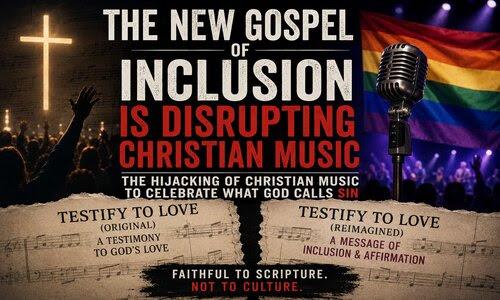
For generations, Christian worship music has served a sacred purpose. It was never primarily about entertainment, self-expression, or cultural relevance. Worship was designed to direct hearts toward God, proclaim biblical truth, encourage believers, and point sinners to the saving grace of Jesus Christ. The greatest Christian songs endure because they exalt God rather than man. They remind us of who He is, what He has done, and our need for repentance and redemption.
That is why the growing trend of reworking Christian songs into vehicles for affirming lifestyles contrary to Scripture is so troubling.
The latest example comes from the rerelease of the beloved contemporary Christian hit “Testify to Love.” Nearly three decades after the song became one of the defining anthems of Christian radio, former Avalon member Michael Passons has partnered with country artist Ty Herndon and singer Melissa Greene to create a new version featuring LGBTQ themes.
Passons, who publicly came out as gay in 2020, described the project as a “full-circle moment” after leaving Avalon years earlier. Supporters have praised the song as an anthem of inclusion, healing, and affirmation for those who have experienced what is often called “religious trauma.”
But Christians must ask an important question: inclusion into what?
The issue is not whether God loves every person. Scripture repeatedly affirms that He does. The issue is whether Christian worship music should be used to affirm behavior that Scripture consistently identifies as sinful.
The answer is no.
The Bible teaches that all people are sinners in need of salvation. Whether the sin is greed, pride, lust, adultery, drunkenness, or homosexual behavior, God’s call is always the same: repentance and transformation through Christ. Christian music has historically reflected that message. The goal was not to reassure people in their sin but to lead them out of it.
Yet increasingly, some artists appear determined to redefine Christian music’s purpose. Instead of pointing people toward God’s standards, they seek to reshape God’s standards around modern cultural values.
What makes the controversy surrounding “Testify to Love” even more significant is that the reworked version reportedly surged to No. 1 on the iTunes Christian chart shortly after its release. Supporters celebrated the achievement as evidence that attitudes within portions of the Christian music audience are changing and that a growing number of listeners embrace a more inclusive vision of faith.
But the chart success raises a more sobering question. How many listeners fully understand the theological shift taking place beneath the surface?
Many Christians hear a familiar melody and remember the song’s original message without realizing that it is now being presented within an entirely different framework. What was once a testimony to God’s transforming love is increasingly being used as a symbol of affirming identities and lifestyles that historic Christianity has consistently taught require repentance. The debate is no longer occurring on the fringes of Christian culture. It is now reaching the very charts and platforms that helped shape modern worship music for an entire generation.
Supporters of the rerelease have been remarkably candid about their broader goals. In interviews and public statements surrounding the project, many have described it as part of a larger effort to reconcile LGBTQ identity with Christianity and to challenge traditional interpretations of Scripture. In other words, the conversation extends far beyond a single song. The song itself has become a vehicle for advancing a larger theological argument–that Christianity must evolve alongside changing cultural attitudes regarding sexuality and identity.
That is why songs like “Testify to Love” are being repurposed. The objective is not simply musical creativity. It is theological revision.
By attaching LGBTQ affirmation to familiar worship songs, activists gain something powerful: emotional credibility. Music bypasses intellectual defenses and speaks directly to the heart. If beloved Christian songs can be reinterpreted through a new lens, then biblical teachings themselves begin to feel negotiable.
This strategy is not new.
One of the earliest and most influential examples was Ray Boltz. For years, Boltz was one of Christian music’s biggest stars, known for songs such as “Thank You” and “Watch the Lamb.” In 2008, he publicly announced that he was gay and later became a prominent advocate for LGBTQ acceptance within Christian circles.
Another major example is Jennifer Knapp. After years as a respected Christian recording artist, Knapp publicly acknowledged being in a same-sex relationship and became one of the most visible voices arguing that Christianity and homosexual practice can coexist without contradiction.
Former members of groups such as Avalon are now joining that same movement. The support surrounding the new “Testify to Love” project has also included encouragement from artists associated with Point of Grace and others within the broader contemporary Christian music community who have increasingly embraced progressive theological positions.
What connects many of these stories is not simply a personal struggle with sin. Every Christian battles sin. Rather, it is the public effort to redefine sin itself.
That distinction matters.
Christianity has always welcomed sinners. In fact, there are no other kinds of people. The church is filled with former addicts, adulterers, thieves, liars, idolaters, and countless others who found forgiveness through Christ. What Christianity has never done is celebrate the very sins from which Christ came to save us.
When worship music becomes a tool for affirming behaviors Scripture condemns, it ceases to function as worship. Instead, it becomes a vehicle for cultural messaging dressed in Christian language.
This is precisely why these controversies generate such strong reactions. They are not merely debates about music styles or artistic freedom. They are debates about authority.
Who gets the final word on truth?
Is it Scripture, or is it culture?
Every generation of Christians faces pressure to conform God’s Word to the spirit of the age. In previous eras, the battles centered around different issues. Today, sexuality and gender have become some of the primary fault lines.
The tragedy is that many artists who once used their gifts to proclaim biblical truth are now using those same gifts to challenge it. Songs originally written to glorify Christ are being repackaged to affirm identities and behaviors that Scripture calls people to leave behind.
Christians should respond with both conviction and compassion. We should never hate those who disagree with biblical teaching. We should pray for them, love them, and share the Gospel with them. But love does not require abandoning truth.
In fact, genuine love depends upon it.
The power of worship music is immense because music shapes what people believe. It teaches theology long after sermons are forgotten. That is why believers must be discerning about the messages attached to the songs they sing.
The question facing the church is not whether Christian music should evolve with changing culture. The question is whether Christian music will remain faithful to the unchanging Word of God.
The answer to that question will determine whether future generations are taught to testify to God’s love–or merely to humanity’s desire for affirmation.
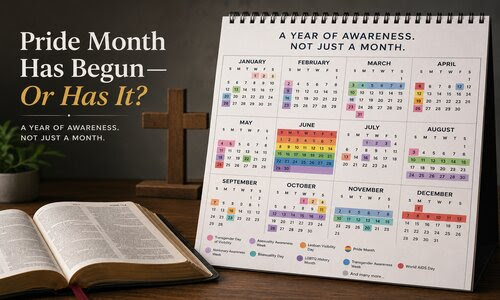
Pride Month Has Begun – Or Did It Ever End? The Rainbow Flag That Never Comes Down.
As June begins, a familiar ritual is unfolding across much of the Western world.
Corporate logos are being transformed into rainbow-colored versions of themselves. Social media feeds are filling with Pride Month messages. Government agencies, sports leagues, entertainment companies, major retailers, and countless public institutions are once again rolling out campaigns celebrating LGBTQ identities and causes.
For millions of Americans, it has become one of the most recognizable annual events on the cultural calendar. The rainbow banners appear. The themed advertising campaigns begin. Companies that sell everything from hamburgers to banking services suddenly become eager participants in conversations about sexuality and gender identity.
Americans are told that “Pride Month” has arrived and that celebration is expected. Yet a growing number of people are beginning to ask a simple question: Has Pride Month really begun–or has it ever actually ended?
For decades, Pride Month was presented as a single month dedicated to recognizing those who identify as LGBTQ. Today, however, the movement has expanded far beyond June. What was once marketed as a month-long observance has become a year-round cultural phenomenon.
Advocacy organizations now recognize dozens of LGBTQ-related awareness days, weeks, and months throughout the calendar. International Transgender Day of Visibility is observed on March 31. International Asexuality Day follows on April 6. Lesbian Visibility Day takes place on April 26. Harvey Milk Day is celebrated on May 22. Pride Month occupies June. International Drag Day arrives in July. Celebrate Bisexuality Day is recognized in September. LGBTQ History Month fills October, along with National Coming Out Day and International Pronouns Day. November includes Transgender Awareness Week and Transgender Day of Remembrance. December begins with World AIDS Day.
The point is not to debate every date on the calendar. The point is that LGBTQ observances now stretch across much of the year. By some estimates, LGBTQ-related awareness campaigns, commemorations, and celebrations occupy nearly one-third of the calendar year.
Think about that for a moment.
One out of every three days is connected to some form of LGBTQ recognition, awareness, remembrance, or celebration.
Whether one supports or opposes the movement, it is difficult to argue that it suffers from a lack of visibility.
In fact, few groups in modern Western society receive more sustained institutional recognition than the LGBTQ movement. From corporations and universities to government agencies, sports leagues, entertainment companies, and media outlets, public affirmation has become a year-round reality rather than a month-long observance.
For many Christians, this raises an important question: When does awareness become promotion? When does tolerance become celebration? And when does celebration become ideological conformity?
The issue is not whether people should be treated with dignity and respect. Scripture teaches that every human being is made in the image of God and possesses inherent value. Christians are commanded to love their neighbors, even when profound disagreements exist.
The concern is that modern Pride celebrations increasingly demand more than tolerance. They demand affirmation.
There is a significant difference between allowing people to live according to their own choices and requiring society to celebrate those choices.
Historically, Pride events were presented primarily as civil rights demonstrations. Today, many Pride celebrations openly center around sexual identities, sexual behaviors, gender identities, and romantic preferences. Christians are left asking why sexual preference has become one of the most celebrated aspects of human identity.
Imagine if society devoted months of observances, awareness campaigns, corporate promotions, educational programs, and public celebrations to almost any other category of personal behavior. Most people would find it excessive. Yet when it comes to sexuality and gender identity, the cultural expectation appears to be endless affirmation.
The message is impossible to miss.
Corporate marketing campaigns. Public schools. Children’s programming. Professional sports leagues. Streaming platforms. Government agencies. Social media companies. Entertainment awards shows.
The celebration is not confined to June.
It is everywhere.
And for Christians attempting to raise children according to biblical convictions, that reality creates growing tension. Families increasingly find themselves navigating a culture that not only rejects biblical teachings regarding sexuality but actively seeks to replace them with an entirely different worldview.
Yet perhaps the most troubling development is not what is happening in Hollywood, corporate boardrooms, government agencies, or public schools.
It is what is happening in churches.
As June begins, numerous mainline Protestant denominations are once again preparing Pride Month worship services, Pride celebrations, Pride liturgies, and LGBTQ-themed church events. Denominations such as the United Church of Christ, the Evangelical Lutheran Church in America (ELCA), the Presbyterian Church (USA), the Christian Church (Disciples of Christ), the United Methodist Church, and The Episcopal Church have increasingly woven Pride Month observances into their annual church calendars.
Many congregations will display rainbow flags alongside crosses. Others will organize special Pride worship services, Pride-themed sermons, and public celebrations specifically affirming LGBTQ identities and relationships.
For supporters, these events are viewed as expressions of inclusion and acceptance.
For many Bible-believing Christians, however, they represent something far more serious: a reversal of the church’s historic mission.
The New Testament presents the church as a place where all sinners are welcomed but where no sinner is affirmed in sin. The Gospel invitation has always been accompanied by a call to repentance. Jesus welcomed tax collectors, adulterers, and outcasts, but His message consistently included the command to “repent and believe.”
The church’s role has never been to mirror the culture. Its role has been to proclaim truth to the culture–even when that truth is unpopular.
Yet increasingly, some denominations appear more interested in affirming contemporary sexual ideologies than proclaiming biblical teaching regarding sexuality, marriage, and holiness. What previous generations of Christians viewed as behaviors requiring repentance are now being celebrated from pulpits, incorporated into worship services, and elevated as expressions of spiritual faithfulness.
This raises a sobering question: If the church no longer calls people away from sin, what exactly is it calling them to?
Throughout history, the church has often faced pressure to conform to prevailing cultural values. The challenge facing Christians today is not entirely new. What is new is the speed and enthusiasm with which some churches have embraced ideas that directly conflict with thousands of years of Christian teaching.
A church that refuses to call sinners to repentance may attract cultural applause, but it risks abandoning the very message that gives people hope. The Gospel is not good news because it affirms us as we are. It is good news because Christ transforms us into what we were created to be.
Perhaps the most uncomfortable question surrounding Pride Month is one that advocates rarely address.
If unprecedented levels of visibility, affirmation, representation, and celebration are the answer, why do so many troubling statistics remain?
Despite extraordinary cultural support, studies continue to show elevated rates of depression, anxiety, self-harm, and suicidal ideation among those who identify as LGBTQ.
That reality should not be used to mock anyone’s pain. Every life matters. Every struggle deserves compassion.
But it does raise an important question.
If affirmation and celebration are the cure, why does the crisis persist?
Perhaps the answer lies deeper than politics, representation, or social approval.
Scripture teaches that every human being–regardless of race, background, orientation, identity, wealth, or status–shares the same fundamental problem: separation from God.
The deepest human need is not affirmation.
It is reconciliation.
The greatest crisis facing humanity is not a lack of visibility.
It is a lack of truth.
And the solution is not found in another awareness campaign, another corporate logo change, another month of celebration, or another cultural movement.
It is found in the Gospel of Jesus Christ.
This is why many Christians increasingly view Pride Month not as a simple call for tolerance, but as evidence of a culture searching desperately for meaning in identities that were never designed to carry the weight of human purpose.
The modern world tells people to look inward for fulfillment.
The Gospel tells people to look upward.
One says, “Celebrate yourself.”
The other says, “Deny yourself, take up your cross, and follow Christ.”
Those two messages are fundamentally incompatible.
As June begins, Christians should respond neither with fear nor hostility. They should respond with conviction, compassion, courage, and truth. They must refuse to compromise biblical teaching while remembering that every person they encounter is someone Christ died to save.
Because in the end, no amount of cultural celebration can heal what only the Creator can restore.
And that is something worth remembering–not just in June, but every day of the year.
TruLight Ministries Daily Entertainment Manna

TruLight TV & Kingdom Kidz TV – Finding Hidden Treasure: A Lesson in Faith for Kids
On today’s episode of Kids Hour, How can I help my child when they are feeling down? When we are feeling down, God is always there to comfort us. In week seven of “Blueprints,” your child learns the true story of how God comforted Jonah when he was sad (Jonah 1-4). Meanwhile, over at Konnect HQ, Dot is convinced that there’s hidden treasure waiting to be discovered. She’s putting her faith into action and following the clues to find it. And to keep the energy high, we’ll be playing some amazing gospel children’s songs. Join us for a fun-filled hour!
Today on TruLight Radio XM
TruLight Radio XM 24/7
Program
GMT / UTC +2
Monday To Fridays
00:15 Words to Live By Testimonies
01.15 Science Scripture and Salvation
02.15 Ground Works
04.00 Gospel Concert of the Day
05.00 The Daren Streblow Comedy Show
5:55 It is Today devotional
6:00 Gaither Homecoming Morning Show
7:15 Discover the Word
8.15 Destined for Victory
8:55 Science Scripture and Salvation
9:00 Holy Spirit Hour – Normally Sermons
10:15 Hope of the Heart
11:15 Unshackled
11.45 Words to Live By
12:15 Truth for Life
13:15 Living on the Edge with Chip Ingram
14:15 Focus on the Family
15:00 Kids Hour
16:00 In Touch with Dr. Charles Stanley
16:30 Groundwork
17:15 Live in the Light
18:15 Renewing your Mind
19:00 Gaither Homecoming Show
20:15 Growing Hope
21:15 Adventures in Odyssey Radio Drama
21:45 Bible Reading
22:15 Night-sounds
23.00 Good Old Country Gospel / Rhema Gospel Express
VISIT THE WEBSITE
TruLight Ministry News – EXTRA MANNA

TruLight Ministries orders from God since 2012 . Teach Them , Comfort Them and Warn Them!
Healing Truths.
End Time Articles.
Bonus Manna = Bonus Teaching for the Child of God !!
Some of the most promising and spectacular words ever spoken by God are found in the book of Jeremiah: “You will seek me and find me when you seek me with all your heart. I will be found by you” (Jeremiah 29:13–14). And sometimes, in our quest for finding God, it appears that He wants to remind us of this extraordinary promise. We’re deeply troubled, so we fervently pray. We’re distressed, so we cry out to God for relief. But sometimes all we hear in reply is a silence so deafening it drowns out every thought but this: God isn’t listening. So we ask, “Has God abandoned me?”
Many believers have experienced the feeling that finding God is difficult or impossible. After C. S. Lewis lost his wife to cancer, he called out to God for comfort but sensed no reply. Confused, he asked, “What can this mean? Why is He so present a commander in our time of prosperity and so very absent a help in time of trouble?”
The Scripture speaks of cries for help from those who are intent on finding God: “Will the Lord reject forever? Will he never show his favor again? Has his unfailing love vanished forever? Has his promise failed for all time?” (Psalm 77:7–8).
This prayer of the psalmist communicates the heart of someone focused on finding God: “O God, do not keep silent; be not quiet, O God, be not still” (Psalm 83:1).
At times, finding God seems difficult, even for those who have a relationship with Him. Changes in life bring uncertainty: the loss of a job, a divorce, a job promotion, the birth of a child. Some have referred to these unexpected changes in life as “divine interruptions.” Even when the change is positive, it can interrupt our feelings of well-being and leave us feeling alone. The question arises, “Where is God anyway? Why am I having such a difficult time finding God?”
It’s important to remember that, in finding God, the promise of Jeremiah 29:13–14 is never nullified by our subjective feelings. Just because we feel that God is far from us doesn’t mean He is. In fact, He has told us that He will never leave us or forsake us (Hebrews 13:5). Since God never lies, we reject incorrect conclusions about our circumstances when those conclusions contradict what we know about God from His Word. We walk by faith, not by sight (2 Corinthians 5:7).
For the key to finding God, we have to go back to Psalm 77. After the psalmist laments that God has rejected him and His love has vanished (verses 7–8), he comes to his senses and writes verses 11–12, giving us the two-part solution to feeling abandoned by God: “I will remember the deeds of the LORD; yes, I will remember your miracles of long ago. I will meditate on all your works and consider all your mighty deeds.” First, the psalmist determines to remember God’s deeds and His miracles. Just remembering how God saved us from a life of futility and an eternity in hell should give us a proper perspective on His love. When we think of the many times God has intervened in our lives in the form of answered prayer, we are reminded of His faithfulness. Some people find it helpful to keep a journal of answered prayer that they can refer back to in the “dry” times of doubts and confusion.
Second, the psalmist determines to meditate on God’s Word to reach his objective of finding God. Meditating on God’s Word is the only sure way to come to right conclusions about God. Those who are “blessed” in Psalm 1 are those who mediate on God’s law—the Bible—“day and night.” God’s Word delights us (Psalm 1:2) and makes us strong, fruitful, and able to withstand life’s storms without withering (verse 3). To neglect the Word is to neglect the only means of sanctification in our lives (John 17:17) and to leave ourselves open to the lies of the devil, who would like nothing better than to convince us that God has abandoned us.
Jeremiah promises that, when we seek God with all our hearts, God will be found. As Paul told the Athenians, God “is not far from any one of us. ‘For in him we live and move and have our being’” (Acts 17:27–28). As we embark on the never-ending quest to find God in every single day, we remember and meditate on His mighty works, and we welcome His “divine interruptions.”
Share this Feeding of Manna with your Friends and Family. just click on the Social Media icon and share !