Hosted by TruLight Ministries – The Place of Truth
SELECT YOUR READING LANGUAGE – BOTTOM LEFT = YOUR DAILY MANNA NOW AVAILABLE IN 103 LANGUAGES
@ TruLight – Daily Manna is not Just a Bible Verse with a Small Prayer . No WE SERVE DAILY Manna for the Whole Day . Breakfast , Lunch , Dinner , Plus tea Times and even Entertainment Manna . Plus News Manna and More , This Daily Manna will keep you Spiritually full for the full 48 Hours and even More to Share with your Friends and Family !!!
For the Next 2 week we will look at the Fruits of the Flesh !
BITTERNESS – THE FRUIT CHANGER !!! THE POISON THAT SENDS SOULS TOWARDS DESTRUCTION !!!
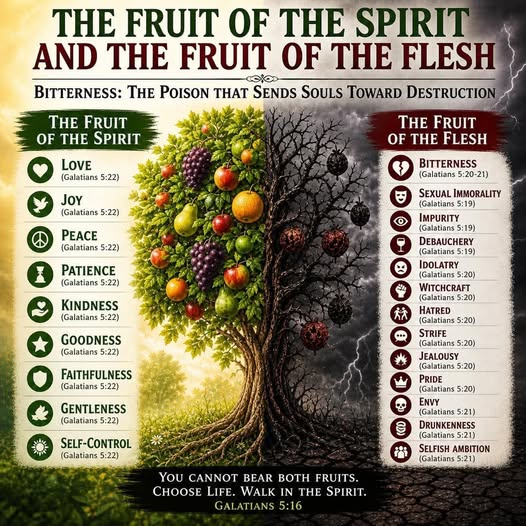
Bitterness is resentful cynicism that results in an intense antagonism or hostility toward others. The Bible teaches us to “get rid of all bitterness, rage and anger, brawling and slander, along with every form of malice.” It then goes on to tell us how to deal with such bitterness and its fruits by being “kind and compassionate to one another, forgiving each other, just as in Christ God forgave you” (Ephesians 4:31-32).
As an adjective, the word bitter means “sharp like an arrow or pungent to the taste, disagreeable; venomous.” The idea is that of the poisonous water given to the women who were suspected of committing adultery in Numbers 5:18: “The bitter water that brings a curse.” In its figurative sense, bitterness refers to a mental or emotional state that corrodes or “eats away at.” Bitterness can affect one experiencing profound grief or anything that acts on the mind in the way poison acts on the body. Bitterness is that state of mind that willfully holds on to angry feelings, ready to take offense, able to break out in anger at any moment.
The foremost danger in succumbing to bitterness and allowing it to rule our hearts is that it is a spirit that refuses reconciliation. As a result, bitterness leads to wrath, which is the explosion on the outside of the feelings on the inside. Such unbridled wrath and anger often leads to “brawling,” which is the brash self-absorption of an angry person who needs to make everyone hear his grievances. Another evil brought on by bitterness is slander. As used in Ephesians 4, it is not referring to blasphemy against God or merely slander against men, but to any speech springing from anger and designed to wound or injure others.
All this then leads to a spirit of malice, which signifies evil-mindedness or feelings of intense hatred. This kind of attitude is sensual and devilish in its influences. Malice is a deliberate attempt to harm another person. Therefore, “every form of malice” must be done away with (Ephesians 4:31).
The person who is bitter is often resentful, cynical, harsh, cold, relentless, and unpleasant to be around. Any expression of these characteristics is sin against God; they are of the flesh, not of His Spirit (Galatians 5:19-21). Hebrews 12:15 warns us to “see to it that no one misses the grace of God and that no bitter root grows up to cause trouble and defile many.” We must always be wary of allowing “bitter roots” to grow in our hearts; such roots will cause us to fall short of the grace of God. God wills that His people live in love, joy, peace, and holiness—not in bitterness. Therefore, the believer must always watch diligently, being on guard against the dangers of bitterness.

Tea Time Manna
Before the mountains were born or you brought forth the earth and the world, from everlasting to everlasting you are God.
. . .
For a thousand years in your sight are like a day that has just gone by, or like a watch in the night.
—Psalm 90:2, 4
So many things about our lives are uncertain. This one thing, however, is sure: no matter where, when, or how long, God will be there and will be with us and will be for us. He is the “I AM” — the one “who is, and who was, and who is to come” — of every past, present, and future moment (Revelation 1:8). He will not forsake us (Hebrews 13:5-6). We will never be separated from his love for us in Jesus (Romans 8:38-39). Because God existed before anything was made (John 1:1-3), we can trust he will be with us when this form of creation ends, and when he ushers us into our eternal home with him forever. Hold fast, dear child of the eternal God, our Father has all of us, his children, in his “everlasting arms” (Deuteronomy 33:27-28).
Prayer
Everlasting Father, I find great comfort in knowing that I cannot be in a place or time where you are not. Stir my courage through your Spirit, that I may be bolder because of your power and presence. Help me to share the Gospel of Jesus with boldness, yet with gentleness and respect (1 Peter 3:15-16), with those who need your hope. In Jesus’ name I pray. Amen and Amen

Bible Teaching of the Day
LUNCH MANNA =
Hebrews 12:15, in the King James Version, refers to a “root of bitterness” which, if it springs up, will “trouble you, and thereby many be defiled.” What exactly is this “root,” and how can it defile many? True to the purpose of the book of Hebrews, we can find some explanations in the Old Testament, which are confirmed by other uses in the New Testament.
First, it is helpful to look at a more recent translation of the entire verse. The New International Version reads, “See to it that no one misses the grace of God and that no bitter root grows up to cause trouble and defile many” (Hebrews 12:15). This passage is directed at the whole church.
In the Hebrew culture, any poisonous plant was called a “bitter” plant. Poison destroys, and the result of ingesting a poisonous plant would be bitter, indeed. The author of the book of Hebrews uses a “bitter root” as a metaphor for that which would bring harm to the church.
There is a verse in the Pentateuch that closely mirrors the wording in Hebrews. In Deuteronomy 29, Moses reviews the covenant between God and Israel. In this context, he says, “Make sure there is no root among you that produces such bitter poison” (Deuteronomy 29:18). This particular “bitter poison” is idolatry in defiance of the covenant. Throughout the Old Testament, the Hebrew word translated “bitter poison” refers either to the unfaithful (Deuteronomy 29:18; Amos 6:12) or to their punishment (Jeremiah 8:14; 9:15; 23:15).
Moving to the New Testament, we have another reference to the destructive power of bitterness. While rebuking Simon the Sorcerer, Peter tells him to repent of his wickedness, with an added insight: “I see that you are full of bitterness and captive to sin” (Acts 8:23). Simon’s wickedness was his desire to buy the power of the Holy Spirit, essentially treating God as a commodity to enhance his own career as a magician.
So, the “bitter root” in Hebrews refers to a source of evil or wickedness within the church. A root may be small and slow in its growth, but, if it carries poison, it is malignant; it is dangerous. Sin in the church must be diligently rooted out; the result of tolerating wickedness is that “many” will be defiled.
For an example of how God dealt with a “root of bitterness” in the early church, see the story of Ananias and Sapphira in Acts 5. Obviously, God considers pulling up such “bitter roots” to be critically important to the health of His church.
Today’s Devotional
DINNER MANNA =
Proverbs 14:10 states, “The heart knows its own bitterness, and no stranger shares its joy” (ESV). Here, Solomon highlights our inner experience of bitterness and joy. Everyone experiences emotions that, on a certain level, others cannot fully understand or empathize with.
The word bitterness in Proverbs 14:10 is synonymous with suffering or sorrow. The word is juxtaposed with joy in the second half of the proverb’s couplet. While others may sympathize with our sufferings, they cannot grasp the true depth of our pain. Job’s life is an example of this reality. Job says, “Have pity on me, my friends, have pity, for the hand of God has struck me” (Job 19:21), but he finds no comfort from them. Job’s friends had good intentions in trying to console him, but they could not understand his anguish and they wrongly assumed the reasons behind it. As Job tells them, “My brothers are as undependable as intermittent streams” (Job 6:15). Sorrow is often solitary.
It is sometimes difficult to articulate the bitterness or sorrow within our hearts. Words often fail to capture the complexity of grief, and no objective observer can step in to our subjective worlds. No one, that is, except Jesus. The truth that the heart knows its own bitterness is given a hopeful twist in the old African American spiritual:
Nobody knows the trouble I see,
nobody knows but Jesus;
oh, nobody knows the trouble I see,
glory hallelujah! (“Nobody Knows the Trouble I See” Songs of Zion, 170 and 171)
The spiritual and Scripture remind to bring our burdens to God, who knows us thoroughly:
O Lord, you have searched me and known me!
You know when I sit down and when I rise up;
you discern my thoughts from afar.
You search out my path and my lying down
and are acquainted with all my ways” (Psalm 139:1–3, ESV)
Acknowledging that “the heart knows its own bitterness” (Proverbs 14:10, ESV) has profound implications for interpersonal relationships. While we cannot fully understand another’s pain, godly empathy calls believers to enter their experiences as much as possible. We are to “rejoice with those who rejoice; weep with those who weep” (Romans 12:15, ESV). Though our understanding of their joy and sorrow is limited, our expression of Christian love and fellowship is necessary.
Knowing that only the heart knows its own bitterness, we must be careful not to place unrealistic expectations on others to meet our emotional needs. Only God can ultimately fulfill those needs. Human relationships are essential, but they are limited. God wants us to rely on Him. Psalm 34:18 says, “The Lord is near to the brokenhearted and saves the crushed in spirit” (ESV). God sees, understands, and heals the inner wounds that others may only see in part.
God’s concern for our emotional well-being means we can be vulnerable in prayer: “Pour out your heart before him; God is a refuge for us” (Psalm 62:8, ESV). God promises to console our troubled hearts when we come to Him. As we pray with thanksgiving, “the peace of God, which surpasses all understanding, will guard your hearts and your minds in Christ Jesus” (Philippians 4:7, ESV).
Proverbs 14:10 reminds us of the personal nature of human emotions. Every person carries bitterness within his or her heart that no one else can fully understand. While this can make us feel isolated, Scripture encourages us to rest in God’s providential care: “When anxiety was great within me, your consolation brought my joy” (Psalm 94:19, ESV). God is the only person who fully knows our hearts.
Embracing Solomon’s wisdom in Proverbs 14:10 allows us to grow in our relationships with God and others. We find the courage to bring our innermost struggles to the Lord, knowing He cares about us. At the same time, we develop greater compassion for others. God does not want us to suffer in silence. He wants us to trust and depend on Him to supply our needs.

NEWS MANNA –
Bible Prophecy, Signs of the Times and Gog and Magog Updates with Articles in the News
When Apostate Pastors Make Disciples: The Dangerous Legacy of Progressives
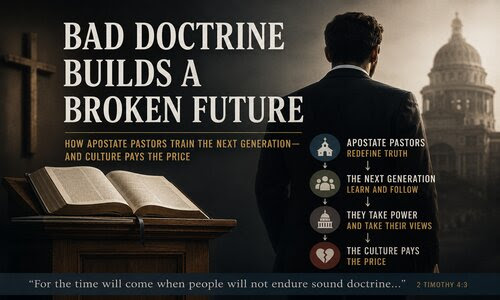
Every generation leaves a spiritual inheritance to the next. Faithful pastors pass on sound doctrine, a love for God’s Word, and a commitment to biblical truth. But what happens when pastors abandon those foundations? What happens when church leaders begin treating Scripture as something to be corrected, edited, or explained away rather than believed?
The answer is now playing out in real time across the World CHURCH.
One of the clearest examples may be found in Austin, Texas, where progressive pastor Jim Rigby has spent decades reshaping Christianity according to modern cultural values. Now one of his most prominent disciples, Texas politician James Talarico, is taking those same ideas beyond the walls of the church and into the public square as he runs for the Senate.
This is how theological drift works. It rarely stops with one pastor. Ideas reproduce. Beliefs spread. Teachers make disciples who become teachers themselves.
And eventually entire generations inherit the consequences.
The recent profile of Rigby and Talarico reveals far more than a simple pastor-congregant relationship. It provides a window into how progressive Christianity trains the next generation to embrace a faith that increasingly bears little resemblance to historic biblical Christianity.
Consider the environment in which Talarico was spiritually formed.
During a Sunday service at Rigby’s church, congregants were asked what came to mind when they heard the name of the Apostle Paul. The responses included “villain,” “homophobic,” and “he’s a jerk.”
Imagine that for a moment.
The Apostle Paul was not merely an influential Christian thinker. He was chosen by Christ, inspired by the Holy Spirit, and responsible for much of the New Testament. Through his writings, God gave the church foundational doctrines concerning salvation, grace, sanctification, marriage, church leadership, and Christian living.
Yet in this congregation, one of Christianity’s greatest apostles is openly ridiculed.
This should alarm every Bible-believing Christian.
The problem is not merely disrespect toward Paul. The problem is what such attitudes reveal about the authority of Scripture itself. Once believers are taught that biblical authors were morally defective, culturally backward, or fundamentally wrong on important issues, it becomes easy to dismiss any biblical teaching that conflicts with modern values.
The authority shifts from God’s Word to human opinion.
That shift becomes even more evident when examining Rigby’s theology.
He reportedly avoids referring to God as “Lord.” He avoids masculine pronouns for God. He says he does not particularly care for the word “God” itself. In sermons, he has referred instead to a vague “creative impulse of the universe.”
This language may sound spiritual, but it is a far cry from the God revealed in Scripture.
The Bible does not describe God as an undefined force. God reveals Himself personally and specifically. He identifies Himself as Father. Jesus repeatedly refers to Him as Father. Christ Himself is called Lord. These are not accidental descriptions that modern believers are free to rewrite. They are divine revelations.
Yet progressive Christianity increasingly treats God’s self-revelation as something that must be adjusted to fit contemporary sensitivities.
The consequences become evident in the positions being promoted.
Rigby played a significant role in pushing his denomination toward affirming same-sex relationships. His church has hosted ceremonies affirming transgender identities. The church uses an “Inclusive Bible” that alters traditional wording in an effort to accommodate modern ideological concerns.
What began as theological accommodation has become theological transformation.
And now those same ideas are appearing in politics through figures like Talarico.
Talarico frequently frames progressive political positions using biblical language. He has argued for abortion rights using the story of Mary. He has promoted interpretations of Scripture that critics say blur or redefine biblical understandings of gender. He regularly presents progressive political priorities as natural extensions of Christian teaching.
This is precisely why doctrine matters.
Ideas have consequences.
What pastors teach on Sunday eventually shapes what leaders advocate on Monday.
When pastors teach that Scripture is flexible, politicians learn to use Scripture as a tool to support whatever cultural cause they favor. When pastors question biblical authority, future leaders become comfortable reinterpreting God’s Word to fit contemporary ideologies.
A generation ago, many Christians assumed progressive theology would remain confined to declining mainline denominations.
They were wrong.
The influence of these ideas now extends through social media, seminaries, universities, political movements, and increasingly visible public figures who speak the language of Christianity while redefining its content.
Perhaps the most sobering aspect of this story is that Rigby himself expressed delight at seeing Talarico “taking the ideas out there.”
That statement captures the heart of the issue.
Every pastor is making disciples.
Every church is producing a next generation.
The question is not whether ideas are being passed down. The question is which ideas are being passed down.
Will the next generation inherit a faith anchored in the authority of Scripture, the lordship of Jesus Christ, and the historic truths of the Gospel?
Or will they inherit a Christianity that treats biblical authors as villains, Scripture as optional, doctrine as negotiable, and God’s revelation as something to be revised whenever culture changes?
The Apostle Paul warned that a time would come when people would no longer endure sound doctrine but would gather teachers who tell them what they want to hear (2 Timothy 4:3).
That warning feels increasingly relevant today.
The church’s greatest threat has never been opposition from outside. It has always been corruption from within.
And when apostate pastors train the next generation, the damage rarely ends with one congregation. It spreads into institutions, communities, and even governments.
That is why Christians must remain vigilant.
Because today’s progressive pastor may be producing tomorrow’s influential leader.
And what is planted in the pulpit today may shape an entire culture tomorrow.
Three Incorrect Approaches To Biblical Prophecy With Disastrous Consequences

Bible prophecy is an exceptional gift given to us by God. The Creator of the universe, in His sovereignty and authority, provides us with an astonishing glimpse into the future.
Sadly, instead of reading these prophecies with hopeful anticipation, discernment, and assurance, vast segments of the church are spiraling down a dangerous road, failing to recognize the disastrous consequences of three incorrect approaches to Biblical prophecy.
Removing — In the first category are those who ignore Biblical prophecy as a whole; unfortunately, they make up a considerable portion of the church.
In this case, over one-third of Scripture is disregarded entirely, often branded as confusing, divisive, impractical, disruptive, or a stumbling block scaring away new believers. Each of these accusations misrepresents God’s prophetic Word and its powerful impact.
The apostles not only used Bible prophecy as a witnessing tool to showcase the authenticity of Jesus Christ, but they also considered the topic to be essential to a Christian’s understanding from the very beginning of their walk with the Lord. Equipped with knowledge about the future from Scripture, Christians are encouraged (1 Thess. 4:18, Luke 21:28, 2 Peter 1:19), filled with hope (Titus 2:13, Phil. 3:20), receive special blessings (Rev. 1:3), and are promised rewards in eternity (2 Tim. 4:8).
Considering that “the testimony of Jesus is the spirit of prophecy” (Rev. 19:10) and Christ frequently urged the church to “watch” for the season of His return (Matt. 24:42), the position of rejecting Biblical prophecy is an untenable position for any believer to take. It is also deeply damaging, leaving us with an incomplete picture of God’s plan of redemption, and having a ripple effect through our understanding of Scripture.
Adding — The second incorrect approach to Biblical prophecy comes at the other end of the spectrum and is related to those who add to the text–sensationalizing or making predictions that go beyond what God’s Word has expressly stated.
While this can also arise from those who declare themselves to be prophets and apostles in the modern day, I would like to focus on those who apply considerable conjecture when examining what God’s Word has to say about the future.
For example, in Ezekiel 38 we read about a future war, where a coalition of countries–including Russia, Iran, and Turkey–will attack the nation of Israel. The prophecy references the death of the Russian leader during this war. The challenge, however, arises when Christians make statements declaring: “According to Bible prophecy, Russian President Vladimir Putin will face his ultimate demise on the mountains of Israel.” Now wait just a moment! The text doesn’t explicitly say that. The leadership in Russia could change tomorrow, and then, in the eyes of all those who heard this declaration, God is viewed as the liar!
This also applies to date-setting and other assumptions added to the text, and it happens routinely among many popular prophecy commentators.
The danger is obvious. When we say, “thus saith the Lord” based on our own conjecture, we damage how others view the authenticity of God’s Word, and consequently, we significantly damage our witness.
Twisting — The third incorrect approach to Bible prophecy surrounds those who twist the text. As the late Dr. Chuck Missler would routinely warn: “Torture the data long enough, and it will confess to anything.” This “torture of the data” is precisely what is occurring among the groups who spiritualize Bible prophecy. When the plain/literal meaning is abandoned, a verse can mean anything under the sun!
One of the most prominent examples surrounds the nation of Israel. Through a significant spiritualization of the text, replacement theology emerged, and God’s future plans and promises to Israel were distorted. Suddenly, the Jewish people were branded as perpetually forsaken, and God’s everlasting covenants were bestowed upon the church. Under this view, Jews were no longer beloved by God, and the modern re-established state of Israel–an awe-inspiring fulfillment of ancient prophesies–was disregarded and demonized.
The spiritualization of God’s prophetic Word didn’t stop with robbing the Jews of their promised future; it has also been used to rob Jesus Christ Himself of His future millennial kingdom, with many distorting His ruling and reigning on the earth as merely symbolic. Once again, these promises were stolen and given to another, as many claim the church is spiritually ruling the earth as we speak!
While a great deal more could be mentioned, it is not difficult to see why “torturing” the text is a treacherous trail to go down.
Rightly Dividing — All three of these approaches to Bible prophecy are monumentally dangerous (Rev. 22:19). God means what He says, and says what He means. While many venture into these positions out of ignorance, or the blind trust in a particular denomination, we must all understand our responsibility to rightly divide God’s Word, examining it with clarity and discernment.
Bible Prophecy was lovingly given by God for a purpose. When we remove it, add to it, and twist it, we are making a significant mistake–one that not only affects our personal understanding, rewards in eternity, and walk with the Lord, but also our witness to the unsaved world.
TruLight Ministries Daily Entertainment Manna

TruLight TV – Consider The Cost of Your Decisions
We aren’t God, so we can’t expect to be a light for Him if we don’t intentionally spend time with Him. Jesus is the Light of the World, and Christian songwriter Lynda Randle reminds us of Jesus’ promise that if we walk with Him, we won’t walk in the dark. Be reminded of the importance of walking in and with the light, today! and later our sermon from Dr. Charles Stanley (Sacrificing Your Future For The Pleasure Of The Moment) – Broth or birthright? No rational person would choose the former at the expense of the latter. Yet Esau did, and he’s not the only one among us sacrificing the future for momentary pleasure. In this message, Dr. Stanley exhorts us to exercise self-awareness and self-control when it comes to the temptation of instant gratification. Learn to consider the cost of your decisions so that you can protect the future God has for you. This plus some great gospel music on today’s show. Enjoy! and Share this Video With your Friends.
Today on TruLight Radio XM
TruLight Radio XM 24/7
Program
GMT / UTC +2
Monday To Fridays
00:15 Words to Live By Testimonies
01.15 Science Scripture and Salvation
02.15 Ground Works
04.00 Gospel Concert of the Day
05.00 The Daren Streblow Comedy Show
5:55 It is Today devotional
6:00 Gaither Homecoming Morning Show
7:15 Discover the Word
8.15 Destined for Victory
8:55 Science Scripture and Salvation
9:00 Holy Spirit Hour – Normally Sermons
10:15 Hope of the Heart
11:15 Unshackled
11.45 Words to Live By
12:15 Truth for Life
13:15 Living on the Edge with Chip Ingram
14:15 Focus on the Family
15:00 Kids Hour
16:00 In Touch with Dr. Charles Stanley
16:30 Groundwork
17:15 Live in the Light
18:15 Renewing your Mind
19:00 Gaither Homecoming Show
20:15 Growing Hope
21:15 Adventures in Odyssey Radio Drama
21:45 Bible Reading
22:15 Night-sounds
23.00 Good Old Country Gospel / Rhema Gospel Express
VISIT THE WEBSITE
TruLight Ministry News – EXTRA MANNA

TruLight Ministries orders from God since 2012 . Teach Them , Comfort Them and Warn Them!
Healing Truths.
End Time Articles.
Bonus Manna = Bonus Teaching for the Child of God !!
What does the bible say?
Resentment and bitterness are two sides of the same coin. Resentment is the attitude people have toward someone or something. Bitterness is the accompanying inner feeling. Resentment is a negative reaction to events that we see as unfair. Left unchecked, continued resentment can change someone’s nature into bitterness. Resentment and bitterness are both passive-aggressive reactions to anger. To respond to bitterness, we need to first handle the anger that leads to it by taking every thought captive and submitting it to God. By doing this, we allow Him to heal our hearts, turn our anger into forgiveness, and restore our trust in Him.
From the old testament
Resentment is as old as Genesis 4. Cain was angry that God accepted Abel’s sacrifice and not his own (Genesis 4:4–5). Instead of actively dealing with those feelings by admitting his own part in the situation and considering God’s point of view, he buried his anger under feelings of resentment which grew until he killed his brother (Genesis 4:8). God had warned him that his anger would consume him if he didn’t master it (Genesis 4:6–7).
Mankind followed Cain’s example throughout the years. Sarai asked Abram to impregnate her maidservant Hagar, then resented Hagar when it worked (Genesis 16:4–6).
Leah and Rachel’s resentment regarding their fertility created a baby-war that didn’t end until Jacob had conceived thirteen children by four different women (Genesis 29:31—30:24; 35:16–26).
When King Saul realized how much the people loved David and celebrated his accomplishments, Saul resented David so much he tried to kill him with a spear multiple times (1 Samuel 18—19). David ultimately left Jerusalem, and Saul continued to pursue him for years, even employing the best of his army to kill David (1 Samuel 20—31).
The epitome of bitterness in the Bible is Job’s wife. Anger would be an understandable reaction to God allowing her children to die and her family’s assets to be taken. But instead of accepting God’s sovereignty like Job did or even being honest and talking to God, she allowed anger to lead to resentment, which molded her character into bitterness. The apex occurred in Job 2:9 when she told Job, “Do you still hold fast your integrity? Curse God and die.”
Bitterness is easy to fall into, but it is also possible to reject bitterness and return to faith in God. In Ruth 1:20, having lost her husband and two sons, Naomi tells her daughters-in-law to call her Mara, which means “bitter,” saying, “for the Almighty has dealt very bitterly with me.” The devotion of Ruth, however, redirected Naomi’s anger to action, and God restored Naomi and redeemed her story as she became nurse to Ruth’s son, the grandfather of King David.
King David also escaped the trap of bitterness. In 1 Samuel 30, David and his men returned to the city where they had been staying to find their wives and children taken captive. Verse 6 says, “And David was greatly distressed, for the people spoke of stoning him, because all the people were bitter in soul, each for his sons and daughters. But David strengthened himself in the LORD his God.” Instead of resenting God, David used many such occasions to write what he was feeling, composing much of the book of Psalms.
From the new testament
Perhaps the most significant example of resentment and bitterness in the New Testament is that of the Jewish religious leaders who demanded Jesus’ death (Mark 14:1–2; 15:10; John 9:22).
Bitterness and resentment spring from a belief that someone, often God, is being unfair or not giving what is due. Peter recognized this in Simon the Magician in Acts 8:14–24. Simon wanted the power that Peter and John wielded—even offering to pay for it. But Peter saw a “gall of bitterness” behind Simon’s request.
The Bible tells us to reject bitterness. Ephesians 4:31 says, “Let all bitterness and wrath and anger and clamor and slander be put away from you, along with all malice.”
Hebrews 12:15 says, “See to it that no one fails to obtain the grace of God; that no ‘root of bitterness’ springs up and causes trouble, and by it many become defiled.”
James 3:13–18 warns that words spoken in bitterness have nothing to do with wisdom but are “earthly, unspiritual, demonic.”
Implications for today
It’s easy to resent God when we see Him blessing others while we suffer (Psalm 73). If we feed our resentment long enough, it will lead to a bitter attitude. We’ll begin to see everything as a hardship—even blessings that God tries to give us. Eventually, we won’t be able to see His work in our lives at all.
The most effective way to deal with resentment and bitterness is to appropriately handle the anger that comes first. Anger is a natural, sometimes physiological, response, but left unchecked it can do great damage. It can blind us to our part in the situation. It can push out all empathy for and understanding of others. Even when our anger is just, we must not let it control our actions or beliefs. Taking every thought captive (2 Corinthians 10:5) and submitting to God (James 4:7) will drive us to forgive others (Colossians 3:13) and keep our anger from turning to resentment. God can heal resentment and bitterness if we let Him. He can heal our hearts and turn us to forgiveness of others and trust in Him.
Share this Feeding of Manna with your Friends and Family. just click on the Social Media icon and share !