Hosted by TruLight Ministries – The Place of Truth
SELECT YOUR READING LANGUAGE – BOTTOM LEFT = YOUR DAILY MANNA NOW AVAILABLE IN 103 LANGUAGES
@ TruLight – Daily Manna is not Just a Bible Verse with a Small Prayer . NO ::: WE SERVE DAILY Manna for the ENTIRE Day . Breakfast , Lunch , Dinner , Plus tea Times and even Entertainment Manna . Plus News Manna and More , This Daily Manna will keep you Spiritually full for the full 48 Hours and even More to Share with your Friends and Family !!!
For the Next week we will look at the Fruits of the Flesh !
WITCHCRAFT !!!
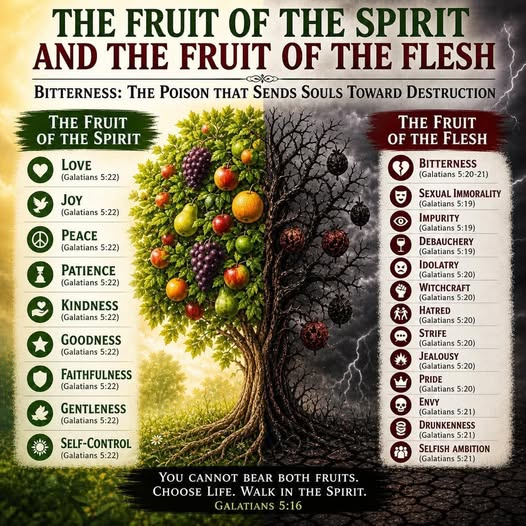
The Bible has a lot to say about witchcraft. Witchcraft and its many cousins, such as fortune-telling and necromancy, are Satan’s counterfeits to holy spirituality. The Bible expressly condemns all forms of witchcraft.
Since early times, people have sought supernatural experiences God did not endorse. The nations that surrounded the Promised Land were saturated with such practices, and God had stern words for His people concerning any involvement with them. Deuteronomy 18:9–12 says, “When you enter the land the Lord your God is giving you, do not learn to imitate the detestable ways of the nations there. Let no one be found among you who sacrifices their son or daughter in the fire, who practices divination or sorcery, interprets omens, engages in witchcraft, or casts spells, or who is a medium or spiritism or who consults the dead. Anyone who does these things is detestable to the Lord.”
God takes witchcraft very seriously. The penalty for practicing witchcraft under the Mosaic Law was death (Exodus 22:18; Leviticus 20:27). First Chronicles 10:13 tells us that “Saul died because he was unfaithful to the Lord; he did not keep the word of the Lord and even consulted a medium for guidance.” In the New Testament, “sorcery” is translated from the Greek word pharmakeia, from which we get our word pharmacy (Galatians 5:20; Revelation 18:23). Witchcraft and spiritism often involve the ritualistic use of magic potions and mind-controlling drugs. Using illicit drugs can open ourselves up to the invasion of demonic spirits. Engaging in a practice or taking a substance to achieve an altered state of consciousness is a form of witchcraft.
There are only two sources of spiritual power: God and Satan. Satan has only the power that God allows him to have, but it is considerable (Job 1:12; 2 Corinthians 4:4; Revelation 20:2). To seek spirituality, knowledge, or power apart from God is idolatry, closely related to witchcraft. First Samuel 15:23 says, “For rebellion is as the sin of witchcraft, and stubbornness is as iniquity and idolatry.” Witchcraft is Satan’s realm, and he excels in counterfeiting what God does. When Moses performed miracles before Pharaoh, the magicians did the same things through demonic power (Exodus 8:7). At the heart of witchcraft is the desire to know the future and control events that are not ours to control. Those abilities belong only to the Lord. This desire has its roots in Satan’s first temptation to Eve: “You can be like God” (Genesis 3:5).
Since the Garden of Eden, Satan’s major focus has been to divert human hearts away from worship of the true God (Genesis 3:1). He entices humans with the suggestions of power, self-realization, and spiritual enlightenment apart from submission to the Lord God. Witchcraft is merely another branch of that enticement. To become involved in witchcraft in any way is to enter Satan’s realm. Seemingly “harmless” modern entanglements with witchcraft can include horoscopes, Ouija boards, Eastern meditation rituals, and some video and role-playing games. Any practice that dabbles in a power source other than the Lord Jesus Christ is witchcraft. Revelation 22:15 includes witches in a list of those who will not inherit eternal life: “Outside are the dogs, those who practice magic arts, the sexually immoral, the murderers, the idolaters and everyone who loves and practices falsehood.”
We don’t need to fear Satan’s power, but we should acknowledge it and stay away from it. First John 4:4 says, “Greater is He who is in you, than he who is in the world.” Satan can create much havoc, harm, and destruction, even in the lives of believers (1 Thessalonians 2:18; Job 1:12–18; 1 Corinthians 5:5). However, if we belong to the Lord Jesus Christ, there is no power that can ultimately defeat us (Isaiah 54:17). We are overcomers (1 John 5:4) as we “put on the whole armor of God so that you can take your stand against the devil’s schemes” (Ephesians 6:11). When we give our lives to Christ, we must repent. This repentance should include renouncing any involvement with witchcraft, following the example of the early believers in Acts 19:19.
Isaiah 8:19 says, “When someone tells you to consult mediums and spiritists, who whisper and mutter, should not a people inquire of their God? Why consult the dead on behalf of the living?” When we follow those words to their logical conclusion, we could also ask, “Why seek any power apart from the source of all real power? Why seek spirits who are not the Holy Spirit?” Witchcraft and its many counterparts promise spirituality but lead only to emptiness and death (Micah 5:12; Galatians 5:19–21). Only Jesus has the words of life (John 6:68).

Tea Time Manna
The heavens declare the glory of God; the skies proclaim the work of his hands. Day after day they pour forth speech; night after night they display knowledge.
—Psalm 19:1-2
God’s voice is always speaking through his creation. His witnesses give testimony to his glory, majesty, and creative grace. The universe shouts with joy that behind its intricate beauty, astounding powers, and marvelous wonders is the One who gave it life, purpose, order, specificity, and intention. The apostle Paul said something similar when he wrote to the Corinthians:
…what may be known about God is plain to them, because God has made it plain to them. For since the creation of the world God’s invisible qualities — his eternal power and divine nature — have been clearly seen, being understood from what has been made, so that people are without excuse. (Romans 1:19-20)
The Creator is magnificent and glorious. All his creation — with its vast expanses of the universe, dazzling array of stars and planets, intricate patterns of beauty, its incredible variety of species and terrain, and wonderful motion and forces — proclaim his glory!
Are we listening to the voice behind it all, or are we simply taking it for granted?
Prayer
O Great God, Creator of the countless heavens and gracious one who tends to our own small blue planet, we thank you for noticing the heart-cry of each of us, even though we are so small in a universe so vast. We love you, admire you, trust you, and worship you with wonder at your greatness and grandeur. Your marvelous love, demonstrated to us in Jesus, silences us in the breathless wonder of your grace just as creation shouts to your glory about your marvelous work as Creator, in Jesus’ name. Amen and Amen
Bible Teaching of the Day
LUNCH MANNA =
Wicca is a neo-pagan religion that has been growing in popularity and acceptance in the United States and Europe. There are many websites and books claiming to teach “real” Wicca, but the truth is, there is no consensus among Wiccans as to what the religion is all about. The reason for this is that Wicca, as it is practiced now, is only about 50 years old. Wicca is a belief system that Briton Gerald Gardner cobbled together in the 1940s and 1950s from a variety of religious traditions and beliefs as well as Freemason rituals. Since Gardner published several books espousing his system of worship, many offshoots and variations of Wicca have sprung up. Some Wiccans are polytheistic, worshiping more than one deity, while others worship only the “God” or the “Goddess.” Still other Wiccans worship nature, and call it Gaea, after the Greek earth goddess. Some Wiccans pick and choose parts of Christian doctrine to embrace, while others totally reject Christianity. Most practitioners of Wicca believe in reincarnation.
Most Wiccans will vehemently deny that Satan is part of their pantheon, citing major doctrinal differences between themselves and Satanists. Wiccans generally promote moral relativity, disdaining labels like “good” and “evil” and “right” or “wrong.” Wicca has one law or rule, called the Rede: “Do what ye will, harm ye none.” At first blush, the Rede seems like complete, uninhibited personal license. You can do whatever you want, as long as no one gets hurt; however, Wiccans are quick to point out that the ripple effect of one’s actions can carry far-reaching consequences. They articulate this principle in the Three-fold Law, which says, “All good that a person does to another returns three-fold in this life; harm is also returned three-fold.”
One major factor that contributes to the abiding fascination with Wicca is the purported use of spells and magick (a deliberate misspelling intended to separate Wiccans from magicians and illusionists). Curiosity seekers, as well as spiritual neophytes, are most eager to delve into these mysteries. Not all Wiccans practice witchcraft, but those that do claim magick is to them what prayer is to a Christian. The difference between the two is that Wiccans claim magick is simply using their minds to control matter, or they are appealing to their favorite deity to do them a favor, while Christians call upon an omnipotent, omnipresent God to heal people and to intervene and work in their lives. Because the Rede disallows witches from hurting others and the Three-fold Law spells out the consequences for Rede-breakers, witches who practice magick prefer to call themselves “nature witches” or “white witches” to further distance themselves from Satanists.
Wicca is basically a religion that is about minding your own business and living peaceably with your neighbors and environment. Wiccans are eager to draw parallels between themselves and biblical Christianity for the sake of earning credibility, but what does the Bible have to say about this religion? You won’t find the word “wicca” in the Bible, so let’s evaluate the beliefs in light of what God says about them.
Wiccan spells are idolism—Romans 1:25 says, “They exchanged the truth of God for a lie, and worshiped and served created things, rather than the Creator…” Who wants to settle for second best? In Isaiah 40, God paints a picture of how much greater the Creator is than His creation. If you are worshiping anything besides the Creator, you are not only spinning your wheels, you are guilty of idolatry.
Wiccan spells bring false hope. Hebrews 9:27 says, “…Man is destined to die once, after that, to face judgment.” God says we get one chance at life, and that is it. There are no do-overs. If we don’t accept God’s gift of Jesus in our lifetime, He judges us as unwilling to be in His presence, and we are sent to hell.
Wiccan spells bring disillusionment. Mark 7:8 says, “You have let go of the commands of God and are holding on to the traditions of men.” God is God, and we are not. We have a decision to make. Are we going to take God at His word and adopt His worldview, or are we not? Knowing God takes a lot of discipline. Wicca is a religion that takes a pack of lies, ties it in a romantic ribbon, and searches out a well-intentioned, but lazy and gullible mark to sell its hollow doctrines.
Deuteronomy 18:10-12 says, “Let no one be found among you who… practices divination or sorcery, interprets omens, engages in witchcraft, or casts spells…Anyone who does these things is detestable to the LORD…” Wicca witchcraft is a sin, and God hates it. Why? Because it is an attempt to cut off our dependence on God and get answers apart from Him.
Sin isn’t just a heinous, socially disagreeable action. Sin is our decision to disagree with God on any topic—to rebel against Him. Sin is saying, “God, I want to live my life my way.” Romans 3:23 says, “For all have sinned and fallen short of the glory of God.” Romans 6:23 says, “For the wages of sin is death…” This isn’t bodily death, this is spiritual death: eternal separation from God and all the blessings that His presence brings. This is the definition of hell: the absence of God’s presence. That is what our sin gains for us.
Thankfully, Romans 6:23 doesn’t end there. It goes on to say, “…but the gift of God is eternal life in Christ Jesus our Lord.” God knew that we would all rebel in one way or another, and He provided a way for us to avoid that separation—through faith in Jesus Christ. Wicca witchcraft is nothing more than another lie from Satan, the enemy of our souls, who “prowls around like a roaring lion looking for someone to devour” (1 Peter 5:8).
Today’s Devotional
DINNER MANNA =
God despises witchcraft, sorcery, and all kinds of magic (“white” or “black”), and He warns against our involvement in such practices. Black magic, also called dark magic, is the use of supernatural powers for selfish purposes, often involving the casting of spells to control other people or to bring about evil. Practitioners of black magic seek to conjure demonic beings, speak to the dead, and in general benefit themselves at the expense of others.
The Bible lists witchcraft and, by association, black magic as one of the works of the flesh: “The acts of the sinful nature are obvious: . . . witchcraft. . . . Those who live like this will not inherit the kingdom of God” (Galatians 5:19–21). When people in Ephesus came to know Christ, they brought their magic books and publicly burned them as a sign that they were trading the dark power of sorcery for the holy power of the Spirit (Acts 19:19). In Revelation 21:8 those who practice black magic are warned of God’s judgment in no uncertain terms: “Those who practice magic arts . . . will be consigned to the fiery lake of burning sulfur. This is the second death.”
Black magic is an ancient practice, and many Old Testament commands forbade the Israelites from all association with witchcraft or sorcery. Deuteronomy 18:10 says, “Let no one be found among you . . . who practices divination or sorcery, interprets omens, engages in witchcraft.” Under Israel’s theocracy, the penalty for being a witch was death (Exodus 22:18). Many other Old Testament passages condemn black magic along with witchcraft in its many forms (Micah 3:7; 5:12; 2 Kings 21:6; Leviticus 19:26, 31; Deuteronomy 18:14).
Black magic is wrong on several levels. First, we should seek power and wisdom from God alone and trust Him as the omnipotent source of all that is good; we are not to seek power or wisdom from lying, unclean spirits or trust them in any way. Second, our goal should be to accomplish God’s will, not to pursue our own selfish ends. Third, we are to love our enemies and pray for them (Matthew 5:44); black magic teaches people to hate their enemies and place hexes on them. Fourth, seeking to control others or wield power over them is contrary to God’s desire that people exercise free will and make moral choices. Fifth, opening oneself to demonic influence is beyond foolish, because the devil is an adversary who seeks to destroy (1 Peter 5:8). God clearly condemns the evil practice of black magic. To choose black magic is to reject the control of God and invite judgment (see John 12:48).
NEWS MANNA –
Bible Prophecy, Signs of the Times and Gog and Magog Updates with Articles in the News
The Child Safety Trojan Horse: Digital IDs Are Coming

Around the world, governments are increasingly moving to restrict children’s access to social media, pornography, and other online content. On the surface, the goal seems noble. Most parents agree that children should not have unrestricted access to explicit material, predatory online communities, or social media platforms that have been linked to anxiety, depression, and other mental health concerns.
The problem is not necessarily the goal.
The problem is the method.
What is unfolding across Britain, Canada, Australia, France, and other nations may ultimately become one of the most significant battles over privacy, free speech, and digital freedom in the coming decade.
Because there is one unavoidable reality: to verify someone’s age online, you must first verify who they are.
And that is where the danger begins.
Britain’s Labour government recently announced plans to force major technology companies such as Apple and Google to implement age verification systems designed to prevent children from accessing pornography and even from taking or sharing nude photographs. Prime Minister Keir Starmer has argued that technology companies already possess the tools necessary to accomplish this and should be required to deploy them.
At first glance, many parents will applaud the effort.
Who wants children exposed to pornography?
Who wants minors sending explicit images?
Who wants online predators targeting vulnerable teenagers?
These are legitimate concerns.
Yet critics warn that the solution being proposed could require something unprecedented: population-wide identity verification to access large portions of the internet.
Civil liberties groups have sounded the alarm that age verification cannot function without collecting some form of identifying information. Whether it is a government-issued ID, facial recognition scan, biometric age estimation, passport verification, driver’s license confirmation, or digital identity credential, the end result is largely the same.
The internet begins to lose its anonymity.
Instead of simply visiting a website, citizens may increasingly be required to prove who they are before being allowed access.
Supporters insist that such systems would only confirm age and would not permanently store identities.
History suggests otherwise.
Governments rarely surrender powers once they obtain them.
Throughout history, emergency powers, surveillance authorities, and security measures introduced for one purpose often expand into entirely different areas over time. What begins as child protection can quickly become misinformation monitoring. What begins as pornography restrictions can evolve into content restrictions. What begins as age verification can become identity verification for nearly everything online.
This phenomenon is often referred to as “mission creep.”
And there are already signs of it emerging.
Britain’s Online Safety framework not only contemplates age verification but also includes provisions that could require platforms to scan private communications for prohibited material. Critics argue that such measures threaten end-to-end encryption, one of the last remaining tools protecting private communications from government surveillance.
Signal, one of the world’s leading encrypted messaging platforms, has repeatedly warned that creating government-approved backdoors into encrypted systems is technically impossible without creating vulnerabilities that can eventually be exploited by hackers, criminals, foreign governments, or malicious actors.
The fundamental problem is simple.
There is no such thing as a surveillance system that only the “good guys” can access.
Every database becomes a target.
Every digital credential becomes valuable.
Every identity system eventually creates opportunities for abuse.
Canada is now moving in a similar direction.
The proposed Safe Social Media Act would prohibit social media accounts for children under 16 while creating a new Digital Safety Commission tasked with overseeing compliance. Age verification would become a central component of enforcement.
Australia has already moved aggressively in this direction, reporting millions of accounts removed following its under-16 social media ban.
France, Spain, Denmark, South Korea, Brazil, Indonesia, Thailand, and other nations are considering similar restrictions.
Viewed individually, each proposal may appear reasonable.
Viewed collectively, however, they reveal something much larger.
A global framework is emerging in which access to information increasingly requires proof of identity.
For decades, the internet functioned much like a public square. Citizens could read, research, discuss, and debate without first presenting identification papers.
That model is gradually disappearing.
The next generation internet increasingly resembles an airport security checkpoint.
Before you enter, you must prove who you are.
Before you speak, you may need credentials.
Before you access information, your identity may be verified.
And once that infrastructure exists, governments gain tremendous leverage.
A future administration could require age verification for political content deemed “harmful.”
Another could require identity verification before posting comments.
Another could restrict access to certain viewpoints, news sources, or controversial topics.
The technology itself is neutral.
The question is who controls it.
Christians should pay particular attention to these developments.
The Bible repeatedly warns about the dangers of centralized systems of control. While age verification laws are not the fulfillment of prophecy, they contribute to a broader technological environment where access, participation, commerce, and information become increasingly dependent upon digital credentials and government-approved verification systems.
That trend deserves scrutiny.
Children absolutely need protection online.
Parents need better tools.
Platforms should be held accountable when they knowingly expose minors to harmful content.
But societies must also be careful not to sacrifice liberty in pursuit of safety.
Because history teaches a consistent lesson.
The greatest threats to freedom rarely arrive announcing themselves as threats.
They usually arrive carrying promises of security.
Turkey’s Ottoman Dreams And Ezekiel’s Warning
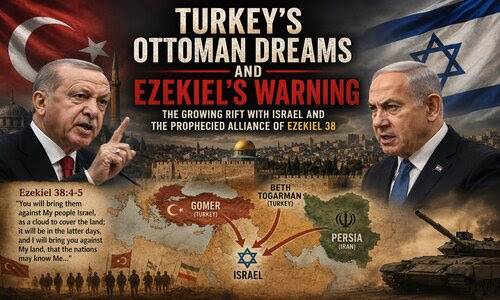
The war of words between Turkey and Israel is becoming increasingly difficult to ignore. What was once a tense diplomatic relationship has evolved into something far more confrontational, with Turkish leaders openly speaking about Jerusalem, threatening Israel, and positioning themselves as champions of the Islamic world against the Jewish state.
This week, the rhetoric reached another alarming level.
Turkey’s Interior Minister Mustafa Çiftçi openly declared his hope that one day Turkey would witness the “liberation of Jerusalem” just as it had supposedly witnessed the “liberation” of Damascus, Aleppo, and Karabakh. He even expressed a desire to become governor of Jerusalem for a day, declaring that lands once controlled by the Ottoman Empire would one day return to Turkish sovereignty.
For Israelis, these comments were not viewed as harmless political theater. They were interpreted as a direct challenge to Israel’s sovereignty and a revival of old Ottoman ambitions.
Israel’s response was swift and sharp.
Foreign Minister Gideon Sa’ar reminded Turkey that “the corrupt Ottoman Empire is gone. Forever.
Defense Minister Israel Katz went even further, declaring that Jerusalem is not Constantinople and that Israel is not some crumbling medieval kingdom waiting to be conquered. Jerusalem, he emphasized, has been the capital of the Jewish people for 3,000 years and will remain Israel’s capital.
Behind the exchange lies a much larger geopolitical story.
For years, Turkish President Recep Tayyip Erdoğan has increasingly embraced a neo-Ottoman vision of Turkey’s role in the Middle East. While modern Turkey was founded by Mustafa Kemal Atatürk as a secular republic following the collapse of the Ottoman Empire after World War I, Erdoğan has steadily moved the nation back toward Islamic nationalism.
Many analysts believe Erdoğan sees Turkey not merely as a regional power but as the natural leader of the Sunni Muslim world.
That helps explain Turkey’s growing involvement in Syria, Libya, Azerbaijan, Lebanon, and Gaza.
It also helps explain why Jerusalem occupies such an important place in Turkish political rhetoric.
For nearly 400 years, from 1516 until 1917, Jerusalem was under Ottoman control. The city’s loss remains a symbolic wound for many Islamists who view the collapse of the Ottoman Empire as one of the great tragedies of Islamic history.
Today, some Turkish politicians openly speak as though history can be reversed.
But rhetoric about Jerusalem is only one part of the story.
This week Erdoğan also warned that Israeli military actions in Syria and Lebanon threaten Turkey itself. He declared that Turkey’s security extends beyond its own borders into Aleppo, Damascus, and Beirut. He further warned that Turkey would respond forcefully if Turkish or Turkish-Cypriot interests were threatened.
Such statements reveal a growing willingness by Ankara to project military and political influence far beyond its borders.
At the same time, Israel increasingly views Turkey’s support for Hamas and its close relationship with Islamist movements across the region as a direct threat.
The result is a rapidly deteriorating relationship between two of the most powerful militaries in the Middle East.
For students of Bible prophecy, however, these developments carry an additional layer of significance.
The Bible foretells a future coalition of nations that will one day march against Israel.
Ezekiel 38 describes an alliance led by “Gog of the land of Magog” that includes Persia, Gomer, and Beth Togarmah.
Most prophecy scholars identify Persia as modern Iran.
The names Gomer and Beth Togarmah have long been associated with regions that correspond largely to modern-day Turkey.
This is one of the reasons many prophecy watchers have paid such close attention to Turkey’s transformation over the past two decades.
For much of the twentieth century, Turkey was one of Israel’s strongest regional partners. It was secular, Western-oriented, and even maintained military cooperation with the Jewish state.
Yet today’s Turkey looks very different.
Under Erdoğan, anti-Israel rhetoric has become commonplace. Turkish leaders regularly accuse Israel of aggression while simultaneously defending Hamas and other Islamist causes. The relationship has shifted from partnership to hostility.
Meanwhile, Iran and Turkey increasingly find themselves aligned on key regional issues despite their historic rivalries.
Neither nation currently appears capable of leading a successful military campaign against Israel by itself. Iran’s regional proxy network has suffered significant setbacks and she has been significantly weakened after attacks by the United States and Israel. These attacks may even be part of the reason she would reach out to other nations to help bring down Israel. With Hezbollah weakened and Hamas devastated she has few regional partners left to call upon.
Yet Ezekiel does not describe the condition of these nations today.
It describes a future alignment
The remarkable thing is not that Turkey and Iran currently have disagreements. The remarkable thing is that Scripture predicted thousands of years ago that these nations would ultimately find themselves on the same side of a future confrontation involving Israel.
Whether that alliance forms in the near future or decades from now remains unknown.
What is becoming increasingly clear, however, is that Turkey’s trajectory is moving away from the secular vision of Atatürk and toward a far more assertive Islamic identity.
That shift has profound implications for the Middle East.
It also serves as a reminder that the geopolitical landscape surrounding Israel continues to evolve in ways that many Bible students find strikingly familiar.
The headlines coming out of Ankara and Jerusalem this week may seem like another diplomatic spat. But beneath the rhetoric lies a deeper struggle over history, sovereignty, religion, and regional power.
And for those watching the prophetic stage, Turkey’s increasingly hostile posture toward Israel is one development that cannot be easily dismissed.
The Ottoman Empire may never return. But the alliances foretold by Ezekiel appear to be moving closer into focus with each passing year.
Parents Remain Essential To Instilling Authentic Faith In Next Generation

With the rate of religious practice among young people in the U.S. at levels significantly below older generations, concerns are growing over a likely future America of diminished church attendance and a higher proportion of morally ungrounded citizens. A new report released last week identifies ways that parents can help mitigate a continued decline in religious practice by passing their faith on to their children.
According to data compiled by the Pew Research Center last December, Americans in the youngest age bracket (18-30) surveyed the lowest of any other age bracket in response to four questions about faith, including the percentage identifying with a religion (57%), those that pray daily (32%), those that say religion is “very important in their lives” (33%), and those who attend religious services at least monthly (tied for second lowest at 31%).
“While belief has not disappeared, it has become more individualized and less connected to church life,” write sociologists Jesse Smith and Jane Lankes Smith, who authored the report “Passing the Torch: How Faith Moves Across Generations” published by the Institute for Family Studies (IFS) and Communio. “As a result, many religious communities now face a sustained pattern of generational decline rather than temporary fluctuation, raising concerns for churches and church members alike about the long-term vitality of their congregation.
The authors go on to note, “Research consistently shows that families are the single most important factor in whether children adopt and maintain faith into adulthood.” They argue that regular church attendance when children are young is key to attendance as adults, observing that “when parents reported attending church weekly while raising their children, a predicted 26% of their children did the same in their 30s and 40s, compared to only 12% whose parents were not weekly attenders.”
Additionally, they highlight data showing that “when parents identified religion as being very important in their lives, nearly two-thirds of their children were predicted to say the same as adults, compared to less than half of those whose parents did not affirm the high importance of religion.” What’s more, “parents who prayed daily had a 47% chance of having children who did the same as adults, compared to less than one-third when parents did not pray daily.”
Another key aspect identified by the report is the importance of parents regularly discussing faith amid their daily lives. The authors point out that many Christian parents in today’s culture have tended to shy away from emphasizing religious discussion with their kids for fear of pushing them away from the faith by “jamming it down their throats.”
But “according to the data, efforts to pass on the faith are more often undermined not by parents laying it on too thick, but by taking too light a touch,” they highlight. Since Christianity is rarely uplifted and often denigrated in modern society, Smith and Lankes Smith urge parents to “set a tone in the household where talk of religion is normal and to prepare for the hard theological or moral conversations, especially as their kids get older.”
The strength of the marriage of the mother and father was identified as another key factor in children’s faith formation. “Parents in troubled marriages are likely to have more difficulty coordinating the time and effort needed for effective faith formation,” the authors explained.
“When children see loving, harmonious marriages preached at church but witness marital strife at home, this creates cognitive dissonance that makes Christianity harder to internalize.” Data analyzed in the report showed more faith-related conversations with their kids happening per week and a higher probability of their kids praying daily with couples who reported being in happy and satisfying marriages.
But faith transmission cannot rest solely upon the shoulders of moms and dads, the report noted. Smith and Lankes Smith also underscored that an engaged church community is similarly integral to forming the faith of children. They write that pastors must minister to families by offering ongoing religious education to parents (not just to children), expand marriage ministries, create space for community, and invest in youth ministry. This will foster congregational involvement for both parents and adolescents, which “is linked to higher levels of faith commitment when children reach adulthood.”
Experts like Family Research Council Senior Fellow Joseph Backholm say that the IFS/Communio report further proves the principle that faith is primarily passed on through lived witness, not merely through words and exhortations.
“These results seem to communicate that children are watching their parents’ lives and deciding whether they like what they see,” he told The Washington Stand. “If we enjoy being with our parents, and believe their marriage is something we’d like to have ourselves, it makes sense that we’d be more interested in what they tell us about the purpose of life and what we should believe. Of course, the gospel is true despite the fact that people are hypocrites, but there’s little doubt that a life in which actions match words is more compelling to those who are watching. That includes our children.”
TruLight Ministries Daily Entertainment Manna

TruLight TV – The TruLight Radio Top 10 – Number 1 songs of 2025
The TruLight Top 10 broadcast-ed on TruLight Radio XM Saturdays at 17h00 is now also available on Video format via TruLight TV with your Host Dilize Light. Every week on Saturdays afternoon at 17h00 GMT + 2 We count down the TruLight Gospel Top 10 by votes.
Today on TruLight Radio XM
TruLight Radio XM 24/7
Program
GMT / UTC +2
Monday To Fridays
00:15 Words to Live By Testimonies
01.15 Science Scripture and Salvation
02.15 Ground Works
04.00 Gospel Concert of the Day
05.00 The Daren Streblow Comedy Show
5:55 It is Today devotional
6:00 Gaither Homecoming Morning Show
7:15 Discover the Word
8.15 Destined for Victory
8:55 Science Scripture and Salvation
9:00 Holy Spirit Hour – Normally Sermons
10:15 Hope of the Heart
11:15 Unshackled
11.45 Words to Live By
12:15 Truth for Life
13:15 Living on the Edge with Chip Ingram
14:15 Focus on the Family
15:00 Kids Hour
16:00 In Touch with Dr. Charles Stanley
16:30 Groundwork
17:15 Live in the Light
18:15 Renewing your Mind
19:00 Gaither Homecoming Show
20:15 Growing Hope
21:15 Adventures in Odyssey Radio Drama
21:45 Bible Reading
22:15 Night-sounds
23.00 Good Old Country Gospel / Rhema Gospel Express
VISIT THE WEBSITE
TruLight Ministry News – EXTRA MANNA
TruLight Ministries orders from God since 2012 . Teach Them , Comfort Them and Warn Them!
Healing Truths.
End Time Articles.
Bonus Manna = Bonus Teaching for the Child of God !!
Essential oils are highly concentrated plant extracts obtained through steam distillation, cold pressing, or resin tapping. These oils are then used for therapeutic benefit as the scent molecules enter the nose and travel through the nervous system. The results are reported to include reduced stress, improved sleep, and relief from pain (see “What are the benefits of aromatherapy?” by Brent Bauer, M.D., www.mayoclinic.org/healthy-lifestyle/consumer-health/expert-answers/aromatherapy/faq-20058566, accessed 6/23/21). There is no inherent spiritual aspect to the scientific process of extracting oils from plants or to the body’s physical response to olfactory stimulation. Therefore, it is the attitude of the heart and the way in which we use essential oils or aromatherapy that has spiritual significance.
The use of oils and aromatic infusions is seen in the Bible. God commanded Moses to infuse oil with aromatic spices to make a sacred anointing oil for the priests in Exodus 30:22–38. God also commanded the priests to add scented oil to certain sacrifices to make them “a food offering with a pleasing aroma to the LORD” (Leviticus 2:1–2, ESV). The wise men brought frankincense (an aromatic incense) and myrrh (an aromatic oil) to Jesus after His birth (Matthew 2:11). Jesus was anointed with perfumed oil several times, and twice in the week of His crucifixion (Matthew 26:7, 12; Luke 7:37–38; John 12:3). James instructed the church to use anointing oil when praying for the healing of those who are sick (James 5:14). And God gave John a vision of the new heaven and the new earth where “the leaves of the tree [of life] are for the healing of the nations” (Revelation 22:2).
From these examples we see that plants and their oils have been used in God-honoring ways in worship and in seeking healing of the body. However, it is important to remember that God said, “I am the LORD, who heals you” (Exodus 15:26). So, ultimately, it is not the spices, oils, or plants themselves that heal, but God, the Creator of both plants and human bodies.
Because some false religions, including Wicca and New Age religions, use oils and incense, some people are concerned that essential oils are associated with magic or that using them may lead to nonbiblical practices. God commanded the Israelites, “Let no one be found among you who . . . practices divination or sorcery, interprets omens, engages in witchcraft, or casts spells” (Deuteronomy 18:10–11). “Idolatry and witchcraft” are part of a list of “acts of the flesh” (Galatians 5:20–21). So essential oils should never be used as a potion or in a ritual, whether it’s to harness the “energy of Nature,” enhance psychic vibrations, attract good luck, or any other spiritual practice not directed to the glory of the one true God of the Bible. However, the misuse of essential oils does not invalidate their proper use. Because oils were used for the glory of God in the Bible, it is possible to use essential oils today in God-honoring ways that avoid unbiblical practices.
Completely shunning the use of essential oils is not the only mistake people can make. Some people chase health and longevity to the point that physical or emotional well-being becomes an idol. They turn to every new diet, supplement, exercise plan, or alternative treatment and end up forgetting God’s call on their lives and His sovereignty over their physical condition. Chasing immortality is a futile endeavor (Psalm 90:10; 1 Peter 1:24–25; Hebrews 9:27). It is always God—not plants, oils, or even pharmaceuticals or surgery—who is responsible for healing. And when He chooses not to heal us in this earthly life, we can take Paul’s perspective: “I will boast all the more gladly about my weaknesses, so that Christ’s power may rest on me. That is why, for Christ’s sake, I delight in weaknesses, in insults, in hardships, in persecutions, in difficulties. For when I am weak, then I am strong” (2 Corinthians 12:9–10). Essential oils do not have any magical powers. In His wisdom and grace, God has designed human bodies to react in certain ways to the plants He created, and He should get the glory for any benefit we may or may not receive from the use of essential oils.
Paul instructed the church, “Whatever you do, do it all for the glory of God” (1 Corinthians 10:31). Using essential oils should only be done in a way that acknowledges God as the perfect Creator and ultimate Healer, and we must avoid forbidden spiritual practices. Those who choose to use essential oils should do so with biblical motives and in a manner that glorifies God, with a heart of gratitude and worship, while relying on Him for health and healing.
Share this Feeding of Manna with your Friends and Family. just click on the Social Media icon and share !