Hosted by TruLight Ministries – The Place of Truth
SELECT YOUR READING LANGUAGE – BOTTOM LEFT = YOUR DAILY MANNA NOW AVAILABLE IN 103 LANGUAGES
@ TruLight – Daily Manna is not Just a Bible Verse with a Small Prayer . NO ::: WE SERVE DAILY Manna for the ENTIRE Day . Breakfast , Lunch , Dinner , Plus tea Times and even Entertainment Manna . Plus News Manna and More , This Daily Manna will keep you Spiritually full for the full 48 Hours and even More to Share with your Friends and Family !!!
The Blood of the Lamb !!!
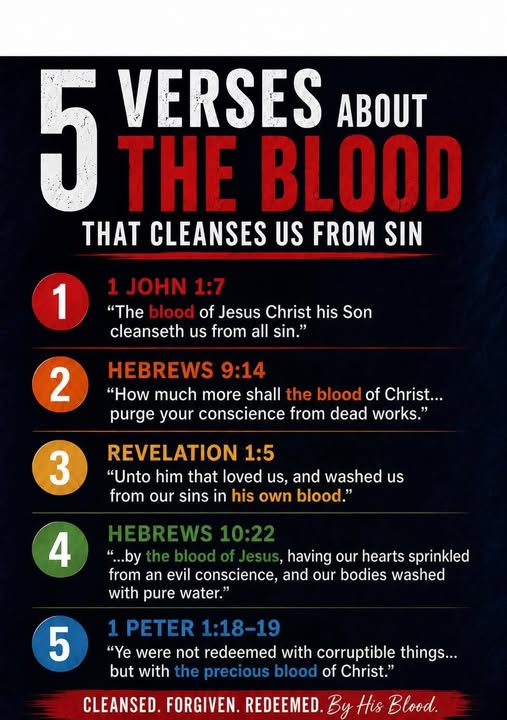
The Passover lamb was the animal God directed the Israelites to use as a sacrifice in Egypt on the night God struck down the firstborn sons of every household (Exodus 12:29). This was the final plague God issued against Pharaoh, and it led to Pharaoh releasing the Israelites from slavery (Exodus 11:1). After that fateful night, God instructed the Israelites to observe the Passover Feast as a lasting memorial (Exodus 12:14).
God instructed every household of the Israelite people to select a year-old male lamb without defect (Exodus 12:5; cf. Leviticus 22:20-21). The head of the household was to slaughter the lamb at twilight, taking care that none of its bones were broken, and apply some of its blood to the tops and sides of the doorframe of the house. The lamb was to be roasted and eaten (Exodus 12:7-8). God also gave specific instructions as to how the Israelites were to eat the lamb, “with your cloak tucked into your belt, your sandals on your feet and your staff in your hand” (Exodus 12:11). In other words, they had to be ready to travel.
God said that when He saw the lamb’s blood on the doorframe of a house, He would “pass over” that home and not permit “the destroyer” (Exodus 12:23) to enter. Any home without the blood of the lamb would have their firstborn son struck down that night (Exodus 12:12-13).
The New Testament establishes a relationship between this prototypical Passover lamb and the consummate Passover Lamb, Jesus Christ (1 Corinthians 5:7). The prophet John the Baptist recognized Jesus as “the Lamb of God” (John 1:29), and the apostle Peter links the lamb without defect (Exodus 12:5) with Christ, whom he calls a “lamb without blemish or defect” (1 Peter 1:19). Jesus is qualified to be called One “without blemish” because His life was completely free from sin (Hebrews 4:15). In Revelation, John the apostle sees Jesus as “a Lamb, looking as if it had been slain” (Revelation 5:6). Jesus was crucified during the time that the Passover was observed (Mark 14:12).
The Bible says believers have symbolically applied the sacrificial blood of Christ to their hearts and thus have escaped eternal death (Hebrews 9:12, 14). Just as the Passover lamb’s applied blood caused the “destroyer” to pass over each household, Christ’s applied blood causes God’s judgment to pass over sinners and gives life to believers (Romans 6:23).
As the first Passover marked the Hebrews’ release from Egyptian slavery, so the death of Christ marks our release from the slavery of sin (Romans 8:2). As the first Passover was to be held in remembrance as an annual feast, so Christians are to memorialize the Lord’s death in communion until He returns (1 Corinthians 11:26).
The Old Testament Passover lamb, although a reality in that time, was a mere foreshadowing of the better and final Passover Lamb, Jesus Christ. Through His sinless life and sacrificial death, Jesus became the only One capable of giving people a way to escape death and a sure hope of eternal life (1 Peter 1:20-21).

Tea Time Manna
Those who hope in the Lord will renew their strength. They will soar on wings like eagles; they will run and not grow weary, they will walk and will not be faint.
—Isaiah 40:31
It is easy for us to live victoriously for the Lord when we are soaring on the wings of eagles. Things are going great. We can see the Lord at work in our life and good things are happening. It can be exciting when we run and don’t grow weary doing the work of the Lord, buoyed by his power and presence, as the Holy Spirit shows up and makes us better than we really are. But it often takes real heroes to keep walking without fainting during trying times, attacks from the evil one, or oppressive criticism and opposition. So, dear friend of Jesus, please keep walking forward. Trust the Spirit of the living God is alive in you to empower you, more than you can even ask or think (Ephesians 1:17-20, 4:14-21). The Lord is with you, even when you most fear he has forgotten you. Keep walking, and as you do, may the Lord reveal his sustaining presence to you, in you, and through you!
Prayer
O, Majestic God, who spoke into existence the universe, whose voice holds together the great expanse of the heavens, give those who can barely walk forward with faith, the strength to continue as they face the stress and assaults of the evil one. I specifically want to pray for those I know personally who are facing trying times. Please, dear Lord, give them strength as I share their names with you, and meet their most pressing needs, and do your work through them in ways that they can see and experience. Through Jesus, who conquered Satan, sin, hell, and death. Amen and Amen
Bible Teaching of the Day
LUNCH MANNA =
Revelation 12:10 calls Satan the “accuser of our brothers and sisters, who accuses them before our God day and night.” The context of the verse describes a cosmic battle between a great red dragon (identified as Satan in Revelation 12:7) and the angelic hosts of heaven. The dragon is hurled to the earth (Revelation 12:9), the authority of the Messiah is locked in place (verse 10), and the believers are victorious:
“And they overcame him by the blood of the Lamb and by the word of their testimony, and they did not love their lives to the death” (Revelation 12:11, NKJV).
During the tribulation of the end times, Satan’s wrath against God’s’ people, especially Israel (the “woman” of Revelation 12) will intensify. But the believers are promised to overcome. Dr. Charles Ryrie comments on Revelation 12:11: “The believer’s defense against Satan is (1) to bank on the merits of the death of Christ, (2) to be active in witnessing, and (3) to be willing to make any sacrifice, including death” (The Ryrie Study Bible, Moody Press, 1978, p. 1,801).
Down through the centuries, the “great dragon” Satan has despised the mercy, love, grace, and forgiveness that God pours out on believers in Jesus Christ. With relentless, evil determination, the devil hounds us, fixated on destroying our walk with God and chasing us back into a spiritual prison. But, day by day, night by night, believers always overcome him “by the blood of the Lamb” (Revelation 12:11).
Satan’s tireless goal in the life of every Christian is to prevent, disrupt, and cut off his or her relationship with God. He “prowls around like a roaring lion looking for someone to devour” (1 Peter 5:8). But the devil’s only real power over believers is to throw our sins and transgressions in our faces. He is the accuser. Thankfully, the sacrifice of Christ has effectively dealt with the problem. It is the blood of Jesus Christ—the blood of the Lamb—that redeems people, setting them free from slavery to sin and Satan’s control.
Scripture gives us vivid pictures of Christ’s redemptive work on the cross. Peter explains that “God paid a ransom” to save us from our old empty way of life. “And it was not paid with mere gold or silver, which lose their value. It was the precious blood of Christ, the sinless, spotless Lamb of God” (1 Peter 1:18–19, NLT). The tribulation saints will have “washed their robes and made them white in the blood of the Lamb” (Revelation 7:14). When Jesus Christ died, His precious blood “purchased for God persons from every tribe and language and people and nation” (Revelation 5:9). Jesus’ blood was poured out “for the forgiveness of sins” (Matthew 26:28), and it “purifies us from all sin” (1 John 1:7).
Satan tries to condemn us, but we overcome by the blood of the Lamb. “There is now no condemnation for those who are in Christ Jesus, because through Christ Jesus the law of the Spirit who gives life has set you free from the law of sin and death” (Romans 8:1–2). Jesus freed us from the spiritual chains of sin (John 8:35–36; Romans 6:17–22).
The next time Satan tries to hurl past failures in your face, remember that “God did not send his Son into the world to condemn the world, but to save the world through him. Whoever believes in him is not condemned” (John 3:17–18).
All believers—past, present and future—overcome the accuser by the blood of the Lamb. Jesus Christ’s death is the definitive basis for our victory over the enemy of our souls. The apostle Paul asks, “Who dares accuse us whom God has chosen for his own? No one—for God himself has given us right standing with himself. Who then will condemn us? No one—for Christ Jesus died for us and was raised to life for us, and he is sitting in the place of honor at God’s right hand, pleading for us” (Romans 8:33–34, NLT). Despite everything in the devil’s arsenal that he can throw at us, “in all these things we are more than conquerors through him who loved us” (Romans 8:37).
Paul tells the Colossians, “For you were buried with Christ when you were baptized. And with him you were raised to new life because you trusted the mighty power of God, who raised Christ from the dead. You were dead because of your sins and because your sinful nature was not yet cut away. Then God made you alive with Christ, for he forgave all our sins. He canceled the record of the charges against us and took it away by nailing it to the cross. In this way, he disarmed the spiritual rulers and authorities. He shamed them publicly by his victory over them on the cross. So don’t let anyone condemn you” (Colossians 2:12–16, NLT).
We must not allow the devil to deceive us with lies and accusations. Every charge he can bring against us is canceled, nailed to the cross, and overcome by the blood of the Lamb. It may seem strange that, in Revelation 12, a raging dragon is overcome by a slain lamb. Lambs are not usually seen as dragon-slayers. But such is the power and efficacy of the death of Christ. Because of Christ’s shed blood on the cross, sin has lost its grip on us. Whenever Satan accuses us, we can sing, “My chains are gone; I’ve been set free.”
Today’s Devotional
DINNER MANNA =
When Jesus is called the Lamb of God in John 1:29 and John 1:36, it is referring to Him as the perfect and ultimate sacrifice for sin. In order to understand who Christ was and what He did, we must begin with the Old Testament, which contains prophecies concerning the coming of Christ as a “guilt offering” (Isaiah 53:10). In fact, the whole sacrificial system established by God in the Old Testament set the stage for the coming of Jesus Christ, who is the perfect sacrifice God would provide as atonement for the sins of His people (Romans 8:3; Hebrews 10).
The sacrifice of lambs played a very important role in the Jewish religious life and sacrificial system. When John the Baptist referred to Jesus as the “Lamb of God who takes away the sin of the world” (John 1:29), the Jews who heard him might have immediately thought of any one of several important sacrifices. With the time of the Passover feast being very near, the first thought might be the sacrifice of the Passover lamb. The Passover feast was one of the main Jewish holidays and a celebration in remembrance of God’s deliverance of the Israelites from bondage in Egypt. In fact, the slaying of the Passover lamb and the applying of the blood to doorposts of the houses (Exodus 12:11-13) is a beautiful picture of Christ’s atoning work on the cross. Those for whom He died are covered by His blood, protecting us from the angel of (spiritual) death.
Another important sacrifice involving lambs was the daily sacrifice at the temple in Jerusalem. Every morning and evening, a lamb was sacrificed in the temple for the sins of the people (Exodus 29:38-42). These daily sacrifices, like all others, were simply to point people towards the perfect sacrifice of Christ on the cross. In fact, the time of Jesus’ death on the cross corresponds to the time the evening sacrifice was being made in the temple. The Jews at that time would have also been familiar with the Old Testament prophets Jeremiah and Isaiah, who foretold the coming of One who would be brought “like a lamb led to the slaughter” (Jeremiah 11:19; Isaiah 53:7) and whose sufferings and sacrifice would provide redemption for Israel. Of course, that person was none other than Jesus Christ, “the Lamb of God.”
While the idea of a sacrificial system might seem strange to us today, the concept of payment or restitution is still one we can easily understand. We know that the wages of sin is death (Romans 6:23) and that our sin separates us from God. We also know the Bible teaches we are all sinners and none of us is righteous before God (Romans 3:23). Because of our sin, we are separated from God, and we stand guilty before Him. Therefore, the only hope we can have is if He provides a way for us to be reconciled to Himself, and that is what He did in sending His Son Jesus Christ to die on the cross. Christ died to make atonement for sin and to pay the penalty of the sins of all who believe in Him.
It is through His death on the cross as God’s perfect sacrifice for sin and His resurrection three days later that we can now have eternal life if we believe in Him. The fact that God Himself has provided the offering that atones for our sin is part of the glorious good news of the gospel that is so clearly declared in 1 Peter 1:18-21: “For you know that it was not with perishable things such as silver or gold that you were redeemed from the empty way of life handed down to you from your forefathers, but with the precious blood of Christ, a lamb without blemish or defect. He was chosen before the creation of the world, but was revealed in these last times for your sake. Through him you believe in God, who raised him from the dead and glorified him, and so your faith and hope are in God.”

NEWS MANNA –
The World Cup Is Revealing Something Bigger Than Soccer

Every four years the World Cup reminds us that national identity still matters. Fans wave flags. Anthems are sung. Rivalries that stretch back generations are renewed. Nations celebrate victories and mourn defeats together.
Yet amid all the passion and patriotism on display at the 2026 World Cup, something else has quietly emerged—something far more powerful than national pride.
Faith.
While much of the media remains focused on goals, controversies, and tournament storylines, many players from multiple nations are using one of the world’s largest sporting stages to publicly declare their trust in Jesus Christ. Even more remarkable, players who wear different uniforms, speak different languages, and represent different countries are finding unity not in nationality, race, or politics, but in their shared faith.
In a world constantly trying to divide people into competing groups, the World Cup is providing a glimpse of a very different reality.
Recent reporting highlighted how openly Christian many members of the United States Men’s National Team have become about their faith. Christian Pulisic, Weston McKennie, Chris Richards, Matt Freese, and others have spoken publicly about prayer, Bible studies, and the role Scripture plays in their lives. Pulisic has even become known for organizing what teammates affectionately call “Bible Time,” regular Bible studies among players.
For many Christians watching the tournament, this visibility has been refreshing. Faith is no longer being hidden behind carefully crafted public relations statements. Players are openly acknowledging that their ultimate identity is not found in soccer, fame, or national achievement.
The United States is not alone.
German midfielder Felix Nmecha has become one of the most visible examples of faith at the tournament. Cameras captured his shin guard bearing the words, “ALL THINGS THROUGH CHRIST” from Philippians 4:13. After scoring for Germany, Nmecha openly pointed attention toward God rather than himself.
England also has several players known for their Christian faith. Bukayo Saka, Eberechi Eze, Marc Guéhi, and Ivan Toney have reportedly developed a reputation for praying together during international camps. Guéhi has repeatedly spoken publicly about his faith, while Saka has often credited God for helping him navigate both success and disappointment.
Croatia’s Luka Modrić continues to be recognized as one of the tournament’s most openly Christian veterans, while players across Africa, Latin America, Europe, and North America have been increasingly willing to discuss faith publicly.
But perhaps the most powerful moments have not come during interviews.
They have come after the final whistle.
One of the most striking images from this World Cup occurred after Germany’s match with Curaçao. Instead of simply celebrating or walking toward the locker room, players from both teams gathered together on the field in prayer. Countries that had just competed against one another were suddenly united before God.
Similar scenes have emerged involving members of the U.S. team, who have been seen gathering in prayer after matches. Images and videos of players kneeling together, heads bowed, have spread across social media throughout the tournament.
Think about what these moments represent.
The world often teaches that our primary identity is our race, nationality, ethnicity, political affiliation, or social group. Entire industries thrive by convincing people they should view others primarily through those categories.
Yet Christianity has always offered a radically different vision.
The Apostle Paul wrote in Galatians 3:28:
“There is neither Jew nor Greek, slave nor free, male nor female, for you are all one in Christ Jesus.”
That does not erase national identity. Germans remain Germans. Americans remain Americans. Brazilians remain Brazilians.
But it establishes something greater.
When believers encounter one another, they see a brother or sister in Christ before they see a passport, skin color, or nationality.
That truth is being demonstrated on soccer fields before millions of viewers.
A German Christian and a Curaçao Christian may be opponents for ninety minutes. An American believer and an English believer may desperately want their own team to win. Yet when the match ends, they recognize a deeper reality. They belong to the same Kingdom.
In a tournament that features nations with political disagreements, historical grievances, and vastly different cultures, these moments of prayer quietly proclaim a message the world desperately needs to hear.
Christ breaks down barriers.
He does not unite people through government mandates, political programs, or global institutions. He changes hearts.
The result is something that politics has never successfully achieved: genuine unity without requiring uniformity.
Perhaps that is why these displays of faith have resonated with so many people.
At a time when society often feels increasingly fractured, the World Cup is revealing that the Gospel still possesses extraordinary power to unite people who otherwise have little in common.
The headlines may focus on trophies and championships. Those stories will eventually fade.
But long after the final match is played, some of the most important images from this World Cup may be the ones showing players from opposing nations standing shoulder to shoulder in prayer.
The Father’s Day Stunt That Missed The Real Target
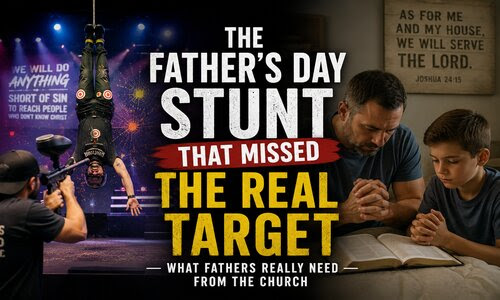
Father’s Day should be one of the easiest opportunities of the year for churches to speak into one of the greatest crises facing our culture. Across North America, fatherlessness is devastating families. Children are growing up without strong male role models. Marriages are crumbling. Men are increasingly disconnected from their biblical responsibilities as husbands, fathers, and spiritual leaders.
That is why a recent Father’s Day service at Church by the Glades in Coral Springs, Florida, deserves careful reflection.
According to reports, the church staged an elaborate production that featured worship pastor Lucas Gomes suspended upside down while spinning as a participant fired a paintball gun at targets attached to him. The service also included a performance of George Thorogood’s “Bad to the Bone” and continued the church’s well-known emphasis on high-energy entertainment and theatrical presentations.
Church by the Glades has long embraced a philosophy articulated by Pastor David Hughes: “We will do anything short of sin to reach people who don’t know Christ.”
On the surface, many Christians may find it difficult to criticize such efforts. After all, reaching lost people is a worthy goal. Most churches would love to see more visitors walk through their doors. Most pastors genuinely desire to connect with people who might never otherwise attend a service.
The motivation may be noble.
The method is where the concern begins.
The question Christians should ask is not merely, “Does it attract a crowd?” The more important question is, “What are people being attracted to?”
If people come primarily for spectacle, entertainment, and novelty, then the church will constantly face pressure to provide even bigger spectacles, greater entertainment, and more elaborate productions. What begins as a creative outreach strategy can quickly become an endless cycle of trying to outdo last week’s show.
In that environment, the church slowly adopts the logic of the entertainment industry.
The congregation becomes an audience.
The sanctuary becomes a stage.
The worship service becomes a production.
And the pastor increasingly resembles a motivational speaker tasked with keeping people engaged.
None of this means that creativity is wrong. Scripture itself contains vivid imagery, dramatic narratives, and powerful illustrations. Jesus often used stories and object lessons to communicate truth.
But Jesus never allowed the illustration to overshadow the message.
The signs pointed to the truth.
They were never the truth itself.
Sadly, much of modern church culture appears to be reversing that order. The production increasingly becomes the attraction while biblical teaching becomes secondary.
That should especially concern us when addressing men and fathers.
What do fathers actually need from the church?
They do not need to be entertained.
They do not need another adrenaline rush.
They do not need a church experience that competes with Netflix, professional sports, or a rock concert.
What fathers desperately need is the Word of God.
They need pastors willing to tell them that biblical manhood is not toxic. It is essential.
They need to hear that God calls husbands to love their wives as Christ loved the church and gave Himself for her.
They need to hear that children require discipline, instruction, and spiritual leadership.
They need to hear that their first ministry is not their career, their hobbies, or their social status–but their family.
They need to hear that masculinity is not defined by cultural trends but by God’s design.
They need to hear that sacrifice, responsibility, courage, integrity, and servant leadership remain virtues worth pursuing.
Most importantly, they need to hear the Gospel.
The greatest need of every father is reconciliation with God through Jesus Christ. A man cannot lead his family spiritually if he has never surrendered his own life to Christ.
Imagine the impact if Father’s Day services across America focused less on entertaining dads and more on equipping them.
Imagine fathers challenged to become prayer warriors for their families.
Imagine men called to repentance for spiritual passivity.
Imagine husbands encouraged to love their wives sacrificially.
Imagine fathers urged to open their Bibles, disciple their children, and establish Christ as the center of their homes.
That message may not generate viral social media clips.
It may not produce dramatic headlines.
It may not be as exciting as paintball guns, stage stunts, or elaborate productions.
But it is precisely what fathers need.
Church history repeatedly demonstrates that genuine revival is not born through entertainment. It comes through the preaching of God’s Word, conviction of sin, repentance, prayer, and transformed lives.
The Church has something the world cannot offer. It possesses the truth of God’s Word and the life-changing power of the Gospel. When churches attempt to compete with the world’s entertainment, they inevitably lose because the world will always produce bigger and better spectacles.
But when the Church faithfully proclaims Christ, it offers something infinitely greater.
The challenge for pastors today is not whether they can attract a crowd.
The challenge is whether they are making disciples.
This Father’s Day, men did not need a paintball show.
They needed a call to biblical manhood.
And that is a message that will never go out of style.

TruLight TV – The Cathedrals: A Farewell Celebration
Today’s Concert – “The Cathedrals: A Farewell Celebration” captures this legendary group during one of their finest – and most emotional – hours. This video was taped at a live concert in the Ryman Auditorium on the Nashville stop of the group’s 1999 farewell tour. The farewell celebration, hosted by Bill Gaither, attracted some of the biggest names in gospel music. Shown paying musical tribute to the Cathedrals are the Statler Brothers, the Oak Ridge Boys, Sandi Patty, Guy Penrod and others.
Today on TruLight Radio XM
TruLight Radio XM 24/7
Program
GMT / UTC +2
Monday To Fridays
00:15 Words to Live By Testimonies
01.15 Science Scripture and Salvation
02.15 Ground Works
04.00 Gospel Concert of the Day
05.00 The Daren Streblow Comedy Show
5:55 It is Today devotional
6:00 Gaither Homecoming Morning Show
7:15 Discover the Word
8.15 Destined for Victory
8:55 Science Scripture and Salvation
9:00 Holy Spirit Hour – Normally Sermons
10:15 Hope of the Heart
11:15 Unshackled
11.45 Words to Live By
12:15 Truth for Life
13:15 Living on the Edge with Chip Ingram
14:15 Focus on the Family
15:00 Kids Hour
16:00 In Touch with Dr. Charles Stanley
16:30 Groundwork
17:15 Live in the Light
18:15 Renewing your Mind
19:00 Gaither Homecoming Show
20:15 Growing Hope
21:15 Adventures in Odyssey Radio Drama
21:45 Bible Reading
22:15 Night-sounds
23.00 Good Old Country Gospel / Rhema Gospel Express
VISIT THE WEBSITE
TruLight Ministry News – EXTRA MANNA
TruLight Ministries orders from God since 2012 . Teach Them , Comfort Them and Warn Them!
The Sheriff of the Church address the NAR Church in this Audio Movie
Healing Truths.
End Time Articles.
Bonus Manna = Bonus Teaching for the Child of God !!
In Revelation 13:8, the apostle John writes, “All who dwell on the earth will worship him, whose names have not been written in the Book of Life of the Lamb slain from the foundation of the world” (NKJV). Here, there is a contrast between those who worship the beast (see Revelation 13:1–7) and those who are in the book of life. Before the foundation of the world, God chose certain individuals to be redeemed by the blood of Christ. These individuals will not worship the beast because their names have been written “in the Book of Life of the Lamb slain from the foundation of the world.”
The term book of life occurs several times in the New Testament (Philippians 4:3; Revelation 3:5; 20:12, 15; 21:27; 22:19). In each instance, the book of life is a list of names of those who have been redeemed by the blood of Christ. Life, in this context, refers to eternal life in heaven. This is the reward for those who persevere to the end: “Blessed is the man who remains steadfast under trial, for when he has stood the test he will receive the crown of life, which God has promised to those who love him” (James 1:12, ESV; cf. Revelation 2:10). Believers will persevere to the end because God will preserve them (Philippians 1:6).
The phrase from the foundation of the world (Revelation 13:8) refers either to those who are in the book of life or to the Lamb who was slain. For the former view, Revelation 17:8 is often cited: “The beast that you saw was, and is not, and is about to rise from the bottomless pit and go to destruction. And the dwellers on earth whose names have not been written in the book of life from the foundation of the world will marvel to see the beast, because it was and is not and is to come” (ESV). Before God created the world, he knew the names of everyone in the book of life. How could He not? After all, He is omniscient (Isaiah 46:10).
For the latter view, 1 Peter 1:18–20 is sometimes cited. Peter says, “You were ransomed from the futile ways inherited from your forefathers, not with perishable things such as silver or gold, but with the precious blood of Christ, like that of a lamb without blemish or spot. He was foreknown before the foundation of the world but was made manifest in the last times for the sake of you” (ESV). Before God created the world, the Father and Son established an eternal covenant of redemption. This means that the sacrificial death of the Lamb was not an afterthought but was a part of God’s perfect plan of redemption: “Father, I desire that they also, whom you have given me, may be with me where I am, to see my glory that you have given because you loved me before the foundation of the world” (John 17:24, ESV).
Whether we adopt the former or latter view, we can be certain of God’s everlasting love. We need not fear the tyrannical reign of the beast. Believers in this age as well as the tribulation saints have this assurance: “I am sure that neither death nor life, nor angels nor rulers, nor things present nor things to come, nor powers, nor height nor depth, nor anything else in all creation, will be able to separate us from the love of God in Christ Jesus our Lord” (Romans 8:38–39, ESV).
Share this Feeding of Manna with your Friends and Family. just click on the Social Media icon and share !