NOTE THE DATE 26-06-2026 3 BY 2 222 3 BY 6 666
Hosted by TruLight Ministries – The Place of Truth
SELECT YOUR READING LANGUAGE – BOTTOM LEFT = YOUR DAILY MANNA NOW AVAILABLE IN 103 LANGUAGES
@ TruLight Daily Manna is not Just a Bible Verse with a Small Prayer . NO ::: WE SERVE DAILY Manna for the ENTIRE Day . Breakfast , Lunch , Dinner , Plus tea Times and even Entertainment Manna . Plus News Manna and More , This Daily Manna will keep you Spiritually full for the full 48 Hours and even More to Share with your Friends and Family !!!
Fight the Good Fight !!!
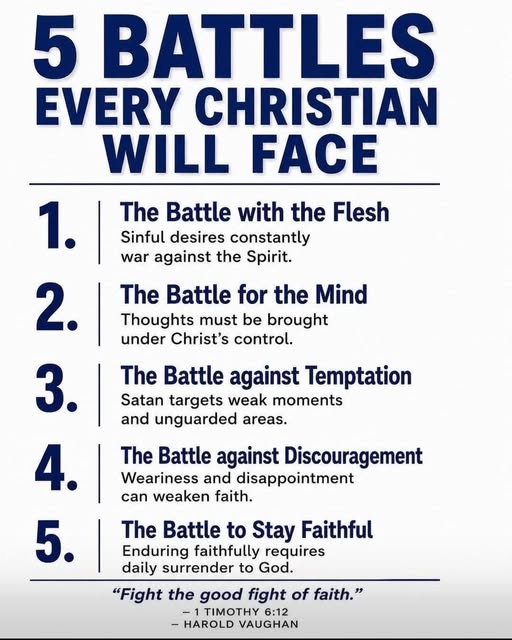
In 2 Timothy 4:7, Paul says, “I have fought the good fight, I have finished the race, I have kept the faith.” This well-known and oft-quoted passage is quite significant in that this epistle was Paul’s last before his martyrdom in A.D. 67. It is a deeply moving affirmation of his unwavering faith and unyielding love for the gospel of Jesus Christ (Galatians 1:4; Galatians 2:20; Philippians 1:21).
“I have fought the good fight” is also significant for believers today because it serves as a stark reminder that the Christian life is a struggle against evil—within ourselves and in the world (John 15:9; Romans 8:7; James 4:4). Earlier in this same epistle, Paul reminded Timothy to “endure hardship as a good soldier of Jesus Christ” (2 Timothy 2:3).
The Greek word agonizomai, translated “fought,” means literally “to engage in conflict.” The word was used in the context of competing in athletic games or engaging in military conflict. Considering that Paul was chained to a Roman soldier when he wrote this epistle, it would have been easy for him to make such an analogy. In fact, he had known many Roman soldiers and during his imprisonment had won a number of them to Christ, some of them members of the Praetorian Guard (Philippians 1:13).
Our battle is not with flesh and blood “but against principalities, against powers, against the rulers of the darkness of this age, against spiritual hosts of wickedness in the heavenly places” (Ephesians 6:12). The Christian life is a fight in that Christians face a never-ending struggle against evil—not an earthly military campaign, but a spiritual battle against Satan. This is why we must “take up the whole armor of God, that you may be able to withstand in the evil day” (see Ephesians 6:13-18).
Without question, the apostle Paul was the consummate warrior, never quitting, never flagging in his zeal for the Lord (Philippians 3:14-15). He knew where lay the source of his strength (Philippians 4:13; 2 Corinthians 12:9). His campaign to spread the gospel of Christ began on the Damascus Road (Acts 9:3) and eventually took him across the ancient world on four missionary journeys. He had witnessed of Christ before Felix and Agrippa, the legates and officials of Rome (Acts 23:26; Acts 26:1). He contended with false teachers and false brethren within the church (2 Corinthians 11:13; Galatians 1:7; Galatians 2:4).
Paul’s “good fight” included an astonishing series of dangers and indignities (2 Corinthians 11:23-33). Even in these he proclaimed his victory in Christ: “Yet in all these things we are more than conquerors through Him who loved us” (Romans 8:37).
Paul’s life and ministry provide for us a powerful example for modeling Christ today. Not only did he “fight the good fight,” but he also “finished the race” and “kept the faith” (2 Timothy 4:7). Paul knew that his death was near (verse 6) but had no regrets. After Jesus took control of his life (Acts 9:15-16), Paul had lived life to the fullest, fulfilling all that Jesus had charged and empowered him to do (Ephesians 3:6; 2 Timothy 4:17). He had a remarkable sense of fulfillment and contentment with his life (Philippians 4:11-13; 1 Timothy 6:6-8).
As believers today, we can have no greater sense of fulfillment than to know, as Paul did, that we have fully accomplished all that the Lord has called us to do (Matthew 25:21). May we “fight the good fight” and “be watchful in all things, endure afflictions, do the work of an evangelist, fulfill [our] ministry” (2 Timothy 4:5).

Tea Time Manna
“Can anyone hide in secret places so that I cannot see them?” declares the Lord. “Do not I fill heaven and earth?” declares the Lord.
—Jeremiah 23:24
There is no hiding from God, but for those who willingly and joyously seek him, there is great comfort, power, and hope in knowing that his presence is ever with us. He promises never to leave or forsake us (Hebrews 13:5-6). David beautifully praises God for his abiding presence in Psalm 139. He wants us to remember that God is with him, and that God’s presence goes with us from conception to death, and even beyond. God knew us in the womb. He guides us daily and regularly in our lives. He is willing to go with us to the farthest reaches of our existence, and he always longs to be near us and to be for us.
Prayer
El Shaddai, God Almighty, God of the Mountains, Jehovah Jireh, God our constant Provider, please be my source of strength as I seek to abide in your presence and walk with you in every moment of my days. I seek to acknowledge your might, love, mercy, power, strength, and grace in all I do and everywhere I go. Please, dear Father, don’t just bless me with your presence; please use me to bless others so they can find their place in your plan for their lives. In the name of Jesus, my Lord and Savior, I pray. Amen and Amen
Bible Teaching of the Day
LUNCH MANNA =
The apostle Paul used metaphorical comparisons (see 1 Corinthians 9:24–27; Hebrews 12:1; 2 Timothy 4:7) to refer to different aspects of the Christian life and faith journey. For his protégé, Timothy, Paul often framed the calling to ministry in terms of a soldier fighting a battle. This analogy may have been inspired by prophecies spoken about Timothy earlier: “This charge I entrust to you, Timothy, my child, in accordance with the prophecies previously made about you, that by them you may wage the good warfare, holding faith and a good conscience” (1 Timothy 1:18–19, ESV).
The original words translated “wage the good warfare” are alternately translated as “fight the battle well” (NIV) and “fight the good fight” (CSB). Paul used a similar metaphor toward the end of his letter, urging Timothy to “fight the good fight of the faith. Take hold of the eternal life to which you were called and about which you made the good confession in the presence of many witnesses” (1 Timothy 6:12, ESV). As Paul’s death drew near, he echoed these words, reminding Timothy to stay strong and follow Paul’s example: “I have fought the good fight, I have finished the race, I have kept the faith” (2 Timothy 4:7, ESV).
In the original Greek, the command translated “wage the good warfare” is terminology associated with military combat. Paul began, “This charge I entrust to you,” again choosing a military term to give his words a sense of force, urgency, and obligation. He was Timothy’s superior officer handing down a formal charge. Paul stressed that serving as a soldier for Christ was no small, insignificant challenge. It would involve sacrifice and suffering (see 2 Timothy 2:3–26). Christian servants must be willing to endure hardship and be completely loyal to the ultimate commander-in-chief, Jesus Christ.
Believers are called to serve in hostile environments. We are engaged in a spiritual battle, “not fighting against flesh-and-blood enemies, but against evil rulers and authorities of the unseen world, against mighty powers in this dark world, and against evil spirits in the heavenly places” (Ephesians 6:12, NLT; see also Ephesians 6:10–20; Philippians 1:30; John 18:36).
Paul told the Corinthian believers, “We are human, but we don’t wage war as humans do. We use God’s mighty weapons, not worldly weapons, to knock down the strongholds of human reasoning and to destroy false arguments. We destroy every proud obstacle that keeps people from knowing God. We capture their rebellious thoughts and teach them to obey Christ” (2 Corinthians 10:3–5, NLT). The good warfare is waged with spiritual armor and spiritual weapons of truth, righteousness, peace, faith, the hope of salvation, the sword of the Spirit (God’s Word), prayer, and sharing the gospel (see Ephesians 6:11–20; 1 Thessalonians 5:8). We also fight the good fight with love, purity of heart, a good conscience, and sincere faith (see 1 Timothy 1:5).
Christians wage the good warfare when they encounter struggles within the church (Colossians 2:1; 1 Thessalonians 2:2). Timothy faced a particular problem as a fledgling pastor, which was opposition from false teachers (see 1 Timothy 1:3–11, 19–20). Paul urged Timothy to stand his ground in defending the truth and stay at his post: “Cling to your faith in Christ, and keep your conscience clear. For some people have deliberately violated their consciences; as a result, their faith has been shipwrecked” (1 Timothy 1:19–20, NLT; see also 1 Timothy 1:3–4).
Waging the good warfare or fighting the good fight of faith includes the believer’s struggle to honor the Lord through obedience and personal holiness. The author of Hebrews set forth Jesus as the ultimate model to imitate in this battle against sin: “Think of all the hostility [Jesus] endured from sinful people; then you won’t become weary and give up. After all, you have not yet given your lives in your struggle against sin” (Hebrews 12:3–4, NLT).
Today’s Devotional
DINNER MANNA =
First Timothy 6:12 states, “Fight the good fight of the faith. Take hold of the eternal life to which you were called when you made your good confession in the presence of many witnesses.” This verse is part of Paul’s personal letter to Timothy and provides instructions on how to live and lead. Let’s focus on the concept of “the good confession” that Timothy made.
The “good confession” refers to a public declaration of faith. Interestingly, in the next verse, Paul mentions that Jesus also made a good confession: “In the sight of God, who gives life to everything, and of Christ Jesus, who while testifying before Pontius Pilate made the good confession, I charge you” (1 Timothy 6:13).
In John 18:37, we find the details of Jesus’ confession: “‘You are a king, then!’ said Pilate. Jesus answered, ‘You say that I am a king. In fact, the reason I was born and came into the world is to testify to the truth. Everyone on the side of truth listens to me.’” Here, truth refers not merely to a set of preceptsd in Scripture but to the embodiment of truth in Jesus Himself (John 14:6). When Jesus claimed to testify to the truth, He was, in essence, testifying about Himself.
Thus, the good confession bears witness to Jesus, as Romans 10:9–10 emphasizes, “If you confess with your mouth that Jesus is Lord and believe in your heart that God raised him from the dead, you will be saved. For with the heart one believes and is justified, and with the mouth one confesses and is saved.”
The Greek word for “belief” is pistis, which also denotes trust in something. A proper confession of Jesus arises from trusting in His resurrection, intrinsically linked to His sacrifice on the cross for our sin. There is no resurrection without the crucifixion.
Modern evangelistic crusades often feature public declarations with altar calls. While altar calls can be beneficial, they should be offered to individuals who understand themselves as sinners in need of a Savior. We come to Christ to be reconciled with God, not for money, a comfortable life, or even good health. While we have the promise of a future freedom from suffering, sickness, and pain (Revelation 21:4), Jesus’ primary mission was to lead us to the Father, not to grant a physical utopia on earth. Therefore, the gospel must serve as the foundation for every altar call.
Similarly, the sinner’s prayer, used as a formulaic approach to guide someone in making a confession, should be handled with care. The sinner’s prayer is not a magical statement, and it does not, in itself, save. Jesus saves us by faith. The sinner’s prayer should be an outward declaration of the inner transformation that has occurred, and it must be accompanied by the gospel.
Once we have believed and publicly made a good confession, like Timothy, we are called to “take hold of eternal life” and live consistently with our beliefs.

NEWS MANNA –
Are We Watching The Birth Pains Increase? 3 Major Earthquakes In 24hrs

Within just a matter of hours, the earth delivered a powerful reminder that humanity lives on a restless planet.
A devastating series of earthquakes struck Venezuela. A powerful 6.9-magnitude earthquake rattled Japan. Northern California was shaken by a magnitude 5.6 quake that triggered dozens of aftershocks.
Individually, none of these events prove anything prophetically. Earthquakes happen every year, and geologists rightly caution against drawing conclusions from any single event.
But when several significant earthquakes occur almost simultaneously, they capture people’s attention—and they naturally raise an uncomfortable question:
How prepared are we if something much larger is coming?
The most devastating event is still unfolding in Venezuela, where back-to-back earthquakes measuring 7.2 and 7.5 struck west of Caracas. Buildings collapsed, airports closed, rescue workers rushed into damaged neighborhoods, and the U.S. Geological Survey’s rapid assessment warned that casualties could ultimately be very high. Search-and-rescue operations continue as authorities attempt to determine the full scope of the disaster.
Across the Pacific, Japan was struck by a magnitude 6.9 earthquake. Meanwhile, Northern California experienced a magnitude 5.6 earthquake centered in Mendocino County. Although California escaped catastrophic damage this time, the quake injured several people, damaged buildings, knocked out power, and produced dozens of aftershocks that kept residents on edge.
For many Americans, however, the California quake immediately brought another name to mind:
The San Andreas Fault.
The Fault Everyone Knows Is There
The San Andreas Fault stretches roughly 800 miles through California, marking the boundary between the Pacific and North American tectonic plates.
Scientists have long emphasized that it is not a question of if another major rupture will occur, but when.
No one can predict the day or hour.
No responsible scientist claims they can.
But nearly everyone agrees another major earthquake along portions of the fault is inevitable.
USGS modeling has examined what could happen if the southern San Andreas produced approximately a magnitude 7.8 earthquake.
The projections are sobering:
Roughly 1,800 deaths
More than 50,000 injuries
Hundreds of billions of dollars in economic losses
Thousands of fires
Widespread water-main failures
Long-term power outages
Major transportation disruptions
Millions of people affected throughout Southern California
Those numbers assume modern emergency response and engineering.
A slightly smaller event—perhaps magnitude 6.8 to 7.0—would likely remain a severe regional disaster, damaging older buildings, highways, utilities, and infrastructure while causing billions in losses.
A magnitude 7.3 to 7.5 rupture would likely impact much larger portions of Southern California, disrupting transportation corridors, communications, hospitals, and supply chains.
A full-scale 7.8 “Big One,” similar to USGS planning scenarios, would be remembered for generations.
Even Americans living thousands of miles away would feel its economic consequences.
California’s ports move enormous volumes of imported goods. Interstate highways, fuel pipelines, data infrastructure, food distribution, and financial markets all depend upon systems that could be disrupted for weeks or months.
In today’s interconnected economy, a California megaquake would not remain California’s problem.
PASTOR DIRK SAYS – THE NEXT TRUMPET TO SOUND IS THE 5TH TRUMPET . SUPER VALCANO RING OF FIRE EXPLODES
How Britain Enabled The Abuse Of Thousands Of Its Own Children
Last week, a group called Restore Britain released a summary report of an inquiry into the widespread and systematic sexual exploitation of vulnerable working-class women and children across the nation. At least a quarter of a million girls were sexually assaulted, trafficked, tortured, and even killed, mostly by gangs of Pakistani Muslims. The details in the report are so horrifying, it is difficult to believe they are true.
As shocking as the reports of abuse are the descriptions of the response by British authorities, including police, teachers, social workers, doctors, and politicians. Evidence of the abuse and reports by victims were downplayed and ignored. When Prime Minister Kier Starmer, who resigned Monday, was Director of Public Prosecutions and the head of the Crown Prosecution Service, he dismissed 13,000 cases of suspected child sexual offenders with a warning letter rather than attempt to prosecute.
According to the report, the fear of being labeled racist, the fear of losing votes, the fear of rioting if prosecutions happened, and the fear of accusations of classism all contributed to a culture in which “community cohesion” became more important than protecting women and children.
British citizens who spoke out about the abuse or expressed criticism of mass migration were often prosecuted, especially if the criticisms were directed at Pakistani or Muslim communities. In some cases, fathers attempting to rescue their daughters from abusers were even arrested. Last year alone in Great Britain, approximately 12,000 people were prosecuted for social media posts, some for longer periods than those who committed the crimes they were protesting.
Underlying the British response and the silence by media outlets both in Britain and in the U.S. is a cultural mood common among elites and shaped by Critical Theory. Western culture is assumed to be oppressive, and minorities, especially immigrants, are assumed to be victims of Western oppression. Thus, minorities cannot be expected to be held to the same standards.
Their behavior results from their oppression, and identifying criminals within a minority group, it is assumed, will foster even deeper racism and Islamophobia–a term coined by the Muslim Brotherhood to shut down criticism of Islam. In this morally upside-down world, racism and Islamophobia are worse crimes than the sexual exploitation of children.
The gangs that have been operating in Britain have deep ideological and cultural roots shaped by Islam, including Sharia law. While most Muslims are law abiding and many imams have condemned these gangs, the scale of abuse is so widespread that it must have been known. And yet, it was allowed and even enabled in some communities.
Also ignored is the difficult truth that Islam, on its own terms, allows child sexual exploitation and trafficking. According to Islamic teaching, Mohammad received the Quran directly from Allah through dictation from the angel Gabriel. Thus, Muslims claim, it is the perfect and unchangeable expression of how Allah wants us to live, and Mohammad was the perfect exemplar of that way of life. Therefore, Muslims should pattern their lives after him.
Mohammad, who claimed divine approval for himself, was a polygamist and a slaver. He promised his followers unending sexual bliss in paradise along with wine and other goods they were forbidden to have in this world, if they followed him and fought along with him. He married a 6-year-old girl and consummated the marriage when she was 9.
Many Muslims believe that, under Sharia, the same behavior is permitted with children today, and that Muslims are permitted to take non-Muslim women, married or not, as slaves. They are also permitted to abuse and humiliate them, including prostituting them for the benefit of their owners. All this is part of Sharia.
What these gangs have done to at least 250,000 women and children in Britain is allowed by these extreme interpretations of Sharia. Many of the young men responsible for these atrocities believe they are answerable to Sharia, rather than to British law. They believe what they are doing is approved by Allah, especially when done to an enemy who is oppressing them. This is something radical Islam has in common with Critical Theory.
This terrible story reveals why it is foolish to suggest that all cultures and religions are morally equal. They are not. Though every person is made in the image of God and fallen into sin, some cultures and religions encourage sin and fallenness, including the abuse of other image bearers.
Ideas have consequences. Bad ideas have victims. In Great Britain alone, the victims of Islam and Critical Theory number in the hundreds of thousands

TruLight TV – How to Help Your Kids Stay Calm in the Midst of Chaos
Parker and Rose are on the case to solve an incredible mystery! In the seventh episode of “Mystery Manor,” everything seems to be going wrong. Will Parker and Rose give up? Meanwhile, on Konnect HQ: Families, if your kids are out of control, talk about how your kids can be calm again, even in the middle of a bad situation! Worship as you dance along to “Your Love Is” and “Echo,” watch the Bible story “Jesus Calms the Storm,” memorize Isaiah 26:3, and play the storm game with your family. If you have kids 6 to 10 years old, it’s time for church at home! This and some stunning gospel kids’ songs Enjoy.
Today on TruLight Radio XM
TruLight Radio XM 24/7
Program
GMT / UTC +2
Monday To Fridays
00:15 Words to Live By Testimonies
01.15 Science Scripture and Salvation
02.15 Ground Works
04.00 Gospel Concert of the Day
05.00 The Daren Streblow Comedy Show
5:55 It is Today devotional
6:00 Gaither Homecoming Morning Show
7:15 Discover the Word
8.15 Destined for Victory
8:55 Science Scripture and Salvation
9:00 Holy Spirit Hour – Normally Sermons
10:15 Hope of the Heart
11:15 Unshackled
11.45 Words to Live By
12:15 Truth for Life
13:15 Living on the Edge with Chip Ingram
14:15 Focus on the Family
15:00 Kids Hour
16:00 In Touch with Dr. Charles Stanley
16:30 Groundwork
17:15 Live in the Light
18:15 Renewing your Mind
19:00 Gaither Homecoming Show
20:15 Growing Hope
21:15 Adventures in Odyssey Radio Drama
21:45 Bible Reading
22:15 Night-sounds
23.00 Good Old Country Gospel / Rhema Gospel Express
VISIT THE WEBSITE
TruLight Ministry News – EXTRA MANNA

TruLight Ministries orders from God since 2012 . Teach Them , Comfort Them and Warn Them!
The Sheriff of the Church NEWEST EPISODE – JUST RELEASED
APOSTLES AND PROPHETS = SHERIFF OF THE CHURCH – I TELL YOU TRU – EPISODE 14 OF 25
Healing Truths.
End Time Articles.
Bonus Manna = Bonus Teaching for the Child of God !!
“I have fought the good fight, I have finished the race, I have kept the faith” (2 Timothy 4:7). This is one of the better-known and most-quoted passages of the apostle Paul. These words written just before Paul’s death are a powerful affirmation of his unyielding love and undying faith in Jesus and the gospel message (Galatians 1:4; 2:20; Philippians 1:21).
The word translated “kept” means “to keep by guarding, to watch over.” The Greek word for “faith” is pistis, which has to do with a conviction based on hearing (cf. Romans 10:17). Paul’s trust in Jesus never wavered. His faith was as solid on the day of his death as it had been the moment he first believed on the Damascus road (Acts 9:3). He was firm in his faith in the midst of the mob’s violence (Acts 16:22; 2 Corinthians 11:25; 1 Thessalonians 2:2). He stood uncompromising before the dignitaries Felix (Acts 22:10, 22), Festus (Acts 25:9), and Agrippa (Acts 25:26). He boldly confronted Peter when that apostle showed signs of compromising the teachings of Christ (Galatians 2:11-16).
The expression “I have kept the faith” has two possible meanings. One is that Paul had faithfully declared the gospel and guarded its truth, keeping its message unadulterated. Elsewhere, Paul called this the “pattern of sound teaching” and encouraged Timothy to “keep” it as well (2 Timothy 1:13; cf. 1 Timothy 6:20).
The other possible meaning of “I have kept the faith” is that Paul had fulfilled his divine appointment in this world, viz., that he would be Jesus’ messenger to the Gentiles (Acts 9:15; 22:21). When Jesus commissioned Paul, He was clear that the appointment would mean much suffering (Acts 9:16). But Paul gladly accepted the summons and never wavered in his commitment, trusting that he would soon experience “an eternal glory” (2 Corinthians 4:17).
Keeping the faith is never easy. Without question, Satan sought to derail Paul’s work by opposing him far and wide. There were Galatian legalists, Colossian Gnostics, and Judaizers at every turn. There were forged letters (2 Thessalonians 2:2). There were slanderous attacks on his integrity, his personal appearance, and his unpolished speech (2 Corinthians 10:10; 2 Corinthians 1:6). Not to mention the physical beatings he took (2 Corinthians 11:23-27). He was truly “hard pressed on every side” (2 Corinthians 4:8). Paul’s faith was the victory: “I know whom I have believed, and am persuaded that He is able to keep that which I have committed unto Him against that day” (2 Timothy 1:12). What God had committed to Paul, Paul committed back to God. And through it all, Paul looked forward to the moment when he would hear the Lord say, “Well done, good and faithful servant!” (Matthew 25:21).
As believers in Christ, we, too, should “keep the faith.” What has God called you to do? Do it with all your might (Colossians 3:23). Just as Paul “longed for His appearing” and anticipated receiving the “crown of righteousness” (2 Timothy 4:8), so should we serve the Lord and faithfully fulfill His plan for our lives.
Share this Feeding of Manna with your Friends and Family. just click on the Social Media icon and share !