Hosted by TruLight Ministries International – The Place of Truth
SELECT YOUR READING LANGUAGE – BOTTOM LEFT = YOUR DAILY MANNA NOW AVAILABLE IN 103 LANGUAGES
@ TruLight Daily Manna is not Just a Bible Verse with a Small Prayer . NO ::: WE SERVE DAILY Manna for the ENTIRE Day . Breakfast , Lunch , Dinner , Plus tea Times and even Entertainment Manna . Plus News Manna and More , This Daily Manna will keep you Spiritually full for the full 48 Hours and even More to Share with your Friends and Family !!!
One Act of Disobedience Started it All , And that flame is running wild !!!
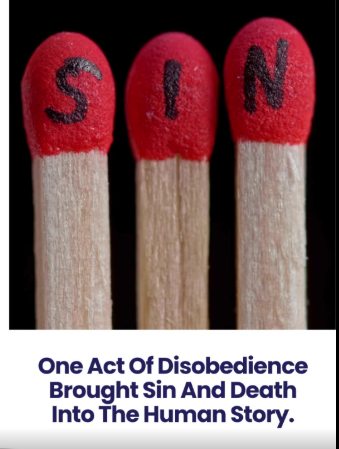
Adam was the first man to ever exist (Genesis 1:27; 1 Corinthians 15:45). He was created by God as the first human being and placed in the Garden of Eden designed just for him (Genesis 2:8, 10). Adam is the father of all mankind; every human being who has ever existed is a direct descendant of Adam, and it is through Adam that every human being has inherited a sinful nature (Romans 5:12).
God spoke everything else in the universe into existence (Genesis 1). But on the sixth day God did something different. He got down in the dirt and formed Adam from the clay (the name Adam is related to adamah, the Hebrew word for “ground” or “soil”). God then breathed His own breath into the man’s nostrils, “and man became a living soul” (Genesis 2:7). The breath of God is what separates human beings from the animal kingdom (Genesis 1:26–27). Beginning with Adam, every human being created since then has an immortal spirit as God has. God created a being so like Him that the man could reason, reflect, intuit, and choose his own paths.
The first woman, Eve, was made from one of Adam’s ribs (Genesis 2:21–22). God placed them in His perfect world, with only one restriction: they were not to eat of the Tree of the Knowledge of Good and Evil (Genesis 2:16–17). The option for Adam to disobey had to be present, because without that ability to choose, human beings would not be completely free. God created Adam and Eve as truly free beings, and He allowed them to make an entirely free choice.
Genesis 3 details the account of Adam’s choice to sin. Both Adam and Eve disobeyed God’s command and ate of the tree which the Lord had forbidden (verse 6). In that one act of disobedience, they brought sin and all of its consequences into God’s perfect world. Through Adam, sin entered the world, and with sin came death (Genesis 3:19, 21; Romans 5:12).
We know that Adam was an actual person, not an allegory, because he is referred to as a real person throughout the rest of the Bible (Genesis 5:1; Romans 5:12–17). Luke, the great historian, traces the lineage of Jesus all the way back to this one man (Luke 3:38). In addition to his being a real person, Adam is also the prototype for all human beings to come. Prophets, priests, and kings, born with a sin nature, were all children of the first Adam. Jesus, virgin-born and sinless, is “the second Adam” (1 Corinthians 15:47). The first Adam brought sin into the world; the second brought life (John 1:4). Jesus, our second Adam, offers a new birth (John 3:3) with a new nature and new life for whoever believes (2 Corinthians 5:17; John 3:16–18). Adam lost paradise; Jesus will regain it.
Romans 5:14 states, “Death reigned from Adam to Moses, even over those who had not sinned according to the likeness of the transgression of Adam, who is a type of Him who was to come” (NKJV). Here, Paul speaks about the consequences of sin. In saying, “Death reigned from Adam to Moses,” Paul conveys the pervasive power of sin and death over humanity and the need for redemption through Christ.
Death reigned from Adam to Moses refers to the time between the first man, Adam, and the giving of the law to Israel through Moses. Adam’s disobedience in the Garden of Eden brought sin and death into the world (Genesis 3). Sin entered through one man, Adam, and its impact was felt universally. Death was the consequence of Adam’s sin. It did not matter that no one committed the same act of disobedience as Adam; people still died. Paul’s point here is that death, the consequence of sin, is a universal experience, even for those who lived before the law was given at Sinai.
When Paul says, “Death reigned from Adam to Moses,” he emphasizes that death held sway over all humanity because of Adam’s sin. Although the law had not yet been given, death still affected people. The reality of death demonstrated that sin was present even before it was codified in the Mosaic Law. Paul argues earlier that “sin entered the world through one man, and death through sin, and in this way, death came to all people because all sinned” (Romans 5:12). The reign of death over humanity was not contingent on the law but on our sinful nature inherited from Adam. Therefore, “death reigned from Adam to Moses” because sin’s penalty applied universally, regardless of the presence of the law.
Death reigned from Adam to Moses also highlights the idea that the effects of sin were present even in those who did not consciously transgress a direct command from God. In the period before Moses, there was no specific law for people to break, yet death still reigned. So, sin’s consequence is not merely the result of breaking explicit rules but is rooted in the fallen condition of humanity that began with Adam. Paul’s argument clarifies that people died not because they sinned in the same way as Adam but because Adam’s sin brought death into the world. Death reigned from Adam to Moses because sin was in our nature.
Picturing death as a potentate communicates that all humanity is under the curse of sin, a theme Paul develops throughout Romans. The grip of sin and its consequences are pervasive. Even in the absence of explicit laws from God, the reality of death reveals that sin’s power extends beyond individual actions—it is systemic, affecting every person. The dominion of death is a grim reminder of our fallen state and the need for a solution to the problem of sin and death.
Understanding that “death reigned from Adam to Moses” prepares readers for the introduction of Christ as the new Adam, the one who brings life where death once ruled. Romans 5:14 refers to Adam as a “type of the one who was to come” (ESV). That is, Adam was a pattern for Jesus Christ. The difference is that “Adam brought destruction, Christ brought salvation” (Romans 5:14, AMP). Just as Adam’s sin brought death, Christ’s obedience and sacrifice would bring life. The reign of death from Adam to Moses set the stage for the more incredible reign of grace and life through Jesus Christ. Paul elaborates on this in Romans 5:17, stating, “For if, by the trespass of the one man, death reigned through that one man, how much more will those who receive God’s abundant provision of grace and of the gift of righteousness reign in life through the one man, Jesus Christ!” Christ’s redemptive work solves the problem of sin and death.
The emperor of Rome from AD 54 to 68 was Nero Claudius Caesar Augustus Germanicus, also known simply as Nero. The emperor was not known for being a moral and ethical person, to say the least. In AD 64 the great Roman fire occurred, with Nero himself being suspected of arson. In his writings, the Roman senator and historian Tacitus recorded, “To get rid of the report [that he had started the fire], Nero fastened the guilt and inflicted the most exquisite tortures on a class hated for their abominations, called Christians by the populace” (Annals, XV).
It was during the reign of Nero that the apostle Paul wrote his epistle to the Romans. While one might expect him to encourage the Christians in Rome to rise up against their oppressive ruler, in chapter 13, we find this instead:
“Every person is to be in subjection to the governing authorities. For there is no authority except from God, and those which exist are established by God. Therefore whoever resists authority has opposed the ordinance of God; and they who have opposed will receive condemnation upon themselves. For rulers are not a cause of fear for good behavior, but for evil. Do you want to have no fear of authority? Do what is good and you will have praise from the same; for it is a minister of God to you for good. But if you do what is evil, be afraid; for it does not bear the sword for nothing; for it is a minister of God, an avenger who brings wrath on the one who practices evil. Therefore it is necessary to be in subjection, not only because of wrath, but also for conscience’ sake. For because of this you also pay taxes, for rulers are servants of God, devoting themselves to this very thing. Render to all what is due them: tax to whom tax is due; custom to whom custom; fear to whom fear; honor to whom honor” (Romans 13:1–7).
Even under the reign of a ruthless and godless emperor, Paul, writing under the inspiration of the Holy Spirit, tells his readers to be in subjection to the government. Moreover, he states that no authority exists other than that established by God, and that rulers are serving God in their political office.
Peter writes nearly the same thing in one of his two New Testament letters:
“Submit yourselves for the Lord’s sake to every human institution, whether to a king as the one in authority, or to governors as sent by him for the punishment of evildoers and the praise of those who do right. For such is the will of God that by doing right you may silence the ignorance of foolish men. Act as free men, and do not use your freedom as a covering for evil, but use it as bondslaves of God. Honor all people, love the brotherhood, fear God, honor the king” (1 Peter 2:13–17).
Both Paul’s and Peter’s teachings have led to quite a few questions from Christians where civil disobedience is concerned. Do Paul and Peter mean that Christians are always to submit to whatever the government commands, no matter what is asked of them?
A Brief Look at the Various Views of Civil Disobedience
There are at least three general positions on the matter of civil disobedience. The anarchist view says that a person can choose to disobey the government whenever he likes and whenever he feels he is personally justified in doing so. Such a stance has no biblical support whatsoever, as evidenced in the writings of Paul in Romans 13.
The extremist says that a person should always follow and obey his country, no matter what the command. As will be shown in a moment, this view also does not have biblical support. Moreover, it is not supported in the history of nations. For example, during the Nuremberg trials, the attorneys for the Nazi war criminals attempted to use the defense that their clients were only following the direct orders of the government and therefore could not be held responsible for their actions. However, one of the judges dismissed their argument with the simple question: “But gentlemen, is there not a law above our laws?”
The position the Scriptures uphold is one of biblical submission, with a Christian being allowed to act in civil disobedience to the government if it commands evil, such that it requires a Christian to act in a manner that is contrary to the clear teachings and requirements of God’s Word.
Civil Disobedience—Examples in Scripture
In Exodus 1, the Egyptian Pharaoh gave the clear command to two Hebrew midwives that they were to kill all male Jewish babies. An extreme loyalist would have carried out the government’s order, yet the Bible says the midwives disobeyed Pharaoh and “feared God, and did not do as the king of Egypt had commanded them, but let the boys live” (Exodus 1:17). The Bible goes on to say the midwives lied to Pharaoh about why they were letting the children live; yet even though they lied and disobeyed their government, “God was good to the midwives, and the people multiplied, and became very mighty. Because the midwives feared God, He established households for them” (Exodus 1:20–21).
In Joshua 2, Rahab directly disobeyed a command from the king of Jericho to produce the Israelite spies who had entered the city to gain intelligence for battle. Instead, she let them down via a rope so they could escape. Even though Rahab had received a clear order from the top government official, she resisted the command and was redeemed from the city’s destruction when Joshua and the Israeli army destroyed it.
The book of 1 Samuel records a command given by King Saul during a military campaign that no one could eat until Saul had won his battle with the Philistines. However, Saul’s son Jonathan, who had not heard the order, ate honey to refresh himself from the hard battle the army had waged. When Saul found out about it, he ordered his son to die. However, the people resisted Saul and his command and saved Jonathan from being put to death (1 Samuel 14:45).
Another example of civil disobedience in keeping with biblical submission is found in 1 Kings 18. That chapter briefly introduces a man named Obadiah who “feared the Lord greatly.” When the queen Jezebel was killing God’s prophets, Obadiah took a hundred of them and hid them from her so they could live. Such an act was in clear defiance of the ruling authority’s wishes.
In 2 Kings, the only apparently approved revolt against a reigning government official is recorded. Athaliah, the mother of Ahaziah, began to destroy the royal offspring of the house of Judah. However, Joash the son of Ahaziah was taken by the king’s daughter and hidden from Athaliah so that the bloodline would be preserved. Six years later, Jehoiada gathered men around him, declared Joash to be king, and put Athaliah to death.
Daniel records a number of civil disobedience examples. The first is found in chapter 3 where Shadrach, Meshach and Abednego refused to bow down to the golden idol in disobedience to King Nebuchadnezzar’s command. The second is in chapter 6 where Daniel defies King Darius’ decree to not pray to anyone other than the king. In both cases, God rescued His people from the death penalty that was imposed, signaling His approval of their actions.
In the New Testament, the book of Acts records the civil disobedience of Peter and John towards the authorities that were in power at the time. After Peter healed a man born lame, Peter and John were arrested for preaching about Jesus and put in jail. The religious authorities were determined to stop them from teaching about Jesus; however, Peter said, “Whether it is right in the sight of God to give heed to you rather than to God, you be the judge; for we cannot stop speaking about what we have seen and heard” (Acts 4:19–20). Later, the rulers confronted the apostles again and reminded them of their command to not teach about Jesus, but Peter responded, “We must obey God rather than men” (Acts 5:29).
One last example of civil disobedience is found in the book of Revelation where the Antichrist commands all those who are alive during the end times to worship an image of himself. But the apostle John, who wrote Revelation, states that those who become Christians at the time will disobey the Antichrist and his government and refuse to worship the image (Revelation 13:15) just as Daniel’s companions violated Nebuchadnezzar’s decree to worship his idol.
Civil Disobedience—Conclusion
What conclusions can be drawn from the above biblical examples? The guidelines for a Christian’s civil disobedience can be summed as follows:
- Christians should resist a government that commands or compels evil and should work nonviolently within the laws of the land to change a government that permits evil.
- Civil disobedience is permitted when the government’s laws or commands are in direct violation of God’s laws and commands.
- If a Christian disobeys an evil government, unless he can flee from the government, he should accept that government’s punishment for his actions.
- Christians are certainly permitted to work to install new government leaders within the laws that have been established.
Lastly, Christians are commanded to pray for their leaders and for God to intervene in His time to change any ungodly path that they are pursuing: “First of all, then, I urge that entreaties and prayers, petitions and thanksgivings, be made on behalf of all men, for kings and all who are in authority, so that we may lead a tranquil and quiet life in all godliness and dignity” (1 Timothy 2:1–2).

Tea Time Manna
Just as each of us has one body with many members, and these members do not all have the same function, so in Christ we who are many form one body, and each member belongs to all the others.
—Romans 12:4-5
Three key realities of our discipleship are belonging, usefulness, and connectedness. Each of us belongs! We belong to God. We belong to Jesus. We belong to Jesus’ body, the Church. We belong to each other as members of Jesus’ body. The Holy Spirit not only cleansed us when we were given new birth in Jesus’ family (John 3:6-7; 1 Corinthians 6:11), but the Spirit also gifted us (Ephesians 4:7; 1 Peter 4:10) and connected us with everyone else in Jesus’ body! We each have a place and a purpose for the Church to function as Jesus’ bodily presence in our world today. We each have something to bring to the other believers who make us Jesus’ body, the Church. Each of us belongs! Each of us is needed! Each of us has an important role to play with significant things to do! Each of us is connected to each other. If one part suffers, we all suffer. If one person is blessed, we all rejoice (1 Corinthians 12:26). So, dear friend of Jesus, rather than envying someone else’s gift or belittling someone we feel has a lesser gift, or rejecting someone who does not have a specific gift, let’s rejoice in each other, support each other, and do our part in helping the world see Jesus!
Prayer
Help me, please, dear Father. I want to find the place you made me to fill in Jesus’ body, the Church. As I discover my place to serve and use my gifts, I pledge to work so that your Spirit, and not just my own preferences, will guide me into your place for me to serve. Thank you for giving me a place not only to belong, but also to serve and be a part of Jesus’ bodily presence in the world. In Jesus’ name, and for his glory, I pray. Amen and Amen

NEWS MANNA –
Global Food Production Is Facing The Perfect Storm

Global hunger was already soaring as we entered 2026, and now it appears that we have a historic crisis on our hands. The war with Iran has significantly restricted the flow of fertilizer out of the Middle East, and even the UN is admitting that this will make global food supplies much tighter in the months ahead. Meanwhile, the war in Eastern Europe has greatly escalated and that has resulted in severely reduced wheat exports from Ukraine.
On top of everything else, it is being projected that the strongest Super El Niño in recorded history will peak later this year, and as a result crazy weather patterns will continue to hammer crops all over the planet. At this stage, no rational person can deny what we are witnessing.
Experts are warning that this upcoming fall harvest season will be a real turning point.
Agriculture analyst Noel Fryer recently explained to CNBC why we are facing a “perfect storm” for global food production…
“A lot of things will come together to seriously affect crops next year,” Fryer said on Thursday.
“We’ve had crops decimated by weather in Europe and the U.S. A searingly hot summer in Europe has eroded grazing potential, with no hay and grass for cattle. A possible result of that is significant herd liquidation,” he said.
“We’ve got no end in sight to the Black Sea problem. The issue with fertilizer since the start of the Iran conflict is still there and if anything getting worse. U.S. corn yields look concerning after a wet spring and less fertilizer use, and could push prices up.”
We have never been through anything quite like this.
Everyone assumed that commercial traffic would always be able to flow freely through the Strait of Hormuz, but now everything has changed.
Much of the fertilizer that normally comes out of the Persian Gulf didn’t get to farmers in the northern hemisphere this year, and as a result the Food and Agriculture Organization of the United Nations is projecting that there will be a substantial tightening of global food supplies following the coming harvest season…
The Director-General of the Food and Agriculture Organization of the United Nations (FAO), QU Dongyu, emphasized today that the global fertilizer scarcity caused by disruptions in the Strait of Hormuz will lead to lower yields and tightening food supplies in the latter half of 2026 and into 2027. He spoke at the Ministerial Meeting of the MED9++ Countries on “Supporting Food Security and Access to Fertilizers” co-chaired by FAO, Italy and Croatia.
Addressing ministers and senior representatives gathered in Rome, the Director-General stressed that the current crisis extends far beyond geopolitics, increasingly affecting food production, trade, agricultural inputs and access to food worldwide.
“We meet at a moment of profound strain,” the Director-General said. “This is not only a geopolitical crisis, but also a disruption at the core of the global agrifood system.”
We really struggle to feed the planet even in the best of years.
So what will 2027 be like?
In addition to facing a global fertilizer crisis, the rapidly escalating war in Eastern Europe has severely disrupted Ukrainian grain exports…
Recent military strikes on grain export facilities, oil tankers and vessels in the Black Sea region have now made it too challenging for shipping firms to get insurance, meaning many are avoiding its ports. Alternative land routes for Ukrainian grain are also being stymied by low water levels on the Danube river, and by rail maintenance in Eastern Europe.
Ukraine is one of the great breadbaskets of the world.
That is one of the things that makes Ukraine so valuable.
But now it has become much more challenging to get grain shipped out of that nation…
Separately, Bloomberg pointed out that Russian attacks on Odesa have nearly halted Ukraine’s grain exports this peak harvest season. Total grain shipments from Ukraine have amounted to about 500,000 tons since the start of August, equivalent to roughly 20% of the country’s potential exports. The Greater Odesa ports normally handle about 90% of Ukraine’s grain shipments.
This is not a small matter.
There are some countries that are really starting to panic because it appears that the shipments that they ordered are not going to arrive on time…
Asian processors booked between 2 million and 2.5 million tons of Black Sea wheat for delivery from July through September, representing about 30% to 50% of regional import demand, according to Singapore-based traders. Traders are fretting over some grain shipments won’t arrive in time because of the widespread disruptions.
At the importer level, Egypt and Indonesia are among some of the top countries exposed to Black Sea shipments. Egypt, the world’s largest wheat importer, sourced more than 82% of its first-half imports from Russia and Ukraine. Indonesia contracted for roughly 600,000 tons from suppliers in the region for delivery in July to September.
One Singapore-based trader who sells Black Sea wheat to millers in Asia told the outlet, “The cargoes were due to start arriving from mid-August, but many ships could not go in to load. Buyers are thinking about replacing some of these cargoes with other origins, such as Australia, North America and Argentina.”
Meanwhile, the wheat harvest in the United States is going to be very disappointing this year.
According to Newsweek, it is being estimated that the U.S. will “harvest its lowest acreage of wheat since 1877″…
America is expected to harvest its lowest acreage of wheat since 1877, due to drought, scorched crops, high input costs and uncertainty in export markets.
The U.S. Department of Agriculture’s (USDA) National Agricultural Statistics Service released estimates on June 30 that the total area of all wheat planted was 42.7 million acres in 2026, down six percent from the previous year. This was also 1 million acres below the agency’s March forecasts.
The harvested area of all wheat for 2026 is forecasted to be around 32 million acres, which would be the lowest level in about a century and a half, according to USDA data.
So who is going to volunteer to eat less wheat in 2027?
Not me.
I love bread.
Sadly, this has been such a difficult year for wheat farmers in the heartland of America…
It’s a perfect storm of terrible conditions for wheat farmers this year. Drought, dramatic swings in temperature, the skyrocketing price of fertilizer and diesel, plus multiple viruses affecting wheat have all led to one of the most challenging years for farmers in decades.
The outlook for the months ahead is not promising at all because we haven’t even reached the peak of the Super El Niño yet.
According to CNN, the latest forecast from the National Oceanic and Atmospheric Administration says that there is almost a 70 percent chance that this Super El Niño will be the strongest Super El Niño in recorded history…
There is a nearly 70% chance that the building Super El Niño will be the strongest such event on record, according to a National Oceanic and Atmospheric Administration forecast released Thursday.
Previously, NOAA had been projecting that this event would likely rank “Among the largest El Niño events in the historical record.”
The change in the forecast largely stems from how rapidly this El Niño is intensifying, along with computer model guidance nearly unanimously showing it will peak in late fall and early winter at a level that is stronger than previously thought. NOAA’s El Niño intensity records date back to 1950.
The projections for this Super El Niño just keep getting worse and worse.
One prominent climate scientist named Daniel Swain is openly admitting that we are “already at record-breaking or record-tying territory now”…
“This is a genuinely remarkable event,” said University of California climate scientist Daniel Swain in a YouTube briefing on El Niño broadcast this week.
“We’re already at record-breaking or record-tying territory now, and we’re expected to skyrocket,” he said.
What this means is that a lot more really crazy weather is ahead.
There will be more epic storms, more flooding, more droughts and more gigantic wildfires.
Of course there will be a lot more unusually hot temperatures too.
In fact, we are being told that it is “virtually certain” that 2027 will be the hottest year ever…
Because of the strength of this El Niño, it is virtually certain that 2027 will set a record for the hottest year on record, and possible that 2026 will as well.
So what is the bottom line?
In wealthy western countries, absurd food prices will become even more absurd.
In impoverished nations all over the globe, there will be very serious shortages.
The number of people in the world experiencing acute hunger was already at the highest level ever as we entered this year.
Needless to say, the situation has deteriorated significantly in recent months.
We have never faced a global food crisis of this magnitude, and this is only just the beginning.
AI Was Supposed To Help Us Work – Now We’re Asking It How To Live
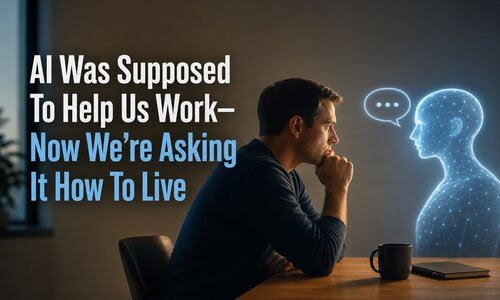
For years, Americans have been told that the artificial intelligence revolution would transform the workplace. AI would write reports, analyze spreadsheets, generate computer code, automate customer service and potentially eliminate millions of jobs.
All of that may still happen. But something quieter–and potentially far more consequential–is already taking place.
AI isn’t merely entering our workplaces. It is entering our private lives.
New research from the AI Observatory examined more than 23,000 anonymized conversations with major AI chatbots and found that nearly half–48 percent–were not related to work. People were talking to artificial intelligence about health, relationships and other deeply personal subjects.
That should get our attention.
The biggest AI revolution may ultimately have less to do with whether a machine replaces your accountant and more to do with whether it replaces your counselor, confidant, pastor–or eventually, your conscience.
From Tool To Adviser
There is an enormous difference between asking artificial intelligence, “Can you summarize this report?” and asking it, “Should I divorce my husband?”
One is assistance. The other is counsel.
Yet the transition between the two can happen almost imperceptibly.
Someone begins using AI to compose emails. Then he asks for career advice. Soon he is discussing an argument with his wife, worries about his children, questions about his health, or doubts about his faith.
The attraction isn’t difficult to understand.
AI is available at 2 a.m. It doesn’t appear impatient. It doesn’t become offended. It can respond sympathetically and immediately, and there is none of the embarrassment that might accompany admitting something painful to another human being.
But convenience can slowly become dependence.
The progression could look something like this:
AI as tool -> AI as adviser -> AI as confidant -> AI as counselor -> AI as authority.
And that final step should especially concern Christians.
We Are Creating A “Thought History”
There is another dimension to this transformation that deserves much more attention: privacy.
For years, people have worried about their search histories. Google searches can reveal interests, medical concerns, political questions and purchasing intentions.
Social media reveals something different: what we want other people to see about us.
But conversations with AI can potentially reveal something much deeper–how we actually think.
Imagine several years of conversations with a highly personalized AI assistant.
It could potentially know about your marriage problems, financial fears, medical worries, political opinions, religious doubts, sexual temptations, family conflicts, ambitions and insecurities.
It might know what makes you angry.
It might know what frightens you.
It might even know which arguments are most likely to persuade you.
We are moving from the age of the search history toward the age of the thought history.
That could become one of the richest collections of personal information ever created.
The danger is not necessarily that someone is sitting somewhere reading everyone’s conversations. The larger concern is that society is rapidly normalizing the creation of extraordinarily detailed digital portraits of human beings without fully considering what such information could eventually mean.
The Ultimate Persuasion Machine?
That leads to an even more unsettling possibility.
Traditional advertising attempts to categorize people. You are male or female, young or old, conservative or liberal, wealthy or struggling. Advertisers then determine which messages might appeal to someone like you.
Social media made that process considerably more sophisticated by tracking what people click, watch and share.
But personalized AI could potentially go much further.
After thousands of conversations, an AI system could theoretically understand not simply what you believe, but why you believe it.
Does fear persuade you? Statistics? Emotional stories? Religious arguments? Financial concerns? Appeals involving your children?
The machine that knows you best could eventually become the machine best equipped to persuade you.
That possibility becomes particularly concerning when AI systems are controlled by corporations that determine their rules, training methods and acceptable boundaries.
AI doesn’t descend from heaven possessing perfect neutrality.
Someone builds it. Someone trains it. Someone establishes its parameters. Someone decides what it should refuse to say and what perspectives it should emphasize.
That matters tremendously when people begin asking machines moral questions.
Christians Cannot Outsource Discernment
For Christians, there is an important distinction between using AI to obtain information and allowing AI to determine truth.
Asking, “What are the major interpretations of this biblical passage?” can be useful.
Asking, “What should I believe?” is something very different.
AI can summarize theological arguments, locate historical information, compare translations and explain difficult concepts. Those can be valuable tools.
But artificial intelligence cannot replace Scripture, prayer, the Holy Spirit, mature Christian counsel or the fellowship of believers.
Proverbs repeatedly emphasizes the importance of godly wisdom and counsel. The New Testament tells Christians to test what they hear and exercise discernment.
The danger is that AI makes bypassing those processes incredibly easy.
Why approach a pastor about a difficult moral issue when a chatbot will answer instantly?
Why discuss a troubled marriage with mature Christian friends when AI will listen without embarrassment?
Why wrestle through Scripture when a machine can provide an immediate conclusion?
Over time, convenience can quietly transfer authority.
Christians who would never consciously say, “I want Silicon Valley deciding my theology,” could nevertheless find themselves consulting AI every day about relationships, morality, sexuality, parenting, politics and Scripture.
Eventually the question changes from “What information can AI give me?” to “What does AI think I should do?”
That is a very different relationship.
A Tool Must Remain A Tool
Artificial intelligence is not inherently evil. Like countless technologies before it, it can be used productively or destructively.
The warning is about something more subtle.
We are creating machines capable of speaking with remarkable confidence, empathy and apparent wisdom. At the same time, millions of people are increasingly willing to tell those machines things they may not tell another human being.
The AI revolution therefore isn’t simply about automation.
It is about authority.
Who will advise us? Who will interpret our problems? Who will help define right and wrong? And who–or what–will we increasingly trust when making life’s most important decisions?
Christians should use powerful new tools without becoming dependent upon them.
Because there is an enormous difference between having artificial intelligence in your pocket and allowing artificial intelligence to become your conscience.

TruLight TV & Kingdom Kidz TV – A Better Life in Tumbleweed Canyon
Dallas, who had just been appointed as the sheriff of Rowdy Town, found herself in a precarious situation last week when she stumbled upon some troubling information about the town mayor. Realizing that the well-being of the town’s residents was at stake, Dallas teamed up with her cousin, Dusty, and devised a plan to seek refuge in Tumbleweed Canyon, located far out west, in hopes of finding a better life for themselves and the people of Rowdy Town. Tune in now to witness the thrilling turn of events that unfold! The kids at Konnect HQ are gearing up to throw a surprise birthday bash for their friend Luke, and the excitement is palpable. However, things take an unexpected turn when everyone wants to take charge of making the birthday cake, resulting in a chaotic and messy situation. Join us for an hour filled with laughter, surprises, and a whole lot of fun as we navigate through the hilarious mishaps and ultimately celebrate Luke’s special day in style!
Today on TruLight Radio XM
TruLight Radio XM 24/7
Program
GMT / UTC +2
Monday To Fridays
00:15 Words to Live By Testimonies
01.15 Science Scripture and Salvation
02.15 Ground Works
04.00 Gospel Concert of the Day
05.00 The Daren Streblow Comedy Show
5:55 It is Today devotional
6:00 Gaither Homecoming Morning Show
7:15 Discover the Word
8.15 Destined for Victory
8:55 Science Scripture and Salvation
9:00 Holy Spirit Hour – Normally Sermons
10:15 Hope of the Heart
11:15 Unshackled
11.45 Words to Live By
12:15 Truth for Life
13:15 Living on the Edge with Chip Ingram
14:15 Focus on the Family
15:00 Kids Hour
16:00 In Touch with Dr. Charles Stanley
16:30 Groundwork
17:15 Live in the Light
18:15 Renewing your Mind
19:00 Gaither Homecoming Show
20:15 Growing Hope
21:15 Adventures in Odyssey Radio Drama
21:45 Bible Reading
22:15 Night-sounds
23.00 Good Old Country Gospel / Rhema Gospel Express
VISIT THE WEBSITE
TruLight Ministry News – EXTRA MANNA
TruLight Ministries orders from God since 2012 . Teach Them , Comfort Them and Warn Them!
Healing Truths.
End Time Articles.
Share this Feeding of Manna with your Friends and Family. just click on the Social Media icon and share This Manna with your Friends and Family. just click on the Social Media icon and share !