SELECT YOUR READING LANGUAGE – BOTTOM LEFT = YOUR DAILY MANNA NOW AVAILABLE IN 103 LANGUAGES
@ TruLight – Daily Manna is not Just a Bible Verse with a Small Prayer . No WE SERVE DAILY Manna for the Whole Day . Breakfast , Lunch , Dinner , Plus tea Times and even Entertainment Manna . Plus News Manna and More , This Daily Manna will keep you Spiritually full for the full 48 Hours and even More to Share with your Friends and Family !!!
Our Joy is rooted In Christ Jesus !!!

In Romans 5:1–5, the apostle Paul elaborates on the peace and joy that accompany being justified by faith. A person who puts his or her faith in Jesus Christ is no longer condemned to face God’s wrath but stands secure in a state of grace: “Therefore, since we have been declared righteous by faith, we have peace with God through our Lord Jesus Christ. We have also obtained access through Him by faith into this grace in which we stand, and we rejoice in the hope of the glory of God” (Romans 5:1–2, HCSB).
Because of our faith in Jesus Christ, we are brought into a place of undeserved privilege and favor with God. All is well with our souls. In Christ, we are safe from all harm. This new secure standing results in a sense of peace and joy. To “rejoice” usually means to feel or show great happiness or delight. However, in Romans 5:2, the Greek word translated as “rejoice” actually means “to show off verbally, to boast or exult.” It refers to expressing trust in God to do what He promised. In the context of this passage, rejoicing is not merely a fleeting emotion but a deep-seated sense of assurance grounded in the Lord’s faithfulness. This joy stems from the hope of the glory of God.
The believer’s hope is not wishful thinking but a confident expectation rooted in trust and faith in God. Our joy and hope are firmly anchored upon the assurance that God will fulfill His promises. They are cemented in the character and faithfulness of God. We have joy, hope, and confidence that the future holds the fulfillment of God’s Word to us. In Romans 5:2, this hope is tied explicitly to the “glory of God.”
The glory of God refers to His divine presence (John 1:14), majesty (Psalm 8:1), and holiness (Isaiah 6:3; Psalm 29:2). It represents the manifestation of God’s character and power (Romans 9:23). Because we have peace with God through Jesus Christ, we have obtained complete and unhindered access to God’s glorious presence (see Hebrews 4:16). Paul says in Ephesians 3:12, “Because of Christ and our faith in him, we can now come boldly and confidently into God’s presence” (NLT).
For believers, rejoicing in the hope of the glory of God involves an expectation of sharing in the fullness of God’s glory. We have the forward-facing assurance of our ultimate completion in Jesus Christ (see Philippians 1:6), as Paul explains in Colossians 1:27: “Christ in you, the hope of glory.” This hope includes the anticipation of eternal life (1 Peter 1:3–5), the resurrection of the body (Romans 8:11; 1 Corinthians 6:14; 2 Corinthians 4:14; 1 Thessalonians 4:16–17), and the ultimate redemption of creation (see Romans 8:19–21; 1 Peter 5:10).
While believers will fully experience God’s glory in the future, there is also a present aspect to this glory. As Christians live in a state of grace, they reflect God’s glory through their lives (Matthew 5:14–16; 2 Corinthians 3:18; Colossians 3:10; Philippians 2:15). Our transformation and sanctification are ongoing processes that reveal God’s character and glory to the world (Romans 12:2; 2 Corinthians 4:16; Ephesians 4:20–24).
Interestingly, Paul does not shy away from the reality of suffering. Immediately following Romans 5:2, he states, “We can rejoice, too, when we run into problems and trials, for we know that they help us develop endurance. And endurance develops strength of character, and character strengthens our confident hope of salvation” (Romans 5:3–4, NLT).
Everything in our lives, even suffering, has a good purpose (Romans 8:28). Suffering, when faced with faith, produces perseverance or endurance. Perseverance, in turn, shapes and develops character. This character is not self-made but formed by the Holy Spirit’s work within believers (Romans 15:13; 2 Corinthians 3:18; Ephesians 3:16; Titus 3:5).
Ultimately, this process strengthens our hope. The Holy Spirit plays a vital role in this dynamic: “And hope does not put us to shame, because God’s love has been poured out into our hearts through the Holy Spirit, who has been given to us” (Romans 5:5). The Spirit reassures us of God’s love and the certainty of His promises, making our hope steadfast (see Hebrews 6:19–20).
Rejoicing in the hope of the glory of God is not dependent on circumstances but on the unchanging promises of God. We can rejoice in our secure position with God in Jesus Christ, regardless of what is happening around us. We can persevere through trials, knowing they will lead to spiritual growth and unwavering hope.
Rejoicing in the hope of the glory of God transforms our perspectives, priorities, and interactions. We experience a living hope that develops resilience in the face of adversity and cultivates a lifestyle that honors God. As ambassadors of this hope, we share the message of God’s grace and glory with others.

Tea Time Manna
May the God who gives endurance and encouragement give you a spirit of unity among yourselves as you follow Christ Jesus, so that with one heart and mouth you may glorify the God and Father of our Lord Jesus Christ.
—Romans 15:5-6
Unity comes from God’s Spirit as we all draw closer to Jesus (John 17:20-21). As we are drawn to Jesus through the Spirit, we immediately find ourselves drawn closer to one another (1 John 1:1-4). Unity also has a purpose much deeper than our getting along with each other. Jesus prayed we would be one so that the world would know that God sent him into the world as the Son to save the world (John 3:16-17, 17:21, 23). We want to be united so that our praise can bring glory to God and lead others to him. Unity is far more than a goal; it is a process through which the world learns of Jesus. At the same time, we glorify the Father who sent Jesus to save us when we live together in unity. Leading others to Jesus and glorifying God are what living for Jesus is all about! Let’s make unity one of our deepest passions.
Prayer
Great and Almighty God, you are the eternal strength for all who call on your name. I apologize and ask your forgiveness for everything I’ve done and every word I’ve spoken that has hurt others in your family. I do not want to cause a wound to the unity of your Body, the church. So please, bless my efforts as I seek less of my will, long to live for your glory, and seek to draw close and encourage others. In the name of Jesus, I pray. Amen and Amen
Bible Teaching of the Day
LUNCH MANNA =
The world places constant pressure on believers to conform to its understanding of identity and purpose. For believers, however, we must find our identity in Christ. Life will not make sense until we do.
To find our identity in Christ, we must accept that our worth is not defined by societal standards, achievements, or personal qualities but by our relationship with Christ. The Bible teaches that we are created in God’s image (Genesis 1:27), redeemed by the blood of Christ (2 Corinthians 5:17), adopted into God’s family (John 1:12), and empowered by the Holy Spirit (Romans 8:9). These teachings fundamentally alter how we view ourselves and our relation to Christ.
Finding our identity in Christ begins with understanding that we are created in God’s image. This foundational belief affirms our inherent worth and dignity, countering any negative self-perceptions or societal devaluation. Embracing this truth requires faith, seeing ourselves the way God sees us. The beauty of this truth is knowing that we have God-given value and purpose.
The process of finding our identity in Christ involves accepting the redemptive work of Christ. Second Corinthians 5:17 declares, “Therefore, if anyone is in Christ, he is a new creation. The old has passed away; behold, the new has come” (ESV). This means, among other things, that our past sins do not define us. On the contrary, we are a new creation, forgiven and set free to live a God-honoring life. We must accept this new identity, letting go of our former self that is rooted in sin.
We can also find our identity in Christ by recognizing our adoption into God’s family. John 1:12 states, “But to all who did receive him, who believed in his name, he gave the right to become children of God” (ESV). This new spiritual relationship means that God loves us unconditionally and has brought us into His family, providing a sense of belonging and support: “See what great love the Father has lavished on us, that we should be called children of God! And that is what we are!” (1 John 3:1). As children of God, we actively participate in the life of the church, cultivating positive relationships with our brothers and sisters in Christ.
The indwelling presence of the Holy Spirit is another way to find our identity in Christ. Romans 8:9 explains, “You, however, are not in the flesh but in the Spirit, if in fact the Spirit of God dwells in you” (ESV). The Holy Spirit empowers and guides us, enabling us to live in a way that honors God. His empowerment leads to spiritual growth and the ability to bear fruit such as love, joy, peace, and patience (Galatians 5:22–23). To find our identity in Christ, we must follow the Holy Spirit, who conforms us into the image of Christ.
The results of finding our identity in Christ are life-changing and wonderful. Perhaps the most significant benefit is freedom from condemnation. Romans 8:1 assures us, “There is therefore now no condemnation for those who are in Christ Jesus” (ESV). This freedom allows us to live confidently and joyfully, unburdened by past sins.
Another result of finding our identity in Christ is a renewed sense of purpose. Ephesians 2:10 says, “We are his workmanship, created in Christ Jesus for good works, which God prepared beforehand, that we should walk in them” (ESV). When we know that God has a purpose for our lives, we are motivated to pursue good works.
Finding our identity in Christ means recognizing that our value, worth, and purpose come through a personal relationship with Him. We can say, “I have been crucified with Christ and I no longer live, but Christ lives in me. The life I now live in the body, I live by faith in the Son of God, who loved me and gave himself for me” (Galatians 2:20). We are freed from condemnation, have a renewed sense of purpose, a new spiritual community, and a heart that reflects Christ.
Today’s Devotional
DINNER MANNA =
The call to be “established in the faith” (Colossians 2:7, ESV) is as relevant today as when the apostle Paul first wrote it. The Christian life involves walking, growing, and standing firm in the faith. Believers must be rooted in Christ and the truth of His gospel. We must be established in the faith.
In the previous verse, Paul writes, “As you received Christ Jesus the Lord, so walk in him” (Colossians 2:6, ESV). The Colossians had accepted the gospel, so they must live by that truth. The metaphor of “walking” suggests an ongoing lifestyle marked by active obedience and dependence on Christ.
Walking in Christ entails being “rooted and built up in him and established in the faith” (Colossians 2:7, ESV). Paul uses agricultural, architectural, and educational imagery to convey the depth and stability of a Christ-centered life.
Being rooted, built up, and established in the faith protects us from “philosophy and empty deceit, according to human tradition” (Colossians 2:8, ESV). Paul contrasts the emptiness of human wisdom with the fullness we possess in Christ (verses 9–10). Thus, being “established in the faith” protects us from manipulation, lies, and deceit.
The Greek word translated as “established” in Colossians 2:7 means “being made firm” or “confirmed.” God establishes us through the Holy Spirit, who ensures we “grow in the grace and knowledge of our Lord and Savior Jesus Christ” (2 Peter 3:18, ESV). Knowing Christ is more than accumulating facts about Him; it is also about trusting Him and obeying His commands (John 14:15).
Trust and obedience are necessary to being established in the faith. The word faith here likely refers to the objective content of Christian doctrine, consistent with what we see in 1 Corinthians 16:13 and Jude 1:3. Paul wants us to be firmly grounded in gospel truth, not “tossed to and fro by the waves and carried about by every wind of doctrine, by human cunning, by craftiness in deceitful schemes” (Ephesians 4:14, ESV).
To be established, then, is to be anchored in Christ and His gospel. It implies conviction, clarity, and commitment. Buildings are set on solid foundations, and trees have roots to withstand storms. Likewise, believers must be grounded in sound doctrine to stand firm in the faith.
Note the progression of metaphors in Colossians 2:7: rooted, built up, and established. This progression suggests mature faith. Conversion marks the moment we are “rooted” in Christ, “built up” implies an ongoing process of sanctification, and being “established in the faith” produces a steadfast conviction in Christ.
Being established in the faith results in joy and gratitude (Colossians 2:7). When we understand the riches of Christ and our secure standing in Him, our hearts will overflow with worship and praise. A grateful heart is a clear sign of being grounded in the gospel.
The need to be established in the faith is evident from Colossians 2:8, where Paul writes, “See to it that no one takes you captive.” False teachers will try to drag us away from Christ. Deceptive teachings often sound plausible, but they are dangerous because they diminish the supremacy of Christ and His gospel.
The Holy Spirit equips us to discern truth from error. Through the Spirit, we learn Scripture, understand sound doctrine, and consciously depend on Christ. As Paul reminded Timothy, “All Scripture is breathed out by God . . . that the man of God may be complete, equipped for every good work” (2 Timothy 3:16–17, ESV). Believers are established in the faith by God’s infallible and inerrant Word.

NEWS MANNA –
Bible Prophecy, Signs of the Times and Gog and Magog Updates with Articles in the News
Fact Or Fiction: Is There Going To Be A Motor Oil Shortage
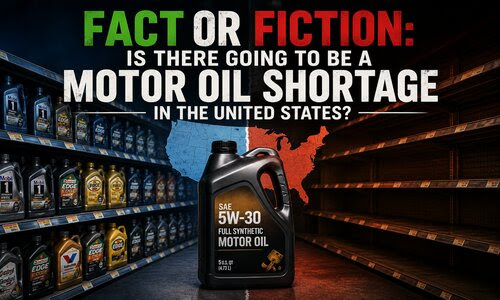
There have been persistent rumors that industry insiders are bracing for a widespread shortage of motor oil. Are these rumors accurate? I decided that I was going to investigate this and discover the truth.
Unfortunately, I have very bad news. Multiple sources within the industry are confirming that we are facing much higher prices and physical shortages of certain products if the Strait of Hormuz is not reopened soon.
I realize that what I have just shared is not welcome news, but it isn’t going to do any good to stick our heads in the sand.
According to Axios, supply chains for lighter-viscosity synthetic oils are particularly vulnerable, and one industry insider is warning that “actual shortages are starting to appear”…
Industry groups and analysts say lighter-viscosity synthetic oils — including 0W-8, 0W-16 and certain 0W-20 grades commonly used in newer vehicles — are most vulnerable to disruption.
“Actual shortages are starting to appear” for some synthetic oil products, Amanda Hay, global lead for base oils at ICIS, told Axios, adding that “security of supply is the chief concern for industry players.”
What we are experiencing now is the leading edge of this crisis.
An internal memo that was apparently meant for AutoZone stores in the Southeast region got leaked to the public, and it is causing a great deal of concern…
Over the past week, reports about looming motor oil shortages have started popping up from multiple directions. The most pointed of them surfaced today, when a person posted what looks like an internal memo to the Southeast region of AutoZone stores.
In the memo, the writer says, “Realistic, middle-of-the-road estimates are for our average available supply in this product category [lubricating fluids] to drop by 40%.” That figure continues to pop up, and it basically means one thing. Oil changes, transmission fluid changes, really anything that lubricates your car is about to get more expensive. We reached out to AutoZone for comment, but haven’t received a reply at the time of writing.
So far, AutoZone has not confirmed or denied that the memo is real or not.
But what local repair shop owners are hearing appears to confirm that big trouble is brewing…
Shops on the ground are already bracing for it. Speaking to a local repair store here in Little Rock, Arkansas, a general manager tells Carscoops that “They are being very secretive about all that. They say the price is for sure gonna go up, but they don’t know how the mainline volume will be affected yet.”
Another shop owner in DC said on Monday that Mobil and Shell informed Costco and Walmart that they’re out of product to ship. Later that same day, he posted what appears to be a bulletin focused on managing supply chain issues. Guidance included partially substituting 0W-8 oil with 0W-16 and then doing the same for 0W-16 with 0W-20. These are just the most recent and easily accessible examples of the current concern.
What I have shared so far is certainly alarming enough.
But now Toyota and Nissan are both openly warning their service departments that shortages are on the way…
Rising fuel prices are not the only petroleum-related problem facing drivers this summer. According to internal service bulletins reportedly tied to Toyota and Nissan, automakers are now preparing for potential shortages of certain motor oils as global supply chain pressure spreads beyond gasoline and diesel.
The issue primarily affects low-viscosity synthetic oils like 0W-8 and 0W-16, which are commonly used in newer hybrid and fuel-efficient engines. These lightweight oils have become increasingly important as automakers chase tighter emissions standards and better fuel economy numbers, especially in hybrid-heavy lineups like Toyota’s.
Toyota is instructing their dealers to temporarily substitute heavier oil grades if necessary…
According to the leaked Toyota bulletin, the company warned service departments that 0W-8 and 0W-16 oils could become difficult to source due to production and logistics constraints affecting the petrochemical industry.
To manage inventories, Toyota reportedly instructed dealers to occasionally substitute heavier oil grades for certain service intervals. The guidance specifically notes that these substitutions are intended only as temporary measures rather than permanent changes to maintenance schedules.
And it is being reported that Nissan is warning their dealers to “expect oil allocations limited to roughly 55% of prior-year supply levels”…
Nissan’s draft bulletin reportedly warned dealers to expect oil allocations limited to roughly 55% of prior-year supply levels. The company later confirmed the authenticity of the document, although it stated the memo itself had not yet been officially distributed across the dealer network.
The shortage concerns are not isolated to one automaker, either. Nissan’s customer communication draft specifically stated the supply issue is affecting the entire automotive industry rather than only Nissan-branded service departments.
Clearly, there is widespread expectation that at least certain types of motor oil will be in short supply throughout the rest of this year.
So I would encourage you to stock up while you still can.
Meanwhile, the largest budget airline in Europe is bracing for an “Armageddon situation” due to a looming shortage of jet fuel…
Europe’s biggest budget airline has warned weaker carriers could collapse under soaring jet fuel costs as the industry braces for what one executive described as a possible ‘Armageddon situation’.
Ryanair finance chief Neil Sorahan said the airline has contingency plans in place as fears grow over fuel shortages and surging oil prices linked to instability in the Middle East and disruption risks around the Strait of Hormuz.
‘Do we have plans for some kind of Armageddon situation? Of course we do,’ Sorahan told CNBC.
I don’t think that this will be a major problem in the United States yet.
Asia and Europe will be the first to experience a serious lack of jet fuel.
But one thing we are already experiencing in the United States is much higher gasoline prices…
US gas prices have gone up, and up, and up since the country bombed Iran in late February. In March, I reported that the average price of gas in the country had gone up from $2.89/gallon to $3.48/gallon. Now, the average price of gas in the US is $4.517/gallon. That’s a 56% increase in the price of gasoline since the US bombed Iran!
Read the last sentence of that quote again.
A 56 percent increase in just a matter of weeks is insane.
Sadly, things will only get worse if the fighting in the Middle East resumes.
Retired Army General Jack Keane has close ties to the Trump administration, and he just told Fox News that “we’re on the cusp of going back into military operations”…
“Where are we? The president has exhibited a huge amount of patience here since the ceasefire on April the 8th. And we’ve tried to work a deal with these guys, and it just doesn’t seem possible. And where we are, we’re on the cusp of going back into military operations. When we stopped. Bill and Dana, we had two weeks to go, a little less than 30% of the targets. Those targets remain, but we have better intelligence now, after these five, six weeks. So that target list is expanded. It’s considerably more comprehensive,” he continued. “It’ll be a combined operation with the United States and Israel going full throttle, all out, no half measures here whatsoever.
And when those target lists are complete and they will consist of the rest of the weapons that are remaining, to indicate some of what you just mentioned, to include what remains of nuclear, and also all the organizations that sustain the regime. We have better intelligence on locations and other things associated with that, and certainly they’re going to be a comprehensive target list in of itself, and then a grouping of targets that really deal with all of Iran’s revenue sources to force an economic collapse of the regime. Obviously, Kharg Island blockade is having significant impact. But this attack will even further aggravate their ability to gain revenue source. Without revenue, it’s hard to see how this regime can survive. So we put it on a path.”
I believe that General Keane is correct.
I believe that we are right on the brink of more fighting.
The bottom line is that the Strait of Hormuz is not going to be reopened any time soon and even with a deal – it will take weeks if not months to get caught up.
So there will be rationing and there will be shortages.
And the entire global economy is entering a major downturn.
We really are facing a nightmare scenario, and most of the general population still has no clue.
GOG / Russia Just Tested A Missile That Could Destroy An Area The Size Of Texas

The Russians have developed the most sophisticated nuclear missile in the history of the world by a very wide margin, and it is specifically designed to be used in a future nuclear war with the United States.
The RS-28 Sarmat is an intercontinental ballistic missile that has a maximum speed of approximately 15,500 miles per hour. It is 116 feet tall, and that makes it roughly as tall as a ten story building. It can carry up to 10 metric tons of thermonuclear warheads, and those warheads can destroy an area the size of the state of Texas.
We have no defenses against the Sarmat, and so once it is launched we will get hit. It is an incredibly terrifying weapon, and many believe that it is only a matter of time before it actually gets used.
The Sarmat is the crown jewel of Vladimir Putin’s very long campaign to modernize Russia’s strategic nuclear arsenal…
Since coming to power in 2000, Putin has overseen efforts to upgrade the Soviet-built components of the Russian nuclear triad — deploying hundreds of new, land-based intercontinental ballistic missiles, commissioning new nuclear submarines and modernizing nuclear-capable bombers.
The United States doesn’t have anything like the Sarmat.
Neither does anyone else.
It has a maximum range of more than 21,000 miles, and it can carry up to 16 independently targetable nuclear warheads…
The Sarmat intercontinental ballistic missile has an expected range over 10,000 kilometers (6,200 miles) and can reportedly carry up to 16 independently targeted nuclear warheads, according to the Missile Defense Advocacy Alliance, a US-based nonprofit. Putin claims the range extends to more than 35,000 kilometers (21,750 miles).
Let me try to put this into language that anyone can understand.
This missile has enough range to reach any target on the entire planet.
So there is nowhere that is out of reach.
A single Sarmat can release 16 independently-targetable nuclear warheads.
That means that one missile goes up, and 16 warheads come down.
And each one of those warheads can instantly destroy an entire major city.
Russia plans to eventually produce more than 40 of these ICBMs.
According to Newsweek, a single Sarmat intercontinental ballistic missile can carry enough nuclear warheads to wipe out “an area the size of Texas”…
The RS-28 Sarmat will reportedly carry a nuclear payload large enough to wipe out an area the size of Texas or France.
The Sarmat is the most advanced intercontinental ballistic missile in the entire world by a wide margin, and we have no way to defend against them.
In fact, a study that was conducted by a team of 13 physicists and engineers with the American Physical Society determined that our anti-missile defenses are so feeble that we couldn’t even do much “to stop a relative handful of old-fashioned North Korean ICBMs” from reaching their targets.
But just in case we are able to improve them in the future, the Russians have equipped the Sarmat with “a host of capabilities intended to defeat ballistic missile defenses”…
The Sarmat is a silo-launched, liquid-fueled, nuclear-armed ICBM. The missile will reportedly have a host of capabilities intended to defeat ballistic missile defenses, ranging from decoys and other countermeasures to a fractional orbital bombardment capability, and independent post-boost vehicles (IPBV). There have even been suggestions that it could carry a payload of multiple hypersonic boost-glide vehicles.
If Vladimir Putin decides to push the button, we are toast.
Of course most people in the western world assume that Putin would never do that because our retaliatory strikes would destroy the Russians.
But the truth is that so much has changed over the past couple of decades.
The Russians now have the most sophisticated anti-missile systems in the world by a very wide margin, and we are still relying on extremely outdated Minuteman ICBMs that first went into service in the 1960s and 1970s.
If we launched our extremely outdated ICBMs at the Russians, are you sure that they would get through?
The balance of power has shifted dramatically, and most people in the western world have no idea.
Earlier this week, the Russians conducted a test launch of the Sarmat that Putin called an “unconditional success”…
The test-launch from the Plesetsk Cosmodrome in the Arkhangelsk region took place at 11:15 a.m. Moscow time today, according to the Kremlin. Around half an hour later, Russian officials said that the missile hit its target at the Kura test range on the Kamchatka Peninsula in Russia’s Far East.
The commander of the Strategic Rocket Forces, Sergei Karakayev, informed Putin of the successful test. The Russian leader monitored the launch via video link from his office bunker.
Putin called the test a “major event and unconditional success.”
This should have received a lot more attention from the media in the western world, because it is a huge story.
According to Putin, Sarmat missiles will start entering combat service by the end of this calendar year…
Putin said that the nuclear-armed Sarmat missile would enter combat service at the end of the year. It was built to replace the aging Soviet-built Voyevoda.
“This is the most powerful missile in the world,” Putin declared, adding that the combined power of the Sarmat’s individually targeted warheads is more than four times higher than that of any Western counterpart.
In contrast, the next-generation U.S. intercontinental ballistic missile, the LGM-35 Sentinel, is scheduled to enter combat service in the early 2030s.
In other words, we are way behind.
The Russians are also in the “final stages” of development for two other exceedingly fearsome weapons…
Putin also announced Russia was in the “final stages” of the development of the nuclear-armed Poseidon underwater drone and the Burevestnik cruise missile powered by miniature atomic reactors.
The Poseidon is designed to explode near enemy coastlines and cause a radioactive tsunami. The Burevestnik has virtually unlimited range thanks to nuclear propulsion, allowing it to loiter for days, circling air defenses and attacking from an unexpected direction.
In the future, a Poseidon drone armed with a nuclear weapon could be lurking just off the east coast and we would never even know it.
Once it explodes, a gigantic wall of radioactive water could come sweeping over Washington D.C. or New York City in just moments.
The Russians have been feverishly preparing for the wars of the future.
Meanwhile, our leaders have been focused on other things.
So let’s hope that a shooting war between the United States and Russia does not erupt any time soon, because it would not go very well for us.
AI Is Coming For Both Blue-Collar And White-Collar Jobs

The warnings are no longer coming only from science fiction movies or fringe commentators. Increasingly, they are coming from the very executives building the artificial intelligence systems reshaping the global economy. And if even half of their predictions prove accurate, the world may be heading toward one of the largest labor disruptions in modern history.
For decades, Americans were told automation would mostly threaten repetitive factory work while white-collar professionals remained relatively safe. That assumption is rapidly collapsing. AI is now coming for both the office cubicle and the warehouse floor — and the speed of the transition may leave societies dangerously unprepared.
At the center of the latest debate is Mustafa Suleyman, the CEO of Microsoft AI, who recently warned that within 12 to 18 months, artificial intelligence could perform most professional white-collar tasks at human levels. His comments sent shockwaves through industries once viewed as stable career paths: accounting, legal analysis, project management, software development, customer service, and marketing.
The implications are staggering.
For years, college degrees were presented as protection against economic instability. Parents encouraged children to avoid manual labor and pursue “knowledge work” because those careers were supposedly future-proof. But AI systems are rapidly learning to draft contracts, analyze financial reports, write code, create advertising campaigns, summarize meetings, and even generate strategic business recommendations.
Large law firms are already using AI tools to conduct legal discovery and contract review tasks that once required teams of junior associates billing hundreds of hours. Accounting firms are deploying AI systems capable of auditing transactions, spotting irregularities, and preparing financial summaries in seconds. Marketing departments increasingly rely on generative AI to create ad copy, social media campaigns, graphics, and customer analytics with minimal human involvement.
Even software engineers — long considered among the safest professions in the digital age — are now under pressure from AI coding systems. GitHub Copilot, ChatGPT-based coding assistants, and autonomous AI agents can already generate large blocks of functioning code, debug software, and assist with app development. Some companies have begun reducing entry-level coding hires altogether because AI can now handle much of the routine work previously assigned to junior developers.
The threat extends into customer support as well. Klarna, the Swedish fintech giant, revealed that its AI assistant was handling work equivalent to hundreds of customer service agents. IBM has also openly discussed slowing hiring for back-office roles that AI may soon replace.
But while white-collar workers are only beginning to feel the pressure, blue-collar industries are also undergoing a revolution that could fundamentally alter employment.
One of the clearest examples came recently from viral demonstrations involving robotic warehouse systems competing directly against humans in package sorting and fulfillment tasks. Videos circulated online showing AI-powered robotic arms rapidly identifying, grabbing, sorting, and packing packages with incredible speed and consistency. Unlike human workers, the machines do not tire, require breaks, call in sick, or demand overtime pay.
Amazon has become a major symbol of this transformation. The company has deployed hundreds of thousands of robots throughout its fulfillment network, including systems capable of lifting heavy inventory, transporting shelves autonomously, and sorting products at high speed. New AI vision systems allow robots to identify damaged products, track inventory movement, and optimize warehouse flow faster than human supervisors.
The automotive service industry is also being transformed. Companies like Automated Tire Inc. and RoboTire are already operating robotic tire-changing systems that can replace and balance four tires in around 23 minutes — roughly twice as fast as experienced human technicians. One technician can now oversee multiple robotic bays simultaneously, dramatically increasing productivity while reducing labor requirements.
And the transportation industry may face even greater disruption. Autonomous trucking technology continues advancing rapidly, with companies testing AI-guided freight systems capable of operating long-haul routes with minimal human input. Considering trucking remains one of the largest employment sectors for American men without college degrees, widespread automation there could devastate entire communities.
Fast food is another frontline. Chains such as McDonald’s, Wendy’s, and Chipotle have experimented with AI drive-thru systems, robotic fry stations, automated beverage dispensers, and AI scheduling tools. Some restaurants are testing fully automated kitchen operations where machines prepare meals with little human involvement.
Supporters argue these changes will increase efficiency, reduce costs, and solve labor shortages. And in some cases, that is true. But history shows that societies become unstable when large numbers of people suddenly feel economically discarded.
The Industrial Revolution created extraordinary wealth, but it also triggered riots, worker uprisings, and decades of painful social adjustment. Entire populations saw their livelihoods disappear almost overnight. The difference today is speed. AI is not evolving over generations. It is evolving monthly.
If millions of both blue-collar and white-collar workers begin losing jobs simultaneously, the political and cultural consequences could become explosive. Rising unemployment combined with inflation, housing shortages, and declining faith in institutions could create fertile ground for growing civil unrest.
What happens when a 45-year-old accountant discovers his career has been automated? What happens when warehouse workers, truck drivers, customer service agents, and retail employees all compete for a shrinking pool of human jobs? What happens when young people spend tens of thousands on degrees only to discover AI can perform much of the work cheaper and faster?
The danger is not merely economic. It is psychological and societal. Work provides purpose, structure, dignity, and stability. Remove that too quickly from millions of people, and societies begin to fracture.
Artificial intelligence will undoubtedly bring enormous breakthroughs in medicine, logistics, research, and productivity. But America may be dangerously underestimating the human cost of the transition already underway.
The conversation can no longer be limited to whether AI is impressive. The far more urgent question is whether society is prepared for what happens when millions of people realize the machines are no longer just assisting workers — they are replacing them.
TruLight Ministries Daily Entertainment Manna

TruLight TV – I Trust…
Spiritual warfare is a little sneaky. Sometimes you don’t recognize what’s going on, only that life seems to be in chaos. That’s why it’s so important that we put on the full armor of God. That’s the only way we win against the enemy. learn more by watching today’s program. Tune in for some good southern gospel music! Daryl Williams Trio performs “Glory to God In The Highest” and more! Find out how the trio started and what Daryl Williams and Josh have in common! and later Watch Session 2 of the “Start Right Here” Devotional Series! Enjoy and thanks for watching.
Today on TruLight Radio XM
TruLight Radio XM 24/7
Program
GMT / UTC +2
Monday To Fridays
00:15 Words to Live By Testimonies
01.15 Science Scripture and Salvation
02.15 Ground Works
04.00 Gospel Concert of the Day
05.00 The Daren Streblow Comedy Show
5:55 It is Today devotional
6:00 Gaither Homecoming Morning Show
7:15 Discover the Word
8.15 Destined for Victory
8:55 Science Scripture and Salvation
9:00 Holy Spirit Hour – Normally Sermons
10:15 Hope of the Heart
11:15 Unshackled
11.45 Words to Live By
12:15 Truth for Life
13:15 Living on the Edge with Chip Ingram
14:15 Focus on the Family
15:00 Kids Hour
16:00 In Touch with Dr. Charles Stanley
16:30 Groundwork
17:15 Live in the Light
18:15 Renewing your Mind
19:00 Gaither Homecoming Show
20:15 Growing Hope
21:15 Adventures in Odyssey Radio Drama
21:45 Bible Reading
22:15 Night-sounds
23.00 Good Old Country Gospel / Rhema Gospel Express
VISIT THE WEBSITE
TruLight Ministry News – EXTRA MANNA

TruLight Ministries orders from God since 2012 . Teach Them , Comfort Them and Warn Them!
Healing Truths.
End Time Articles.
Bonus Teaching for the Child of God !!
What does the bible say about Joy ?
Joy in the Christian life is not a fleeting emotion but a deep, abiding fruit of the Holy Spirit that flows from a life rooted in Christ. Scripture teaches that joy springs from shifting our focus—from our burdens to God’s faithfulness, from our circumstances to His unchanging character. Like David, who brought his pain honestly before God yet ended his psalms in praise, we too can experience renewed joy when we remember what God has done. The apostle Paul, even in trials, exhorted believers to rejoice through prayer and thanksgiving, reminding us that God’s peace and joy transcend our understanding. Jesus invites us to abide in Him—resting in His love, trusting His words, and obeying His commands—so that His joy may dwell in us fully, even in life’s hardest moments, as we walk in grace-filled community and keep our minds fixed on what is true, pure, and praiseworthy.
From the old testament
When it comes to experiencing joy, perspective is key. When we look at what God has done for us, our response should be thanksgiving and joy. David poured out his complaints to God, not denying the hardships of life such as his depression, his hurt, or his disappointment, yet by the end of his psalms, he generally seems encouraged (Psalm 3; 6; 7; 13; 16; 18).
We can glean joy from relying on other believers. Ecclesiastes 4:9-12 says, “Two are better than one, because they have a good reward for their toil. For if they fall, one will lift up his fellow. But woe to him who is alone when he falls and has not another to lift him up! Again, if two lie together, they keep warm, but how can one keep warm alone? And though a man might prevail against one who is alone, two will withstand him—a threefold cord is not quickly broken.”
From the new testament
When we voice our concerns and allow ourselves to be reminded of the goodness of God, we release our burdens. Jesus said, “Come to me, all who labor and are heavy laden, and I will give you rest. Take my yoke upon you, and learn from me, for I am gentle and lowly in heart, and you will find rest for your souls. For my yoke is easy, and my burden is light” (Matthew 11:28-30). We can experience joy when we give our burdens to Jesus.
We were created for community, as can be seen by God’s creation of Eve to be a helper for Adam and in Paul’s description of the church as a body of believers (Romans 12:3-13). Believers can share both their hurtful and happy moments with each other (Romans 12:15).
Joy is a fruit of the Holy Spirit (Galatians 5:22-23) but can often seem elusive for Christians. The Greek word for “joy” is related to the Greek word for “grace.” Joy is a grace bestowed on us by God.
Paul was no stranger to hardships, yet he was prolific on the topic of joy, particularly in his epistle to the Philippians: “Rejoice in the Lord always; again I will say, rejoice. Let your reasonableness be known to everyone. The Lord is at hand; do not be anxious about anything, but in everything by prayer and supplication with thanksgiving let your requests be made known to God. And the peace of God, which surpasses all understanding, will guard your hearts and your minds in Christ Jesus” (Philippians 4:4-7). We can give our burdens to God through prayer and do so with thanksgiving.
After we have given our requests to God, we keep a proper perspective. We think of things that are pure, full of splendor, excellent, right, and praiseworthy. In Philippians 4:8 Paul says: “Finally, brothers, whatever is true, whatever is honorable, whatever is just, whatever is pure, whatever is lovely, whatever is commendable, if there is any excellence, if there is anything worthy of praise, think about these things.” We should not dwell on our heartache but on the goodness of God and the beauty He infuses into our lives.
James even tells us to “Count it all joy, my brothers, when you meet trials of various kinds…” (James 1:1) It’s not that our trials are joyful, but that these trials produce patience and endurance in our lives.
implications for today
Ultimately, these practical tips for experiencing joy are just a small part of living a joyful life. Jesus describes what it means to abide in Him in John 15:1-11, linking it with remembering His words, living in His love, depending on Him, and obeying His commands. He then says, “These things I have spoken to you, that my joy may be in you, and that your joy may be full” (John 15:11). We experience joy in our Christian lives by giving our lives completely over to Jesus, accepting His gift of grace. When we truly abide in Him, we will know the fullness of His joy.
Joy in the Christian life transforms how we experience everything—from our relationships to our hardships. When the joy of the Lord fills our hearts, it gives us a resilient strength that enables us to keep moving forward, even when life feels overwhelming. As Nehemiah declared, “The joy of the Lord is your strength” (Nehemiah 8:10), meaning joy doesn’t just make us feel good—it empowers us to stand firm in faith. This inner strength keeps us steady in trials, reminds us of our eternal hope, and helps us respond with grace instead of fear.
Joy also changes how we relate to others. A joyful heart is contagious—it lifts the spirits of those around us and creates an atmosphere of peace, encouragement, and love. Joy-filled believers are better equipped to forgive, serve, and build unity within the body of Christ. Rather than being weighed down by bitterness or anxiety, they bring light into their communities. This kind of joy doesn’t depend on everything going right; it comes from knowing we are deeply loved by God and securely held in His hands.
Living with joy also shapes our witness to the world. In a culture marked by worry, despair, and discontentment, a joyful life stands out. It shows others that the gospel is not just a message to be believed, but a reality that transforms. Our joy points people to Christ—it reflects His presence in us and invites others to discover the source of that joy for themselves. When we live joyfully, we don’t just survive—we radiate the beauty and fullness of life that God intended.
Share this Feeding of Manna with your Friends and Family. just click on the Social Media icon and share !