Hosted by TruLight Ministries – The Place of Truth
SELECT YOUR READING LANGUAGE – BOTTOM LEFT = YOUR DAILY MANNA NOW AVAILABLE IN 103 LANGUAGES
@ TruLight Daily Manna is not Just a Bible Verse with a Small Prayer . NO ::: WE SERVE DAILY Manna for the ENTIRE Day . Breakfast , Lunch , Dinner , Plus tea Times and even Entertainment Manna . Plus News Manna and More , This Daily Manna will keep you Spiritually full for the full 48 Hours and even More to Share with your Friends and Family !!!
Live for Jesus – Only Plan Forward !!!
We all live for something. Parents may live for their children. Spouses may live for each other, and business owners may live for success. We say that we are “living for” something when that is the motivation for all we do. Living for Jesus means that pleasing Him is our highest aim (Colossians 1:10). Although we have dozens of lesser motivators, those filled with the Spirit of Christ are motivated primarily by His goals and His plans for their lives. When those plans collide with lesser goals, those who are living for Jesus follow His way and not their own (Proverbs 3:5–6).
The phrase living for Jesus can sound ethereal and idealistic. But Jesus warned that living for Him would be costly (Luke 14:26–33). The first disciples were willing to pay that price. They suffered tremendous persecution and even death in order to glorify God (Acts 5:41). Stephen was stoned (Acts 7:58–60), James was beheaded (Acts 12:2), and history records that all the apostles but John were also martyred. Even today, Christians around the world are beaten, robbed, tortured, and imprisoned simply because they live for Jesus.
Here is some of what living for Jesus means:
- Living for Jesus means we have died to sin. Romans 6 is a beautiful description of a Christian who chooses daily to consider himself dead to sin and alive to Christ (verses 6–8). Being dead to sin means we no longer consider sinning against God a viable option. The decision was made when we bowed at the cross and were born again by grace through faith. Though we will still stumble at times, sin no longer masters us. Just as a corpse does not lust, covet, or gossip, those who are dead to sin do not heed temptation (Galatians 2:20).
- Living for Jesus means we have only one God. This is the first commandment (Exodus 20:3), yet people can and do make gods out of anything. John Calvin rightly stated, “The human heart is an idol factory.” We recognize our false gods by asking ourselves a question: What is it that I am unwilling to lay on the altar? Whatever we refuse to give to God becomes our god. Living for Jesus means we continually search our hearts for idols that steal our time and affection away from total devotion to Him (2 Corinthians 11:3).
- Living for Jesus means we diligently study His Word. Second Timothy 2:15 says, “Do your best to present yourself to God as one approved, a worker who does not need to be ashamed and who correctly handles the word of truth.” Correctly handling God’s Word is vital for one who wants to avoid deception and live as salt and light in this world (Matthew 5:13–16). Unless we know the heart of God, we will violate His standards and lead others to do the same. We discover His heart when we pursue the “whole counsel of God” (Acts 20:27, NKJV) and apply it regularly to our lives.
- Living for Jesus means we use our gifts to serve God and others. We strive to live as Jesus lived. We study Him in the Scriptures and pattern our lives after His (1 Corinthians 11:1). He was kind, so we imitate His kindness. He gave unselfishly, so we set aside our preferences and devote our time, resources, and energy to His purposes (1 Corinthians 10:31). People who live for Jesus discover their spiritual gifts and utilize them to impact their world (1 Corinthians 12:7–11). Living for Jesus means we find our greatest fulfillment in serving Him. Pleasing Him is our reward (2 Corinthians 5:9).
- Living for Jesus means we know where our real treasure is. People who live for Jesus are not as concerned about earthly treasures as is the rest of the world. While we are free to enjoy all God’s blessings in this life, Jesus made it clear that we are not to put our whole focus on them (Matthew 6:19–20). People who are living for Jesus focus on eternity and dedicate themselves to endeavors that have eternal significance. Worldly entanglements are temporary and seem like wasted time and effort. Our passion and energy are directed toward investing in the lives of others who will join us in heaven one day (Luke 10:2–3).
Becoming a Christian means we are choosing to live for Jesus instead of living for ourselves. He made His requirements clear: “If anyone would come after me, let him deny himself, take up his cross daily and follow me” (Luke 9:23, ESV). Carrying a cross means we are dying to our right to be our own boss. We cannot have two masters; Jesus will not share His throne (Luke 14:26–27; Galatians 1:10; Matthew 6:24). We either live for Jesus or for something or someone else. As we live for Jesus, He empowers us to live the godly lives we were created to live (1 Peter 1:16; Hebrews 12:14).

Tea Time Manna
The Lord will be king over the whole earth. On that day, there will be one Lord, and his name the only name.
—Zechariah 14:9
Jesus taught us:
“So then, this is how you should pray:
‘Our Father in heaven,
hallowed be Your name.
Your kingdom come,
Your will be done,
on earth as it is in heaven'” (Matthew 6:9-10 BSB).
As we pray, our hearts should yearn for the day when the Lord will be the universally recognized King over all the earth (Philippians 2:10-11). As we use the opening words of Jesus’ model prayer, we are also asking the Lord to be King of our hearts as we commit ourselves to him alone. For us, he is the “one Lord, and his name the only name” that reigns in our hearts. These are more than words. As we say them, we look forward to the day when all created beings, seen and unseen, recognize Jesus as Lord. In a world of profanity, a world where God’s name is blasphemed, and a world where God’s greatness is often ignored, we hold to the promise that every knee will bow and every tongue confess, in heaven and on the earth and under the earth, that Jesus Christ is Lord. He has no rival. He is incomparable. His name is the only name worthy of reverence, honor, and praise. And we choose to make this so in our lives today!
Prayer
Great Almighty Lord, bring yourself glory in our time of history. With all my heart, dear Father, I pray for your name to be reverenced in all the earth. Do mighty works that show your control and sovereignty to help your people bring others to call on your name and praise you for your glory and grace. In Jesus’ holy and precious name, I pray. Amen and Amen

Bible Teaching of the Day
LUNCH MANNA =
Scripture says that “without faith it is impossible to please God” (Hebrews 11:6). And the book of James teaches us that, if our faith is real, it will be lived out. That is, our faith will make a difference in our daily lives. Christians should live out their faith because it properly represents God to the world.
The false teachers of Paul’s day claimed to have faith, but they did not live it out. Paul wrote about them, “They claim to know God, but by their actions they deny him. They are detestable, disobedient and unfit for doing anything good” (Titus 1:16). If we claim to follow Jesus, but our actions don’t back it up, we’re not really following Jesus (see John 14:15).
In this modern world, it’s tempting to keep one’s faith private. If no one else knows what we believe, life can seem less complicated. When we don’t allow our faith to influence what we say and do, we’re free to live like the rest of the world. Our language, politics, and actions won’t offend unbelievers—or cause them to persecute us. And we can even use the church to network with people who can help us get more money, status, and security. But these are temporary gains. By living out our Christian faith, our work can last for eternity.
When we live out our faith in Christ, we not only further the truth about God but also benefit ourselves and those around us.
When we live out our faith, we worry less. Anxiety over money, death, politics, and other things of this world is lessened. We learn to “pray about everything” (Philippians 4:6, NLT) and in everything give thanks. We have confidence that “[God] will never let the righteous be shaken” (Psalm 55:22).
Others benefit, too, when we live out our faith. A person living out his or her faith in Christ will love his neighbors and his enemies (Mark 12:31; Luke 6:27). He will care for those in need (Luke 14:12–14). He will pray for his leaders and work for a peaceful community (1 Timothy 2:1–2). He will stand for justice (Isaiah 1:17). Most importantly, the one who lives out his faith will teach the world how God wants to forgive their sins and have a relationship with Him (1 Peter 3:15).
When we live out our faith in Christ, we follow in Jesus’ steps and live as Jesus taught. Others will see our good works, done in Jesus’ name, and glorify our Father in heaven (Matthew 5:16). Our witness will help the world discover the truth (Ephesians 4:25), and “the fruitless deeds of darkness” will be exposed (Ephesians 5:11–13).
The truth is, we do live out our faith, no matter how hard we might try to hide it. Our actions and words are always rooted in what we believe most deeply. If we claim to know Jesus but don’t act like it, our deeds prove that we don’t believe He is Lord or following Him is important (see Titus 1:16). As James says, this type of dead faith is really no faith at all (James 2:26).
Today’s Devotional
DINNER MANNA =
Jesus talked to those who would follow Him about taking up a cross, counting the cost, and giving up everything (Luke 14:25—33). “The way is hard that leads to life,” He said (Matthew 7:14, ESV). Scripture mentions many of God’s people who have walked that hard road—Daniel, Elijah, Joseph, and John the Baptist are just a few.
Romans 7 shows that living for God is difficult for all of us. The apostle Paul wrote of his own struggle: “So I find this law at work: Although I want to do good, evil is right there with me. For in my inner being I delight in God’s law; but I see another law at work in me, waging war against the law of my mind and making me a prisoner of the law of sin at work within me” (verses 22–23).
Before we knew Christ, we could do nothing but sin. We had no choice in the matter. Our motivation was to please ourselves. Even the benevolent acts we performed had a selfish root: we did good things to feel better about ourselves, to assuage guilt, or to enhance our reputation with others. At salvation, the Holy Spirit moves into our spirits. He breaks the power that sin had held over our lives and frees us to obey God. We are now motivated by love rather than guilt (Ezekiel 36:26–27).
But we still face temptation from without and from within (2 Corinthians 7:5). The Bible calls our old sin nature “the flesh” and warns that those who are “in the flesh” cannot please God (Romans 8:8). Even Christians can be “in the flesh.” Although the Holy Spirit indwells the heart of every believer (1 Corinthians 3:16; 6:19), it is up to each person how much control to allow Him to have. We are commanded to “walk in the Spirit and you will not fulfill the lusts of the flesh” (Galatians 5:16, 25). It is only by considering ourselves “crucified with Christ” (Galatians 2:19–20) that we can remain walking in the Spirit.
Jesus did not come to reform our flesh, but to crucify it (Romans 6:6–7). But the flesh does not want to die. The deep desire to please ourselves and compromise with the world does not die an easy death. When we cling to our rights, our opinions, and our agenda, we remain the lords of our own lives. When we lay our will on the altar before God and let go, we die to ourselves. We can then be “filled with the Holy Spirit,” totally controlled by Him (Acts 4:8; 13:52; Ephesians 5:18). It is only through the power of the Holy Spirit that we can live a life that honors God. Only the power of the Spirit can produce good works in us free from legalism and pride.
The desire to be acceptable to the world is the greatest source of compromise for Christians. We don’t want to suffer ridicule or face persecution of any kind. It is more pleasant to gauge ourselves by those around us than by the Word of God (2 Corinthians 10:12). But James 4:4 says, “Anyone who chooses to be a friend of the world becomes an enemy of God.”
When we adopt the false idea that salvation will make our lives easier, we are in for a shock. Those who have come to Christ for the “goodies” He offers often turn away when they realize that accepting Him means they have a new Boss. When Jesus was on the earth, the crowds loved the free food and the miracles, but when He began to talk about the hard things of the gospel, “many of his disciples turned back and no longer followed him” (John 6:66).
We cannot serve both God and ourselves (see Luke 16:13). Living for God means we make a final decision about who is in charge. When our flesh begins to reassert its rights, we take it back to the cross and allow it to die. When sin tempts, the decision has already been made: we seek God’s will over our own. Galatians 1:10 asks, “Am I now trying to win the approval of human beings, or of God? Or am I trying to please people?” The answer is plain: “If I were still trying to please people, I would not be a servant of Christ.”
Living for God may be difficult, but it is not joyless. Paul wrote his most joyful letter while suffering persecution in Rome (see the book of Philippians). We will still face temptation and hardship, but when the glory of God is our focus, living for Him becomes the source of our joy rather than a drudgery (Psalm 100:2; 1 Corinthians 6:20; 1 Peter 4:16).

NEWS MANNA –
Iran Was The Warning. China Could Be The Catastrophe.

For the past several weeks, the world’s attention has been fixed on Iran.
Military strikes. Missile exchanges. A fragile ceasefire. Constant speculation about whether the Strait of Hormuz might stay open or closed. Markets have reacted nervously because everyone understands a simple truth: modern civilization still runs on energy.
For a brief moment, the world caught a glimpse of how fragile our interconnected economy really is.
But if we think Iran represents the greatest economic threat facing the West, we are looking in the wrong direction.
The conflict with Iran may ultimately be remembered as a dress rehearsal.
A confrontation with China would be an entirely different story.
If Iran can shake the global economy by threatening the flow of oil, China possesses something arguably even more powerful–the ability to choke off the materials, products, and manufacturing that modern life depends upon every single day.
Oil keeps the engine running.
China manufactures the engine.
And that should concern every American.
Iran Showed Us Our Weakness
The recent Middle East crisis reminded us how dependent the global economy remains upon uninterrupted energy supplies. Roughly one-fifth of the world’s oil passes through the Strait of Hormuz. Even the possibility of disruption caused oil prices to spike and governments to begin contingency planning. The recent ceasefire has reduced immediate fears, but analysts continue describing the situation as fragile, with global markets remaining sensitive to any renewed escalation.
That dependence should have been a wake-up call.
Instead, many are breathing a sigh of relief and returning to business as usual.
That would be a dangerous mistake.
Because America’s dependence on China extends far beyond gasoline prices.
It reaches into nearly every aspect of daily life.
The Hidden Supply Chain We Rarely Think About
Walk through your home.
Look at your television.
Your smartphone.
Your laptop.
Kitchen appliances.
Medical devices.
Power tools.
Electric vehicles.
Children’s toys.
Odds are, China was involved somewhere in their production.
The United States has spent decades outsourcing manufacturing to lower-cost countries, with China becoming the world’s factory.
What once appeared to be smart economics has quietly become a profound national security vulnerability.
If tensions over Taiwan or another geopolitical flashpoint ever erupted into sustained conflict, Americans could quickly discover that many of the products they assume will always be available suddenly are not.
The Rare Earth Problem
Perhaps nowhere is this dependence more alarming than rare earth elements.
Despite the name, these minerals are not particularly rare.
Processing them economically is.
China controls approximately 70 percent of global rare earth mining and an even larger share of the world’s refining capacity. Those materials are indispensable for everything from smartphones and electric motors to fighter jets, guided missiles, wind turbines, MRI machines, and advanced semiconductors. Recent Chinese export restrictions exposed just how vulnerable Western supply chains remain, with U.S. manufacturers reporting shortages and defense planners warning that rebuilding alternative supply chains will take years rather than months.
Think about that.
The same country viewed as America’s primary strategic competitor also dominates the materials needed to build many of America’s most advanced weapons.
Medicines From Abroad
The dependence extends into healthcare.
Many Americans assume pharmaceuticals are made domestically.
In reality, large portions of the world’s pharmaceutical supply chain–including active pharmaceutical ingredients, precursor chemicals, and essential medical products–depend heavily on Chinese manufacturing or Chinese-controlled supply networks.
Imagine pharmacies unable to refill common prescriptions.
Hospitals delaying procedures because critical supplies never arrive.
Manufacturers shutting down because essential industrial chemicals cannot be sourced.
This is not fearmongering.
It is simple supply-chain mathematics.
If production stops overseas, shortages quickly appear at home.
Modern Life Runs On Invisible Dependencies
The average person rarely thinks about semiconductors, magnets, lithium processing, industrial chemicals, precision electronics, or advanced battery materials.
Until they disappear.
The COVID pandemic offered a small preview.
Remember empty store shelves?
Delayed vehicle production?
Computer shortages?
Building materials doubling in price?
Now imagine disruptions not lasting months–but potentially years.
Imagine those shortages occurring during a military confrontation rather than a public health crisis.
Iran showed us how quickly energy uncertainty can rattle financial markets.
China possesses leverage over manufacturing, electronics, telecommunications, pharmaceuticals, critical minerals, industrial machinery, consumer goods, and countless intermediate components that businesses rely upon every day.
That level of dependence creates vulnerabilities no nation should willingly accept.
Building Resilience Before Crisis
None of this means America should isolate itself from global trade.
International commerce has lifted billions from poverty and brought tremendous prosperity.
But resilience matters.
Diversification matters.
Domestic manufacturing matters.
Trusted allies matter.
Families can learn this lesson as well.
Preparedness does not require panic.
It means avoiding unnecessary debt.
Maintaining modest emergency supplies.
Supporting domestic manufacturing where practical.
Learning practical skills.
Growing food if possible.
Reducing unnecessary dependence upon fragile supply chains.
Resilient families contribute to resilient nations.
The Bigger Lesson
History repeatedly teaches that civilizations often ignore vulnerabilities until crisis forces painful change.
The recent confrontation with Iran reminded us that the global economy remains astonishingly fragile.
We would be wise not to waste that lesson.
Because if a regional conflict over oil can unsettle the entire world…
Imagine what a prolonged economic confrontation with the nation that manufactures so much of what the world consumes would look like.
That would not simply mean higher gasoline prices.
It could touch nearly every shelf, every hospital, every factory, every electronics store, every pharmacy, and every home.
The current tensions with Iran should not simply make us thankful that oil continues flowing.
They should motivate us to ask a much larger question:
What happens if the world’s factory suddenly stops shipping?
If we fail to answer that question now–while we still have time–the next geopolitical crisis could make today’s headlines look like child’s play.
The King’s New Role Is A Mirror Of Britain’s Soul – The Mouth of the Lion speaks Islam Now?

Sometimes a nation’s spiritual decline isn’t announced with revolution, military defeat, or economic collapse.
Sometimes it arrives with a few carefully chosen words buried in an official government report.
That is exactly what has happened in Britain.
For centuries, the British monarch has stood as one of the world’s most recognizable public symbols of Christians. Kings and queens were not merely constitutional rulers–they were the “Defender of the Faith” and Supreme Governor of the Church of England, a visible reminder that Britain’s identity was inseparable from the Christian faith that shaped its laws, culture, and history.
But something has changed.
According to the newly released Sovereign Grant Report, King Charles III is now officially described as someone who “protects the space for Faith within the multi-faith nation.”
At first glance, the wording seems harmless–even gracious. After all, every citizen should enjoy the freedom to worship according to his or her conscience. Christians have long defended religious liberty because genuine faith cannot be forced by governments or monarchs. God desires willing hearts, not coerced religion.
Yet this subtle change tells a much larger story.
It reflects a nation that no longer sees Christianity as its defining foundation, but as one faith among many.
The King’s new role is, in many ways, a mirror of Britain’s soul.
Britain was not built upon vague spirituality or generic religious values. It was built upon Christianity.
This is the nation that gave the world the English Bible through the sacrifices of men like William Tyndale, who was executed for translating God’s Word into the language of ordinary people. It is the nation of John Wycliffe, Thomas Cranmer, John Wesley, George Whitefield, Charles Spurgeon, William Wilberforce, and countless missionaries who carried the Gospel from Britain’s shores to Africa, Asia, the Pacific, and the Americas.
Its legal traditions, universities, hospitals, charitable institutions, and even many of its concepts of liberty and human dignity were profoundly shaped by biblical truth.
No nation has ever been perfect, and Britain certainly has its share of historical failures. Yet there is no denying that Christianity formed the bedrock upon which the nation stood.
Today, that foundation is steadily being redefined.
King Charles has spoken for decades about fostering understanding between religions, often referring to Britain as a “community of communities.” His desire to promote peaceful coexistence is understandable in an increasingly diverse society.
Christians should never oppose treating people of other faiths with dignity, kindness, and respect.
But there remains an important distinction between protecting everyone’s freedom to worship and removing Christianity’s unique place in a nation’s identity.
Christianity has never claimed merely to be one option among many.
Jesus Christ declared, “I am the way, the truth, and the life. No one comes to the Father except through Me.”
That exclusive claim has always distinguished Christianity from every other religion. It is not simply another path up the same mountain. It proclaims that salvation is found in Christ alone.
When a nation that was once openly Christian begins presenting all faiths as equally representative of its identity, it signals far more than political inclusivity. It reveals a profound shift in worldview.
History teaches us that civilizations rarely abandon their foundations all at once.
The change is gradual.
The language softens.
The symbols evolve.
The traditions are quietly redefined.
Eventually the culture itself no longer remembers what once gave it life.
Britain has already witnessed much of that transformation.
Magnificent cathedrals that once overflowed with worshippers often serve more tourists than congregants. Biblical literacy has plummeted. Church attendance continues to decline, while an entire generation grows up knowing little of the faith that shaped the nation they inherited.
The King’s revised role does not create this reality.
It simply acknowledges it.
For Christians, however, there is another lesson that should not be missed.
As sobering as it is to watch Britain’s Christian identity fade, perhaps there is also something healthy about separating genuine faith from ceremonial religion.
For generations, many have confused cultural Christianity with biblical Christianity.
Being born in a Christian nation does not make someone a Christian.
Being baptized as an infant does not guarantee salvation.
Attending church on Christmas or Easter is not the same as following Christ.
History is filled with nations that outwardly honored Christianity while inwardly drifting far from God.
The New Testament never places our hope in governments, monarchs, or established churches.
It places our hope in Jesus Christ.
The Church has often flourished most powerfully when it possessed the least political influence.
That reality should encourage believers.
Our confidence has never rested in Buckingham Palace.
It rests in an empty tomb.
Still, Christians should not dismiss what this moment represents.
National symbols matter because they reflect national priorities.
When the official role of the monarch evolves from publicly defending the Christian faith to protecting the space for all faiths equally, it tells us something about the spiritual direction of the country itself.
The crown has become a mirror.
And the reflection is sobering.
Yet Britain’s story is not finished.
This is, after all, the land where God repeatedly poured out remarkable revivals.
When eighteenth-century England appeared morally exhausted, God raised up John Wesley and George Whitefield to preach the Gospel in fields, streets, and coal mines. Tens of thousands were converted. Entire communities were transformed. Crime declined. Charitable work flourished. Missionary movements exploded, and the spiritual awakening eventually reached around the world.
Later generations witnessed fresh movements of God’s Spirit that once again reminded Britain that revival comes not from government but from heaven.
That is precisely what Britain needs today.
Not merely a return to Christian symbols.
Not simply the restoration of historic titles.
Not a nostalgic longing for a cultural Christianity that may have lacked genuine faith.
Britain needs another Great Awakening.
It needs churches that boldly proclaim the whole counsel of God.
It needs believers whose lives make the Gospel attractive through holiness, compassion, and truth.
It needs Christians who pray with the same urgency as those who came before them.
The King’s updated role may accurately reflect the Britain of 2026.
But it does not have to define Britain’s future.
The same God who brought revival to England before has not changed.
He still transforms hearts.
He still restores nations.
He still answers prayer.
Perhaps the King’s new role is indeed a mirror of Britain’s soul.
If so, may it also become a wake-up call for the Church.
Because history reminds us that while nations drift slowly from God, revival can begin with a single generation willing to seek Him once again.
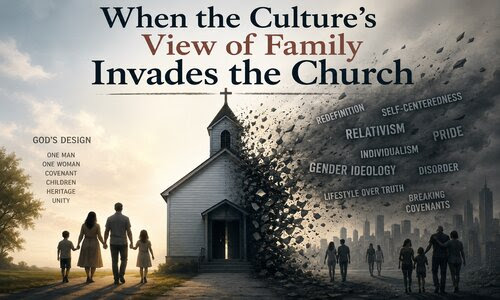
When the Culture’s View Of Family Invades the Church
The late James Q. Wilson, former professor of government at Harvard University, once said, “It is not money, but the family that is the foundation of public life. As it has become weaker, every structure built on that foundation has become weaker.”
Those words came to mind when I reviewed some sobering and disturbing statistics from Pew Research and others on the views of Christians when it comes to marriage and cohabitation–especially young Christians.
It has been stated many times that the downfall of every great civilization, as well as institution, comes from within–not from aggressive external attacks but from moral compromises made along the way that slowly weaken its foundation.
As our society has debuckled itself from the institution of marriage, with catastrophic results, it seems now many churches are doing the same thing–choosing to conform to the culture rather than transforming it. As a result, the church’s voice in our culture becomes weaker–to the point of irrelevance–and our children are paying the price. This is evident in these statistics, especially when it comes to today’s young adults.
In 2019, Pew reported 58% of white evangelicals said cohabitation was acceptable as long as the couple eventually plans to marry.
Alarming as that statistic is, it is more sobering among young evangelicals. Nine years ago, a General Social Survey reported more than 40% of evangelicals between the ages of 20 and 29 thought cohabitation was acceptable even if they had no plans to marry.
In addition, a new survey from David Ayers at the Institute of Family Studies found nearly half of evangelical Protestants between the ages of 15 and 22 who are not presently cohabitating or married believe they will likely cohabit with a member of the opposite sex sometime in the future.
The study also found that 65% of evangelicals between the ages of 23 and 44 who had already cohabitated plan on doing so again. This not only impacts our church’s witness when it comes to marriage and family but also accelerates the continued fragmentation of the family unit–the stabilizing factor in all civilizations–regardless of faith.
Why has this happened? In the rush to be seen as “culturally relevant,” “tolerant,” and “nonjudgmental,” many Christians and churches have pushed aside the Biblical teachings regarding marriage and family. While it is commendable for churches to try to reach the unchurched, many have chosen to avoid so-called “hot topics”–especially when it comes to human sexuality–leaving a vacuum our culture is eager to fill.
A generation of young believers is learning more about sex and marriage from popular culture than from their churches. When the world–and not churches–is the main educator on these issues, these are the results.
Jim Daly, the president of Focus on the Family, has written, “It will be up to us to show a fraying culture that marriage is so much more than ‘just a piece of paper’ or an association of any two or more persons who profess to love each other. It is a sacred union of a man and a woman that confers myriad benefits on the spouses, their children, and society at large–benefits that cannot be replicated by any other relationship. I would go so far as to say a society cannot flourish, or even long survive, without stable marriages at its core.”
And I would add that when churches no longer view marriage as sacred, but just as another optional arrangement, churches themselves cannot flourish.
Why? Because when churches no longer treat marriage any differently than the culture–blindly accepting cohabitation as the “new normal”–they have lost their way–and their influence. They especially damage their credibility with rising generations of young Christians and other people of faith. Children still look to adults and institutions for guidance, and when those adults and institutions silently concede their rightful leadership, our children will do the same.
It is time for those of us who believe in the sanctity of marriage to no longer sit on the sidelines while our children learn about marriage from the Kardashians or “The Bachelor.” Instead, we must emphasize the beauty and sanctity of marriage; why it is spiritually, emotionally, and physically beneficial to not cohabit with someone of the opposite sex; and why waiting will be ultimately to their benefit.
With this vision of marriage prioritized in our churches, we can once again not only have stable families but also a church possessing the moral authority to be a clear and convincing voice reestablishing a flourishing society and the dignity of love.
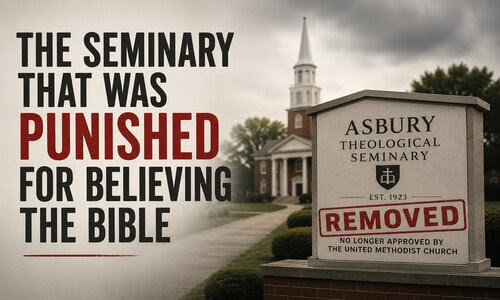
Methodists Punish Seminary For Believing The Bible
Imagine telling the apostles that one day a Christian seminary would be punished–not for denying Scripture, but for believing it.
Sadly, that day has arrived.
In one of the clearest signs yet of how far the United Methodist Church has drifted from its biblical foundations, Asbury Theological Seminary has been removed from the denomination’s approved list of schools for ordination. Its offense was neither scandal nor doctrinal confusion. It was refusing to abandon the Bible’s historic teaching that marriage is the lifelong covenant between one man and one woman.
Read that again.
A Christian denomination has officially distanced itself from one of the world’s most respected evangelical seminaries because the seminary would not change what Scripture says.
That should send a chill through every Bible-believing Christian.
Asbury President David Watson made clear throughout the process that the seminary never attempted to hide its convictions. There were no backroom negotiations or carefully worded compromises. The school simply informed denominational leaders that God’s design for marriage was not theirs to rewrite.
In another era, that position would have been considered basic Christianity.
Today, it is apparently grounds for exclusion.
The Wrong Side Of History
The language often heard from progressive Christianity is that those who uphold biblical morality are “on the wrong side of history.”
But history tells a different story.
Every generation has faced pressure to conform God’s Word to the spirit of the age. Whether the issue was Roman emperor worship, Enlightenment skepticism, theological liberalism, or today’s sexual revolution, the temptation has always been the same: soften the hard teachings of Scripture to remain culturally acceptable.
The churches that chose popularity over biblical authority rarely sparked revival. They usually emptied.
The churches that endured were those willing to stand alone when necessary.
Asbury has chosen that harder path.
A Place Marked By Revival
That makes this decision even more heartbreaking.
Asbury is not some obscure Bible college hidden from public view. Founded in 1923, it has spent more than a century training pastors, missionaries, evangelists, and Christian leaders around the globe. It has earned a reputation for serious biblical scholarship while remaining deeply committed to evangelism, holiness, and the authority of Scripture.
Millions were reminded of that heritage during the remarkable revival at nearby Asbury University in February 2023.
What began as an ordinary chapel service unexpectedly continued for over two weeks as students lingered in prayer, confession, repentance, worship, and reconciliation. News crews descended on the small Kentucky campus as thousands traveled from across America–and around the world–to witness what many believed was a genuine move of God.
One reason the revival captured so much attention was what it lacked.
There were no celebrity personalities.
No political slogans.
No entertainment-driven production.
No attempts to make Christianity look fashionable.
Instead, there was something our culture desperately needs but increasingly rejects: humble repentance before a holy God.
How striking that only a few years later, the broader Methodist denomination is distancing itself from the theological tradition that helped cultivate such a hunger for God’s Word.
The UMC’s Long Drift
This decision is not an isolated event. It is another chapter in a much larger story.
For years, the United Methodist Church has steadily moved away from historic Christian doctrine. In 2024, delegates removed language from the Book of Discipline stating that homosexual practice is incompatible with Christian teaching. They also approved same-sex weddings and opened the door for the ordination of openly LGBTQ clergy.
Those decisions triggered one of the largest denominational splits in American history, with thousands of congregations concluding they could no longer remain under the denomination’s theological leadership.
Yet the movement has continued.
Many within the denomination have embraced gender ideology that conflicts with the biblical understanding that God created humanity male and female. Methodist advocacy organizations have increasingly supported expanded abortion access, moving further from historic Christian teaching on the sanctity of unborn life. Denominational agencies have also adopted increasingly one-sided criticism of Israel while often showing far less concern for the evil of terrorism directed against the Jewish state.
These are not simply political positions.
They reveal a church wrestling with a much deeper question.
Who has the final authority–God or culture?
Every compromise begins by answering that question incorrectly.
When Faithfulness Has A Price
Jesus never promised His followers that obedience would be applauded.
He promised the opposite.
Increasingly, Christians are discovering that the greatest opposition to biblical truth does not always come from secular universities, Hollywood, or government. Sometimes it comes from religious institutions that still bear Christian names while abandoning Christian convictions.
That is why Asbury’s removal should not be viewed primarily as a defeat.
It is a reminder that there are still institutions willing to count the cost.
History has consistently shown that churches do not become stronger by lowering biblical standards to mirror society. They become weaker because once Scripture ceases to be the authority, every cultural trend becomes the new doctrine.
Culture changes every decade.
God’s Word has stood unchanged for thousands of years.
The real question facing Christians today is no longer whether the culture will pressure the Church to compromise.
It already has.
The question is whether there will still be seminaries, pastors, churches, and believers who love the approval of Christ more than the approval of denominations.
Thankfully, Asbury has answered that question.
One can only hope more churches will do the same before faithfulness itself becomes the final disqualifier.

TruLight TV – Clean Christian Comedy – Ron Pearson
Ron Pearson Bananas Comedy Performance
Today on TruLight Radio XM
TruLight Radio XM 24/7
Program
GMT / UTC +2
Monday To Fridays
00:15 Words to Live By Testimonies
01.15 Science Scripture and Salvation
02.15 Ground Works
04.00 Gospel Concert of the Day
05.00 The Daren Streblow Comedy Show
5:55 It is Today devotional
6:00 Gaither Homecoming Morning Show
7:15 Discover the Word
8.15 Destined for Victory
8:55 Science Scripture and Salvation
9:00 Holy Spirit Hour – Normally Sermons
10:15 Hope of the Heart
11:15 Unshackled
11.45 Words to Live By
12:15 Truth for Life
13:15 Living on the Edge with Chip Ingram
14:15 Focus on the Family
15:00 Kids Hour
16:00 In Touch with Dr. Charles Stanley
16:30 Groundwork
17:15 Live in the Light
18:15 Renewing your Mind
19:00 Gaither Homecoming Show
20:15 Growing Hope
21:15 Adventures in Odyssey Radio Drama
21:45 Bible Reading
22:15 Night-sounds
23.00 Good Old Country Gospel / Rhema Gospel Express
VISIT THE WEBSITE
TruLight Ministry News – EXTRA MANNA

TruLight Ministries orders from God since 2012 . Teach Them , Comfort Them and Warn Them!
The Sheriff of the Church Addresses The Jesuit Order / Illuminate
Healing Truths.
End Time Articles.
Bonus Manna = Bonus Teaching for the Child of God !!
Wouldn’t it be great if the Christian life had a check list? A recipe of sorts to provide instructions that we could follow to ensure we were being “good Christians”? Few things in life really work that way. In fact, even recipes followed exactly don’t always turn out. They fail to account for effects of the weather, slight differences in ingredients, variance in oven temperatures, or a number of other factors. And “good” is in the taste buds of the eater. So what does it take to be a good Christian?
Many will say that it means reading your Bible daily, praying at least twice a day, serving at church, tithing, supporting a missionary, evangelizing, and the like. These are all great activities for Christians, but they are not what the Christian life is all about.
A Christian is someone who has been made new in Christ (2 Corinthians 5:17) and restored to relationship with God. The Christian life is about getting to know God, enjoying Him and bringing Him glory (Isaiah 43:7; 2 Corinthians 3:18; John 17:1–5, 22). It is true that when we know God certain actions will naturally result. Jesus said, “You are my friends if you do what I command” (John 15:14). But before that He said, “I am the true vine, and my Father is the gardener. . . . Remain in me, as I also remain in you. No branch can bear fruit by itself; it must remain in the vine. Neither can you bear fruit unless you remain in me. . . . This is to my Father’s glory, that you bear much fruit, showing yourselves to be my disciples. As the Father has loved me, so have I loved you. Now remain in my love. If you keep my commands, you will remain in my love, just as I have kept my Father’s commands and remain in his love. I have told you this so that my joy may be in you and that your joy may be complete” (John 15:1–11). Obedience—living the “good Christian” life—flows from a loving relationship. And obedience helps us remain in God’s love and therefore experience His joy.
Being a “good Christian” is not about performing certain actions. It is about growing in love for Christ and allowing His Holy Spirit to transform our hearts and lives. Jesus is the author and perfecter of our faith (Hebrews 12:2), the recipe-writer and taste-tester for our lives. As we seek to know God and glorify Him, we also get to enjoy Him (Psalm 73:25—26).
Share this Feeding of Manna with your Friends and Family. just click on the Social Media icon and share !