Hosted by TruLight Ministries – The Place of Truth
SELECT YOUR READING LANGUAGE – BOTTOM LEFT = YOUR DAILY MANNA NOW AVAILABLE IN 103 LANGUAGES
@ TruLight Daily Manna is not Just a Bible Verse with a Small Prayer . NO ::: WE SERVE DAILY Manna for the ENTIRE Day . Breakfast , Lunch , Dinner , Plus tea Times and even Entertainment Manna . Plus News Manna and More , This Daily Manna will keep you Spiritually full for the full 48 Hours and even More to Share with your Friends and Family !!!
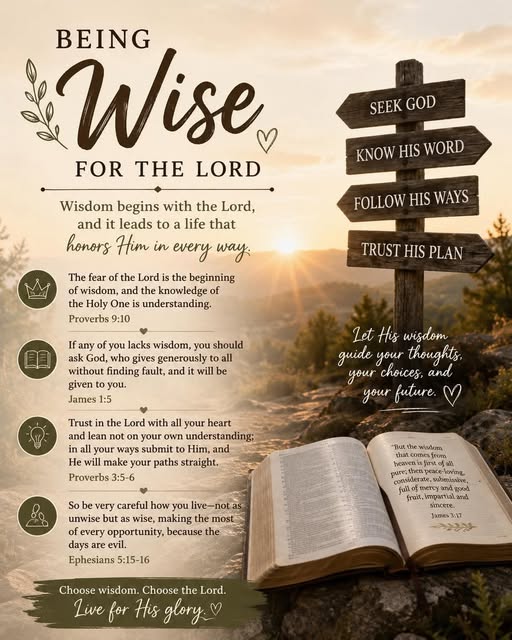
BEING WISE FOR THE LORD !!! CHOOSE THE LORD !!!
The statement “As for me and my house, we will serve the Lord” is often printed on plaques that adorn homes of Christians today. It is an affirmation of the family’s commitment to serve the Lord. Such a family’s allegiance is not an incorrect application of the text, although it had slightly different connotations in Joshua’s day.
God first made a covenant with Israel at Sinai. He explained what He required, and the people said they would do it. This type of covenant was common among vassals and suzerains at the time. The suzerain promised to protect and provide for the vassals, and the vassals would conduct themselves in such a way that they would reflect well on the suzerain. If the vassals rebelled, the suzerain would turn against them and punish them. At Sinai, the suzerain is not a human king but God himself. God told Israel what He expected of them (Exodus 20—23), and then the people committed to do it (Exodus 24).
Of course, Moses’ generation failed miserably. Not only did they make the golden calf just a short time later (Exodus 32), but they ultimately refused to enter the Promised Land, not trusting God to protect them and honor His part of the covenant (Numbers 14). As a result, that generation died in the wilderness.
After forty years of wandering, a new generation had grown up and was ready to enter the Promised Land. The book of Deuteronomy is Moses’ retelling of Israel’s history and a summary of the Law for a new generation, most of whom had not been present for the exodus from Egypt, the giving of the Law at Sinai, or the refusal to enter the Promised Land. Moses calls on Israel to follow the Lord. He says that they can choose between life and prosperity or death and destruction (Deuteronomy 30:15).
After Moses dies, Joshua leads the people in conquest and gets them established in the land. Then, as his death approaches, Joshua calls Israel together once again to challenge them to renew the covenant and confirm their willingness to serve the Lord. Like Moses, he offers them a choice. They must serve the Lord or serve the gods of the surrounding nations. (It would never have occurred to them that they could serve no gods. Everyone served a god of some sort; it was just a matter of which one.) Either way, Joshua said, they will reap the consequences of their choice. Joshua expresses his personal commitment to the Lord in Joshua 24:14–15:
“Now fear the Lord and serve him with all faithfulness. Throw away the gods your ancestors worshiped beyond the Euphrates River and in Egypt, and serve the Lord. But if serving the Lord seems undesirable to you, then choose for yourselves this day whom you will serve, whether the gods your ancestors served beyond the Euphrates, or the gods of the Amorites, in whose land you are living. But as for me and my household, we will serve the Lord.”
The people expressed their good intentions in Joshua 24:16: “Then the people answered, ‘Far be it from us to forsake the Lord to serve other gods!’”
Joshua, as head of his house, which probably meant the whole extended family of which he was the patriarch, proclaimed that he and his family would serve the Lord. In this context, he could guarantee that, while he was alive, he would not allow the worship of any other deity by anyone in his extended family. As an ancient patriarch, he could dictate what actions his family took. Obviously, he could not dictate their innermost feelings, desires, and beliefs. Keeping the covenant was largely about external actions, and probably more externally focused than most Christian families would be happy with today.
When a Christian father posts a wall hanging saying “as for me and my house, we will serve the Lord” in his home today, he is proclaiming very much the same thing that Joshua did, although he is probably thinking more of his immediate family who live “under his roof.” Christian parents have a responsibility to make sure that what goes on in the home is honoring to God and to exclude activities that are not. Christian parents would do well to remember, however, that they can only control, at most, the external actions and activities that take place in the home, and with much less authority than would have been allowed to Joshua as an ancient patriarch. They are like Joshua in that they are powerless to control what their children feel, believe, and desire. That will require loving communication of their faith to their children and, ultimately, a work of the Spirit of God to change their hearts.
“As for me and my house, we will serve the Lord” is a promise to do the best we can to make sure that everything that takes place inside the home honors God. It is also a prayer that the children raised there will follow in the faith of their parents.

Tea Time Manna
By the grace given me I say to everyone of you: Do not think of yourself more highly than you ought, but rather think of yourself with sober judgment, in accordance with the measure of faith God has given you.
—Romans 12:3
The wisdom of heaven reminds us:
Pride goes before destruction, a haughty spirit before a fall (Proverbs 16:18).
Knowing this, we must try to balance two truths: I must not be prideful, but I must understand just how much God values me. It’s not easy. Satan can use our self-denigration, what I call “the worthless worm syndrome,” to discourage and demean ourselves as God’s creation. He longs to keep us from using our spiritual gifts (1 Peter 4:10-11) and living for God’s purposes (Psalm 139:13-16). The evil one wants us to forget our value to God. On the other hand, pride takes God out of the picture. We attribute any contribution we make to God’s Kingdom and our world to our own efforts, rather than to God. To be both image bearers of God (Genesis 1:26-27) and part of fallen humanity (Romans 3:21-24) is more than a theological issue; it is the daily struggle of being JESUShaped disciples who know our sinfulness but also God’s love, mercy, and grace. We maintain our proper balance of humility as flawed mortals and divine utility as beings uniquely created and recreated (2 Corinthians 5:17) by God. When we praise the One who made us his children and give thanks for being adopted into God’s family because of his grace for us in Jesus (2 Corinthians 5:21), we think of ourselves properly.
Prayer
Holy Father, I know that I am your child, not because of my deservedness, but because you redeemed me at the cost of Jesus’ life. I know I am loved and valuable to you. I know you have given me the gifts, abilities, and experiences that have shaped me. May I ever be your humble yet valuable child, I pray this in the name of Jesus. Amen and Amen
Bible Teaching of the Day
LUNCH MANNA =
In John 15:16 Jesus says, “You did not choose me, but I chose you and appointed you so that you might go and bear fruit—fruit that will last—and so that whatever you ask in my name the Father will give you.” Ephesians 1:4 says, “He chose us in him before the creation of the world to be holy and blameless in his sight.” First Peter 2:9 says, “You are a chosen people, a royal priesthood, a holy nation, God’s special possession, that you may declare the praises of him who called you out of darkness into his wonderful light.” It is undeniable that God has chosen those who are believers in Jesus. But why? Is there something special about me that led God to choose me? The short answer is, no, God did not choose us because of anything inherent in ourselves. He chose us out of His love and mercy, and for His glory.
Ephesians 1 goes on to say, “In love he predestined us for adoption to sonship through Jesus Christ, in accordance with his pleasure and will—to the praise of his glorious grace, which he has freely given us in the One he loves” (verses 5–6). We see that God’s choosing of us is linked to His love. God’s choice is something that gives Him pleasure and brings Him praise. God’s choosing of us highlights His gracious character, not our merit. As we know from Ephesians 2:8–9, we are not saved because of our good works but solely because of God’s grace. We are all sinners who fail to measure up to God’s glory (Romans 3:23). Apart from Jesus all deserve death (Romans 6:23). But in Jesus we can have life. It is not because of who we are that God chooses us but because of who He is. As 1 Peter 2:9 indicates, the proper response to being chosen by God is to declare God’s praise and give Him worship.
God also chose us so that we could join in His work in the world. Ephesians 2:10 says God has prepared good works in advance for us to do. Jesus spoke of His followers’ bearing fruit that would last. Ephesians 1:4 links election to being holy and blameless in God’s sight. God chose us because He has a purpose in mind for our lives.
The Old Testament focuses on Israel as God’s chosen people (Deuteronomy 7:6). In Deuteronomy 7:7–9 Moses tells the children of Israel why God chose them: “The Lord did not set his affection on you and choose you because you were more numerous than other peoples, for you were the fewest of all peoples. But it was because the Lord loved you and kept the oath he swore to your ancestors that he brought you out with a mighty hand and redeemed you from the land of slavery, from the power of Pharaoh king of Egypt. Know therefore that the Lord your God is God; he is the faithful God, keeping his covenant of love to a thousand generations of those who love him and keep his commandments.” Once again, we see that God’s choice is not based on the merit of a particular person or nation, but solely on His love and faithfulness.
Just as God chose Israel out of love and not because of something impressive about the nation, God chooses us out of love. As 1 John 3:1 says, “See what great love the Father has lavished on us, that we should be called children of God!” Why did God choose me? Because of His great love, His lavish love.
The doctrine of predestination is difficult to grasp. We naturally tend to think that those who are predestined are chosen because of some merit of their own. After all, that is how we tend to choose. We remember picking teams for P.E.—everyone chooses the tallest, fastest, most athletic, most popular, etc., to be on their team. But God is not like that. His criterion for choosing is not based on us. “Consider your calling, brothers: not many of you were wise according to worldly standards, not many were powerful, not many were of noble birth. But God chose what is foolish in the world . . . God chose what is weak in the world . . . God chose what is low and despised in the world, even things that are not . . . so that no human being might boast in the presence of God. And because of him you are in Christ Jesus” (1 Corinthians 1:26–30, ESV).
Why did God choose me? He chose you to demonstrate His character. He chose you that you may know Him and love Him. He chose you because He is love (1 John 4:8), He is gracious, He is merciful, and He has a glorious plan for you.
Today’s Devotional
DINNER MANNA =
In Deuteronomy 30:19–20, we find one of Scripture’s most direct communications regarding the choices we make and God’s will for His people: “Today I have given you the choice between life and death, between blessings and curses. Now I call on heaven and earth to witness the choice you make. Oh, that you would choose life, so that you and your descendants might live! You can make this choice by loving the Lord your God, obeying him, and committing yourself firmly to him. This is the key to your life” (Deuteronomy 30:19–20, NLT).
As Moses nears the end of his ministry, he counsels God’s people to choose life. He outlines the way to do this: “Love the Lord your God, listen to his voice, and hold fast to him. For the Lord is your life” (Deuteronomy 30:20). Moses reviews the terms of the covenant, explaining to the people of Israel that walking in a covenant relationship with God means making a radical decision to commit themselves wholly to the Lord and His ways (see Exodus 19:3–9; Joshua 24:15–24). To choose the Lord is to choose life.
Choose life indicates that people have a choice, a decision to make. We choose life by choosing God. When we respond to the Lord in faith, love, and obedience, we receive life eternal. Under the Old Covenant, Israel received life abounding with all God’s goodness and physical blessings (Deuteronomy 11:26; 30:2–10; 15; Psalm 21:4–6). Under the New Covenant, believers in Christ receive abundant life (John 10:10; Ephesians 1:3–14).
Jesus said, “I am the resurrection and the life. The one who believes in me will live, even though they die” (John 11:25). We choose life when we accept Jesus Christ as our Lord and Savior and dedicate ourselves to following Him. He becomes our life (Colossians 3:4). The Lord gives His followers “a rich and satisfying life” (John 10:10, NLT). Our obedience to God brings life now in all its fullness, as well as life eternal (John 17:3; Psalm 16:11). But disobedience results in the greatest curse of all—death and destruction now and forever (Matthew 7:13; 2 Thessalonians 1:8–9; Hebrews 2:2–3).
The life God offers—the life Israel was to choose—was lived out in worship of God, in purity, justice, fairness toward the weak and poor, and through obedience to all the instructions Moses had laid out. Choosing life was choosing the Lord’s way above their own. Any other choice would lead to tragedy and death.
The call of Moses to choose life was not only about obeying rules. It was a call to the heart: “And now, Israel, what does the Lord your God ask of you but to fear the Lord your God, to walk in obedience to him, to love him, to serve the Lord your God with all your heart and with all your soul” (Deuteronomy 10:12; see also Deuteronomy 6:5; 11:13–14). Jesus issued this same call as the first and greatest commandment: “Love the Lord your God with all your heart and with all your soul and with all your mind” (Matthew 22:37–38).
Loving the Lord is the first step in choosing life. When we love the Lord, we desire to know Him intimately. We hear His voice and follow (John 10:3, 27). One feature of the relationship between a shepherd and his flock is that sheep always recognize their shepherd’s voice. As we get to know the Lord intimately, we become aware that He is our Great Shepherd (Hebrews 13:20). Whenever we might be tempted to turn away to the right or the left, our Shepherd is there, telling us the right way to go (Isaiah 30:21). We will obey and follow the voice of the Lord because we know and trust Him deeply.
We choose life when we choose God, who is the giver and sustainer of life (Acts 17:25). The Bible says God breathed the breath of life into humans (Genesis 2:7). Since our lives are a gift from God (Psalm 139:13; Acts 17:28), our highest aim ought to be living for Him. Jesus said, “If you cling to your life, you will lose it; but if you give up your life for me, you will find it” (Matthew 10:39, NLT). We choose life by letting go of selfish desires and living for His sake. Then we can say like the apostle Paul, “For to me, to live is Christ and to die is gain” (Philippians 1:21).

NEWS MANNA –
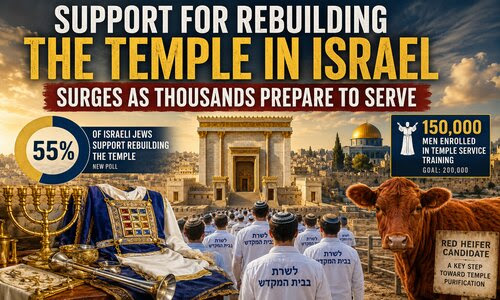
Support For Rebuilding The Temple In Israel Surges As Thousands Prepare To Serve
For generations, the rebuilding of the Jewish Temple in Jerusalem was viewed as little more than a dream held by a small number of deeply religious Jews. It was discussed in prophecy conferences, debated by theologians, and dismissed by many as politically impossible.
Not anymore.
Something remarkable is happening inside Israel.
A new poll commissioned by Temple Mount Heritage Foundation and conducted by the Direct Polls Institute, shows that 55 percent of Israeli Jews now support rebuilding the Third Temple on the Temple Mount. That statistic alone represents a dramatic cultural shift. But perhaps even more astonishing is another development: reports indicate that 150,000 men have already enrolled in training for Temple service, with plans eventually calling for as many as 200,000 participants.
Stop and think about that for a moment.
People do not spend years preparing to serve in a Temple they never expect to exist.
Whether one approaches these developments from a political, historical, or biblical perspective, something significant is clearly changing. The conversation surrounding the Temple is no longer confined to a small religious movement. It is steadily moving into Israel’s mainstream consciousness.
A Dream Becoming Preparation
For nearly forty years, organizations dedicated to preparing for a future Temple have quietly gone about their work.
They have painstakingly recreated the sacred vessels described in Scripture. The golden menorah has been fashioned. Priestly garments have been woven. Silver trumpets, incense altars, priestly crowns, and dozens of other instruments required for Temple worship have already been completed according to biblical specifications.
To many observers, these projects once seemed more symbolic than practical.
Today they look increasingly like preparation.
The shift is subtle but important.
Instead of simply talking about rebuilding the Temple someday, increasing numbers of Israelis are preparing for the possibility that “someday” could actually arrive.
Preparing The Next Generation Of Priests
One of the most overlooked developments is the growing emphasis on training.
Temple worship is not something that can simply begin overnight.
According to biblical law, priests must understand detailed purification procedures, sacrificial regulations, ceremonial worship, and countless practical responsibilities. These traditions require years of education and preparation.
That helps explain why reports of 150,000 men enrolling in Temple service training are so significant.
Even if only a fraction eventually serve, the numbers reveal something much larger than simple religious curiosity.
They reveal expectation.
Preparation on this scale suggests that many Israelis are beginning to view the restoration of Temple worship as a realistic possibility rather than an unreachable ideal.
The Red Heifer Conversation Returns
Adding even more momentum is renewed interest surrounding one of the Bible’s most fascinating requirements–the red heifer.
According to Numbers 19, the ashes of a perfectly qualified red heifer are necessary for the purification rites associated with Temple worship.
For centuries, no suitable animal could be found.
Then several years ago, the arrival of five red heifers from Texas captured worldwide attention. Many prophecy watchers wondered whether history was approaching another major milestone.
As those animals matured, however, questions emerged over whether they continued to satisfy every biblical requirement. Even the smallest imperfection can permanently disqualify a candidate.
Now attention has shifted once again.
A young red heifer born in Israel has become the latest candidate under careful observation. Temple authorities emphasize that no final determination can be made until the animal fully matures, and history reminds us that several previous candidates ultimately failed inspection.
Still, the search itself has become increasingly serious.
Not long ago, discussions about finding a red heifer seemed almost mythical.
Today they are part of ongoing preparation.
The Greatest Obstacle Still Remains
Of course, enormous challenges continue to stand in the way.
The Temple Mount remains one of the most disputed pieces of land on earth.
It is home to the Dome of the Rock and the Al-Aqsa Mosque, making any discussion of rebuilding the Jewish Temple politically explosive. Any attempt to change the status quo would likely trigger enormous international tension.
Yet this is precisely why these developments deserve attention.
For decades critics argued that biblical prophecy concerning a future Temple could never happen because there was neither the desire nor the preparation for such a project.
That argument grows weaker every year.
The desire is increasing.
The preparation is advancing.
The equipment exists.
The priestly garments are ready.
Training is underway.
The search for a qualified red heifer continues.
Piece by piece, foundations that once seemed unimaginable are quietly falling into place.
Why Christians Should Pay Attention
For Christians who study biblical prophecy, these developments are impossible to ignore.
Scripture speaks repeatedly of a functioning Temple during the last days.
Daniel describes sacrifices being interrupted.
Paul writes of the “man of lawlessness” taking his seat in God’s Temple.
Revelation refers to a Temple that is measured during the Tribulation.
Those passages have puzzled generations of Bible readers because no Temple has existed in Jerusalem since A.D. 70.
Today, for the first time in nearly two thousand years, we are watching an entire generation actively preparing for one.
That does not mean construction begins tomorrow.
Nor should Christians fall into the trap of predicting dates or claiming every headline fulfills prophecy.
Jesus warned against that.
Instead, He told His followers to watch.
There is a profound difference between setting dates and recognizing seasons.
Preparation is not fulfillment–but it often precedes fulfillment.
That may be the most remarkable aspect of everything happening today.
The Temple has not yet been rebuilt.
But the obstacles that once made such a possibility seem impossible are steadily being removed.
Perhaps the most striking lesson is this: prophecy often advances quietly before it suddenly accelerates. Noah built an ark long before the first raindrop fell. The wise virgins prepared their lamps before the bridegroom arrived. In much the same way, what we are witnessing today may not be the fulfillment itself, but the preparation that makes fulfillment possible.
Whether these events unfold in our lifetime or another generation’s, they remind believers that God’s prophetic clock has never stopped ticking. As Jesus instructed, our calling is not to speculate–but to watch, remain faithful, and be ready.
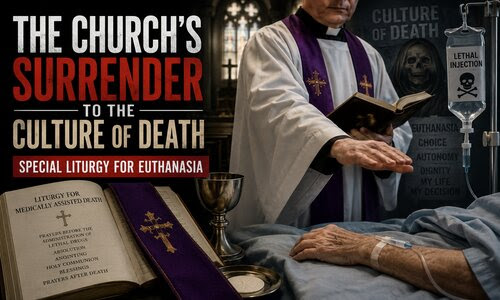
The Church’s Surrender To The Culture Of Death – Special Liturgy For Euthanasia
For centuries, the Church has stood at the bedside of the dying with a simple but profound mission: to comfort the suffering, proclaim the hope of Christ, and remind both the living and the dying that life belongs ultimately to God. That sacred calling is now being dramatically redefined in Canada.
The Anglican Church of Canada has authorized the trial use of a 66-page liturgy specifically designed for those choosing Medical Assistance in Dying (MAiD), complete with prayers before the lethal drugs are administered, prayers afterward, confession, anointing with oil, Holy Communion, blessings, and other rites traditionally reserved for preparing believers to meet God.
It is difficult to overstate the significance of this decision.
This is not merely the Church ministering to someone who has already decided to end his or her life. It is the Church creating an official religious framework surrounding the act itself. Whether intended or not, the message received by many believers will be unmistakable: euthanasia is compatible with faithful Christian discipleship.
That represents a profound theological shift.
The Anglican Synod attempts to avoid taking a direct moral position by emphasizing the Church’s responsibility to provide pastoral care regardless of the circumstances. Compassion is certainly central to Christianity. Jesus ministered to the sick, the brokenhearted, and the dying. Christians should never abandon those facing unbearable suffering.
But biblical compassion has never meant affirming every decision someone makes.
Throughout Scripture, shepherds are repeatedly commanded not only to comfort God’s people but also to teach, correct, warn, and guide them in truth. Pastoral care separated from moral truth ceases to be biblical shepherding. It becomes little more than emotional accompaniment.
The document itself illustrates this tension.
It speaks movingly about people enduring terrible illnesses, exhausted by pain, longing for rest, and wishing not to burden their families. Few Christians would fail to sympathize with those heartbreaking realities. Yet nowhere does suffering itself become justification for intentionally ending innocent human life.
Instead, Scripture consistently presents suffering as one of the painful consequences of living in a fallen world while simultaneously affirming that human life remains sacred from conception until natural death.
King David declared, “My times are in Your hands” (Psalm 31:15).
Job, after losing everything, confessed, “The Lord gave, and the Lord has taken away.”
God Himself tells Israel in Deuteronomy, “I put to death and I bring to life.”
The consistent biblical witness is clear: God alone possesses ultimate authority over life and death.
This is precisely why historic Christianity–whether Roman Catholic, Orthodox, or Protestant–has overwhelmingly opposed both suicide and euthanasia for nearly two thousand years.
The concern is not merely about death itself.
It is about sovereignty.
Who ultimately determines when a human life ends?
When physicians intentionally administer lethal drugs, and the Church surrounds that act with sacramental language and sacred ritual, it inevitably communicates that the act itself has moral legitimacy.
The Anglican liturgy repeatedly refers to God’s presence during the euthanasia procedure. One suggested prayer speaks of the room becoming “a thin-space that is sacred.” Afterwards, another prayer thanks God for helping those present offer their loved one “their final gift” and seeing them “safely home.”
These are extraordinarily powerful theological statements.
Language shapes belief.
Liturgy shapes doctrine.
For generations, Christians have understood this principle. What churches repeatedly pray eventually becomes what congregations believe.
That is why this decision extends far beyond denominational Politics
Canada already has one of the world’s most expansive euthanasia programs. Since MAiD was legalized in 2016, eligibility has expanded dramatically–from terminal illness to chronic conditions, and from those whose deaths were reasonably foreseeable to many whose deaths are not. Debate continues over future expansion involving mental illness and other categories.
Many Christians have watched those developments with growing concern, asking where the cultural boundaries ultimately end.
Now, rather than serving as a prophetic voice questioning that trajectory, one of Canada’s historic churches appears to be adapting to it.
History repeatedly demonstrates that when the Church stops challenging culture, it soon begins reflecting it.
The earliest Christians gained respect in the Roman Empire precisely because they refused to adopt Rome’s practices surrounding unwanted infants, suicide, and the value of vulnerable human life. They became known as people who rescued the abandoned, cared for plague victims, and defended life when doing so was costly.
Their witness was not built upon cultural accommodation.
It was built upon holy distinction.
Today’s Church faces a remarkably similar crossroads.
Modern Western culture increasingly defines compassion as affirming personal autonomy above all else. Christianity has historically defined compassion differently: walking faithfully beside those who suffer without surrendering God’s definition of truth.
Those are not always the same thing.
Christians absolutely should sit with the dying.
They should pray with them.
They should anoint them.
They should remind them of Christ’s promises, encourage reconciliation with loved ones, proclaim forgiveness through the Gospel, and assure them that death itself has been conquered through Jesus Christ.
But there is a profound difference between preparing someone for the natural end of life and preparing someone for an intentionally induced death.
One ministers through suffering.
The other risks sanctifying the act that ends it.
The tragedy of this moment is not merely that another denomination has adopted a controversial position. The greater tragedy is that countless confused believers may now conclude that because the Church has created prayers for euthanasia, God must surely approve of it as well.
That is precisely why the Church exists–not simply to echo society’s changing moral consensus, but to proclaim God’s unchanging truth with both conviction and compassion.
When the Church ceases calling sin what Scripture calls sin, it may temporarily gain cultural approval.
But it inevitably loses its prophetic voice.
And when the Church begins blessing what God has never blessed, it is not merely changing its liturgy.
It is changing its witness.

TruLight TV – Nature Documentary – Croatia’s secret paradise
Did you know it’s possible to have a great day even on a bad day? Sounds impossible, but Paul demonstrates this concept that as long as we have Christ in our hearts, it doesn’t matter if we have a full stomach or an empty one, a life with plenty or little. We can do all things through Christ who gives us strength. Learn how by watching this video! in today’s Nature Documentary in title (Croatia’s secret paradise) – Every year, in the middle of Croatia, it’s the same story: after the annual snowmelt, a huge flood wave spills out of the Alps toward Zagreb and Belgrade. This leads to an increase in the River Sava’s water levels of some ten meters. The annual floods not only create a natural retention reservoir for flood control: alongside the Sava lies a natural paradise, unique in Central Europe. The fertile floodplains of the Sava are an important resting place for more than 240 bird species, including Hoopoe, great crested Grebe, little Egret, common snipe and pied Avocet. Old, domestic livestock breeds like the Turopolje pig and Posavina horse spend almost the entire year in the floodplains. The point of this Nature Documentary is based on the Bible Verse in Psalm 91;1 – The Heavens Declare the Glory of God; The Skies Proclaim the Work of His Hands. Enjoy today’s show and thanks for watching.
Today on TruLight Radio XM
TruLight Radio XM 24/7
Program
GMT / UTC +2
Monday To Fridays
00:15 Words to Live By Testimonies
01.15 Science Scripture and Salvation
02.15 Ground Works
04.00 Gospel Concert of the Day
05.00 The Daren Streblow Comedy Show
5:55 It is Today devotional
6:00 Gaither Homecoming Morning Show
7:15 Discover the Word
8.15 Destined for Victory
8:55 Science Scripture and Salvation
9:00 Holy Spirit Hour – Normally Sermons
10:15 Hope of the Heart
11:15 Unshackled
11.45 Words to Live By
12:15 Truth for Life
13:15 Living on the Edge with Chip Ingram
14:15 Focus on the Family
15:00 Kids Hour
16:00 In Touch with Dr. Charles Stanley
16:30 Groundwork
17:15 Live in the Light
18:15 Renewing your Mind
19:00 Gaither Homecoming Show
20:15 Growing Hope
21:15 Adventures in Odyssey Radio Drama
21:45 Bible Reading
22:15 Night-sounds
23.00 Good Old Country Gospel / Rhema Gospel Express
VISIT THE WEBSITE
TruLight Ministry News – EXTRA MANNA
TruLight Ministries orders from God since 2012 . Teach Them , Comfort Them and Warn Them!
Healing Truths.
End Time Articles.
Bonus Manna = Bonus Teaching for the Child of God !!
Solid decision-making begins by discerning the will of God. God delights in revealing His will to those who are eager to follow His precepts (Psalm 33:18; Psalm 35:27; Psalm 147:11). Our attitude towards decision-making should be that of Jesus Himself who affirmed, “Not My will, but Yours be done” (Luke 22:42; Matthew 6:10).
God reveals His will to us primarily in two ways. First, through His Spirit: “When the Spirit of truth comes, he will guide you into all the truth, for he will not speak on his own authority, but whatever he hears he will speak, and he will declare to you the things that are to come” (John 16:13; see also 1 John 2:20, 27). And, second, God reveals His will through His Word: “Your word is a lamp to my feet and a light to my path” (Psalm 119:105; see also Psalm 19:7-9; 2 Peter 1:19).
The process of decision-making includes making a judgment about an attitude or action. Decisions are an act of the will, and they are always influenced by the mind, the emotions, or both. The decisions we make actually reflect the desires of our heart (Psalm 119:30). Therefore, a key question before making a decision is “do I choose to please myself, or do I choose to please the Lord?” Joshua set the standard: “If serving the Lord seems undesirable to you, then choose for yourselves this day whom you will serve… But as for me and my household, we will serve the Lord” (Joshua 24:15; cf. Romans 12:2).
God sees the whole picture—the past, present, and future of our lives. He teaches and counsels us as He reveals Himself to us through His Word and Spirit. God has made this promise to us: “I will instruct you and teach you in the way you should go; I will counsel you with My eye upon you” (Psalm 32:8; cf. Psalm 25:12). There will be times when God’s will may seem undesirable or unpleasant, when our heart follows our own desires instead of trusting God. But we will eventually learn that God’s will is always for our benefit (Psalm 119:67; Hebrews 12:10-11).
Again, the chief key to solid decision-making is knowing God’s will and not following the desires of our own hearts: “There is a way that seems right to a man, but its end is the way to death” (Proverbs 14:12; cf. Proverbs 12:15; Proverbs 21:2). As we put our trust in God, rather than ourselves, we soon discover what decisions are pleasing to Him.
First, God blesses those decisions that He initiates and that line up with His Word: “I have taught you the way of wisdom; I have led you in the paths of uprightness” (Proverbs 4:11; see also Psalm 119:33). Second, God blesses decisions that accomplish His purpose and depend on His strength: “It is God who works in you to will and to act according to His good purpose” (Philippians 2:13; see also Philippians 4:13).
Additionally, God blesses those decisions that result in His glory: “Whether you eat or drink or whatever you do, do it all for the glory of God” (1 Corinthians 10:31). He blesses decisions that reflect His character, that promote justice, kindness and humility: “He has showed you, O man, what is good. And what does the Lord require of you? To act justly and to love mercy and to walk humbly with your God” (Micah 6:8; see also 1 Corinthians 10:31; 1 Timothy 4:12). And He blesses those decisions that come from faith: “Without faith it is impossible to please God, because anyone who comes to Him must believe that He exists and that He rewards those who earnestly seek Him” (Hebrews 11:6).
We must not forget God’s promise to give His children wisdom when they ask: “If any of you lacks wisdom, he should ask God, who gives generously to all without finding fault, and it will be given to him” (James 1:5; cf. 1 Thessalonians 5:17). And when we pray for wisdom, we must trust God to answer our prayer: “When he asks, he must believe and not doubt, because he who doubts is like a wave of the sea, blown and tossed by the wind. That man should not think he will receive anything from the Lord (James 1:6-7). Patience is important, too, as we wait for God’s timing: “After waiting patiently, Abraham received what was promised” (Hebrews 6:15).
Decision-making is more difficult when it involves a painful choice. Sometimes, the right course of action will also hurt us in some way. This is where we need grace the most. Are we really willing to suffer for the glory of Christ? “Since therefore Christ suffered in the flesh, arm yourselves with the same way of thinking, for whoever has suffered in the flesh has ceased from sin, so as to live for the rest of the time in the flesh no longer for human passions but for the will of God” (1 Peter 4:1-2).
Making a decision today? Look to God’s Word for direction. Take comfort in the peace which only He can provide (Philippians 4:7). Ask for wisdom, trust His promises, and He will guide your path: “Trust in the LORD with all your heart, and do not lean on your own understanding. In all your ways acknowledge Him, and He will make straight your paths” (Proverbs 3:5-6; see also Isaiah 58:11; John 8:12).
Share this Feeding of Manna with your Friends and Family. just click on the Social Media icon and share !