Hosted by TruLight Ministries International – The Place of Truth
SELECT YOUR READING LANGUAGE – BOTTOM LEFT = YOUR DAILY MANNA NOW AVAILABLE IN 103 LANGUAGES
@ TruLight Daily Manna is not Just a Bible Verse with a Small Prayer . NO ::: WE SERVE DAILY Manna for the ENTIRE Day . Breakfast , Lunch , Dinner , Plus tea Times and even Entertainment Manna . Plus News Manna and More , This Daily Manna will keep you Spiritually full for the full 48 Hours and even More to Share with your Friends and Family !!!
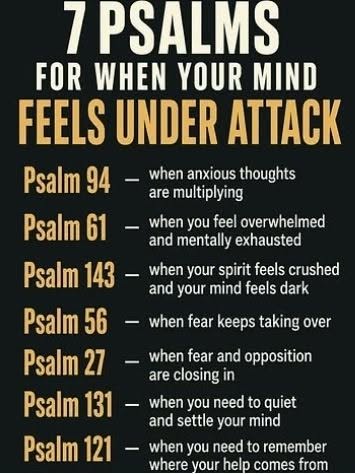
7 Psalms for when your Mind are Under Attack !!! Psalm 56
In God I Trust
Psa 56:1 To the chief Musician upon Jonathelemrechokim, Michtam of David, when the Philistines took him in Gath. Be merciful unto me, O God: for man would swallow me up; he fighting daily oppresseth me.
Psa 56:2 Mine enemies would daily swallow me up: for they be many that fight against me, O thou most High.
Psa 56:3 What time I am afraid, I will trust in thee.
Psa 56:4 In God I will praise his word, in God I have put my trust; I will not fear what flesh can do unto me.
Psa 56:5 Every day they wrest my words: all their thoughts are against me for evil.
Psa 56:6 They gather themselves together, they hide themselves, they mark my steps, when they wait for my soul.
Psa 56:7 Shall they escape by iniquity? in thine anger cast down the people, O God.
Psa 56:8 Thou tellest my wanderings: put thou my tears into thy bottle: are they not in thy book?
Psa 56:9 When I cry unto thee, then shall mine enemies turn back: this I know; for God is for me.
Psa 56:10 In God will I praise his word: in the LORD will I praise his word.
Psa 56:11 In God have I put my trust: I will not be afraid what man can do unto me.
Psa 56:12 Thy vows are upon me, O God: I will render praises unto thee.
Psa 56:13 For thou hast delivered my soul from death: wilt not thou deliver my feet from falling, that I may walk before God in the light of the living?
The words translated “trust” in the Bible literally mean “a bold, confident, sure security or action based on that security.” Trust is not exactly the same as faith, which is the gift of God (Ephesians 2:8-9). Rather, trusting is what we do because of the faith we have been given. Trusting is believing in the promises of God in all circumstances, even in those where the evidence seems to be to the contrary. Hebrews 11 talks about faith, which is accepting and believing the truth that God reveals about Himself, supremely in the person of His Son, the Lord Jesus Christ. Nevertheless, the practical consequence of faith in God is trust, which we prove by living out our full acceptance of God’s promises day by day. Furthermore, it is by this trust that we are promised peace: “You will keep in perfect peace those whose minds are steadfast, because they trust in you” (Isaiah 26:3).
The classic verse regarding trust is Proverbs 3:5: “Trust in the LORD with all your heart and lean not on your own understanding.” This verse sums up the Bible’s teaching on trust. First, it is the Lord in whom we are to trust, not ourselves or our plans, and certainly not the world’s wisdom and devices. We trust in the Lord because He and He alone is truly trustworthy. His Word is trustworthy (Psalm 93:5; 111:7; Titus 1:9), His nature is faithful and true (Deuteronomy 7:9; Psalm 25:10; 145:13; 146:6), and His plans for us are perfect and purposeful (Isaiah 46:10; Jeremiah 29:11). Further, because of God’s nature, we are to trust Him with all our hearts, committing every aspect of our lives to Him in complete confidence. Finally, we are not to trust in ourselves because our understanding is temporal, finite, and tainted by our sin natures. Trusting in ourselves is like walking confidently across a rotten wooden bridge over a yawning chasm thousands of feet deep. Disaster inevitably follows.
Trust in God is a feature of many of the psalms of David. There are 39 references to trust in the Psalms alone, whether referring to trusting in God and His Word, or to not trusting in riches or the things of this world. It is on the basis of this trust that David finds deliverance from all the evil he encounters. Many of David’s psalms describe situations when he was pursued by Saul and his army, as well as his other enemies, and always did the Lord come to his aid. One thing that can be noted about biblical trust is that it always engenders further trust in our God. The man of God never stops trusting in God completely. His faith may be knocked, he may stumble, or he may fall into the foulest of sins, but “though he stumble, he will not fall, for the LORD upholds him with his hand” (Psalm 37:24). The man of God knows that, though trials will beset in this life, his trust will not waver because that trust is based on faith in the promises of God: the promise of eternal joy with the Lord and the promise of an inheritance that “can never perish, spoil or fade” (1 Peter 1:4).
In the Gospel of John, the Farewell Discourse marks a pivotal moment in the ministry of Jesus, as He prepares the disciples for His imminent departure (John 13—17). In John 14:1, Jesus says, “Let not your hearts be troubled. Believe in God; believe also in me” (ESV). In this statement, Jesus takes away fear and replaces it with faith.
To grasp the significance of believe also in me, we must situate it within the context of the Farewell Discourse. In the preceding chapters, Jesus predicts His betrayal and death, and, understandably, the disciples become distressed. As a result, the atmosphere is filled with tension and uncertainty.
So, Jesus takes a moment to comfort His disciples, urging them not to let their hearts be troubled. The disciples are encouraged to maintain unwavering trust both in God the Father and in Jesus. The emphasis on belief is a recurring theme in the Gospel of John (John 1:12–13; 3:16; 17:20; 20:27). In fact, it is the purpose for which the Gospel was written: “These are written so that you may believe that Jesus is the Christ, the Son of God, and that by believing you may have life in his name” (John 20:31, ESV).
The directive to “believe in God; believe also in me” highlights the oneness of the Father and the Son (see John 10:30). This link is more than an abstract concept; rather, it prompts believers to anchor their faith in the person of Christ (Hebrews 6:19).
Jesus is more than a teacher and prophet. He is, as John declared, “the only Son from the Father, full of grace and truth” (John 1:14, ESV). The writer of Hebrews put it this way: “The Son radiates God’s own glory and expresses the very character of God, and he sustains everything by the mighty power of his command” (Hebrews 1:3, NLT). Part of believing in Christ, then, is to trust that He and the Father are one.
The inclusion of the word also (John 14:1) adds depth to Jesus’ directive. By saying, “Believe also in me,” Jesus establishes equality between Himself and the Father. To the Jewish leaders, this was blasphemy (see John 5:18); their hardness of heart would not allow them to accept the one who is the way, the truth, and the life (John 14:6). Children of God, however, trust in Christ with the same vigor that they trust in God.
No genuine believer can place God and Jesus into separate categories. To do so would be a failure to acknowledge the foundational doctrine of the deity of Christ. Jesus is more than a good moral teacher. He was, is, and will always be “the image of the invisible God, the firstborn of all creation” (Colossians 1:15, ESV). And He deserves to be worshiped as such (Philippians 2:10).
The directive to believe in Jesus in the same way we believe in God has profound implications for discipleship. To believe in Christ means that we surrender ourselves to His lordship and entrust our lives to Him alone. Our faith in Him equips us to face any and every challenge. Faith overcomes fear.
On the topic of trusting others, King David said, “It is better to take refuge in the Lord than to trust in man. It is better to take refuge in the Lord than to trust in princes” (Psalm 118:8–9). David spoke from experience, having been betrayed many times by those close to him (see Psalm 41:9). Instead of becoming bitter or regarding all people as inherently untrustworthy and not worth his time, he learned and taught a simple truth: sinful people will fail us, but we can always trust in God. David’s son, King Solomon, learned that lesson well and added to it, saying that it’s better to trust God than to trust our own minds (Proverbs 3:5–6).
Even though others will fail us at times, and we ourselves are not always trustworthy, we can and should still trust people to varying degrees. Without trust, true relationship is impossible. It is precisely because we know that God will never fail us that we can trust others. Our ultimate security is in Him, so we are free to trust others and experience the joy it brings. Trusting others is almost inseparable from loving others. True intimacy can only be achieved through honesty and trust. It requires trust to bear one another’s burdens (Galatians 6:2) and “spur one another on toward love and good deeds” (Hebrews 10:24). It takes trust to confess our sins to one another (James 5:16) and share about our needs (James 5:14; Romans 12:15). Trust is necessary in any number of human relationships, and especially for the healthy functioning of the family of Christ.
Christians should strive to be trustworthy. Jesus was clear that His followers should keep their word (Matthew 5:37). James repeated the command (James 5:12). Christians are called upon to be discreet and refrain from gossiping (Proverbs 16:28; 20:19; 1 Timothy 5:13; 2 Timothy 2:16). At the same time, Christians are called to speak up when appropriate and help bring about restoration from sin (Matthew 18:15–17; Galatians 6:1). Christians are to be speakers of truth, and to speak this truth with love (Ephesians 4:15; 1 Peter 3:15). We are to “do your best to present yourself to God as one approved, a worker who does not need to be ashamed and who correctly handles the word of truth” (2 Timothy 2:15). Christians are also expected to care for the practical needs of others (James 2:14–17; 1 John 3:17–18; 4:20–21). All of these actions contribute to being trustworthy. Christians should be people that others can trust. Such trustworthiness is empowered by the Holy Spirit at work in the believer’s life (2 Corinthians 3:18; Philippians 1:6; Galatians 5:13–26).
Trusting others is not always natural or easy. We are wise to take time to get to know others and not heedlessly give them our complete trust. Jesus did this when He withdrew from the crowds at times (John 2:23–25; 6:15). But sometimes it is difficult to tell the difference between being wise about our trust and being overly self-protective out of past hurt or fear. If we find ourselves reluctant to trust anyone to any extent, we are wise to do some introspection and, if necessary, ask God to heal our wounded hearts.
The Bible gives advice about trusting others after we’ve been hurt. Trusting God is the first, most important step. When we know that, no matter what men do to us, God will always be there, faithful and true and trustworthy, it is easier to handle betrayal or disappointments. Psalm 118:6 says, “The Lord is on my side, I will not fear. What can man do to me?” Reading God’s Word with attention to the ways He describes His own faithfulness and trustworthiness will be helpful to us. Prayer is vital. Particularly if we feel like God has betrayed our trust by allowing us to be hurt, we need to be reminded of His truth and comforted by His love.
The second step after being hurt by trusting others is forgiveness. As Jesus told Peter, if a brother sins against you seventy-seven times a day and comes back asking for forgiveness, we should forgive (Matthew 18:21–22). The point is not that we should not forgive the seventy-eighth offense, but that we should be people who seek to continually forgive. If a person repeatedly betrays our trust unrepentantly, we do not have to continue to associate with him or to make ourselves vulnerable to him. Yet we also should not harbor bitterness or allow that person’s actions to impede our relationships with other people (Hebrews 12:14–15). If the person is truly repentant—even when it involves betrayal and exploited trust—we are to seek to fully forgive and even pursue restoration and a rebuilding of trust over time. As part of Jesus’ lesson on forgiveness, He told the parable of a servant who was forgiven a huge debt and then went out and immediately became judgmental and cruel with another servant who owed him a small debt. The heartless actions of the unmerciful servant should remind us of our need to forgive. We have been forgiven by God a much greater debt than anything other people owe to us (Matthew 18:23–35).
Finally, it bears repeating that, as we learn to trust others, we should continually strive to be trustworthy ourselves. This is good and godly. We should be a safe place for others (Proverbs 3:29) and keep confidences (Proverbs 11:13). We should be known for our honesty (Proverbs 12:22) and a willingness to suffer with a friend (Proverbs 17:17). Everyone goes through hard times, and we need our friendships even more when the sun is not shining. At times, we all let others down. But we should always strive to “walk in a manner worthy of the calling to which you have been called, with all humility and gentleness, with patience, bearing with one another in love” (Ephesians 4:1–2).

Tea Time Manna
Jesus replied, “If anyone loves me, he will obey my teaching. My Father will love him, and we will come to him and make our home with him.”
—John 14:23
At many Christian funerals and memorials, the preacher emphasizes that Jesus has gone to prepare a place for us to join him in heaven, but will one day come back for us and bring us home with him (John 14:1-3). Just a few verses later, the Lord deepens his promise. He promises that if we love him and obey him, he will love us and reveal himself to us (John 14:21). On top of that, he and the Father will love us and make their home in us until we can go home to be with them (John 14:23). As we love God and obey Jesus’ commandments, our relationship, closeness, and experience of God’s presence as Father, Son, and Holy Spirit, deepens because they live inside us — make their home with us. Obeying Jesus’ teaching is our pathway to a closer walk with God!
Prayer
Holy God, I know Jesus came to earth and obeyed your will. Please bless me with the discernment I need to fully obey you. I desire that my obedience will not just be the strict obedience of your words, but a deep longing to live according to your will. I long to honor you because you have done so much to save me. Thank you. In Jesus’ name I thank and praise you. Amen and Amen

NEWS MANNA –
Hidden Beneath The Waves: The New Nuclear Threat From Russia And China

While much of the world is watching drones transform the battlefields of Ukraine and the Middle East, another military revolution is taking place largely out of sight.
It is happening beneath the oceans.
Russia and China are rapidly developing underwater nuclear capabilities designed around one of the most important principles of nuclear warfare: survival. Missiles sitting in fixed silos can be targeted. Air bases can be monitored by satellites. But a nuclear submarine that disappears beneath millions of square miles of ocean presents a completely different problem.
And both Moscow and Beijing are investing heavily in making that problem much more difficult for the United States.
Russia’s newest contribution is particularly ominous.
The nuclear-powered submarine Khabarovsk reportedly began sea trials in Russia’s White Sea in August. Launched in November 2025, the vessel is the first of a new class specifically designed to carry Russia’s Poseidon nuclear-powered underwater weapon. Reports indicate that Khabarovsk could eventually carry as many as six Poseidons.
Poseidon is unlike the ballistic missiles that dominated Cold War nuclear planning. It is essentially an enormous autonomous underwater vehicle powered by its own nuclear reactor and capable of carrying a nuclear warhead.
Russian claims surrounding the weapon have often been dramatic and should be treated cautiously, but the concept itself is serious. Instead of sending a warhead through space on a predictable ballistic trajectory, Poseidon is designed to travel enormous distances underwater before approaching its target.
That makes it primarily a weapon of retaliation.
If Russia’s land-based missiles, bombers and military installations were devastated during a nuclear exchange, Moscow wants an enemy to know that weapons hidden beneath the ocean could still be coming.
That is why Poseidon has earned the disturbing nickname “doomsday weapon.”
China, meanwhile, is pursuing a somewhat more conventional but potentially even more consequential expansion of its underwater nuclear forces.
On July 6, Beijing conducted a rare test of a strategic missile launched from a nuclear-powered submarine toward the Pacific. China said the missile carried a dummy warhead and described the launch as routine training, but the test demonstrated something Washington and its Pacific allies cannot ignore: China’s sea-based nuclear deterrent is becoming increasingly capable.
The missile was widely believed to be China’s JL-3, although Beijing did not publicly identify it. The JL-3 has an estimated range of roughly 10,000 kilometers, giving Chinese ballistic-missile submarines the ability to threaten portions of the continental United States without traveling nearly as far into the Pacific as earlier Chinese systems required.
China currently operates six Jin-class Type 094 ballistic-missile submarines and has been upgrading them with longer-range JL-3 missiles. Even more important is what comes next: Beijing is developing the quieter Type 096 ballistic-missile submarine while rapidly expanding its broader nuclear-powered submarine fleet.
U.S. naval intelligence warned Congress earlier this year that China’s undersea forces could eventually challenge American regional maritime dominance. China’s submarine fleet already exceeds 60 vessels, while its shift toward increased production of nuclear-powered submarines represents a significant change from its historical dependence on diesel-electric boats.
Put Russia and China together and the strategic picture becomes considerably more troubling.
For most of the Cold War, American nuclear planning was overwhelmingly focused on one principal nuclear adversary: the Soviet Union. China possessed nuclear weapons, but its arsenal was comparatively small.
That world is disappearing.
China’s nuclear stockpile is now estimated at roughly 620 warheads, while Beijing is simultaneously expanding its land-based missiles, submarine-launched weapons and bomber capabilities. Russia already possesses one of the world’s two largest nuclear arsenals and is adding unconventional systems such as Poseidon.
The United States therefore faces the increasingly difficult challenge of deterring two major nuclear powers at the same time.
Submarines make that equation especially dangerous because deterrence depends heavily upon knowing what an opponent can do—and where his weapons are located.
A missile silo can be photographed. A bomber base can be watched. Satellite constellations can monitor missile fields and military installations almost continuously.
But somewhere beneath the Pacific, Arctic or Atlantic, a submarine carrying nuclear weapons can simply disappear.
That uncertainty is precisely what makes these vessels so valuable. Even after absorbing a devastating surprise attack, a nation with surviving ballistic-missile submarines retains the ability to retaliate. The enemy can never be certain it has eliminated the threat.
Russia’s Poseidon takes that logic another step by attempting to create an entirely different underwater retaliatory system.
Meanwhile, China’s expanding submarine fleet forces the United States to devote greater resources to tracking increasingly capable vessels across the vast Pacific at the same time Washington must continue monitoring Russian submarines in the Arctic and Atlantic.
None of this means nuclear war is imminent. In one sense, survivable retaliatory weapons can strengthen deterrence because they make a successful first strike virtually impossible.
But they also reveal where the world’s major powers believe the future may be heading.
While headlines concentrate on inexpensive drones, artificial intelligence and hypersonic missiles, Russia and China are spending enormous resources preparing for a far darker possibility.
The most frightening weapons of the next great-power conflict may not be the ones everyone can see crossing the sky.
They may already be silently moving beneath the waves.
Court Restricts Girl’s Church Attendance Over Claims Of “Psychological Harm”
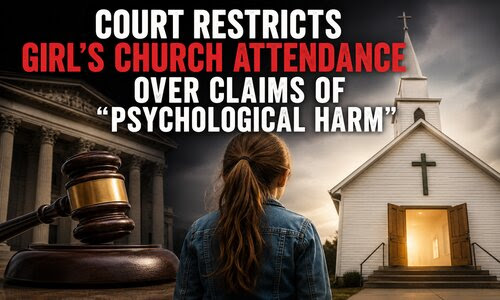
A troubling court ruling out of Maine should have Christians paying attention. The Maine Supreme Judicial Court has upheld an order giving a father final authority to prevent his daughter from attending an evangelical church after arguments that the religious environment was psychologically harmful to the girl.
At the center of the controversy is Calvary Chapel Greater Portland in Westbrook, Maine, where the girl’s mother, Emily Bickford, had been taking her to services. Her father, Matthew Bradeen, objected. In 2024, a Portland District Court gave him authority to determine whether his daughter could continue attending the church, and Maine’s highest court has now upheld that decision.
One of the concerns from the father was that the church was praying for him to repent and receive salvation, which he believed made it seem to his daughter as if he was the enemy. Another striking detail involves what the girl was hearing from the pulpit. Bradeen argued that his daughter experienced anxiety in connection with the church, including a panic attack after hearing teaching about the Rapture.
If The Rapture Is “Harmful,” What Comes Next?
For Bible-believing Christians, alarm bells should immediately be going off. America is entering dangerous territory when courts find themselves deciding whether exposure to Christian teaching contributes to psychological harm serious enough to restrict a child’s participation in a church.
And if the Rapture can become part of that conversation, Christians should consider what could come next. Hell? Judgment? Sin? Repentance? Biblical sexuality? The exclusivity of Jesus Christ?
Christianity contains many doctrines capable of making people uncomfortable. In fact, that is partly the point. The Gospel does not merely affirm us; it confronts us. Scripture tells humanity things modern culture increasingly does not want to hear: We are sinners. We are accountable to God. Judgment is real. Christ is returning. Salvation is found in Jesus Christ alone.
Those teachings can frighten people, offend people and even cause emotional distress. But since when did emotional distress determine whether a religious belief should be protected?
That question matters enormously in modern America because the language surrounding Christianity has changed. Traditional Christian beliefs are increasingly described not simply as outdated or incorrect but as “harmful.”
Biblical teaching on sexuality is called harmful to LGBT youth. Teaching about sin can be described as shame-producing. Christian exclusivity can be portrayed as intolerant. Biblical teachings about men, women and marriage are increasingly characterized as damaging.
When “Harm” Becomes The Standard
Now consider what happens when that language moves from the classroom, media and activist organizations into family courts. A parent no longer needs to argue merely that he disagrees with a church; he can potentially argue that the church is harming his child. And once “harm” becomes the standard, judges may inevitably be drawn into deciding which religious messages cross the line.
Cultural definitions of “psychological harm” change rapidly. Imagine a Christian mother and an unbelieving father fighting over whether their teenager should attend a church teaching that homosexual behavior is sinful. What happens when the father presents an expert who says those teachings are psychologically harmful?
What happens when a Christian parent takes a confused teenager to a church that teaches God created humanity male and female, while the other parent argues that such teaching is damaging to the child’s mental health? What happens when a child becomes terrified after hearing a sermon about hell, anxious after hearing Revelation, or distressed because a pastor says an unbelieving parent needs salvation? At what point does the state intervene?
These are no longer abstract questions. The language of “harm” has become one of the most powerful tools in America’s cultural battles because once something is classified as harmful, restricting it can suddenly be presented not as censorship but as protection. That is precisely why Christians should watch cases like this carefully.
Bible Prophecy Isn’t An Optional Part Of Christianity
There is also a particularly significant issue for Christians who take Bible prophecy seriously. The return of Jesus Christ, coming judgment and the culmination of human history are not fringe subjects that can simply be removed from Christianity because someone finds them disturbing.
Jesus spoke repeatedly about His return. Paul wrote about believers being caught up to meet the Lord, while Revelation describes terrifying judgments coming upon the earth. A church cannot faithfully preach the whole counsel of Scripture while guaranteeing that nobody–especially a child–will ever become frightened by what Scripture says.
Parents and pastors should certainly teach difficult doctrines with wisdom, compassion and age-appropriate care. But that is very different from allowing government to become the final judge of whether those doctrines are psychologically acceptable.
Who Gets To Define Acceptable Christianity?
The legal battle may now move even higher. Bickford’s attorney, Mathew Staver of Liberty Counsel, says the family intends to petition the U.S. Supreme Court, arguing that Maine’s decision raises serious First Amendment concerns and conflicts with decisions elsewhere.
For now, Bradeen has final authority over whether his daughter attends Calvary Chapel Greater Portland or has contact with members of that church other than her mother. Christians should hope the Supreme Court takes a very careful look at where the constitutional boundaries lie, because there is a line America cannot afford to cross.
Government can protect children from abuse and intervene when children face genuine danger. But government must be extraordinarily cautious about deciding that children need protection from religious beliefs.
When Christian doctrine begins appearing in court alongside words such as “psychologically harmful,” Christians have every reason to pay attention. Once government begins determining which biblical teachings are safe for children to hear, the question is no longer merely about protecting children.
It becomes a question of who has the authority to define acceptable Christianity.

TruLight TV – Remind Yourself of God’s Love
Are you taking the time to invest in deep friendships? If you’re seeking meaningful friendships, check out this video and be reminded of the qualities and values to look for in genuine friends. Dr. Charles Stanley’s message – Do you have trouble accepting God’s love due to feelings of inferiority? If you know the Lord, He loves you and views you as His workmanship, a precious work of art. Don’t let your feelings block the beauty of that truth. Remind yourself of God’s great love. Enjoy! and Share this Video With your Friends.
Today on TruLight Radio XM
TruLight Radio XM 24/7
Program
GMT / UTC +2
Monday To Fridays
00:15 Words to Live By Testimonies
01.15 Science Scripture and Salvation
02.15 Ground Works
04.00 Gospel Concert of the Day
05.00 The Daren Streblow Comedy Show
5:55 It is Today devotional
6:00 Gaither Homecoming Morning Show
7:15 Discover the Word
8.15 Destined for Victory
8:55 Science Scripture and Salvation
9:00 Holy Spirit Hour – Normally Sermons
10:15 Hope of the Heart
11:15 Unshackled
11.45 Words to Live By
12:15 Truth for Life
13:15 Living on the Edge with Chip Ingram
14:15 Focus on the Family
15:00 Kids Hour
16:00 In Touch with Dr. Charles Stanley
16:30 Groundwork
17:15 Live in the Light
18:15 Renewing your Mind
19:00 Gaither Homecoming Show
20:15 Growing Hope
21:15 Adventures in Odyssey Radio Drama
21:45 Bible Reading
22:15 Night-sounds
23.00 Good Old Country Gospel / Rhema Gospel Express
VISIT THE WEBSITE
TruLight Ministry News – EXTRA MANNA
TruLight Ministries orders from God since 2012 . Teach Them , Comfort Them and Warn Them!
Artist Liners
Healing Truths.
End Time Articles.
Share this Feeding of Manna with your Friends and Family. just click on the Social Media icon and share This Manna with your Friends and Family. just click on the Social Media icon and share !