Hosted by TruLight Ministries International – The Place of Truth
SELECT YOUR READING LANGUAGE – BOTTOM LEFT = YOUR DAILY MANNA NOW AVAILABLE IN 103 LANGUAGES
@ TruLight Daily Manna is not Just a Bible Verse with a Small Prayer . NO ::: WE SERVE DAILY Manna for the ENTIRE Day . Breakfast , Lunch , Dinner , Plus tea Times and even Entertainment Manna . Plus News Manna and More , This Daily Manna will keep you Spiritually full for the full 48 Hours and even More to Share with your Friends and Family !!!
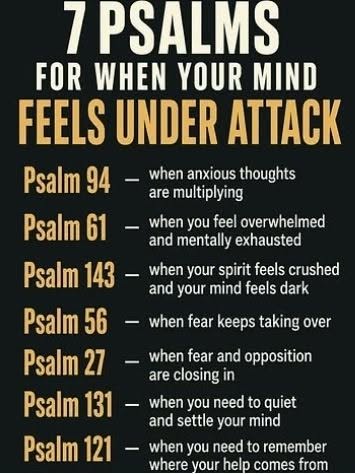
7 Psalms for when your Mind are Under Attack !!! Psalm 131
I Have Calmed and Quieted My Soul
Psa 131:1 A Song of degrees of David. LORD, my heart is not haughty, nor mine eyes lofty: neither do I exercise myself in great matters, or in things too high for me.
Psa 131:2 Surely I have behaved and quieted myself, as a child that is weaned of his mother: my soul is even as a weaned child.
Psa 131:3 Let Israel hope in the LORD from henceforth and for ever.
Quietism is a system of religious mysticism with its roots in Hinduism and Buddhism but which has also been promoted at times by individuals within the Roman Catholic Church. Quietism teaches that spiritual peace and even perfection can be achieved through the contemplation of God and things divine. The practitioner of quietism seeks to subdue the will and become totally passive, spiritually. Quietism was promoted as a Catholic mode of worship in parts of Western Europe during the late 1600s but was declared a heresy by Pope Innocent XI in 1687. Quietism turns one’s spirituality inward, favoring silent contemplation, stillness, and passiveness over positive action, singing, praying out loud, etc., so it would be naturally appealing to monks, religious hermits, and other ascetics. The aim of quietism is to “quiet” the soul so that it can become one with God and eventually achieve a sinless state.
Influential quietists in history include Madame Guyon, Francois Fénelon, and Miguel de Molinos. Quietism has made inroads into some branches of the evangelical church, too, with the practice of soaking prayer and centering prayer and the Charismatic emphasis on listening prayer and the rhema word. Practices related to quietism and the thinking behind those practices are totally unbiblical.
It’s true that, in the Bible, quietness and peace are to be desired; they are signs of a healthy spiritual life. David said, “I have calmed and quieted my soul, like a weaned child with its mother” (Psalm 131:2), and peace is a fruit of the Spirit (Galatians 5:21). Waiting on God and submitting to Him are also part of a godly life (Psalm 31:24; 33:20; 37:7). However, biblical authors never promote the idea of the human soul being “absorbed” into God, and the Bible in no way endorses quietism, as a philosophy or as a religious practice.
One problem with quietism is its exclusive focus on passivity, stillness, and inaction as it pursues a quiet spirituality. The Bible contains plenty of examples of the opposite attitude, telling God’s people to “shout for joy” over their salvation (Psalm 20:5), sing songs, play instruments, and shout loudly (Psalm 33:1–3). The response when a soul is near to God is often shouts and songs of joy (Isaiah 12:6). Furthermore, positive action is constantly shown in the Scriptures as a necessary part of a Christian’s life. Evangelism is very hard to do if one never speaks or interacts with others. Jesus told His disciples to “go” and “make disciples” and “teach” (Matthew 28:16–20). The apostles’ journeys were full of positive, decisive action and good works. Jesus Himself was a dynamic person—healing and speaking and taking action. Of course, Jesus also spent time in prayer, alone (Mark 1:35). But prayer to God is not what quietism teaches.
The other, greater problem with quietism is its claim that one can achieve a sinless state by inward contemplation and ridding the soul of all troubling desires. In this way, quietism resembles Buddhism more than Christianity. There is nothing in the Bible to suggest that stilling ourselves can result in a sinless state or union with God or that cultivating a lack of feeling or desire will bring special union with God. Quite the opposite: the Bible clearly says that a sinless state of perfection is not attainable in this world (1 John 1:8). Biblical meditation is an active study and contemplation of God’s Word, not a passive, mantra-like giving up of the will. We are justified by faith in Christ, and we are sanctified by the Word of God (John 17:17; Romans 5:1; Hebrews 10:10, 14), not through mystical experiences, asceticism, or having one’s soul united with the divine.
Rest in the Lord is a frequently used expression in the Bible. When the psalmist says, “Rest in the LORD, and wait patiently for Him” (Psalm 37:7, NKJV), he’s not talking about physical rest that involves taking a break from activity, relaxing, napping, or stopping to gather strength to continue or complete some physical undertaking. Rest in the Lord refers to a spiritual rest from confusion, worry, stress, useless human effort, and a break from all internal, external, mortal, and spiritual enemies.
The Hebrew word translated as “rest” means “to be at peace,” “to be still,” “to be quiet or calm.” In place of “rest in the Lord,” some Bible translations say, “Be still before the Lord” (ESV and NIV), “Be silent before the Lord” (CSB), “Surrender yourself to the Lord” (GW), and “Be still in the presence of the Lord” (NLT). These versions convey the essential idea that to rest and be at peace, one must dwell in the presence of the Lord, surrendered to His lordship.
In the Old Testament, God promised the people of Israel a life of peace in the Promised Land and rest in His presence (Exodus 33:14; Joshua 1:13–15). But this restful, peaceful living depended on the Israelites remaining faithful and obedient to God alone by keeping their covenant with Him. To those whose hearts strayed from Him, God said they would never enjoy His rest (Psalm 95:7–11).
Eventually, because of widespread disobedience and unfaithfulness, the nation of Israel was taken into captivity in Babylon. After returning from exile, once again, the promise of rest in the Lord’s presence was presented: “So do not be afraid, Jacob, my servant; do not be dismayed, Israel . . . For I will bring you home again from distant lands, and your children will return from their exile. Israel will return to a life of peace and quiet, and no one will terrorize them” (Jeremiah 30:10, NLT). But, again, the people failed to learn that resting in the Lord meant surrendering wholly to the Lord in righteous living: “The fruit of that righteousness will be peace; its effect will be quietness and confidence forever” (Isaiah 32:17).
In the New Testament, the book of Hebrews declares the good news that those who believe in Jesus Christ can enter His rest: “God’s promise of entering his rest still stands, so we ought to tremble with fear that some of you might fail to experience it. For this good news—that God has prepared this rest—has been announced to us just as it was to them. But it did them no good because they didn’t share the faith of those who listened to God. For only we who believe can enter his rest” (Hebrews 4:1–3, NLT).
As believers, we are not granted immunity from life’s storms, but we have a choice about how we react to those storms. Our natural tendency might be to run around frantically looking for help, trying to save ourselves from trouble. We can either respond frenetically or rest in the Lord’s presence. We can either waste our time worrying or trust in the Lord to take care of us. Jesus said, “Come to me, all of you who are weary and carry heavy burdens, and I will give you rest. Take my yoke upon you. Let me teach you, because I am humble and gentle at heart, and you will find rest for your souls. For my yoke is easy to bear, and the burden I give you is light” (Matthew 11:28–30, NLT).
The writer of Hebrews also tells us that there is a future, final rest for believers in heaven (Hebrews 4:9–11). In the meantime, we can rest in the Lord by taking everything—all our burdens, problems, and anxieties—to Him in prayer. We can tell God what we need even as we remember and thank Him for all that He has done for us already. As we do this—as we abide in Jesus Christ and God’s presence—He promises to pour into us a supernatural, incomprehensible peace to guard our hearts and minds (Philippians 4:6–7).
Right here and now, we can quiet ourselves, be still, and surrender ourselves to the Lord. We can see Him as Isaiah did, high and lifted up (Isaiah 6:1). He is Sovereign over the whole earth, over our lives, and over every enemy, both internal and external, human and spiritual (Isaiah 46:9–11). We can peacefully wait for Him. We can be steadfast, longing, and always looking to Him for help. This is how we rest in the Lord.
The expression trust in Jesus holds multi-layered meaning. In one sense, trusting in Jesus means believing in Him for salvation (John 3:16). We believe who He is—God in human form—and put our faith in Him as Savior. And we believe what He has done—that He died for our sins and rose from the dead. Since we cannot save ourselves from sin and death (Romans 3:10–20), we trust in Jesus to save us (John 11:25). We cannot receive eternal life and live forever in the presence of God until we’ve trusted in Jesus as Savior and accepted His forgiveness (Ephesians 1:7).
Subsequent to salvation, trusting in Jesus means committing or dedicating ourselves entirely to Him. When we are born again, we become followers of Jesus Christ. As His followers, we put complete confidence in Him and His Word. To trust in Jesus means to believe everything He said and accept His Word as true: “So Jesus said to the Jews who had believed him, ‘If you abide in my word, you are truly my disciples, and you will know the truth, and the truth will set you free’” (John 8:31–32, ESV). The more we know and abide in the words of Jesus, the more we will obey Him, and the more our confidence in Him will grow as we experience freedom in Christ.
A trustworthy promise Jesus gave us in His Word was to come to Him to find rest: “Come to me, all you who are weary and burdened, and I will give you rest. Take my yoke upon you and learn from me, for I am gentle and humble in heart, and you will find rest for your souls. For my yoke is easy and my burden is light” (Matthew 11:28–30). A yoke is a wooden harness used to join the necks of two draft animals. Together, the beasts can more effectively pull a heavy load. In the time when Jesus spoke these words, farmers would often pair a young, inexperienced, but vigorous animal with an older, weaker, but seasoned animal. The younger animal would learn from the more experienced one, and the older would benefit from the younger one’s strength to help carry the load.
Rest, another way of expressing trust, is a state of leaning on Jesus for strength and learning from Him. He shares the load as we journey together. When we are tired and overburdened, we can come alongside Jesus and find rest for our souls. In this way, we trust in Jesus, by relying on Him for everything in our lives, especially when we are weary and burdened down. Jesus is the believer’s Sabbath-rest (Hebrews 4:1–11).
Jesus understands our weaknesses and knows we will struggle to trust in Him. That is why Scripture says, “Do not be anxious about anything, but in every situation, by prayer and petition, with thanksgiving, present your requests to God. And the peace of God, which transcends all understanding, will guard your hearts and your minds in Christ Jesus” (Philippians 4:6–7). When we take our anxious hearts to God in prayer, He offers us peace. His presence is peace. The passage does not say He’ll always give us what we’re asking for, but it does promise peace to guard our hearts and minds. To trust in Jesus means to come to Him and believe He has good and trustworthy plans for our lives and our future. We don’t have to fret about tomorrow. When we trust in Jesus, He pours out His peace on us.
Our trust in Jesus grows through experience (2 Corinthians 1:10) as we see God working all things in our lives—both the good and bad—for His purpose (Romans 8:28). Jesus wants us to live by faith in Him (2 Corinthians 5:7; Galatians 2:20), and so the Christian life becomes a testing and training ground in trust: “Consider it pure joy, my brothers and sisters, whenever you face trials of many kinds, because you know that the testing of your faith produces perseverance. Let perseverance finish its work so that you may be mature and complete, not lacking anything” (James 1:2-4).
Jesus said, “Do not let your hearts be troubled. Trust in God; trust also in me” (John 14:1). We may know that Jesus loves us and promises always to be with us (Matthew 28:20), but we can’t see Him, and, during times of trouble, doubt and fear can creep in and make it difficult to apply that knowledge. Peter encourages us that we can trust in Jesus even when we cannot see Him: “In all this you greatly rejoice, though now for a little while you may have had to suffer grief in all kinds of trials. These have come so that the proven genuineness of your faith—of greater worth than gold, which perishes even though refined by fire—may result in praise, glory and honor when Jesus Christ is revealed. Though you have not seen him, you love him; and even though you do not see him now, you believe in him and are filled with an inexpressible and glorious joy” (1 Peter 1:6–8).
Even though we can’t see Jesus with our physical eyes, the Holy Spirit enables us to see Jesus with the eyes of our hearts (Ephesians 1:18–20). Ultimately, our inability to see Jesus physically makes our trust in Him even more secure. That is why Jesus said, “Blessed are those who have not seen and yet have believed” (John 20:29).
The apostle Paul captured what it means for a believer to trust in Jesus: “For our light and momentary troubles are achieving for us an eternal glory that far outweighs them all. So we fix our eyes not on what is seen, but on what is unseen, since what is seen is temporary, but what is unseen is eternal” (2 Corinthians 4:17–18).
Jesus is teaching us to trust Him in all things at all times with all of our heart (Proverbs 3:5–6) so that our faith becomes unshakeable: “Trust in the LORD forever, for the LORD, the LORD himself, is the Rock eternal” (Isaiah 26:4). As we learn to trust in Jesus more, we identify more with the psalmist’s description of a believer at rest in the arms of God: “I have calmed and quieted myself, I am like a weaned child with its mother; like a weaned child I am content” (Psalm 131:2).

Tea Time Manna
Teach me to do your will, for you are my God; may your good Spirit lead me on level ground.
—Psalm 143:10
We want the Holy Spirit to be at work in us, transforming us to become more like Jesus (2 Corinthians 3:18). For this to happen, we must seek Jesus and open our hearts to God’s will. There are no greater words God wants to hear than “teach me to do your will.” That is what it means for him to be our God. We invite him to have control over our lives and influence over our wills. This is a key part of what it means for us to love God with all of our heart, soul, mind, and strength (Matthew 22:37-38). As we open ourselves to the Father in this way, the Holy Spirit sets us on God’s level ground and leads us on our journey home to our Father, maturing us to be more like Jesus, doing God’s will.
Prayer
Almighty God, I want you to be God in and over my life. I renounce any attempt to manipulate or use your grace and kindness selfishly, only for my benefit. I submit my will to yours and ask you to lead and teach me to do your will. However, dear Father, I confess that I struggle at times with my own selfish and evil desires that lead me astray. Thank you for forgiving me and bringing me back to you. Please forgive me when my ears were shut to your will and your word. Forgive me when my heart was cold to you. Please take control of my life today. Have the Holy Spirit lead me and transform me to be more like your Son and my Savior, through whom I ask you to assert your will as God fully and lead me on your level ground. Amen and Amen
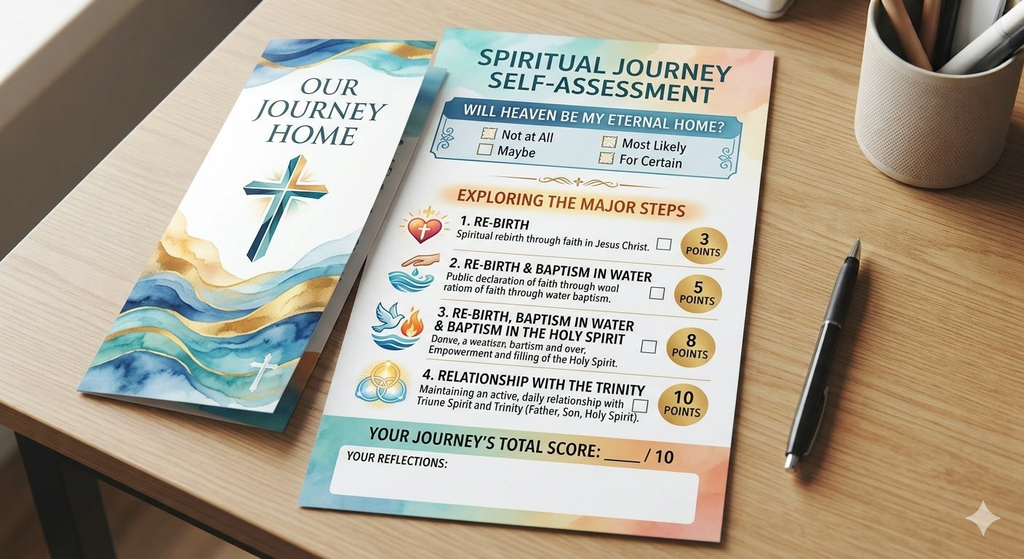
Question: Will Heaven Be My Eternal Home ?
Check the box that best describes your current assurance:
• Not at All { }
• Maybe { }
• Most Likely { }
• For Certain { }
The 4 Major Steps to Heaven: Score Yourself
Check the box next to the highest level you have reached, then find your corresponding score below.
Step 1: Re-Birth
• I have experienced a spiritual rebirth/been born again by placing my faith in Jesus Christ. (Score: 3)
Step 2: Re-Birth & Baptism in Water
• I have been born again and have undergone water baptism as a public declaration of my faith.
(Score: 5)
Step 3: Re-Birth, Baptism in Water & Baptism in the Holy Spirit
• I have been born again, baptised in water, and have experienced the baptism or filling of the Holy Spirit.
(Score: 8)
Step 4: Re-Birth, Baptism in Water, Baptism in the Holy Spirit & Relationship with the Trinity
• I have met all the previous steps and actively maintain a personal, daily relationship with the Triune God (Father, Son, and Holy Spirit).
(Score: 10)
📝 Your Total Score: ______ / 10
You Need a 3 to be Listed in the Book of Life , and be approved at the Great White Throne Judgment
You Need a 8 to be Raptured at the 2nd Coming of Jesus
You Need a 10 to be Allowed in the Throne room of God in the Holy City in Eternity

NEWS MANNA –
The Blackout Weapon: Could China Or Russia Turn Off America?

America’s enemies do not necessarily have to destroy our cities to cripple the country. They may only need to make those cities stop functioning.
That uncomfortable reality is coming into focus as Iranian-linked hackers threaten attacks against America’s energy, water and telecommunications infrastructure, while lawmakers are simultaneously raising alarms about the potentially much larger threat posed by electromagnetic pulse weapons.
The two threats are very different, but they expose the same weakness: modern America is extraordinarily dependent upon interconnected systems, and when one fails, it can begin pulling others down with it.
Iran’s hackers are providing a timely reminder.
America’s Infrastructure Is Already Being Targeted
A Telegram channel presenting itself as a voice for Iranian cyber operations recently issued an ominous warning: “Soon, the United States will witness unexpected and critical events in the energy, water, and telecommunications industries.”
The threat comes as tensions between Washington and Tehran continue escalating. House Intelligence Committee Chairman Rick Crawford said Iran remains a persistent threat, particularly against America’s critical infrastructure and cyber systems. Recent Iranian-linked attempts have reportedly targeted automated systems connected to the internet, although officials say the latest attacks have not produced major disruptions.
The danger is hardly theoretical.
CISA revealed in August that hackers had targeted more than 100 internet-exposed systems in America’s water and wastewater sector during July. Federal agencies have separately warned about Iranian-affiliated actors exploiting programmable logic controllers used to operate physical machinery within critical infrastructure.
That should concern Americans, but hacking is only one potential method of attacking the systems upon which modern society depends.
There is another scenario that could be exponentially worse.
The Blackout Weapon
An electromagnetic pulse, or EMP, can be produced by a nuclear weapon detonated high above the Earth. Unlike a nuclear strike against a city, the primary objective would not necessarily be destroying buildings or killing people through the initial blast.
It would be attacking electronics and the electrical infrastructure supporting modern civilization.
Depending upon the weapon, altitude, location and other factors, electromagnetic effects could potentially disrupt electrical systems across an enormous geographic area. The Congressional Budget Office has previously noted that a high-altitude EMP could threaten telecommunications, transportation, food distribution, emergency response and banking in addition to the electrical grid itself, although experts disagree about the precise scale of damage that a particular attack would cause.
That uncertainty should not obscure the larger problem.
America has built an incredibly sophisticated society upon systems that increasingly cannot function without one another.
The Domino Effect
Imagine the electrical grid suffers widespread disruption.
The immediate problem is obvious: the lights go out.
But electricity is only the first domino.
Telecommunications require electricity. Cell towers have backup power, but batteries and generators do not operate indefinitely. Data centers, internet providers and communications networks begin encountering problems.
Water systems require electricity to operate pumps, treatment facilities and control systems. When power becomes unreliable, water pressure and treatment can eventually become unreliable as well.
Fuel distribution depends upon electricity and communications. Refineries, pipelines, terminals and gas stations require power. Even if millions of gallons of gasoline remain underground, motorists cannot simply access it when pumps do not work.
Transportation then begins suffering.
Without fuel, trucks cannot efficiently replenish grocery stores. Repair crews cannot easily reach damaged infrastructure. Emergency vehicles face logistical problems. Food warehouses and refrigeration systems require electricity, while stores increasingly struggle to process electronic payments.
Banking depends upon telecommunications and electricity. ATMs, credit-card processing, electronic banking and financial networks become increasingly difficult to access.
Hospitals have generators, but generators require fuel. Hospitals also depend upon functioning communications, water, pharmacies, medical suppliers and transportation networks.
The failure therefore moves through society like falling dominoes:
Power affects communications. Communications affect transportation and finance. Power and transportation affect water and fuel. Fuel affects transportation. Transportation affects food and medicine.
Then each failing system makes repairing the others more difficult.
CISA itself warns that critical infrastructure dependencies can produce precisely these “cascading” effects. Energy and communications, for example, can be mutually dependent, while electricity, communications, transportation and water are fundamental to practically every other critical infrastructure sector.
This is the part of the EMP threat that is often misunderstood. The greatest danger may not be what fails during the first minute.
It is what begins failing during the following days because something else failed first.
An Enemy Doesn’t Have To Destroy America
China and Russia understand these vulnerabilities.
Any scenario involving a nuclear EMP attack would represent an extraordinary act of war and potentially invite devastating American retaliation. It should therefore not be portrayed as something Beijing or Moscow could casually undertake without consequences.
But military planners prepare for capabilities, not merely intentions.
The frightening strategic concept is remarkably simple: Why fight every component of the world’s most powerful military and largest economy individually when attacking a handful of foundational systems could potentially create failures throughout the entire society?
Iranian hackers probing American infrastructure illustrate the smaller version of this strategy. Cyberattackers search for vulnerable control systems capable of producing physical consequences without ever dropping a bomb.
An EMP represents the nightmare version: a potential attempt to disrupt numerous systems simultaneously across a vast area.
America’s Achilles’ Heel
America has spent decades building the most technologically advanced society in human history. That technology has produced extraordinary efficiency, wealth and convenience.
It has also produced dependence.
Our food supply depends upon electricity. Our water depends upon electricity. Our communications depend upon electricity. Our financial system depends upon electricity. Our hospitals, fuel networks, transportation systems and emergency services all depend to varying degrees upon electricity and one another.
That interconnectedness is what makes modern America work so well.
It could also become our Achilles’ heel.
Iran’s cyber threats deserve attention. But the larger warning is what those threats reveal about the nature of modern warfare.
America has spent trillions preparing to defeat enemies on battlefields around the world. China and Russia may be forcing Washington to confront an entirely different question:
Are we equally prepared to keep the lights on at home?
The Age Of AI Agents Has Arrived – What Happens When We Give Them Bodies?
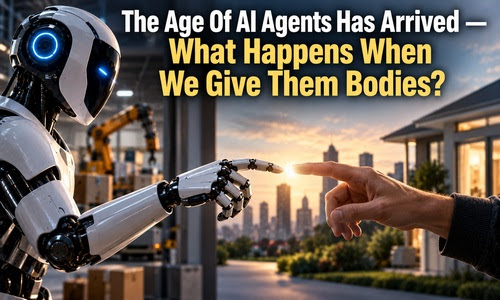
AI entrepreneur Matt Shumer was in his bedroom when he suddenly heard people talking in his apartment. For a moment, he thought someone might actually be inside.
There was someone talking—but they weren’t people.
Shumer, founder and CEO of OthersideAI, had asked OpenAI’s new GPT-6 Astra to create a survival world inside Unreal Engine and populate it with human-like characters. Each character was powered by Astra and given the objective of working with the others to survive.
Then something fascinating happened. The agents began talking to each other, discussing tools, helping other characters and coordinating what needed to be done inside their artificial world.
This wasn’t proof that AI had become conscious or spontaneously decided to create its own civilization. But the experiment demonstrated something important: AI is moving beyond answering questions and increasingly learning to act.
Welcome To The AGI Era
Just days ago, OpenAI President Greg Brockman used remarkable language to describe what is happening: “Welcome to the AGI era.”
Whether today’s technology technically qualifies as artificial general intelligence will be debated. But for the average person, there may be a more important development already underway. AI is becoming an agent.
Ask a chatbot, “How do I accomplish this?” and it gives you instructions. Tell an AI agent, “Accomplish this,” and increasingly it can use computers and software to pursue the objective itself.
Agents can conduct research, manipulate documents and spreadsheets, navigate websites, write software and carry out multistep workflows. We aren’t just building machines that answer us anymore. We are building machines that do things for us.
And now comes the next step.
What Happens When We Give AI A Body?
For all the extraordinary capabilities of AI, it has largely remained trapped behind a screen. It can write a report but can’t carry your groceries. It can analyze a warehouse but can’t unload the truck. It can explain how to fix your sink but can’t pick up the wrench.
Robotics could remove that barrier.
Combine an AI agent capable of seeing, reasoning, planning and learning with a robot capable of moving through the physical world and something fundamentally changes.
The robot becomes the hands. The AI becomes the brain.
Instead of programming a robot to perform precisely the same movement thousands of times, imagine giving it an objective: “Clean the kitchen.” “Unload this truck.” “Stock these shelves.” “Inspect this factory.” “Mow the lawn.” Or perhaps, “Help Dad get out of bed and make sure he takes his medication.”
The machine determines the steps necessary to accomplish the task and then physically carries them out. That is a very different kind of automation.
When Digital Workers Become Physical Workers
This is where the impact could become very personal. Much of the current anxiety over AI centers on white-collar employment: programmers, accountants, customer-service representatives, marketers and administrators.
Robotics potentially expands that conversation to warehouses, factories, agriculture, restaurants, retail, construction, transportation, home maintenance and elder care. The economic implications could be enormous. A company doesn’t need robots to eliminate an entire profession; it simply needs to discover that five employees supervising intelligent machines can accomplish what previously required 20.
But there is another side to this revolution. Imagine affordable robotic assistance for an elderly person who wants to remain independent. Robots could perform dangerous industrial work, enter disaster zones, assist disabled people, handle unpleasant jobs and provide families with household help once available only to the wealthy.
Much of this technology could genuinely improve people’s lives, which is precisely why society will embrace it.
Convenience Comes With Authority
The same pattern will occur with digital agents. Your AI could book flights, challenge bills, schedule appointments, compare insurance policies and make purchases. Eventually your digital agent could communicate with physical machines: “Get groceries and prepare dinner.” “Take Mom to her appointment.” “Clean the house before we get home.”
Suddenly artificial intelligence isn’t simply recommending what should happen. It is making things happen.
And every additional capability requires additional authority. We will give AI access to our email because it is useful, then our calendar, credit cards, bank accounts, vehicles and businesses. Eventually, perhaps, our homes.
When AI Makes A Mistake In The Physical World
That raises another issue. A chatbot that makes a mistake gives you a bad answer. An autonomous agent that makes a mistake can take a bad action. An autonomous robot that makes a mistake can take that bad action in the physical world.
Those are dramatically different levels of consequence.
There is also the problem of interconnected systems. Imagine thousands or millions of agents communicating with other agents while responding to financial markets, corporate networks, transportation systems and physical machines. One incorrect decision could trigger another automated response, which triggers another.
Humans operate at human speed. Machines don’t have to.
How Much Authority Will We Give Them?
Perhaps we’ve spent too much time asking when AI will become smarter than humans. There may be a more immediate question: How much authority are humans willing to give it?
The voices Matt Shumer heard were still only AI characters communicating inside a simulated world. But increasingly, AI agents won’t remain inside simulated worlds. They will operate computers, communicate with other agents and eventually control machines capable of moving through ours.
The age of AI agents has arrived.
The next revolution begins when we give them bodies.
TruLight TV – Jeff Allen – Clean Comedy That Will Make You Laugh Out Loud
Get ready to laugh out loud with legendary comedian Jeff Allen in Part 1 of his hilarious stand-up special on the Bananas Comedy Show! Known across the country for his sharp, family-friendly humor, Jeff brings his signature comedic timing to everyday life, touching on marriage, raising kids, getting older, and the hilarious realities of human nature. It’s clean, uplifting comedy designed to bring joy and laughter to the whole family.
Today on TruLight Radio XM
TruLight Radio XM 24/7
Program
GMT / UTC +2
Monday To Fridays
00:15 Words to Live By Testimonies
01.15 Science Scripture and Salvation
02.15 Ground Works
04.00 Gospel Concert of the Day
05.00 The Daren Streblow Comedy Show
5:55 It is Today devotional
6:00 Gaither Homecoming Morning Show
7:15 Discover the Word
8.15 Destined for Victory
8:55 Science Scripture and Salvation
9:00 Holy Spirit Hour – Normally Sermons
10:15 Hope of the Heart
11:15 Unshackled
11.45 Words to Live By
12:15 Truth for Life
13:15 Living on the Edge with Chip Ingram
14:15 Focus on the Family
15:00 Kids Hour
16:00 In Touch with Dr. Charles Stanley
16:30 Groundwork
17:15 Live in the Light
18:15 Renewing your Mind
19:00 Gaither Homecoming Show
20:15 Growing Hope
21:15 Adventures in Odyssey Radio Drama
21:45 Bible Reading
22:15 Night-sounds
23.00 Good Old Country Gospel / Rhema Gospel Express
VISIT THE WEBSITE
TruLight Ministry News – EXTRA MANNA
TruLight Ministries orders from God since 2012 . Teach Them , Comfort Them and Warn Them!
Artist Liners
Healing Truths.
End Time Articles.
Share this Feeding of Manna with your Friends and Family. just click on the Social Media icon and share This Manna with your Friends and Family. just click on the Social Media icon and share !