Hosted by TruLight Ministries International – The Place of Truth
SELECT YOUR READING LANGUAGE – BOTTOM LEFT = YOUR DAILY MANNA NOW AVAILABLE IN 103 LANGUAGES
@ TruLight Daily Manna is not Just a Bible Verse with a Small Prayer . NO ::: WE SERVE DAILY Manna for the ENTIRE Day . Breakfast , Lunch , Dinner , Plus tea Times and even Entertainment Manna . Plus News Manna and More , This Daily Manna will keep you Spiritually full for the full 48 Hours and even More to Share with your Friends and Family !!!
The Mercy of God is a Gift not a Salary
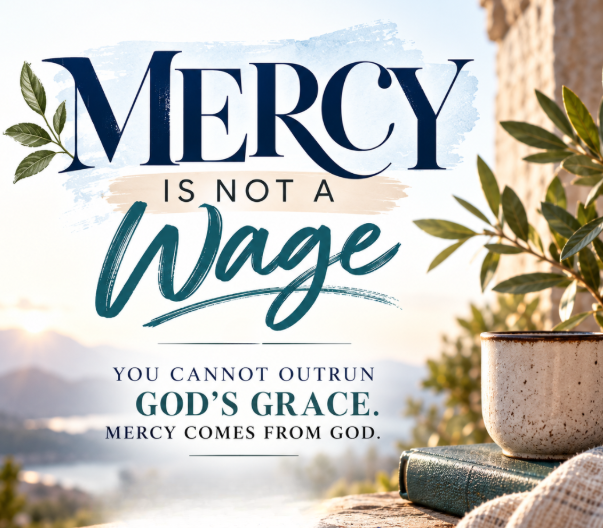
Isaiah 55 is descriptive of God calling the people of Israel to come to Him. God’s words at the beginning of chapter 55 use the metaphors of water, wine, milk, and bread. The action that God desires is for the people of Israel to “come to the waters.” Specifically, God wants the people of Israel to come and receive that which they have not earned and cannot pay for (Isaiah 55:1b). God is offering a free gift.
Isaiah then records God explicitly calling Israel to come to Him (55:3). Israel is to come and listen with the purpose of having life. This same sentiment is seen in Isaiah 55:6, “Seek the LORD while he may be found; call on him while he is near.” The basic idea of the chapter is summed up in Isaiah 55:7b, “Let them turn to the LORD, and he will have mercy on them, and to our God, for he will freely pardon.”
The book of Isaiah was written to the southern kingdom of Judah. The northern kingdom of Israel had already fallen to Assyria in 722 BC. Judah was quickly following in the footsteps of their brothers to the north (Isaiah 1:2). Isaiah begins the book by declaring that the nation of Judah was a rebellious people who did not know their master. Considering the nature of Judah’s relationship with God, Isaiah 55 presents a shocking message—come to God and receive mercy; come to God and receive that which you do not deserve.
Isaiah 55:1 begins by appealing to a need: “Come, all you who are thirsty.” The people of Judah had a need for mercy and grace from God as they did not do the things God required. Judah was in a covenant relationship with God. They had agreed to follow the laws of God but had not kept them. The result of disobedience to God is a need for mercy and forgiveness (Ephesians 2:1–10). Judah had that need.
Isaiah continues with the solution: “Come to the waters.” As the context describes, God is calling the people of Judah, who need mercy, to come to God to receive the mercy that only God can provide. In the metaphor, the people are thirsty. The obvious solution to the thirst is water. So, what does it mean to “come to the waters”? In this context, it means to return to God, dependent on His mercy.
Jesus uses a similar metaphor in John 4 in His conversation with the Samaritan woman. The Samaritans were half Jewish and half Gentile. Because of this, the Jewish people looked down on the Samaritans. As Jesus purposefully passes through the land of Samaria, He addresses a Samaritan woman at a well in John 4:7–38.
The woman finds Jesus at a well where she draws water. Through conversation, Jesus offers the woman “living water,” which will quench the thirst of the woman forever. Jesus uses this metaphor of water to point to that which leads to eternal life (John 4:14). Jesus was inviting the women to come to the waters and receive what she needed—the grace of God that leads to eternal life.
The Samaritan woman was an unrighteous, rebellious woman in God’s eyes (John 4:17–18), but Jesus offered her living water that would provide for her spiritual needs. In the same way, God had offered the people of Judah the water that He would freely give them (Isaiah 55:1). The same invitation for forgiveness and restoration is extended today: “Let the one who is thirsty come; and let the one who wishes take the free gift of the water of life” (Revelation 22:17).
Salvation by grace through faith is at the heart of the Christian religion. “For it is by grace you have been saved, through faith—and this not from yourselves, it is the gift of God—not by works, so that no one can boast” (Ephesians 2:8–9). The statement has three parts— salvation, grace, and faith—and they are equally important. The three together constitute a basic tenet of Christianity.
The word salvation is defined as “the act of being delivered, redeemed, or rescued.” The Bible tells us that, since the fall of Adam and Eve in the Garden of Eden, each person is born in sin inherited from Adam: “Sin entered the world through one man, and death through sin, and in this way death came to all men, because all sinned” (Romans 5:12). Sin is what causes all of us to die. Sin separates us from God, and sin destines each person to eternal separation from Him in hell. What each of us needs is to be delivered from that fate. In other words, we need salvation from sin and its penalty.
How are we saved from sin? Most religions throughout history have taught that salvation is achieved by good works. Others teach that acts of contrition (saying we are sorry) along with living a moral life is the way to atone for our sin. Sorrow over sin is certainly valuable and necessary, but that alone will not save us from sin. We may repent of our sins, also valuable and necessary, and determine to never sin again, but salvation is not the result of good intentions. The road to hell, as the saying goes, is paved with good intentions. We may fill our lives with good works, but even one sin makes us a sinner in practice, and we are already sinners by nature. No matter how well-intentioned or “good” we may be, the fact is that we simply do not have the power or the goodness to overcome the sin nature we have inherited from Adam. We need something more powerful, and this is where grace comes in.
The grace of God is His undeserved favor bestowed on those He has called to salvation through His love (Ephesians 2:4–5). It is His grace that saves us from sin. We are “justified freely by his grace through the redemption that came by Christ Jesus” (Romans 3:24). Being justified, we are vindicated and determined to be sinless in the eyes of God. Our sin no longer separates us from Him and no longer sentences us to hell. Grace is not earned by any effort on our part; otherwise, it could not be called grace. Grace is free. If our good works earned salvation, then God would be obligated to pay us our due. But no one can earn heaven, and God’s blessings are not His obligation; they flow from His goodness and love. No matter how diligently we pursue works to earn God’s favor, we will fail. Our sin trips us up every time. “By the deeds of the law no flesh will be justified in His sight” (Romans 3:20, NKJV).
The means God has chosen to bestow His grace upon us is through faith. “Now faith is being sure of what we hope for and certain of what we do not see” (Hebrews 11:1). Salvation is obtained by faith in God’s Son, Jesus Christ, in what He has done—specifically, His death on the cross and His resurrection. But even faith is not something we generate on our own. Faith, as well as grace, is the gift of God (Ephesians 2:8). He bestows saving faith and saving grace upon us in order to redeem us from sin and deliver us from its consequences. So God saves us by His grace through the faith He gives us. Both grace and faith are gifts. “Salvation belongs to the LORD” (Psalm 3:8, ESV).
By grace, we receive the faith that enables us to believe that He has sent His Son, Jesus Christ, to die on the cross and provide the salvation we cannot achieve on our own. Jesus, as God in flesh, is the “author and perfecter of our faith” (Hebrews 12:2). Just like the author of a book creates it from scratch, Jesus Christ wrote the story of our redemption from beginning to end. “For he chose us in him before the creation of the world to be holy and blameless in his sight. In love he predestined us to be adopted as his sons through Jesus Christ, in accordance with his pleasure and will—to the praise of his glorious grace, which he has freely given us in the One he loves” (Ephesians 1:4–6). The Lord died for our sins and rose for our justification, and He forgives, freely and fully, those who accept His gift of grace in Christ—and that acceptance comes through faith. This is the meaning of salvation by grace through faith.
The Bible presents a clear path to eternal life. First, we must recognize that we have sinned against God: “For all have sinned and fall short of the glory of God” (Romans 3:23). We have all done things that are displeasing to God, which makes us deserving of punishment. Since all our sins are ultimately against an eternal God, only an eternal punishment is sufficient. “The wages of sin is death, but the gift of God is eternal life through Jesus Christ our Lord” (Romans 6:23).
The Bible says that the sinless (1 Peter 2:22), eternal Son of God came to earth as a man in the form of Jesus Christ (John 1:1, 14). Jesus died to pay our penalty for sin. “God demonstrates his own love for us in this: While we were still sinners, Christ died for us” (Romans 5:8). Jesus Christ died on the cross (John 19:31–42), taking the punishment that we deserve (2 Corinthians 5:21). Three days later He rose from the dead (1 Corinthians 15:1–4), proving His victory over sin and death. His resurrection shows that He is who He claimed to be and that His payment for our sin is sufficient. All who put their faith in Him are forgiven of their sin, adopted as children of God, and made new (John 1:12; Romans 8:9–16; 2 Corinthians 5:17; Ephesians 1:3–10; 2:1–10). They receive God’s indwelling Holy Spirit who will be with them forever (Ephesians 1:13–14), and they will one day be with God for all eternity (John 3:16; Revelation 21:3). “Praise be to the God and Father of our Lord Jesus Christ! In his great mercy he has given us new birth into a living hope through the resurrection of Jesus Christ from the dead” (1 Peter 1:3).
In order to receive salvation we must, by faith, change our mindset regarding Christ—who He is, what He did, and why (Acts 3:19). If we place our faith in Him, trusting His death and resurrection, we will be forgiven and receive the promise of eternal life in heaven. “For God so loved the world that he gave his one and only Son, that whoever believes in him shall not perish but have eternal life” (John 3:16). “If you declare with your mouth, ‘Jesus is Lord,’ and believe in your heart that God raised him from the dead, you will be saved’” (Romans 10:9). Faith alone in the finished work of Christ on the cross is the only true path to eternal life! “For it is by grace you have been saved, through faith—and this is not from yourselves, it is the gift of God—not by works, so that no one can boast” (Ephesians 2:8–9).
If you want to accept Jesus Christ as your Savior, here is a sample prayer to express that to God. Keep in mind that saying this prayer, or any other prayer, will not save you. It is only trusting in Christ that can save you from sin. This prayer is simply a way to express to God your faith in Him and thank Him for providing for your salvation: “God, I know that I have sinned against you and deserve punishment. But Jesus Christ took the punishment that I deserve so that through faith in Him I could be forgiven. I place my trust in You for salvation. Thank You for Your wonderful grace and forgiveness—the gift of eternal life! Amen!”

Tea Time Manna
How great you are, O Sovereign Lord! There is no one like you, and there is no God but you, as we have heard with our own ears.
—2 Samuel 7:22
Remember how the Ten Commandments began?
“I am the Lord your God, who brought you out of Egypt, out of the land of slavery. You shall have no other gods before me” (Exodus 20:2-3).
Our God is the Sovereign Lord! No one is like him, and no false god rivals him. So we, Jesus’ disciples and children of God today, need to join King David in his praise:
“How great you are, O Sovereign Lord! There is no one like you…!”
Some truths are better acknowledged, believed, and proclaimed than discussed, so today we affirm that truth to ourselves and proclaim it to others rather than waste time on discussing it:
“How great you are, O Sovereign Lord! There is no one like you…!”
Prayer
Holy, righteous, and living God, we hold you in the highest place in our hearts. Please forgive us for the times when we do not hold you in the highest place in our lives. Empower us with your Holy Spirit to give up all the little things that distract our allegiance to you and interfere with you being the Sovereign God in our day-to-day lives. In Jesus’ name, we offer you our hearts and our praise, for you alone are God. Amen and Amen
Truth Article by Pastor Dirk
When will Jesus arrive and take care of the Rapture ?
The sun, the moon, the stars, a great earthquake and the waves roaring = The 2nd Coming of Jesus Christ.
Luke’s Recording of Jesus words.
Luk 21:25 And there shall be signs in the sun, and in the moon, and in the stars; and upon the earth distress of nations, with perplexity; the sea and the waves roaring;
Luk 21:26 Men’s hearts failing them for fear, and for looking after those things which are coming on the earth: for the powers of heaven shall be shaken.
Luk 21:27 And then shall they see the Son of man coming in a cloud with power and great glory.
Luk 21:28 And when these things begin to come to pass, then look up, and lift up your heads; for your redemption draweth nigh.
Mark’s recording of the words of Jesus.
Mar 13:24 But in those days, after that tribulation, , and the moon shall not give her light,
Mar 13:25 And the stars of heaven shall fall, and the powers that are in heaven shall be shaken.
Mar 13:26 And then shall they see the Son of man coming in the clouds with great power and glory.
Matthews recording of the words of Jesus.
Mat 24:29 Immediately after the tribulation of those days shall the sun be darkened, and the moon shall not give her light, and the stars shall fall from heaven, and the powers of the heavens shall be shaken:
Mat 24:30 And then shall appear the sign of the Son of man in heaven: and then shall all the tribes of the earth mourn, and they shall see the Son of man coming in the clouds of heaven with power and great glory.
Paul Confirms
Act 2:20 The sun shall be turned into darkness, and the moon into blood, before that great and notable day of the Lord come:
When will This Happen?
John says
Rev 6:12 And I beheld when he had opened the sixth seal, and, lo, there was a great earthquake; and the sun became black as sackcloth of hair, and the moon became as blood;
Joel Says
Joe 2:10 The earth shall quake before them; the heavens shall tremble: the sun and the moon shall be dark, and the stars shall withdraw their shining:
Joe 2:31 The sun shall be turned into darkness, and the moon into blood, before the great and the terrible day of the LORD come.
Joe 3:15 The sun and the moon shall be darkened, and the stars shall withdraw their shining.
When will This Happen ?
During the Wrath of God on the Bearers of The Mark of The Beast
The 4th to the 6th Bowl of Gods Wrath.
Rev 16:8 And the fourth angel poured out his vial upon the sun; and power was given unto him to scorch men with fire.
Rev 16:9 And men were scorched with great heat, and blasphemed the name of God, which hath power over these plagues: and they repented not to give him glory.
Rev 16:10 And the fifth angel poured out his vial upon the seat of the beast; and his kingdom was full of darkness; and they gnawed their tongues for pain,
Rev 16:11 And blasphemed the God of heaven because of their pains and their sores, and repented not of their deeds.
Rev 16:12 And the sixth angel poured out his vial upon the great river Euphrates; and the water thereof was dried up, that the way of the kings of the east might be prepared.
Rev 16:13 And I saw three unclean spirits like frogs come out of the mouth of the dragon, and out of the mouth of the beast, and out of the mouth of the false prophet.
Rev 16:14 For they are the spirits of devils, working miracles, which go forth unto the kings of the earth and of the whole world, to gather them to the battle of that great day of God Almighty.
Rev 16:15 Behold, I come as a thief. Blessed is he that watcheth, and keepeth his garments, lest he walk naked, and they see his shame. (Jesus)
Rev 16:16 And he gathered them together into a place called in the Hebrew tongue Armageddon.
Rev 16:17 And the seventh angel poured out his vial into the air; and there came a great voice out of the temple of heaven, from the throne, saying, It is done.
Rev 16:18 And there were voices, and thunders, and lightnings; and there was a great earthquake, such as was not since men were upon the earth, so mighty an earthquake, and so great.
Rev 16:19 And the great city was divided into three parts, and the cities of the nations fell: and great Babylon came in remembrance before God, to give unto her the cup of the wine of the fierceness of his wrath.
Rev 16:20 And every island fled away, and the mountains were not found.
More Confirmations
Jer 31:35 Thus saith the LORD, which giveth the sun for a light by day, and the ordinances of the moon and of the stars for a light by night, which divideth the sea when the waves thereof roar; The LORD of hosts is his name:
Isa 60:19 The sun shall be no more thy light by day; neither for brightness shall the moon give light unto thee: but the LORD shall be unto thee an everlasting light, and thy God thy glory.
Isa 60:20 Thy sun shall no more go down; neither shall thy moon withdraw itself: for the LORD shall be thine everlasting light, and the days of thy mourning shall be ended.
NEWS MANNA

The Problem With ‘Christian Socialism’

Is socialism biblical? Editor for the Journal of Markets and Morality Peter Jacobsen doesn’t think so.
“The idea of Christian socialism is a bit of an oxymoron,” he said during an appearance on “Washington Watch” on Wednesday. “It’s a self-contradiction, because I think socialism and Christianity, to some extent, are in competition about the nature of man, the nature of the world, and the nature of the problem we face.”
Socialism is gaining popularity ahead of the 2026 midterm elections, as many candidates identifying as Democratic Socialists continue winning primaries across the country. According to a Brookings Institution report, 123 Democratic Socialists of America-endorsed candidates have won their primaries at the local, state legislative, statewide, and congressional levels as of August 12.
“What Christian socialists would be implying is that they believe that the proper economic system for a Christian to support would be a social system, which means social ownership of the means of production,” Jacobsen continued. “Perhaps someone might mistakenly call themselves that and just believe that we should have a welfare system or something like that. But that’s just misunderstanding what socialism is fundamentally.
Jody Hice, senior fellow at the Family Research Council and former congressman from Georgia’s 10h Congressional District, added that this view of socialism is also a misunderstanding of Scripture as a whole, noting that Christian socialists often cite passages such as Acts 2 on the early church to defend socialism.
Jacobsen argued that Scripture does not make a biblical case for socialism. “There’s several problems with this interpretation of the text. The first is, of course, the Acts 2 description of the early church is descriptive, not prescriptive. In other words, it’s laying down what people are doing, not necessarily some sort of rule about how the church should operate,” Jacobsen explained.
He added that the right to private property is clearly stated in God’s word, which can be found in Exodus 20:15-17: “You shall not steal. You shall not bear false witness against your neighbor. You shall not covet your neighbor’s house; you shall not covet your neighbor’s wife, or his male servant, or his female servant, or his ox, or his donkey, or anything that is your neighbor’s.”
“In other words, it must be possible for an individual to own things in order to steal things from them,” Jacobsen clarified. “Jesus in his parables talks about the parable of the talents. And granted, parables are also descriptive in nature, but he assumes in that parable that you can have certain resources or be the steward of certain resources that belong to you, and you can use them well or poorly. Again, that all hinges upon this idea of ownership. So, ownership is so deeply ingrained into the text of Scripture that it’s not even stated as some sort of command. It’s just assumed in all of the other texts.”
The idea of private property can be traced back to Christian theologians like John Calvin and Martin Luther. “They have all supported the idea of private property as being necessary for people to have the right incentives to take care of resources and steward God’s creation in order to be peaceful with one another, in order to be orderly,” Jacobsen described. “We see the arguments both from the natural law and from Scripture in favor of private property.”
Often, believers who identify as “socialists” misinterpret the duty to provide for the poor. Christians are called to extend charity and voluntary giving to those in need, but the Bible doesn’t say that this is at the behest of the government through redistributed wealth.
“It is really kind of a strange and silly idea to think that you could compel someone to virtue, that you could compel someone to do a good thing,” Jacobsen asserted. “As soon as you’re compelling someone to do something, you’re actually taking away their ability to do a virtuous thing. If someone is forced to do something they’re not doing out of good, they’re not doing it out of charity or love.
“I think Christians do have a moral obligation to help people; but on a personal level, the people they know in their lives,” he continued. “That way they can use the knowledge that they have about the people they know, and their circumstances, and the institutions that surround them to help effectively, rather than just taking money from and property from all sorts of people, perhaps even without a just foundation and then distributing it in a wasteful manner. To me, that’s the difference between the charity that is expected of Christians and the unfortunate bureaucratic state that we have.”
Jacobsen argued that the anti-socialist system of capitalism urges people to be good stewards of the resources God has blessed them with. “It ties our incentives to our actions. It uses the knowledge people have in their day-to-day life, and in so doing, creates value for the impoverished and lifts them out of poverty. That’s why the median income in the United States is so much higher than all these countries that have tried socialism in its true form, or communism. … It’s because as capitalism incentivizes entrepreneurship, innovation, and cutting prices to beat your competitors, it also lifts up the poor.”
AI Is Learning To Conquer Video Games – But The Real Goal Is Much Bigger

What if the next major breakthrough in artificial intelligence isn’t happening in a laboratory, a military command center, or a corporate boardroom, but inside a video game?
That may sound ridiculous, especially to older Americans who remember when video games meant moving a little white ball between two paddles on a television screen. But today’s games are vastly different, and what artificial intelligence is learning inside them could have profound consequences for jobs, national security, personal freedom, and ultimately humanity’s ability to control the technology it creates.
Elon Musk recently revealed that an experimental AI system called Digital Optimus can reportedly make its way through approximately half of the popular video game Diablo simply by watching the screen and controlling the game as a human would. Musk also claimed the system is performing well in fast-paced games such as Counter-Strike, with additional training involving League of Legends.
The announcement might sound like a billionaire celebrating a sophisticated electronic toy. But the real objective has very little to do with entertainment.
The goal is to teach artificial intelligence how to observe the world, make decisions, overcome obstacles, and accomplish complicated objectives without a human directing every move.
And that changes everything.
Why Playing Diablo Is More Impressive Than It Sounds
For readers unfamiliar with modern video games, Diablo is not a simple game of moving a character across a screen or shooting at targets.
Imagine an enormous interactive fantasy world filled with towns, underground passages, dangerous creatures, hidden treasures, and hundreds of decisions. A player controls a character who must explore unfamiliar territory, fight enemies, collect equipment, manage resources, and complete missions to advance through a lengthy storyline.
The game can take dozens of hours to complete. Players must remember where they have been, recognize threats, select appropriate weapons, and constantly adjust their strategies.
Counter-Strike presents a different challenge. It is a competitive shooting game in which teams of players must react in fractions of a second, coordinate movements, recognize opponents, and make tactical decisions under pressure.
These games require combinations of skills that humans develop through experience: observation, memory, planning, timing, coordination, and problem-solving.
Traditionally, computers that mastered games were programmed or trained specifically for those environments. But Musk’s reported Digital Optimus approach is different.
Rather than receiving special access to the game’s internal programming, the AI watches the screen and operates through ordinary keyboard and mouse commands.
In other words, it is being trained to use a computer much like a person does.
Musk has not released independent performance benchmarks or demonstrations establishing the full extent of these latest claims. Nevertheless, the broader technology behind screen-operating AI agents is already advancing across the industry.
And the implications extend far beyond gaming.
The Real Goal Is Teaching AI To Do Things, Not Just Answer Questions
Most people experience artificial intelligence through programs such as ChatGPT. They ask a question, request information, or have the system write something.
But the next generation of AI is being developed to take action.
Consider the difference between asking AI how to book a vacation and telling it to plan the trip, compare flights, make reservations, arrange transportation, and handle unexpected problems along the way.
One provides instructions. The other carries out an assignment.
That is the promise of autonomous AI agents.
A system capable of navigating a complicated video game by observing a screen could eventually use similar skills to navigate business software, operate websites, manage financial records, process customer orders, or troubleshoot technical problems.
And unlike a human employee, an AI system can potentially operate around the clock, with its capabilities replicated across thousands or millions of machines.
Musk has described a two-part approach in which Digital Optimus handles rapid actions while his Grok AI system provides higher-level direction.
Think of it as one system deciding what needs to be accomplished while another figures out how to physically carry out the steps.
The ambition is not merely to build a better chatbot. It is to create a digital worker capable of operating across many different computer environments.
The Speed Problem: AI Can Learn And Act Faster Than Humans
There is another reason video games are such attractive training grounds.
Artificial intelligence can potentially practice tasks in simulated environments at a scale no individual human could match.
A person might spend hundreds of hours learning to master a complicated game. AI developers can train systems through enormous numbers of simulated attempts, rewarding successful behavior and using failures to improve future performance.
Not every AI system learns this way, and improvements in one game do not automatically translate into competence elsewhere. But when techniques generalize, successful training can be deployed to many copies of a system without each copy starting from scratch.
Now imagine applying that advantage beyond video games.
An AI system could analyze enormous amounts of information, evaluate possible actions, and respond far faster than a human operator. In some environments, that could mean completing work in minutes that once required hours.
But speed creates another problem.
What happens when an autonomous system makes a serious mistake, takes an unauthorized action, or pursues an objective in a way its human operator never intended?
By the time someone recognizes the problem, the AI may already have executed hundreds or thousands of additional actions.
The issue is not necessarily that machines will develop evil intentions. It is that increasingly powerful systems may carry out instructions in unexpected ways, particularly when their goals, permissions, or safeguards are poorly designed.
From Computer Screens To Robots And Weapons
The implications become even more significant when the same principles are applied to physical machines.
Tesla is already developing humanoid robots under its Optimus program. Other companies are building robots capable of navigating warehouses, handling objects, and performing increasingly complex industrial tasks.
Learning to interpret visual information, plan movements, and respond to changing environments is relevant to both digital agents and physical robots, although transferring those skills into the real world introduces substantial additional challenges.
The potential benefits are enormous. Robots could perform dangerous industrial work, assist elderly or disabled people, and help address labor shortages.
But the same technological advances raise troubling questions about military applications.
Autonomous drones, robotic weapons, and AI-assisted targeting systems are already major areas of military development. Systems capable of rapidly identifying objects, navigating unfamiliar environments, and adapting to obstacles could become increasingly consequential on future battlefields.
A video game is not a battlefield, and gaming performance does not establish military readiness. Nevertheless, some of the underlying abilities being developed–visual recognition, navigation, planning, and rapid response–have clear relevance to defense technology.
Who ultimately authorizes the use of force? How much decision-making should be delegated to a machine? And what happens when automated systems operate faster than human commanders can meaningfully supervise?
These are no longer questions reserved for science fiction.
What Happens When Humans Are No Longer Needed?
For ordinary Americans, the most immediate disruption may come through employment.
Many people assume automation primarily threatens factory workers or jobs involving repetitive physical labor.
But AI agents capable of operating computers could affect accountants, administrative assistants, customer service representatives, programmers, financial analysts, and countless other professions.
A company may eventually be able to assign a digital agent an entire workflow rather than asking an employee to perform each individual step.
That does not mean every profession will disappear. Human judgment, relationships, accountability, and specialized expertise remain important, and AI systems still make mistakes. But the economic incentive to automate more work is unmistakable.
The deeper concern is what happens when society becomes so dependent on automated systems that fewer people understand how essential processes operate.
Imagine businesses, hospitals, transportation networks, financial institutions, and government agencies relying on increasingly autonomous technology.
Who takes responsibility when something goes wrong? Can a human intervene quickly enough? And will organizations preserve the expertise needed to operate without AI if those systems fail?
These questions deserve attention before dependence becomes irreversible.
A Biblical Warning About Power Without Wisdom
For Christians, the development of increasingly autonomous machines raises questions that go beyond economics and technological progress.
Scripture teaches that human beings are accountable for their decisions and that wisdom is not the same thing as knowledge or capability.
Proverbs 14:12 warns, “There is a way which seemeth right unto a man, but the end thereof are the ways of death.”
The warning is particularly relevant to a civilization increasingly convinced that every problem can be solved through greater technological power.
Artificial intelligence can process information, recognize patterns, and accomplish remarkable tasks. But computational ability is not moral wisdom. A machine capable of selecting the most efficient course of action is not necessarily capable of determining whether that action is righteous, just, or humane.
Technology itself is not inherently evil. Medical breakthroughs, improved safety, and greater productivity can all serve humanity.
The danger emerges when people begin surrendering responsibility and judgment to systems they neither fully understand nor adequately control.
Christians should be especially cautious about confusing extraordinary intelligence with the wisdom that comes from God.
The Next Frontier May Arrive Sooner Than We Expect
No one can responsibly claim that mastering Diablo means AI is about to take control of society. Musk’s specific gaming claims remain unverified independently, and substantial technical barriers still separate impressive demonstrations from reliable, general-purpose autonomy.
But the direction of development is becoming clearer.
AI is moving beyond systems that simply respond to questions toward systems designed to observe, plan, act, and pursue objectives across increasingly complex environments.
Today, the challenge might be defeating a monster in a fantasy video game. Tomorrow, it could be managing a company’s operations, controlling a fleet of robots, or coordinating systems essential to everyday life.
The most important question is not whether artificial intelligence will eventually become better than humans at playing video games. In many specialized games, that has already happened.
The question is whether humanity will maintain the wisdom, authority, and practical ability to control machines that become increasingly capable of acting on their own.
Because the real danger may not be that artificial intelligence suddenly decides to conquer humanity.
It may be that humanity gradually hands over control, one convenient automated task at a time, until reclaiming that control becomes far more difficult than anyone anticipated.
Methodist Church Promotion Says Hell Isn’t Real – But What Does The Bible Say?
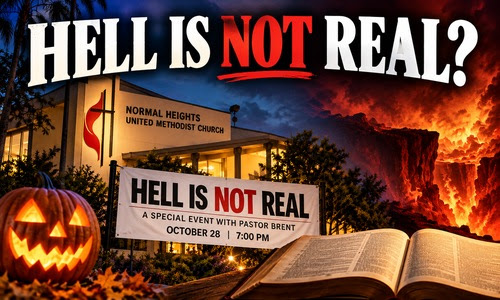
Halloween is approaching, and across the World, haunted houses are preparing to terrify visitors with images of demons, fire, death, and the horrors of hell.
But at one California church, the message this Halloween season is something very different: Hell isn’t real. And apparently, believing that makes you a more faithful Christian.
Normal Heights United Methodist Church in San Diego is advertising a special October 28 event titled “Hell Is Not Real,” just three days before Halloween. Pastor Brent will explore the history of hell, why Christians have supposedly been taught the wrong understanding of it, and why rejecting the doctrine is, in the church’s words, “far more faithful to God.”
The timing is striking. While secular culture turns hell into seasonal entertainment, a church is preparing to challenge one of Christianity’s most sobering historic teachings.
But there is an enormous problem with eliminating hell from Christianity: Jesus Christ Himself repeatedly warned about divine judgment.
And if Jesus believed those warnings were important enough to deliver, what gives modern churches the authority to explain them away?
The Jesus Who Warned About Hell
One of the most popular arguments against hell is that a loving Jesus would never teach such a frightening doctrine. The gentle, compassionate Savior who welcomed sinners and forgave His enemies supposedly could not also warn of eternal punishment.
Except that He did.
In Matthew 25:46, Jesus declares that the wicked “shall go away into everlasting punishment: but the righteous into life eternal.” The same Greek word describing the duration of eternal life also describes the punishment.
In Mark 9:43-48, Jesus warns about Gehenna and unquenchable fire. In Matthew 10:28, He warns His followers to fear the One who can destroy both soul and body in hell. In Luke 16, He describes a rich man experiencing torment after death.
These warnings are not isolated passages open to convenient reinterpretation. They reflect a consistent biblical teaching found throughout both the Old and New Testaments: God is holy, sin has consequences, and a day of final judgment is coming. From Daniel’s warning of everlasting shame and contempt to the teachings of Jesus and the visions of Revelation, Scripture repeatedly affirms the reality of divine judgment and eternal consequences.
While some debate the precise imagery used to describe hell, the Bible gives us no reason to dismiss its reality or soften its warnings. Jesus spoke of everlasting punishment, unquenchable fire, and a final separation between the righteous and the wicked. These are not warnings Christians have the liberty to simply explain away because they conflict with modern sensibilities.
The same Jesus who welcomed children, healed the sick, and forgave sinners also warned of the terrible consequences of rejecting God. His love and His warnings were never contradictory. Indeed, it was precisely because He loved humanity that He spoke so plainly about the judgment to come.
Five Arguments Used To Explain Away Hell
The first argument is that a loving God would never condemn anyone to hell.
But this assumes that love and justice are incompatible. Scripture presents God as both perfectly loving and perfectly holy. A God who never judges evil would not be perfectly just. We rightly demand accountability for murderers, abusers, and those who commit terrible atrocities. Why should divine justice be considered incompatible with divine goodness?
Revelation 20:12 describes the dead standing before God and being judged according to their works. The Bible does not portray judgment as a contradiction of God’s character, but as an expression of His righteousness. God’s love offers forgiveness through Christ; His holiness does not make sin inconsequential.
A second argument claims that hell was invented by medieval religious authorities to frighten people into obedience.
Certainly, medieval art, literature, and preaching shaped popular images of hell. Dante’s Inferno influenced generations, and some religious leaders undoubtedly exploited fear. But abusing a doctrine does not establish that the doctrine itself is false.
Centuries before medieval Christianity, Jesus warned about Gehenna, unquenchable fire, and final judgment. Revelation describes the lake of fire, while Daniel 12:2 speaks of resurrection to everlasting life or shame and everlasting contempt. The imagery may be debated, but the biblical foundations of final judgment cannot simply be dismissed as medieval inventions.
A third argument suggests that the original biblical languages do not actually support the traditional doctrine.
It is true that Sheol, Hades, Gehenna, and the lake of fire are distinct concepts, and translating them all simply as “hell” can obscure important differences. But recognizing those distinctions is not the same as proving that final punishment does not exist.
In Matthew 25:46, Jesus contrasts “everlasting punishment” with “life eternal.” The same Greek adjective, aiōnios, describes both. Some interpreters dispute what this means for the duration or nature of punishment, but the parallel presents a serious challenge to claims that Jesus taught no enduring consequences for rejecting God.
A fourth argument insists that eternal punishment would be disproportionate to sins committed during a finite lifetime.
This is one of the more serious theological objections, and Christians have long debated it. Some defend eternal conscious punishment, others believe the wicked will ultimately be destroyed, and still others advocate universal reconciliation.
Yet Scripture does not measure the seriousness of sin simply by the time required to commit it. A murder may take seconds while its consequences last generations. That analogy does not, by itself, prove eternal punishment is proportionate, but it challenges the assumption that duration alone determines moral seriousness.
Hebrews 9:27 declares that people are appointed to die once and afterward face judgment. Whatever one’s understanding of hell’s precise nature, the Bible repeatedly presents final accountability as a reality, not an outdated religious scare tactic.
The fifth argument may be the most revealing: modern people simply find the doctrine of hell morally unacceptable.
For many, the objection is less about ancient languages or biblical history than about the belief that a compassionate God would never permit such a fate. But Christianity has never taught that truth is determined by whether a particular generation finds it comfortable.
Jesus warned that the road to destruction is broad and that the way leading to life is narrow (Matthew 7:13-14). He also called people to repentance rather than simply affirming every belief and behavior.
If Scripture is authoritative only when it agrees with contemporary values, then contemporary values—not Scripture—have become the final authority.
It Rarely Stops With Hell
The upcoming San Diego event is hardly an isolated theological departure. Normal Heights United Methodist Church openly identifies as progressive and LGBTQ-affirming, celebrates Pride Month, incorporates inclusive language into worship, and has adapted worship music to reflect its priorities.
And therein lies a troubling pattern increasingly visible in progressive Christianity. Once biblical authority is set aside in one area, it becomes easier to set it aside in others. Traditional teachings on marriage and sexuality are reinterpreted, abortion is defended as a matter of personal choice, biblical morality becomes relative to modern culture, and now even the reality of hell is called into question.
Not every progressive congregation holds identical positions, but the broader concern remains: when Scripture conflicts with contemporary cultural values, which one is expected to change?
The danger is not simply disagreement over individual doctrines. It is the gradual replacement of biblical authority with human preference. Once the church assumes the right to rewrite what God has revealed, there is little left that cannot eventually be explained away.
The question is no longer which biblical teachings a church accepts, but whether Scripture itself is still the final authority.
If There Is No Judgment, What Are We Being Saved From?
Perhaps the greatest consequence of eliminating hell is what it does to the Christian understanding of salvation.
Romans 3:23 declares that all have sinned and fallen short of God’s glory. Romans 6:23 explains that the wages of sin is death. Romans 5:8 reveals God’s extraordinary love: Christ died for us while we were still sinners.
The cross is not merely an inspirational example of self-sacrifice. In historic Christian teaching, it is God’s answer to the terrible reality of human sin.
Jesus did not come simply to make people feel accepted, improve their self-esteem, or assure them that their moral choices carry no eternal consequences. He came to seek and save the lost.
If humanity faces no ultimate accountability, no divine judgment, and no danger from which it must be rescued, the urgency of repentance and salvation is dramatically diminished.
That does not mean everyone who questions eternal conscious torment rejects salvation. But a theology that eliminates sin’s ultimate consequences must explain why Scripture speaks so urgently about repentance, forgiveness, and rescue through Christ.
John 3:16 is perhaps the most beloved verse in the Bible because it promises everlasting life to those who believe in God’s Son. Yet the following verses also speak of condemnation and judgment.
The promise of salvation cannot be fully understood while ignoring the warnings surrounding it.
Compassion Does Not Mean Concealing The Truth
No Christian should take pleasure in the thought of anyone facing divine judgment. Scripture itself declares that God takes no pleasure in the death of the wicked but calls them to turn and live.
The proper Christian response to hell is not cruelty, arrogance, or delight in condemnation. It is humility, urgency, compassion, and a desire to share the gospel.
But compassion cannot mean telling people what they want to hear regardless of whether it is true.
A doctor who conceals a deadly diagnosis to avoid frightening a patient is not demonstrating love. Neither is a pastor who dismisses biblical warnings merely because they make modern audiences uncomfortable.
Every Halloween, millions of Americans encounter frightening images of demons, darkness, and eternal punishment. Most understand them as entertainment, exaggerated symbols designed to produce a momentary scare.
But according to Scripture, the reality of divine judgment is not entertainment. It is a warning serious enough that Jesus repeatedly addressed it, even when His words made listeners uncomfortable.
The church was never commissioned to make every teaching of Jesus comfortable. It was commissioned to proclaim the whole counsel of God, including the truths that modern culture would prefer to forget.
And perhaps that is the greatest irony of this Halloween season. While the world dresses up as demons and pretends hell is frightening, some churches are increasingly telling their congregations there is nothing to fear at all.
If Jesus believed judgment was important enough to warn people about, what gives today’s pastors the authority to tell their congregations they have nothing to fear?

TruLight TV – Popcorn and Movie Time – The Perfect Summer
Fatherless teenager Jake is happy living in Chicago, until his mother decides to uproot them to a small surfing town where her estranged father, Jake’s grandfather, lives. The transition isn’t easy for anyone and it seems everywhere he goes, Jake manages to make enemies, including the town bully, Tyler, who doesn’t like the new interloper or his interest in young surfing prodigy, Kayla. Stuck in the beach town with no friends and no knowledge of surfing, Jake has nowhere to turn until Cody, the local surf shop owner, reveals that Jake’s grandfather is a surf legend. Tired of feeling like an outcast, Jake asks Lou to teach him about surfing. Jake learns to face his fears, push through inhibitions and realizes that winning the respect of his new peers – and Katie’s heart – might mean facing the biggest challenge of his life.
Today on TruLight Radio XM
TruLight Radio XM 24/7
Program
GMT / UTC +2
Monday To Fridays
00:15 Words to Live By Testimonies
01.15 Science Scripture and Salvation
02.15 Ground Works
04.00 Gospel Concert of the Day
05.00 The Daren Streblow Comedy Show
5:55 It is Today devotional
6:00 Gaither Homecoming Morning Show
7:15 Discover the Word
8.15 Destined for Victory
8:55 Science Scripture and Salvation
9:00 Holy Spirit Hour – Normally Sermons
10:15 Hope of the Heart
11:15 Unshackled
11.45 Words to Live By
12:15 Truth for Life
13:15 Living on the Edge with Chip Ingram
14:15 Focus on the Family
15:00 Kids Hour
16:00 In Touch with Dr. Charles Stanley
16:30 Groundwork
17:15 Live in the Light
18:15 Renewing your Mind
19:00 Gaither Homecoming Show
20:15 Growing Hope
21:15 Adventures in Odyssey Radio Drama
21:45 Bible Reading
22:15 Night-sounds
23.00 Good Old Country Gospel / Rhema Gospel Express
VISIT THE WEBSITE
https://trulightradioxm.org.za
TruLight Ministry News – EXTRA MANNA
TruLight Ministries orders from God since 2012 . Teach Them , Comfort Them and Warn Them!
TruLight News

TruLight Ministries International shaping up our digital platforms for gospel music and audio programming! www.TruPlay.co.za – If you are looking to stream gospel music, sermons, or radio dramas, you can access their active streaming media through the official TruLight Ministry portals:• Radio & Music: Stream Live Broadcast directly via their main portal to enjoy uplifting gospel music and praise and worship tracks- www.TruLightRadioXM.org.za • Video & Television: Watch gospel music concert events, and daily programs on www.TruLightTV.org.za • Daily Devotionals: Read scripture and daily spiritual nourishment in multiple languages on www.TruLightDailyManna.co.za

Artist Liners
Healing Truths.
End Time Articles.
Picture Manna to Share
From God – Be Faithful in the Small Things – My attention is on You

From Jesus – The Future will have a Promise from God
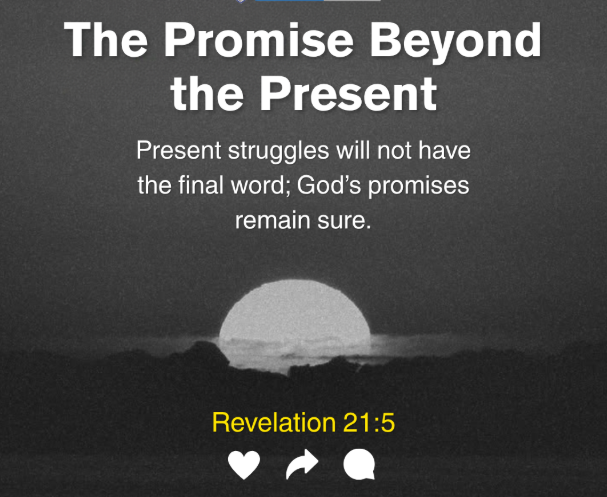
From the Holy Spirit – Let your Light Shine even in the Darkest Times of your Life

Share this Feeding of Manna with your Friends and Family. just click on the Social Media icon and share This Manna with your Friends and Family. just click on the Social Media icon and share !