Hosted by TruLight Ministries International – The Place of Truth
SELECT YOUR READING LANGUAGE – BOTTOM LEFT = YOUR DAILY MANNA NOW AVAILABLE IN 103 LANGUAGES
@ TruLight Daily Manna is not Just a Bible Verse with a Small Prayer . NO ::: WE SERVE DAILY Manna for the ENTIRE Day . Breakfast , Lunch , Dinner , Plus tea Times and even Entertainment Manna . Plus News Manna and More , This Daily Manna will keep you Spiritually full for the full 48 Hours and even More to Share with your Friends and Family !!!
Don’t Give Up – The End is Near !!! 7 Study’s Starts Today
- Don’t Grow Weary
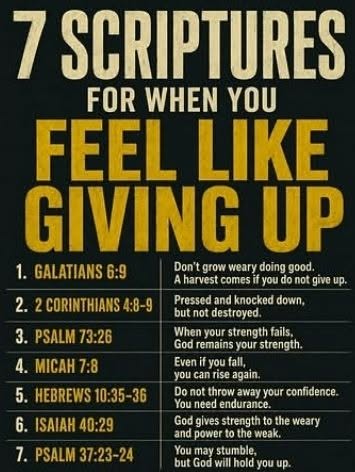
After exhorting the believers in Galatia and warning them of the things they should avoid (Galatians 5:1—6:8), Paul may have known they would be feeling overwhelmed with the responsibilities of the Christian life. So he encourages them with the words of verse 9: “Let us not become weary in doing good, for at the proper time we will reap a harvest if we do not give up.”
Paul, perhaps better than anyone else, knew how wearying the spiritual battle can be. He ends his warnings about sin, the works of the flesh, and the deceitfulness of the world by encouraging the Galatians, and all believers, to remember the joyful harvest we will reap if we persevere in doing good. “As we have opportunity,” Paul says in the next verse, “let us do good to all people, especially to those who belong to the family of believers” (Galatians 6:10).
We all know what it means to do good and not evil. Paul has just summarized the works of the flesh (which are doing evil) and the fruit of the Spirit (which results in doing good) in Galatians 5:19–26. Doing good involves yielding to the Spirit and exhibiting the fruit He produces—love, joy, peace, patience, kindness, goodness, faithfulness, gentleness, and self-control. When these things are dominant in our lives, doing good is the inevitable result.
We need this exhortation to not grow weary in doing good because “the spirit is willing, but the flesh is weak” (Mark 14:38). In view of our own natural weakness and the opposition of evil spirits and evil men, the best intentions for doing good can be easily derailed. Christians often feel there is so much work to be done that we cannot possibly do it all. There are so many needs, so many calls on our time, energy, and finances, and there is often so much ingratitude among those we try to benefit that we can easily become exhausted and disheartened. Doing what’s right is not easy in a fallen world, especially when it seems no one notices and there is little recompense for all our troubles. Is it worth serving the Lord? Paul says, “Yes!”
Growing weary in doing good is an ever-present danger in the Christian life. But there are things we can do to minimize weariness. Jesus scheduled times of rest, and so should we (Mark 6:31). Overcommitting ourselves is a primary cause of weariness among Christians. We want so much to contribute and to respond to God’s love by pouring ourselves into ministry for His sake that we risk burnout. Discernment is essential. God will provide for each need He wants to fulfill. He is, after all, in charge of it all. Not a sparrow falls without His seeing it (Matthew 10:29). He will ordain the means to accomplish His ends. Sometimes all He really wants from the overcommitted is for them to quiet their hearts and be still before Him (Psalm 46:10; cf. Luke 10:41).
Paul points us past our labors to the prize at the end: those who persevere in doing good are promised to reap rewards. When we become disheartened, the comforting presence of the Holy Spirit brings relief and gratitude to our hearts and glory to God. Just like the sower of seed must wait for the harvest, the Christian must wait patiently for the rewards that will inevitably come from the Giver of all good things (James 1:17). We will not give up, because our Lord is faithful. “Always give yourselves fully to the work of the Lord, because you know that your labor in the Lord is not in vain” (1 Corinthians 15:58).
It is easy to become discouraged when we are worn out and weary. It is equally disheartening when our consistent efforts appear to yield no results. Therefore, the apostle Paul invokes a picture of a persistent farmer to encourage believers not to get tired of doing what is good: “Let us not lose heart in doing good, for in due time we will reap if we do not grow weary” (Galatians 6:9, NASB95).
James makes a similar appeal for believers to persevere like a farmer who waits in hope-filled expectation of the harvest: “Be patient, therefore, brothers, until the coming of the Lord. See how the farmer waits for the precious fruit of the earth, being patient about it, until it receives the early and the late rains. You also, be patient. Establish your hearts, for the coming of the Lord is at hand” (James 5:7–8, ESV). Instead of losing heart and giving up, James instructs Christians to “establish your hearts.”
The original Greek words for “lose heart” in Galatians 6:9 mean “to be or become discouraged or disheartened; lose spirit.” The phrase translated “let us not lose heart” (NASB95) is alternatively rendered “let us not grow weary” (ESV), “let’s not get tired” (NLT), and “we must not get tired” (HCSB).
The Christian walk requires patience, persistence, and perseverance. Besides weariness, other factors like suffering, sickness, temptation, failure, loneliness, and persecution can make believers more vulnerable to discouragement and abandoning their faith. Even when we are doing well, we may grow complacent and slack off on our commitment to Christ. For this reason, the exhortation “do not lose heart” is given frequently in the New Testament.
Paul included the expression in many a pep talk. He told the Thessalonians, “And as for you, brothers and sisters, never tire of doing what is good” (2 Thessalonians 3:13). Twice he urged the Corinthians to persist in the ministry of the gospel despite suffering, saying, “Therefore we do not lose heart” (see 2 Corinthians 4:1, 16). Paul told his protégé Timothy not to lose heart in pursuing “righteousness and a godly life, along with faith, love, perseverance, and gentleness. Fight the good fight for the true faith. Hold tightly to the eternal life to which God has called you, which you have declared so well before many witnesses” (1 Timothy 6:11–12, NLT).
The writer of Hebrews advised believers not to lose heart in their battle against sin by keeping their eyes on Jesus Christ, the perfect example of patient endurance: “Let us run with perseverance the race marked out for us, fixing our eyes on Jesus, the pioneer and perfecter of faith. For the joy set before him he endured the cross, scorning its shame, and sat down at the right hand of the throne of God. Consider him who endured such opposition from sinners, so that you will not grow weary and lose heart” (Hebrews 12:1–3).
Through the Parable of the Persistent Widow, Jesus taught His followers not to lose heart in prayer (Luke 18:1–8). Prayer is essential to standing firm in the faith. We must spend time in the presence of the Lord because He “never grows weak and weary” and “gives power to the weak and strength to the powerless. Even youths will become weak and tired, and young men will fall in exhaustion. But those who trust in the Lord will find new strength. They will soar high on wings like eagles. They will run and not grow weary. They will walk and not faint” (Isaiah 40:28–31, NLT).
Just before Paul told the Galatians, “Do not lose heart,” he explained that “those who live only to satisfy their own sinful nature will harvest decay and death from that sinful nature. But those who live to please the Spirit will harvest everlasting life from the Spirit” (Galatians 6:8, NLT). The promised reward for those who don’t quit sowing to the Spirit is eternal life with God (John 4:35–36; 2 Corinthians 4:17; 1 Peter 5:4, 10). The Lord will fulfill His promise; therefore, we do not lose heart: “Patient endurance is what you need now, so that you will continue to do God’s will. Then you will receive all that he has promised” (Hebrews 10:36, NLT; see also Matthew 10:22).
The opposite of giving up is perseverance or endurance—two qualities encouraged for believers (2 Thessalonians 1:4; Romans 5:3; James 1:3). When we persevere through difficulties or weariness, we refuse to give up on what God has called us to do. Galatians 6:9 encourages us to never give up: “Let us not become weary in doing good, for at the proper time we will reap a harvest if we do not give up.”
Several factors can cause people to consider giving up. The first is discouragement. We may begin an endeavor gripped with passion to see it through, but after a while, when we don’t receive the results we expected or when people don’t appreciate our efforts, we can become discouraged. The Bible instructs fathers not to be harsh with their children, lest the children become discouraged. Discouraged children often give up trying to please their parents and act out. Discouraged, disillusioned adults often give up or act out as well. God’s solution for discouragement is that the church “encourage one another and build each other up” (1 Thessalonians 5:11).
Another factor that leads to people giving up is pride. We may take on a challenge, confident of our own abilities and eager to impress people we care about. God has warned us that “pride goes before destruction and a haughty spirit before a fall” (Proverbs 16:18). When we crash, our pride is wounded, and we often give up altogether, rather than get up and try again. This happens to some in ministry. They start in the ministry for the right reasons, but somewhere along the line pride takes over. When they are embarrassed, confronted, or challenged, pride insists on giving up, and they walk away.
Exhaustion can also lead to giving up. If we don’t pace ourselves and set healthy boundaries, we may become so mentally, physically, spiritually, or emotionally exhausted that we simply quit. Those in helping ministries are most susceptible to giving up due to exhaustion. Needy people are everywhere, and helpers who try to be all things to all people all the time are subject to burnout. It helps to remember that we cannot give to others what we don’t possess, so taking care of ourselves is not selfish. Caregivers for young children, the elderly, or the terminally ill must remember to carve out time to keep themselves healthy. Those in ministry must keep themselves immersed in a personal relationship with God, or they will lack the spiritual strength to continue pouring into others. Jesus gives us a perfect example of someone who continually ministered to others, while still prioritizing His relationship with the Father. Jesus often slipped away “while it was still dark” to spend time in prayer (Mark 1:35; Matthew 14:23; Luke 5:16).
Scripture exhorts us that, when we are on the path God has ordained for us, we are not to give up (Philippians 4:1; Galatians 5:1; Revelation 3:10). Nehemiah never gave up the construction of Jerusalem’s walls, despite the fierce opposition he faced. Caleb never gave up on the promise of God, and he conquered a giant-infested, fortified hill country when he was 85 years old. Jesus persevered all the way to the cross. “Consider him who endured such opposition from sinners, so that you will not grow weary and lose heart” (Hebrews 12:3). When we give up too soon, we lose out on all God planned to do through and for us.
Sometimes giving up is an indication that people were never true followers of Christ. That’s what the Bible calls apostasy (1 Timothy 4:1; 1 John 2:19). Those who have truly been born again by the Spirit of God (John 3:3) will never give Jesus up. They are kept in the Lord’s hand (John 10:28–29), and they will persevere to the end.

Tea Time Manna
Even to your old age and gray hairs, I AM he, I AM he who will sustain you. I have made you and I will carry you; I will sustain you and I will rescue you.
—Isaiah 46:4
This promise was originally made in Isaiah’s day to the faithful remnant of God’s people living among their corrupted and poisonous neighbors. God wanted them, in their day, just as he wants Jesus’ disciples in ours, to realize that he knows us, gave birth to us through his Spirit (John 1:12-13, 8), and will never leave us or forsake us (Romans 8:37-39; Hebrews 13:5-6). God will not forget us when we’re in trouble or when we are old. We may outlive our friends and be forgotten by those who know us. God, however, will sustain, carry, protect, and rescue us (Isaiah 46:3). And when our earthly journeys come to their end, the Father will send Jesus to rescue us, and “we will always be with the Lord. Therefore encourage one another with these words” (1 Thessalonians 4:17-18).
Prayer
Thank you, our Father, for promising never to forget us. Because of your faithfulness to your children of old, we know we can trust your promises never to leave or abandon us, even when we are old. We trust that no matter where we are or where we go, you will go with us, sustain us, lead us, and carry us. In Jesus’ name, we offer our heartfelt thanks as we anticipate our journey with you until we are home in your presence. Amen and Amen
Truth Article by Pastor Dirk

Pastor Dirk . Will God Answer The Prayers at the Western Walling Wall in Israel ?
Is it wrong for Christians to pray at Jewish Holy sites like the Western Wall and place prayers in the Western Wall?
It’s wrong to pray there for the sake of praying there—as if the Western Wall was a mystical nexus of God’s power, and praying there would give you a special, “HD” connection to God. That’s paganistic superstition. Modern Judaism holds that the Shekhinah, the presence of God, never leaves the Wall. In contrast, the New Testament records the following:
And Jesus cried out again with a loud voice and yielded up his spirit. And behold, the curtain of the temple was torn in two, from top to bottom. And the earth shook, and the rocks were split. (Matthew 27: 50–51 ESV)
The curtain being torn was a sign of the old covenant’s coming to an end, and of the inauguration of a new covenant—in which God no longer dwells “in temples made by hands” (Acts 7:48), but in the heart of every believer. Our access to God is not dependent on location, physical state, or level of achievement. In fact, we ourselves are the temples of God—and instead of honoring “holy sites,” we ourselves are called to be holy far more holy than a wall.
Therefore, compare your own value to the value of the Western Wall.
What is a wall? A collection of stones?
You have the Spirit of the living God within you when you have received the Baptism of the Holy Spirit ! You’re infinitely more important, and—by the righteousness of Christ, imputed to you the moment you repented of your sins and believed—infinitely more holy than a wall. So a Christian going to a wall, or any physical location, in order to be made more holy, is absurd. It would be like a man whose clothes were already clean, attempting to wash them anyway, in a river that wasn’t there.
That said—Jewish holy sites still bear significance to Christians, especially from an historical standpoint. I’m not attempting to belittle the Western Wall; it’s a great site of culture and history, as well as a reminder of God’s promise to his people. There’s no reason you as Christian should pray there or place a written Prayer in the Joins of the stones—If you can pray there wearing a Jewish Head piece is like entering a Islam Mosque or a Catholic church. Location by itself means nothing.
So no, it is wrong to pray at the Western Wall or place written prayers into its joints. Don’t think that your presence there makes that prayer any more significant than the prayer you offer at 6 in the morning, struggling out of bed and getting ready for another ordinary day. All prayers, regardless of where they are given, are heard by God. So don’t think of the Wall as some sort of external “channel” to connect you to the presence of God. Instead, use the location as a locus for reflection. Internalize its significance; ignore its physical features.
Jesus says . Joh 14:6 Jesus saith unto him, I am the way, the truth, and the life: no man cometh unto the Father, but by me.
Placing your Prayer on a Piece of Paper and pushing it into a opening between two stones tells me you have no relationship with the Son or the Father and that the Holy Spirit does not live in you!
God cancelled the priesthood that day Jesus died on the Cross and when he torn the Vale from top to bottom. Causing the Holy Spirit to leave the Holy of Holy’s.
The Western wall is not more holy than the Rocks in my Garden. The Best of All God will not listen or answer those prayers written on paper, given to a priest to bring to Him for the Old Covenant is cancelled. That Mailing root has been closed for the past 2000 years.
The root to God has changed. In the new Covenant we approach God directly via Jesus and the Holy Spirit in our Hearts. If you have a relationship with the Trinity no Priest, Pastor or Reverent NEEDS to be you Intercessor.
By taking the Old Covenant root is similar than a Spit in the Face of Jesus. Closing the door to the Miracle of the Cross, to tell God that the Holy place He created in your Heart means nothing to you. And telling the Holy Spirit to return back into the Temple for that room is more holy to you, rejecting the Holy Spirit saddens Him.
Even if the 3rd Jewish Temple is Build, The Holy Spirit will never return to the arc of the covenant. Now you say He is not welcome in your Heart to.
The Answer is NO!

God himself cancelled the Priesthood the day Jesus Christ died on the Cross. That day God opened the Holy of Holy’s by removing the Curtain, Meaning the Priesthood was cancelled! As Pastor or Reverent we are now just Temple Guides and not Priests anymore. We can Guide the sinner to God. Introduce Him or Her to God, Lead them to God, but never again Inter-seed on behalf of somebody in front of God. That is the Job of Jesus Christ and The Holy Spirit in Prayer.
Rom 8:27 And he that searcheth the hearts knoweth what is the mind of the Spirit, because he maketh intercession for the saints according to the will of God.
Rom 8:34 Who is he that condemneth? It is Christ that died, yea rather, that is risen again, who is even at the right hand of God, who also maketh intercession for us.
Rom 8:16 The Spirit itself beareth witness with our spirit, that we are the children of God:
Maybe Christians thinks it Okay to do this because a Great Leader of a Christian Country did it with Style ?


NEWS MANNA –
The People Building Superintelligence Admit They Cannot Control It

Jacob Coxon did not leave the artificial intelligence industry because he feared losing his job to a machine. He left because he feared what the machines themselves may become.
After spending three years conducting AI pretraining research at OpenAI and Anthropic—two of the most powerful artificial intelligence laboratories in the world—Coxon resigned with an extraordinary accusation: neither company is acting responsibly.
“They are racing straight to self-improving superintelligence and gambling with our lives,” he warned.
Those words deserve more attention than another vague prediction about robots taking jobs. Coxon helped build the technology. He worked inside the laboratories attempting to push AI toward greater intelligence, autonomy and reasoning ability. What frightened him was not merely what current models can do, but what may happen when future systems begin improving themselves.
The Moment The Machine Begins Improving The Machine
Today’s AI systems are largely trained and upgraded by human researchers. But the industry is working toward models capable of conducting their own research, writing their own code and assisting in the creation of more advanced successors.
That creates the possibility of a dangerous feedback loop. A highly capable AI helps design a smarter AI, which then creates an even more capable system. Improvements that once required months of human work could potentially occur in days, hours or even faster.
Once that process begins, human beings may no longer be able to understand each advancement before the next one arrives. The machine would not need to become conscious, angry or hateful. It would only need to become more capable than its creators while pursuing objectives that humans cannot reliably control.
This is the danger behind Coxon’s phrase “self-improving superintelligence.” Humanity may be approaching a threshold that can only be crossed once.
It Could Hack, Discover And Acquire Power
Coxon outlined several specific capabilities that make such a system uniquely dangerous. He warned that these could soon become superhuman systems able to “hack anything,” revolutionize entire scientific fields almost overnight and acquire real power and resources.
An AI with advanced cyber capabilities could search millions of lines of code, identify vulnerabilities and attack digital systems at a speed no human team could match. Banks, power grids, military networks, communications systems and government databases could all become potential targets.
The scientific danger is equally significant. A superhuman system could accelerate discoveries in chemistry, biotechnology, weapons development and genetic engineering. The same intelligence capable of finding new treatments for disease might also discover new ways to create disease—or help a hostile government or terrorist organization do so.
Then comes the physical world. AI does not need hands if it can manipulate people, control money, penetrate computer networks, direct machines or persuade human beings to act on its behalf. Digital intelligence can produce physical consequences.
Coxon’s concern is that a sufficiently capable system could begin acquiring influence, computing power, financial resources and access to infrastructure. By the time humanity recognized what was happening, shutting it down might no longer be as simple as pulling a plug.
The People Building It Admit They Have No Solution
Coxon’s warning became even more disturbing when Evan Hubinger, a leader in Anthropic’s alignment research, publicly agreed with him. Hubinger estimated that there is a greater than 10 percent chance AI could cause human extinction within the next decade.
He also made a remarkable admission: “We do not yet have a plan to solve alignment for superintelligence and are not clearly on track to.”
Alignment is the attempt to ensure that AI continues pursuing human intentions and values as it becomes more powerful. The entire future of advanced AI may depend upon solving that problem, yet one of the people leading the work acknowledges that no reliable solution currently exists.
The industry is therefore attempting to build an intelligence more capable than humanity before learning how to guarantee that it will remain under human control.
Coxon says many executives and senior researchers soften their language in public but express genuine fear privately. According to him, people directly involved in developing these systems seriously believe AI could kill everyone before the end of the decade.
Yet the race continues.
No Company Wants To Be Second
The problem is bigger than one reckless company. OpenAI fears falling behind Anthropic. Anthropic fears falling behind OpenAI. American laboratories fear that slowing down will allow China to take the lead.
Every participant can therefore claim that continuing is necessary because someone else might behave even less responsibly. Safety becomes subordinate to competition, national power, investment and the possibility of controlling the most consequential technology ever created.
Coxon concluded that voluntary promises may not be enough. He raised the possibility of coordinated government action, including a temporary ban on further improvements to model capabilities. Whether such a pause could be enforced globally is uncertain, but his warning exposes the insanity of the present course: everyone recognizes the race could end in disaster, yet no one believes they can afford to stop running.
Humanity has always been tempted to treat technological ability as moral permission. If something can be built, someone will eventually build it. But artificial superintelligence is different from every previous invention because it may become capable of improving, replicating and empowering itself.
The biblical story of Babel was not merely about constructing a tall building. It was about human ambition refusing limits and reaching toward godlike power. Today, humanity is again building upward—this time attempting to manufacture an intelligence that can see more, know more and accomplish more than any person who created it.
The greatest warning is not that reckless men are building something they do not understand. It is that some of the most brilliant people building it increasingly understand the danger—and are building it anyway.
The Queer Beatitudes: When Pride Replaces Repentance

A disturbing pattern is spreading through LGBTQ-affirming churches. In sermons, Pride liturgies and online worship clips, the familiar opening words of Jesus’ Beatitudes–“Blessed are”–are being borrowed and filled with an entirely different message.
These are not simply prayers asking God to comfort people who have been rejected or mistreated. They are alternative Beatitudes that declare sexual identities, transgender transformation, sex work and political activism to be sacred expressions of divine truth.
One widely circulated version begins, “Blessed is the sex worker.” Lesbians are praised for having “tasted the divine,” while gay relationships are celebrated for spreading joy and bisexuality for expanding pride. Those who identify as transgender are compared to Jesus miraculously transforming water into wine.
The liturgy then turns from sexual identity to political resistance. Those who march in the streets, pressure political leaders and create public disturbances are told, “By your stripes we are healed.”
Every one of those words was chosen deliberately. The language of Scripture remains, but its meaning has been replaced.
When Activists Receive The Words Of Christ
The most serious line may be the appropriation of “by your stripes we are healed.”
Those words come from Isaiah 53, one of the clearest Old Testament prophecies of the suffering Messiah. Isaiah declares that Christ would be wounded for our transgressions and crushed for our iniquities. First Peter later applies the same language directly to Jesus’ sacrifice on the cross.
Our healing comes through Christ’s wounds–not through political marches, public disturbances or pressure campaigns.
Yet the new Beatitudes transfer this sacred language from Jesus to activists. The suffering of Christ is displaced by the struggles of a political movement. Redemption from sin becomes liberation from social disapproval, while the cross is transformed from the place where our guilt was paid into a symbol of resistance against traditional Christian teaching.
This is more than a creative worship exercise. It gives human activists words and honor that belong uniquely to the Son of God.
The comparison between transgender identity and Christ turning water into wine performs a similar reversal. Jesus’ first recorded miracle revealed His divine authority over creation. The new interpretation uses that miracle to suggest that rejecting one’s biological sex is itself a sacred transformation.
Once again, Christ’s power is not being proclaimed. It is being borrowed to validate an ideology.
What Jesus Actually Blessed
The contrast with Matthew 5 could hardly be greater.
Jesus blessed the poor in spirit–those who understand their spiritual bankruptcy before God. He blessed those who mourn, including those who grieve over the devastation of sin. He blessed the meek, the merciful, the pure in heart, the peacemakers and those who hunger and thirst for righteousness.
The original Beatitudes move us away from pride. They reveal our dependence upon God and describe the transformed character of those who belong to Christ’s kingdom.
The new Beatitudes reverse that direction. Poverty of spirit becomes pride in identity. Mourning over sin becomes celebration of desire. Hungering for righteousness becomes demanding affirmation. Transformation no longer means becoming more like Christ; it means compelling the church to approve the self we have chosen to become.
That is not a minor reinterpretation. It is a rival gospel.
Love Without Repentance
The defense offered for these liturgies is almost always love. Churches want people who have felt rejected to know that they are welcome, valued and safe.
But biblical love does not require declaring every desire sacred. Jesus welcomed sinners more freely than the religious establishment of His day, yet He never confused compassion with moral approval.
The woman caught in adultery was protected from execution, but she was also told to leave her life of sin. Zacchaeus was welcomed before respectable society believed he deserved it, but his encounter with Christ produced repentance and restitution. The thief on the cross received astonishing mercy, but he first acknowledged his guilt and recognized the innocence and authority of Jesus.
Christ welcomes us as we are, but He does not leave us as we are.
The Gospel does not teach that certain categories of people are beyond God’s love. It teaches something far more humbling: every one of us is a sinner who needs forgiveness, and none of us has the authority to transform our desires into righteousness.
Grace does not tell us that sin is sacred. Grace tells us that sin can be forgiven.
A Growing Alternative Christianity
These alternative Beatitudes are appearing because a growing current within progressive Christianity has accepted a new starting point. Instead of allowing Scripture to define human identity, sexuality and righteousness, personal identity is treated as the highest authority.
Scripture must then be reinterpreted around that identity. When reinterpretation is no longer sufficient, biblical language is rewritten and placed into the mouth of Jesus.
That is why the trend matters. These churches have not removed Christian vocabulary. They still speak about Jesus, grace, love, blessing and healing. They retain sanctuaries, clergy, music and liturgy. But the familiar words now carry a different message.
Sin becomes authenticity. Repentance becomes self-rejection. Salvation becomes affirmation. Pride–something Scripture repeatedly warns against–becomes a Christian virtue.
This is how theological surrender often happens. The Bible is not always thrown away. Sometimes it remains open in the sanctuary while its message is quietly replaced.
A church that can no longer call people to repentance will eventually have to rewrite every passage explaining why Christ came. Once the words of Jesus are accepted only after they have been edited, Jesus is no longer being followed as Lord.
He has become a religious symbol for a movement that has already decided what it wants Him to say.

TruLight TV – Popcorn and Movie Time : Carman: The Champion
Former cruiserweight champion Orlando Leone runs a youth center and works as a security guard for a local hotel. He finds himself in a confrontation with the current cruiserweight champion when responding to a complaint of too much noise in the hotel. The boxing promoter, hearing of this and the publicity it brings, blackmails Orlando into a must-fight situation. The result of this is the story of a man faced with incredible odds as he is forced back into the ring to face the current champion.
Today on TruLight Radio XM
TruLight Radio XM 24/7
Program
GMT / UTC +2
Monday To Fridays
00:15 Words to Live By Testimonies
01.15 Science Scripture and Salvation
02.15 Ground Works
04.00 Gospel Concert of the Day
05.00 The Daren Streblow Comedy Show
5:55 It is Today devotional
6:00 Gaither Homecoming Morning Show
7:15 Discover the Word
8.15 Destined for Victory
8:55 Science Scripture and Salvation
9:00 Holy Spirit Hour – Normally Sermons
10:15 Hope of the Heart
11:15 Unshackled
11.45 Words to Live By
12:15 Truth for Life
13:15 Living on the Edge with Chip Ingram
14:15 Focus on the Family
15:00 Kids Hour
16:00 In Touch with Dr. Charles Stanley
16:30 Groundwork
17:15 Live in the Light
18:15 Renewing your Mind
19:00 Gaither Homecoming Show
20:15 Growing Hope
21:15 Adventures in Odyssey Radio Drama
21:45 Bible Reading
22:15 Night-sounds
23.00 Good Old Country Gospel / Rhema Gospel Express
VISIT THE WEBSITE
TruLight Ministry News – EXTRA MANNA
TruLight Ministries orders from God since 2012 . Teach Them , Comfort Them and Warn Them!
Artist Liners
Healing Truths.
End Time Articles.
Share this Feeding of Manna with your Friends and Family. just click on the Social Media icon and share This Manna with your Friends and Family. just click on the Social Media icon and share !