Hosted by TruLight Ministries International – The Place of Truth
SELECT YOUR READING LANGUAGE – BOTTOM LEFT = YOUR DAILY MANNA NOW AVAILABLE IN 103 LANGUAGES
@ TruLight Daily Manna is not Just a Bible Verse with a Small Prayer . NO ::: WE SERVE DAILY Manna for the ENTIRE Day . Breakfast , Lunch , Dinner , Plus tea Times and even Entertainment Manna . Plus News Manna and More , This Daily Manna will keep you Spiritually full for the full 48 Hours and even More to Share with your Friends and Family !!!
I will Never Apologize for This ==
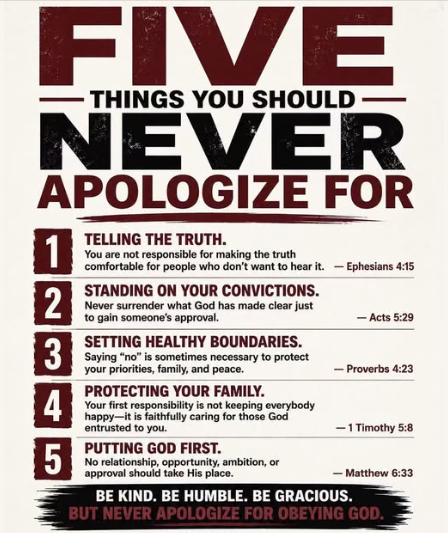
Apologizing. Ugh! Most of us hate to have to do it. It’s hard to admit when we were wrong and even harder to ask someone to forgive us, especially if the other person was partly to blame. But apologizing is part of seeking humility, and humility is a character quality God holds in high esteem. James 4:10 says, “Humble yourselves in the sight of the Lord and He will exalt you.” Apologizing humbles us by reminding us that we are not perfect and we need forgiveness from God and from other people.
However, our ideas about apologizing might not be sufficient. Even adults can act like children whose mother just told them to “shake hands and say you’re sorry.” Many times simply saying “I’m sorry” is not a full apology because it does not take into account the level of wrong done. There are times when we accidentally bump into someone or say something we shouldn’t. Those little errors, done without evil intent, are easy to apologize for with an “I’m sorry.” But when we have truly wronged someone, that person needs us to validate the pain we caused. A real apology sounds something more like this: “I was wrong to ________. I know I hurt you and I am sorry that I did. Would you please forgive me? How can I make this right?”
King Saul gave us an example of an insufficient apology. He disobeyed a direct command from the Lord, and Samuel confronted him. Saul at first denied any wrongdoing but, when pressed, admitted he had sinned against God. Still, he blamed his wrongdoing on a desire to please the people (1 Samuel 15:24–26). He was sorry he got caught but not humble enough to truly admit his wrong. God was not impressed with Saul’s apology and removed the kingdom from him (verse 28).
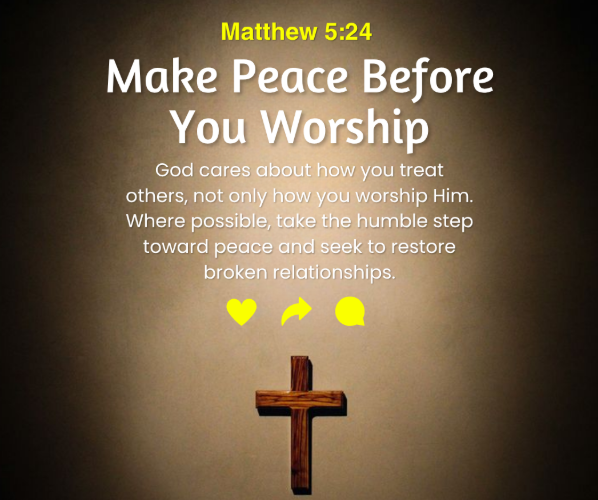
When we know we have wronged God or someone else, God expects us to make it right. We make things right with God by repenting of that sin, confessing it to Him, and receiving His forgiveness (1 John 1:9). We make things right with others by apologizing—admitting our wrong, asking for forgiveness, and offering to make restitution (see the example of Zacchaeus in Luke 19:8). When we have wronged someone else, we should do whatever we can to make it right. Being reconciled to an offended brother or sister should be a top priority (Matthew 5:23–24).
When someone confronts us about our sin, we must be humble enough to admit the truth, apologize, and ask forgiveness. If someone comes to us to apologize for something he or she did, then we must be gracious enough to extend forgiveness. “Bear with each other and forgive one another if any of you has a grievance against someone. Forgive as the Lord forgave you” (Colossians 3:13; cf. Matthew 18:21–22).
Jesus said, “Blessed are the peacemakers, for they will be called children of God” (Matthew 5:9). Part of being a peacemaker is readily admitting when we are wrong. Peacemakers forgive when they need to forgive and apologize when they offend someone else (Ephesians 4:32). As difficult as apologizing sometimes is, it helps us grow to be more like Jesus by humbling us and teaching us about grace.
A scriptural understanding of truth encompasses more than simple honesty. The Bible reveals truth as a moral concept rooted in God’s character (Psalm 43:3; 25:5; 26:3; 86:11; Isaiah 65:16). He is the “God of truth” (Isaiah 65:16, NLT), and His truthfulness embraces His steadfastness, trustworthiness, and eternal faithfulness (Psalm 117:2).
Most commonly, discussions of truth have to do with speaking the truth (Psalm 15:2; Proverbs 12:17). Lying is the opposite of telling the truth (Jeremiah 9:3), and God never lies (Titus 1:2). The Bible says that God is not only truthful, but He Himself is the essence of truth. The reliability and trustworthiness of His being were highly significant to the biblical writers in expressing God’s truthfulness. When Scripture speaks of truth, it refers to a completeness of moral integrity that influences how one thinks and behaves (Psalm 86:11; 119:30, 43–44; Malachi 2:6).
God demonstrates that He is truth in the faithfulness and dependability of His words, actions, and dealings: “God is not a man, so he does not lie. He is not human, so he does not change his mind. Has he ever spoken and failed to act? Has he ever promised and not carried it through?” (Numbers 23:19, NLT; see also 1 Samuel 15:29). God’s Word holds true, and we can trust everything He does (Psalm 33:4). He is completely reliable (Psalm 31:5). The Lord is a rock-solid, trustworthy foundation for life because He is entirely reliable and consistent in His character (Deuteronomy 32:4; Psalm 145:13; 2 Timothy 2:13).
God’s laws and instructions outline the way of truth that is meant to lead people to Him (Psalm 19:7; 119:30, 42–45; Malachi 2:6–7). The Bible says God’s Word is truth: “The entirety of Your word is truth” (Psalm 119:160, HCSB). As the Logos—the living, incarnate Word of God—Jesus Christ is truth (John 1:14, 17; John 6:32). Jesus Himself said, “I am the way and the truth and the life. No one comes to the Father except through me” (John 14:6).
Scripture also says that the gospel message is truth (Galatians 2:5, 14; Ephesians 1:13). That message is the good news of salvation—that Jesus is the only way to everlasting life with God. Through Jesus, “we can know the true God. And now we live in fellowship with the true God because we live in fellowship with his Son, Jesus Christ. He is the only true God, and he is eternal life” (1 John 5:20, NLT). Likewise, the Holy Spirit is the “Spirit of truth” who dwells within believers and leads them “into all truth” (John 14:17, NLT; see also John 15:26; 16:13; 1 John 5:6).
The truth of God’s Word also holds sanctifying power for the believer. In His High Priestly Prayer, Jesus asked the Father, “Make them holy by your truth; teach them your word, which is truth” (John 17:17, NLT). Since the Bible is truth, Christians ought to study it, working hard to understand and correctly apply it to their lives (2 Timothy 2:15; 3:16–17). As we deepen our knowledge and insight into God’s Word, its truth will set us free (John 8:32).
God desires His followers to be people of the truth (Ephesians 4:25). He loves those who tell the truth and detests those who lie (Proverbs 12:22; 6:16–19). The Lord underscores the importance of truth by presenting us with “the belt of truth” as the first piece of our spiritual armor (Ephesians 6:10–17). The rest of our armor is held secure when the truth is wrapped around us. Otherwise, we are defenseless against the lies of our adversary, the devil, who is the father of lies (John 8:44).
The Bible says that God delights in truth. “The Lord is close to all who call on him, yes, to all who call on him in truth,” declares the psalmist (Psalm 145:18, NLT). Because of truth’s high value, Solomon counsels, “Buy the truth and do not sell it—wisdom, instruction and insight as well” (Proverbs 23:23). God takes pleasure in seeing His truth reflected in the character of His children (Psalm 15:1–5; 51:6). He calls believers to worship Him in truth (John 4:24), love others in truth (1 John 3:18), and always speak the truth (Ephesians 4:15, 25; Zechariah 8:16).
You come to a fork in the road, a decision that needs to be made. Do you turn left or right? Do you stay where you are and not choose a side? If you have personal convictions on the matter, you know what you have to do. A person with personal convictions is convinced that something is true and stands on principle, regardless of the situation and regardless of the consequences. Personal convictions reveal a lot about who a person is.
Having personal convictions is important to keep us from being swayed by the opinions of others or automatically obeying them. Someone with no personal convictions will be wishy-washy, indecisive, and easily led astray. When the crowd says, “Let’s all disobey God,” it takes someone with personal convictions to stand up and say, “No.” Shadrach, Meshach, and Abednego had personal convictions against worshiping false gods, and they held their ground against the Babylonian tide, standing firm even in the face of the king’s wrath (Daniel 3).
Everyone has opinions and preferences, but a person with conviction does not form his ideas based on selfish desires or for selfish gain. A person with personal convictions has thought through the issues and lives with purpose. Such people are sure of what they believe, and they are convinced of the things that matter most. The apostle Paul looked forward to a time when believers will reach spiritual maturity: “We will no longer be infants, tossed back and forth by the waves, and blown here and there by every wind of teaching and by the cunning and craftiness of people in their deceitful scheming” (Ephesians 4:14). Part of maturity is having enough personal conviction to recognize and withstand the false teachings of the day.
Personal convictions should be formed using the Bible as the touchstone. What the Bible promotes, we should have a personal conviction in favor of. What the Bible forbids, we should have a personal conviction against. In this way, the Word of God informs our conscience and is a light to our path (Psalm 119:105). Personal convictions should never be based solely on what we “feel” about a matter: “Those who trust in themselves are fools, but those who walk in wisdom are kept safe” (Proverbs 28:26).
Of course, the Bible does not deal directly with every situation. Forming personal convictions on issues not specified in Scripture requires us to search out the guiding principles in the Word (2 Timothy 3:16–17; James 1:5). The Bible does not mention abortion, per se, but it does speak clearly about matters such as murder and the protection of the innocent. When we study and submit to the Word of God, we learn what God says is right or wrong (Hebrews 5:14). As we mature in wisdom and judgment, our personal convictions will align with those things that are excellent to God (Philippians 1:9–11; Romans 12:1–2).
Since we’re dealing with personal convictions, there are some issues on which different believers may have different convictions. Not all issues are black and white, and not all issues can be traced back to a biblical guideline. In such cases, we must let the law of love rule. Paul tells us to not quarrel “over disputable matters” (Romans 14:1) such as the eating of certain foods or holding one day more sacred than other days. We should have personal convictions: “Each . . . should be fully convinced in their own mind” (verse 5), but should also leave room for the convictions of others: “Who are you to judge someone else’s servant? To their own master, servants stand or fall. . . . Whoever regards one day as special does so to the Lord. Whoever eats meat does so to the Lord, for they give thanks to God; and whoever abstains does so to the Lord and gives thanks to God” (verses 4 and 6).
Personal convictions are important because they help us stand firm when this world is uncertain and changing. We need more men and women with a “moral center” in the midst of the moral chaos surrounding us. Personal convictions keep us on point and remind us of what matters most. They help us to endure temptation without compromise. They refine and prove our faith.
Every one of us puts up emotional and mental boundaries in the interest of self-protection, and mental wellness professionals agree that boundaries are healthy. Spiritual boundaries are similarly beneficial to our spiritual well-being. There should be clear boundaries to govern the beliefs we hold and how we put those beliefs into practice.
Not having spiritual boundaries can lead to theological confusion and the misbehavior that comes with it. The Bible tells us that the spiritually immature are “tossed back and forth by the waves, and blown here and there by every wind of teaching and by the cunning and craftiness of people in their deceitful scheming” (Ephesians 4:14). How can we avoid being deceived by the schemes of false teachers? Study the Word (2 Timothy 2:15), obey the Word (Psalm 119:33), and set spiritual boundaries.
Here are some guidelines for setting spiritual boundaries:
Set spiritual guidelines concerning doctrine. It is vital for our spiritual health that we not give heed to false teachings. To have proper spiritual boundaries, we must know the truth—we must study the Word of God and commit to following it. “Follow the pattern of the sound words that you have heard from me, in the faith and love that are in Christ Jesus” (2 Timothy 1:13). We must also screen out the lies: “Have nothing to do with godless myths and old wives’ tales; rather, train yourself to be godly” (1 Timothy 4:7). The church of Ephesus did a good job at setting spiritual boundaries concerning doctrine: “You have tested those who claim to be apostles but are not, and have found them false” (Revelation 2:2). The churches of Pergamum (Revelation 2:14) and Thyatira (Revelation 2:20) were not so good at doctrinal discernment.
Set spiritual guidelines concerning companions. Our choice of friends is important in our spiritual walk (Amos 3:3). The Bible gives us guidance about the type of person we should be seeking as a friend. Our close friends should exhibit godly wisdom: “Walk with the wise and become wise, for a companion of fools suffers harm” (Proverbs 13:20). Our close friends should be self-controlled: “Do not make friends with a hot-tempered person, do not associate with one easily angered” (Proverbs 22:24). Our close friends should be willing to tell us the truth, even when it hurts: “Wounds from a friend can be trusted, but an enemy multiplies kisses” (Proverbs 27:6). This isn’t about being holier-than-thou; it’s about being wise in selecting close associates, knowing that “iron sharpens iron” (Proverbs 27:17).
Set spiritual guidelines concerning morality. What we choose to do with our bodies has an impact on our spiritual health (1 Corinthians 6:9–10). For this reason, we are told to “run from anything that stimulates youthful lusts” (2 Timothy 2:22, NLT) and “do not think about how to gratify the desires of the flesh” (Romans 13:14). Samson failed to set spiritual boundaries in this regard, and he lost his hair, his eyes, and his freedom as a result (Judges 16).
Set spiritual guidelines concerning idolatry. An idol is anything that replaces God in our hearts or prevents us from giving God His due glory, and the world is full of idols. We must make a conscious decision to reject what would damage our fellowship with Christ. We must learn to say with the psalmist, “Whom have I in heaven but you? And earth has nothing I desire besides you” (Psalm 73:25). God promises rewards for those who set spiritual boundaries to keep the idols out: “Come out from them and be separate, says the Lord. Touch no unclean thing, and I will receive you” (2 Corinthians 6:17).
Setting spiritual boundaries entails discernment: “I will not look with approval on anything that is vile. I hate what faithless people do; I will have no part in it” (Psalm 101:3). It involves having the foresight to see where a particular path will lead and choosing appropriately: “Do not set foot on the path of the wicked or walk in the way of evildoers. Avoid it, do not travel on it; turn from it and go on your way” (Proverbs 4:14–15; cf. Proverbs 22:3). It requires commitment: “Choose for yourselves this day whom you will serve. . . . But as for me and my household, we will serve the Lord” (Joshua 24:15).
Physical boundaries are important—putting a fence around a high-voltage area is a good idea. But spiritual boundaries are much more important. The health of our souls is at stake. Being protected from spiritual danger is every bit as important as staying physically safe.
It is common to hear a Christian say, “I’m putting God first” or to counsel others to “make sure God has first place in your life.” Such expressions are used so often they run the risk of becoming a Christian cliché. But there’s nothing trite about the idea of putting God first; in fact, it’s thoroughly biblical.
Everyone has priorities. We arrange our schedules, budgets, and relationships according to perceived importance. Putting God first means we give Him top priority over everything else. He is the principal figure in our lives and central to all we do and think. When we choose to put God first, we determine that He is more important than any other person, His Word is more valuable than any other message, and His will is weightier than any other imperative.
Putting God first means that we keep the greatest commandment: “Love the Lord your God with all your heart and with all your soul and with all your mind” (Matthew 22:37). In other words, we are totally invested in our relationship with God. Everything we have and everything we are is devoted to Him. We hold nothing back.
Putting God first means we keep our lives free from idolatry in all its forms: “Dear children, keep yourselves from idols” (1 John 5:21). An idol is anything that replaces the one, true God in our hearts. As Gideon demolished the altar of Baal and chopped down the Asherah pole (Judges 6:25–27), we must tear from our hearts anything that lessens our devotion to or reverence of God. As Gideon built an altar to the Lord to replace the idolatrous images, we must dedicate ourselves as “living sacrifices” to God and in that way put Him first (Romans 12:1).
Putting God first means that we strive to follow in Jesus’ steps (1 Peter 2:21). Jesus’ life was characterized by total submission to the Father’s will, service to others, and prayer. In the garden, faced with unthinkable agony, Jesus prayed, “Not my will, but yours be done” (Luke 22:42). That’s putting God first. Jesus’ words, actions, and doctrine all came from the Father (John 5:19; 7:16; 12:49). Jesus glorified the Father in every detail of His life and accomplished all that He has been sent to do (John 17:4).
Jesus taught us to “seek the Kingdom of God above all else” (Matthew 6:33, NLT). That is, we are to seek the things of God over the things of the world. We are to seek the salvation that is inherent in the kingdom of God, considering that of greater value than all the world’s riches combined (see Matthew 13:44–46). The promise associated with the command is that, if we are putting God first, “he will give you everything you need.”
During a time of famine, the prophet Elijah visited a town where he met a widow who was preparing a final meal for herself and her son. Elijah asked her from some bread and water, and the widow explained that she had the resources for one meal only, and after that was gone, she would face starvation. Elijah persisted: “Don’t be afraid. . . . But first make a small loaf of bread for me from what you have and bring it to me, and then make something for yourself and your son” (1 Kings 17:13). In essence, Elijah told her to put God first. By faith, the widow obeyed. She put God first and fed the prophet. And then came the miracle: “There was food every day for Elijah and for the woman and her family. For the jar of flour was not used up and the jug of oil did not run dry” (verses 15–16).
Those who put God first will stand out from the rest of the world. They will obey God’s commands (John 14:15), they will take up their cross and follow Jesus (Luke 9:23), and they will not forsake their first love (Revelation 2:4). They give God the firstfruits, not the leftovers. The Christian life is characterized by moment-to-moment selfless service to God that flows from love for Him and His people. In all things, the believer trusts, obeys, and loves God above all else. Putting God first becomes easier when we take to heart the words of Romans 11:36: “Everything comes from the Lord. All things were made because of him and will return to him. Praise the Lord forever! Amen” (CEV).

Tea Time Manna
Let us not give up meeting together, as some are in the habit of doing, but let us encourage one another — and all the more as you see the Day approaching.
—Hebrews 10:25
“Going to church” isn’t very attractive phrase to many folks. This reality shouldn’t surprise us. Doing things as an act of discipline isn’t very popular and often isn’t easy. Plus, doing things for others doesn’t always fill our hearts with joy — although it probably should. On top of these realities is another spiritual reality that may be even more important: “going to church” is a concept nowhere found in Scripture — church is not a place we go, but something we are! The Holy Spirit’s message in our Verse of the Day reminds us that WE need to be with God’s people because they need us to encourage, bless, and motivate them! Church is a gathering of Jesus’ disciples to honor him and bless each other. The Lord would prefer us to think of encouragement, comfort, and exhortation as being church rather than gathering in a box we fill to worship him. But don’t misrepresent this truth. The Holy Spirit isn’t saying we can skip out on gathering together. He is commanding the opposite. “Assemble! Don’t quit meeting together,” the Spirit commands us here. Where we meet isn’t nearly as important as gathering together and blessing each other when we regularly meet. Each of us needs encouragement to keep living for Jesus as his return grows ever nearer!
Prayer
Father, please bless the group of Christians with whom I regularly meet. Bless them through my words, attitude, and influence as we walk beside and encourage each other to honor you. Stir me to bless your disciples and encourage them to live for Jesus as we await his return. In Jesus’ name, I pray. Amen and Amen
Truth Article by Pastor Dirk

What will the 2 Witnesses Say?
The main reason for the Two Witnesses standing before the 3rd Jewish Temple is!
Not only to say too the Jews, that the Holy of Holy’s is no longer occupied by God’s Holy Spirit, but to warn Christians that will use the Temple to bring sacrifices , the main reason is that a large amount of Christians will become part of the Jewish Traditions of bringing daily sacrifices for their sins.
Yes, there are Christians who will use the Temple for sacrifices to God just as the Jews are going to do. With this action they spit in the face of Jesus Christ. To reject Him, betray Him to return to the Old Testament faith of the first covenant,
There are already loads of Christians who follow and still follow the Jewish festivals and bring Jewish traditions into Christianity and Churches.
Yes, there will be born again, baptized in water Christians who will bring animal sacrifices to the 3rd Jewish temple once it has been built and unveiled. just as they are currently standing at the wailing wall in Jerusalem and praying.
The only Christians who will not be involved in the terrible abomination are Spirit-filled Children of God.
A Christian who is part of the daily sacrifices in the 3rd Jewish Temple is a terrible abomination in God and Jesus’s eyes,
Rev 11:1 ~ 19 And there was given me a reed like unto a rod: and the angel stood, saying, Rise, and measure the temple of God, and the altar, and them that worship therein.
But the court which is without the temple leave out, and measure it not; for it is given unto the Gentiles: and the holy city shall they tread under foot forty and two months.
And I will give power unto my two witnesses, and they shall prophesy a thousand two hundred and threescore days, clothed in sackcloth.
These are the two olive trees, and the two candlesticks standing before the God of the earth.
And if any man will hurt them, fire proceedeth out of their mouth, and devoureth their enemies: and if any man will hurt them, he must in this manner be killed.
These have power to shut heaven, that it rain not in the days of their prophecy: and have power over waters to turn them to blood, and to smite the earth with all plagues, as often as they will.
And when they shall have finished their testimony, the beast that ascendeth out of the bottomless pit shall make war against them, and shall overcome them, and kill them.
And their dead bodies shall lie in the street of the great city, which spiritually is called Sodom and Egypt, where also our Lord was crucified.
And they of the people and kindreds and tongues and nations shall see their dead bodies three days and an half, and shall not suffer their dead bodies to be put in graves.
And they that dwell upon the earth shall rejoice over them, and make merry, and shall send gifts one to another; because these two prophets tormented them that dwelt on the earth.
And after three days and an half the Spirit of life from God entered into them, and they stood upon their feet; and great fear fell upon them which saw them.
And they heard a great voice from heaven saying unto them, Come up hither. And they ascended up to heaven in a cloud; and their enemies beheld them.
And the same hour was there a great earthquake, and the tenth part of the city fell, and in the earthquake were slain of men seven thousand: and the remnant were affrighted, and gave glory to the God of heaven.
The second woe is past; and, behold, the third woe cometh quickly.
And the seventh angel sounded; and there were great voices in heaven, saying, The kingdoms of this world are become the kingdoms of our Lord, and of his Christ; and he shall reign for ever and ever.
And the four and twenty elders, which sat before God on their seats, fell upon their faces, and worshipped God,
Saying, We give thee thanks, O Lord God Almighty, which art, and wast, and art to come; because thou hast taken to thee thy great power, and hast reigned.
And the nations were angry, and thy wrath is come, and the time of the dead, that they should be judged, and that thou shouldest give reward unto thy servants the prophets, and to the saints, and them that fear thy name, small and great; and shouldest destroy them which destroy the earth.
And the temple of God was opened in heaven, and there was seen in his temple the ark of his testament: and there were lightnings, and voices, and thunderings, and an earthquake, and great hail.
NEWS MANNA

The Cyberattack Crisis: The Coming Battle For Control Of The Internet
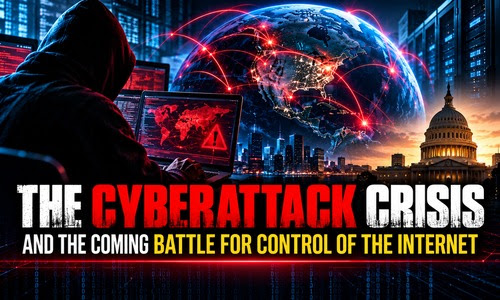
Imagine waking up tomorrow morning to discover that your bank’s website is inaccessible. Your credit card no longer works. Gas stations cannot process payments. Grocery stores are accepting cash only, while others have closed entirely because their computerized systems are down.
Now imagine that the problem isn’t limited to your community or even your country. Major financial institutions around the world are experiencing similar disruptions, and nobody knows how long they will last.
For most Americans, such a scenario sounds like something out of a Hollywood disaster movie. But for the cybersecurity professionals who spend their days defending the digital infrastructure upon which modern civilization depends, the threat is becoming increasingly difficult to ignore.
And the latest wave of cyberattacks raises an unsettling question: Could the growing vulnerability of our digital world eventually create the conditions for a global financial system in which buying and selling are tightly controlled?
For students of Bible prophecy, that question should sound remarkably familiar.
The Invisible War Most People Never See
At Prophecy News Watch, we have experienced this digital battlefield firsthand.
During October alone, our website has faced more than 200,000 malicious requests and attempted attacks. Most of our readers never know anything is happening. They visit the website, read the news, and continue with their day, unaware of the constant activity taking place behind the scenes.
Our security systems intercept and block most of these threats. But the experience provides a sobering glimpse into a world that the average internet user rarely sees.
Every day, automated programs probe websites for weaknesses. Hackers search for vulnerable software, outdated security systems, exposed databases, and overlooked entry points. Some attacks are relatively unsophisticated. Others are designed to exploit weaknesses that even experienced programmers may not know exist.
And the attackers never need to sleep.
Now multiply that activity across millions of websites, including banks, hospitals, electrical utilities, transportation networks, government agencies, and the companies responsible for processing financial transactions.
The internet may appear to be functioning normally, but beneath the surface, an enormous struggle is underway to keep it secure.
A Dangerous Discovery Beneath The Internet
The latest alarm involves PHP, a programming language used by roughly 70 percent of websites whose server-side programming language can be identified.
PHP helps power everything from ordinary blogs and online stores to major publishing platforms and business applications. Many organizations depend upon it without their customers ever knowing it exists.
On October 21, researchers disclosed two critical vulnerabilities, collectively known as PHP2Shell, that could allow attackers to execute malicious code on vulnerable servers without first logging in.
Even more disturbing, Amazon’s security researchers detected an attempt to exploit these vulnerabilities on October 17, four days before they were publicly disclosed. That raises the troubling possibility that attackers were already targeting weaknesses before the wider cybersecurity community even knew they existed.
Cloudflare subsequently reported millions of attempts to exploit the flaws as website operators raced to install emergency security updates.
Consider the implications. A vulnerability in a single company’s software might threaten thousands of customers. But a serious weakness in technology used throughout the internet potentially exposes an enormous number of unrelated organizations.
It is like discovering that millions of buildings were constructed using the same defective lock.
The manufacturer can develop a replacement, but every building owner must install it. Some respond immediately. Others take days or weeks. Some never make the necessary repairs.
Meanwhile, attackers begin searching for every building that remains vulnerable.
Not every PHP-powered website is necessarily exposed to the same degree, and security protections can reduce the danger. But the crisis demonstrates how a single underlying software weakness can become an international security emergency.
And the situation becomes considerably more troubling when artificial intelligence enters the picture.
Artificial Intelligence Is Changing The Rules
For decades, discovering sophisticated software vulnerabilities required considerable technical expertise. Skilled hackers needed to understand programming languages, operating systems, networks, and security defenses.
Artificial intelligence is beginning to change that equation.
AI-powered tools can analyze enormous quantities of computer code, identify suspicious weaknesses, generate potential exploits, and help automate the process of testing systems for vulnerabilities.
In fact, AI-assisted research helped uncover the latest PHP vulnerabilities, demonstrating just how powerful these tools have become.
Imagine thousands of automated hacking agents simultaneously examining websites around the world. They can test different approaches, analyze failures, modify their strategies, and continue operating around the clock.
An attacker who previously had the resources to target a handful of organizations might eventually be capable of investigating thousands.
Defenders are using artificial intelligence as well, but the growing capabilities of both sides are creating a technological arms race with consequences that extend far beyond the cybersecurity industry.
What happens when hackers can discover weaknesses faster than organizations can repair them?
What happens when malicious software becomes capable of coordinating increasingly complex attacks with minimal human involvement?
And what happens when the targets are no longer merely websites, but the financial and physical infrastructure upon which entire nations depend?
When Digital Attacks Become Real-World Disasters
Our modern economy has become extraordinarily dependent upon interconnected computer systems.
Money moves electronically. Businesses maintain digital inventories. Hospitals depend on networked medical systems. Electrical utilities use computerized controls. Shipping companies coordinate deliveries through complex software platforms.
Even purchasing groceries increasingly requires multiple digital systems to function correctly.
A sufficiently widespread cyberattack could therefore create consequences far beyond stolen passwords or inaccessible websites.
Imagine a coordinated attack disrupting major payment processors. Retailers suddenly cannot accept electronic transactions. Customers find their debit cards useless, even though their bank accounts still contain money.
Banks temporarily restrict online access while investigating suspicious activity. Financial institutions begin limiting certain transfers to prevent fraud. Businesses struggle to pay suppliers, and customers rush to withdraw cash.
Now add attacks against transportation systems, telecommunications providers, or electrical infrastructure.
The disruption could spread rapidly.
We have already witnessed how ransomware attacks against individual hospitals, businesses, and infrastructure operators can interrupt essential services. The greater danger is what could happen if numerous critical systems were compromised simultaneously.
Such a crisis would not necessarily require hackers to steal everyone’s money. Simply preventing people from accessing or transferring their funds could produce widespread economic panic.
For a society accustomed to instant digital payments, even several days of serious disruption could feel catastrophic.
And that brings us to perhaps the most consequential question of all.
What kind of solution would governments offer to prevent it from happening again?
The Solution That Could Change Everything
History demonstrates that major crises often accelerate changes that would otherwise take years to implement.
Following a devastating series of cyberattacks, governments and financial institutions would face enormous pressure to restore confidence in the financial system.
The public would demand action. Banks would demand stronger protections. Businesses would insist upon more reliable methods of verifying transactions.
And increasingly, the proposed answer could involve stronger forms of digital identification and centralized financial oversight.
Imagine a future in which every financial transaction requires a government-recognized digital identity. Biometric verification, perhaps using fingerprints, facial recognition, or other unique identifiers, could become standard.
Financial institutions might require approved digital wallets connected to verified personal identities. Advanced artificial intelligence could monitor transactions continuously, identifying suspicious activity and automatically restricting accounts considered dangerous.
Such technologies could offer genuine security benefits. Criminals would find it harder to impersonate account holders, steal identities, or transfer money anonymously.
But there is another side to that equation.
The same infrastructure designed to prevent criminals from accessing your money could potentially prevent you from accessing it as well.
And that raises a question far more important than how sophisticated the technology becomes: Who ultimately decides what constitutes a threat?
Today, that might mean identifying hackers, terrorists, and financial criminals. Tomorrow, could the definition expand to include political dissidents, religious organizations, or individuals who refuse government mandates?
Imagine a financial system in which an algorithm can freeze your accounts because your behavior has been flagged as suspicious. Imagine being denied access to essential services because your digital identity has been suspended or your activities violate government-approved standards.
And imagine having no practical alternative because nearly every bank, payment processor, and major business operates within the same interconnected system.
What begins as protection against criminals could eventually become an instrument for enforcing obedience.
The technology that promises to protect everyone could become the technology that controls everyone.
And after enough devastating cyberattacks, millions of frightened people might welcome such a system.
They might even demand it.
Revelation 13 And The Coming Control Of Buying And Selling
For Christians who study Bible prophecy, these developments bring to mind one of Scripture’s most sobering warnings.
Revelation 13:16–17 describes a future system under the authority of the Antichrist:
*”And he causeth all, both small and great, rich and poor, free and bond, to receive a mark in their right hand, or in their foreheads: And that no man might buy or sell, save he that had the mark, or the name of the beast, or the number of his name.”*
Consider the extraordinary implications of those words.
Nearly two thousand years ago, the Apostle John described a future system in which economic participation would be restricted according to an individual’s allegiance to a global ruler.
For much of history, the practical enforcement of such a system would have been extraordinarily difficult.
How could authorities prevent someone from purchasing bread from a neighbor? How could they monitor transactions across entire nations? How could they enforce financial restrictions against millions of people simultaneously?
Today, the technological possibilities are becoming much easier to imagine.
Digital currencies, biometric identification, artificial intelligence, automated surveillance, and interconnected financial networks could provide mechanisms for controlling economic participation on an unprecedented scale.
Scripture does not tell us that a cyberattack will introduce the mark of the beast. Nor does it identify a particular digital currency, biometric system, or technological platform as the mark itself.
But it does describe a future in which the ability to buy and sell becomes conditional upon submission to the Antichrist’s authority.
The technology capable of enforcing such restrictions is no longer difficult to envision.
What remains to be understood is how the world could become willing to accept it.
A prolonged crisis of confidence in the global financial system could provide part of that answer.
When Security Becomes More Important Than Freedom
Perhaps the most disturbing possibility is that a future system of financial control will not initially be presented as an instrument of oppression.
It may be introduced as the ultimate solution to identity theft, financial fraud, cyberterrorism, and the increasingly dangerous vulnerabilities of our digital economy.
The sales pitch could be remarkably appealing: no more stolen passwords, no more fraudulent transfers, no more anonymous hackers draining accounts, and no more devastating attacks against financial institutions.
All that would be required is participation in a secure, universally recognized system of digital identification and financial authorization.
After experiencing repeated economic disruptions, how many people would object?
How many would willingly surrender a measure of financial independence if they believed doing so would protect their savings, their businesses, and their families?
And how many would eventually regard those who refused to participate as threats to everyone else’s security?
That is where the prophetic implications become especially sobering.
The world described in Revelation 13 is not merely technologically advanced. It is a world in which economic survival becomes a powerful instrument of coercion.
The decision to participate is no longer simply about convenience or protection. It becomes a matter of worship, allegiance, and obedience.
Today’s cyberattacks are not the fulfillment of that prophecy. But they offer a revealing glimpse of how technological vulnerability, public fear, and the demand for security could help prepare the way for extraordinary systems of control.
The next major cyberattack may be stopped. The next vulnerability may be patched. But with artificial intelligence accelerating the digital arms race, the battle to secure the internet is only beginning.
And the stakes extend far beyond stolen passwords, compromised websites, or temporary banking outages. The real question is who will ultimately control the digital infrastructure upon which modern civilization depends.
Will the future internet remain a place where individuals can communicate, conduct business, and access their money freely? Or will repeated crises lead to a system in which every transaction, every identity, and every financial decision requires approval from an increasingly centralized authority?
Revelation 13 warns that a day is coming when the ability to buy and sell will be tied to allegiance to the Antichrist. The technological foundations for such control are becoming easier to imagine, and the crises that could persuade the world to accept it are becoming increasingly real.
The greatest danger may not be that hackers eventually bring our financial systems to their knees. It may be that a frightened world willingly hands over control of those systems to someone promising that it will never happen again.
The Battle For Israel Is Now Being Fought Inside The Church
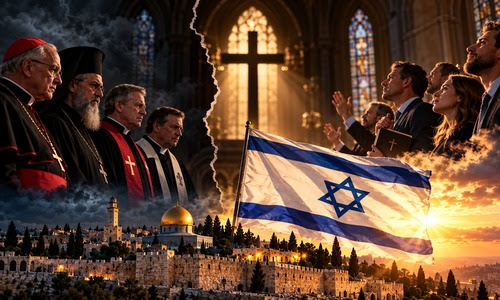
For decades, the battle over Israel has been fought in the halls of the United Nations, across university campuses, and in the streets of major cities. But an increasingly bitter confrontation is now unfolding in a place many Christian might never have expected: inside the Church itself.
At the heart of the dispute is a question that reaches far beyond Middle Eastern politics. Does the Jewish people’s return to their ancient homeland represent the fulfillment of biblical promises, or has the coming of Jesus Christ changed how those promises should be understood?
The answer is dividing Christian denominations, challenging longstanding theological traditions, and raising fundamental questions about God’s covenant with Israel.
Some church leaders are now openly condemning Christian Zionism as a dangerous ideology. Others insist that abandoning the biblical promises to Israel risks undermining the very foundation of God’s faithfulness.
And the stakes go far beyond whether Christians support the modern State of Israel. The deeper issue is whether God’s ancient promises to the Jewish people still stand.
When Christian Leaders Turn Against Zionism
The controversy intensified when the Patriarchs and Heads of the Churches in Jerusalem issued a statement condemning what they called “damaging ideologies, such as Christian Zionism.”
The declaration, supported by prominent Orthodox and Catholic church leaders in Jerusalem, warned against outside interference in the affairs of local Christian communities.
Their position reflects a longstanding tension between Christian Zionists, who view Jewish restoration to Israel as biblically significant, and many historic churches in the Middle East, whose members include Palestinian Christians living amid the Israeli-Palestinian conflict.
But the opposition extends far beyond Jerusalem.
The Presbyterian Church (USA) has taken an increasingly confrontational position toward Christian Zionism, including a General Assembly resolution rejecting it and an August conference titled ” Christian Without Christian Zionism.”
Other mainline Protestant denominations, including elements of the Methodist, Lutheran, Episcopal, and United Church of Christ traditions, have similarly challenged theological arguments used to support Israeli territorial claims.
The Catholic Church takes a different approach. While recognizing Israel’s right to exist in security and affirming the enduring significance of the Jewish people, the Vatican does not teach that modern Israeli sovereignty or territorial boundaries are automatically guaranteed by biblical prophecy. It also advocates Palestinian national rights and a negotiated peace.
Eastern Orthodox churches generally interpret Israel’s biblical promises through Christ and the Church rather than through the establishment of a modern nation-state.
These traditions do not all share identical positions. Opposition to Christian Zionism does not necessarily mean opposition to Jewish people or even to Israel’s existence. Nevertheless, their disagreements with evangelical Christian Zionists reveal a profound theological divide.
Why Evangelicals Continue To Stand With Israel
On the other side are millions of evangelical Christians, particularly within Baptist, Pentecostal, independent Bible church, and dispensational traditions, who believe the restoration of Israel is deeply connected to biblical prophecy.
For these believers, support for Israel is not simply a political preference or an expression of sympathy for Jewish suffering throughout history.
It is rooted in their understanding of Scripture.
They believe God made specific promises to Abraham, Isaac, Jacob, and their descendants concerning the land of Israel. Those promises, they argue, were never canceled, transferred entirely to the Church, or rendered meaningless by the coming of Christ.
The modern restoration of Jewish sovereignty in 1948, followed by Israel’s dramatic territorial changes in 1967, is therefore viewed by many as prophetically significant.
Prominent evangelical supporters of Israel, including Pastor John Hagee and former Arkansas Governor and U.S. Ambassador to Israel Mike Huckabee, have defended the Jewish people’s historic and biblical connection to the land.
Christians from several theological traditions affirm the continuing significance of God’s covenant with Israel, even while disagreeing over prophetic timelines or the meaning of the modern state.
The central question remains: What did God actually promise, and did He ever revoke those promises?
God’s Covenant With Abraham Was Not Temporary
The biblical argument begins in Genesis 12, where God calls Abraham and promises to make him a great nation.
God declares:
“I will bless them that bless thee, and curse him that curseth thee: and in thee shall all families of the earth be blessed.” (Genesis 12:3)
The promise contains both a universal blessing for the nations and a special covenant relationship with Abraham’s descendants.
But Scripture goes further.
In Genesis 15:18, God establishes a covenant with Abraham concerning a specific geographical inheritance, describing land extending from the river of Egypt to the Euphrates.
In Genesis 17:7–8, God calls His covenant an “everlasting covenant” and describes Canaan as an “everlasting possession” for Abraham’s descendants.
For Christian Zionists, these passages establish an important principle: God’s promises were not merely symbolic expressions of spiritual blessing. They included a real people, a real land, and an enduring covenant.
This does not mean every action of the modern Israeli Government carries divine approval. Israel’s own prophets repeatedly condemned the nation’s sins and warned of judgment.
But divine discipline and divine abandonment are not the same thing.
Indeed, the Old Testament repeatedly describes Israel’s disobedience, exile, and eventual restoration as part of the same covenant story.
The question is not whether Israel has always been faithful to God. Scripture clearly says otherwise.
The question is whether God remains faithful to Israel despite its failures.
Did God Promise To Bring Israel Back?
The prophet Ezekiel describes a remarkable future restoration.
In Ezekiel 36:24, God declares:
“For I will take you from among the heathen, and gather you out of all countries, and will bring you into your own land.”
The following chapter presents the famous vision of the valley of dry bones, where a seemingly lifeless nation is restored.
God identifies the bones as “the whole house of Israel” and promises to bring His people into the land of Israel.
Christian Zionists see these passages as particularly significant because they describe both a physical regathering and a subsequent spiritual transformation.
In Ezekiel 36, the return to the land is followed by God’s promise to cleanse His people, give them a new heart, and place His Spirit within them.
This sequence is important to those who interpret modern Israel as an early stage of a larger prophetic restoration.
The Jewish state may exist today, they argue, without the Jewish nation having yet experienced the full spiritual renewal described by the prophets.
Critics interpret these prophecies differently, often emphasizing their fulfillment in the return from Babylonian exile, the coming of Christ, or the spiritual restoration of God’s people.
But the specificity of Ezekiel’s language presents a serious interpretive question: Why repeatedly describe the restoration of Israel to its own land if the ultimate promise has no continuing national dimension?
Jeremiah makes the issue even more striking.
In Jeremiah 31:35–37, God connects Israel’s continued existence as a nation before Him to the established order of the sun, moon, and stars.
The imagery is extraordinary. Israel’s continued identity is presented as something bound to the faithfulness of the Creator Himself.
For those who believe God’s covenant promises remain in force, these passages are foundational.
Has The Church Replaced Israel?
Perhaps no New Testament passage addresses this controversy more directly than Romans 11.
The Apostle Paul begins with a question:
“Hath God cast away his people?”
His answer is immediate:
“God forbid.” (Romans 11:1)
Paul then develops the image of an olive tree, explaining that Gentile believers have been grafted into a covenantal relationship rooted in God’s promises.
But he warns them against arrogance toward the natural branches.
“Boast not against the branches,” Paul writes in Romans 11:18.
He later declares that “the gifts and calling of God are without repentance” (Romans 11:29), meaning that God’s calling is not something He simply withdraws.
For Christian Zionists, Romans 11 is among the clearest New Testament affirmations that God has not finished His purposes for the Jewish people.
Paul even speaks of a future in which “all Israel shall be saved,” a passage that has generated centuries of theological discussion.
Those who reject a distinct national future for Israel point to other New Testament passages.
Galatians 3 emphasizes that those who belong to Christ are Abraham’s seed and heirs according to the promise. Ephesians 2 describes Jews and Gentiles becoming one new humanity in Christ. Hebrews points believers toward a heavenly homeland and the ultimate fulfillment of God’s promises.
These passages are central to the argument that Christ transforms how the Old Testament covenants should be understood.
But Christian Zionists respond that the spiritual unity of Jews and Gentiles in Christ does not require the cancellation of God’s specific promises to Israel.
In their understanding, the Church’s participation in Abraham’s spiritual blessings does not mean that the Jewish people’s covenant identity has disappeared.
Paul’s warning against Gentile arrogance makes that distinction especially important.
Jerusalem, The Nations, And The Prophetic Future
The prophet Zechariah describes a future in which people from many nations seek the God of Israel.
In Zechariah 8:23, ten men from the languages of the nations take hold of the garment of a Jewish man, declaring:
“We will go with you: for we have heard that God is with you.”
It is a striking picture of the nations recognizing God’s continuing work among the Jewish people.
Zechariah later describes Jerusalem as a focal point of international conflict and divine intervention, particularly in chapters 12–14.
Jesus Himself spoke of Jerusalem being trampled by the Gentiles “until the times of the Gentiles be fulfilled” (Luke 21:24).
For many evangelical believers, such passages reinforce the conviction that Jerusalem and Israel retain a meaningful place in God’s future plans.
The Christian Zionist position is therefore not simply that Jews deserve a homeland because of historical persecution, although that history provides a powerful moral argument.
It is that Scripture describes a continuing divine purpose involving the Jewish people, their restoration, and Jerusalem itself.
The Question The Church Cannot Avoid
The modern dispute over Christian Zionism is about much more than diplomatic policy, territorial boundaries, or the actions of Israeli leaders.
It touches the reliability of God’s promises, the relationship between Israel and the Church, and the interpretation of biblical prophecy.
Christian can disagree about particular Israeli policies, the treatment of Palestinians, and the best political path toward peace without abandoning serious theological engagement with Israel’s place in Scripture.
But the underlying biblical questions cannot simply be dismissed as modern political ideology.
God’s covenant with Abraham, Ezekiel’s restoration prophecies, Jeremiah’s promises, and Paul’s unmistakable warning against Gentile arrogance all demand careful consideration.
And as churches increasingly take opposing positions on Christian Zionism, believers face a question that has echoed through centuries of Christian theology:
Has God finished His work with Israel, or does the Jewish nation still have a future in His unfolding plan?
For Christians who believe the covenant promises remain, the answer rests not on the shifting politics of the Middle East, but on the enduring faithfulness of the God who made those promises in the first place.
Can Humanity Stop What Revelation Says Is Coming From The Heavens?
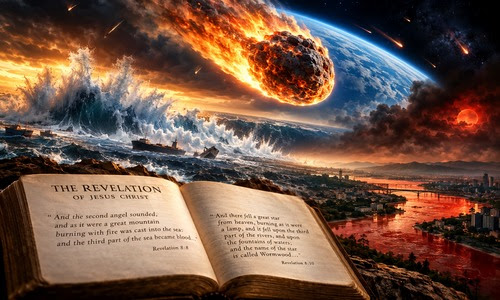
On April 13, 2029, an enormous asteroid named Apophis will race past Earth at a distance of just 20,000 miles from our planet’s surface. That’s closer than many of the satellites orbiting above us. Measuring approximately 1,100 feet across, this massive space rock will provide humanity with an extraordinary reminder of just how vulnerable our world really is.
NASA assures us that Apophis will not strike Earth and has ruled out an impact for at least the next century. But its approaching flyby raises a much larger question: What happens when the next giant asteroid isn’t going to miss?
Scientists are increasingly investing in ways to detect, track, and even destroy dangerous objects approaching Earth. Nuclear weapons, asteroid-deflecting spacecraft, and elaborate disaster simulations are all part of a growing effort to protect humanity from threats originating millions of miles away.
Yet nearly 2,000 years ago, the Apostle John described terrifying events in the Book of Revelation that sound remarkably similar to the consequences of massive celestial objects striking our planet.
A mountain burning with fire thrown into the sea. A blazing star falling from heaven and poisoning Earth’s waters. Stars falling from the sky as the nations of the world tremble in fear.
Could modern planetary defense efforts be preparing humanity for the very kinds of catastrophes Scripture warns are coming?
Humanity Is Preparing For A Threat It Cannot Ignore
NASA and other scientific institutions are taking the asteroid threat seriously, even though no known large asteroid is currently on a collision course with Earth.
Preparations for the 2027 Planetary Defense Conference include a hypothetical impact scenario involving an object comparable to the one responsible for the devastating Tunguska explosion in Siberia in 1908.
That event flattened approximately 800 square miles of forest. Had it occurred over a densely populated modern city, the destruction could have been catastrophic.
In 2013, a much smaller meteor exploded over Chelyabinsk, Russia, injuring roughly 1,500 people, primarily from shattered windows. The object had approached from the direction of the sun, making it difficult to detect beforehand.
Now imagine an asteroid hundreds of feet across approaching a major metropolitan area.
Scientists at Lawrence Livermore National Laboratory have been conducting advanced simulations examining whether nuclear explosions could deflect or disrupt threatening asteroids. NASA has already demonstrated one form of planetary defense through its successful DART mission, which deliberately crashed a spacecraft into an asteroid moonlet and altered its orbit.
These aren’t preparations for a confirmed incoming disaster. They are efforts to prevent a catastrophe that history tells us is possible.
But there is something sobering about humanity’s sudden realization that threats from the heavens could overwhelm even our most advanced civilization.
When A Mountain Of Fire Falls Into The Sea
One of Revelation’s most astonishing descriptions appears in Revelation 8:8–9:
“And the second angel sounded, and as it were a great mountain burning with fire was cast into the sea: and the third part of the sea became blood.”
John continues by describing the death of a third of the creatures living in the sea and the destruction of a third of the ships.
For centuries, Bible readers could scarcely imagine what such an event might look like. Today, the image of a massive asteroid plunging into the ocean provides a chilling possible comparison.
An enormous impact could unleash unimaginable energy, generating destructive waves, devastating nearby coastlines, and destroying ships and coastal infrastructure across a vast region.
Consider the consequences for our interconnected world. Major shipping routes could be disrupted, critical ports destroyed, energy supplies interrupted, and international trade thrown into chaos. Coastal cities housing millions of people could face destruction.
The biblical description goes even further, depicting devastation on a scale beyond an ordinary regional disaster.
Scripture does not specifically identify the burning mountain as an asteroid. Nevertheless, the imagery bears a striking resemblance to the kind of catastrophe scientists now recognize as physically possible.
And Revelation’s next trumpet judgment is equally disturbing.
Wormwood: When The World’s Water Turns Bitter
Revelation 8:10–11 describes another terrifying event:
“And the third angel sounded, and there fell a great star from heaven, burning as it were a lamp, and it fell upon the third part of the rivers, and upon the fountains of waters.”
The star is given a name: Wormwood.
The passage says that a third of the waters become bitter and many people die from drinking them.
Unlike the previous judgment, which strikes the sea, this one targets freshwater—the very resource upon which human survival depends.
Could John have been describing a comet, an asteroid fragment, or some other celestial object whose impact would contaminate vast water systems?
The text doesn’t explain the physical mechanism. Some interpreters understand Wormwood as a literal object falling from heaven, while others see supernatural or symbolic judgment.
But imagine the consequences if enormous regions suddenly lost access to safe drinking water.
Cities would face immediate emergencies. Hospitals, agriculture, food processing, and sanitation systems would be affected. Millions could be forced to flee in search of uncontaminated water.
Human beings can survive disruptions to electricity, transportation, and communications. Without water, survival becomes a matter of days.
The frightening aspect of Wormwood is not simply that something falls from the sky. It is that the consequences continue long after the initial event.
Stars Falling, The Sun Darkened, Nations Terrified
The Book of Revelation contains additional descriptions of disturbances in the heavens.
Revelation 6:13 describes the stars of heaven falling to Earth like figs shaken from a tree by a mighty wind. The following verse describes the heavens departing like a scroll and mountains and islands being moved.
Revelation 8:12 describes a third of the sun, moon, and stars being darkened.
Jesus Himself warned in Luke 21:25–26 of signs in the sun, moon, and stars, distress among nations, the roaring of the seas, and people becoming fearful because of what is coming upon the Earth.
These passages describe events far beyond the meteor showers we admire on clear nights.
Scientists already understand that sufficiently large asteroid impacts could throw enormous quantities of dust and debris into the atmosphere, reduce sunlight, disrupt global temperatures, and threaten agricultural production.
Imagine food shortages spreading across continents, supply chains breaking down, and governments confronting disasters that no emergency response system was designed to handle.
The parallels do not prove that every biblical description refers to an asteroid. God’s judgments may involve supernatural events beyond anything modern science can explain.
But the growing scientific understanding of cosmic hazards makes the imagery of Revelation more sobering than ever.
Can Technology Stop The Judgments Of God?
Humanity has made extraordinary technological advances. We can land spacecraft on distant asteroids, collect samples from their surfaces, calculate orbital trajectories, and even alter the movement of objects in space.
Yet our defenses remain limited. A dangerous object discovered too late, approaching from an unexpected direction, or possessing an unusual composition could present challenges beyond our ability to overcome.
And the judgments described in Revelation are not portrayed as random accidents of nature. They unfold under God’s sovereign authority.
That distinction changes everything.
If the burning mountain, Wormwood, and falling stars represent literal celestial objects, no amount of human ingenuity can overturn what God has determined. If they represent supernatural judgments, humanity’s technological defenses would be even less relevant.
This does not mean scientists should abandon planetary defense. Protecting human life is a worthy endeavor. But there is a profound difference between preparing for natural disasters and believing that technology can ultimately shield civilization from divine judgment.
Apophis is not predicted to strike Earth in 2029, and there is no biblical basis for identifying it as Wormwood or assigning it a prophetic role.
Its approach nevertheless offers a timely reminder of a truth modern civilization often forgets: Our world is far more fragile than we imagine.
The Bible warns of a future when the heavens will shake, the seas will be struck, and the nations will discover the limits of human power.
Scientists may one day save a city—or even civilization—from an incoming asteroid. But when the judgments of Revelation unfold, the ultimate question will not be whether humanity has developed sufficiently powerful weapons to defend itself.
It will be whether humanity is prepared to stand before the God who created the heavens in the first place.

TruLight TV : Fighting Monday Blues – Jeff Allen – Clean Comedy That Will Make You have Laughter Out Loud
Get ready to laught out loud with legendary comedian Jeff Allen in Part 1 of his hilarious stand-up special on the Bananas Comedy Show! Known across the country for his sharp, family-friendly humor, Jeff brings his signature comedic timing to everyday life, touching on marriage, raising kids, getting older, and the hilarious realities of human nature. It’s clean, uplifting comedy designed to bring joy and laughter to the whole family.
Today on TruLight Radio XM
TruLight Radio XM 24/7
VISIT THE WEBSITE
https://trulightradioxm.org.za
TruLight Ministry News – EXTRA MANNA
TruLight Ministries orders from God since 2012 . Teach Them , Comfort Them and Warn Them!
a TruQuestion for the Day
Would people say you walk in the light, or walk in the darkness?
(1 John 1:6-7)
Sou mense sê dat jy in die lig wandel, of in die duisternis?
TruLight News

a New Podcast for TruYouth – The African Teenager Platform Podcast
https://truyouth.co.za/podcasts/our-daily-bread-african-teen-podcast/
Artist Liners
Picture Manna to Share
From God –
From Jesus –
From the Holy Spirit –

Share this Feeding of Manna with your Friends and Family. just click on the Social Media icon and share