Hosted by TruLight Ministries International – The Place of Truth
SELECT YOUR READING LANGUAGE – BOTTOM LEFT = YOUR DAILY MANNA NOW AVAILABLE IN 103 LANGUAGES
@ TruLight Daily Manna is not Just a Bible Verse with a Small Prayer . NO ::: WE SERVE DAILY Manna for the ENTIRE Day . Breakfast , Lunch , Dinner , Plus tea Times and even Entertainment Manna . Plus News Manna and More , This Daily Manna will keep you Spiritually full for the full 48 Hours and even More to Share with your Friends and Family !!!
Just Say Yes , Yes Lord my Life is Yours !!!
It is important to know God’s will. Jesus said that His true relations are those who know and do the Father’s will: “Whoever does God’s will is my brother and sister and mother” (Mark 3:35). In the parable of the two sons, Jesus rebukes the chief priests and elders for failing to do the will of the Father; specifically, they “did not repent and believe” (Matthew 21:32). At its most basic, the will of God is to repent of our sin and trust in Christ. If we have not taken that first step, then we have not yet accepted God’s will.
Once we receive Christ by faith, we are made God’s children (John 1:12), and He desires to lead us in His way (Psalm 143:10). God is not trying to hide His will from us; He wants to reveal it. In fact, He has already given us many, many directions in His Word. We are to “give thanks in all circumstances; for this is God’s will for you” (1 Thessalonians 5:18). We are to do good works (1 Peter 2:15). And “it is God’s will that you should be sanctified: that you should avoid sexual immorality” (1 Thessalonians 4:3).
God’s will is knowable and provable. Romans 12:2 says, “Do not conform any longer to the pattern of this world, but be transformed by the renewing of your mind. Then you will be able to test and approve what God’s will is—His good, pleasing and perfect will.” This passage gives us an important sequence: the child of God refuses to be conformed to the world and instead allows himself to be transformed by the Spirit. As his mind is renewed according to the things of God, then he can know God’s perfect will.
As we seek God’s will, we should make sure what we are considering is not something the Bible forbids. For example, the Bible forbids stealing; since God has clearly spoken on the issue, we know it is not His will for us to be bank robbers—we don’t even need to pray about it. Also, we should make sure what we are considering will glorify God and help us and others grow spiritually.
Knowing God’s will is sometimes difficult because it requires patience. It’s natural to want to know all of God’s will at once, but that’s not how He usually works. He reveals to us a step at a time—each move a step of faith—and allows us to continue to trust Him. The important thing is that, as we wait for further direction, we are busy doing the good that we know to do (James 4:17).
Often, we want God to give us specifics—where to work, where to live, whom to marry, what car to buy, etc. God allows us to make choices, and, if we are yielded to Him, He has ways of preventing wrong choices (see Acts 16:6–7).
The better we get to know a person, the more acquainted we become with his or her desires. For example, a child may look across a busy street at the ball that bounced away, but he doesn’t run after it, because he knows “my dad wouldn’t want me to do that.” He doesn’t have to ask his father for advice on every particular situation; he knows what his father would say because he knows his father. The same is true in our relationship to God. As we walk with the Lord, obeying His Word and relying on His Spirit, we find that we are given the mind of Christ (1 Corinthians 2:16). We know Him, and that helps us to know His will. We find God’s guidance readily available. “The righteousness of the blameless makes their paths straight, / but the wicked are brought down by their own wickedness” (Proverbs 11:5).
If we are walking closely with the Lord and truly desiring His will for our lives, God will place His desires in our hearts. The key is wanting God’s will, not our own. “Delight yourself in the LORD and He will give you the desires of your heart” (Psalm 37:4).

Tea Time Manna
Those who had been scattered [at the stoning of Stephen and the outbreak of subsequent persecution] preached the word wherever they went.
—Acts 8:4
When someone tries to stomp out the flame of dry broom weed, the sparks fly upward and ride upon the wind, spreading the sparks and igniting wildfires far and wide. Satan tried to use persecution and martyrdom to discourage the early church. As the evil one drove these Christians from their homes, they continued to share Jesus without fear wherever they went. God used their boldness to spread the message of Jesus far and wide like wildfire. Each believer was a spark driven by the Divine Wind — God’s empowering Spirit — to do what Jesus had commanded: to be his “witnesses in Jerusalem, and in all Judea and Samaria, and to the ends of the earth” (Acts 1:8).
Prayer
O great God of mercy and grace, please give me a holy passion to share your love and power with all I meet, no matter what circumstances led them into my acquaintance. Give me the wisdom to see and the courage to act on the opportunities to share Jesus with those you bring into my life. I pray all this in the name of the Lord Jesus, and for his glory and gospel. Amen and Amen
Bible Teaching of the Day
LUNCH MANNA =
Several Scriptures describe the hand of God moving and guiding people (1 Samuel 5:11; 2 Chronicles 30:12; Job 19:21; 27:11; Ecclesiastes 2:24; 9:1). These passages do not mean that God literally has a hand. The Bible declares that God is spirit (John 4:24), that He does not, in His essence, have a physical form. However, this does not mean that God is incapable of taking on a physical form; numerous times in Scripture God does take a physical form. The hand of God is not speaking of a literal body part. Rather, just as a father lovingly guides and patiently disciplines a child with his hand, so are we guided by the hand of God.
The moving of the hand of God seems to be one area in which the saying “hindsight is 20/20” is particularly true. Often when we are going through a difficult or confusing time, we are unaware of how God is guiding us. Years later it becomes very clear why God brought us through that experience the way He did. Looking back, the hand of God can be clearly seen moving, guiding, protecting, etc. A time of trial is rarely enjoyable. At the same time, there are many instances where a trial or struggle is looked upon as the most meaningful spiritual time in a person’s life. This is why James exhorts us to “consider it pure joy” (James 1:2) when we encounter various trials, because they are immensely valuable to our spiritual lives.
How can we better recognize the hand of God moving in our lives? First, we must familiarize ourselves with God’s Word (2 Timothy 3:16-17), which tells us about who God is and what He does. Similar to how an instruction manual helps us to understand a particular device, so reading God’s Word helps us to understand how God works and how we should respond to Him. Second, we must communicate with God through prayer. We can ask God for wisdom (James 1:5). We can ask God to help us recognize, and submit to, His hand. We can thank Him for how His hand has guided us. We can ask Him to help us learn His lesson, in His time, for whatever time His hand is bringing us through.
Third, we must trust God. Just as a son often rebels against the guidance of his father—not trusting his judgment or not accepting his discipline—so do we often fight against the hand of God: “Why did You allow this? Why must I do that? Is there not another way?” While it is not wrong to ask these questions in a spirit of humility, it is wrong to doubt God’s goodness or the quality of His plan. Many times in our lives, we make an ordeal worse by not trusting and obeying God and by not quickly learning the intended lesson.
The hand of God is a symbol of God’s guidance, instruction, and discipline. The more we recognize the hand of God, the better we will be able to follow His lead. Through the study of God’s Word, a strong prayer life, and an abiding trust in God, we can learn to recognize, trust, and enjoy the hand of God moving in our lives.
DINNER TIME MANNA
At the very end of Jesus’ life, as He was hanging on the cross, the sun was darkened and the veil of the temple was torn down the middle. Then “Jesus called out with a loud voice, ‘Father, into your hands I commit my spirit.’ When he had said this, he breathed his last” (Luke 23:46).
Of note is the fact that, when Jesus said, “Into your hands I commit my spirit,” He was quoting Scripture, Psalm 31:5, to be exact. Earlier, Jesus had also quoted from Psalm 22:1 from the cross (Matthew 27:46). In everything Jesus did and said, He fulfilled the will of God and the word of God. Even in the throes of death, our Lord was sensible of His mission and pointed those around Him to the fulfillment of prophecy. Psalm 31 is a prayer of David in distress, full of trust in God, and in Luke 23 the Son of David echoes the same prayer:
“In you, Lord, I have taken refuge;
let me never be put to shame;
deliver me in your righteousness.
Turn your ear to me,
come quickly to my rescue;
be my rock of refuge,
a strong fortress to save me.
Since you are my rock and my fortress,
for the sake of your name lead and guide me.
Keep me free from the trap that is set for me,
for you are my refuge.
Into your hands I commit my spirit;
deliver me, Lord, my faithful God”
(Psalm 31:1–5).
But Jesus’ words from the cross were not wholly didactic; they also expressed the true feeling of His heart. As centuries earlier David in his extremity had cried out to God, so does Jesus feel an acute and pressing need for help, and He turns to the “faithful God,” the only true source of aid. In the midst of all His trouble, Jesus’ spirit reaches upward for relief, with a strong confidence in the One who alone is a worthy refuge.
Jesus prays, “Father, into your hands I commit my spirit,” because it is only in the Father’s hands that our spirits are safe. In speaking of the security of believers, Jesus had taught, “My Father, who has given them to me, is greater than all; no one can snatch them out of my Father’s hand” (John 10:29). We are in the habit of securing our most valuable earthly treasures in a safe or a bank vault, where we know no harm will come to them. From the cross, Jesus shows us that our most valuable of treasures—our spirits—should be committed for safekeeping into the Father’s hands.
The moment we are saved, we commit our spirits into the Father’s hands; we trust Him for our salvation. From then on, life is lived in a day-to-day commitment of our spirits into the Father’s hands. We commit our spirits to Him in our service to Him, in our daily decisions, and in all our joys and sorrows. And, when the time of our death comes, we follow Jesus’ example and say yet again, “Father, into your hands I commit my spirit.”
As Stephen, the first Christian martyr, was being stoned to death, he prayed a modified form of Jesus’ prayer from the cross (Acts 7:59). Through the years, many other Christians have found comfort in Psalm 31 and at the time of their death repeated Jesus’ words from the cross. Among those who said, “Into your hands I commit my spirit,” as they were leaving this world were Polycarp, Jan Hus, Martin Luther, and Philip Melanchthon.
NEWS MANNA –
Trump’s Iran Trap: Why Every Path Leads To Greater Risk
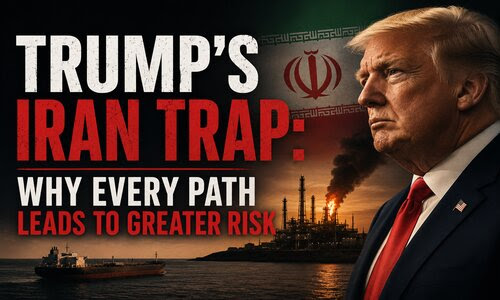
Donald Trump may command the world’s most powerful military, but today he faces an enemy that understands something equally powerful: time.
Iran no longer needs to defeat America on the battlefield. It only needs to make every available option so politically, economically and militarily painful that Washington hesitates. If that is Tehran’s strategy, it may already be working.
Over the past several weeks, President Trump has repeatedly signaled that military action remained on the table, only to pause again as negotiations resumed. On the surface, the decision appears understandable. Iran has already demonstrated its willingness to disrupt maritime traffic and threaten one of the world’s most important energy corridors. But military planners fear something far worse than the current standoff.
The real nightmare scenario is not simply more interference with shipping through the Strait of Hormuz. It is a coordinated Iranian campaign against the oil fields, refineries, export terminals, pipelines and energy infrastructure of America’s Gulf allies.
Such attacks would not merely slow the movement of oil–they could temporarily cripple the Gulf’s ability to produce and export it altogether. The result could be one of the largest energy shocks the modern world has experienced in decades, sending oil prices sharply higher, reigniting inflation, rattling financial markets and placing enormous strain on economies already burdened by debt and slowing growth.
That is the real trap confronting the White House.
Every Option Carries A Price
Rarely does a president face a foreign policy decision where every available path carries significant consequences.
If Trump authorizes a major military operation, Iran’s retaliation would likely extend well beyond attacks on American military bases. Tehran has repeatedly warned that Gulf nations assisting U.S. military operations could see their own energy infrastructure become targets. Oil fields, refineries, export terminals, pipelines, desalination plants and electrical facilities across Saudi Arabia, the United Arab Emirates, Bahrain and other neighboring states could suddenly find themselves on the front lines.
That distinction is critical.
Closing or disrupting the Strait of Hormuz creates a transportation crisis.
Destroying or severely damaging Gulf energy infrastructure creates a production crisis.
One delays oil deliveries.
The other reduces the world’s ability to produce millions of barrels of oil each day.
The difference is enormous.
Unlike a tanker waiting for safe passage, a destroyed refinery cannot simply resume operations overnight. Damaged export terminals take time to repair. Pipeline networks require reconstruction. Production lost from major oil fields cannot always be immediately replaced elsewhere, particularly when global spare production capacity is limited.
The consequences would ripple through nearly every sector of the global economy.
Oil prices could surge dramatically. Gasoline and diesel prices would climb. Airlines, trucking companies and manufacturers would face soaring operating costs. Inflation–which many central banks have spent years trying to bring under control–could return with renewed force. Stock markets would likely react sharply, consumer confidence could weaken, and nations already struggling with high debt and slowing economic growth could once again find themselves confronting recession.
In other words, what begins as a military conflict in the Persian Gulf could quickly become a global economic crisis affecting families thousands of miles from the battlefield.
These are not theoretical concerns. They are precisely the kinds of scenarios military planners are attempting to prevent.
Iran’s Most Powerful Weapon May Not Be Its Missiles
Iran cannot match America’s conventional military strength.
It doesn’t have to.
Instead, Tehran may be pursuing something far more effective.
Its greatest strategic weapon may be the fear of what a wider conflict would do to the global economy.
Threaten the Strait of Hormuz.
Threaten Gulf oil infrastructure.
Threaten commercial shipping.
Threaten regional energy production.
Suddenly, military decisions are no longer measured solely by battlefield success. They become measured by gasoline prices, inflation, financial markets, insurance costs and political consequences back home.
If an adversary can convince its opponent that the economic consequences of military action are simply too costly, overwhelming military superiority begins to lose some of its advantage.
That should concern every American–not only in this conflict, but in future confrontations with other adversaries.
Can America Fight On An Election Calendar?
Every president must weigh military decisions alongside domestic realities.
No responsible commander-in-chief ignores the possibility of American casualties, economic disruption or broader regional escalation.
But America’s adversaries understand those realities too.
Iran knows elections matter.
It knows rising gasoline prices matter.
It knows public opinion matters.
If Tehran believes it can influence Washington’s decision-making simply by threatening economic chaos, then it has identified a strategic pressure point extending far beyond this conflict.
The danger is that America’s military calendar begins following its political calendar while Iran continues following its strategic one.
The Window Of Opportunity Will Not Stay Open Forever
History repeatedly demonstrates that military opportunities rarely remain available indefinitely.
Whether confronting terrorist organizations, rogue regimes or expanding military powers, delays often allow adversaries to rebuild capabilities that previously had been degraded.
That does not automatically mean military action is always the correct answer.
It does mean postponement carries costs of its own.
Every additional week potentially allows Iran to repair infrastructure, relocate military assets, improve air defenses, replenish missile and drone inventories, harden underground facilities and further disperse sensitive capabilities. Even if only some of those efforts succeed, any future military campaign could become significantly more difficult than it would be today.
The tragic irony would be discovering that the war everyone hoped to avoid has simply become larger, longer and more expensive.
What Does Victory Actually Look Like?
Before deciding when to act, Washington must answer an even more important question.
What exactly is victory?
Is success reopening the Strait of Hormuz?
Ending uranium enrichment?
Destroying Iran’s missile production?
Preventing future nuclear capability?
Ending support for terrorist proxies?
Changing the regime’s behavior?
Or replacing the regime altogether?
Each objective requires a different strategy.
Without a clearly defined end state, military victories can become temporary while diplomatic agreements become little more than pauses between future crises.
Diplomacy is valuable when it produces lasting, verifiable security. But diplomacy that merely postpones confrontation without fundamentally reducing the threat risks becoming a strategy of delay rather than a strategy of peace.
The Real Danger
Trump’s critics argue he is waiting too long.
His supporters argue he is wisely trying to avoid a regional war that could devastate the global economy.
Both perspectives recognize genuine risks.
But perhaps the greatest danger lies somewhere in between.
What if Iran has successfully maneuvered the United States into a position where every available option carries unacceptable consequences?
Strike now, and Tehran may attempt to ignite an economic firestorm by targeting the energy infrastructure that powers much of the world.
Wait longer, and Iran gains additional time to recover, adapt, strengthen its military capabilities and prepare for the next confrontation.
That is what makes this more than a military dilemma.
It is a strategic trap.
History shows that windows of military opportunity do not remain open forever. They close as enemies rebuild, disperse assets, adapt tactics and prepare for the next phase of conflict.
Trump’s challenge is no longer simply deciding whether to strike Iran.
It is deciding whether today’s economic risks are greater than tomorrow’s strategic risks.
Because if diplomacy ultimately fails–and Iran emerges stronger while the world’s dependence on Gulf energy remains unchanged–the next decision facing the White House may be even more dangerous than the one it faces today.
Iran no longer has to defeat America on the battlefield. It only has to convince America that the cost of defeating Iran has become too high.
If that is Tehran’s strategy, then every day of delay raises one unsettling question:
Is America running out of options–or running out of time?
Canada’s Military Just Silenced God: What Happens When A Nation Erases Faith
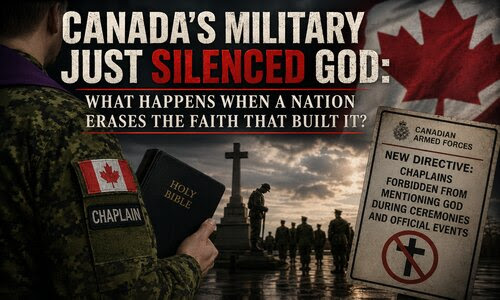
Canada has long prided itself on being a nation of tolerance, diversity, and freedom. Yet one of its latest military directives raises a troubling question: How tolerant is a society that increasingly excludes Christianity from public life?
The Canadian Armed Forces has reportedly issued guidance instructing military chaplains to avoid using religious-specific language–including references to God–during public ceremonies and official events. The irony is difficult to ignore. Chaplains exist precisely because they are ministers of faith. Asking them to leave God out of public prayers is rather like asking a physician to avoid mentioning medicine.
Even more striking is the fact that Canada’s own national anthem still asks God to “keep our land glorious and free.” Apparently, the nation may sing about God, but those officially appointed to provide spiritual care are increasingly discouraged from speaking His name.
This is about far more than military protocol. It reflects a profound shift in how Canada understands its own history, identity, and future.
The Faith That Helped Build A Nation
Modern Canada did not emerge in a spiritual vacuum.
For centuries, Christian missionaries established many of the country’s earliest schools, hospitals, and charitable institutions. Churches played a central role in caring for the poor, educating children, and building communities across an often harsh and unforgiving landscape.
The nation’s constitutional foundations also reflected this heritage. Canada’s Constitution Act, 1982 begins with the declaration that “Canada is founded upon principles that recognize the supremacy of God and the rule of law.” Whether every Canadian today personally embraces Christianity is beside the point. The country’s legal and moral framework openly acknowledged that rights ultimately came from a higher authority than the state.
That understanding has enormous implications.
When governments recognize God, they implicitly recognize limits on their own power. Human rights are viewed as inherent–not merely privileges granted by politicians. Freedom of conscience, freedom of worship, and freedom of speech become protected because they are understood to flow from something greater than government itself.
When that foundation is gradually removed, rights become increasingly vulnerable to the shifting priorities of whoever happens to hold political power.
Christians Have Always Served Canada
The irony of this directive becomes even sharper when considering the sacrifices Christians have made in Canada’s defense.
Thousands of Canadian soldiers who stormed the beaches of Normandy, fought through Europe, or served in Korea, Afghanistan, and countless peacekeeping missions carried Bibles in their packs and prayed before entering battle.
Military chaplains have stood beside wounded soldiers, comforted grieving families, buried the dead, and offered hope in humanity’s darkest moments. They have ministered during wars, natural disasters, and national tragedies. Their role has never been simply ceremonial–it has been deeply spiritual.
Many soldiers sought them precisely because they wanted someone willing to speak honestly about God, eternity, forgiveness, courage, and hope.
Now those same chaplains are increasingly expected to provide spiritual care while carefully avoiding the very faith that defines their calling.
Neutrality Or Secular Preference?
Supporters of these policies often argue they promote neutrality in an increasingly diverse military.
But genuine neutrality treats all beliefs equally.
What increasingly appears to be happening across much of the Western world is not neutrality but the elevation of secularism into the preferred public worldview. Religious expression is welcomed only so long as it remains private and invisible.
Ironically, a military chaplain can often discuss mindfulness, resilience, mental wellness, or personal values with little controversy. Mentioning God during an official ceremony, however, becomes problematic.
That is not neutrality.
It is selective exclusion.
A truly pluralistic society should have enough confidence to allow chaplains to pray according to their own faith while recognizing that participation remains voluntary.
Instead, diversity increasingly seems to mean every belief is welcome–except the one that historically shaped the nation itself.
Forgetting Our Foundations
History offers countless examples of civilizations that eventually forgot the very values that enabled their success.
Western civilization’s concepts of human dignity, forgiveness, equality before the law, compassion for the vulnerable, and individual worth were profoundly influenced by centuries of Christian teaching.
One need not be a churchgoer to acknowledge this historical reality.
Removing every visible reminder of Christianity from public institutions does not create historical accuracy. It creates historical amnesia.
Future generations may eventually conclude that Canada’s freedoms somehow appeared spontaneously, disconnected from the moral convictions that inspired many of the nation’s founders, reformers, soldiers, and citizens.
That would be a profound misunderstanding of history.
A Warning Beyond Canada
Christians should view this story as more than simply another culture-war headline.
It illustrates how rapidly societies can move from celebrating religious liberty to restricting religious expression in the name of inclusivity.
The issue is not whether every Canadian shares the Christian faith.
The issue is whether Christians remain free to publicly express the beliefs that motivated generations to serve, sacrifice, and build the nation.
Military chaplains are not political activists. They are shepherds called to care for those facing some of life’s greatest hardships. If they cannot openly speak about God during the very ceremonies where comfort, hope, remembrance, and sacrifice are being honored, one has to ask what role society believes faith should still play.
Canada’s anthem continues to ask God to keep the nation “glorious and free.”
The greater question now is whether Canada still wants Him to be part of its public life at all.
History suggests that nations are rarely strengthened by forgetting the faith that helped build them. More often, they lose not only their memory but eventually the freedoms that memory helped preserve.
TruLight TV : Finding Fulfillment: How Christ Meets Our Unmet Needs
Today on 7th Street Theater, Kelly shares her testimony in word and song. And our sermon today from Dr. Charles Stanley (The Origin Of Our Needs) – God has an answer for all our unmet needs. He wants us to be made whole and to discover the source of our true needs. In this message, Dr. Stanley teaches the three universal needs that every person feels and explains how a relationship with Christ can help us discover and lay to rest our unmet needs. This and some stunning Gospel songs. Enjoy!
Today on TruLight Radio XM
TruLight Radio XM 24/7
Program
GMT / UTC +2
Monday To Fridays
00:15 Words to Live By Testimonies
01.15 Science Scripture and Salvation
02.15 Ground Works
04.00 Gospel Concert of the Day
05.00 The Daren Streblow Comedy Show
5:55 It is Today devotional
6:00 Gaither Homecoming Morning Show
7:15 Discover the Word
8.15 Destined for Victory
8:55 Science Scripture and Salvation
9:00 Holy Spirit Hour – Normally Sermons
10:15 Hope of the Heart
11:15 Unshackled
11.45 Words to Live By
12:15 Truth for Life
13:15 Living on the Edge with Chip Ingram
14:15 Focus on the Family
15:00 Kids Hour
16:00 In Touch with Dr. Charles Stanley
16:30 Groundwork
17:15 Live in the Light
18:15 Renewing your Mind
19:00 Gaither Homecoming Show
20:15 Growing Hope
21:15 Adventures in Odyssey Radio Drama
21:45 Bible Reading
22:15 Night-sounds
23.00 Good Old Country Gospel / Rhema Gospel Express
VISIT THE WEBSITE
TruLight Ministry News – EXTRA MANNA
TruLight Ministries orders from God since 2012 . Teach Them , Comfort Them and Warn Them!
Healing Truths.
End Time Articles.
Share this Feeding of Manna with your Friends and Family. just click on the Social Media icon and share This Manna with your Friends and Family. just click on the Social Media icon and share !