Hosted by TruLight Ministries International – The Place of Truth
SELECT YOUR READING LANGUAGE – BOTTOM LEFT = YOUR DAILY MANNA NOW AVAILABLE IN 103 LANGUAGES
@ TruLight Daily Manna is not Just a Bible Verse with a Small Prayer . NO ::: WE SERVE DAILY Manna for the ENTIRE Day . Breakfast , Lunch , Dinner , Plus tea Times and even Entertainment Manna . Plus News Manna and More , This Daily Manna will keep you Spiritually full for the full 48 Hours and even More to Share with your Friends and Family !!!
7 CERTAINTIES TO LIVE BY = NEXT 7 DAY STUDY
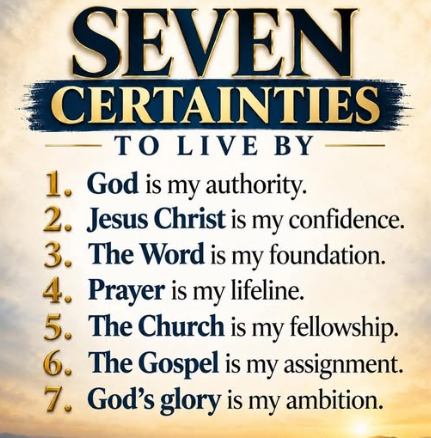
- GOD IS MY AUTHORITY
The Bible teaches believers to be law-abiding citizens, to avoid civil disputes, and to show respect for all people in positions of authority. In Romans 13:1–14, the apostle Paul refers chiefly to the Christian’s attitude toward human governing authorities: “Everyone must submit to governing authorities. For all authority comes from God, and those in positions of authority have been placed there by God. So anyone who rebels against authority is rebelling against what God has instituted, and they will be punished” (verses 1–2, NLT).
All authority comes from God means that God is the One who establishes and ordains civil government. The original Greek word (exousia), translated as “authority” in Romans 13:1, refers to the authority exerted by government officials. Christians are called to recognize, respect, and submit to public officials as the Lord’s appointed servants to restrain evil, punish the disobedient, and carry out God’s righteous will in society.
The apostle Peter echoes the command: “Submit yourselves for the Lord’s sake to every human authority: whether to the emperor, as the supreme authority, or to governors, who are sent by him to punish those who do wrong and to commend those who do right. For it is God’s will that by doing good you should silence the ignorant talk of foolish people. Live as free people, but do not use your freedom as a cover-up for evil; live as God’s slaves. Show proper respect to everyone, love the family of believers, fear God, honor the emperor” (1 Peter 2:13–17).
A proper, godly response to authority is our Christian witness to the world. When believers obey the law and show respect for government officials, their conduct reflects the example of Jesus Christ. When He was arrested, put on trial, and was crucified, Jesus was submissive to the authorities (see Matthew 26:47–56; 27:11–44; John 18:1–14; 18:28—19:30).
In the Old Testament, God is presented as the ultimate ruling authority over all human governments: “He controls the course of world events; he removes kings and sets up other kings” (Daniel 2:21, NLT see also Daniel 4:17; 5:18–21). God raises and brings down leaders according to His will (see Psalm 75:6–7). Knowing that all authority comes from God should motivate all leaders to exercise their power responsibly (Matthew 20:25–28; 2 Corinthians 10:8; 13:10).
All authority comes from God means that obeying the law, paying taxes, and respecting our leaders is not optional for Christians. If we reject and rebel against human authority, we are rebelling against God. And Scripture says if we do this, He will punish us (Romans 13:2).
All authority comes from God does not mean blind, unreasoning obedience. The believer’s allegiance is first and foremost to God (see Exodus 1:17; Daniel 3:10–12). Suppose submission to a human authority will cause us to disobey God and His Word. In that case, we are to follow the example of Peter and the apostles: “We must obey God rather than any human authority” (Acts 5:29, NLT).
The highest authority belongs to God, who does as He pleases (Psalm 115:3). He rules over angels, demons, and all the unseen forces of the spiritual realm (Psalm 91:11; Luke 4:10; Ephesians 6:10–24). He is the sovereign head of the church: “God has put all things under the authority of Christ and has made him head over all things for the benefit of the church” (Ephesians 1:22, NLT, see also Ephesians 4:15; 5:22–23; Colossians 1:18; 3:18). God ordains spiritual leaders in the church and calls believers to “submit to their authority” (Hebrews 13:17; see also 1 Corinthians 16:15–16; 1 Thessalonians 5:12–13) and to “one another out of reverence for Christ” (Ephesians 5:21).
God also established the hierarchy of authority in the home and family, between husbands and wives and parents and children (see Genesis 18:19; Proverbs 6:20; Joshua 24:15; 1 Corinthians 11:3; Ephesians 5:23; 6:1–4; Colossians 3:20; 1 Timothy 3:4, 12). Likewise, God is the Master over all earthly bosses (Colossians 4:1), and therefore Christians must respect those in authority in the workplace (Ephesians 6:5–9; Colossians 3:22–24; 1 Timothy 6:1–2; Titus 2:9–10; 1 Peter 2:18–21). Ultimately, all authority comes from God, the almighty Creator of everything (2 Chronicles 20:6; Acts 17:24–28; Romans 9:19–21).
The authority of the believer rests on the believer’s mandate to serve the Lord. When we are in God’s will, we can move with confidence that we are doing what is right and that the Holy Spirit’s power is at work within and through us. Some ministries emphasize the authority of the believer to an unhealthy and unbiblical extent. It’s better to remember the meekness to which we are called (Titus 3:1–2; James 3:13). Even Paul, who as an apostle had genuine authority over the church, did not always exert his authority: “Although in Christ I could be bold and order you to do what you ought to do, yet I prefer to appeal to you on the basis of love” (Philemon 1:8–9).
Before we start enumerating the things that fall under the authority of the believer, we must acknowledge that, first and foremost, the believer is under authority. “God [is] the blessed and only Ruler, the King of kings and Lord of lords” (1 Timothy 6:15). And our Lord Jesus reminds us, “You also, when you have done everything you were told to do, should say, ‘We are unworthy servants; we have only done our duty’” (Luke 17:10). The believer’s life is one of total dependence on God, as modeled by the Son of Man (see Luke 22:42 and John 5:30).
God has appointed lesser authorities in this world to rule under Him. Parents have authority over their children (Ephesians 6:1). Husbands have authority over their wives (Ephesians 5:22–24). Kings have authority over their subjects (Romans 13:1–7). The apostles had authority over the church (Acts 4:34–35; Philemon 1:3).
Some people use the Great Commission to teach the authority of the believer: “Jesus came to them and said, ‘All authority in heaven and on earth has been given to me. Therefore go and make disciples of all nations, baptizing them in the name of the Father and of the Son and of the Holy Spirit, and teaching them to obey everything I have commanded you’” (Matthew 28:18–20). But the authority in the passage clearly belongs to Jesus. He claims “all authority” and then tells those who fall under His authority what to do. Based on the Great Commission, the only “authority” believers possess is the authority to go into all the world, the authority to make disciples, the authority to baptize in the name of the Triune God, and the authority to teach Jesus’ commands. In the exercise of this authority, the believer is simply obeying orders.
Besides the authority to share the gospel, the authority of the believer includes the right to be called a child of God (John 1:12) and the authority to “approach God’s throne of grace with confidence” (Hebrews 4:16). In all things, we remember that Christ is the Lord. “Let the one who boasts boast in the Lord” (2 Corinthians 10:17).
Some Christians get mixed up about the authority of the believer because they take verses out of context. Matthew 10:1, for example, says, “Jesus called his twelve disciples to him and gave them authority to drive out impure spirits and to heal every disease and sickness.” Some people claim authority over demons and sickness based on this verse, overlooking the fact that Jesus was speaking to a particular group of people (“his twelve disciples”) for a particular time of ministry. Others assert they possess apostolic gifts, claiming for themselves the same authority as Peter or Paul. Some people claim authority for the believer based on Old Testament promises to Joshua (Joshua 1:3), Gideon (Judges 6:23), or Israel (Deuteronomy 8:18; Malachi 3:10)—again, taking verses out of context. Other believers claim authority based on Mark 16:17–18, even though that portion of Mark’s gospel is a late addition and not original.
Paul exhorted Titus to teach the Scripture boldly, with authority (Titus 2:15). As believers serve each other and the Lord, they should do so with confidence and the authority that comes with knowing they are doing God’s work: “If anyone speaks, they should do so as one who speaks the very words of God. If anyone serves, they should do so with the strength God provides, so that in all things God may be praised through Jesus Christ. To him be the glory and the power for ever and ever. Amen” (1 Peter 4:11).
The authority of the believer comes from God and from God’s Word. As we are God’s ambassadors, we can speak with His authority as we share His Word, appealing to the world on behalf of Christ (2 Corinthians 5:20). We wield the sword of the Spirit, a mighty weapon forged by God for our use (Ephesians 6:17).
The statement “the Bible is our only rule for faith and practice” appears in many doctrinal statements. Sometimes, it takes a similar form, stating that the Bible is “the final authority,” “the only infallible rule,” or “the only certain rule.” This sentiment, whatever the wording, is a way for Bible-believing Christians to declare their commitment to the written Word of God and their independence from other would-be authorities.
The statement that the Bible is the “only rule for faith and practice” is rooted in the sufficiency of Scripture, as revealed in 2 Timothy 3:16–17: “All Scripture is God-breathed and is useful for teaching, rebuking, correcting and training in righteousness, so that the servant of God may be thoroughly equipped for every good work.” Because God is sovereign, His Word is the absolute authority in our lives, and by it God equips us for His service. As A. A. Hodge wrote, “Whatever God teaches or commands is of sovereign authority. . . . The Scriptures of the Old and New Testaments are the only organs through which, during the present dispensation, God conveys to us a knowledge of his will about what we are to believe concerning himself, and what duties he requires of us” (Outlines of Theology, chapter 5).
When we say, “The Bible is our only rule for faith and practice,” we mean that we hold the Bible, God’s Holy Word, to be our ultimate guide for what we believe (“faith”) and what we do (“practice”). We mean that the Bible trumps man’s authority, church tradition, and our own opinions. We mean we will allow nothing that opposes God’s Word to dictate our actions or control our thinking. We mean that we agree with the Reformers’ cry of sola scriptura.
When the Bible clearly reveals a truth, we believe it with all our hearts. When the Bible clearly commands us to do something, we make sure we are doing it. For example, the Bible says that Jesus is coming back again (John 14:3; Revelation 19:11–16). Since the Bible is our “only rule for faith,” we have no choice but to believe that Jesus is returning some day. Also, the Bible says that we are to “flee from sexual immorality” (1 Corinthians 6:18). Since the Bible is our “final authority for practice,” we are bound to abstain from immorality (as defined by the Bible).
We believe following the Bible as our only rule of faith and practice is the safest position, theologically. Fidelity to Scripture keeps us from being “tossed back and forth by the waves, and blown here and there by every wind of teaching” (Ephesians 4:14). As the noble Bereans taught us (Acts 17:11), all doctrines are to be examined in light of the Bible, and only what conforms to biblical truth should be accepted.
Following the Bible is also the most sensible position, because the Word of God “is eternal; it stands firm in the heavens” (Psalm 119:89) and “the law of the LORD is perfect, refreshing the soul. The statutes of the LORD are trustworthy, making wise the simple” (Psalm 19:7).

Tea Time Manna
Do nothing out of selfish ambition or vain conceit, but in humility consider others better than yourselves. Each of you should look not only to your own interests, but also to the interests of others.
—Philippians 2:3-4
Do you remember one of the earliest questions in the Bible? “Where is your brother… Abel?” To which Cain responded: “Am I my brother’s keeper?” (Genesis 4:9) Paul’s answer to Cain’s question is clear and undeniable: It is, YES! As Paul tells the Philippians (and us) in this verse, we must not look only to our “own interests, but also to the interest of others”! We are our brother’s keeper! We are our sister’s keeper! We look not only to our own interests, but also to the interests of those around us who need God’s grace and our love.
Prayer
Father, teach me to love your family as you love me. I get so caught up and distracted in my own world and my own problems that I forget to notice those hurting around me. Help me grow more aware and attuned to others’ needs, so you may minister to their needs and interests through me. In the powerful name of Jesus, I pray. Amen and Amen
Truth Article by Pastor Dirk
The RAPTURE, Where will it take place on Earth?
The Bible says at the 2nd Coming of Jesus Christ and at the Sound of the 7th Trumpet , He Jesus will instruct His Angels to collect The Dead and Alive of His Elect , that died or lives for Christ in one Place , Where will this Be ?
Mat 24:30 ~ 31 And then shall appear the sign of the Son of man in heaven: and then shall all the tribes of the earth mourn, and they shall see the Son of man coming in the clouds of heaven with power and great glory.
And he shall send his angels with a great sound of a trumpet, and they shall gather together his elect from the four winds, from one end of heaven to the other.
1Th 4:13 ~ 17 But I would not have you to be ignorant, brethren, concerning them which are asleep, that ye sorrow not, even as others which have no hope.
For if we believe that Jesus died and rose again, even so them also which sleep in Jesus will God bring with him.
For this we say unto you by the word of the Lord, that we which are alive and remain unto the coming of the Lord shall not prevent them which are asleep.
For the Lord himself shall descend from heaven with a shout, with the voice of the archangel, and with the trump of God: and the dead in Christ shall rise first:
Then we which are alive and remain shall be caught up together with them in the clouds, to meet the Lord in the air: and so shall we ever be with the Lord.
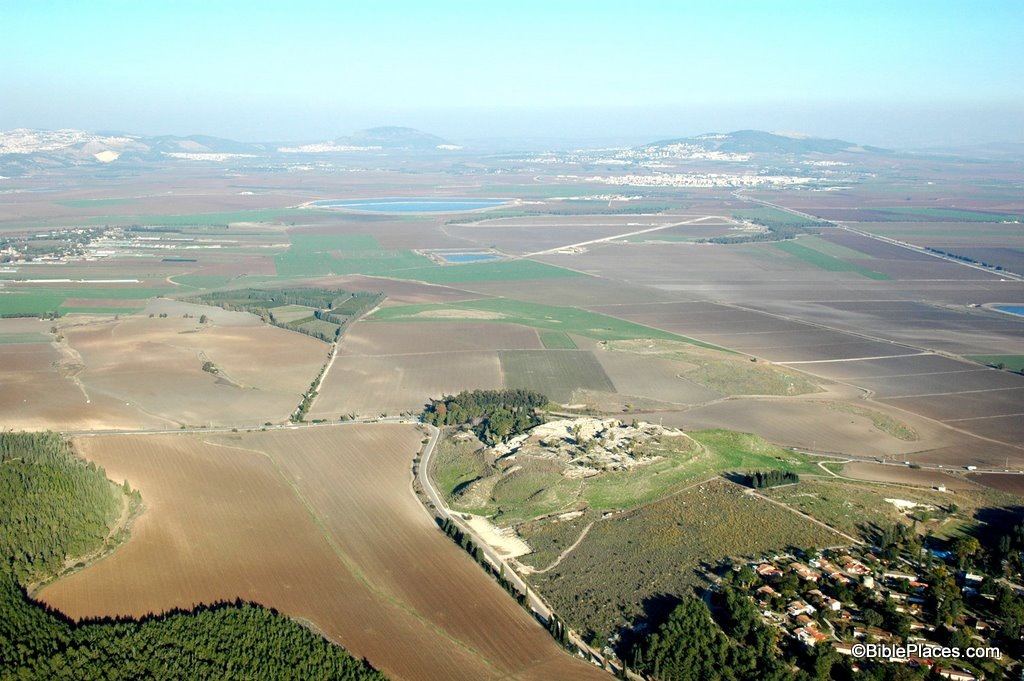
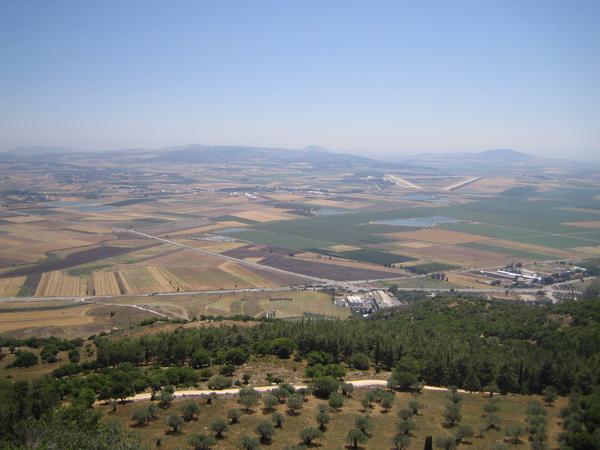
Jesus is going to place His feet on the Mount of olives , facing the Valley of Meggido.
Zec 14:4 And his feet shall stand in that day upon the mount of Olives, which is before Jerusalem on the east, and the mount of Olives shall cleave in the midst thereof toward the east and toward the west, and there shall be a very great valley; and half of the mountain shall remove toward the north, and half of it toward the south.
So they Rapture of the Elect will happen in the Valley of Megiddo at the Battle of Armageddon.
Rev 16:15 ~ 16 Behold, I come as a thief. Blessed is he that watcheth, and keepeth his garments, lest he walk naked, and they see his shame.
And he gathered them together into a place called in the Hebrew tongue Armageddon.
Pastoor Dirk , TruLight Radio XM
View of the Valley of Megiddo from Muraka
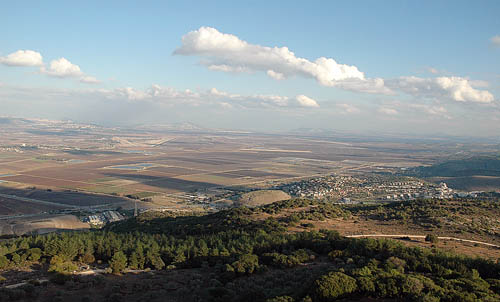
Megiddo and Jezreel Valley, Israel
a view of the Valley of Jezreel, also known as the Valley of Megiddo, or Armageddon from the Mount of Olives
Article by Pastor Dirk – TruLight Ministries International

NEWS MANNA –
The Sounds Of The Temple Are Returning To Jerusalem
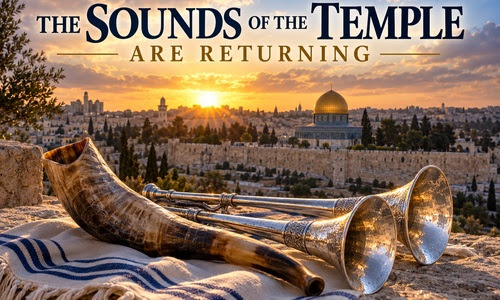
For nearly two thousand years, these were sounds that belonged to the Bible.
The Temple was gone. The sacrifices had ceased. The priestly service ended. The silver trumpets associated with Israel’s ancient worship became artifacts of another age.
But on Rosh Hashanah this year, something remarkable happened on the Temple Mount.
Hundreds of Jews ascended the mountain. Organized Jewish prayer continued there for hours. Worshippers openly carried prayer books and wore traditional prayer shawls.
Then the shofar sounded.
And beside it sounded two silver trumpets—recreating a combination of instruments associated with worship in ancient Jerusalem.
A Temple has not been rebuilt. Sacrifices have not resumed.
But increasingly, people are preparing as though they someday could.
Ancient Sounds Return To The Temple Mount
The significance of the silver trumpets could easily be missed.
God commanded Moses in Numbers 10 to make two trumpets of hammered silver. They became associated with Israel’s national life and worship, and Scripture specifically commanded their use during appointed festivals and over certain sacrifices.
For generations, Christians have read those passages as descriptions of Israel’s ancient past.
Now the sound of silver trumpets has been heard again on the mountain where the Temple once stood.
Rabbi Josh Wander, who participated in the Rosh Hashanah gathering, believes this was the first time in thousands of years that the shofar and silver trumpets had sounded together on the Temple Mount.
It was not completely permitted. Police briefly detained those responsible for bringing the instruments onto the Mount, and Israeli authorities confirmed that administrative proceedings were opened. But according to Wander, worshippers were allowed to finish each round of blasts before police intervened.
Three rounds were completed.
That might sound like a small detail. Against the recent history of the Temple Mount, however, it illustrates an extraordinary transformation.
For years, Jews could be removed or detained for visibly praying there. Even carrying Jewish prayer books was heavily restricted. This Rosh Hashanah, a large group spent hours openly praying, some wearing prayer shawls and carrying approved prayer books.
Practices once considered almost unimaginable are gradually becoming possible.
And Temple-related practices are beginning to appear with them.
They Aren’t Just Talking About A Temple
The trumpets are only one piece of a much larger story.
Jewish organizations dedicated to preparing for a future Temple have spent decades researching exactly how biblical Temple worship functioned.
Sacred vessels have been recreated. Priestly garments have been produced. The procedures surrounding sacrifices have been studied. Priests descended from the biblical priestly line have received instruction concerning Temple service.
These efforts are not about constructing a museum exhibit depicting ancient Judaism.
The stated objective of groups such as the Temple Institute is the eventual restoration of Temple worship.
That changes the significance of what is happening.
For centuries, Jews prayed for the restoration of Jerusalem and the Temple. Today, some Jews are moving beyond prayer and attempting to solve the practical problems that would arise if that opportunity ever came.
What vessels would be needed?
How would the priests serve?
How would sacrifices be performed?
How would biblical requirements concerning ritual purity be satisfied?
Increasingly, those questions are being treated not merely as matters of ancient history, but as preparations for a possible future.
Then There Are The Red Heifers
Perhaps nothing illustrates this shift better than the extraordinary attention surrounding the red heifer.
Numbers 19 describes a purification ceremony involving an unblemished red cow. Its ashes were mixed with water and used to cleanse people from ritual impurity associated with contact with the dead.
To most people, it is one of the more obscure commandments in the Old Testament.
To Jews preparing for renewed Temple worship, it is anything but obscure.
They believe restoring biblical standards of purification is necessary before full Temple worship can resume. That is why enormous attention has been given to finding red heifers that could potentially meet the biblical requirements.
Practical preparations for the ceremony have also taken place.
Think about what that means.
People are not simply asking whether another Temple could someday stand in Jerusalem.
They are working through the details of how worship could actually begin.
Even Israeli Politics Is Changing
There is another obstacle that would have seemed nearly insurmountable only a few decades ago: Israeli politics.
The Temple Mount is one of the most sensitive pieces of territory on earth. Any change there can reverberate throughout Israel, the Muslim world and the international community.
Yet before Rosh Hashanah, Israeli lawmakers Simcha Rothman and Shlomo Karai publicly called for Jews to be permitted to pray and sound the shofar on the Temple Mount. Rothman argued that preventing Jews from fulfilling the commandment at Judaism’s holiest site infringed upon their ability to practice their faith.
Temple Mount activism that once existed largely on Israel’s political fringes has increasingly entered mainstream political debate.
Activists are already looking toward the next step: expanding the Jewish religious practices permitted on the Mount during biblical festivals.
Nobody knows how far—or how quickly—this will go.
Enormous religious, political and security barriers remain. Any serious attempt to change the existing arrangements surrounding the Temple Mount could trigger an international crisis.
Yet something is clearly moving.
Christians Should Understand What They Are Watching
For Jews involved in these efforts, this is about restoring something lost nearly two thousand years ago.
For Christians who understand biblical prophecy, however, there is another reason to watch Jerusalem closely.
Several prophetic passages describe Temple worship operating again in the last days.
Daniel describes sacrifices being stopped. Jesus points His disciples toward Daniel’s prophecy of the “abomination of desolation” standing in the holy place. Paul describes a future figure entering what he calls the Temple of God in 2 Thessalonians 2. Revelation 11 describes a Temple in Jerusalem being measured.
Christians disagree about precisely how and when these passages will be fulfilled. But generations of Bible prophecy teachers have expected that some form of Jewish Temple worship would eventually return to Jerusalem.
For much of Christian history, that required imagining a world that did not exist.
There was no Jewish state.
Then Israel was reborn.
Jerusalem was divided.
Then Israel gained control of the Old City and Temple Mount in 1967.
Jews were severely restricted from praying on the Mount.
Now Jewish prayer there is becoming increasingly open.
Temple worship existed primarily in history books.
Now vessels have been recreated, priestly service studied, purification requirements investigated and ancient practices rehearsed.
And now the shofar and silver trumpets have sounded together on the Temple Mount.
None of this means a Third Temple will be built tomorrow. There are still immense obstacles between today’s preparations and an operating Temple.
But that may be precisely why these developments deserve attention.
Biblical prophecy does not require everything to happen at once. Before sacrifices can be stopped, sacrifices must exist. Before Temple worship can operate, the infrastructure, knowledge, religious desire and political circumstances allowing it must somehow emerge.
We may be watching pieces of that infrastructure gradually fall into place.
Religious Jews and prophecy-minded Christians ultimately expect very different things to happen on this mountain. Yet both understand something much of the world overlooks:
Jerusalem is not finished making biblical history.
For almost two thousand years, the sounds of the Temple belonged to the past.
Now, faintly but unmistakably, some of those sounds are returning.
TruLight Radio Dramas Address the Building of the 3rd Jewish Temple
A Bizarre Alliance: When The Church Pulpit Becomes A Platform For Queer Islam
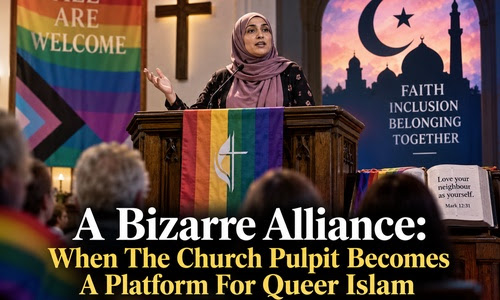
Christianity and Islam disagree about some of the most fundamental questions imaginable. Who is Jesus Christ? Is He God incarnate? Did He die on the cross? Did He rise from the dead? Is salvation found through Him alone?
Yet inside the modern progressive religious movement, those enormous theological divisions can suddenly seem remarkably unimportant.
That strange convergence was on display at McDougall United Church in Calgary, where a Pride worship service featured Tahira Ebrahim, a Muslim speaker discussing the perspectives of queer Muslims and the attempt to reconcile LGBTQ identities with Islamic faith.
It was an extraordinary scene: a Christian sanctuary, a Muslim perspective and LGBTQ-affirming theology brought together under the banner of inclusion.
And perhaps that combination tells us something important about what is happening to parts of Western Christianity.
When Inclusion Becomes The Unifying Doctrine
McDougall makes no secret of its direction. The congregation identifies itself as an “Affirming” ministry and says it seeks inclusion regardless of sexual orientation, gender identity, gender expression, religious background and other differences. The church says it moved beyond merely being “welcoming” toward becoming an explicitly inclusive community.
Its Pride activities are similarly extensive. In September, McDougall hosted a joint Pride worship service with other United Church congregations. Days earlier, it hosted Calgary’s Citywide Pride Interfaith Service, an annual gathering intended to bring together affirming religious communities and LGBTQ organizations.
And that is where the story becomes much bigger than one speaker or one Canadian congregation.
Christianity and Islam cannot both be correct about Jesus.
Historic Christianity declares Him the divine Son of God, crucified and resurrected, the only way to the Father. Islam rejects several of those foundational Christian claims.
Those aren’t minor denominational disagreements.
Yet progressive religion has discovered something capable of bringing adherents of dramatically different faith traditions together: a shared understanding of identity, sexuality and inclusion.
A New Kind Of Interfaith Unity
For generations, interfaith gatherings generally focused on coexistence, religious liberty, community relationships or humanitarian causes. Christians could treat Muslims with dignity and friendship without pretending their theological differences didn’t exist.
Something different is increasingly taking shape.
The objective isn’t merely living peacefully beside someone who believes differently. Religious traditions themselves are increasingly being reinterpreted around a common progressive moral framework.
Christianity must become LGBTQ-affirming.
Islam must become LGBTQ-affirming.
Judaism must become LGBTQ-affirming.
And once that framework becomes the standard by which religion itself is judged, an extraordinary reversal occurs. Instead of Scripture defining which cultural ideas Christians accept, cultural ideas increasingly determine which interpretations of Scripture are considered acceptable.
The religions remain different, but the moral authority sitting above them begins to look remarkably similar.
What Exactly Is The Christian Pulpit For?
That raises an uncomfortable question churches eventually have to answer.
What is the pulpit actually for?
The New Testament presents Christian preaching as the proclamation of Christ, repentance, salvation and biblical truth. Paul told Timothy to “preach the word” and warned that a time would come when people would accumulate teachers who suited what they wanted to hear.
Paul’s concern wasn’t that Christians would fail to be sufficiently accommodating to every religious idea surrounding them. His concern was precisely the opposite: that the Church would gradually exchange truth for teaching more agreeable to its culture.
Christians can—and should—treat Muslims and LGBTQ people with compassion and dignity. Christians can defend their freedom, befriend them, work beside them and welcome them through the church doors.
But welcoming someone into a church is very different from giving competing religious beliefs authority within Christian worship.
The distinction becomes especially striking when the subject being presented is itself an attempt to reinterpret another religion’s historic teachings about sexuality.
At that point, what exactly is the congregation being asked to affirm?
The Alliance That Should Make Christians Think
There is an irony here that shouldn’t be overlooked.
Traditional Christianity and traditional Islam disagree profoundly about God and salvation, yet historically both have maintained restrictive teachings concerning same-sex sexual relationships. Progressive movements within both religions now seek to reinterpret those teachings.
Suddenly the progressive Christian and progressive Muslim may find themselves standing closer together on sexuality than either stands to historic teachings within his or her own religious tradition.
That is a remarkable realignment.
The deepest dividing line in modern Western religion may increasingly be less about whether someone identifies as Christian, Muslim or Jewish and more about whether ancient revelation is permitted to challenge modern cultural assumptions.
Once revelation must continually bend to contemporary definitions of identity and sexuality, the process rarely stops with a single doctrine.
Paul Already Warned The Church
If the Apostle Paul walked into many modern Pride-themed worship services, Christians don’t have to speculate very hard about what he would say.
His letters already tell us.
“Preach the word,” he commanded Timothy. “Be ready in season and out of season; reprove, rebuke, and exhort.”
He warned the Galatians about accepting a different gospel. He warned the Romans against conforming themselves to the world. He repeatedly instructed churches that Christian teaching would sometimes collide sharply with the surrounding culture.
None of that requires hostility toward people.
It requires fidelity to Christ.
The Church’s calling was never to discover the theological formula capable of affirming every identity, religion and cultural movement simultaneously. It was to proclaim a message so specific that the earliest Christians were willing to suffer rather than alter it:
Jesus Christ is Lord.
When a Christian pulpit instead becomes a platform for explaining how another religion can be reconciled with the sexual revolution, Christians should recognize that something fundamental has changed.
The bizarre alliance of Christianity, Islam and Pride may appear extraordinarily inclusive.
But the more important question for the Church is whether, in making room for everything else, it has slowly pushed the Gospel itself to the side.
The Sheriff of the Church VS Chrislam


TruLight TV ! Popcorn and Movie Time – Call the Family = The Prince of Egypt
In this animated retelling of the Book of Exodus, Egyptian Prince Moses, upon discovering his roots as a Jewish slave, embarks on a quest to free his people from bondage. When his plea is denied by his brother Rameses, the new pharaoh, a series of horrific plagues strike Egypt. Moses finally leads the Israelites to freedom by parting the Red Sea and drowning the Egyptian army. God then gives Moses the Ten Commandments, a list of rules for his people to live by.
Today on TruLight Radio XM
TruLight Radio XM 24/7
Program
GMT / UTC +2
Monday To Fridays
00:15 Words to Live By Testimonies
01.15 Science Scripture and Salvation
02.15 Ground Works
04.00 Gospel Concert of the Day
05.00 The Daren Streblow Comedy Show
5:55 It is Today devotional
6:00 Gaither Homecoming Morning Show
7:15 Discover the Word
8.15 Destined for Victory
8:55 Science Scripture and Salvation
9:00 Holy Spirit Hour – Normally Sermons
10:15 Hope of the Heart
11:15 Unshackled
11.45 Words to Live By
12:15 Truth for Life
13:15 Living on the Edge with Chip Ingram
14:15 Focus on the Family
15:00 Kids Hour
16:00 In Touch with Dr. Charles Stanley
16:30 Groundwork
17:15 Live in the Light
18:15 Renewing your Mind
19:00 Gaither Homecoming Show
20:15 Growing Hope
21:15 Adventures in Odyssey Radio Drama
21:45 Bible Reading
22:15 Night-sounds
23.00 Good Old Country Gospel / Rhema Gospel Express
VISIT THE WEBSITE
TruLight Ministry News – EXTRA MANNA
TruLight Ministries orders from God since 2012 . Teach Them , Comfort Them and Warn Them!
Artist Liners
Healing Truths.
End Time Articles.
INTRODUCTION MANNA

Bless Somebody with a Bible ! from City Bibles

Share this Feeding of Manna with your Friends and Family. just click on the Social Media icon and share This Manna with your Friends and Family. just click on the Social Media icon and share !