Hosted by TruLight Ministries International – The Place of Truth
SELECT YOUR READING LANGUAGE – BOTTOM LEFT = YOUR DAILY MANNA NOW AVAILABLE IN 103 LANGUAGES
@ TruLight Daily Manna is not Just a Bible Verse with a Small Prayer . NO ::: WE SERVE DAILY Manna for the ENTIRE Day . Breakfast , Lunch , Dinner , Plus tea Times and even Entertainment Manna . Plus News Manna and More , This Daily Manna will keep you Spiritually full for the full 48 Hours and even More to Share with your Friends and Family !!!
Do Not Continue to Sow on Dry Land !!!
In Ecclesiastes 3:1–8, King Solomon introduces a series of fourteen opposing seasons and events in the cycle of life (birth and death, mourning and dancing, war and peace, etc.). “There is a time for everything,” begins Solomon, “and a season for every activity under the heavens: a time to be born and a time to die, a time to plant and a time to uproot” (verses 1–2).
All of the moments in Solomon’s list combine to represent the whole of human activity in its varied expressions. Our lives in this world are a blend of joy and sorrow, ups and downs, harmony and discord, rooting and upheaval. Solomon acknowledges that every moment has its proper place and time appointed by God. From beginning to end, the Lord is in control. He is sovereign. He has a purpose in every season, whether we understand it or not.
The first two pairings—“a time to be born and a time to die” and “a time to plant and a time to uproot”—represent beginnings and endings, new life, and the inevitability of death. Plant life starts with sowing or planting but ends when uprooting occurs. Those who work in the world of agriculture understand that there is a proper time to plant and an appropriate season to harvest.
When a seed is buried in the ground and then nurtured, the potential for germinating life is established. By contrast, to “uproot” is to pull up or tear out by the roots. Elsewhere in the Old Testament, the term is used figuratively for the destruction of cities and nations (Zephaniah 2:4; Jeremiah 12:17). The New Living Translation renders “a time to uproot” as “a time to harvest,” whereas the English Standard Version uses “pluck up what is planted.”
Life is full of contrasts. Birthing and planting represent the giving of life. There are occasions when we produce life by giving birth or planting seeds in the ground. Yet, for every person, there is also an appointed time to die (Job 14:5; Hebrews 9:27), just as there are designated agricultural seasons for uprooting and harvesting crops. In a metaphor, the prophet Jeremiah confirms there are times in life “to uproot and tear down, to destroy and overthrow, to build and to plant” (Jeremiah 1:10).
In the New Testament, Jesus illustrates an important spiritual truth through a similar metaphor of planting and uprooting: “I tell you the truth, unless a kernel of wheat is planted in the soil and dies, it remains alone. But its death will produce many new kernels—a plentiful harvest of new lives. Those who love their life in this world will lose it. Those who care nothing for their life in this world will keep it for eternity” (John 12:24–25).
Jesus was speaking about His impending death. Only by sacrificing His life would new life come. His glorification would proceed from His death. Like a kernel of wheat planted in the soil, Jesus would die to give life to a glorious new plant that would bear much fruit. Resurrection life for the many would come through the sacrifice and death of the One (2 Corinthians 5:14–15). Jesus was the grain of wheat that had to fall into the ground and die before becoming fruitful in the Father’s purpose—to provide eternal life for all who would believe in Him (John 3:16).
By the same token, as followers of Christ, it is in dying that we live (Romans 6:4–8; 1 Corinthians 15:36; Galatians 2:20). Jesus said, “Whoever wants to be my disciple must deny themselves and take up their cross and follow me. For whoever wants to save their life will lose it, but whoever loses their life for me will find it” (Matthew 16:24–25; see also Mark 8:34–35).
Christ’s teaching helps us understand why God sometimes allows us to experience difficult seasons of upheaval and mourning. For every Christian, there is a time to plant and a time to uproot (Matthew 9:37; Luke 10:2; Psalm 126:5), a time to be born again (John 3:3–7), and a time to die to self (Luke 14:27; Galatians 5:24). We can’t experience the joy of birth or the glorious sprouting of new life that bears abundant fruit unless we pass through times of travail, uprooting, and death.

Tea Time Manna
The unfolding of your words gives light; it gives understanding to the simple.
—Psalm 119:130
Years ago, before GPS, driving to a distant place required a map, and sometimes several maps. As you journeyed to that place, the route became increasingly more straightforward as you unfolded the map and found your destination. Sometimes the right path is not so difficult to find; we need to know where to begin our search. We need to unfold our map by reading God’s words. As we unfold them, the way we should travel in life becomes increasingly clearer. The right way is very seldom just the property of the bright, wise, and scholarly; it can be very clear for any of us who choose to look for it in God’s words, and then unfold them so God can get us to his destination for us
Prayer
O holy Father, thank you for making your will known through your words in Scripture. Bless me as I open your Word, as I listen to your words, and as I focus on your will. I ask that the Holy Spirit guide me in understanding those words and that the Spirit lead me as I seek to live your will. May I find not only the answer to my questions, but also find you and your precious will as I unfold your words. In Jesus’ precious name, I pray. Amen and Amen
Bible Teaching of the Day
LUNCH MANNA =
The Bible says much about gratitude as well as the lack of it. God knows how we are made, and He designed us to thrive when we are humble, moral, and thankful. When we are arrogant, immoral, and ungrateful, we cannot have fellowship with Him, nor can we experience all it means to be created in the image of God (Genesis 1:27; James 4:6; 1 Peter 5:5). So God included repeated commands in His Word about being thankful, reminding us that a grateful heart is a happy heart (1 Thessalonians 5:18; Colossians 3:15; Psalm 105:1).
Ingratitude is a sin with severe repercussions. Romans 1:18–32 gives a detailed description of the downfall of a person or a society. Listed alongside idolatry, homosexuality, and every kind of rebellion is unthankfulness. Verse 21 says, “Although they knew God, they neither glorified him as God nor gave thanks to him.” This tells us that God takes gratefulness—and ungratefulness—seriously. As long as a person or a culture remains thankful to God, they retain a sensitivity to His presence. Thankfulness toward God requires a belief in God at the very least, and ingratitude fails to fulfill our responsibility to acknowledge Him (Proverbs 3:5–6; Psalm 100:4). When we refuse to be thankful or to express gratitude, we grow hard-hearted and proud. We take for granted all God has given us and become our own gods.
Jesus’ healing of the ten lepers gives an example of how highly God values thankfulness (Luke 17:12–19). Jesus healed all ten men, but only one returned to thank Him (verse 15). The Bible specifically records that the thankful leper was not even a Jew. He was a Samaritan, a fact that drove home the idea that Jews were not the only people who could reach the heart of God. The Lord notices those who thank Him, regardless of socio-political status or level of spirituality. His questions “Were not all ten cleansed? Where are the other nine?” (verse 17) show His disappointment at the ingratitude of the majority.
Second Timothy 3:2 describes what people will be like in the last days, and one characteristic is ingratitude. When pride and self-rule become fashionable, the human heart has no one to thank. We become convinced of our own supremacy and consider all we have as a just reward for our efforts. We are wise to heed Paul’s rhetorical questions “What do you have that you did not receive? And if you did receive it, why do you boast as though you did not?” (1 Corinthians 4:7).
Ingratitude toward God is not so much a cause of evil as the result of it. Once we have hardened our hearts to the point that we no longer see God as the source of our gifts, nothing is off-limits. We become a law unto ourselves. One reason the Bible takes such a strong stance against unthankfulness and ingratitude may be that God knows that the end result of such arrogance is a reprobate mind (Romans 1:24). When we remind ourselves often that all we are and all we have is a gift from God (James 1:17), we are guarding ourselves against idolatry and pride.
DINNER TIME MANNA
Ecclesiastes 3:1–8 is a well-known passage that deals with the balanced, cyclical nature of life and says that there is a proper time for everything:
“There is a time for everything,
and a season for every activity under the heavens:
a time to be born and a time to die,
a time to plant and a time to uproot,
a time to kill and a time to heal,
a time to tear down and a time to build,
a time to weep and a time to laugh,
a time to mourn and a time to dance,
a time to scatter stones and a time to gather them,
a time to embrace and a time to refrain from embracing,
a time to search and a time to give up,
a time to keep and a time to throw away,
a time to tear and a time to mend,
a time to be silent and a time to speak,
a time to love and a time to hate,
a time for war and a time for peace.”
In this passage, the Preacher says that there is a time for every matter in life. He illustrates this truth by juxtaposing opposites: fourteen pairs of contrasting activities as examples of how life is comprised of various seasons. A straightforward reading of the passage reveals several concepts:
First, the timing of our activities is important. Killing someone (Ecclesiastes 3:8) is generally considered evil and a crime, but that may change during a time of war, when defending one’s country can be considered a noble act. Dancing (verse 4) may be appropriate during a time of celebration, but it would not be appropriate for a funeral. Both our actions and the timing of our actions are important to God.
Second, these seasons in which certain pursuits are proper are appointed by God. His plan for life involves a variety of experiences and activities. Weeping may be part of life, but life is not all weeping; laughter has a place, too (Ecclesiastes 3:4). Construction is good in its time, but sometimes deconstruction is necessary (verse 3).
A key to this passage is found a few verses later: “He has made everything beautiful in its time” (Ecclesiastes 3:11). The proper activity at the right time, bringing about God’s purposes, is a beautiful part of God’s overall plan. A tapestry, viewed from the back, seems a chaotic and unlovely work; but the maker of the tapestry has a wise purpose for the placement of each thread.
Third, Ecclesiastes 3:1–8 serves as a bridge between the first two chapters and the section that follows. People are to accept each day as a gift from the hand of God (2:24–26). Why? Ecclesiastes 3:1–8 explains it is because God has a reason and a time for all things. People may be ignorant of God’s timing (3:9–11), but they are called to enjoy life in the present (3:12–13) and trust in God’s sovereignty (3:14–15).
God offers much wisdom in the saying, “There is a time for everything, / and a season for every activity under the heavens.” God is sovereign. Our activity in this world is meaningful as we rely on His wisdom, His timing, and His goodness.

NEWS MANNA –
Barna: Christians Are Using AI More Than Most Americans
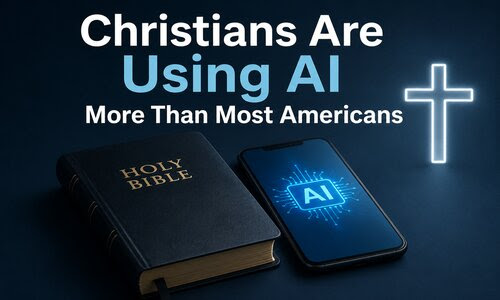
In what some might find surprising, Christians are tapping into artificial intelligence (AI) more than other Americans, with many even trusting it to foster “spiritual growth” within their lives, according to new data from Barna Research.
The Big Picture
Barna’s latest research on faith and AI found that “practicing Christians are outpacing nearly every population segment on AI adoption, including pastors.” Yet even within Christian circles, a clear contrast exists between how the average Christian uses AI compared to pastors.
“Pastors understand that AI is out there,” said Daniel Copeland, Barna’s vice president of research, “but they’re not immersed in it the way their engaged congregants may be. The danger for pastors is underestimating just how normal AI is for the people around them. For most practicing Christians, AI isn’t for occasional use. It’s already woven into how they work, learn and make decisions.
Zoom out and “ask people yes-or-no whether they use AI, and the average pastor and the average American look about the same,” Copeland added. “It’s frequency of use [is] where the difference actually shows up.”
The data shows that 44% of practicing Christians say they use AI “very often” or “often” in their personal lives. Among U.S. adults as a whole, that figure drops to 31%, with only 29% of non-practicing Christians reporting the same. And it’s not just for personal use—26% of U.S. adults across the nation and 39% of practicing Christians use AI often or very often at work.
How Christians Are Using AI
While many practicing Christians say they trust AI to support spiritual growth, most turn to it for far more ordinary purposes. As the researchers put it, “everyday tasks: look something up, learn how to complete a task, get advice on a decision, catch up on the news, sharpen a piece of writing.” Questions related to faith, “like interpreting Scripture or seeking spiritual guidance, show up much further down the list.”
Still, nearly half of the practicing Christian participants said they would trust AI to help with spiritual growth. Approximately one-third report having “turned to AI for spiritual guidance or Bible-related questions in the past month.” Even among those who have sought their pastors’ help in navigating AI, only 12% of pastors believe they are equipped to offer such guidance.
Barna’s own report asked pressing questions: “Where does that leave church leaders, when one-third of practicing Christians want their pastor’s perspective on AI yet most pastors don’t yet feel prepared to give it? Do pastors need to become technology experts to keep up with their congregants?”
The Barna Group determined that “pastors don’t need to become AI experts” in order to tend to their flock. “The questions people already bring to AI, about Scripture, relationships, their own struggles, often surface before they ever reach a pastor. Christian leaders who pay attention gain a clearer view of where people are stuck, and one more reason to keep showing up in person for exactly those moments.”
And as Copeland put it, “the better move is for pastors to double down on what they already do well: teaching people how to engage Scripture, building real relationships, making space for analog discipleship. That’s what people can lean on when AI gives them an answer that’s incomplete, misleading or just wrong.”
A Soft Warning
Robert Maginnis, retired U.S. Army lieutenant colonel, author of 15 books and senior fellow for National Security at the Family Research Council, has written extensively on the topic of AI as it pertains to Christians. Referring to Barna’s latest data, Maginnis told Decision that “the numbers describe a church that has outrun its shepherds.”
He explained how the research reveals an “inversion” of how many practicing Christians are reportedly using AI for personal use versus the number of pastors—which is a much smaller percentage. “That inversion,” Maginnis argued, “is a discipleship problem before it is a technology problem. Christians are not primarily consulting AI about Scripture or theology. The danger is quieter: AI is becoming the first place they turn to gather information, learn a skill, make a decision, or sharpen an argument. Those daily habits shape the mind long before anyone labels the question ‘spiritual.’”
But there remain a large number of Christians who do trust AI with their spiritual development. And yet, Maginnis warned, “AI is ultimately someone else’s understanding … packaged as an immediate and authoritative answer. Scripture warns, ‘Trust in the LORD with all thine heart; and lean not unto thine own understanding’ (Proverbs 3:5).”
In an ever-technologically advanced world, Maginnis is less concerned about Christians and pastors utilizing tools such as AI and more concerned about allowing those tools to be used without discernment. As he argues in his book AI for Mankind’s Future, “the church does not need to master every new technology before its members do. It must form Christians who can test what technology tells them. A congregation fluent in AI but untrained in Biblical discernment is not prepared for the world now taking shape.”
An Ongoing Trend, Not a New One
In related research released in May, Barna found that among practicing Christians, AI was increasingly becoming a “spiritual authority.” At the same time, the research noted that “the Christians most open to AI are often the same ones most unsettled by it.”
That data showed roughly 61% of respondents would “completely or somewhat” trust AI with achieving financial stability, while 56% said the same for mental and physical well-being. Additionally, 56% said “they would trust AI with feeling happy and content with life,” 54% with “understanding and expressing one’s true self” and “having a sense of meaning or purpose,” and 53% with “building meaningful relationships with others.”
Many of those same respondents viewed AI advice as just as credible as guidance from a pastor. Copeland described the findings as “confounding” data. “Christians say they trust AI with spiritual growth, and a meaningful share say its spiritual guidance is as trustworthy as a pastor’s—yet large majorities are simultaneously concerned about AI misinterpreting Scripture, replacing God, or undermining the role of spiritual leaders,” he said.
“The use case and the underlying fear are both present, and they’re pointing in different directions.”
Barna researchers had concluded in May that Christians’ rapid embrace of AI has outpaced any settled conviction about its proper place in the life of faith. Many are “extending trust and registering fear in the same breath.” Fast forward to July, and that tension is not something the latest data resolves. Rather, it confirms how widespread it has become.
Canada Is Building A Surveillance State In The Name Of Human Rights

If someone proposed a law giving government broad authority to monitor online speech, verify citizens’ identities before accessing digital platforms, compel technology companies to remove “harmful” content, and punish citizens for expressing ideas deemed unacceptable by government-appointed regulators, most Canadians would likely reject it outright.
But history suggests that free societies rarely surrender their liberties overnight. Instead, governments tend to expand their authority gradually. One law protects children. Another combats hate. Another fights misinformation. Another strengthens national security. Each proposal appears reasonable when viewed on its own. Collectively, however, they can begin to reshape the relationship between citizens and the state.
That is why Canada’s growing legislative push into digital regulation deserves careful attention. Civil liberties advocates, privacy experts, and free speech organizations have increasingly warned that the country is constructing something larger than a collection of unrelated laws. They argue Canada is gradually building the legal and technological infrastructure needed to monitor digital activity, regulate online expression, and expand government oversight of public discourse.
For generations, human rights were understood primarily as protections that limited government power. Freedom of speech, freedom of religion, freedom of conscience, due process, and privacy existed to safeguard individuals from state interference. Governments were expected to defend those liberties–not determine when they could be suspended.
Increasingly, however, that understanding appears to be changing. Rights are no longer viewed solely as freedoms government must protect, but as claims government must actively enforce–even if doing so requires limiting someone else’s liberty. Protecting one person’s dignity may involve restricting another person’s speech. Preventing harm may require expanded surveillance. Promoting inclusion may justify compelling certain forms of expression while discouraging others.
Whether viewed as progress or cause for concern, this represents a profound shift in the philosophy of individual rights.
That shift is increasingly reflected in public policy.
Recent legislative proposals and enacted laws in Canada have expanded government involvement in regulating online platforms, retaining digital communications data, creating new digital safety regulators, strengthening oversight of online content, and exploring age-verification systems that could require users to verify their identities before accessing portions of the internet. Supporters argue these measures are necessary to protect children, combat online exploitation, reduce extremist content, and make digital spaces safer.
Those are legitimate public policy goals. Yet critics argue that, taken together, these initiatives are also constructing something else: the infrastructure through which governments can exercise unprecedented influence over digital life.
History offers an important lesson. Effective censorship rarely begins with banning speech. It begins with identifying who is speaking.
Age verification increasingly requires identity verification. Identity verification increasingly relies upon biometric information, facial recognition, government-issued credentials, or centralized digital authentication. Anonymous participation becomes more difficult. Metadata retention enables authorities to reconstruct digital activity long after conversations have ended. Regulatory bodies gain expanding authority to determine what content should remain online and what should be removed.
Individually, each measure may appear modest. Collectively, they establish capabilities that previous generations of governments simply did not possess.
Technology has fundamentally transformed the nature of governmental power.
A century ago, censorship often meant banning newspapers or confiscating printed materials. Today it can involve algorithmic suppression, account suspensions, search-result manipulation, payment processor restrictions, internet blocking, or artificial intelligence capable of monitoring billions of online interactions in real time. Modern censorship is often subtle enough that many citizens never realize it has occurred.
Perhaps the most significant transformation, however, is cultural rather than technological.
Every generation elevates certain values above others. Previous generations placed extraordinary emphasis on liberty, personal responsibility, and robust public debate–even when that meant tolerating speech many considered offensive or wrong. Increasingly, modern governments place greater emphasis on safety, inclusion, psychological well-being, and protection from harm.
These are worthwhile objectives. Every civilized society should seek to protect children, reduce violence, and defend vulnerable people. The more difficult question is whether every worthy objective justifies expanding state authority.
How much freedom are citizens willing to surrender if every new restriction is presented as making society safer?
Recent legal battles over compelled speech, parental rights, religious liberty, and gender identity demonstrate why many civil liberties advocates believe this question deserves greater attention. High-profile disputes involving psychologist Jordan Peterson, former British Columbia school trustee Barry Neufeld, and the series of human rights complaints brought by Jessica Yaniv have highlighted growing tensions between freedom of conscience and expanding interpretations of anti-discrimination law.
Regardless of where one stands on those individual controversies, they illustrate a broader trend. Questions once settled through public debate are increasingly being decided through administrative tribunals, regulatory agencies, and human rights commissions rather than through the free exchange of ideas. Increasingly, these bodies are asked not simply to determine whether laws have been broken, but to decide which beliefs and expressions are acceptable within public life.
That institutional shift may ultimately prove more significant than the outcome of any single case.
Nor is this conversation unique to Canada.
Across the United Kingdom, Australia, much of Europe, and increasingly within parts of the United States, lawmakers are advancing remarkably similar proposals. Governments speak of combating hate speech, preventing misinformation, protecting children online, regulating artificial intelligence, and strengthening digital safety. The language varies, but the underlying direction often looks familiar: greater oversight of digital communication combined with expanded governmental authority over the flow of information.
Canada may simply be further along that path than many of its democratic peers.
None of this means Canada has become an authoritarian nation. Nor does it suggest every piece of legislation is inherently misguided or every concern raised by government is illegitimate. Democratic societies have both the right and responsibility to address genuine threats facing their citizens.
But history also teaches that governments rarely accumulate extraordinary powers all at once. They do so gradually, often with broad public support and the promise of solving real problems. Each new authority appears limited. Each new regulation seems reasonable. Only in hindsight does the larger pattern become visible.
Canadians–and indeed citizens throughout the Western world–should therefore wrestle with several uncomfortable questions. At what point does protecting citizens begin to require monitoring them? When does combating harmful speech become controlling legitimate dissent? And who ultimately decides where those lines should be drawn?
These are not merely Canadian questions. They are questions every modern democracy will increasingly face as technology gives governments powers previous generations could scarcely imagine.
The debate unfolding in Canada is ultimately about far more than one country’s legislation. It is about whether institutions created to preserve liberty can gradually evolve into mechanisms that monitor, regulate, and restrict it–always in the name of safety, always in the name of human rights, and always one reasonable step at a time.

TruLight TV : Popcorn & Movie Time – The Bible Collection: Esther
Following the conquest of Babylon, the King of Persia gives a banquet for his people, but his wife, Vashti, refuses to attend. Ahasuerus disowns Vashti and goes in search of her replacement. In his harem, he meets the young girl Esther and falls in love with her. Esther then reveals to Ahasuerus that she is Jewish and asks him to show her people mercy because of a planned genocide of the Jews by the King’s right-hand man, Haman. In doing so, she saves the lives of many innocent people.
Today on TruLight Radio XM
TruLight Radio XM 24/7
Program
GMT / UTC +2
Monday To Fridays
00:15 Words to Live By Testimonies
01.15 Science Scripture and Salvation
02.15 Ground Works
04.00 Gospel Concert of the Day
05.00 The Daren Streblow Comedy Show
5:55 It is Today devotional
6:00 Gaither Homecoming Morning Show
7:15 Discover the Word
8.15 Destined for Victory
8:55 Science Scripture and Salvation
9:00 Holy Spirit Hour – Normally Sermons
10:15 Hope of the Heart
11:15 Unshackled
11.45 Words to Live By
12:15 Truth for Life
13:15 Living on the Edge with Chip Ingram
14:15 Focus on the Family
15:00 Kids Hour
16:00 In Touch with Dr. Charles Stanley
16:30 Groundwork
17:15 Live in the Light
18:15 Renewing your Mind
19:00 Gaither Homecoming Show
20:15 Growing Hope
21:15 Adventures in Odyssey Radio Drama
21:45 Bible Reading
22:15 Night-sounds
23.00 Good Old Country Gospel / Rhema Gospel Express
VISIT THE WEBSITE
TruLight Ministry News – EXTRA MANNA

TruLight Ministries orders from God since 2012 . Teach Them , Comfort Them and Warn Them!
Healing Truths.
End Time Articles.
Share this Feeding of Manna with your Friends and Family. just click on the Social Media icon and share This Manna with your Friends and Family. just click on the Social Media icon and share !