Hosted by TruLight Ministries International – The Place of Truth
SELECT YOUR READING LANGUAGE – BOTTOM LEFT = YOUR DAILY MANNA NOW AVAILABLE IN 103 LANGUAGES
@ TruLight Daily Manna is not Just a Bible Verse with a Small Prayer . NO ::: WE SERVE DAILY Manna for the ENTIRE Day . Breakfast , Lunch , Dinner , Plus tea Times and even Entertainment Manna . Plus News Manna and More , This Daily Manna will keep you Spiritually full for the full 48 Hours and even More to Share with your Friends and Family !!!
Transformation of the Heart !!!
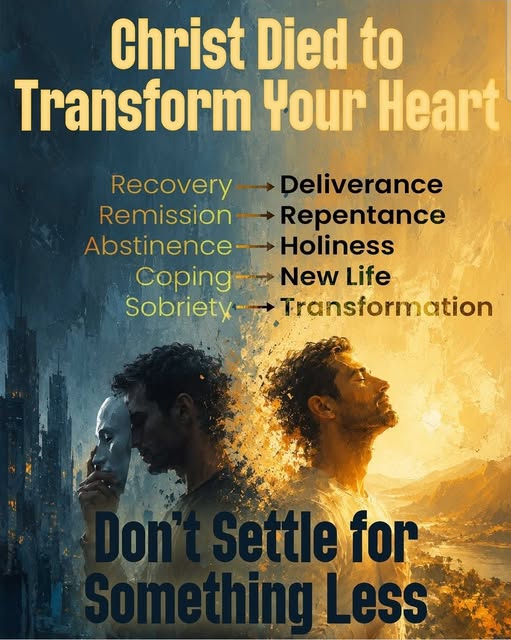
Another word for regeneration is rebirth, related to the biblical phrase “born again.” Our rebirth is distinguished from our first birth, when we were conceived physically and inherited our sin nature. The new birth is a spiritual, holy, and heavenly birth that results in our being made alive spiritually. Man in his natural state is “dead in trespasses and sins” until he is “made alive” (regenerated) by Christ. This happens when he places his faith in Christ (Ephesians 2:1).
Regeneration is a radical change. Just as our physical birth resulted in a new individual entering the earthly realm, our spiritual birth results in a new person entering the heavenly realm (Ephesians 2:6). After regeneration, we begin to see and hear and seek after divine things; we begin to live a life of faith and holiness. Now Christ is formed in the hearts; now we are partakers of the divine nature, having been made new creatures (2 Corinthians 5:17). God, not man, is the source of this transformation (Ephesians 2:1, 8). God’s great love and free gift, His rich grace and abundant mercy, are the cause of the rebirth. The mighty power of God—the power that raised Christ from the dead—is displayed in the regeneration and conversion of sinners (Ephesians 1:19–20).
Regeneration is necessary. Sinful human flesh cannot stand in God’s presence. In His conversation with Nicodemus, Jesus said twice that a man must be born again in order to see the kingdom of God (John 3:3, 7). Regeneration is not optional, for “flesh gives birth to flesh, but the Spirit gives birth to spirit” (John 3:6). Physical birth fits us for earth; spiritual rebirth fits us for heaven. See Ephesians 2:1; 1 Peter 1:23; John 1:13; 1 John 3:9; 4:7; 5:1, 4, 18. Regeneration is part of what God does for us at the moment of salvation, along with sealing (Ephesians 1:14), adoption (Galatians 4:5), reconciliation (2 Corinthians 5:18–20), etc. Regeneration is God’s making a person spiritually alive, as a result of faith in Jesus Christ. Prior to salvation we were not God’s children (John 1:12–13); rather, we were children of wrath (Ephesians 2:3; Romans 5:18–20). Before salvation, we were degenerate; after salvation we are regenerated. The result of regeneration is peace with God (Romans 5:1), new life (Titus 3:5; 2 Corinthians 5:17), and eternal sonship (John 1:12–13; Galatians 3:26). Regeneration begins the process of sanctification wherein we become the people God intends us to be (Romans 8:28–30).
The only means of regeneration is by faith in the finished work of Christ on the cross. No amount of good works or keeping of the Law can regenerate the heart. “By works of the law no human being will be justified in [God’s] sight” (Romans 3:20). Only Christ offers a cure for the total depravity of the human heart. We don’t need renovation or reformation or reorganization; we need rebirth.

Tea Time Manna
The Lord is our judge, the Lord is our lawgiver, the Lord is our king; it is he who will save us.
—Isaiah 33:22
When we think about God as our Judge, we normally think of falling under judgment and receiving punishment. Isaiah reminds us that God’s being our Judge means he will judge us according to his will, rule, and grace. He is on our side and is looking to save us, not condemn us (John 3:16-17). His commands are rightfully given as our Creator and King, yet given to us to protect us and bless us. Using the New Testament idiom, when we stand before our Judge, we see our loving Father, and at his right hand is our Savior, who gave his life for us (Hebrews 1:3). As Paul so beautifully told us:
For all who are led by the Spirit of God are children of God. For you did not receive a spirit of slavery to fall back in fear, but you received a spirit of adoption. When we cry, “Abba! Father!” it is that very Spirit bearing witness with our spirit that we are children of God (Romans 8:14-16).
We don’t obey out of fear, we don’t fear the judge, but we obey because of loving appreciation for all that our Father has done to save us!
Prayer
Holy and Righteous Judge, I am glad that my fate, my future, and my life are in your hands. I know about your love for me because of the gift of Jesus. I know about your desire to save me because of your loving grace. I know your demand for holiness in me is met by the sacrifice of your Son. So God, I gladly and willingly trust my life, my soul, and my eternal future to you. I offer you my obedience in humble appreciation for all you have done for me. In Jesus’ name, I thank you. Amen and Amen
Bible Teaching of the Day
LUNCH MANNA =
In Matthew 12:33, Jesus uses the image of a tree and its fruit to illustrate a principle about people’s character and actions. He states, “Either make the tree good and its fruit good, or make the tree bad and its fruit bad, for the tree is known by its fruit” (Matthew 12:33, ESV).
The Lord’s statement, “Make the tree good,” is part of a broader teaching in which Jesus challenges the hypocrisy of the Pharisees. Immediately after Jesus heals a demon-possessed man, these outwardly pious religious leaders accuse Him of working by the power of Satan (see Matthew 12:22–37). Thus, Jesus engages in a rhetorical confrontation with the Pharisees, intending to expose their inner unholiness, which they have hidden behind a mask of righteous performance and religious ritual.
Jesus says that a healthy (good) tree naturally produces good fruit, while a diseased (bad) tree produces bad fruit. The condition of the tree determines the quality of its fruit. Metaphorically, the “tree” represents a person’s inner nature—what is inside a person, his heart, mind, and motivations. The “fruit” represents his words, actions, and behaviors. A defiled heart is a tree only capable of producing bad fruit (see Matthew 15:18–19). To “make the tree good” means to transform the inner person so that his outward actions (the “fruit”) are also good.
Jesus is not suggesting that people can easily “make the tree good” and change themselves at will. Instead, He emphasizes that true goodness comes from within—from a transformed heart, made new by Jesus Christ and the inner work of the Holy Spirit (Ezekiel 36:26–27; 2 Corinthians 5:17; Romans 12:2).
The religious leaders may not have been guilty of obvious sins, but they were still deeply flawed and in need of transformation. Their true nature was showing itself through the rotten fruit of pride, ambition, greed, envy, and slanderous speech. Christ was essentially bringing their hidden evil into the light.
Jesus knew the inner characteristics of these hypocritical religious leaders. On multiple occasions, Jesus was described as “knowing what they were thinking” and discerning the motives in their hearts (Matthew 9:4; 12:25; 22:18; Luke 5:22). The Pharisees were bad trees producing bad fruit, and Jesus would not tolerate them making empty professions of righteousness while remaining insincere and unrepentant on the inside.
Earlier, John the Baptist had sternly warned the Pharisees with another tree-related metaphor: “Prove by the way you live that you have repented of your sins and turned to God. . . . Even now the ax of God’s judgment is poised, ready to sever the roots of the trees. Yes, every tree that does not produce good fruit will be chopped down and thrown into the fire” (Matthew 3:8–10, NLT).
Jesus calls all religious hypocrites to repent and turn to God. A person may appear “good” in some ways, yet the fruit will eventually manifest itself. Jesus wants all people to recognize their need, humble themselves, repent, and find genuine uprightness in a relationship with Jesus Christ. Only He can change a person from the inside out.
In order to make the tree good and its fruit good, there must be a conversion of heart that starts inside and is visible through outward behavior. In another teaching, Jesus said, “A good tree can’t produce bad fruit, and a bad tree can’t produce good fruit. A tree is identified by its fruit. Figs are never gathered from thornbushes, and grapes are not picked from bramble bushes. A good person produces good things from the treasury of a good heart, and an evil person produces evil things from the treasury of an evil heart” (Luke 6:43–45, NLT).
These verses encourage us to evaluate our inner condition. Are we attempting to prove our goodness through a smokescreen of actions and appearances, or are we consistently producing the good fruit of a hidden life in Christ? The apostle Paul urged, “Examine yourselves to see if your faith is genuine. Test yourselves. Surely you know that Jesus Christ is among you; if not, you have failed the test of genuine faith” (2 Corinthians 13:5, NLT; see also Lamentations 3:40). The examination process involves humbly asking God to search our hearts, test our thoughts, identify any offensive ways, and ultimately guide us along the path of eternal life (Psalm 26:2; 139:23–24). The goal is not self-condemnation but honest reflection in search of spiritual growth and alignment with God’s will.
Make the tree good in Matthew 12:33 means ensuring that our inner life—our character, motives, and heart—is rooted in the righteousness of Christ. Only then will our actions and words reflect true goodness, just as a healthy tree naturally bears good fruit.
DINNER TIME MANNA
Spiritual formation is the process of forming, or growing, the spiritual self toward Christlikeness, started and completed by the power and work of the Holy Spirit. The “spiritual formation movement” refers to the heightened interest in spiritual formation. Because all people have spirits, spiritual formation happens in all people. However, Christian spiritual formation is something a little more specific; it is about becoming more like Christ. Leaders in Christian spiritual formation include Richard Foster, Dallas Willard, and Larry Crabb. Through practices like prayer, Scripture meditation, worship, and service, spiritual formation helps us open our lives to God’s shaping power, allowing our inner transformation to be reflected in outward obedience. While salvation is entirely by grace, spiritual formation is our response—an intentional, grace-fueled pursuit of maturity and intimacy with God. It is not about earning His favor, but about living the abundant, Spirit-led life that Jesus died to give us, becoming living reflections of His character in the world.
from the old testament
The Old Testament lays the foundation for Christian spiritual formation by emphasizing the transformation of the heart through a growing relationship with God. It teaches that true devotion is not about external rituals alone, but about inner obedience and holiness. God calls His people to love Him wholeheartedly (Deuteronomy 6:5), to walk humbly and righteously (Micah 6:8), and to let His Word shape their thoughts and actions (Psalm 1:1–3; Joshua 1:8).
Spiritual growth involves meditating on God’s law, turning away from sin, and living in covenant faithfulness—allowing God to write His law on the heart (Jeremiah 31:33; Ezekiel 36:26–27).
from the new testament
Biblical spiritual formation is about actively engaging with God and following His commands. Paul told Timothy to train himself to be godly (1 Timothy 4:7).
Biblical spiritual formation is a training program, an intentional effort to be godly, not in our own strength, but through the power of Christ and the work of the Holy Spirit (John 15:5).
Matthew 28:19–20 (NIV) says, “Therefore go and make disciples of all nations, baptizing them in the name of the Father and of the Son and of the Holy Spirit, and teaching them to obey everything I have commanded you. And surely I am with you always, to the very end of the age.” Theologian Dallas Willard calls verse 20 (“teaching them to obey everything I have commanded you”) the “great omission from the great commission.” At times, Christians seem more interested in salvation for the afterlife than in salvation to an abundant life in Christ now (John 10:10). We tend to focus on justification more than sanctification. We seem to miss the fact that we are to be disciples. This lack is what Christian spiritual formation attempts to address.
The acts of Christian spiritual formation are meant to draw us closer to God. They are methods we use to “put off [the] old” and prepare our hearts for God to “put on the new” (Ephesians 4:20–24).
Second Peter 1:3–9 sums up biblical spiritual formation: “His divine power has granted to us all things that pertain to life and godliness, through the knowledge of him who called us to his own glory and excellence, by which he has granted to us his precious and very great promises, so that through them you may become partakers of the divine nature, having escaped from the corruption that is in the world because of sinful desire. For this very reason, make every effort to supplement your faith with virtue, and virtue with knowledge, and knowledge with self-control, and self-control with steadfastness, and steadfastness with godliness, and godliness with brotherly affection, and brotherly affection with love. For if these qualities are yours and are increasing, they keep you from being ineffective or unfruitful in the knowledge of our Lord Jesus Christ. For whoever lacks these qualities is so nearsighted that he is blind, having forgotten that he was cleansed from his former sins.”
Christian spiritual formation is essentially the process of sanctification. God does the work, but we must also be disciplined to obey Him. He does the transformation, and we exert our effort to become more like Him. As the Holy Spirit renews us (2 Corinthians 4:16; 5:17), we work to allow Him freedom in our lives and to obey the commands we have received. He creates the new life, and we intentionally live it (Colossians 3:1–10).
implications for today
The spiritual formation movement has become somewhat controversial in Christian circles. Some say that Christian spiritual formation borders on New Age-ism or works-based salvation. They argue that our relationship with God is not about experience or effort, but about truth. Others believe that the Church has been negligent in obeying the word of Christ. Salvation is by grace, and we use that as an excuse not to engage in any traditional religious practices. Because we cannot earn salvation, we have abdicated completely our responsibility to grow spiritually. We think we are saved through belief alone, and we fail to translate that belief into action. Of course, there is also a balanced perspective—one that affirms salvation by grace through faith, the importance of truth, and the importance of obedience. Many term this type of spiritual formation, “spiritual transformation.”
The intent of Christian spiritual formation is to facilitate and cooperate with the Holy Spirit’s inward transformation of our hearts, which is reflected through our outward behaviors. As we make efforts to obey the directives God has given us, we begin to know Him more. Specific practices of Christian spiritual formation include disciplines such as prayer, meditating on Scripture, worship, study, silence, and service. Some also engage in spiritual direction, or receiving spiritual counsel or mentorship. The methods used are modeled after the practices and behaviors of Christ and those of the early church, providing a historical method of growing in one’s relationship with God. These practices help us know and follow God’s commands, which are for our good and reflect His character; thus, when we follow them, we know God more fully, and we find more satisfaction in life.
Spiritual formation has become a topic of interest for many in our society—Christian and secular alike. It seems that many are unsatisfied and seek a deeper spirituality. Some address this lack through manufactured spiritual experiences or working to become good in themselves. This is not biblical. We know that satisfaction only comes from Christ. He has called us to Himself, and apart from Him, we can do nothing (John 15:5). However, when we trust in Him, we are made alive (Ephesians 2:5). And we are given instructions about how to obey Him. We do not simply accept Jesus in order to gain heaven. We accept Him in order to experience fullness of life and to shine for His glory. Spiritual formation happens after salvation; it is not a path to salvation.
When practiced in a way to grow closer to Christ, rather than to earn favor with God, spiritual formation becomes a vital part of the Christian life, not a departure from biblical truth, but a faithful response to it—an active, grace-fueled participation in becoming who God created us to be.

NEWS MANNA –
The New Orthodoxy: Why Biblical Truth Is Becoming A Career Liability

For generations, Americans assumed the greatest threats to religious freedom would come from laws banning churches, confiscating Bibles, or preventing people from worshipping. Instead, the pressure has arrived in a quieter—and arguably more effective—form. Increasingly, Christians are discovering that faithfully holding to biblical convictions can carry a professional cost.
A recent federal appeals court ruling in Oregon illustrates just how dramatically the cultural landscape has shifted.
Roderick Theis, a public school counselor and Christian, lost his job after refusing to remove books from his office affirming the biblical understanding that human beings are created male and female. Among the books were He Is He, She Is She, and Johnny the Walrus, a satirical children’s book addressing gender ideology by well known Conservative columnist Matt Walsh.
After students asked about the books and Theis shared them outside of formal counseling sessions, school officials terminated his employment. This month, the Ninth Circuit Court of Appeals upheld that decision, concluding that because he was acting as a government employee, his speech was not protected under the First Amendment.
On one level, this is a dispute over workplace policies. On another, it reveals something far more significant.
The issue is no longer simply whether Christians are free to believe what the Bible teaches. Increasingly, the question is whether those beliefs can be expressed in certain workplaces without risking one’s career. What was once regarded as a widely accepted understanding of human nature is now, in some settings, viewed as inappropriate—or even harmful.
That should concern far more people than Christians alone.
This Isn’t Really About Three Books
At first glance, this appears to be another dispute over transgender ideology in the public schools. But if that’s all we see, we’ll miss the much bigger story.
Rod Theis wasn’t accused of mistreating students. He wasn’t fired for incompetence, harassment, or neglecting his responsibilities. According to the school district, the problem was that he quietly displayed books affirming the belief that people are created male and female—a view shared not only by Christians, but by virtually every civilization throughout history until only the past few years.
That should give us pause.
The real question isn’t whether someone agrees with Theis’ beliefs. The question is why those beliefs are increasingly treated as unacceptable in places where other viewpoints are openly celebrated.
Something fundamental has changed.
For decades, Christians were told they were free to believe whatever they wished—as long as they didn’t force those beliefs on others. Today, in many institutions, simply expressing those beliefs can itself be viewed as harmful. The issue is no longer coercion. The belief itself has become the problem.
That represents a profound cultural shift.
When Truth Becomes Harm
Perhaps the most remarkable change isn’t that biblical beliefs are being challenged. Christians have always expected opposition. What’s different today is how those beliefs are increasingly being reclassified.
The progression has been subtle but unmistakable.
First came the call for tolerance.
“You don’t have to agree.”
Then came the expectation of silence.
“Keep those beliefs private.”
Then came the demand for affirmation.
“Use the preferred language. Celebrate every identity.”
Now, in a growing number of workplaces, schools, and professional settings, simply affirming what the Bible teaches about humanity may itself be considered harmful.
That is far more than a cultural disagreement. It is a complete reversal of how truth is understood.
The debate is no longer merely over biology or psychology. It is over authority. Who has the right to define reality? Scripture? Nature? Government agencies? Professional organizations? Or each individual for themselves?
Increasingly, the answer to that question determines not only what people are allowed to say—but whether they can keep their jobs.
A Pattern That Is Becoming Difficult To Ignore
Viewed in isolation, the Oregon case might appear to be an unfortunate workplace dispute. Viewed alongside other developments, however, it begins to look like part of a much broader pattern.
Across North America and Europe, Christian parents have faced investigations after declining to affirm a child’s transgender identity. Teachers and public employees have been disciplined over pronoun disputes. Healthcare professionals have encountered pressure to participate in practices that conflict with deeply held religious convictions.
Military chaplains in Canada have recently been instructed to avoid explicitly Christian language during official ceremonies. Foster and adoptive parents in several jurisdictions have been denied opportunities because they would not affirm prevailing views on gender and sexuality.
Individually, each of these stories can be dismissed as an isolated controversy. Collectively, they tell a different story.
Traditional Christian convictions are increasingly treated not as one legitimate viewpoint among many, but as obstacles to institutional goals that must be managed, restricted, or removed. The message may not always be explicit, but it is becoming increasingly difficult to ignore: certain biblical beliefs are no longer simply unpopular—they are increasingly viewed as incompatible with participation in parts of public life.
Whether one agrees with those convictions is almost beside the point. A genuinely pluralistic society should be able to tolerate peaceful disagreement without requiring ideological conformity.
The New Definition Of Neutrality
Supporters of these policies often argue that public institutions must remain neutral. Yet neutrality itself appears to be undergoing a remarkable redefinition.
Displaying symbols or messages that affirm contemporary gender ideology is frequently regarded as expressing inclusion. Diversity statements and approved social messaging are often welcomed as signs of compassion and progress. Displaying books that affirm biological sex, however, may be viewed as inappropriate advocacy.
The question is not whether every viewpoint belongs in every workplace. Employers have long established reasonable standards for professional conduct.
The deeper question is why one set of moral assumptions is increasingly treated as neutral while another is considered unacceptable.
Neutrality once meant making room for differing convictions. Increasingly, it means affirming one particular moral framework while restricting competing beliefs.
That is not the absence of ideology. It is the elevation of one worldview over another.
A Warning Beyond One Court Case
Christians should avoid both panic and naïveté.
The New Testament never promised believers cultural approval. Jesus Himself warned that His followers would often find themselves at odds with the prevailing values of their age. Faithfulness has never been measured by popularity.
At the same time, Christians should recognize the significance of what is unfolding. The issue extends far beyond debates over gender identity. At stake is a much larger question: Can citizens continue to live and work according to convictions rooted in Scripture without being regarded as professionally unfit?
That question will not remain confined to one issue. If society increasingly decides that biblical teaching on human identity is too harmful to tolerate in public life, there is little reason to believe the pressure will stop there. The same reasoning could eventually be applied to biblical teachings on marriage, sexuality, the sanctity of life, parental authority, religious liberty, or any number of convictions that increasingly conflict with prevailing cultural norms.
The Oregon counselor was not accused of abusing students or neglecting his responsibilities. He lost his position because he quietly displayed books affirming a view of humanity that Christians have held for two thousand years.
Whether one agrees with his actions or not, his case raises a question that deserves careful consideration far beyond the courtroom.
History shows that every society develops an orthodoxy—a set of beliefs considered beyond question. The question facing Christians today is not whether such an orthodoxy exists, but whether biblical truth will increasingly find itself outside its boundaries.
If that happens, the greatest challenge facing believers will not be the loss of cultural influence. It will be the growing expectation that faith remain confined to Sunday morning while every other institution embraces a competing moral vision.
The Oregon ruling may ultimately be remembered for far more than the fate of one school counselor. It may mark another step in a cultural transformation where the greatest liability is no longer poor performance or misconduct—but quietly holding to truths that much of civilization once considered self-evident, and that Scripture has proclaimed from the very beginning: “Male and female He created them.”
A Dangerous Deal: Trump’s Board Of Peace And Hamas

For nearly a year, the international community insisted that there could be no future for the Gaza Strip unless Hamas was stripped of every weapon, every tunnel, every missile factory, and every military capability.
US President Donald J. Trump’s September 2025 peace plan was explicit: Gaza would be demilitarized, terrorist infrastructure destroyed, and weapons rendered permanently unusable.
Article 13 of Trump’s 20-point plan states:
“All military, terror, and offensive infrastructure, including tunnels and weapon production facilities, will be destroyed and not rebuilt. There will be a process of demilitarization of Gaza under the supervision of independent monitors, which will include placing weapons permanently beyond use through an agreed process of decommissioning, and supported by an internationally funded buy back and reintegration program all verified by the independent monitors.”
Now, however, that clear objective appears to have been replaced by something radically different. Instead of eliminating Hamas’s arsenal, negotiators are discussing storing weapons, transferring them to another Palestinian party, and even allowing Hamas members to retain “personal firearms.”
The original goal of Trump’s peace plan was not to relocate Hamas’s arsenal. It was to eliminate it permanently. Replacing “demilitarization” with “storage” is a win for Hamas and other Palestinian terrorist groups in the Gaza Strip.
The latest deal between Trump’s Board of Peace and Hamas, titled “A Roadmap for Completing the Implementation of President Trump’s Comprehensive Peace Plan in Gaza,” states:
“A process to decommission and store heavy weapons, military production sites, depots of weapons, and tunnels, shall begin after completing the remaining commitments under Sharm Sheikh Protocol, the entry of NCAG [National Committee for the Administration of Gaza] and deployment of ISF [International Stabilization Force].”
How did the promise of permanent demilitarization become a discussion about warehouses full of Hamas weapons? Weapons stored in warehouses remain weapons that function. Explosives stored today can be easily recovered tomorrow. Rocket factories that are preserved can resume production. Tunnels that are mapped rather than destroyed can be used again.
The issue has never been where Hamas keeps its weapons. The issue has always been Hamas having access them.
The assumption that the NCAG or ISF would be able to prevent terrorists from regaining control over the stored weapons is totally misleading. Even more disturbing is the new deal’s assertion that “no weapons shall be transferred or handed to Israel or non-Palestinian parties.”
Transferring weapons from one Palestinian group to another is not demilitarization.
Equally disturbing is the new roadmap’s conditioning of disarmament on an Israeli withdrawal from the Gaza Strip:
“This process [to decommission and store heavy weapons, military production sites, depots of weapons, and tunnels] shall be linked to an Israeli withdrawal, in phases, from the areas under its control in Gaza and the decommissioning of [Israel-backed] armed militias.”
Why should a terrorist organization that carried out the October 7, 2023 massacre in Israel be allowed to dictate the conditions of its own disarmament? No country fighting ISIS or al-Qaeda would first withdraw its forces and only then hope terrorists voluntarily surrender their weapons. Hamas should not be negotiating the terms of its defeat. It should be compelled to unconditionally surrender and disarm.
While discussions about disarmament were underway, Hamas reportedly began distributing more automatic rifles to operatives under the guise of “personal ownership.” Israel’s Kan News quoted an unnamed Palestinian source as saying that the goal of the rifle distribution was to ensure that weapons stay in the hands of Hamas members. “Hamas will not disarm. Period,” the source asserted.
Before the first stage had even been implemented, Hamas was already looking for loopholes.
Shortly after the new roadmap was announced, senior Hamas official Ghazi Hamad said in an interview with Saudi-owned Al-Arabiya TV:
“The weapons will be stored and not handed over, and this is conditional on Israel’s commitment. What we agreed upon with the mediators is storing the weapons, not surrendering them. Our political and civilian role in Gaza continues. Hamas has not and will not abandon its national project to reclaim the Palestinian land. We consider the current phase exceptional due to the circumstances that the Gaza Strip is going through.”
This is the same Ghazi Hamad who publicly vowed that Hamas would repeat the October 7 massacre time and again until Israel is eliminated:
“We must teach Israel a lesson, and we will do this again and again. The Al-Aqsa Flood [the name Hamas uses to describe the October 7 massacre] is just the first time, and there will be a second, a third, a fourth, because we have the determination, the resolve, and the capabilities to fight.”
This quote alone should destroy confidence in Hamas’s promises to the Board of Peace.
Anyone who thinks that the newly established NCAG will somehow confront Hamas and impose its authority over the terrorist organization is living under an illusion. Hamas has ruled the Gaza Strip since 2007. It controls thousands of armed men, intelligence networks, clan alliances, financial resources, and a deeply entrenched political and security apparatus. No technocratic committee can simply arrive and displace an organization that has spent nearly two decades ruthlessly consolidating its power.
The far more likely scenario is that Hamas will continue to call the shots from behind the scenes while allowing another Palestinian body to assume responsibility for governance, civil service salaries, reconstruction, and collecting international aid.
This would essentially replicate the Hezbollah model in Lebanon, where a heavily-armed Iran-backed terrorist militia coexists with a formal government while retaining independent military power and ultimate political influence.
Supporters of the new roadmap argue that international observers and the ISF will oversee implementation. International observers may monitor warehouses and oversee the delivery of humanitarian assistance, and the ISF may train Palestinian security forces. They will not confront Hamas if it decides to rearm. They definitely will not risk their lives dismantling some terrorist infrastructure.
Within hours of the announcement of the roadmap, Iran’s Islamic Revolutionary Guard Corps dismissed the plan outright, declaring that the effort to disarm Hamas “will achieve nothing” and had already failed. Tehran pledged that “the resistance” (Hamas) would remain steadfast until what it called the “final victory” over Israel.
Iran understands Hamas better than anyone else because it has financed, armed and trained the terrorist organization for decades. If the Iranian regime is openly rejecting the prospect of Hamas’s disarmament, why should anyone else believe that Hamas intends to honor the agreement?

TruLight TV : I’m Free
Our faith needs to be tended every day, not just on Sundays. Learn the importance of investing time and care into our relationship with God daily in today’s video devotional. and later Today’s guest artist on Gospel Music USA With over 40 years of traveling behind them, The Whisnants have performed all across the nation and around the world, including Canada, Hawaii and cruises sailing to the Bahamas, Belize and Mexico. Austin and Ethan, Jeff and Susan’s boys, have been inseparable from their parent’s calling since they were born. This generation of Whisnant’s grew up on the bus watching their family’s ministry unfold in their childhood and now they take active parts in each concert as well as behind the scenes. Enjoy today’s show and thanks for watching.
Today on TruLight Radio XM
TruLight Radio XM 24/7
Program
GMT / UTC +2
Monday To Fridays
00:15 Words to Live By Testimonies
01.15 Science Scripture and Salvation
02.15 Ground Works
04.00 Gospel Concert of the Day
05.00 The Daren Streblow Comedy Show
5:55 It is Today devotional
6:00 Gaither Homecoming Morning Show
7:15 Discover the Word
8.15 Destined for Victory
8:55 Science Scripture and Salvation
9:00 Holy Spirit Hour – Normally Sermons
10:15 Hope of the Heart
11:15 Unshackled
11.45 Words to Live By
12:15 Truth for Life
13:15 Living on the Edge with Chip Ingram
14:15 Focus on the Family
15:00 Kids Hour
16:00 In Touch with Dr. Charles Stanley
16:30 Groundwork
17:15 Live in the Light
18:15 Renewing your Mind
19:00 Gaither Homecoming Show
20:15 Growing Hope
21:15 Adventures in Odyssey Radio Drama
21:45 Bible Reading
22:15 Night-sounds
23.00 Good Old Country Gospel / Rhema Gospel Express
VISIT THE WEBSITE
TruLight Ministry News – EXTRA MANNA

TruLight Ministries orders from God since 2012 . Teach Them , Comfort Them and Warn Them!
Healing Truths.
End Time Articles.
Share this Feeding of Manna with your Friends and Family. just click on the Social Media icon and share This Manna with your Friends and Family. just click on the Social Media icon and share !