Hosted by TruLight Ministries International – The Place of Truth
SELECT YOUR READING LANGUAGE – BOTTOM LEFT = YOUR DAILY MANNA NOW AVAILABLE IN 103 LANGUAGES
@ TruLight Daily Manna is not Just a Bible Verse with a Small Prayer . NO ::: WE SERVE DAILY Manna for the ENTIRE Day . Breakfast , Lunch , Dinner , Plus tea Times and even Entertainment Manna . Plus News Manna and More , This Daily Manna will keep you Spiritually full for the full 48 Hours and even More to Share with your Friends and Family !!!
Time will Come when they WILL NOT endure SOUND DOCTRINE – That Time is Here !!!
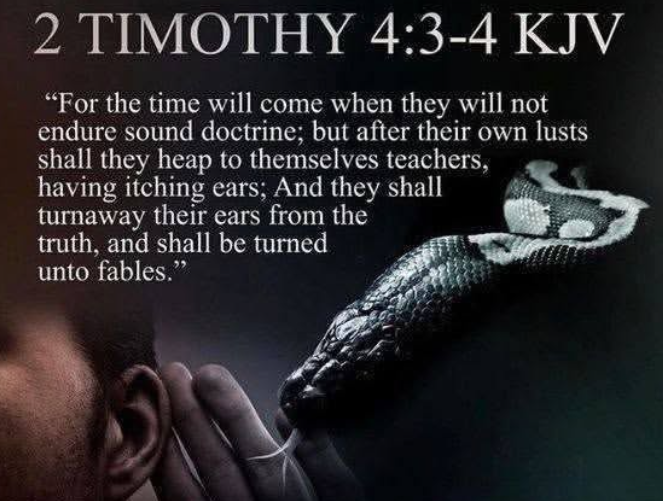
Paul warns Timothy, an elder of the church in Ephesus, that there will come a time when people “will not endure sound doctrine” (2 Timothy 4:3, NKJV); instead, “they will gather around them a great number of teachers to say what their itching ears want to hear.” The idea of “enduring” sound teaching has to do with “tolerating” it or putting up with it. In other words, people will refuse to listen to what is good and right. They will be intolerant of the truth.
Prior to the warning, Paul establishes the source and utility of the Scriptures. The Scriptures are from the mouth of God, or God-breathed, and are beneficial for teaching, among other things, which leads to the maturing and equipping of the Christian (2 Timothy 3:16–17). This maturing and equipping has the purpose of allowing the believer to complete every good work that God has ordained.
Paul exhorts Timothy to be ready to proclaim the Scriptures at all times (2 Timothy 4:1–2), exhorting and correcting others by using the Word of God. Timothy is to study, practice, and then teach the Scriptures (cf. Ezra 7:10). In 2 Timothy 4:3, Paul provides the reason for urgency in such a task: “For the time will come when people will not put up with sound doctrine.”
The Greek word translated “doctrine” is simply referring to “teaching” or “instruction.” Often, teaching and instruction systematized is understood as doctrine. The Greek word translated as “sound” can also be understood as “healthy” or “free from error.” Paul is warning Timothy that there will come a time when people will not desire to hear true or correct teaching—teaching that accords with reality. Instead, “they will follow their own desires and will look for teachers who will tell them whatever their itching ears want to hear” (2 Timothy 4:3, NLT).
Usually, understanding sound doctrine requires the individual to change his actions. If it is something he does not want to do, he may reject the teaching. At first, Peter did not want to preach the gospel to the Gentiles due to an improper understanding of what God desired for him to do (Acts 10). However, God patiently corrected his understanding and prepared Peter to proclaim the gospel to Cornelius, a Gentile leader. Peter responded to the sound doctrine and moved forward without fear.
It is important that we, as teachers and learners, heed the words of Paul in 2 Timothy 4:3. As teachers, we must teach sound doctrine, holding to the truths of Scripture regardless of the consequences. As learners, we must seek sound doctrine and receive it, if we are to live according to the truth. The learner’s desires must take a back seat to the truths of Scripture. Prayerfully, as the learner matures and is transformed by the renewing of the mind, his or her desires align more and more with the sound doctrine of Scripture.
It is beneficial for the learner to desire sound doctrine. It is also important for the learner to test what is being taught. During Paul’s second missionary journey, he travelled across Greece, proclaiming the gospel of Jesus Christ to all. Many believed in the gospel (Acts 17:4). Paul eventually reached the town of Berea where he also presented the gospel. The Bereans notably received Paul with eagerness, and they “examined the Scriptures every day to see if what Paul said was true” (verse 11). The Bereans are a perfect example of how the learner ought to desire sound doctrine and examine the Bible to test whether an unfamiliar doctrine is truly sound.

Tea Time Manna
Are not five sparrows sold for two pennies? Yet not one of them is forgotten by God. Indeed, the very hairs of your head are all numbered. Don’t be afraid; you are worth more than many sparrows.
—Luke 12:6-7
In a universe so vast, what is our little planet? On a planet so diverse and so full of life, what are simple, ordinary, and everyday people? Among all the billions of people alive and all those who have lived before us, what significance do I have among so many others?
Jesus reminds us that our significance is great—not because we are so important, but because we are known personally by God, who created us, has known us, and has had a purpose for us from the time of our conception (Psalm 139:13-16). We don’t have to be afraid; we are known and loved by the One who is and who was and who is to come! As born-of-God believers, we are God’s precious children (John 1:11-13, 3:3-7). He will never leave us or forsake us (Hebrews 13:5-6; Romans 8:38-39).
Prayer
Eternal God, Almighty Father, Tender Shepherd, and Abba Father, you already know my heart. You know where I struggle with sin. You know my struggles in life. You know my fears; please encourage and strengthen me. You know my immaturity; please nurture and mature me. You know my weakness and disease, please comfort and heal me. You also know my strengths, gifts, passions, and value. So, dear Father, please empower me, forgive me, and complete your transformation in me through the blessed Holy Spirit (2 Corinthians 3:18). Holy God, I am both awed and comforted that you know me and love me. Thank you! In Jesus’ name, I pray. Amen and Amen
Bible Teaching of the Day
LUNCH MANNA =
The apostle Paul wrote a warning for the church: “The time will come when men will not put up with sound doctrine. Instead, to suit their own desires, they will gather around them a great number of teachers to say what their itching ears want to hear” (2 Timothy 4:3).
The Greek word translated “itching” literally means “to itch, rub, scratch, or tickle.” To want one’s ears “tickled” is to desire massages rather than messages—sermons that charm rather than challenge, entertain rather than edify, and please rather than preach. The people Paul warns about will have, as one commentator put it, “ears which have to be continually titillated with novelties.”
“Itching ears” is a figure of speech that refers to people’s desires, felt needs, or wants. It is these desires that impel a person to believe whatever he wants to believe rather than the actual truth itself. When people have “itching ears,” they decide for themselves what is right or wrong, and they seek out others to support their notions. “Itching ears” are concerned with what feels good or comfortable, not with the truth—after all, truth is often uncomfortable. Paul’s warning is that the church would one day contain those who only opened their ears to those who would scratch their “itch.”
Those with “itching ears” only want teachers who will assure them that all is well, teachers who say, “Peace, peace . . . when there is no peace” (Jeremiah 6:14). Where there is a demand for something, the suppliers are not far away. Paul says that not only will there be great demand for watered-down, personalized messages, but there will be “a great number of teachers” willing to provide such pap and steer people away from “sound doctrine.”
Evidence today of people having “itching ears” includes the popularity of messages that people are not required to change, as if repentance were outmoded; that people are basically good; that God is too loving to judge anyone; that the cross, with all its blood, is not really necessary; and that God wants His children to be healthy, wealthy, and content in this world. As people turn their backs on the truth about sin and condemnation, they disregard their need for repentance and forgiveness. And a craving for “new” and “fresher” ideas grows—even though there is “nothing new under the sun” (Ecclesiastes 1:9–10)—accompanied by a longing to feel good about who they are and where they’re going. Messages that tickle ears can fill a lot of churches, sell a lot of books, and buy a lot of time on cable tv.
Some of the early followers of Jesus complained about some of the Lord’s words: “Many of his disciples said, ʻThis is a hard teaching. Who can accept it?’ . . . From this time many of his disciples turned back and no longer followed him” (John 6:60, 66). Walking away from hard truth is easy to do.
In today’s postmodern church, we see many walking away from the hard truth. Some churches that once preached sound doctrine now teach as acceptable the very evils the Bible condemns. Some pastors are afraid to preach on certain passages of the Bible. “Christian feminists” deny God as a heavenly Father, calling Him a “she.” “Gay Christians” are not only welcomed without repentance into church fellowship but into the pulpit, as well.
The church’s remedy for those who have “itching ears” is found in the same passage of 2 Timothy: “Preach the word; be prepared in season and out of season; correct, rebuke and encourage—with great patience and careful instruction” (2 Timothy 4:2). It is a solemn charge, made “in the presence of God and of Christ Jesus, who will judge the living and the dead, and in view of his appearing and his kingdom” (verse 1). And it contains all the elements needed to combat the temptation to tickle ears: preach, correct, rebuke, and encourage. The content of preaching must be the written Word of God, and it must be preached when convenient and when inconvenient. This takes “great patience and careful instruction,” but sound doctrine is worth it.
The church’s quest to manage the comfort level of its audience must never take priority over preaching the Word. The fear of offending people’s sensibilities can never supersede the fear of offending God. Rather, the church should follow the example of the apostles: “We have renounced secret and shameful ways; we do not use deception, nor do we distort the word of God. On the contrary, by setting forth the truth plainly we commend ourselves to every man’s conscience in the sight of God” (2 Corinthians 4:2).
The church today, more than ever, needs to re-examine the teachings it endorses. We need to ask ourselves the following questions:
- Are our teachings truly from God or simply itches we want to scratch?
- Are we standing on solid biblical grounds, or have we allowed the world to influence our thinking?
- Have we guarded ourselves from the schemes of Satan (Ephesians 6:11)?
- Are we keeping ourselves “blameless for the coming of our Lord Jesus Christ” (1 Thessalonians 5:23)?
The truth is, God is not concerned with scratching our itches but in transforming us into the image of His Son (Romans 12:2; 2 Corinthians 4:4).
DINNER TIME MANNA
Paul charges Titus, “You must teach what is in accord with sound doctrine” (Titus 2:1). Such a mandate makes it obvious that sound doctrine is important. But why is it important? Does it really make a difference what we believe?
Sound doctrine is important because our faith is based on a specific message. The overall teaching of the church contains many elements, but the primary message is explicitly defined: “Christ died for our sins according to the Scriptures [and] . . . he was raised on the third day according to the Scriptures” (1 Corinthians 15:3-4). This is the unambiguous good news, and it is “of first importance.” Change that message, and the basis of faith shifts from Christ to something else. Our eternal destiny depends upon hearing “the word of truth, the gospel of your salvation” (Ephesians 1:13; see also 2 Thessalonians 2:13-14).
Sound doctrine is important because the gospel is a sacred trust, and we dare not tamper with God’s communication to the world. Our duty is to deliver the message, not to change it. Jude conveys an urgency in guarding the trust: “I felt I had to write and urge you to contend for the faith that was once for all entrusted to the saints” (Jude 1:3; see also Philippians 1:27). To “contend” carries the idea of strenuously fighting for something, to give it everything you’ve got. The Bible includes a warning neither to add to nor subtract from God’s Word (Revelation 22:18-19). Rather than alter the apostles’ doctrine, we receive what has been passed down to us and keep it “as the pattern of sound teaching, with faith and love in Christ Jesus” (2 Timothy 1:13).
Sound doctrine is important because what we believe affects what we do. Behavior is an extension of theology, and there is a direct correlation between what we think and how we act. For example, two people stand on top of a bridge; one believes he can fly, and the other believes he cannot fly. Their next actions will be quite dissimilar. In the same way, a man who believes that there is no such thing as right and wrong will naturally behave differently from a man who believes in well-defined moral standards. In one of the Bible’s lists of sins, things like rebellion, murder, lying, and slave trading are mentioned. The list concludes with “whatever else is contrary to the sound doctrine” (1 Timothy 1:9-10). In other words, true teaching promotes righteousness; sin flourishes where “the sound doctrine” is opposed.
Sound doctrine is important because we must ascertain truth in a world of falsehood. “Many false prophets have gone out into the world” (1 John 4:1). There are tares among the wheat and wolves among the flock (Matthew 13:25; Acts 20:29). The best way to distinguish truth from falsehood is to know what the truth is.
Sound doctrine is important because the end of sound doctrine is life. “Watch your life and doctrine closely. Persevere in them, because if you do, you will save both yourself and your hearers” (1 Timothy 4:16). Conversely, the end of unsound doctrine is destruction. “Certain men whose condemnation was written about long ago have secretly slipped in among you. They are godless men, who change the grace of our God into a license for immorality and deny Jesus Christ our only Sovereign and Lord” (Jude 1:4). Changing God’s message of grace is a “godless” thing to do, and the condemnation for such a deed is severe. Preaching another gospel (“which is really no gospel at all”) carries an anathema: “let him be eternally condemned!” (see Galatians 1:6-9).
Sound doctrine is important because it encourages believers. A love of God’s Word brings “great peace” (Psalm 119:165), and those “who proclaim peace . . . who proclaim salvation” are truly “beautiful” (Isaiah 52:7). A pastor “must hold firmly to the trustworthy message as it has been taught, so that he can encourage others by sound doctrine and refute those who oppose it” (Titus 1:9).
The word of wisdom is “Do not remove the ancient landmark which your fathers have set” (Proverbs 22:28, NKJV). If we can apply this to sound doctrine, the lesson is that we must preserve it intact. May we never stray from “the simplicity that is in Christ” (2 Corinthians 11:3).
One of TruLight Ministries Flagship Ministries are “The Sheriff of the Church ” : The website and Radio Dramas that Exposes Doctrines of Demons
The Sheriff of The Church (I Tell You Tru): All Episodes
The Sheriff of The Church is a Breakthrough radio drama that follows a Spiritual Lawman, Appointed by God and commissioned by the City Marshal’s Office, as he rides across a landscape to serve Reproof and Rebuke Summons on systems that have traded the Truth for for everything else but the truth . with his trusty Horse Justice , He travels from Doctrine of Demon to Doctrine of Demons and meet Strange character’s along the way,
This radio drama produced by TruLight Broadcasting Network and Hosted by Trulight Ministries, is more than just a Western Radio Adventure—it is a spiritual Educational Teaching Platform of Discernment. It is a journey to strip away the “False Religions and traditions of men” and return to the pure, unadulterated Word of God.
As the Sheriff likes to say: “Eternity is an awfully long time to be wrong.”

NEWS MANNA –
Jerusalem’s Cup Is Trembling Again: The Battle For The Temple Mount
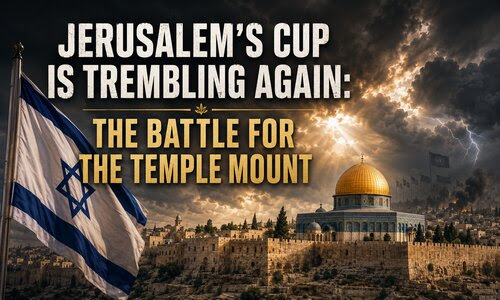
The Middle East is burning. Wars are spreading, oil routes are under threat, and nations are struggling to contain chaos from Gaza to the Persian Gulf.
Yet nearly 20 Muslim nations have found time to unite around one urgent concern: Jews praying on the Temple Mount.
That fact alone should tell us something.
A few Jewish worshippers quietly praying on a hilltop in Jerusalem can provoke emergency meetings, diplomatic threats and warnings of regional upheaval. Turkish Foreign Minister Hakan Fidan recently described a gathering in Amman as “historic,” as Islamic governments discussed coordinated action against Israel over developments at Al-Aqsa.
Why does this small piece of land create such fear and fury?
Because the Temple Mount is not merely another disputed location. It is the spiritual heart of Jerusalem, the place where the First and Second Jewish Temples stood, and the place where the Jewish people believe their biblical history is anchored.
It is also the place where the question of Jerusalem’s sovereignty can no longer be avoided.
For decades, Israel has exercised extraordinary restraint on the Temple Mount. After regaining Jerusalem’s Old City in 1967, Israel left day-to-day religious administration of the site in the hands of the Islamic Waqf.
Muslims were allowed to worship freely. Jews were generally permitted to visit, but open Jewish prayer was restricted.
Think about that for a moment.
Israel controlled Jerusalem, yet Jews were told they could not openly pray at the holiest site in Judaism. The threat of riots and terrorism became the unwritten rule governing Jewish religious freedom.
That arrangement is now beginning to crack.
More Jewish visitors are ascending the Mount. Some are praying openly. Israeli officials are speaking more boldly about Jewish rights there. Israeli security authorities are becoming more visibly involved.
No formal takeover has been declared. No dramatic announcement has been made.
But the reality is changing.
And the Muslim world sees it.
That is why governments are gathering. That is why Turkey is issuing warnings. That is why Jordan is sounding the alarm. They understand that every Jewish prayer offered on the Mount weakens the idea that the site belongs exclusively to Islam.
This is no longer simply about maintaining order. It is about who has the right to stand before God in Jerusalem.
The international reaction reveals a glaring double standard.
Western governments constantly speak about freedom of religion. They defend the right of Muslims to build mosques, wear religious clothing and worship publicly throughout Europe and North America.
But when Jews seek to pray at Judaism’s holiest place, their worship is treated as an act of aggression.
Jewish prayer becomes an “incursion.” A Jewish visitor becomes a “provocation.” An Israeli flag becomes a threat to world peace.
There is no serious proposal to prevent Muslims from worshipping at Al-Aqsa. The issue is whether Muslims should possess an exclusive right to a place that is central to Jewish history and faith.
Should threats of violence determine whether Jews may pray?
Should Israel permanently restrict its own people because foreign governments warn that allowing Jewish worship could produce unrest?
Israel must act with wisdom. The Temple Mount is one of the most sensitive places on earth, and careless actions could carry terrible consequences.
But caution is not the same as surrender.
For too long, Israel has been expected to prove its commitment to peace by denying Jews basic religious rights in their own capital. Meanwhile, the threat of Muslim violence has been rewarded with greater control.
That is not coexistence. It is intimidation disguised as diplomacy.
Turkey’s reaction is especially important.
President Recep Tayyip Erdoğan has spent years presenting himself as a defender of Jerusalem and a leader of the Islamic world. By declaring Al-Aqsa to be one of Turkey’s own sacred places, his government is claiming a direct stake in what happens on Israeli territory.
Jordan claims custodianship over the Islamic holy sites. Saudi Arabia guards Mecca and Medina. Iran claims to lead the armed struggle against Israel.
Now Turkey increasingly wants to lead the political and religious battle for Jerusalem.
These nations disagree on many things. They compete for influence, fight proxy wars and pursue rival ambitions.
But Jerusalem can unite them.
That is what makes the Temple Mount so dangerous–and so prophetically significant.
The prophet Zechariah warned that Jerusalem would become “a cup of trembling” to the surrounding peoples and “a burdensome stone” for the nations.
What other city creates this kind of reaction?
Jerusalem has no enormous oil reserves. The Temple Mount controls no global shipping lane. It is a relatively small hilltop.
Yet Jews praying there can summon foreign ministers from across the Islamic world.
That is not ordinary geopolitics.
The Bible said Jerusalem would become an obsession for the nations.
Today, it is becoming exactly that.
The coming struggle will not merely be about prayer schedules or security procedures. It will be about who owns Jerusalem, who controls its holiest place and whether the Jewish people will continue to be treated as outsiders on the mountain where their Temples once stood.
Israel may move slowly. International pressure may delay further changes. Political leaders may temporarily restore the old arrangements.
But the question will not go away.
Who truly controls the Temple Mount?
Who decides who may worship there?
And how long will the Jewish people accept being forbidden to pray at the holiest place in their own faith?
Jerusalem’s cup is trembling again.
And the nations are already gathering around it.
What Happens If America Must Fight Russia And China At Once?
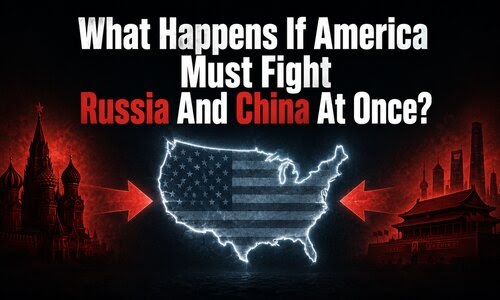
For generations, America’s nuclear weapons were intended to prevent a world war. The growing danger is that they may now be viewed as the only way to avoid losing one.
The Pentagon is reportedly developing a revised nuclear strategy for a potential conflict with Russia or China. Overseen by Under Secretary of Defense for Policy Elbridge Colby, the review is said to place greater emphasis on shorter-range tactical nuclear weapons and provide the president with more options during a regional crisis.
That does not mean Washington is planning to start a nuclear war. It means military officials are wrestling with a terrifying question: What happens if America becomes trapped in conflicts with Russia and China at the same time?
The answer may be forcing nuclear weapons closer to the battlefield.
America’s Two-Front Nightmare
For most of the Cold War, the United States concentrated its nuclear planning on one principal adversary: the Soviet Union. Today, Washington faces two nuclear powers capable of threatening the American homeland while waging major conventional wars in separate regions.
U.S. Strategic Command has publicly described this as an unprecedented challenge. Russia has nearly completed the modernization of its nuclear triad and continues to improve its tactical nuclear forces. China, meanwhile, is rapidly expanding an arsenal expected to become increasingly comparable to those of the United States and Russia.
The nightmare scenario is not difficult to imagine.
China could launch a blockade or invasion of Taiwan, drawing American aircraft, submarines, warships and long-range missiles into the Indo-Pacific. While Washington’s attention and military resources were concentrated there, Russia could increase pressure on NATO’s eastern flank–or exploit the crisis through cyberattacks, sabotage, missile deployments or a limited military incursion.
The sequence could also be reversed. America might become heavily committed to defending Europe while Beijing concludes that Washington is too distracted to stop a move against Taiwan.
Russia and China would not need to sign a formal agreement or launch perfectly coordinated invasions. Each would simply need to recognize the opportunity created by the other.
Conventional Strength Has Limits
America remains the world’s most powerful military, but it does not possess unlimited ships, aircraft, missiles, air-defense interceptors or trained personnel.
A major war in the Pacific would consume enormous quantities of precision-guided weapons. American and allied bases would face waves of ballistic and cruise missiles. Aircraft carriers, fuel depots, communications systems and satellites would all become targets.
At the same time, a European conflict would demand armored forces, air defenses, combat aircraft, logistical support and a continuous supply of ammunition.
The United States would be forced to divide its best capabilities across two distant theaters while still protecting the homeland, supporting allies in the Middle East and deterring North Korea.
That is where the nuclear danger becomes unavoidable.
When a nation fears that it may be overwhelmed conventionally, nuclear weapons become more attractive as an equalizer. Russia has long relied on its nuclear arsenal to compensate for areas of conventional weakness. America could now find itself confronting the same brutal calculation.
If U.S. forces were losing a critical battle, if an ally were facing defeat, or if America lacked enough conventional firepower to stop simultaneous offensives, the president could be presented with options that previously would have been considered unthinkable.
Why Tactical Nuclear Weapons Are Returning
The reported strategy appears intended to provide choices between conventional defeat and a massive strategic nuclear attack.
Instead of immediately striking cities or launching intercontinental missiles, the United States could theoretically use a lower-yield weapon against a military formation, naval force, hardened command center or isolated target. The hope would be to stop an enemy advance, restore deterrence and force negotiations without triggering an all-out exchange.
But this logic contains a potentially fatal assumption: that nuclear escalation can be controlled.
A weapon may be described as “tactical” because of its range, yield or battlefield purpose. The country receiving the strike may not view the distinction as meaningful.
Russia or China would have only minutes to determine whether an explosion was an isolated warning or the beginning of a wider attack. Leaders would be forced to make decisions while communications were disrupted, military installations were being destroyed and additional missiles might already be in flight.
A supposedly limited strike could produce retaliation against an American base. Washington could then answer by striking additional military targets. Each side might believe it was responding proportionately even as the conflict moved closer to attacks on major cities.
The escalation ladder may be easy to climb and impossible to descend.
Russia And China Do Not Need A Formal Alliance
The strategic relationship between Moscow and Beijing makes the problem even more dangerous.
China has provided Russia with dual-use components that support its military-industrial base. Russia can offer China battlefield knowledge, advanced military technology and lessons from years of sustained warfare. The two countries also conduct joint exercises and share a desire to weaken American influence.
Their interests are not identical, and neither government fully trusts the other. But a formal alliance is unnecessary.
China benefits when Russia absorbs American resources in Europe. Russia benefits when China forces the United States to concentrate ships, aircraft and missiles in Asia. Every American weapon sent to one theater is a weapon unavailable in the other.
This creates a strategic form of cooperation even without coordinated battle plans.
Nuclear Weapons Are Becoming Thinkable Again
The Pentagon’s dilemma is real. If Russia or China believes America would never answer a limited nuclear strike, that hesitation could invite aggression. Washington therefore wants credible options that convince adversaries they cannot use nuclear weapons to force an American retreat.
Yet credibility creates its own danger. A nuclear weapon becomes a more effective deterrent when an enemy believes it might actually be used.
America is consequently being pushed toward weapons and strategies designed to make nuclear retaliation more flexible, proportionate and believable.
That may strengthen deterrence. It may also lower the threshold separating conventional warfare from nuclear conflict.
The greatest danger is not that Washington, Moscow or Beijing actively desires global destruction. It is that each may believe it can take one more step without triggering it.
A two-front conflict would place American leaders under extraordinary pressure. Conventional forces could become overstretched. Allies could face collapse. Military commanders could demand immediate action before the battlefield situation became irreversible.
Under those conditions, tactical nuclear weapons might no longer appear to be instruments of apocalypse. They could be presented as the least disastrous option remaining.
That is the true nuclear nightmare of fighting Russia and China: America may not choose nuclear war because it believes it can win, but because every conventional alternative appears to be disappearing.
And once the first nuclear weapon is used, no strategy can guarantee that it will be the last.
The New Censorship: AI Will Decide What You Are Allowed To Know

A new form of censorship is taking shape, and it may prove far more powerful than anything Americans have experienced before.
It will not arrive with banned books, government raids, or websites disappearing overnight. It will not announce itself with warning labels declaring that certain opinions have been prohibited.
Instead, it will come through a helpful chatbot.
On June 23, NewsGuard launched an artificial intelligence news service that draws its answers exclusively from 12,000 publishers the company has approved as reliable. NewsGuard says its journalists have rated more than 36,000 sources using a 100-point credibility system, and that its chatbot has been trained with 41 editorial safeguards. Partner schools and universities will be able to offer students free access while they are enrolled.
NewsGuard describes its standards as transparent and apolitical. But PragerU CEO Marissa Streit is warning that the system could bring ideological filtering directly into the classroom, teaching students that approved organizations are trustworthy while conservative sources are treated as misinformation.
The controversy is bigger than NewsGuard or PragerU. It points to a much larger question: What happens when artificial intelligence becomes the gatekeeper between the public and nearly all human knowledge?
Traditional censorship is visible. A book is removed. A speaker is silenced. A website is blocked. People can see what happened and fight back.
AI censorship can be almost invisible.
A source does not need to be banned if the chatbot never searches it. An argument does not need to be refuted if the machine never mentions it. A publication can remain online while becoming functionally invisible to millions who now rely on AI instead of search engines.
The user asks a question. The machine produces a polished, confident answer. Sources appear beneath it. Everything looks authoritative.
What the user does not see is the information excluded before the answer was written.
That is the new censorship: not erasing information, but ensuring that most people never discover it exists.
NewsGuard is already marketing its reliability data to AI companies so they can use its ratings in model training and retrieval systems–and avoid citing sources classified as unreliable. The company says its database can be integrated into AI products to shape which sources appear in responses.
This creates enormous power for whoever controls the ratings.
Who decides which mistakes make a publication unreliable? Who determines which experts are legitimate? Who defines the difference between misinformation and dissent? Who decides when a disputed scientific, political, or cultural claim has been permanently settled?
NewsGuard says trained journalists apply nine apolitical criteria. Yet those criteria still require human judgment. Analysts decide whether content is “false or egregiously misleading,” whether headlines are responsible, and whether a publication has corrected its mistakes adequately. A system can call itself neutral while still reflecting the worldview of the people operating it.
Recent history should make Americans skeptical of any permanent information authority. Official narratives change. Experts disagree. Supposedly settled debates reopen. Claims once dismissed as irresponsible can later become legitimate subjects of public discussion.
But an AI system built around approved narratives may freeze institutional opinion in place. It can take yesterday’s consensus, present it as unquestionable truth, and quietly filter out evidence that might overturn it.
The danger is especially serious in education.
Students once learned research by examining different sources, identifying bias, comparing evidence, and defending their conclusions. Under the emerging model, they may simply ask an AI system for “the truth” and accept whatever approved answer appears.
That is not critical thinking. It is intellectual dependency.
Children may never learn how to evaluate competing claims because the competition has already been removed. Instead of asking whether an argument is persuasive, they will ask whether the machine has certified it.
Christian and conservative perspectives are particularly vulnerable because many of today’s greatest disputes are conflicts between worldviews.
Questions about abortion, gender, marriage, sexuality, parental authority, religious liberty, Israel, and the authority of Scripture cannot be separated from moral assumptions. Yet AI systems can present secular progressive assumptions as neutral expertise while describing biblical conclusions as partisan, controversial, or unreliable.
Christian viewpoints may never be officially prohibited. They may simply be pushed outside the machine’s approved information universe.
A two-tier internet could follow.
Approved publications will be cited by AI, receive traffic, gain legitimacy, and share in new revenue. NewsGuard says its chatbot will split revenue with publishers whose journalism is cited. Disapproved outlets may technically remain free to publish, but their reach could collapse as AI becomes the primary way people find information.
This could create a self-reinforcing credibility cartel: approved sources are cited because they are approved, and their constant citation becomes proof that they deserve approval.
The greatest battle of the AI age may not be whether machines become more intelligent than human beings. It may be over who controls the boundaries of what those machines are allowed to say.
When one system becomes the teacher, librarian, search engine, news editor, and fact-checker at the same time, its creators possess extraordinary power over the public mind.
The danger is not merely that artificial intelligence may lie.
The greater danger is that it will deliver one carefully filtered version of reality–and convince an entire generation that no other version ever existed.
TruLight TV : I Can’t Do Life on My Own!
Even adults still need someone to pour into them so they can pour into others. Galatians reminds us that no matter how old we are we still get to come to the One who can fill us up emotionally, spiritually, and physically so we can live out through His Spirit to our families. Watch this video now and be refilled with the One who meets all of our needs. Today on The Josh and Ashley show, sing along en worship the Trinity whit some great Gospel Hymns. and later a The Story Behind The Song – Come To The Table By Sidewalk Prophets. Enjoy and Thanks For watching and Share this Video With your Friends.
Today on TruLight Radio XM
TruLight Radio XM 24/7
Program
GMT / UTC +2
Monday To Fridays
00:15 Words to Live By Testimonies
01.15 Science Scripture and Salvation
02.15 Ground Works
04.00 Gospel Concert of the Day
05.00 The Daren Streblow Comedy Show
5:55 It is Today devotional
6:00 Gaither Homecoming Morning Show
7:15 Discover the Word
8.15 Destined for Victory
8:55 Science Scripture and Salvation
9:00 Holy Spirit Hour – Normally Sermons
10:15 Hope of the Heart
11:15 Unshackled
11.45 Words to Live By
12:15 Truth for Life
13:15 Living on the Edge with Chip Ingram
14:15 Focus on the Family
15:00 Kids Hour
16:00 In Touch with Dr. Charles Stanley
16:30 Groundwork
17:15 Live in the Light
18:15 Renewing your Mind
19:00 Gaither Homecoming Show
20:15 Growing Hope
21:15 Adventures in Odyssey Radio Drama
21:45 Bible Reading
22:15 Night-sounds
23.00 Good Old Country Gospel / Rhema Gospel Express
VISIT THE WEBSITE
TruLight Ministry News – EXTRA MANNA
TruLight Ministries orders from God since 2012 . Teach Them , Comfort Them and Warn Them!
Healing Truths.
End Time Articles.
Share this Feeding of Manna with your Friends and Family. just click on the Social Media icon and share This Manna with your Friends and Family. just click on the Social Media icon and share !