Hosted by TruLight Ministries International – The Place of Truth
SELECT YOUR READING LANGUAGE – BOTTOM LEFT = YOUR DAILY MANNA NOW AVAILABLE IN 103 LANGUAGES
@ TruLight Daily Manna is not Just a Bible Verse with a Small Prayer . NO ::: WE SERVE DAILY Manna for the ENTIRE Day . Breakfast , Lunch , Dinner , Plus tea Times and even Entertainment Manna . Plus News Manna and More , This Daily Manna will keep you Spiritually full for the full 48 Hours and even More to Share with your Friends and Family !!!
UN-FORGIVENESS !!!
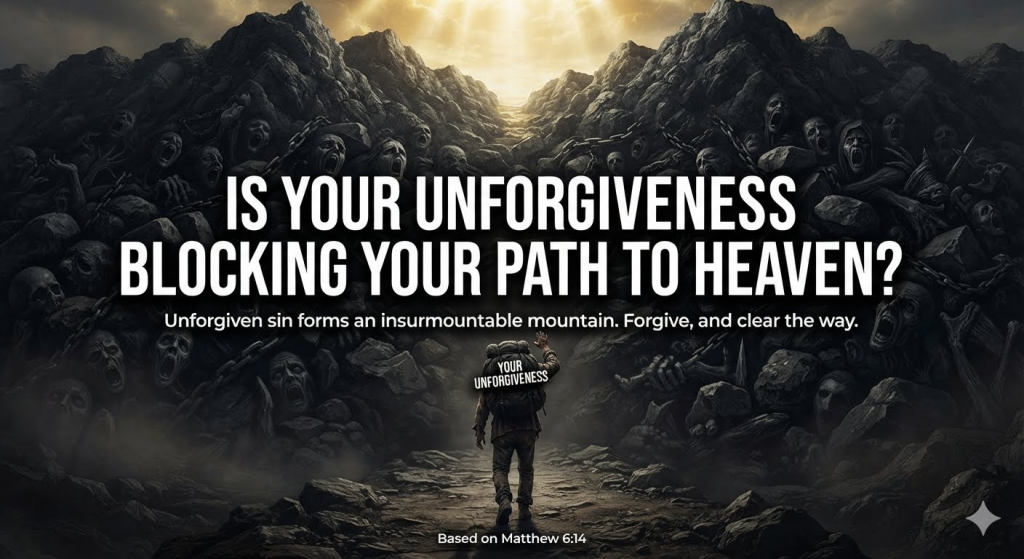
Between You and Heaven is a Huge Mountain of Un-forgiven Sin Due to Your Un-forgiveness Towards Others.
The human heart easily harbors resentment. When someone hurts you, holding a grudge feels like protection. However, spiritual laws reveal a dangerous reality: withholding forgiveness from others blocks God’s forgiveness from reaching you. Your own un-forgiveness builds a massive, impassable mountain of unforgiven sin between you and heaven.
The Spiritual Law of Reciprocity
Spiritual laws operate with absolute certainty. You cannot receive what you refuse to give. If you demand justice for yourself but expect mercy from God, you create a spiritual contradiction.
The mechanics of this law are clear:
- Direct connection: Your vertical relationship with God mirrors your horizontal relationships with people.
- The structural barrier: Every grudge you hold acts as a brick. Over time, these bricks form an insurmountable mountain.
- The flow of grace: Divine mercy is a continuous current that must flow through you to remain active.
The Clear Warning of Scripture
This concept is not a metaphor; it is a direct warning from Jesus Christ. The New Testament establishes a strict conditional link between human forgiveness and divine absolution.
Consider the explicit structural boundaries set in Matthew 6:14-15:
- The Promise: If you forgive those who sin against you, your heavenly Father will forgive you.
- The Warning: If you refuse to forgive others, your Father will not forgive your sins.
- The Parable: In Matthew 18, the unmerciful servant is delivered to the torturers because he refused to cancel a small debt after his massive debt was wiped clean.
How UN Forgiveness Builds the Mountain
Un-forgiveness changes your spiritual status from “redeemed” to “debtor.” When you refuse to let go of an offense, you tell God that Christ’s sacrifice was not enough to cover that specific hurt.
This mindset triggers a severe spiritual chain reaction:
- Debt retention: By keeping tabs on others, you force God to keep tabs on your own massive spiritual debt.
- Prayer blockage: Your prayers cannot penetrate the ceiling of heaven while your heart harbors bitterness.
- Spiritual stagnation: You cannot grow, move forward, or experience true peace while chained to past trauma.
Demolishing the Mountain
Tearing down a mountain of sin requires a decisive act of the will, not a shift in emotions. Forgiveness is a choice to release a prisoner, only to discover that the prisoner was you.
You can begin leveling the mountain today through specific actions:
- Acknowledge the debt: Admit the pain caused to you without minimizing it.
- Relinquish the right to retaliation: Hand the courtroom gavel over to God and let go of your demand for vengeance.
- Declare forgiveness aloud: Speak the words of release, even if your feelings have not yet caught up to your decision.
- Repent of your own bitterness: Ask God to forgive your stubbornness and dissolve the barrier between you.
Heaven is too high, and eternity is too long, to lose it over temporary bitterness. Drop the grudge, clear the path, and watch the mountain disappear.
Un-Forgiveness / Bitterness are the Main reason for Most Cancers like Breast and Uterine or Cervix Cancers and more
The Bible has quite a bit to say about forgiveness and unforgiveness. Perhaps the most well-known teaching on unforgiveness is Jesus’ parable of the unmerciful servant, recorded in Matthew 18:21-35. In the parable, a king forgives an enormously large debt (basically one that could never be repaid) of one of his servants. Later, however, that same servant refuses to forgive the small debt of another man. The king hears about this and rescinds his prior forgiveness. Jesus concludes by saying, “This is how my heavenly Father will treat each of you unless you forgive your brother or sister from your heart” (Matthew 18:35). Other passages tell us that we will be forgiven as we forgive (see Matthew 6:14; 7:2; and Luke 6:37, for example).
not e confused here; God’s forgiveness is not based on our works. Forgiveness and salvation are founded completely in the person of God and by Jesus’ redeeming work on the cross. However, our actions demonstrate our faith and the extent to which we understand God’s grace (see James 2:14-26 and Luke 7:47). We are completely unworthy, yet Jesus chose to pay the price for our sins and to give us forgiveness (Romans 5:8). When we truly grasp the greatness of God’s gift to us, we will pass the gift along. We have been given grace and should give grace to others in return. In the parable, we are appalled at the servant who would not forgive a minor debt after having been forgiven his unpayable debt. Yet, when we are unforgiving, we act just as the servant in the parable.
Unforgiveness also robs us of the full life God intends for us. Rather than promote justice, our unforgiveness festers into bitterness. Hebrews 12:14-15 warns, “Make every effort to live in peace with everyone and to be holy; without holiness no one will see the Lord. See to it that no one falls short of the grace of God and that no bitter root rises up to cause trouble and defile many.” Similarly, 2 Corinthians 2:5-11 warns that unforgiveness can be an opening for Satan to derail us.
We also know that those who have sinned against us – whom we may not want to forgive – are held accountable by God (see Romans 12:19 and Hebrews 10:30). It is important to recognize that to forgive is not to downplay a wrongdoing or necessarily to reconcile. When we choose to forgive, we release a person from his indebtedness to us. We relinquish the right to seek personal revenge. We choose to say we will not hold his wrongdoing against him. However, we do not necessarily allow that person back into our trust or even fully release that person from the consequences of his sin. We are told that “the wages of sin is death” (Romans 6:23). While God’s forgiveness relieves us from eternal death, it does not always release us from the death-like consequences of sin (such as a broken relationship or the penalty provided by the justice system). Forgiveness does not mean we act as if no wrong has been done; it does mean we recognize that grace abundant has been given to us and that we have no right to hold someone else’s wrongdoing over his head.
Time and again, Scripture calls us to forgive one another. Ephesians 4:32, for example, says, “Be kind and compassionate to one another, forgiving each other, just as in Christ God forgave you.” We have been given much in the way of forgiveness, and much is expected from us in response (see Luke 12:48). Though forgiveness is often difficult, to be unforgiving is to disobey God and to depreciate the greatness of His gift.
Matthew 6 does not teach that our eternal destiny is based on our forgiving other people; however, it does teach that our relationship with God will be damaged if we refuse to pardon those who have offended us. The Bible is clear that God pardons sin by His grace based on Christ’s work on the cross alone, not on man’s actions. Our right standing before Him is established on one thing only—the finished work of Christ (John 3:16; 1 John 2:2; 1 John 4:10). The penalty for the sin that is rightly ours is paid by Christ, and we obtain it by grace through faith, not by any righteous deeds of our own (Ephesians 2:8-9). No one will be able to stand before God demanding that his sins be forgotten simply because he has forgiven others. Only when we are born again and given a new life through God’s Spirit by faith in Jesus Christ are our sins forgiven. Therefore, Jesus is not referring to God’s initial act of forgiveness (reconciliation) that we experienced when we first believed the Gospel.
What He is referring to is the day-to-day cleansing we obtain when we confess our sins in order to restore fellowship with our heavenly Father—the fellowship which is interrupted by the daily tarnishing of sin that affects us all. This is not the wholesale cleansing from sin that comes with salvation by grace through faith, but is more like the foot-washing Jesus describes in John 13:10. The “whole body is clean,” He told the disciples, but their feet were dirty from their walking in the world. Forgiveness in this sense is what God threatens to withhold from Christians who refuse to forgive others.
In Matthew 6 Jesus is teaching disciples how to pray and in doing so outlines how we are restored into intimacy with God whenever we have displeased Him. In fact, Jesus instructs us to build into our prayers a request for God to forgive us in the same way that we have forgiven others who have harmed us (Matthew 6:12). If there are those we have not forgiven when we ourselves pray for forgiveness, then practically speaking we are asking God not to restore a right relationship with us after we sin. To emphasize the importance of restoring broken relationships with our brothers and sisters, Jesus states that asking for God’s forgiveness for one’s own sins, all the while withholding forgiveness from someone else, is not only bizarre but hypocritical. We cannot possibly walk with God in true fellowship if we refuse to forgive others.
To be sure, an unforgiving spirit is a serious sin and should be confessed to God. If we have unforgiveness in our hearts against someone else, then we are acting in a way that is not pleasing to God, making our prayers and a proper living relationship with Him difficult. God will not hear our prayers unless we also show ourselves ready to grant forgiveness. To quote John Calvin on this verse, “If we are not harder than iron, this exhortation ought to soften us, and render us disposed to forgive offenses” (Commentary on Matthew, Mark, and Luke, Vol. 1).
A second biblically plausible interpretation of Matthew 6:14-15 is that it is saying anyone who refuses to forgive others is demonstrating that he has not truly received Christ’s forgiveness himself. Any sin committed against us, no matter how terrible, is trivial in comparison to our sins against God. If God has forgiven us of so much, how could we refuse to forgive others of so “little”? Matthew 6:14-15, according to this view, proclaims that anyone who harbors unforgiveness against others has not truly experienced God’s forgiveness. Both interpretations strongly deny that salvation is dependent on our forgiving others. Whether Matthew 6:14-15 is speaking of “relational forgiveness,” or whether it is a declaration that unforgiveness is the mark of an unbeliever, the core truth is the same. We should forgive others because God, through Christ, has forgiven us (Ephesians 4:32). It is wrong for someone who has truly experienced God’s forgiveness to refuse to grant forgiveness to others.
Everyone has been wronged, offended, and sinned against at some point. How are Christians to respond when such offenses occur against them? According to the Bible, we are to forgive others. Ephesians 4:32 declares, “Be kind and compassionate to one another, forgiving each other, just as in Christ God forgave you.” Similarly, Colossians 3:13 proclaims, “Bear with each other and forgive whatever grievances you may have against one another. Forgive as the Lord forgave you.” The key in both Scriptures is that we are to forgive fellow believers as God has forgiven us. Why do we forgive? Because we have been forgiven! Our forgiveness of others should reflect God’s forgiveness of us.
In order to forgive those who sin against us, we must first of all understand God’s forgiveness. God does not just forgive everyone automatically with no preconditions—if He did, there would be no lake of fire in Revelation 20:14–15. Forgiveness, properly understood, involves repentance on the sinner’s part and love and grace on God’s part. The love and grace are there, but the repentance is often lacking. So, the Bible’s command for us to forgive one another does not mean we ignore sin. It means we gladly, gracefully, lovingly extend forgiveness to those who repent. We are always willing to forgive when given the opportunity. Not just seven times, but “seventy times seven” times (Matthew 18:22, KJV). Refusing to forgive a person who requests it demonstrates resentment, bitterness, and anger, none of which are the traits of a true Christian.
To forgive those who sin against us requires patience and forbearance. The church has the command to “be patient with everyone” (1 Thessalonians 5:14). We should be able to overlook personal slights and minor offenses. Jesus said, “If anyone slaps you on the right cheek, turn to them the other cheek also” (Matthew 5:39). Not every “slap in the face” needs a response.
To forgive those who sin against us requires the transformational power of God in our lives. There is something deep within fallen human nature that thirsts for revenge and urges retaliation in kind. We naturally want to inflict the same type of injury on the one who injured us—an eye for an eye seems only fair. In Christ, however, we have been given the power to love our enemies, do good to the haters, bless the cursers, and pray for the abusers (see Luke 6:27–28). Jesus gives us a heart that is willing to forgive and will work to that end.
Forgiving those who sin against us is made easier when we consider the extent to which God forgives our transgressions. We who have been lavished with grace have no right to withhold grace from others. We have sinned against God infinitely more than any person can sin against us. Jesus’ parable in Matthew 18:23–35 is a powerful illustration of this truth.
God promises that, when we come to Him asking for forgiveness, He freely grants it (1 John 1:9). The grace we extend to those who seek our forgiveness should be just as readily available (Luke 17:3–4).

Tea Time Manna
Since we have these promises, dear friends, let us purify ourselves from everything that contaminates body and spirit, perfecting holiness out of reverence for God.
—2 Corinthians 7:1
In a world so full of distractions and temptations, purity is difficult. Even more than difficult, the call to purity often goes forgotten and ignored (1 John 3:2-3). “Cheap grace” (Jude 1:4) is sometimes substituted for Jesus’ call to passionate, pure, and holy living. While we never want to give in to a works-righteousness approach to salvation, we must also remember that impurity through laziness, lack of commitment, or simple rebellion contaminates those claiming to be Christians and ruins our influence before the watching world. We are called to be at work perfecting holiness in our lives out of our reverence for God!
Prayer
Please purify my heart, my life, my body, and my influence, O God. May my words and my thoughts be blameless in your sight. I want to be holy as you are holy and honor you alone as worthy of honor and glory. I commit to living a holy life dedicated to you because it honors you, the one, true, living, and holy God! Through Jesus, I ask this. Amen and Amen

NEWS MANNA –
Put Israel To Sleep: When Peace Is Really Preparation For War

What if a peace agreement is not actually intended to produce peace?
That disturbing question is again confronting Israel after reports that one Arab country allegedly advised another to show flexibility toward Israel, reach an agreement, lower Israel’s defenses–and use the resulting calm to strengthen itself for a future confrontation.
Some reports have suggested the countries involved were Saudi Arabia and Syria, although that has not officially confirmed.
But the alleged strategy itself should sound painfully familiar to Israelis.
Because one of the most dangerous lessons of October 7 was that quiet does not necessarily mean peace.
Sometimes quiet is when your enemy is preparing.
The Lesson Of Hudaybiyyah
Israeli Arab affairs journalist Tzvi Yehezkeli has reportedly compared this mentality to one of the most famous episodes in early Islamic history: the Treaty of Hudaybiyyah.
In 628, Muhammad entered into a ten-year truce with the Quraysh tribe of Mecca.
This period of peace proved enormously advantageous to Muhammad’s movement. His political and military position grew substantially stronger. Two years later, after an allied tribe of the Quraysh attacked an allied tribe of Muhammad–an event regarded as violating the agreement–Muhammad used that pretext to march on Mecca with a dramatically larger force and conquered the city.
Hudaybiyyah illustrates something strategically important:
A truce can transform the balance of power.
An adversary who cannot achieve his objectives today may accept peace today while never abandoning those objectives tomorrow.
And Israel has encountered that thinking before.
Arafat Actually Invoked Hudaybiyyah
Perhaps the most chilling example came from Yasser Arafat himself.
Just months after the Oslo Accords transformed the Israeli-Palestinian relationship, Arafat addressed Muslims in Johannesburg, South Africa, on May 10, 1994.
He explicitly compared the agreement he had reached with Israel to Muhammad’s Hudaybiyyah agreement with the Quraysh. Contemporary documentation of the speech confirms the comparison.
Think about the implications.
Israelis were being encouraged to believe they had entered a new historical era.
Peace conferences were held. Handshakes were celebrated. Palestinian institutions were established. Israeli territory and security responsibilities were transferred in the expectation that political accommodation would gradually replace conflict.
Yet Arafat was simultaneously speaking to a Muslim audience using the historical analogy of a temporary truce made during an unfinished struggle.
Israel heard peace.
Arafat’s audience heard Hudaybiyyah.
That should have produced far more uncomfortable questions than it did.
Hamas Perfected The Strategy Of Quiet
Then came Gaza.
For years Israel fought Hamas, reached ceasefires, restored calm and repeated the cycle.
Each round produced the same hope: perhaps Hamas had finally been deterred.
But Hamas was digging.
Building tunnels.
Producing rockets.
Training terrorists.
Collecting intelligence.
Planning.
Israel increasingly interpreted extended periods without major conflict as evidence that Hamas preferred economic stability to another devastating war.
Hamas apparently interpreted those same periods as opportunities.
Then came October 7.
The lesson was catastrophic: an enemy temporarily choosing not to attack is not necessarily an enemy who no longer wants to attack.
Sometimes deterrence works.
Sometimes the enemy is simply waiting.
Syria Makes The Question Urgent Again
That lesson matters enormously as Israel considers potential arrangements with Syria.
Syrian leader Ahmed al-Sharaa has publicly acknowledged negotiations with Israel over a security agreement intended to reduce tensions along their border.
Israel certainly has an interest in preventing another hostile front from emerging.
But any agreement must answer a far more important question than whether the other side is willing to sign a piece of paper:
Has its strategic objective changed?
There is an enormous difference between genuine peace and tactical accommodation.
Egypt’s peace treaty with Israel has survived for decades. Jordan’s has as well. The Abraham Accords produced meaningful diplomatic and economic relationships.
Israel therefore should not assume that every agreement with an Arab or Muslim government is fraudulent.
But neither can it afford the opposite mistake–assuming that every signature represents reconciliation.
Peace Requires Open Eyes
The Bible repeatedly warns against declarations of peace that conceal a much more dangerous reality.
Jeremiah warned of those who declared “Peace, peace,” when there was no peace.
Paul similarly warned that the language of “peace and safety” can precede sudden destruction.
Scripture recognizes something human beings continually forget:
Wanting peace badly enough can make people believe peace exists when it doesn’t.
Israel should pursue genuine peace wherever possible.
But October 7 permanently changed what Israel can afford to assume.
A ceasefire is not peace.
Silence is not surrender.
Negotiation is not necessarily reconciliation.
And a signed agreement is only as valuable as the intentions and capabilities of the people signing it.
If reports are true that one regional government advised another to “put Israel to sleep” through an agreement while preparing for a future confrontation, Israel should remember a lesson written repeatedly across its history:
Make peace when peace is possible.
But never sleep because someone promised you peace.
The End Of Forgetting: AI Will Soon Remember Everything You Say

For most of human history, conversation was temporary.
You could sit across from a friend at lunch, talk with your spouse in the kitchen, debate politics with coworkers, counsel someone at church or make an offhand remark—and unless someone deliberately wrote it down or recorded it, those words disappeared into memory.
That assumption is beginning to collapse.
A new generation of wearable artificial intelligence devices is being designed to accompany people throughout the day, listening to conversations and transforming them into transcripts, summaries, reminders and searchable personal histories.
Amazon’s Bee wearable, for example, processes conversations throughout the day and uses them to understand a user’s patterns, preferences and relationships. Amazon says the device processes conversations without retaining the original audio, but the information extracted from those conversations can still become part of the personalized AI experience.
Plaud’s NotePin S can be worn on the body and is designed to record conversations, transcribe them and generate AI summaries.
Limitless developed an AI pendant around an even more ambitious concept: record large portions of your day and allow artificial intelligence to organize, summarize and search what happened. Its system has allowed users to retain audio anywhere from a day to indefinitely, depending on their settings.
The convenience is obvious.
Never take meeting notes again.
Never forget what someone promised.
Ask your AI what your doctor told you six months ago.
Search a conversation from last year.
Automatically generate a list of everything you agreed to accomplish this week.
But underneath that convenience is a much larger transformation.
We are moving from the Internet remembering what you typed to artificial intelligence remembering what you said.
And that raises one of the most important privacy questions of the AI age:
Who controls the memory?
Your Digital Footprint Is About To Get Much Bigger
Americans already leave enormous trails of digital information.
Our phones know where we travel. Search engines know what interests us. Online retailers know what we purchase. Social networks know who our friends are. Apps can collect information about our habits, movements and preferences.
Wearable AI adds something enormously valuable to that profile:
our actual conversations.
What do you worry about?
What does your marriage look like?
What do you think about your employer?
What political opinions do you express privately?
Which medical problems are you discussing?
What are your financial concerns?
Who are you meeting?
What did you promise someone?
What subjects make you angry, frightened or excited?
Conversation contains information that people would never deliberately type into Facebook or enter into a Google search.
Yet increasingly, that information can be captured, converted into text, categorized and made searchable.
A searchable transcript is fundamentally different from a recording sitting forgotten on a hard drive.
AI can potentially identify names, subjects, dates, decisions and recurring themes across thousands of conversations.
What once required someone to listen through hundreds of hours of audio could eventually require a simple question:
“Show me every conversation in which this person criticized his employer.”
That changes the value of the data dramatically.
The Person Being Recorded May Not Even Own The Device
There is another problem that receives far too little attention.
The purchaser of an AI wearable may have willingly agreed to being recorded.
Everyone standing around him did not.
Imagine walking into a business meeting and discovering that someone’s necklace has been creating an AI transcript.
Or speaking privately with a friend whose wearable is quietly documenting the conversation.
Or a pastor counseling a church member.
A teacher speaking with a student.
Parents discussing family problems.
Employees complaining about management.
Limitless explicitly tells its users that they should notify people and obtain consent before recording them, and its pendant uses a visible recording light.
That is important protection.
But it also demonstrates the larger problem.
Technology now makes it remarkably easy for another person’s device to turn your words into someone else’s database.
And once the culture becomes accustomed to these devices, people may simply begin assuming that everything they say could be preserved.
The result could fundamentally alter human conversation.
Today’s Promise Is Not Tomorrow’s Guarantee
Many AI companies emphasize privacy protections.
Plaud says information sent to its AI providers for processing is subject to zero-data-retention arrangements and is not used by those providers to train their models.
Amazon says Bee does not retain the raw conversational audio it processes.
Those safeguards matter.
But privacy concerns are larger than whether one particular company currently stores one particular type of file.
Companies can be acquired.
Terms of service can change.
Accounts can be compromised.
Governments can issue legal demands.
Employees can misuse access.
Databases can be breached.
And even when the original audio disappears, information derived from the conversation may still have tremendous value.
Bee’s own privacy notice, for example, describes potential permissions involving contacts, calendars, messages, microphones, sensors, health and fitness information and other phone features depending upon what the user enables.
That illustrates where personal AI is heading.
Not simply toward knowing one conversation.
Toward understanding the context of your life.
We May Build The Surveillance System Ourselves
The most remarkable aspect of this revolution is that nobody needs to force these devices upon us.
We will buy them because they are useful.
That is how many of the most powerful surveillance technologies have already entered society.
We voluntarily carry GPS trackers because smartphones are convenient.
We installed microphones in our homes because voice assistants were useful.
We put internet-connected cameras at our doors because they improved security.
Now we may begin wearing artificial intelligence capable of documenting our everyday lives because we don’t want to take notes.
There may never be a government announcement declaring that every conversation will be recorded.
Instead, millions of individuals may gradually construct that infrastructure themselves.
One device at a time.
One meeting at a time.
One conversation at a time.
For decades we worried about a future in which computers would know everything about us.
We may have misunderstood how that future would arrive.
It may not begin with a surveillance camera mounted on every wall.
It may begin with a small AI device pinned to someone’s shirt.
The most consequential feature of tomorrow’s artificial intelligence may not be that it can speak to us.
It may be that it never forgets what we said.

TruLight TV – Living with Heaven on my Mind
What does a life of intentionality look like? God showed us the perfect example of doing something with intention in Genesis 1 when he created the world. Imagine a life filled with purpose that doesn’t feel mundane. Watch this video to learn more. Today’s guest artist on Gospel Music USA – The Hinson Family is an award-winning Gospel Music Trio that hails from Nashville, TN. The heritage for The Hinson Family runs deep with Weston Hinson, lead singer, being the son of legendary lead vocalist for The Original Hinsons, the late Kenny Hinson. Kenny is regarded as one of the greatest singers of all time and is a major influence of many in the gospel music field as well as in main stream country music. The Original Hinsons began in Freedom, CA on December 12, 1967 and blazed a trail in gospel music that still burns to this day. The Hinsons were known for a high energy and dynamic presentation during their concerts and are responsible for such songs as “The Lighthouse,” “Hallelujah Meeting,” “That I Could Still Go Free,” “Call Me Gone,” and many others. Enjoy today show and thanks for watching.
Today on TruLight Radio XM
TruLight Radio XM 24/7
Program
GMT / UTC +2
Monday To Fridays
00:15 Words to Live By Testimonies
01.15 Science Scripture and Salvation
02.15 Ground Works
04.00 Gospel Concert of the Day
05.00 The Daren Streblow Comedy Show
5:55 It is Today devotional
6:00 Gaither Homecoming Morning Show
7:15 Discover the Word
8.15 Destined for Victory
8:55 Science Scripture and Salvation
9:00 Holy Spirit Hour – Normally Sermons
10:15 Hope of the Heart
11:15 Unshackled
11.45 Words to Live By
12:15 Truth for Life
13:15 Living on the Edge with Chip Ingram
14:15 Focus on the Family
15:00 Kids Hour
16:00 In Touch with Dr. Charles Stanley
16:30 Groundwork
17:15 Live in the Light
18:15 Renewing your Mind
19:00 Gaither Homecoming Show
20:15 Growing Hope
21:15 Adventures in Odyssey Radio Drama
21:45 Bible Reading
22:15 Night-sounds
23.00 Good Old Country Gospel / Rhema Gospel Express
VISIT THE WEBSITE
TruLight Ministry News – EXTRA MANNA

TruLight Ministries orders from God since 2012 . Teach Them , Comfort Them and Warn Them!
The Next Episode of : The Sheriff of the Church – I Tell You True : Has been released , Take a Listen !!
The Sheriff of the Church – Episode 16 Now released
The Sheriff of The Church (I Tell You Tru) – Episode 16 of 25 – Scientology
Healing Truths.
End Time Articles.
Share this Feeding of Manna with your Friends and Family. just click on the Social Media icon and share This Manna with your Friends and Family. just click on the Social Media icon and share !