Hosted by TruLight Ministries International – The Place of Truth
SELECT YOUR READING LANGUAGE – BOTTOM LEFT = YOUR DAILY MANNA NOW AVAILABLE IN 103 LANGUAGES
@ TruLight Daily Manna is not Just a Bible Verse with a Small Prayer . NO ::: WE SERVE DAILY Manna for the ENTIRE Day . Breakfast , Lunch , Dinner , Plus tea Times and even Entertainment Manna . Plus News Manna and More , This Daily Manna will keep you Spiritually full for the full 48 Hours and even More to Share with your Friends and Family !!!
Be Ready with the Gospel at Anytime , Anyplace to Anyone !!!

Don’t wait for the ” Perfect Moment “
Pray, especially when you’re unsure of God’s will for your life. “If any of you lacks wisdom, he should ask God, who gives generously to all without finding fault, and it will be given to him” (James 1:5). “Be still before the Lord and wait patiently for Him” (Psalm 37:7). If you don’t know what to pray, you can always personalize and pray verses such as, “Show me the way I should go, for to You I lift up my soul” (Psalm 143:8) and, “Guide me in Your truth and teach me” (Psalm 25:5).
The primary way God commands us is through His Word. “All Scripture is God-breathed and is useful for teaching, rebuking, correcting and training in righteousness” (2 Timothy 3:16). If Scripture commands something of us, there’s no need to hesitate and wonder if it’s really God’s will for us. He cares so much about us that He already gave a plain and clear guidebook to life – the Bible. “Your Word is a lamp to my feet and a light for my path” (Psalm 119:105). “The Law of the Lord is perfect, reviving the soul. The statutes of the Lord are trustworthy, making wise the simple” (Psalm 19:7). “How can a young man keep his way pure? By living according to Your Word” (Psalm 119:9). Likewise, God never contradicts Himself, so He’ll never ask you to do something contradictory to Scripture. He will never ask you to sin. He will never ask you to do something Jesus Christ wouldn’t do. We need to immerse ourselves in the Bible, so we will know which actions meet God’s standards. “Do not let this Book of the Law depart from your mouth: meditate on it day and night, so that you may be careful to do everything that is written in it” (Joshua 1:8).
Christians also have the Holy Spirit to discern what is, or is not, God’s will for our lives. “The Spirit of truth . . . will guide you into all truth” (John 16:13). Sometimes the Holy Spirit will either agitate our conscience if we’re making a wrong decision, or He will pacify and encourage us when we’re leaning toward the right decision. Even if He doesn’t intervene in such noticeable ways, we can have confidence that He’s always in charge. Sometimes God will alter a situation without us even realizing He has acted. “The Lord will guide you always” (Isaiah 58:11).
If God is calling you to take a leap of faith, be encouraged by His presence. “Have I not commanded you? Be strong and courageous. Do not be terrified, do not be discouraged, for the Lord your God will be with you wherever you go” (Joshua 1:9). And remember, “Cast all your anxiety on Him because He cares for you” (1 Peter 5:7). “Trust in the Lord with all your heart and lean not on your own understanding; in all your ways acknowledge Him, and He will direct your paths” (Proverbs 3:5-6).
What we are not to do is expect to hear voices from God. There is a dangerous trend today where people seek to hear a “word from the Lord,” extraneous to what He has already given us in the Bible. “The Lord told me . . .” has become the mantra of experience-driven Christianity. Unfortunately, what He “tells” one person often contradicts what He “tells” another, and these extra-biblical revelations have proven to be very divisive, tearing apart church after church as one person’s experience seeks to take precedence over another’s. This results in chaos, benefiting no one except Satan, who loves to sow discord among believers. We should make the apostle Peter our example in these matters. In spite of the miraculous experience on the Mount of Transfiguration, where he beheld the glorified Christ speaking with Moses and Elijah, Peter refused to rely on that experience, declaring instead that “We have the prophetic word confirmed, which you do well to heed as a light that shines in a dark place, until the day dawns and the morning star rises in your hearts” (2 Peter 1:18-19, NKJV).
The gospel message is for young and old, for men and women of all races and cultures (Galatians 3:28). But most who hear the message do not respond immediately. Some might not turn to God until they are well advanced in years.
Humanly speaking, we can suppose many reasons for not responding to God till later in life—having a family or a career, wanting to travel, or pursuing any number of sporting or social activities. Some may think God won’t mind waiting till their busy lives quiet down so they can spare Him some time. Others are too proud to acknowledge God. Some live comfortably by virtue of their own efforts, and they don’t feel any need to turn to God. Some simply love their sin. And others are so convinced they are earning their salvation by good works they have not yet turned to God in faith.
Jesus told a parable that shows different people being called at different times. In Matthew 20:1–16 the master of the vineyard hires workers to bring in the harvest. Some start work early in the day and agree to their wage. The harvest is so great the master has to hire more workers as the day progresses, right up until almost the close of the working day. The master pays those who started work late the same amount as those who started early. This parable speaks of God’s sovereignty in calling whomsoever He will, at whatever stage in life. He treats those who enter His service “late in the day” as equals with those who have toiled all their lives in His service.
From before creation, God knew whom He would call: “For he chose us in him before the creation of the world to be holy and blameless in his sight. In love he predestined us to be adopted as his sons through Jesus Christ” (Ephesians 1:4–5). God knows just the right time to call a sinner to repentance and salvation. Many can hear the outward call of God, for the seed of God’s Word is cast all over, but not all the seed lands on “good soil” where it can take root and produce a harvest (Matthew 13:1–23).
In addition to hearing the outward call, individuals must hear the inward call of the Holy Spirit, for it is He who convicts us of our sin and enables us to put faith in Christ (John 16:7–15). An example of this inward call is the conversion of Lydia: “The Lord opened her heart to respond to Paul’s message” (Acts 16:14). Paul gave the outward call, but it was the Holy Spirit who gave Lydia the inward call. Until that happens, we can never respond properly to the outward call. “The person without the Spirit does not accept the things that come from the Spirit of God but considers them foolishness, and cannot understand them because they are discerned only through the Spirit” (1 Corinthians 2:14). It is God who draws us to Himself; He decides whom He will call and when He will call them. His timing is perfect.
God’s plan for us is hidden till God chooses to disclose it. Only in hindsight can we see how the Holy Spirit was active in bringing us to the point of salvation. We may remember something significant a Christian said that made us stop and think. Or we were introduced to people whose lives demonstrated the love and humility of Jesus. Perhaps our circumstances changed dramatically, and we found ourselves in a place not of our choosing. Through seemingly random events, we finally acknowledged we were missing something important, and that started our search for God and a desire to be in relationship with Him. For each believer, the story of conversion is unique, but the common denominator is the Holy Spirit’s leading and the Word of God’s generation of faith (Romans 10:17).
God knows our hearts, and He knows who will respond to His call. When the moment is right, God breaks through our barriers, and the inward call of God becomes irresistible. Those who reject the outward call are without the Spirit of God (Romans 8:9).
God calls to us, but sometimes we don’t hear. God calls to us, but sometimes we ignore it. God calls to us, but sometimes our pride gets in the way. For some, it takes a personal tragedy before they stop to re-evaluate their lives. For others, it takes a lesson in humility before they acknowledge their need. For all those reasons and more, some people take a while to get around to turning to God. The danger in procrastination is that time might run out. No one is guaranteed tomorrow (Luke 12:20). God is patient, but, after death, there is no second chance to be saved (Hebrews 9:27).
Christians have a responsibility to spread the good news, but it is God who brings people to repentance and saving faith in Christ Jesus. If you have someone you are praying for, possibly for years, follow Jesus’ advice to “pray and not give up” (Luke 18:1). Trust God’s timing and turning.
If you are putting off God’s call to salvation, you are playing with fire. God’s moment is always now (2 Corinthians 6:2). We ignore God’s calling to our eternal peril.
In the Psalms, Proverbs, and many other books of the Bible, we find commands to wait on the Lord” like this one: “Wait on the LORD: Be of good courage, and he shall strengthen thine heart: Wait, I say, on the LORD” (Psalm 27:14, KJV). Most modern translations use “wait for the Lord.” To English readers, the idea of waiting on the Lord might seem like a passive exercise, but a closer study reveals that it’s nothing of the sort.
Patient, confident trust in the Lord is the central idea of the exhortation to wait on the Lord. The entire Psalm 27 is a prayer to God for help. It beautifully illustrates the meaning of waiting on the Lord. Throughout the psalm’s eloquent lines, David expresses authentic faith and courageous trust in God, based on his confident expectation that the Lord will rescue and save him in his time of trouble.
First, we see that we can wait on the Lord by trusting in Him. David expressed great confidence in the Lord, who was his light, salvation, and stronghold (Psalm 27:1–2). This kind of dynamic trust dispels fear and despair: “When the wicked advance against me to devour me, it is my enemies and my foes who will stumble and fall. Though an army besiege me, my heart will not fear; though war break out against me, even then I will be confident” (verses 2–3).
We can wait on the Lord by seeking Him. David conveyed his trust in the Lord by longing to be with Him, to commune in God’s presence and worship in His temple: “One thing I ask from the LORD, this only do I seek: that I may dwell in the house of the LORD all the days of my life, to gaze on the beauty of the LORD and to seek him in his temple” (Psalm 27:4). In God’s dwelling place, praising and worshiping the Lord, David felt safe and secure: “For in the day of trouble he will keep me safe in his dwelling; he will hide me in the shelter of his sacred tent and set me high upon a rock. Then my head will be exalted above the enemies who surround me; at his sacred tent I will sacrifice with shouts of joy; I will sing and make music to the LORD” (verses 5–6).
We can wait on the Lord through prayer, as David did in eager expectation of deliverance (Psalm 27:7–14). David asked God for wisdom, direction (verse 11), and protection (verse 12), wholly believing he would “see the goodness of the LORD in the land of the living” (verse 13). Those who wait on the Lord can fully expect Him to fulfill their hope: “Indeed, none who wait for you shall be put to shame” (Psalm 25:3, ESV).
Waiting on the Lord involves the confident expectation of a positive result in which we place a great hope. This expectation is based on knowledge of and trust in God. Those who do not know the Lord will not wait on Him; neither will those who fail to trust Him. We must be confident of who God is and what He is capable of doing. Those who wait on the Lord do not lose heart in their prayers: “This is the confidence we have in approaching God: that if we ask anything according to his will, he hears us” (1 John 5:14). Waiting on the Lord renews our strength (Isaiah 40:31). Waiting on the Lord by trusting, seeking, and praying establishes our faith and brings serenity and stability: “I waited patiently for the LORD; he turned to me and heard my cry. He lifted me out of the slimy pit, out of the mud and mire; he set my feet on a rock and gave me a firm place to stand. He put a new song in my mouth, a hymn of praise to our God. Many will see and fear the LORD and put their trust in him” (Psalm 40:1–3). As this passage affirms, waiting on the Lord is also a testimony to others who will see our faith and, as a result, put their trust in God.
Waiting on the Lord brings God’s blessings: “Since ancient times no one has heard, no ear has perceived, no eye has seen any God besides you, who acts on behalf of those who wait for him” (Isaiah 64:4; see also 1 Corinthians 1:7).
Sometimes we might feel as though the Lord does not see or hear us—that He’s not answering our prayers. During these moments, we can put our complete faith and trust in the living God. We can wait on the Lord in eager anticipation, knowing that He is with us and in control of our lives. He will do what He has promised. He will rescue and save us. He is always working for our good, even when we don’t feel Him (Romans 8:28). Through patient, courageous, active trusting, seeking, and prayer, we can learn to wait on the Lord.
Tea Time Manna
For many years you were patient with them. By your Spirit you admonished them through your prophets. Yet they paid no attention, so you handed them over to the neighboring peoples.
—Nehemiah 9:30
Nehemiah reminded God’s people that the Lord had spoken repeatedly to his people through the prophets. The faithful prophets spoke as the Holy Spirit of God inspired them. God loved, blessed, and protected his people, yet they often ignored his will revealed through his servants, the prophets. The people abandoned the Lord their God to their destruction! We must not let the same thing be said of us. Let’s pay attention to our God and to his Son, Jesus, whom the Father sent. Let’s listen and obey the Holy Spirit whom the Lord Jesus poured out upon us and who is alive in us to guide us. The Spirit speaks to our hearts and through the Holy Scriptures. The Holy Spirit longs to guide us in the ways of our God.
Prayer
Sovereign Lord and Abba Father, we praise you! Please never let us outlive our love for you or our hearts’ desire to be obedient and pleasing to you! Lead us and speak to our hearts through your Holy Spirit and your holy Scriptures. We offer our hearts to you and are ready to obey you and follow Jesus as our Lord and Savior. In his name, we pray. Amen and Amen
Truth Article by Pastor Dirk

What will the 2 Witnesses Say?
The main reason for the Two Witnesses standing before the 3rd Jewish Temple is!
Not only to say too the Jews, that the Holy of Holy’s is no longer occupied by God’s Holy Spirit, but to warn Christians that will use the Temple to bring sacrifices , the main reason is that a large amount of Christians will become part of the Jewish Traditions of bringing daily sacrifices for their sins.
Yes, there are Christians who will use the Temple for sacrifices to God just as the Jews are going to do. With this action they spit in the face of Jesus Christ. To reject Him, betray Him to return to the Old Testament faith of the first covenant,
There are already loads of Christians who follow and still follow the Jewish festivals and bring Jewish traditions into Christianity and Churches.
Yes, there will be born again, baptized in water Christians who will bring animal sacrifices to the 3rd Jewish temple once it has been built and unveiled. just as they are currently standing at the wailing wall in Jerusalem and praying.
The only Christians who will not be involved in the terrible abomination are Spirit-filled Children of God.
A Christian who is part of the daily sacrifices in the 3rd Jewish Temple is a terrible abomination in God and Jesus’s eyes,
Rev 11:1 ~ 19 And there was given me a reed like unto a rod: and the angel stood, saying, Rise, and measure the temple of God, and the altar, and them that worship therein.
But the court which is without the temple leave out, and measure it not; for it is given unto the Gentiles: and the holy city shall they tread under foot forty and two months.
And I will give power unto my two witnesses, and they shall prophesy a thousand two hundred and threescore days, clothed in sackcloth.
These are the two olive trees, and the two candlesticks standing before the God of the earth.
And if any man will hurt them, fire proceedeth out of their mouth, and devoureth their enemies: and if any man will hurt them, he must in this manner be killed.
These have power to shut heaven, that it rain not in the days of their prophecy: and have power over waters to turn them to blood, and to smite the earth with all plagues, as often as they will.
And when they shall have finished their testimony, the beast that ascendeth out of the bottomless pit shall make war against them, and shall overcome them, and kill them.
And their dead bodies shall lie in the street of the great city, which spiritually is called Sodom and Egypt, where also our Lord was crucified.
And they of the people and kindreds and tongues and nations shall see their dead bodies three days and an half, and shall not suffer their dead bodies to be put in graves.
And they that dwell upon the earth shall rejoice over them, and make merry, and shall send gifts one to another; because these two prophets tormented them that dwelt on the earth.
And after three days and an half the Spirit of life from God entered into them, and they stood upon their feet; and great fear fell upon them which saw them.
And they heard a great voice from heaven saying unto them, Come up hither. And they ascended up to heaven in a cloud; and their enemies beheld them.
And the same hour was there a great earthquake, and the tenth part of the city fell, and in the earthquake were slain of men seven thousand: and the remnant were affrighted, and gave glory to the God of heaven.
The second woe is past; and, behold, the third woe cometh quickly.
And the seventh angel sounded; and there were great voices in heaven, saying, The kingdoms of this world are become the kingdoms of our Lord, and of his Christ; and he shall reign for ever and ever.
And the four and twenty elders, which sat before God on their seats, fell upon their faces, and worshipped God,
Saying, We give thee thanks, O Lord God Almighty, which art, and wast, and art to come; because thou hast taken to thee thy great power, and hast reigned.
And the nations were angry, and thy wrath is come, and the time of the dead, that they should be judged, and that thou shouldest give reward unto thy servants the prophets, and to the saints, and them that fear thy name, small and great; and shouldest destroy them which destroy the earth.
And the temple of God was opened in heaven, and there was seen in his temple the ark of his testament: and there were lightnings, and voices, and thunderings, and an earthquake, and great hail.
Article by Pastor Dirk – TruLight Ministries International
NEWS MANNA
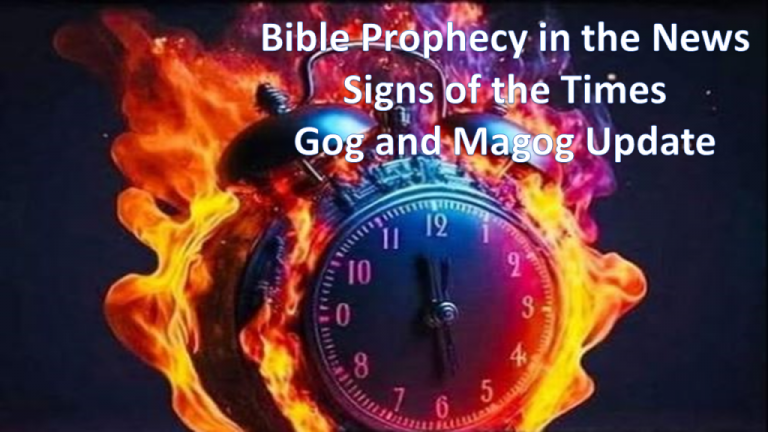
Digital Documents = Your Papers, Please – The Internet Is Entering The Digital ID Era

For most of the internet’s history, opening a website required little more than an internet connection. You could read, search, post, debate and browse without first proving to a government-backed system who you were.
That era may be beginning to close.
Governments increasingly want online platforms to know something about the person sitting behind the screen — beginning with age. Canada is moving toward tougher age requirements for social media, while Europe is developing age-verification technology that can be incorporated directly into its new continent-wide Digital Identity Wallet.
The justification is easy to understand: protect children from pornography, predatory behavior, addictive social media and harmful content.
But once the infrastructure exists to prove something about you before allowing you through a digital doorway, an enormous question follows.
What else might eventually require that digital credential?
First, Prove Your Age
Canada’s proposed Safe Social Media Act would establish a new Digital Safety Commission and give it authority to develop rules concerning age estimation and age verification. The government says it intends to establish a minimum age of 16 for social-media accounts, subject to possible exemptions for platforms with sufficient safeguards.
Europe is moving even further technologically.
The European Commission has developed an age-verification system that allows someone to prove that he or she meets an age threshold without necessarily revealing identity or other personal information. The Commission emphasizes that the technology has been designed around privacy.
But there is another important detail.
The EU calls it a “mini wallet.” It uses the same technical specifications as the European Digital Identity Wallets being rolled out across all 27 EU member states and was deliberately designed so age verification can eventually be integrated into those wallets.
In other words, Europe isn’t merely building an online age gate.
It is building an identity ecosystem.
This Isn’t Just An ID Card
The phrase “digital ID” can create the misleading impression that governments are simply putting your driver’s license on your phone.
The European Commission’s own vision is much broader.
The EU Digital Identity Wallet is designed to allow people to identify themselves to public and private services, store official credentials, electronically sign documents and prove specific attributes about themselves.
Its proposed uses include government services, driver’s licenses, employment and educational credentials, travel documents, SIM registration and social-security information.
Then come two particularly important categories: health and money.
EU documentation describes using the wallet for medical prescriptions and health-related credentials. Its ePrescription system envisions citizens storing a Health ID attestation in their wallet and presenting the wallet at a pharmacy to retrieve prescriptions.
The wallet can also be used to open bank accounts and authenticate payments. EU technical documentation describes payment authentication for both online and in-store purchases.
Consider what is converging inside one technological framework:
Identity.
Age.
Banking.
Payments.
Health credentials.
Prescriptions.
Government services.
Travel.
Education.
Employment qualifications.
Social benefits.
And potentially access to major online platforms.
The EU presents this primarily as convenience, security and user control. And there are obvious conveniences. One credential could eliminate countless passwords, forms, photocopies, identity checks and repeated submissions of personal information.
But convenience and control are not opposites.
A system can provide enormous convenience while simultaneously creating an infrastructure capable of exercising enormous control if its rules, architecture or political environment change.
When Optional Becomes Difficult To Avoid
EU officials emphasize that using the wallet is voluntary and that its architecture is designed to minimize data disclosure, prevent tracking and give individuals control over what information they share. Those protections are important and shouldn’t be ignored.
But there is another kind of pressure governments don’t have to legislate.
Practical necessity.
Imagine that your digital wallet eventually becomes the easiest way to access government services, prove your age online, open a bank account, authorize a payment, retrieve a prescription, sign a contract, verify professional credentials and log into major internet platforms.
Nobody necessarily has to announce, “Digital ID is mandatory.”
Life itself can make it increasingly difficult to function without one.
That is where legitimate questions about function creep become unavoidable. Systems built for one purpose rarely remain limited to that purpose forever. Databases expand. Regulations change. Governments change. Definitions of prohibited behavior change.
And once identity becomes the gateway through which people interact with large portions of the digital world, the consequences of losing access become dramatically greater.
From Moderating Content To Identifying Users
This becomes even more significant when digital identity intersects with efforts to regulate speech and online behavior.
Canada’s proposed legislation is presented primarily around protecting children and creating safer online environments. It also establishes government oversight of regulated services and addresses multiple categories of harmful content.
That does not mean Canada is currently proposing that citizens present a government digital ID before expressing political or religious opinions online.
But the technological direction deserves scrutiny.
The anonymous internet is increasingly colliding with demands for age assurance, platform accountability and identity verification.
Once websites must reliably determine whether someone is 12, 15, 17 or 18, some form of trusted verification must occur somewhere.
Europe is already demonstrating one possible answer: connect that verification infrastructure to a standardized digital wallet.
The Prophetic Question
For Christians watching these developments, there is an unavoidable prophetic dimension.
Revelation 13 describes a future system under the Antichrist in which economic participation becomes conditional. Those without the required mark cannot buy or sell.
For most of human history, constructing such a system on a worldwide scale would have been extraordinarily difficult.
Not anymore.
Digital payments, biometric authentication, centralized platforms, programmable financial systems and interoperable digital identity are rapidly creating technological capabilities previous generations never possessed.
A digital identity wallet is not simply a digital version of your passport when that same architecture can potentially authenticate your identity, age, financial transactions, health credentials, government services and access to the digital world.
And the danger does not require every piece of information to sit inside one giant government database. Control can operate through interconnected systems that simply ask the same credential whether you are authorized to proceed.
Approved? Enter.
Verified? Purchase.
Credential valid? Access granted.
Credential rejected? Access denied.
That is why the question surrounding digital identity is much larger than whether carrying documents on a smartphone is convenient.
It undoubtedly is.
The question is what happens when the credential proving who you are becomes increasingly intertwined with what you are permitted to do.
The world is constructing an unprecedented digital infrastructure around identity, finance, communication and access. Revelation warned nearly two thousand years ago of an eventual regime capable of controlling participation in economic life.
The technology needed to make such control possible is no longer difficult to imagine.
We are watching pieces of it being built.
Israel’s Most Unexpected Weapon Isn’t A Missile – It’s A Netflix Show

Israel has spent nearly three years trying to explain October 7 to the world.
It released videos. It brought journalists to view footage of the massacre. Survivors told their stories. Families described hiding for hours while terrorists moved from house to house. Hostages returned with accounts of captivity. Israeli officials stood before cameras and international bodies pleading with the world not to forget what started the war.
And yet, much of the world moved on.
Now something unexpected is happening.
A television show may be reaching people Israel’s diplomats never could.
The fifth season of the Israeli series Fauda was released globally on Netflix on September 8, and its reception has been extraordinary. The show entered Netflix’s Top 10 in dozens of countries and drew 2.1 million global views during its first week. Most remarkably, it became the No. 1 Netflix television show in Lebanon. It also reached the Top 10 in Jordan, Qatar, Bahrain, the United Arab Emirates, Oman and Kuwait.
Think about that for a moment.
An Israeli television series, created by Israelis, centered this season on the trauma of October 7, became the most watched Netflix show in Lebanon.
No Israeli government information campaign could have dreamed of that kind of penetration.
And Fauda may be accomplishing something even more important.
It is making people feel what happened.
The Day The Story Changed
Fauda was already an international success long before October 7. The series follows Israeli operatives working undercover among Palestinians, and much of its appeal comes from its refusal to portray the conflict as a simple video game of heroes shooting villains.
Palestinian characters have families, motivations and fears. Israeli characters make mistakes, suffer psychologically and sometimes cross lines themselves.
That complexity matters because audiences don’t feel as though they’re watching a government commercial.
But October 7 changed the show just as it changed Israel.
Writers had already begun working on Season 5 when Hamas attacked southern Israel. Co-creator Avi Issacharoff said the series could not simply continue as though the largest event Israel had experienced in generations hadn’t happened.
Two episodes of the new season return directly to October 7.
Co-creator and star Lior Raz explained that they weren’t trying simply to recreate the massacre. They wanted to place characters viewers had known for years inside situations based upon what actually happened.
Accuracy, Raz said, was important.
The result has produced extraordinary reactions.
Viewers around the world have described the October 7 episodes as devastating, frightening and difficult to watch. Some said they had to stop afterward simply to process what they had seen. Social media reactions have appeared from viewers in the United States, Europe, Brazil and elsewhere describing a much deeper emotional understanding of the massacre after watching the episodes.
Which raises an uncomfortable question.
Why did it take a television drama?
When October 7 Disappeared
Part of the answer is what happened to the world’s attention after October 7.
The attack initially dominated global coverage. But as Israel entered Gaza, the camera moved.
For nearly three years, audiences have been saturated with images of Gaza: destroyed buildings, wounded civilians, grieving families, hungry children and enormous casualty figures.
October 7 gradually became the prologue rather than the story.
For younger viewers encountering the conflict primarily through social media, the chronology could become almost inverted. Israel’s military response was constantly visible. The event that triggered it increasingly wasn’t.
Then Fauda put viewers back inside October 7.
Not as diplomats.
Not as military analysts.
Not as competing casualty statistics.
As people.
Families hiding. Israelis trying to survive. Terrorists crossing into communities. Confusion. Helplessness. Fear.
That is the extraordinary power of storytelling. Statistics inform the brain. Stories can reach somewhere else entirely.
The Information War Israel Was Losing
There is another reason this moment deserves attention.
Recent comments by prominent Gazan photojournalist Motaz Azaiza have raised serious questions about what Western audiences were shown from Gaza.
Azaiza acknowledged in a September interview that Gaza journalists sometimes lowered their cameras when Palestinians criticized Hamas. He also said he filmed Palestinians beating Israeli captives on October 7 but withheld that footage because he did not want Israel to use it to identify those involved.
This demonstrates something critical about information coming from territory ruled by an armed terrorist organization: what the world sees can depend enormously upon where the camera is pointed–and when it is turned off.
And now comes the irony.
A fictional television show may be exposing audiences to realities they rarely encountered through the news.
The Cameras Cross Borders
Perhaps the most fascinating part of Fauda’s success isn’t happening in New York, London or Paris.
It’s happening in the Arab world.
People in Lebanon, Jordan, Qatar, Bahrain and other countries are voluntarily watching an Israeli production about Israeli counterterrorism operatives and Israeli trauma.
Fauda hasn’t suddenly created peace in the Middle East. Watching a television series doesn’t tell us what individual viewers believe about Israel, Hamas or the war.
But curiosity itself is significant.
Millions of people now have access to Israeli characters speaking Arabic, interacting with Palestinian society and experiencing the conflict from inside Israel rather than through someone else’s description of Israel.
That is something diplomacy has struggled to achieve.
The Battle Beyond The Battlefield
Israel possesses one of the world’s most technologically advanced militaries. It has missile defenses, intelligence capabilities, fighter aircraft and precision weapons.
Yet one of the country’s greatest vulnerabilities has always existed somewhere those weapons cannot reach: public perception.
Wars today are fought twice.
Once on the battlefield.
And again on the screen.
Israel can destroy a missile launcher. It cannot destroy an idea held by hundreds of millions of people. It can intercept a rocket. It cannot intercept a narrative.
That requires something different.
And perhaps that explains why Fauda is accomplishing what another press conference at the United Nations never could.
For a few hours, people aren’t being asked to choose between competing political arguments.
They’re being invited into the experience.
They see fear. They see families. They see trauma. They see Israelis not as geopolitical abstractions but as human beings living inside a conflict most viewers have experienced only through headlines.
Nearly three years after October 7, the world is watching those events again.
This time it isn’t because an Israeli spokesman asked them to.
They clicked “Play” themselves.
And somewhere in Lebanon, Jordan, Qatar, Europe and America, viewers who thought they understood October 7 are discovering that perhaps they never really did.

TruLight TV – Jesus Is Closer Than a Brother
Sometimes it can feel like God is so far away. But His ear is close to you. He hears every time you call out to Him—every prayer. There is no word spoken in vain, because He is listening for your voice. That can bring assurance in the moments we feel invisible, defeated, and ignored. God hears your voice and answers your prayers. Today on The Josh and Ashley show, As early as five years old while growing up in Dayton, Ohio, Steve Ladd felt the call of God to minister through song. The son of an evangelist, the youngster would mature to become one of the most well-liked and respected group member for some of America’s most award-winning Christian music ensembles like Gold City and The Anchormen. Although still considered a young artist, Ladd has spent the last four years traveling extensively both domestically and internationally. Performing inspirational songs like “Preach the Word” has become a personal anthem of encouragement Ladd takes wherever he goes and he reports “God moves and lives that are broken and hurting are leaving changed and encouraged at his services”.Enjoy Steve Ladd on today’s show and Listen to some great music. Thanks For watching and Share this Video With your Friends.
Today on TruLight Radio XM
TruLight Radio XM 24/7
Program
GMT / UTC +2
Monday To Fridays
00:15 Words to Live By Testimonies
01.15 Science Scripture and Salvation
02.15 Ground Works
04.00 Gospel Concert of the Day
05.00 The Daren Streblow Comedy Show
5:55 It is Today devotional
6:00 Gaither Homecoming Morning Show
7:15 Discover the Word
8.15 Destined for Victory
8:55 Science Scripture and Salvation
9:00 Holy Spirit Hour – Normally Sermons
10:15 Hope of the Heart
11:15 Unshackled
11.45 Words to Live By
12:15 Truth for Life
13:15 Living on the Edge with Chip Ingram
14:15 Focus on the Family
15:00 Kids Hour
16:00 In Touch with Dr. Charles Stanley
16:30 Groundwork
17:15 Live in the Light
18:15 Renewing your Mind
19:00 Gaither Homecoming Show
20:15 Growing Hope
21:15 Adventures in Odyssey Radio Drama
21:45 Bible Reading
22:15 Night-sounds
23.00 Good Old Country Gospel / Rhema Gospel Express
VISIT THE WEBSITE
TruLight Ministry News – EXTRA MANNA
TruLight Ministries orders from God since 2012 . Teach Them , Comfort Them and Warn Them!
Artist Liners
Healing Truths.
End Time Articles.
INTRODUCTION MANNA
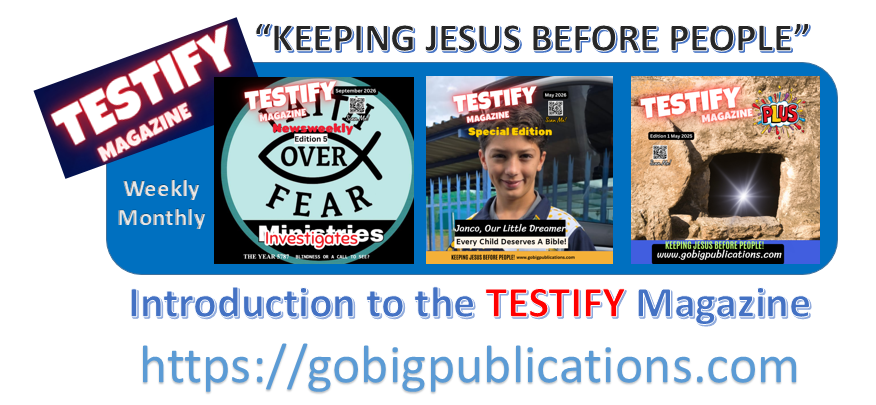
Share this Feeding of Manna with your Friends and Family. just click on the Social Media icon and share This Manna with your Friends and Family. just click on the Social Media icon and share !