Hosted by TruLight Ministries International – The Place of Truth
SELECT YOUR READING LANGUAGE – BOTTOM LEFT = YOUR DAILY MANNA NOW AVAILABLE IN 103 LANGUAGES
@ TruLight Daily Manna is not Just a Bible Verse with a Small Prayer . NO ::: WE SERVE DAILY Manna for the ENTIRE Day . Breakfast , Lunch , Dinner , Plus tea Times and even Entertainment Manna . Plus News Manna and More , This Daily Manna will keep you Spiritually full for the full 48 Hours and even More to Share with your Friends and Family !!!
The Reach of His Hand
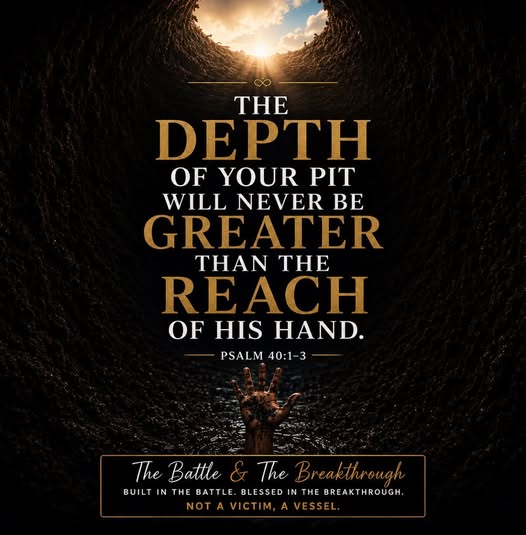
Throughout Israel’s history, the nation struggled with theological forgetfulness and spiritual unfaithfulness. Time and time again, the people turned away from the Lord to worship foreign gods. Through the prophet Hosea, Yahweh reminded His people that the same God who had delivered them from the land of Egypt was still the one true God and Israel’s only Savior: “But I am the Lord your God from the land of Egypt; you know no God but me, and besides me there is no savior” (Hosea 13:4, ESV).
This passage in Hosea equates to a short history lesson on the Ten Commandments: “I am the Lord your God, who brought you out of Egypt, out of the land of slavery. You shall have no other gods before me” (Exodus 20:2–3). The prophet Isaiah delivered a similar reminder: “I, I am the Lord, and besides me there is no savior” (Isaiah 43:11, ESV).
Idolatry is the ultimate manifestation of disloyalty, invoking jealousy and severe judgment from the Lord (Exodus 20:5; Deuteronomy 5:8–10; Leviticus 26:27–33; Numbers 33:51–56). God’s jealousy and judgment were based on His love for the people He redeemed at such a high cost.
“You must worship no other gods, for the Lord, whose very name is Jealous, is a God who is jealous about his relationship with you” (Exodus 34:14, NLT). When God set Israel free from slavery in Egypt and instituted His covenant with them, His whole desire was to live in constant, intimate fellowship with His people. No other god has ever offered such a loving, close, one-on-one relationship.
Israel’s national life and the personal life of every citizen depended on God because He alone was their Savior. In Isaiah 45:14–25, God called the nation to court and charged them with serving worthless “wooden idols” and “praying to a god that cannot save. Declare and present your case; let them take counsel together! Who told this long ago? Who declared it of old? Was it not I, the Lord? And there is no other god besides me, a righteous God and a Savior; there is none besides me” (ESV).
Without God, Israel would not exist. The people only needed to look at their own history to know this was true. If it had not been for the Lord delivering the nation over and over again, they would have no history at all. But still, they continued to abandon their God and Savior to serve foreign gods.
Nothing escapes God’s eyes (Job 34:21; Proverbs 15:3; Hebrews 4:13). He sees our wayward hearts and actions (Jeremiah 16:17; 17:10; 23:24; Psalm 44:21). The people of Israel thought they could live however they pleased and escape the consequences. But God saw their unfaithfulness just as He sees our disloyalty today.
Anything we desire more than God or value more than our relationship with Him is an idol. God must be first in our lives (Matthew 6:24, 33; Proverbs 3:6; Colossians 3:17). Jobs, success, money, possessions, and people can all become idols. Pride, greed, obsession with self-image, and the pursuit of unhealthy or ungodly relationships are all forms of idolatry—a sin of the heart (Matthew 6:21; Colossians 3:5). God longs, insists even, that He be the only one we seek to meet the deep needs in our heart (Matthew 22:37; 1 John 5:21; 1 Corinthians 10:14).
God still says to us today, “Besides me there is no Savior.” When we pursue love, identity, significance, worth, and security in something or someone other than God Himself, we are turning our backs on His love for us (Jonah 2:8) and forgetting, like Israel, that God is the only one who truly saves.
“Besides me there is no Savior” means there never has been and never will be another God and Savior of the world. The God of Israel, the Father of our Redeemer, the Lord Jesus Christ, is the only one. With our whole hearts, we must be devoted to Him and nothing and no one else.
In most superhero movies, the hero must intervene in a dangerous situation to rescue a powerless victim. At the end, the victim might exclaim, with all the force of a well-worn cliché, “You’re my hero!” In this moment, the grateful person is acknowledging that the hero has, potentially with great sacrifice, rescued him or her from mortal danger. Christians mean much the same thing when they refer to Jesus as the Savior, but on a much grander scale. In the Bible, the word Savior simply means “someone who saves someone else.” In the Old Testament, God is frequently referred to as the Savior, rescuing His people from all kinds of danger (Deuteronomy 32:15; 1 Chronicles 16:35; Psalm 18:46; 38:22). What does Jesus rescue us from? And what does He rescue us for?
To understand Jesus’ role as Savior, we must understand our own desperate situation. Humans have sinned against God, rebelling, and voluntarily separating themselves from the God of life (Romans 3:23; 5:12). Sin produces death, and so everything in our world is now dying (Romans 6:23; James 1:15). Because God is holy, He will punish sin, leading to eternal separation from Him (Matthew 10:28). Without Jesus, humans are helplessly enslaved by sin and cannot ever achieve holiness on their own (Romans 3:9–20). We were born on a one-way track to hell, rightly condemned for our sin (Ephesians 2:1–3).
That is where Jesus steps in. Being God, Jesus is perfect and never sinned. He lived a perfectly righteous life, and therefore did not deserve to die (2 Corinthians 5:21). However, He chose to die a horrific death on the cross for us, paying the price for our sin (Romans 6:23; 1 Peter 2:24; 1 John 2:2). Then He rose again three days later, establishing His victory, and He is coming back soon to remove evil from the world completely. Because of His death and resurrection, anyone who trusts in Him can have eternal life. To the person who trusts in Him, Jesus Christ becomes the Savior.
If you are a human being, you needed rescuing. Jesus came to save you. He saves us from sin by forgiving our sins (Luke 19:10; Acts 10:42–43; 1 Timothy 1:15). He saves us from God’s righteous punishment by justifying us with His blood (Romans 5:9). He saves us from death by giving us eternal life. He saves us from the degradation of the world by separating, empowering, and sanctifying us (Titus 3:3–8). He saves us from the devil, who deceives the world (1 John 3:8). For all these reasons and more, Jesus is rightfully worshiped as the Savior of the world (John 4:42; 1 John 4:14).
Jesus did not simply save us from something, He saved us for something. He saved us for a relationship with God, who loves us (John 3:16–18; Romans 5:10). By saving us from our sins, Jesus made reconciliation with God possible, allowing us to approach God as our heavenly Father (2 Corinthians 5:18–21; Hebrews 4:16). By His grace, and not by our works, we are saved for an eternity with God, worshiping Him, enjoying Him, and being loved by Him forever (Ephesians 2:5–10).
Jesus’ death and resurrection make all these things possible, demonstrating that He is the Savior of the world. But is He YOUR Savior? God makes it clear that we can only be saved by trusting in His Son (John 14:6). No other person, philosophy, or work can reconcile us to our holy Creator. When we submit to the truth of Jesus, confessing our sin and trusting Him, we receive eternal life, an intimate relationship with God, and grace to cover all our sins, past, present, and future. If you have not trusted Jesus as your Savior, come to Him today. He is gracious, regardless of your past (1 Timothy 3:3–5). Believe in Him and trust Him for salvation. What are you waiting for?
Humanity needs a Savior. To give an exhaustive answer to why we need a Savior would require encyclopedic volumes of information. In our limited space, we will present some ideas, based on what the Bible says, about why we need a Savior.
First, let us understand the term we in this question to be technically inclusive; that is, when we say, “we need a Savior,” we mean that every person who has ever lived needs a Savior. Also, we should note that the term savior enjoys a somewhat broad use in the Bible; anyone who performs an act of rescue or deliverance may be designated as a “savior”—examples include the judges Othniel and Ehud (Judges 3:9, 15). God Himself (and not just Jesus specifically) is also called “Savior” (Isaiah 43:11; 45:21–22; 60:16). In this article, to avoid confusion, we will use the word Savior to designate Jesus Christ.
The reason we need a Savior has its roots in the nature of God and the nature of man: first, the Bible says God has a plan and human beings are critical to that plan. Second, God is holy, and He cannot abide in sin. Third, every human being has sinned, and every human has an intrinsic sin nature.
The difficulty for us is that living with God requires sinless perfection, and none of us is perfect. So God cannot accomplish His goals without first fixing humankind. That is why we need a Savior—and Scripture identifies Him as Jesus Christ (Luke 2:11; Titus 2:13–14).
We need the Savior, Jesus, because we need to be made holy: “without holiness no one will see the Lord” (Hebrews 12:14). Jesus does not simply make us better people; nor does He boost our godliness or augment our holiness—we have none to begin with. Rather, He makes us completely new creatures (2 Corinthians 5:17; Galatians 6:15).
The plan of God for humankind. We need a Savior because God plans for us to bring Him glory (Isaiah 43:7) and enjoy His fellowship forever (Psalm 27:4). He desires to conform us to the image of His Son (Romans 8:29).
The Self-Existent One did not create the cosmos to entertain Himself. He did so to cultivate relationships with beings made in His image (see Genesis 1:27). God (as a social and moral agent) desires to have His creation love Him and thrive. The fact that we (as volitional beings) fell into sin and rebellion means that we need a Savior, or God’s plan for us cannot be realized. In His love, God sent the Savior—His only begotten Son—so He could fit us for eternity and showcase His glory.
The holiness of God. With over 900 biblical references to the holiness of God, its importance to His creation cannot be overstated. The Bible teaches that we should pursue holiness (1 Peter 1:15).
Jesus taught that we should approach God with the understanding that He is holy (Matthew 6:9). We need a Savior because God is too pure to abide sinfulness: “Your eyes are too pure to look on evil; you cannot tolerate wrongdoing” (Habakkuk 1:13). Without a Savior, God’s word to us would only be “away from me, you evildoers!” (Matthew 7:23).
The sinfulness of humankind. In Romans 3:10–18 Paul brings passages from Psalms and Isaiah into a discussion of the law. In so doing he uses Scripture to conclude with confidence that every person has sinned (Romans 3:23). Every person therefore requires remediation. We cannot cast off our sin any more than a leopard can change its spots (Jeremiah 13:23). “There is no one righteous, not even one” (Romans 3:10; cf. Psalm 14:1).
God says in no uncertain terms that everyone is a sinner, even the ones who don’t think they are (see 1 John 1:8). What this means is that everyone needs a Savior, even the ones who don’t think they do.
The necessity of a Savior. To summarize, God has a plan. It is perfect, and He won’t change His mind about executing it. His plan involves us humans, though, and we are sinners through and through. Since God is holy, He cannot tolerate the presence of sin, and, unless He somehow cleanses us, it is impossible for Him to work His eternal plan with us. Those who are not cleansed—those who are not saved—must be separated from God for all eternity. God’s solution: offer the perfect sacrifice, once and for all, to cleanse us of sin and reconcile us to Himself. This He did with His Son on the cross.
We need a Savior because we cannot save ourselves. We need a Savior because, without Christ, we are described as “having no hope and without God in the world” (Ephesians 2:12, ESV).
We need a Savior, and God has provided one. Jesus saved us as a demonstration of God’s love and as a function of His mercy. Now, “having been justified by his grace, we . . . become heirs having the hope of eternal life” (Titus 3:7). Jesus’ sacrifice unlocked everything for us—and if there were any other way for God to work His plan without compromise, He would have chosen that over the humiliation of the cross (see Luke 22:42). The fact that Jesus did indeed die on the cross is proof enough that we need a Savior.

Tea Time Manna
Everyone who does evil hates the light, and will not come into the light for fear that his deeds will be exposed. But whoever lives by the truth comes into the light, so that it may be seen plainly that what he has done has been done through God.
—John 3:20-21
Truth is seen in what it does and whom it seeks. Let’s live as children of light and seek after the Father who dwells in unapproachable and glorious light (1 Timothy 6:16) so we might be light to a world darkened by evil (Matthew 5:14-16). Let’s not hide, play, or flirt with the darkness, but come to the light and receive the light of life (John 1:4, 8:12) as we live as light in our dark world (Philippians 2:15).
Prayer
Father of the heavenly lights,* I ask you to correct me gently as I place myself, my imperfections, failures, and sins before you, bringing them into the light of your presence. Please forgive and cleanse me by the blood of Jesus so that I might be spotless and holy and blameless in your sight. O Lord, I don’t just want to be forgiven; I want to be cleansed and made useful to you and your people. Please help me find my way to usefulness and be light to those trapped in darkness. In Jesus’ name, I pray. Amen and Amen
Truth Article by Pastor Dirk
The Rhythm of REST
Six days you shall labor and do all your work!
…in the Bible. It describes the rhythm of life that God established for humanity: to work diligently, but also to intentionally make time for rest and restoration.
The best-known passages conveying this command are:
• Exodus 20:9-10: “Six days you shall labor and do all your work; but the seventh day is the Sabbath of the Lord your God; then you shall do no work…”
• Deuteronomy 5:13-14: “For six days you shall continue with your work and complete your tasks. The seventh day is the Lord your God’s day of rest.”
IT IS GOD’S DAY OF REST! WHY DOES THE CHURCH BOTHER GOD ON HIS DAY OF REST?
Why is this rhythm important?
- It is God’s example: In Genesis 2:2-3, we read that God Himself rested on the seventh day after completing creation—not because He was tired, but to enjoy it and set a pattern for us.
- Spiritual and physical restoration: Rest is not merely “doing nothing.” It is an opportunity to let your body recharge and to deepen your relationship with God, your family, and yourself.
- Protection against burnout: If one works continuously without resting, one ignores the rhythm for which the body and spirit were designed, ultimately leading to burnout.
The Biblical command is very clear: all preparations and ordinary work must be completed before the Sabbath begins. In the biblical tradition, the day before the Sabbath is specifically referred to as the Preparation Day [Exodus 16:23]. Since the Sabbath begins at sunset, all physical tasks, cooking, and work had to be completed by that time in order to keep the day of rest entirely holy [Exodus 16:23].
Here is how this principle was practically applied in the Bible:
• The Manna in the wilderness: In Exodus 16:23, God told the Israelites to gather double the amount of manna on the sixth day and to finish baking and cooking it: “Tomorrow is a day of rest, a holy Sabbath to the Lord. Bake what you want to bake, and boil what you want to boil; and whatever remains, put aside for yourselves to keep until the morning.”
• Nehemiah’s strict rules:
In Nehemiah 13:19-22, Nehemiah even had the gates of Jerusalem closed as soon as the shadows fell across them before the Sabbath, so that merchants could not enter to conduct business on the Sabbath.
• The New Testament: Even during the crucifixion of Jesus, it is specifically mentioned that it was the “Preparation Day,” and that the women were in a hurry to embalm Jesus’ body before the Sabbath began at sunset (Luke 23:54-56). Practical lessons for today
Although Christians today differ regarding the precise observance of the Sabbath (some keep Saturday as the Sabbath, while others celebrate Sunday as the Lord’s Day), the principle of thorough preparation remains the same:
- Planning reduces stress: By intentionally completing your weekly tasks, administrative work, and household chores before the day of rest, your mind can truly switch off.
- Creating a boundary: It compels one to set a clear boundary between the time spent producing (work) and the time spent simply being (rest and worship).
Worrying about unfinished work can completely rob you of peace—especially when you are trying to rest. The Bible addresses this very tension directly: God does not ask us to be perfect, but to trust.
When the burden of unfinished work overwhelms you, here are three biblical anchors to hold onto:
• God provides where our abilities reach their limit: Psalm 127:2 states: “In vain you rise early and stay up late, toiling for food to eat—for he grants sleep to those he loves.” This does not mean we should be lazy, but it reminds us that our worries will not get the work done any faster. God is in control, even when we sleep or rest.
• Intentionally surrender your worries: Philippians 4:6 says: “Do not be anxious about anything, but in everything, by prayer and supplication with thanksgiving, let your requests be made known to God.” If you feel overwhelmed by work, stop and tell the Lord exactly what is stressing you out.
• Today has enough trouble of its own: In Matthew 6:34, Jesus says: “Therefore do not worry about tomorrow, for tomorrow will worry about itself. Each day has enough trouble of its own.”
•
3 Practical steps to switch off worry
When the Sabbath or your day of rest arrives and the work isn’t finished, try these practical steps to help calm your mind:
- Do a “Brain Dump” (Write it down): Write down everything that still needs to be done on a list. Once it is on paper, your brain no longer needs to “remember” to stress about it. Tell yourself: “It is on the list. I will attend to it after the day of rest.”
- Give thanks for what has been completed: Focus on what you actually accomplished this week, instead of just what is outstanding.
- Remember the purpose of the Sabbath: The Sabbath exists precisely to acknowledge that the world does not rest on your shoulders, but on God’s. Stopping work despite unfinished tasks is…A great act of faith.
Article by Pastor Dirk – TruLight Ministries International
NEWS MANNA

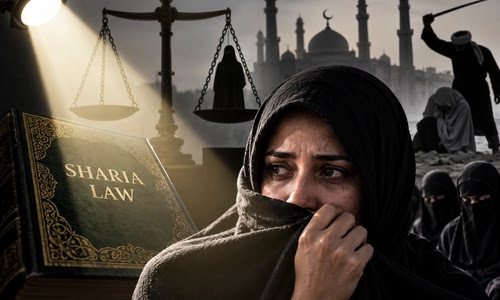
Spotlight Grows On Sharia Law’s Abuse Of Women
Masih Alinejad grew up in a country where she was taught to shout “Death to America!” Decades later, she is a citizen of the republic she was taught to hate that she credits for saving her life from her homeland.
“I love America, and I am ready to sacrifice my life for America to protect America from the most barren regimes over time,” Alinejad proclaimed at the Concerned Women for America annual summit over the weekend. “And I want to tell you, do not apologize for your love for this country, because this is the dream of millions of people living under authoritarian regimes to have a country to protect them, to protest, to challenge, to speak up, to stand up against tyranny.”
Alinejad, a journalist and human rights activist from Iran, escaped to the United States and became a citizen in 2019 — but has since survived multiple kidnapping and assassination attempts on her life.
In 2021, the Iran regime attempted to kidnap Alinejad from the United States to move her to Venezuela, and then back to Iran, reported the U.S. Attorney for the Southern District of New York. The following year, the regime tried to kill her outside of her home in Brooklyn, New York, according to U.S. law enforcement. In 2024, the U.S. Department of Justice revealed a plot by Iran’s Islamic Revolutionary Guard Corp to assassinate Alinejad as well.
Her crime? Speaking out for freedom and equality.
In 2014, Alinejad started My Stealthy Freedom, a campaign against women being forced to wear a hijab in Iran. She says while American women watch episodes of “The Handmaid’s Tale” from the comfort of their homes, Iranian women are living it: “My sisters, your fiction is our reality in Iran. Your fiction is our reality in Afghanistan.”
“Women are not even allowed to sing. Forget about singing. Women are not allowed to speak in Afghanistan under Taliban,” Alinejad continued. “This is called Islamism. Women receive lashes. Women are not allowed to travel abroad without men, without their husband or their male relative.”
Under Sharia law, Muslim women experience abuse and are stripped of fundamental human rights. Author Nonie Darwish describes Sharia law in her book, “Cruel and Usual Punishment: The Terrifying Global Implications of Islamic Law”: “A Muslim woman who commits adultery is to be stoned to death; unmarried girls who have sex must be flogged; women’s testimony in court is half the value of a man; women get half the inheritance of a man; there is no community property between husband and wife; if a woman is killed, her indemnity money is half the indemnity money of a man.”
Darwish goes on to describe that a specific interpretation of Sharia law includes the practice of female castration “in order for the man to make sure her sexual appetite is suppressed.” The woman also “needs her guardian’s permission for marriage or else it is void; she needs her husband’s or male relative’s permission for travel; she must cover all her body except her face and hands.”
Recently, Islam has been gaining more widespread attention and popularity. “Increasingly, more and more Western women are joining Islam under this pretense of enlightenment or empowerment,” pointed out Reagan Conrad, host of “Reported by Reagan.” “They seem to have no difficulty condemning Christianity. Christianity is patriarchal, biblical marriage is oppressive. Christian modesty is controlling. But introduce an ideology under which women are forced to cover themselves.”
“They’re denied education. They’re married as children. They’re equated to animals. They’re legally subordinate to men and even killed for minor offenses,” Conrad emphasized. “And suddenly that outrage goes quiet because that ideology is Islam. Now, many, even who follow the teachings of the Quran don’t even fully grasp all that it teaches.
Other experts like Chris Gacek, who serves as senior fellow for Regulatory Affairs at Family Research Council, say that a realistic outlook on Islam’s core beliefs is becoming increasingly important. “We need to be cautious in assessing its compatibility with Western Civilization,” he told The Washington Stand. “
A large political question looms. Islam appears to have nothing like the Romans 11 concept of acting in accordance with one’s conscience in a private sphere while also recognizing a separate sphere of public decision-making. Or rendering unto Caesar that which is Caesar’s and to God the things of God. This is the cornerstone of the First Amendment.”
Alinejad called on the crowd of young women to use their voices and influence for good. “You have the opportunity to stand up against tyranny in the Middle East. So, join the women of Iran and Afghanistan against gender apartheid. …We are witnessing another form of apartheid, which is called apartheid against women, and we need to speak together to bring the wall of this apartheid regime down.”
AI And The Coming Argument For A One-World Government
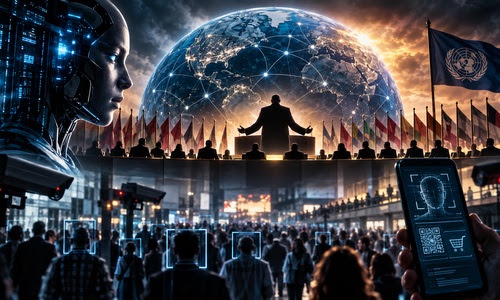
For generations, Christians reading biblical prophecy have wrestled with a basic practical question: How could the nations of the world ever surrender enough sovereignty for anything resembling a truly global system of government to emerge?
Perhaps the answer isn’t that humanity will suddenly fall in love with global government.
Perhaps humanity will become afraid of something it believes only global government can control.
That possibility has become considerably more interesting as artificial intelligence races forward. And billionaire technology investor Peter Thiel–who has spent considerable time publicly discussing the Antichrist, Armageddon and the dangers of global governance–has now made a striking observation.
Asked by Mathias Döpfner what it would actually take to slow the international AI race, Thiel said meaningful restraint would require extraordinary worldwide cooperation.
“In theory, you could slow it down if you had genuine, deep cooperation across the whole world,” Thiel said.
But then came the important part.
Such cooperation, he argued, would require something resembling “a one world government with real teeth, real force.”
Thiel immediately warned that such a solution could be worse than the problem itself.
That should get our attention.
Because AI may be creating something historically unusual: a global problem that governments eventually conclude cannot be solved by national governments.
And here is the deeper danger.
AI could simultaneously create the crisis used to justify global government–and provide the technological machinery necessary to operate it.
The Problem No Country Can Solve Alone
Imagine Washington decides tomorrow that advanced AI development has become too dangerous.
America imposes strict limits on computing power, advanced chips and AI training.
What happens if China doesn’t?
Or Russia?
Or another country?
Or a private organization operating beyond American jurisdiction?
The competitive pressure becomes enormous. No major power wants to stop developing a technology that could determine future military superiority, intelligence capabilities, economic dominance and scientific advancement while its rivals continue racing ahead.
Thiel himself raised essentially this problem. Western restrictions could simply leave competitors–particularly China–continuing their development.
That means genuinely stopping or significantly slowing AI would require more than American legislation.
It would require global cooperation.
But cooperation isn’t enough if countries can cheat.
Eventually someone must inspect.
Someone must monitor.
Someone must enforce.
And suddenly the discussion has moved from international cooperation toward international authority.
That is precisely where Thiel’s phrase becomes so important: a global authority with “real teeth” and “real force.”
The Crisis Changes. The Argument Remains
Humanity has already heard versions of this argument.
Climate change crosses borders.
Pandemics cross borders.
Nuclear weapons threaten everyone.
Financial crises spread internationally.
Biological weapons could affect the entire planet.
And now artificial intelligence may eventually present another version of the same proposition: the threat is global, therefore the solution must also be global.
But AI is different in one particularly important respect.
The technology needed to monitor AI could create an infrastructure capable of monitoring humanity itself.
Consider what serious global AI enforcement might eventually require.
Authorities could demand knowledge of who possesses advanced processors, where massive computing clusters are operating, what models are being trained, how much computing power organizations possess and whether companies or governments are secretly developing prohibited systems.
That could require unprecedented visibility into data centers, communications networks, financial transactions, semiconductor supply chains and digital infrastructure.
Now combine that with increasingly sophisticated AI surveillance.
Facial recognition.
Digital identity.
Automated financial monitoring.
Behavioral analysis.
Massive databases.
Algorithmic censorship.
Predictive policing.
Centralized digital payment systems.
None of these technologies independently constitutes the prophetic system described in Revelation. Christians should be careful about declaring every technological development the fulfillment of a particular prophecy.
But neither should we ignore what is happening before our eyes.
The technological architecture necessary for extraordinary centralized control is becoming increasingly conceivable.
Thiel Has Been Warning About This For Years
What makes Thiel’s latest remarks particularly fascinating is his previous discussion of the Antichrist.
In his public conversations and 2025 lectures, Thiel explored the possibility that fear of existential catastrophe could become the justification for unprecedented global political authority.
His framework presents a disturbing dilemma.
Humanity becomes terrified of Armageddon–nuclear war, runaway technology, biological catastrophe or some other existential threat–and eventually accepts enormous centralized power from whoever promises to prevent it.
In other words, global government doesn’t necessarily arrive because humanity suddenly embraces the idea.
It arrives because humanity becomes convinced that the alternative is catastrophe.
That possibility should sound familiar to students of biblical prophecy.
Revelation describes a future system possessing extraordinary political and economic control. Revelation 13 famously describes a system in which participation in economic life–buying and selling–becomes connected to allegiance to the Beast.
For most of history, people could understand the theological warning while struggling to imagine the practical mechanics.
How could any authority monitor billions of people?
How could economic participation actually be controlled?
How could individuals scattered across continents be identified, tracked and restricted?
Those questions are becoming easier to answer.
AI Could Be Both The Emergency And The Enforcement System
This is perhaps the most important point.
Usually the crisis and the mechanism used to address the crisis are separate.
AI may be different.
Imagine sufficiently advanced artificial intelligence begins producing increasingly frightening consequences: autonomous cyberattacks, sophisticated biological threats, destabilized labor markets, military escalation, financial disruption, deepfake-driven political chaos or autonomous weapons operating faster than humans can control them.
Public fear would understandably increase.
Governments would respond.
But if national regulation repeatedly failed because AI development continued elsewhere, pressure for international enforcement would grow.
Then comes the extraordinary irony.
What technology would be best suited to monitor such a gigantic global regulatory system?
Artificial intelligence.
AI could analyze financial activity.
AI could monitor communications.
AI could identify prohibited computing clusters.
AI could track individuals.
AI could detect unauthorized transactions.
AI could monitor borders.
AI could identify political or security threats.
AI could process surveillance data at a scale impossible for human bureaucracies.
The very technology that creates demands for unprecedented global governance could also make unprecedented global governance technically possible.
That is a development worth contemplating.
Previous generations could dream about world government, but administering billions of human beings was extraordinarily difficult.
AI changes the equation.
For the first time, humanity is building machines capable of analyzing enormous populations, transactions, communications and behavioral patterns continuously and automatically.
A global control system that once required millions of bureaucrats could increasingly be administered by algorithms.
The Antichrist Doesn’t Have To Sell Tyranny
Christians sometimes imagine the future Antichrist arriving openly declaring his intention to dominate humanity.
But deception rarely works that way.
Control is easier to accept when it is presented as protection.
Surveillance becomes safety.
Censorship becomes protection from misinformation.
Financial monitoring becomes protection against crime.
Digital identification becomes convenience and security.
International enforcement becomes protection against existential catastrophe.
And centralized authority becomes the price humanity is told it must pay to survive.
That does not mean every person advocating international AI cooperation secretly desires world government. There are legitimate reasons for governments to discuss safeguards around technologies capable of affecting civilization.
The prophetic question is what happens when cooperation is declared insufficient.
What happens when voluntary agreements fail?
What happens when one country refuses?
What happens when an AI disaster finally occurs?
The demand may quickly become: Someone must have the authority to enforce the rules.
And whoever possesses that authority would wield extraordinary power.
A Warning Worth Hearing
Peter Thiel isn’t a prophet, and his political and theological interpretations should not be treated as Scripture.
But his observation exposes a question Christians should consider carefully.
What kind of crisis could convince independent nations to surrender powers they would never surrender under normal circumstances?
AI may provide one possible answer.
Not because someone announces a grand plan for world government, but because governments gradually conclude that technology has become too dangerous to regulate separately.
The world may eventually be presented with an extraordinarily persuasive argument:
Either humanity establishes powerful global mechanisms capable of controlling artificial intelligence–or humanity risks losing control of artificial intelligence altogether.
And once that argument takes hold, the debate will no longer be about whether global authority is desirable.
It will be about whether global authority is necessary.
That is the moment students of prophecy should be watching.
Because perhaps the greatest danger isn’t that someone will someday force humanity into a global system.
It is that humanity may become frightened enough to demand one.
And AI may not merely provide the crisis that makes such a demand possible.
It may provide the machinery that makes such a system possible as well.
Think You’re Anonymous? 5 Ways AI Can Find You Without GPS
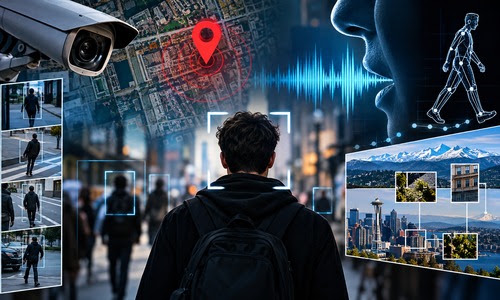
For years, privacy advice has been relatively straightforward: turn off location services, strip location metadata from photographs, keep your face out of pictures, and be careful about what personal information you post online.
Artificial intelligence is beginning to complicate that advice.
A new generation of AI systems doesn’t necessarily need you to explicitly reveal where you are or even who you are. Instead, machines are becoming increasingly capable of extracting clues buried inside photographs, videos, voices and surveillance footage — clues most people would never notice.
Some of these technologies have obvious benefits. They could help locate hostages, identify criminals, combat human trafficking and find threats on battlefields.
But they also raise an uncomfortable question.
What happens to privacy when hiding the obvious information is no longer enough?
Here are five technologies showing how quickly that world is approaching.
1. AI Can Figure Out Where Your Video Was Recorded
One of the clearest examples comes directly from the U.S. intelligence community.
The Intelligence Advanced Research Projects Activity, or IARPA, launched a program called LocUS — Location Using Sound — designed to automatically geolocate multimedia even when accurate location metadata isn’t available.
Instead of depending solely upon GPS coordinates, LocUS is intended to combine visual and audio information to determine where previously unseen video was recorded, both indoors and outdoors. Potential national-security applications include hostage recovery and human-trafficking interdiction.
Think about the implications for an ordinary video.
A building in the background. The sound of traffic. Local architecture. Vegetation. Terrain. A distant announcement. Street markings.
Individually, such details may mean very little. Combined and compared against enormous databases, they can become clues.
Removing the GPS tag doesn’t remove the world visible — and audible — around you.
2. AI May Recognize You Without Seeing Your Face
Facial recognition gets most of the attention, but a face isn’t the only biometric characteristic people reveal.
Researchers have been developing gait-recognition systems capable of analyzing the distinctive way people walk. Characteristics such as body proportions, stride, posture and movement can potentially contribute to identifying or matching individuals.
That creates an important distinction.
A person wearing a mask may have hidden his face without hiding his identity.
Gait recognition isn’t infallible. Clothing, injuries, camera angles and other factors can affect results, and it shouldn’t be treated as some magical identification system.
But AI doesn’t necessarily need one perfect biometric if it can combine multiple imperfect ones.
3. Your Voice Can Become An Identifier
Then there is something millions of people voluntarily place online every day: their voice.
Speaker-recognition technology analyzes characteristics within speech to determine whether recordings may belong to the same person.
Even attempts to anonymize voices aren’t necessarily foolproof.
In research published this month, the National Institute of Standards and Technology examined identity leakage in speaker de-identification systems, including the possibility of re-identification even after attempts have been made to conceal the speaker’s identity.
Consider how many voice samples now exist.
YouTube videos. Podcasts. TikTok clips. Interviews. Livestreams. Recorded meetings. Security cameras with microphones.
A photograph may hide your face.
Your voice may tell another story.
4. AI Can Follow People From Camera To Camera
Perhaps even more significant is what happens when AI begins connecting surveillance systems.
IARPA’s Video LINCS program is developing technology capable of autonomously re-identifying people, vehicles and eventually other objects across different video collections.
The objective isn’t simply to recognize something in one camera.
It’s to determine where that same object appears throughout multiple videos and map those observations into a common geographic reference system. The research is intended to work across different types of footage, potentially including aerial drones and ground-based CCTV.
That changes surveillance dramatically.
Camera one sees someone leave a building.
Camera two sees that person farther away.
Another camera captures a vehicle.
Another system sees the vehicle somewhere else.
Historically, connecting those dots could require enormous amounts of human labor. AI potentially makes searching massive collections of footage far faster.
And IARPA has noted that more than one billion CCTV cameras are operating globally.
The problem is no longer collecting video.
It’s making sense of all of it.
5. The Real Breakthrough: AI Can Connect Everything
This may ultimately be the most consequential development.
Each individual technology has limitations.
A voice match can be uncertain. A gait can change. A photograph may contain few recognizable landmarks. A security camera may capture only several seconds of useful footage.
But AI doesn’t have to examine those clues separately.
The National Geospatial-Intelligence Agency says its AI strategy includes improving identification and automated geolocation. Its Maven program uses computer vision and AI to automatically detect, identify, characterize and extract information about objects and features appearing in imagery and video.
That points toward a fundamentally different surveillance environment.
Imagine a system combining your approximate location, vehicle, voice, gait, travel direction, surrounding architecture and appearances across several cameras.
None of those clues has to identify you perfectly.
Together, they may tell a much clearer story.
The End Of Anonymous?
There are legitimate reasons governments want these capabilities. Few people would object to using sophisticated geolocation technology to locate a kidnapped child or rescue a hostage.
The concern is what happens as the technology becomes cheaper, more powerful and more widely available.
The smartphone era taught us to worry about the information our devices transmit.
The AI era may require us to think about something much bigger: information we reveal without realizing we are revealing anything at all.
Turning off GPS doesn’t remove the mountains behind you. Removing metadata doesn’t remove the architecture. Covering your face doesn’t necessarily conceal your gait. Staying out of photographs doesn’t erase your voice. Moving between different cameras doesn’t necessarily mean those appearances cannot be connected.
Privacy has traditionally depended partly upon obscurity — the practical difficulty of gathering thousands of tiny pieces of information and connecting them to one person.
AI is attacking that barrier.
The surveillance system of the future may not need you to tell it where you are.
It may simply look at the world around you — and figure it out.

TruLight TV – Just Say Hello
When a child throws a tantrum, it’s unfortunate. When an adult throws a tantrum, it sounds silly, right? As adults we should have more discipline than the little kid in the supermarket crying because they can’t have three candy bars. But sometimes, if we’re honest, life circumstances can make us emotional enough to respond in the same way. Today’s video gives you the key to avoid a temper tantrum. and later on 7th Street Theater the program in title (Just Say Hello) – Chad shows up at the theater in a really bad mood and the cast can’t figure out what’s wrong with him. Enjoy today’s program and thanks for watching.
Today on TruLight Radio XM
TruLight Radio XM 24/7
Program
GMT / UTC +2
Monday To Fridays
00:15 Words to Live By Testimonies
01.15 Science Scripture and Salvation
02.15 Ground Works
04.00 Gospel Concert of the Day
05.00 The Daren Streblow Comedy Show
5:55 It is Today devotional
6:00 Gaither Homecoming Morning Show
7:15 Discover the Word
8.15 Destined for Victory
8:55 Science Scripture and Salvation
9:00 Holy Spirit Hour – Normally Sermons
10:15 Hope of the Heart
11:15 Unshackled
11.45 Words to Live By
12:15 Truth for Life
13:15 Living on the Edge with Chip Ingram
14:15 Focus on the Family
15:00 Kids Hour
16:00 In Touch with Dr. Charles Stanley
16:30 Groundwork
17:15 Live in the Light
18:15 Renewing your Mind
19:00 Gaither Homecoming Show
20:15 Growing Hope
21:15 Adventures in Odyssey Radio Drama
21:45 Bible Reading
22:15 Night-sounds
23.00 Good Old Country Gospel / Rhema Gospel Express
VISIT THE WEBSITE
TruLight Ministry News – EXTRA MANNA
TruLight Ministries orders from God since 2012 . Teach Them , Comfort Them and Warn Them!
Artist Liners
Healing Truths.
End Time Articles.
Share this Feeding of Manna with your Friends and Family. just click on the Social Media icon and share This Manna with your Friends and Family. just click on the Social Media icon and share !