Hosted by TruLight Ministries International – The Place of Truth
SELECT YOUR READING LANGUAGE – BOTTOM LEFT = YOUR DAILY MANNA NOW AVAILABLE IN 103 LANGUAGES
@ TruLight Daily Manna is not Just a Bible Verse with a Small Prayer . NO ::: WE SERVE DAILY Manna for the ENTIRE Day . Breakfast , Lunch , Dinner , Plus tea Times and even Entertainment Manna . Plus News Manna and More , This Daily Manna will keep you Spiritually full for the full 48 Hours and even More to Share with your Friends and Family !!!
Are you a Slave to Sin ???
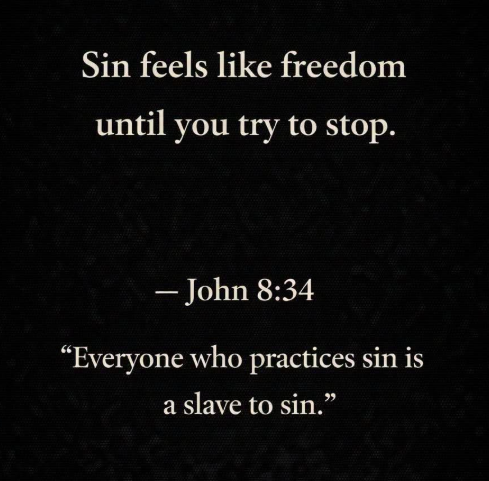
Everyone is a slave in the spiritual sense. We are either slaves to sin, which is our natural state, or we are slaves to Christ. The writers of the New Testament willingly declared their status as slaves of Christ. Paul opens his letter to the Romans by referring to himself as a “slave of Jesus Christ” (Romans 1:1) and his letter to Titus by calling himself a “slave of God” (Titus 1:1). James opens his epistle the same way, “James, a slave of God and of the Lord Jesus Christ” (James 1:1). Most translations say “servant” or “bond-servant” in these passages, but the Greek word doulas means, literally, “slave.”
In John 8:34 Jesus tells the unbelieving Pharisees, “Truly, truly, I say to you, everyone who commits sin is the slave of sin.” He uses the analogy of a slave and his master to make the point that a slave obeys his master because he belongs to him. Slaves have no will of their own. They are literally in bondage to their masters. When sin is our master, we are unable to resist it. But, by the power of Christ to overcome the power of sin, “You have been set free from sin and have become slaves to righteousness” (Romans 6:18). Once we come to Christ in repentance and receive forgiveness for sin, we are empowered by the Holy Spirit who comes to live within us. It is by His power that we are able to resist sinning and become slaves of righteousness.
Jesus’ disciples belong to Him and want to do the things that please Him. This means that the children of God obey Him and live in freedom from habitual sin. We can do this because Jesus has set us free from the slavery of sin (John 8:36), and thus we are no longer under its penalty of death and separation from God.
Romans 6:1–23 goes even further in this idea of a slave and his master. As Christians we aren’t to continue in habitual sin because we died to sin. Romans 6:4 says that since we have been buried and resurrected with Christ we are now able to walk in that newness of life, unlike the unbeliever who is still a slave to sin. Romans 6:6 goes on to say that, since we know that our old self was crucified with Him so that our body of sin might be done away with, we should no longer be slaves to sin. And Romans 6:11 says that we are to consider ourselves dead to sin and alive to God in Christ Jesus.
We are commanded by God to not let sin reign in our bodies, obeying its lusts, but instead we are to present ourselves to Him as instruments of righteousness (Romans 6:12–14). In Romans 6:16-18 we’re told that we are slaves to the one we obey, either of obedience to sin or of obedience to righteousness. We are to be enslaved to God from whom we receive our gifts of sanctification and eternal life. We do this because the wages of sin is death, but the free gift of God is eternal life in Christ Jesus our Lord (Romans 6:23).
The apostle Paul, the author of Romans, goes on to say that he knows how difficult it can be to not live in sin because he struggled with that even after he became a follower of Christ. This is important for all Christians to know. While we’re now set free from the penalty of sin, we still live in the presence of sin while we’re alive on this earth. And the only way we can be free from the power of sin is by the power of the Holy Spirit who is given to believers at the moment we come in faith to Christ (Ephesians 1:13–14), and this seals us in Christ as a pledge of our inheritance as God’s children.
The presence of the Holy Spirit in our lives means that, as we grow in our faith and come to love God ever more each day, we’ll have the strength to resist sin more and more. Through the working of the Holy Spirit we are empowered to resist sin, not give in to its temptation, and live according to God’s Word. Habitual sins will become more abhorrent to us, and we’ll find ourselves not wanting to do anything that might hinder our fellowship with God.
Romans 7:17—8:2 is a wonderful encouragement to believers because we’re told that, even when we do sin, there is no longer any condemnation because we are in Christ Jesus. And 1 John 1:9 reassures us that, when we do sin as Christians, if we confess our daily sins to the Lord, He is faithful and righteous and will cleanse us from them in order that we might continue to live in a right relationship with Him. Throughout the book of Ephesians, the apostle Paul encourages and exhorts us to walk as children of light , loving one another as Christ loved us, and to learn what is pleasing to the Lord and to practice it (Ephesians 2:1–10; 3:16–19; 4:1–6; 5:1–10). In Ephesians 6:10–18 Paul shows us how to be strong in the Lord by putting on the full armor of God each day in order to be able to stand against the schemes of the Devil.
When we commit ourselves as followers of Christ to grow and mature in our faith by reading and studying God’s Word each day and spending time in prayer with Him, we will find ourselves more and more able to stand in the power of the Holy Spirit and resist sin. The daily victories over sin that we have in Christ will encourage and strengthen us and demonstrate in a powerful way that we are no longer slaves to sin, but are instead slaves to God.
Salvation begins the moment we receive, by faith, God’s offer of forgiveness through the death and resurrection of His Son, Jesus (Ephesians 2:8–9; John 1:12). Jesus called it being “born again” (John 3:3). In repenting and giving up our old life, we receive the new life Jesus purchased for us with His blood (2 Corinthians 5:17, 21). We are washed clean, and God chooses to remember our sins no more (Psalm 103:12). But we soon notice that our propensity to sin is still part of us. How can that be, since we are new creatures in Christ? We still sin because we, though forgiven, are still fallen human beings.
Salvation breaks the power that sin once had over us. We were slaves to sin and served it willingly (Romans 6:20–23, 7:14–15). While slaves to sin, it was impossible to please God (Romans 8:8). Regardless of how often we turned over a new leaf, straightened up, went to church, or performed righteous deeds, our souls were still enslaved to unrighteousness and we stood as condemned before God.
Upon surrender of our lives to the lordship of Jesus, we became God’s sons and daughters (Ephesians 1:5; Romans 8:15). But just as children sometimes disobey their parents as they grow, God’s children sometimes disobey Him. We rebel, get angry, or doubt for a while; the difference is, we can no longer live lifestyles of sin because our nature has changed (2 Corinthians 5:17; 1 John 3:4–10). A fish may long to live on the beach, but once it has flipped itself onto the sand, it wants nothing but to return to the water because its nature is not designed for dry land. A fish was created for the water. So it is with us. The nature of those indwelt by the Holy Spirit is to live in righteousness. We may flip ourselves into sin at times, but we can’t survive there. The new nature thrives in righteousness and obedience to God. The degree to which we allow the Holy Spirit access to every area of our lives is the degree to which we live as God intended us to live.
Good parents don’t let their toddler play on the highway. They may start with a stern warning, but if the child persists in heading toward the road, good parents come after him, and the discipline will be memorable and effective. So it is when we, as God’s children, stiffen our necks and charge toward evil. Our Father comes after us. God does not allow us to get away with sin because He is a good Father. Hebrews 12:5–11 says that God’s discipline in our lives is one way we can tell that we belong to Jesus.
To the praise of God’s glory, after we are saved, God deals with our sin differently than He did before we were saved. First John 1:9 tells us that we can confess our sin and be forgiven. Confession means we humbly agree with God about how bad sin is. We admit we were wrong and ask His forgiveness. The awareness of our sin and the confession of it should be a regular practice. The first of Martin Luther’s 95 Theses says, “When our Lord and Master Jesus Christ said ‘Repent,’ he intended that the entire life of believers should be repentance.” God can pardon us and maintain His justice because our sin was already paid for by Jesus. There is no need to punish us because He has already punished His Son (Colossians 2:14).
As we “grow in grace and in the knowledge of our Lord and Savior Jesus Christ” (2 Peter 3:18), we overcome besetting sins (Hebrews 12:1). Peter lists steps we can take in developing our new nature and ends with the promise that, if we do these things, we “will never stumble” (2 Peter 1:3–10). Our holiness is the goal, but John acknowledges that we still sin: “My dear children, I write this to you so that you will not sin. But if anybody does sin, we have an advocate with the Father—Jesus Christ, the Righteous One” (1 John 2:1).
God’s desire for us is that we not sin, and one day our sanctification will be complete (1 John 3:2). But, until that time, we still inhabit fallen bodies in a fallen world, and we struggle with the flesh and sometimes lose the battle. But we will not be lost; Jesus Himself intercedes for us as our High Priest (Romans 8:34).
Every believer has, at one time or another, lamented his or her inability to stop sinning. While we tend to think the problem stems from weakness in ourselves, the inability to stop sinning usually indicates a deficiency in our understanding of God’s strength. When we do not understand His power to save, forgive, and cleanse us from all unrighteousness (1 John 1:9), we can get caught in a destructive cycle of sin, guilt, and fear, which leads to a lack of joy in our salvation, which leads to more sin.
In Psalm 51:12, David pleads with God, “Restore to me the joy of your salvation and grant me a willing spirit, to sustain me.” He wrote this after he had fallen into the grievous sins of adultery and murder. It is interesting to notice that he asks God for a return of the joy of his salvation. Joy is key in our victory over sin. It is also important that we understand that God sustains us “with a willing spirit.” God takes joy in saving us, and we take joy in being saved.
God has saved us willingly, to display His grace, love, and strength. Our salvation does not depend on how much or how little we sin, how much or how little we evangelize or repent or do good works, how loving or unloving we are, or anything else about us. Our salvation is entirely a product of God’s grace, love, and purpose (Ephesians 2:8–9). This is important to understand, because (ironically) believing that we are responsible to keep the law leads inevitably to the inability to stop sinning.
Paul explains this in Romans 7:7–10. When we understand a law, like “do not covet,” our sin nature inevitably rebels against that law, and we covet. This is the plight of man—it is simply how we are. The law aggravates our sin nature. John Bunyan illustrates this truth in The Pilgrim’s Progress. In the Interpreter’s House, Christian sees a very dusty room that had never been swept. First, a man with a broom tries to clean the floor, but the broom’s only effect is to raise choking clouds of dust. The more he sweeps, the more the dust is stirred up; this is a picture of the law, Bunyan says, which cannot clean a sinful heart but only stirs up the sin. However, Christian watches as the broom is set aside and a young girl sprinkles the whole room with water. After that, the room is quickly cleaned; this is a picture of the gospel of grace and its ability to purify the heart. The grace of God can do what the law could never do: cleanse us from sin.
So, the way to stop sinning is not to add more rules. God knew this. In fact, He gave us the law so that we would be aware of our sin and turn to Him (Romans 3:19-20; Galatians 3:23-26). The law is good. It is a reflection of God’s nature and His perfection. But it was not given to us for our salvation. Christ fulfills the law for us (Matthew 5:17).
When we disagree with God and hang onto the idea that we must fulfill the law, we lose our joy in salvation and set ourselves up for failure. We labor under a terrible burden. We feel pressured to do something to secure salvation, but, at the same time, our sin nature renders us unable to obey the law. The more we focus on the law, the more our sin nature rebels. The more our sin nature rebels, the more frightened we become that we are not saved. The more frightened and joyless we become, the more tempting sin’s promise of happiness is.
The only way to break the cycle and stop sinning is to accept the fact that we cannot stop sinning. This may seem contradictory, but if a person does not stop trying to save himself, he will never rest in the knowledge that God has saved him. The joy of salvation comes from accepting the fact that God’s grace covers us, that He will change us and conform us to the image of Christ, and that it is His work, not ours (Romans 8:29; Philippians 1:6; Philippians 2:13; Hebrews 13:20-21). Once this reality is truly grasped, sin loses its power. We no longer feel the impulse to turn to sin as a means of temporary relief from anxiety, because the anxiety and pressure has been relieved once for all by Christ (Hebrews 10:10, 14). Then, the good works we accomplish in faith are done because of love and joy rather than out of fear or duty.
“The sting of death is sin, and the power of sin is the law. But thanks be to God, who gives us the victory through our Lord Jesus Christ. Therefore, my beloved brothers, be steadfast, immovable, always abounding in the work of the Lord, knowing that in the Lord your labor is not in vain” (1 Corinthians 15:56-58, ESV).

Tea Time Manna
He who has the Son has life; he who does not have the Son of God does not have life.
—1 John 5:12
This statement is both a reminder of God’s glorious grace and also of our need to share that grace with others. Life is such a precious gift; it would be a shame and a deep loss for anyone we know and love to miss out on the gift of God’s life. God gave us the gift of his Son so that in finding him, we too could share in his life, and share that life with others. As Jesus himself said:
“I am the way and the truth and the life. No one comes to the Father except through me” (John 14:6)
“Now this is eternal life: that they know you, the only true God, and Jesus Christ, whom you have sent…” (John 17:3).
Prayer
Father of all nations, please resurrect a desire in your people to spread your grace to every language, tribe, nation, and people (Revelation 7:9-10). Empower us with your Spirit so that we will speak the Gospel of Jesus with boldness and respect to a world that does not know him and does not have life. Use us to help others come to life in the Son! Through the name of Jesus, your Son, and our Savior, we pray. Amen and Amen

NEWS MANNA –
Countdown: Multiple Clocks Are Ticking Toward A Turbulent Fall

The world is watching several countdown clocks right now-and some of them may reach zero at almost exactly the same time.
From Iran to Gaza, from oil markets to U.S. elections, the final months of 2026 are shaping up to be unusually volatile. None of these pressure points guarantees a wider war or economic crisis. But taken together, they create a dangerous convergence that could make this fall one of the most consequential periods in years.
The first clock is ticking in Iran.
Iranian officials have warned that if their demands are not met within the coming weeks, Tehran could shift from its current posture toward something far more aggressive against the United States and Israel.
That threat matters because the confrontation is no longer confined to nuclear negotiations. It now touches the Strait of Hormuz, oil exports, sanctions, American naval forces, regional proxy groups and the possibility of renewed Israeli military action.
If diplomacy collapses, the next step may not be another round of negotiations.
It could be escalation.
And that brings us to the second clock.
Hamas is also facing a deadline.
Jared Kushner’s recent meeting with Hamas has reportedly centered on a limited window for the terrorist organization to disarm. The message appears increasingly clear: Hamas has a chance to give up its weapons voluntarily, but if it refuses, Israel may eventually receive broader American backing to resume large-scale military operations.
A 60-to-90-day timetable takes that deadline directly into the heart of the fall.
That means two of the most explosive conflicts in the Middle East could be approaching decisive moments at roughly the same time.
Iran has a clock.
Hamas has a clock.
Israel is watching both.
And Washington is involved in each.
That alone would be enough to make the coming months dangerous. But there are other clocks running too.
The third is economic.
Americans who do not closely follow financial markets may wonder why events thousands of miles away should matter to them.
The answer is oil.
Any serious disruption involving Iran or the Strait of Hormuz could quickly push energy prices higher. Higher oil prices do not simply mean more expensive gasoline. Transportation costs rise. Shipping costs rise. Airlines pay more for fuel. Businesses pass those costs along to consumers.
Food, travel, manufactured goods and everyday household expenses can all become more expensive.
At the same time, inflation pressures can keep interest rates higher for longer, making mortgages, car loans and credit cards more painful.
In other words, a military crisis in the Middle East can eventually arrive at your kitchen table.
That economic pressure creates yet another countdown: America’s midterm elections.
November is approaching fast, and the political stakes are enormous.
The White House could soon face several competing pressures at once: voters angry about inflation and high borrowing costs, Americans concerned about another prolonged conflict, pro-Israel voters demanding decisive action against Hamas, and growing pressure to confront Iran if Tehran becomes more aggressive.
That raises a critical question.
Will Washington become more cautious as Election Day approaches–or more willing to demonstrate strength?
Either path carries risks.
And then there is the clock nobody can see.
The history of the Middle East is filled with wars that did not begin according to anyone’s timetable.
A missile kills American troops.
A tanker is attacked.
A senior leader is assassinated.
A terror attack changes Israeli calculations overnight.
A strike on Gulf oil infrastructure sends markets into panic.
A military commander misreads the intentions of another country.
One unexpected event can erase months of diplomacy in a matter of hours.
That may be the greatest danger of all.
We are entering a period in which multiple parties are issuing threats, establishing deadlines and preparing for what happens if diplomacy fails.
And when several clocks are ticking at once, the risk is not simply that one reaches zero.
It is that one explosion sets all the others in motion.
For Christians watching these developments, the words of Jesus in Matthew 24 are difficult to ignore: “You will hear of wars and rumors of wars.”
We are watching international diplomacy increasingly conducted through threats, ultimatums and countdowns toward military action.
Iran warns that patience is running out.
Hamas is being told its time to disarm is limited.
Israel is preparing for the possibility that diplomacy fails.
Washington is balancing war, economics and elections.
Markets are watching oil.
And everyone is watching everyone else.
No one can say with certainty what the fall will bring.
Perhaps diplomacy will hold.
Perhaps Hamas will disarm.
Perhaps Iran will step back from confrontation.
But the number of pressure points now converging should give us pause.
The clocks are ticking.
And the closer they move toward zero, the smaller the margin becomes for mistakes.
Israel Won’t Let Turkey Become The New Iran In Syria
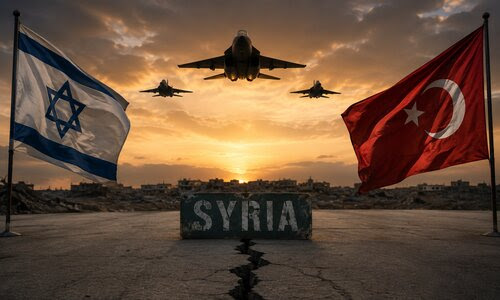
For years, Israel’s greatest concern in Syria was Iran.
Iranian forces, weapons depots, missile infrastructure and supply routes to Hezbollah gradually transformed Syria into a potential forward operating base against the Jewish state. Israel responded with hundreds of airstrikes designed to prevent that military infrastructure from becoming permanently entrenched.
But Syria has changed.
Iran’s influence has been dramatically weakened following the fall of Bashar al-Assad. Yet the power vacuum has not remained empty.
Turkey is moving in.
That is what makes Israel’s latest strike on Syria far more significant than another bombing raid.
Early Tuesday, Israeli aircraft struck the Abu al-Duhur military airbase in northwestern Syria, hitting the runway and storage facilities eight times, according to Syrian state media. No casualties were reported. Israel later acknowledged that the purpose of the attack was to prevent Turkish forces from deploying at the base.
The message to Ankara was difficult to miss:
Israel will not allow Syria to become a Turkish military platform on its northern frontier.
From Iran To Turkey
Turkey has become one of the principal foreign supporters of Syria’s government under President Ahmed al-Sharaa.
Ankara has been training Syrian forces, helping rebuild government institutions and infrastructure, and providing military and diplomatic support. Turkish officials have also been involved in efforts to rehabilitate Syria’s military capabilities.
That includes the Abu al-Duhur airbase.
The facility, roughly 70 kilometers from the Turkish border, has largely been out of service as a dedicated military airfield since 2013. But reports indicate Turkey had begun helping rehabilitate the facility as Ankara expands its influence inside Syria.
Israel apparently decided not to wait and see what came next.
According to the Israeli prime minister’s office, Syria was on the verge of violating what Israel described as an understanding to maintain the existing security situation by permitting Turkish troops to deploy at the airfield.
Israel did not bomb a fully operational Turkish military installation.
It bombed the infrastructure before Turkey could establish one.
Israel’s New Red Line
That reflects an increasingly important principle in Israeli security thinking: dangerous military capabilities are far easier to stop before they become operational.
October 7 demonstrated the potential price of allowing hostile forces to build military infrastructure while relying upon deterrence to contain their intentions.
Israel appears increasingly unwilling to make that gamble.
A runway can be repaired.
An airbase can be rebuilt.
But once Turkish aircraft, troops, radar systems or sophisticated air-defense systems are stationed there, striking the facility becomes dramatically more dangerous.
Turkey is not Iran.
It possesses NATO’s second-largest military and remains a member of the Western alliance. A direct Israeli attack on Turkish forces could therefore produce consequences far beyond Syria.
That is precisely why Israel may believe it must establish the boundaries now.
The deeper concern is not simply Turkish soldiers.
It is control of Syrian airspace.
Turkey has reportedly been involved in efforts to rebuild Syrian air defenses, including radar infrastructure. Israeli officials fear that an expanded Turkish air-defense presence could eventually restrict Israel’s ability to operate freely over Syria.
For Israel, freedom of action over Syria has been central to preventing weapons transfers, missile deployments and hostile military entrenchment.
Any foreign power capable of closing that airspace would fundamentally alter Israel’s security environment.
How Close Could This Have Come To Something Bigger?
Perhaps the most troubling detail emerged after the strike.
U.S. envoy Tom Barrack revealed that Turkey had not been warned that Israeli aircraft were approaching the area. Turkish forces observed the aircraft traveling north toward Turkish territory and could reasonably have prepared a military response.
Barrack said cooler heads prevented the situation from deteriorating further.
Washington is now working to establish a stronger deconfliction mechanism between Israel, Turkey and Syria precisely to prevent a future incident from becoming an accidental military confrontation.
That tells us how serious the emerging situation has become.
Israel and Turkey are not at war.
Neither government appears eager to begin one.
But their strategic interests inside Syria are moving increasingly close to one another.
Turkey wants influence over the emerging Syrian state and appears determined to help rebuild its military capabilities.
Israel wants a weakly militarized Syria that cannot threaten its northern border or restrict Israeli operations.
Those objectives may eventually prove impossible to reconcile.
Erdogan’s Expanding Reach
For years, President Recep Tayyip Erdogan has pursued a much more assertive Turkish role across the former Ottoman sphere.
Syria now offers Ankara an extraordinary opportunity.
Iran has retreated. Russia’s influence has diminished. Assad is gone. A government friendly to Turkey controls Damascus.
From Ankara’s perspective, this is a historic opening to establish Turkey as the dominant outside power shaping Syria’s future.
From Jerusalem’s perspective, that creates an entirely different question:
Did Israel spend years preventing Iran from turning Syria into a military front only to watch another increasingly hostile regional power occupy the vacuum?
That question will shape Israeli strategy for years to come.
A Region Taking A Familiar Shape
For Christians who watch Biblical prophecy, Turkey’s expanding regional role will inevitably attract attention.
Many interpreters of Ezekiel 38 associate several of the ancient regions named in the prophetic coalition against Israel with territory found within and surrounding modern Turkey.
Prophecy watchers should pay attention to such movements.
Turkey is extending its military influence southward.
Iran remains deeply hostile toward Israel.
Syria is being reconstructed after regime collapse.
And Israel finds itself increasingly surrounded by powerful regional actors whose relationships with the Jewish state are deteriorating.
The strategic map of the Middle East continues to rearrange itself in ways that would have seemed extraordinary only a few years ago.
Israel spent the previous decade making one principle unmistakably clear to Iran:
Syria will not become your military base against us.
This week, Turkey may have discovered that the same red line applies to Ankara.

TruLight TV & Kingdom Kidz TV – What it Means to Follow Jesus
In today’s episode, Sean, Fiona, and Noel have finally moved into the new Konnect HQ2 building … and they’re already having a hard time seeing eye to eye. Will Cat, Jake, and Jayden be able to help them find peace? In week one of “Dive in,” our host, Jake, takes your kids on an adventure to learn what it means to follow Jesus. You will play games, worship, meet Cora to learn about pilot fish, and see how Peter became a fisher of men!
Today on TruLight Radio XM
TruLight Radio XM 24/7
Program
GMT / UTC +2
Monday To Fridays
00:15 Words to Live By Testimonies
01.15 Science Scripture and Salvation
02.15 Ground Works
04.00 Gospel Concert of the Day
05.00 The Daren Streblow Comedy Show
5:55 It is Today devotional
6:00 Gaither Homecoming Morning Show
7:15 Discover the Word
8.15 Destined for Victory
8:55 Science Scripture and Salvation
9:00 Holy Spirit Hour – Normally Sermons
10:15 Hope of the Heart
11:15 Unshackled
11.45 Words to Live By
12:15 Truth for Life
13:15 Living on the Edge with Chip Ingram
14:15 Focus on the Family
15:00 Kids Hour
16:00 In Touch with Dr. Charles Stanley
16:30 Groundwork
17:15 Live in the Light
18:15 Renewing your Mind
19:00 Gaither Homecoming Show
20:15 Growing Hope
21:15 Adventures in Odyssey Radio Drama
21:45 Bible Reading
22:15 Night-sounds
23.00 Good Old Country Gospel / Rhema Gospel Express
VISIT THE WEBSITE
TruLight Ministry News – EXTRA MANNA

TruLight Ministries orders from God since 2012 . Teach Them , Comfort Them and Warn Them!
Healing Truths.
End Time Articles.
Share this Feeding of Manna with your Friends and Family. just click on the Social Media icon and share This Manna with your Friends and Family. just click on the Social Media icon and share !