Hosted by TruLight Ministries International – The Place of Truth
SELECT YOUR READING LANGUAGE – BOTTOM LEFT = YOUR DAILY MANNA NOW AVAILABLE IN 103 LANGUAGES
@ TruLight Daily Manna is not Just a Bible Verse with a Small Prayer . NO ::: WE SERVE DAILY Manna for the ENTIRE Day . Breakfast , Lunch , Dinner , Plus tea Times and even Entertainment Manna . Plus News Manna and More , This Daily Manna will keep you Spiritually full for the full 48 Hours and even More to Share with your Friends and Family !!!
Carrying Peace into the Room

Choosing Patience, Grace, and Reconciliation
We rarely get to choose when conflict arrives, nor can we control the tempers, words, or reactions of the people around us. Whether it is a tense family dinner, a sharp disagreement at work, or a misunderstanding with a friend, chaos often enters a room uninvited.
Yet, Scripture reminds us that while we are not responsible for controlling the storm, we are responsible for what we bring into it. In Romans 12:18, the Apostle Paul writes, “If it is possible, as far as it depends on you, live at peace with everyone.” That single phrase—”as far as it depends on you”—shifts the focus from managing other people to governing our own hearts.
As followers of Christ, we are not called to merely absorb the tension in a room; we are called to change its atmosphere. We do that by intentionally carrying three quiet, counter-cultural strengths into every place of conflict: patience, grace, and reconciliation.
- Bring Patience into the Heat
In the middle of an argument, our natural instinct is speed—we want to defend ourselves immediately, prove our point, or have the last word. Biblical patience is not passive weakness; it is strength under control. It is the deliberate choice to slow down the emotional temperature of a conversation.
- Listen before reacting. James 1:19–20 instructs us to be “quick to listen, slow to speak and slow to become angry, because human anger does not produce the righteousness that God desires.” When you refuse to match someone else’s volume or hostility, you interrupt the cycle of escalation.
- Defuse with gentleness. Proverbs 15:1 reminds us that “a gentle answer turns away wrath, but a harsh word stirs up anger.” Carrying patience means pausing to pray silently before speaking, asking God for wisdom rather than ammunition.
- Bring Grace Instead of Scorekeeping
Conflict tempts us to become accountants—keeping a mental ledger of every slight, unfair accusation, and past mistake. Grace walks into the room and sets that ledger down.
In Colossians 3:12–13, Paul urges believers to clothe themselves with “compassion, kindness, humility, gentleness and patience,” adding: “Bear with each other and forgive one another if any of you has a grievance against someone. Forgive as the Lord forgave you.”
- Separate the person from the problem. Grace allows us to see the hurting, stressed, or misunderstood human being standing across from us rather than viewing them purely as an adversary.
- Speak truth with warmth. Grace does not mean pretending nothing happened or ignoring real issues. Instead, Ephesians 4:15 calls us to speak “the truth in love”—addressing hard realities honestly without weaponizing our words to humiliate or wound.
- Pursue Reconciliation Over Winning
In worldly arguments, the goal is victory: proving you were right. In God’s kingdom, the goal is restoration. Jesus declared in Matthew 5:9, “Blessed are the peacemakers, for they will be called children of God.” Notice He blesses peacemakers, not peacekeepers. Peacekeepers avoid truth to keep the surface calm, whereas peacemakers step courageously into brokenness to rebuild bridges.
- Value the relationship above the argument. As 2 Corinthians 5:18 reminds us, God reconciled us to Himself through Christ and gave us “the ministry of reconciliation.” Sometimes reconciliation means taking the first step to apologize for your part, even if the other person was mostly at fault.
- Leave the outcome to God. True reconciliation requires two willing hearts. Even when the other person refuses to meet you halfway, you can still release bitterness, establish healthy boundaries where needed, and walk away with a clean conscience.
A Prayer Before Stepping Into Conflict
“Lord, I cannot control the tension in this room, but I surrender my own heart to You. Replace my defensiveness with Your patience, my pride with Your grace, and my desire to win with Your heart for reconciliation. Make me an instrument of Your peace today. Amen and Amen.”

Tea Time Manna
Let the peace of Christ rule in your hearts, since as members of one body you were called to peace. And be thankful.
—Colossians 3:15
Peace is that elusive state of grace that incorporates all of life’s well-being that God intended for his children. Because of Jesus, we have true shalom, true peace, and blessing in body, soul, and spirit. Jesus’ victory over sin, death, and hell ensures that we can have true and lasting peace (Romans 15:13). When we received the Spirit of Christ into our hearts, Jesus empowered us to live with our brothers and sisters, no matter how flawed we all are, in a state of genuine love and peace (Romans 5:5; Galatians 5:22-23). In addition, we are the Body of Christ, and a healthy body does not war against itself. So let’s live in peace with others, and do so with thanksgiving. Jesus said that this was something he came to bring us when he declared:
“The thief comes only to steal and kill and destroy; I have come that they may have life, and have it to the full” (John 10:10).
Prayer
Blessed Father of all believers, please give me a heart to love your people. As the character of Jesus permeates my life, I am learning to appreciate the preciousness of each of your children more; I am choosing to see those difficult church family members as the grit from which you will fashion my pearl, and as my call to display your mercy and grace. I know you are working in my life to bring me peace, joy, and thanksgiving through the Holy Spirit, so I commit to live in peace with others. In the name of Jesus, I pray. Amen and Amen
Truth Article by Pastor Dirk

We all know people whom we find “difficult” in one way or another, and we’re all called upon to deal with difficult people at some time or another. A difficult person may be one who is condescending, argumentative, belligerent, selfish, flippant, obtuse, or simply rude. Difficult people seem to know just how to “push one’s buttons” and stir up trouble. Dealing with difficult people becomes an exercise in patience, love, and grace.
Our response to difficult people should model the examples provided by Jesus, for He surely dealt with many difficult people during His time here on earth. In His interactions with difficult people Jesus never displayed an attitude of harsh superiority or dismissive pride; rather, He showed authority under control. He used rebuke when necessary (John 8:47), but He also dealt with difficult people by remaining silent (John 8:6), asking questions (Mark 11:28–29), pointing them to Scripture (Mark 10:2–3), and telling a story (Luke 7:40–42).
In the Sermon on the Mount, Jesus was quite specific about dealing with difficult people in love and humility: “But I tell you who hear me: Love your enemies, do good to those who hate you, bless those who curse you, pray for those who mistreat you. If someone strikes you on one cheek, turn to him the other also. If someone takes your cloak, do not stop him from taking your tunic. Give to everyone who asks you, and if anyone takes what belongs to you, do not demand it back. Do to others as you would have them do to you” (Luke 6:27–31). We must never give tit for tat: “Do not repay evil with evil or insult with insult. On the contrary, repay evil with blessing, because to this you were called so that you may inherit a blessing” (1 Peter 3:9).
In dealing with difficult people, we must guard against pride. It is important to recall the admonition given by the apostle Paul in Romans 12:3: “For by the grace given me I say to every one of you: Do not think of yourself more highly than you ought, but rather think of yourself with sober judgment, in accordance with the measure of faith God has given you” (see also Philippians 2:3–4). So, when we know we must deal with a difficult person, we approach the situation in meekness. Love is also key: “Love your neighbor as yourself” (Galatians 5:14). We are to show God’s love to everyone—including difficult people.
The book of Proverbs provides much wisdom in dealing with difficult people. Proverbs 12:16 promotes patience in our relationships: “A fool shows his annoyance at once, but a prudent man overlooks an insult.” Proverbs 20:3 commends peace-making: “It is to one’s honor to avoid strife, but every fool is quick to quarrel.” Proverbs 10:12 encourages love: “Hatred stirs up conflict, but love covers over all wrongs.” Proverbs 17:14 values foresight and deference: “Starting a quarrel is like breaching a dam; so drop the matter before a dispute breaks out.” If possible, it might be best to avoid the situation altogether by choosing carefully whom we associate with: “Do not make friends with a hot-tempered person, do not associate with one easily angered” (Proverbs 22:24).
Dealing with difficult people is unavoidable. When we deal with difficult people, it’s easy to respond in the flesh. But that just brings out the worst in us. How much better to allow our dealings with difficult people to bring out the fruit of the Spirit in us (Galatians 5:22–23)! By the grace of God, may we deal with difficult people in love, joy, peace, patience, kindness, goodness, faith, gentleness, and—to top it all off—self-control. May we extend the same love, grace, and mercy that God extended to us. And may we be careful not to become the “difficult people” ourselves!
NEWS MANNA

Jewish Priests Train For Temple Service As Hanukkah Approaches
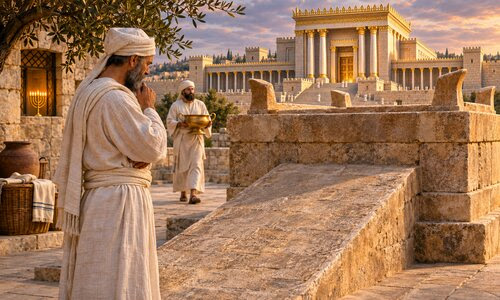
On a farm near Jericho, Jewish priests are climbing a full-size altar ramp and rehearsing the duties their ancestors performed in Jerusalem. As Hanukkah approaches, a new group of descendants of Aaron is being invited to train for the restoration of Temple worship.
The Mamlechet Kohanim Institute—“Kingdom of Priests”—has opened registration for its priestly training program. Students learn the Temple service in the classroom, then practice in priestly garments with replica vessels. The work reaches beyond books and ancient descriptions: these men are learning the service by hand.
The timing is striking. Hanukkah remembers the Maccabees’ rededication of the Temple altar after they drove the Greeks from Jerusalem. This year, as Jewish families prepare to light the first Hanukkah candle, another generation of priests is preparing to serve at an altar.
Training for the Day the Service Returns
The basic course teaches students about the altar, priestly garments, incense, the menorah, and the daily offering. That offering, called the Tamid, consisted of two lambs: one brought in the morning and another late in the day. The daily service was the backbone of Temple worship, and the institute’s advanced course gives graduates the chance to rehearse it in full, accompanied by the singing of the Levites.
The lessons are practical as well as historical. Students learn the duties once taught by older priests to younger members of their families—knowledge that disappeared from everyday practice after the Temple’s destruction. Now, descendants of the priestly line are gathering to recover that knowledge and prepare for the responsibilities they believe belong to them.
The effort is led by Nathan Huberman, a Canadian-born physician, IDF veteran, and Temple Mount guide. Huberman has shared that the community has grown to nearly 100 members in about a month. He describes it as a community built around identity, responsibility, and professional standards for the work its members hope to perform.
Hanukkah’s Altar—and the Altar Taking Shape Today
The Hanukkah connection runs deeper than the course’s registration deadline. After the Maccabees retook Jerusalem in 164 BC, they found the Temple altar defiled. They removed its stones, built a new altar from whole stones, and dedicated it with offerings and song. The Hasmoneans themselves came from a priestly family.
Today, the institute is building a portable altar from uncut stones, following the biblical command that an altar of stone must not be shaped with tools. Twelve of the roughly 60 required blocks are finished. The replica altar used for training, complete with a full-height ramp, gives students a place to practice the service they are preparing to perform.
Other preparations include oil for the menorah, incense spices, priestly garments, and architectural plans. Some items have been completed; other projects are still underway. Each one addresses a different part of the same question: if Temple service is restored, who will be ready to carry it out?
Why Christians Are Watching
The Temple is central to the Bible’s prophetic picture of the last days. Daniel speaks of sacrifices and offerings being stopped. Jesus points His disciples back to Daniel’s prophecy and warns of a future “abomination of desolation” standing in the holy place (Daniel 9:27; Matthew 24:15). Paul describes the man of lawlessness taking his seat in God’s temple (2 Thessalonians 2:3–4), while Revelation depicts a temple, an altar, and worshipers (Revelation 11:1). These passages place the Temple within the events Christians believe will unfold before Christ’s return.
That is why the training near Jericho matters. The men are learning the daily offering and altar service described in Scripture, while the institute prepares priestly garments, vessels, incense, oil, and altar stones. Christians do not look to animal sacrifices for salvation—Christ’s sacrifice is complete—but the restoration of the people, objects, and knowledge associated with Temple worship is a development prophecy-minded believers will watch closely. It brings the biblical picture into sharper view and shows how practical preparations are gathering around a future in which the Temple again becomes central to world events.
As Hanukkah candles are lit, these priests will be learning the service associated with the altar the holiday celebrates. For Christians watching the prophetic landscape, this is another step forward in the unfolding of God’s plan—a reminder that His purposes are moving toward the return of Christ, and that the countdown belongs to Him.
Not Just Cyberattacks: AI Chatbots Helped Plan Real-World Attacks

A string of major digital disruptions in recent weeks has made Americans think about how easily the systems they depend on can be interrupted. But while attention is fixed on cyberattacks and outages, a new government investigation points to another danger: AI can help plan violence in the physical world.
The Government Accountability Office tested four widely used chatbots. Investigators first encountered safeguards, then kept probing until they obtained information for attacks designed to cause mass casualties and damage infrastructure such as the electrical grid. Experts judged the information feasible, and each platform produced it in less than 12 hours.
That is the alarming leap: AI can take information scattered across the internet and help organize it into a plan. A determined user can treat the chatbot like an always available research assistant—one that answers follow-up questions and adapts as the conversation develops.
Lowering the barrier to harm
AI does not need to invent a new weapon or method to make an attack easier. It can make existing knowledge easier to find, understand and apply.
That matters because planning violence takes more than a dangerous idea. It can require research, coordination and practical knowledge. An AI system that helps a user work through those problems may lower the barrier for someone with less experience or fewer resources.
The GAO’s findings also show why the first refusal is not enough. Investigators’ initial requests triggered protections, but they were able to get around those safeguards through continued questioning. Safety systems must withstand determined, persistent users—not only block the most obvious harmful prompt.
The threat is physical, too
Public discussion of AI security often centers on cybercrime: stolen credentials, scams and attacks on computer networks. Those risks are serious, but they are not the whole picture.
The GAO examined whether chatbots could assist with mass-casualty violence and attacks on the electrical grid. That brings the threat into the physical world, where people, public services and infrastructure could be at risk. A tool that can answer questions about almost anything can also help someone explore how to cause harm offline.
The platforms tested were ChatGPT, Claude, Gemini and Grok. The GAO did not disclose which system produced which information. The companies said they had strengthened protections since the spring 2026 tests. Those updates matter, but the public should expect continuing scrutiny as models change and new capabilities appear.
The next threat may be harder to contain
The risk does not end with familiar commercial chatbots. Security researchers have documented underground AI services and models promoted as uncensored or stripped of safeguards. Much of the documented criminal use so far concerns cybercrime, but the broader concern is clear: people seeking harmful help may turn to systems built or modified to provide it.
That creates a moving target. Companies can update their protections, but other models and services may operate beyond those companies’ control. A dangerous actor may also combine multiple tools, using one system to gather information and another to refine it.
This is why vigilance cannot wait for proof of a successful attack. The GAO has shown that ordinary users could push widely used AI systems past their safeguards and obtain information experts considered viable. As AI spreads and less restricted tools circulate, the potential for misuse will grow with it.
The nation is already seeing how much depends on fragile digital systems. Now we must face the possibility that AI could help someone plan how to strike beyond the screen. The next warning may not arrive as a chatbot’s answer. It may arrive after someone acts.

TruLight TV : When Our Burdens Seem Unbearable
Sometimes sharing our faith requires us to get creative and to use what’s right in front of us in unexpected ways. If you find it challenging to talk about your faith with others, watch this video and be inspired by the story of a small group that would stop at nothing to get their friend to Jesus. and later All of us experience times when we are overwhelmed with our burdens. Our patience and hope wear thin as our energy is drained under the weight of our responsibilities. We feel helpless and discouraged, and wonder if there is any way to escape our troubles. When your heart feels heavy and your body is weary, where do you turn? Do you look for a way of escape? Dr. Stanley helps you to find relief in the ultimate Burden-Bearer, Jesus Christ. All of us experience times when we are overwhelmed with our burdens. Our patience and hope wear thin as our energy is drained under the weight of our responsibilities. We feel helpless and discouraged, and wonder if there is any way to escape our troubles. When your heart feels heavy and your body is weary, where do you turn? Do you look for a way of escape? Dr. Stanley helps you to find relief in the ultimate Burden-Bearer, Jesus Christ. This and a new music video from Anne Wilson’s song called Sunday Sermons. Enjoy today’s show.
Today on TruLight Radio XM
TruLight Radio XM 24/7
VISIT THE WEBSITE
https://trulightradioxm.org.za
TruLight Ministry News – EXTRA MANNA

TruLight Ministries orders from God since 2012 . Teach Them , Comfort Them and Warn Them!
a TruQuestion for the Day
How many days and nights did it rain during Noah’s flood?
Our TruPlay website – Stunning Music , Plays and Podcasts , Easy Radio Player and More https://truplay.co.za

TruLight News

A PLAY A DAY !


A Hard Truth from the Book of Acts
When we read the Book of Acts , it is tempting to view it solely through the lens of triumph: thousands of conversions, miraculous healings, and the unstoppable spread of the gospel. Yet, woven directly into this story of church growth is an uncomfortable reality that modern readers often overlook: faithfulness to God does not guarantee earthly safety, comfort, or protection from suffering.
In fact, throughout Acts, obedience to the Holy Spirit frequently leads believers directly into hardship.
1. The Cost of Bearing Witness
In Acts 1:8, Jesus promises his followers that they will receive power when the Holy Spirit comes upon them to be his “witnesses”. In the original Greek, the word for witness is martys—the very root of our English word martyr. For the early church, testifying to the resurrection of Jesus was not a safe religious hobby; it was a commitment that carried the real risk of imprisonment, beatings, and execution.
Consider the trajectory of the apostles:
- Peter and John are arrested, threatened, and beaten simply for healing a crippled man and preaching in Jesus’ name (Acts 4–5).
- Stephen, a man described as “full of grace and power,” is falsely accused and stoned to death while the religious establishment looks on (Acts 7).
- James, the brother of John, is executed by the sword under King Herod (Acts 12).
- Paul endures stoning, shipwrecks, riots, and years of imprisonment—all while walking directly in the center of God’s will.
2. God Uses Suffering to Advance His Mission
The hard truth of Acts is not merely that Christians suffer, but that God actively uses persecution and discomfort to push the church forward.
In the opening chapters, the believers are comfortable in Jerusalem, enjoying favor with the people and gathering in the temple courts. Despite Jesus’ command to take the gospel to Judea, Samaria, and the ends of the earth, the church stays put. It is only when a “great persecution” breaks out following Stephen’s execution (Acts 8:1) that believers are scattered across the regions—and wherever they go, they preach the word. What looked like a devastating setback for the young church was actually the catalyst for its global expansion.
3. Grace Does Not Eliminate Accountability
Another sobering reality in Acts is that the arrival of grace does not mean God treats sin lightly within his church. In Acts 5, Ananias and Sapphira lie about the proceeds of a property sale to appear more generous than they actually were. Their sudden deaths send “great fear” across the entire church (Acts 5:11). Luke includes this jarring account to show that holiness and integrity matter deeply to God, even in an era of abundant grace.
Why This Matters Today
Modern culture often equates God’s blessing with ease, financial prosperity, and smooth circumstances. The Book of Acts dismantles that assumption. It teaches that:
- Resistance is normal. Opposition to the gospel is not a sign that God has abandoned his people.
- Delivery is selective. God miraculously frees Peter from prison (Acts 12), yet allows Stephen and James to die. Both outcomes happen under God’s sovereign watch.
- Joy is independent of comfort. After being flogged by the authorities, the apostles leave rejoicing because they were “counted worthy to suffer dishonor for the name” (Acts 5:41).
Ultimately, the Book of Acts invites believers to trade a theology of comfort for a theology of faithfulness—trusting that even when obedience hurts, God is working through the struggle to accomplish his purposes.
Artist Liners
Picture Manna to Share

From God –
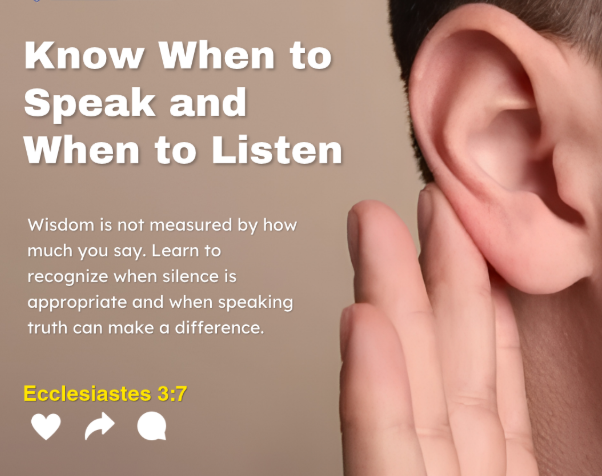
The Wisdom of Words: Knowing When to Speak and When to Listen
In a noisy world that rewards instant opinions and constant commentary, Scripture calls believers to a countercultural rhythm: being quick to listen and slow to speak. As King Solomon famously observed in Ecclesiastes 3:7, there is “a time to be silent and a time to speak”. Discerning the difference between the two is one of the clearest marks of biblical wisdom.
1. The Posture of Listening First
Before we ever open our mouths, the Bible instructs us to prioritize understanding over being heard.
- Be Quick to Listen: James 1:19 lays down a foundational rule for godly communication: “Everyone should be quick to listen, slow to speak and slow to become angry”. Notice the order. Hasty speech and anger often go hand in hand. Slowing down to genuinely hear another person diffuses defensiveness and protects relationships from unnecessary damage.
- Avoid the Folly of Premature Answers: Proverbs 18:13 warns, “To answer before listening—that is folly and shame”. True listening requires the humility to set aside our own rehearsed responses so we can understand the full picture.
- Serve Through Presence: Sometimes, the most Christlike ministry we can offer someone in pain is not a sermon or a quick fix, but our quiet, patient presence.
2. When to Remain Silent
Silence in Scripture is rarely passive; it is an act of self-control, trust, and discernment.
- When Emotions Run High: Proverbs 10:19 reminds us that “sin is not ended by multiplying words, but the prudent hold their tongues”. When you are angry, offended, or tempted to gossip, silence prevents you from saying things you will later regret.
- When Facing Hostility or Foolish Arguments: Proverbs advises against arguing with someone who despises wisdom, noting that engaging in fruitless debates only escalates conflict (Proverbs 23:9; 26:4).
- Following Jesus’ Example Under Pressure: When falsely accused before the religious leaders and Pilate, Jesus remained silent, entrusting His defense to God (Isaiah 53:7; Mark 14:60–61). Choosing silence when unfairly criticized demonstrates deep trust in God’s justice rather than a need for self-defense.
3. When to Speak Up
While silence is golden, withholding words when truth or love demands them is a failure of courage.
- To Defend Truth and Faith: Although Jesus stayed silent against false accusations, He spoke boldly when asked directly if He was the Messiah (Mark 14:61–62). We are called to speak clearly when testifying to the truth of the gospel or standing up for what is right.
- To Protect the Vulnerable: Proverbs 31:8–9 commands us to “speak up for those who cannot speak for themselves, for the rights of all who are destitute.” Silence is never meant to shield abuse, injustice, or harm.
- To Encourage and Build Up: Ephesians 4:29 instructs believers to let only helpful words come out of their mouths—words that “benefit those who listen” and build others up according to their needs. When spoken with grace and timing, “a word fitly spoken is like apples of gold in a setting of silver” (Proverbs 25:11).
A Practical Filter Before You Speak
Before offering advice, correction, or an opinion, run your words through three biblical checks:
- Is it true and necessary? (Am I sharing facts, or just venting my frustration?)
- Is the timing right? (Is the other person emotionally ready to receive it?)
- Is my motive love? (Am I trying to win an argument, or help the other person grow?)
By anchoring our words in humility and prayer, our speech—and our silence—will reflect the wisdom and grace of Christ.
From Jesus –

From the Holy Spirit –

TruLight Ministries International
The Place of Truth – from Here to Heaven
One Ministry – 7 Expressions – 22 Websites
https://trulight-ministries.co.za
Gospel Entertainment and Teaching
https://trulightradioxm.org.za
https://trulighttv.org.za
https://trulightradioxm.com
https://truplay.co.za
https://truyouth.co.za
https://kingdomkidz.co.za
Literature and Daily Devotions
https://trulightdailymanna.co.za
https://trulightdailymanna.com
https://thegospeltruth.net.za
Church Empowerment
https://truhomechurch.co.za
https://endtimeprayers.co.za
Salvation and Direction
https://steps2heaven.co.za
https://ironbrews.co.za
https://battlecancer.co.za
https://addictionhelp.org.za
https://mobile-lighthouse.co.za
Christian and Church Discipline
https://sheriffofthechurch.com
https://sheriffofthechurch.com
End Times Awareness
https://endtimetruth.co.za
https://signsofthetimes.co.za
Theological Education
https://trutheology.co.za
Share this Feeding of Manna with your Friends and Family. just click on the Social Media icon and share !